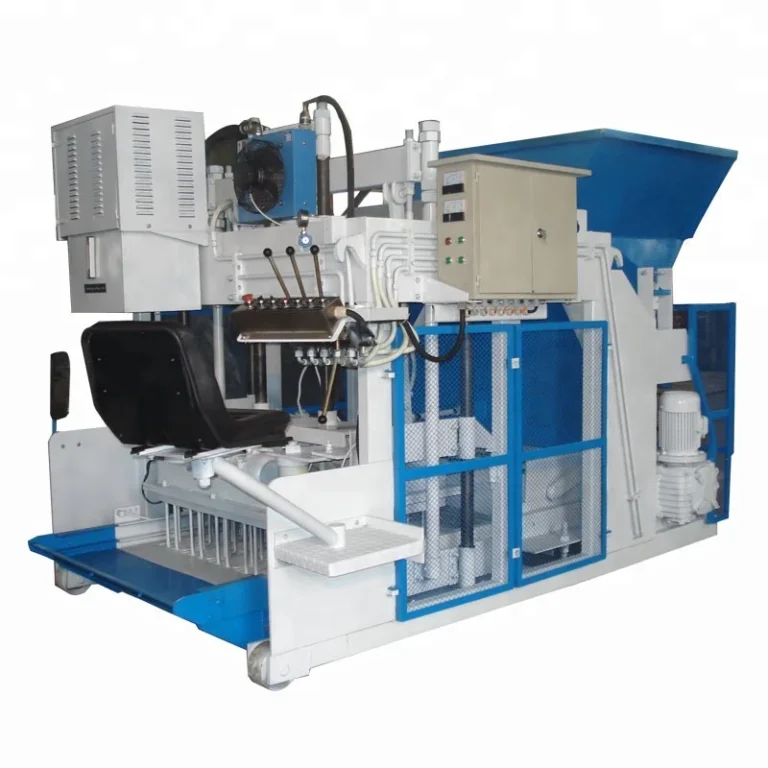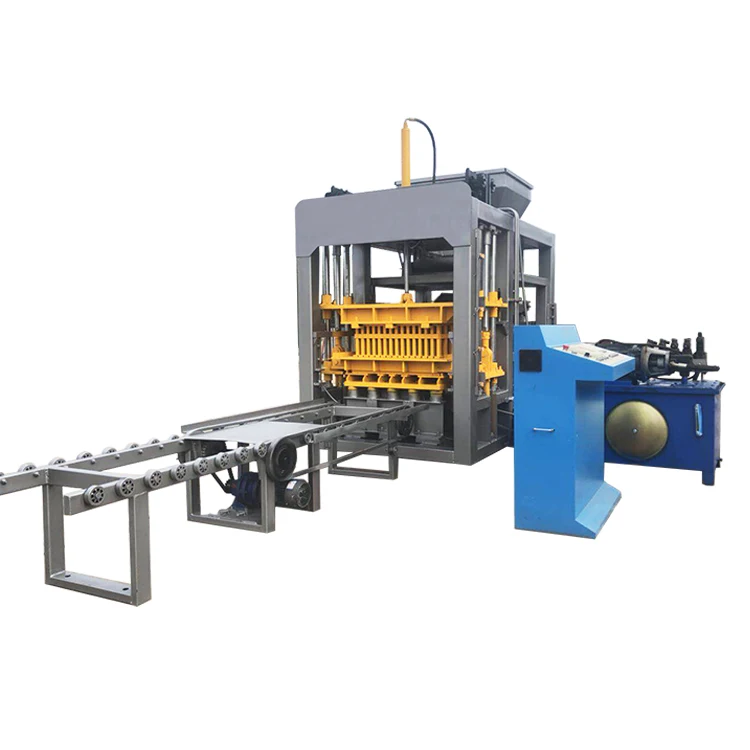
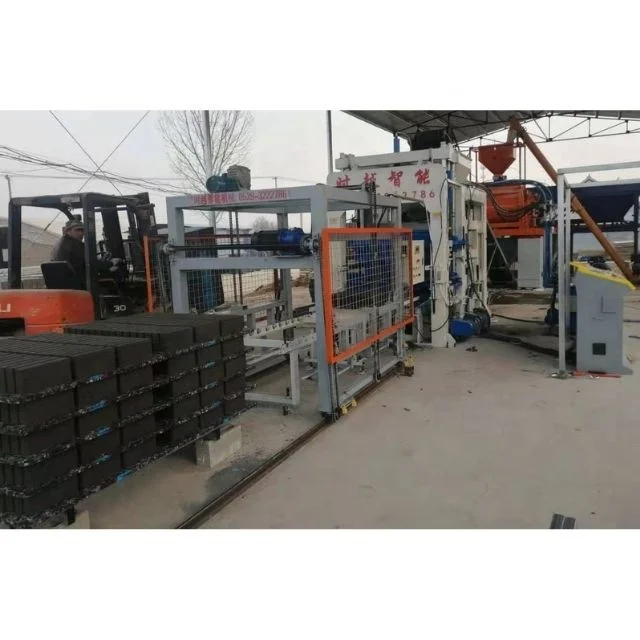
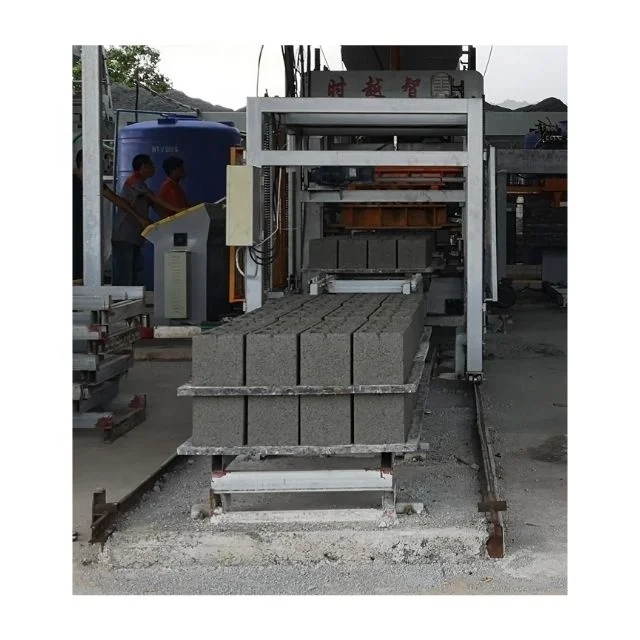
Description
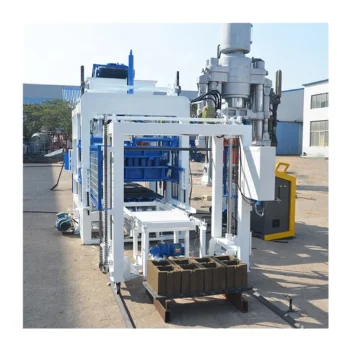
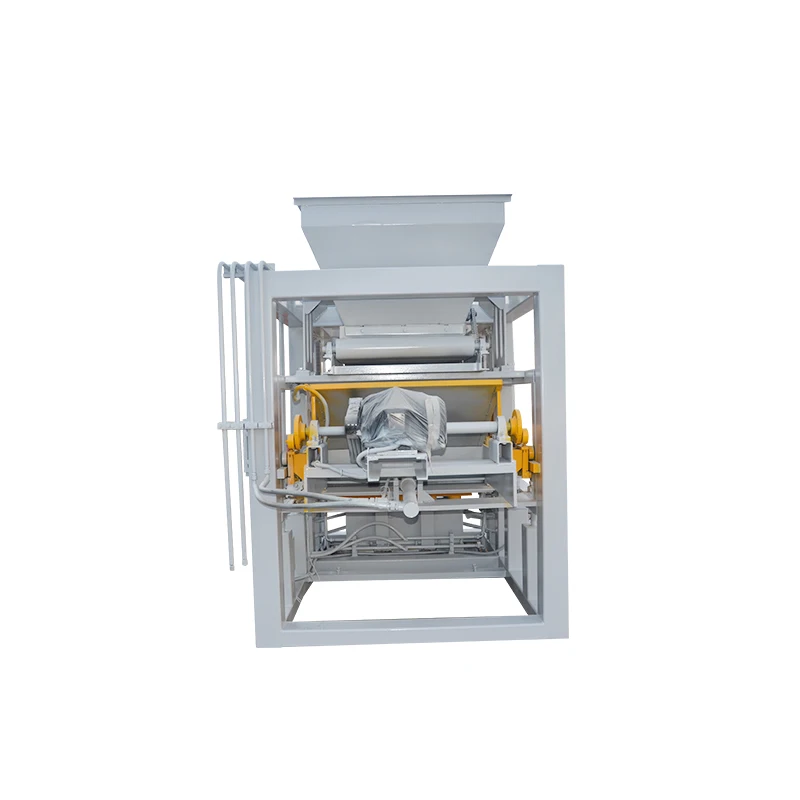
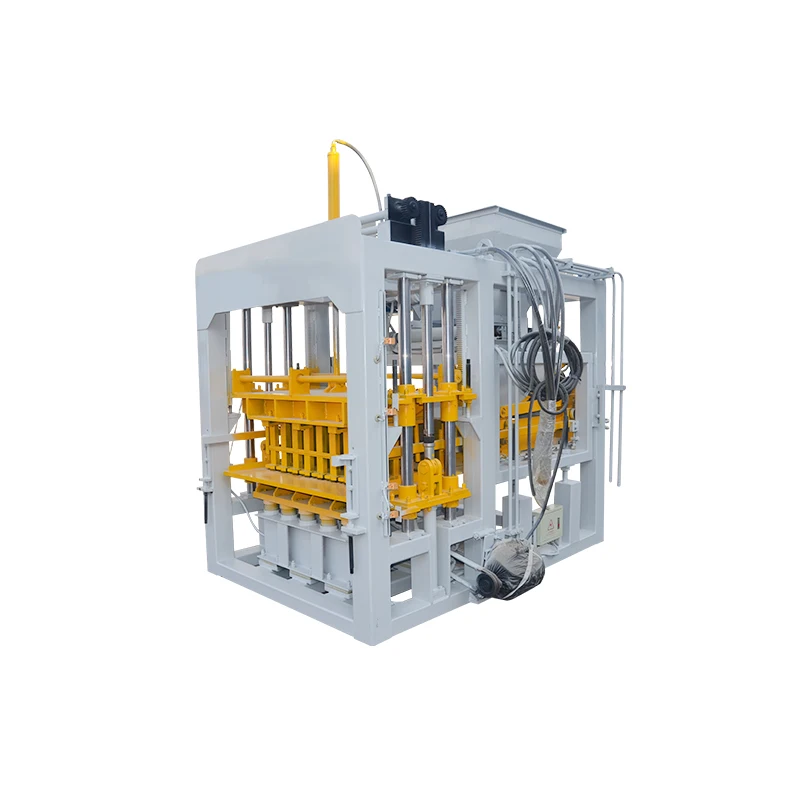
Ready for Dispatch — QT5-15 block machine in stock means the hydraulic unit, PLC cabinet and pallet feed are assembled, tested, and matched to your site’s voltage and handling gear before loading.
Technical Specifications
| Parameter | Value |
|---|---|
| Model | QT5-15 |
| Product Type | Hydraulic Interlocking Paving Block Machine |
| Overall Dimensions (L×W×H) | 7400×1950×2800 mm |
| Pallet Size | 1100×550 mm |
| Molding Cycle | 15-20 s (basis not stated in source — confirm block format / material / thickness) |
| Vibration Form | Platform Vibration |
| Vibration Frequency | 0-60 Hz |
| Vibration Force | 80 kN |
| Demolding Method | Hydraulic |
| Overall Power | 32 kW |
| Total Mass | 5000 kg |
| Control System | PLC with touch screen interface |
| Hydraulic System | Independent integrated hydraulic station |
| Automation Level | Automatic (pallet feeding, material feeding, vibrating, demoulding) |
| Block Compressive Strength | >15 MPa |
| Factory Area Required | 1000 m² |
| Output Capacity (Hollow block 400×200×200 mm) | 900-1200 pcs/h | 7200-9600 pcs/8hr |
| Output Capacity (Hollow block 400×150×200 mm) | 1080-1440 pcs/h | 8640-11520 pcs/8hr |
| Output Capacity (Solid brick 240×115×53 mm) | 5760-7680 pcs/h | 46080-61440 pcs/8hr |
| Output Capacity (Rectangular brick 200×100×60 mm) | 3600-4500 pcs/h | 28800-36000 pcs/8hr (cycle 20-25 s) |
| Output Capacity (Zigzag brick 225×112.5×60 mm) | 2304-2880 pcs/h | 18432-23040 pcs/8hr (cycle 20-25 s) |
| Mould Compatibility | Hollow block, solid brick, rectangular paver, zigzag paver (mould change required) |
| Raw Material Compatibility | Fly ash (up to 70%), slag, gangue, sand, crushed stone, cement, water |
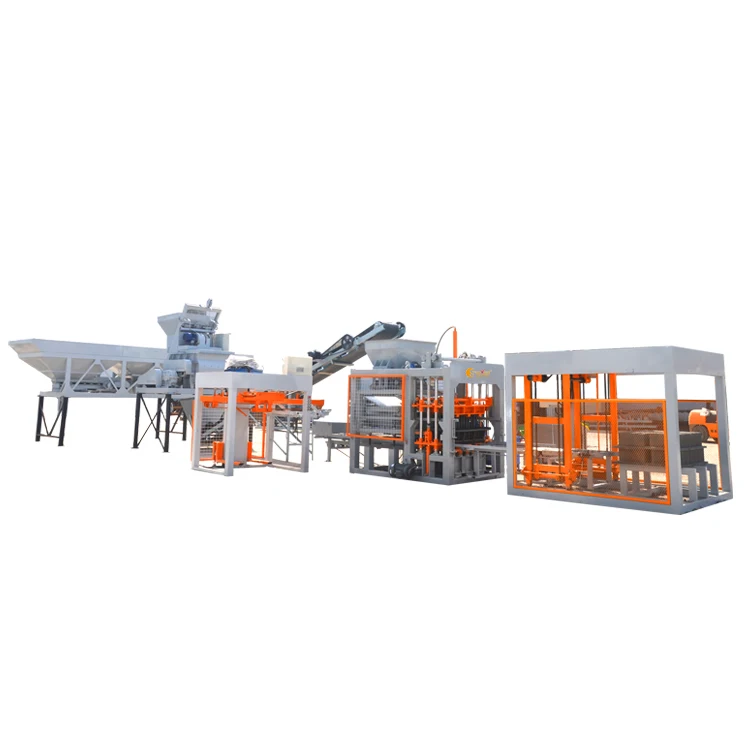
| Line Components | Pallet feed machine, block making machine, storage hopper, conveyor, hydraulic unit, PLC control cabinet |
| Warranty | 1 year (excluding spare parts) |
| Certification | CE (declared where applicable) |
Application Suitability
| Application | Material or Output |
|---|---|
| Paving block production plants | Rectangular and zigzag pavers from crushed stone, sand and cement |
| Hollow and solid brick manufacturing | Standard hollow blocks and solid bricks using fly ash, slag or gangue mixes |
| Interlocking paver production | Interlocking formats from high-strength concrete mixes with local aggregate |
| Environmental building material production | Bricks and blocks incorporating up to 70% fly ash or industrial residue |
| On-site contractor block production | Project-based output for housing and infrastructure contractors with fixed deadlines |
Why the Voltage Question Should Come Before the Price
A QT5-15 block machine in stock is ready to ship fast — but speed means nothing if the motor burns out on arrival.
I once sent a machine to a West African site wired for 440V/60Hz. The unit left the factory on a standard 380V/50Hz configuration. Within minutes of powering up, the main motor overheated and failed. The project stood still for nearly a month while replacement parts were sourced and shipped. That delay cost the contractor more than the motor itself. Every QT5-15 we dispatch now has its voltage, frequency and PLC display language confirmed in writing and signed off before it enters the container. [NEED_CITE: voltage and frequency standards by export market]
Dispatch Readiness Without Configuration Guesswork
Stock availability shortens the wait between order and production start. The QT5-15 block machine in stock arrives with the hydraulic station, vibration platform, PLC cabinet and pallet feeder already assembled and factory-tested. Buyers working against a project deadline avoid the typical multi-week lead time that custom-built orders require. The machine ships dismantled for container loading, and reassembly on site follows a documented sequence so your crew is pressing blocks within days of unpacking.
Matching the Pallet to Your Existing Yard
The 1100×550 mm pallet is a standard size, but standard does not mean universal. If your curing racks are built for a different dimension, or your forklift forks sit wider than the pallet runners, you lose output to manual handling. We confirm pallet size and material — bamboo, steel or PVC — against your curing area layout and the equipment you already run before the QT5-15 leaves our floor. [NEED_CITE: pallet material selection for concrete block curing]
What the Numbers on the Spec Sheet Actually Mean
Platform vibration at 0-60 Hz with 80 kN of vibration force works together with the independent hydraulic station to compact the mix. The hydraulic pressure holds the mould head down while vibration settles the aggregate into voids. If vibration force is high but hydraulic pressure is low, the block releases before full compaction and you see crumbling edges. If pressure is high but vibration is weak, the mix does not flow into the mould corners and you get short blocks. The QT5-15 balances both systems so that compressive strength exceeds 15 MPa when the mix design matches local aggregate.
Pallet size directly controls how many blocks cure per rack tier. At 1100×550 mm, a single pallet carries one 400×200×200 mm hollow block mould layout or a full face of rectangular pavers. Smaller pallets cut output per cycle; larger pallets demand bigger racks and heavier forklifts. Confirming this dimension early prevents a mismatch that no amount of on-site adjustment can fix.
The PLC touch screen stores cycle parameters for each mould format. When you switch from hollow block to paving brick, the operator calls up the stored recipe rather than manually resetting timers and pressure valves. This cuts mould change time and keeps block-to-block consistency across shifts.
The Hidden Cost of Skipping Pre-Shipment Confirmation
When voltage, pallet size or control language are assumed rather than confirmed, the consequences surface at the worst possible moment — the first day of production. A wrong frequency setting degrades motor torque gradually, so the machine runs but the vibration force drops below the threshold needed for proper compaction. Blocks leave the press looking acceptable but fail compressive strength tests weeks later, after they have already been laid in a wall. A PLC display in a language the operator cannot read leads to incorrect cycle settings that go unnoticed until output quality degrades. These are not defects in the machine; they are gaps in the specification conversation that a QT5-15 block machine in stock order should close before dispatch. [NEED_CITE: CE machinery directive requirements for industrial equipment]
Why Source This Machine Through Our Dispatch Channel
Block machinery is our single focus, which means the press, mould, pallet and handling equipment are specified as one matched system rather than pulled from separate vendors. Every configuration is set against the buyer’s actual mix design and target block format, not a catalogue default. Stocked models like the QT5-15 ship with a factory test record that documents cycle performance on the block format you intend to produce. Mould design and supply cover the formats your market sells, and additional moulds can follow the initial shipment on a shorter lead. Installation support and operator training are included so your crew is not left reading a manual on day one. [NEED_CITE: concrete block machinery export documentation requirements]
Documentation & Verification
- Factory test record on your specified block format before dispatch
- Voltage, frequency and PLC language confirmation sheet signed by both parties
- Line layout drawing showing pallet flow from feed to curing rack
- Packing photographs and container loading plan provided pre-shipment
- Wear parts and mould compatibility list matched to your product range
- Operation and maintenance manual in your operator’s language
Installation, Commissioning & Support
- 1000 m² factory area requirement confirmed against your site plan before shipment
- 32 kW total power draw verified against your local supply capacity and dedicated circuit needs
- Machine dismantled into modules for container loading with labelled reassembly sequence
- Hydraulic station and PLC cabinet commissioned on site with cycle parameters set per your mix
- Operator training covers mould change procedure, PLC recipe recall and daily maintenance checkpoints
- Wear parts list and mould inventory provided so first replacement is planned before it is needed
What We Need to Confirm Before Loading
Tell us the exact block formats you intend to produce and the daily volume you need per format. Share your local voltage and frequency, the PLC display language your operators use, and the pallet size your curing racks and forklifts are built around. If you already have a mixer or batching system upstream, let us know its capacity so the QT5-15 feed rate aligns without bottleneck or idle time.
Frequently Asked Questions
Q: Which QT5-15 configurations are in stock and what is the dispatch lead time?
A: Stocked units ship in the standard automatic configuration with PLC control, hydraulic station and pallet feeder assembled. Dispatch lead time is measured in days rather than weeks once voltage, frequency and pallet specifications are confirmed in writing. Container loading follows immediately after pre-shipment testing and photographic documentation.
Q: How is the machine dismantled for container loading and reassembled on arrival?
A: The QT5-15 is broken into the main frame, hydraulic unit, PLC cabinet and pallet feed module. Each section is labelled and secured for ocean freight. On-site reassembly follows a step-by-step sequence, and our technician guides the process through commissioning so the machine is pressing blocks within days of container opening.
Q: Can voltage, frequency and control language be confirmed before dispatch?
A: Yes. We require written confirmation of your site voltage, frequency and preferred PLC display language before the machine is cleared for loading. These values are recorded on a sign-off sheet and verified during the factory test so the electrical system matches your supply the moment it is connected.
Q: What moulds ship with the machine and how fast can additional moulds follow?
A: The initial shipment includes the mould format you specify during the order — hollow block, solid brick, rectangular paver or zigzag paver. Additional moulds are manufactured separately and can be dispatched on a shorter lead once the machine is running, expanding your product range without a full production stop.
Q: What is the arrival estimate from order to port of destination?
A: Arrival timing depends on your destination port and the shipping route available at the time of booking. We provide an estimated arrival date at the quotation stage, updated once the container is booked. Stocked dispatch shortens the factory-to-port window compared with custom-built orders.