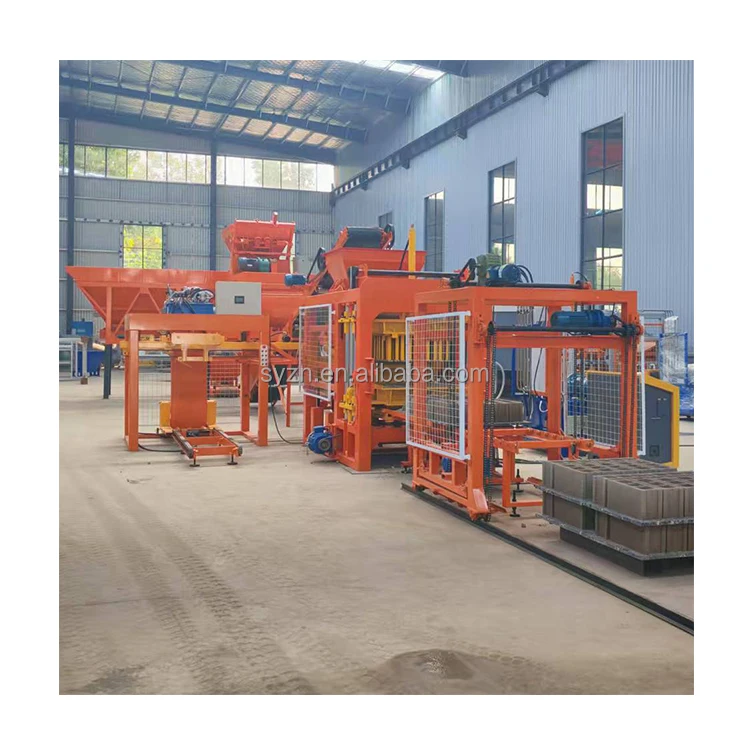


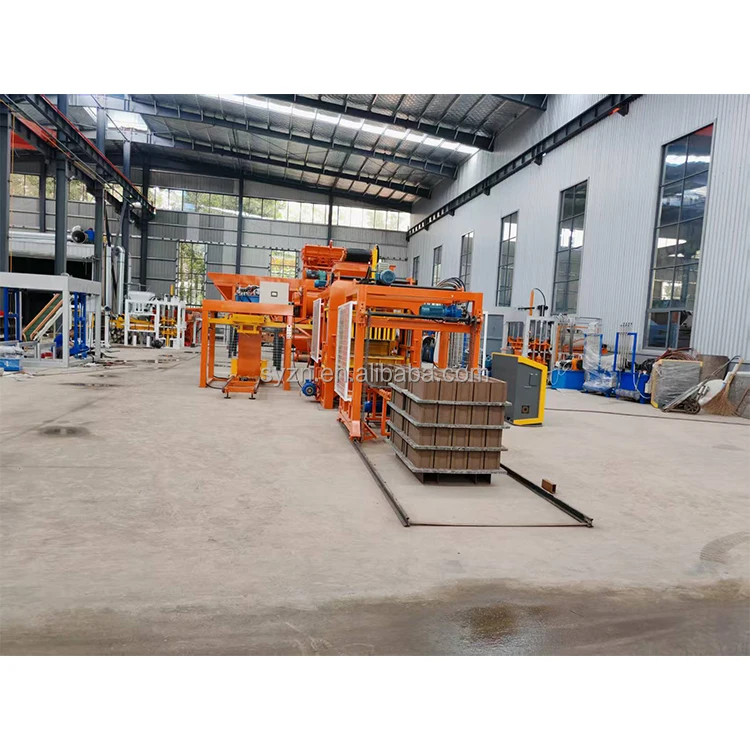

Description
Stock Availability Confirmed — the QT6-15 is held as a stocked model with container loading plans prepared upfront, letting buyers with fixed project deadlines confirm dispatch lead time before committing.
Technical Specifications
| Parameter | Value |
|---|---|
| Model | QT6-15 |
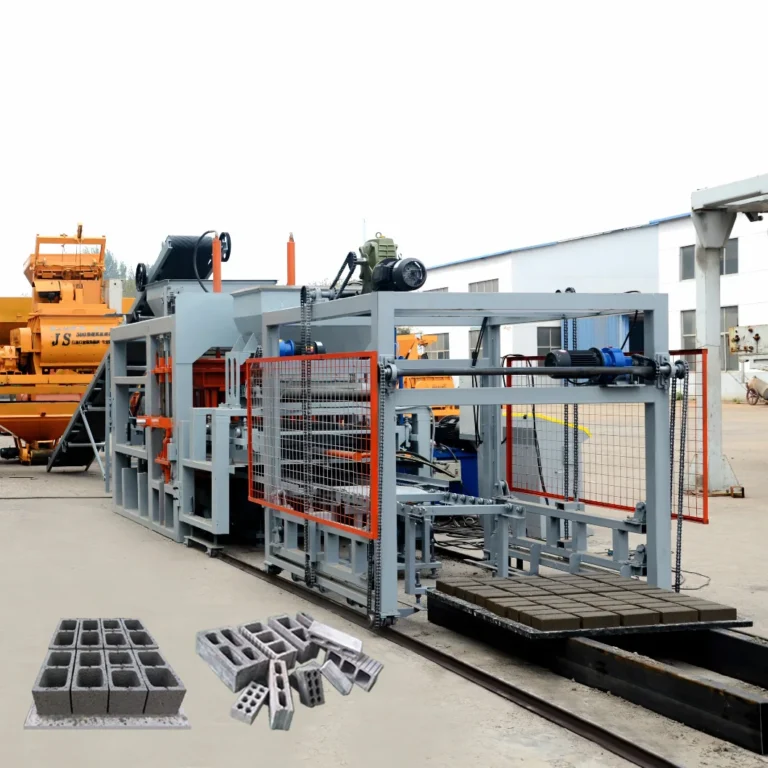
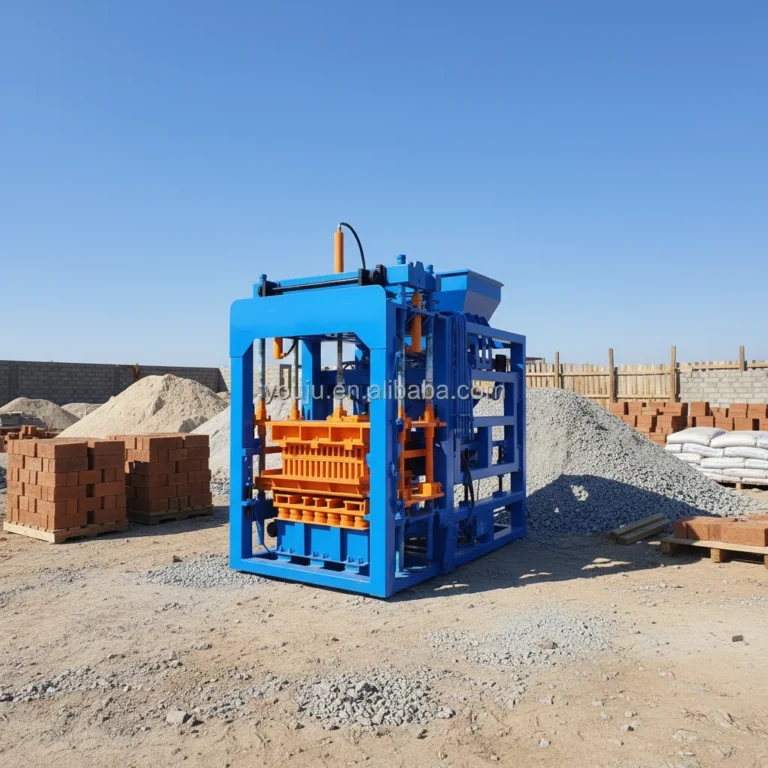
| Product Type | Automatic Concrete Block Making Machine |
| Overall Dimensions (L×W×H) | 8200×1700×2950 mm |
| Vibration Frequency | 0-60 Hz |
| Vibration Form | Platform Vibration |
| Moulding Mode | Automatic loading, vibration moulding |
| Pallet Size | 880×850 mm |
| Molding Cycle | 15-20 s (hollow block), 20-25 s (paving brick) |
| Overall Power | 37 kW |
| Vibration Force | 45 kN |
| Total Mass | 7 T |
| Demolding Method | Hydraulic |
| Factory Area | 1200 m² |
| Control System | PLC with touch screen HMI |
| Output — 400×200×200mm hollow block | 8640-11520 pcs/8hr (6 pcs/mould, 15-20s cycle) |
| Output — 400×150×200mm hollow block | 11520-15360 pcs/8hr (8 pcs/mould, 15-20s cycle) |
| Output — 240×115×53mm solid brick | 46080-61440 pcs/8hr (32 pcs/mould, 15-20s cycle) |
| Output — 200×100×60mm rectangular paving brick | 17280-23040 pcs/8hr (21 pcs/mould, 20-25s cycle) |
| Output — 225×112.5×60mm zigzag paving brick | 17280-23040 pcs/8hr (15 pcs/mould, 20-25s cycle) |
| Compressive Strength of Blocks | >15 MPa |
| Hydraulic System | Independent integrated hydraulic station |
Application Suitability
| Application | Material or Output |
|---|---|
| Hollow block production | Waste ash, slag, crushed stone with cement binder |
| Solid brick production | Standard aggregates with reduced cement dosage |
| Rectangular paving brick | Aggregate-cement mix for pedestrian and light traffic areas |
| Zigzag interlocking paving brick | High-strength mix for interlocking pavement layouts |
Why "Pieces per Hour" Without a Block Format Is Meaningless
The QT6-15 block machine in stock ships with capacity stated per format, because a bare cycle count tells a buyer almost nothing about real daily throughput.
Every quotation I have seen from other suppliers quotes a peak cycle figure tied to the smallest, easiest-to-form block in their catalogue. Buyers then plan their project schedule around that number, only to discover the machine takes longer on the hollow block format that actually sells in their market. With this QT6-15 block machine in stock, each output row above is tied to a specific block size, mould cavity count and cycle range so your project timeline rests on real numbers, not a marketing peak. [NEED_CITE: typical discrepancies between quoted and realised block plant output in West African construction projects]
Dispatch Timing Buyers Can Actually Plan Around
Project contractors and importers working to a fixed milestone need a machine on site before a deadline, not an estimated production window that keeps shifting. The QT6-15 is held as a stocked automatic block making machine, meaning the main press, hydraulic station and PLC cabinet are pre-assembled and factory-tested. Once voltage, frequency and PLC display language are confirmed, the machine is dismantled for container loading and dispatch lead time is quoted upfront rather than guessed after payment.
Container Loading and Arrival Visibility
A 7-tonne machine with an 8200 mm frame length requires careful dismantling and a planned loading sequence inside a standard container. Every QT6-15 block machine in stock shipment includes packing photographs taken before the container doors close, and a loading plan that shows the buyer how the press, hydraulic station, moulds and pallets fit together. This avoids the common situation where components arrive loose and the buyer discovers missing bolts or damaged wiring on the first day of commissioning. [NEED_CITE: container loading best practices for heavy industrial machinery export]
Reading the Specs That Actually Matter on Site
The 880×850 mm pallet size determines whether the blocks leaving the press can be moved by the forklift and stored in the curing area the buyer already has — specifying a machine without checking this first leads to a pallet pile-up that stalls the entire line. The independent integrated hydraulic station sits apart from the main vibration and dust path, keeping seals and valves cleaner over long production runs. Vibration force at 45 kN combined with hydraulic demolding means block density depends on matching both parameters to the buyer’s local aggregate and cement ratio, not just on one number taken from a datasheet. The PLC touch screen HMI supports fault diagnosis on site, cutting the time between a stoppage and a restart.
What Happens When Arrival Timing Is an Afterthought
Buyers who focus only on price and press specification often overlook the lead time conversation until a project deadline is already at risk. The consequences show up as rented block inventory to fill the gap, idle crews waiting on site, or penalty clauses triggered by delayed construction milestones. A stocked machine with confirmed dispatch lead time removes that uncertainty from the critical path. [NEED_CITE: construction project delay costs linked to equipment procurement timing]
What Stocked Availability Actually Means in Practice
Block machinery as a single focus means the QT6-15 press, moulds, pallets and handling equipment are specified as one matched system from the same factory floor, not assembled from separate suppliers after the order is placed. Configuration is checked against the buyer’s actual mix design and local aggregate before the machine leaves the factory, not adjusted on arrival when it is too late to change the hydraulic pressure or vibration frequency without losing weeks. Moulds for the formats the buyer’s market sells — hollow block, solid brick, paving brick — are held alongside the machine so the full order ships in one container. Voltage, frequency and PLC display language are confirmed at order stage, preventing the situation where the machine arrives with a control panel the operator cannot read. Installation and commissioning support with operator training is scheduled around the confirmed arrival date, not squeezed in whenever a technician happens to be available.
Documentation & Verification
- Line layout and capacity calculation stating the block format assumed for each output figure
- Machine specification sheet covering power, vibration force and hydraulic ratings
- Mould drawing and format list for hollow, solid and paving brick cavity counts
- Pallet specification sheet confirming 880×850 mm dimensions and material grade
- Voltage, frequency and PLC display language written confirmation before dispatch
- Packing photographs and customs documentation support for import clearance
Installation, Commissioning & Support
- Foundation pad sized for 8200×1700 mm footprint and 7-tonne operating mass
- 37 kW total power draw requires a dedicated circuit at the confirmed voltage and frequency
- Dismantled for container transport and reassembled on site with alignment checks
- PLC touch screen commissioned with operator language and fault diagnosis verified
- First production run supervised to match vibration and hydraulic settings to local mix
- Wear parts list covering hydraulic seals and mould liners supplied at handover
What We Need to Confirm Before Dispatch
To move an order forward on the QT6-15 block machine in stock, share the target block format you sell most, the daily output your project requires and the raw material available on your site. Confirm the local voltage and frequency supply, the preferred PLC display language and whether standard moulds for hollow block or paving brick should ship in the same container.
Frequently Asked Questions
Q: What is the dispatch lead time for a stocked QT6-15?
A: Stocked QT6-15 units are prepared for container loading once voltage, frequency and PLC language are confirmed. Dispatch lead time is quoted at order confirmation based on the dismantling and packing schedule, along with a container loading plan and estimated sailing duration to your destination port.
Q: How is the machine dismantled for container loading?
A: The press frame, hydraulic station, PLC cabinet and pallets are separated for container loading. Packing photographs are taken before the container doors close, and the loading sequence is documented so your site team can follow the reassembly order on arrival without waiting for additional guidance.
Q: Are standard moulds in stock alongside the QT6-15 machine?
A: Standard moulds for 400×200×200mm hollow block, 240×115×53mm solid brick and 200×100×60mm paving brick are held with the machine. Mould format and cavity count are confirmed at order stage so the full set ships in the same container as the press.
Q: Can voltage and PLC language be confirmed before shipment?
A: Voltage, frequency and PLC display language are confirmed in writing before the machine leaves the factory. This prevents commissioning delays caused by a control panel the operator cannot read or a motor that does not match the local power supply.
Q: What customs documentation is provided before shipment?
A: Shipping documentation includes the commercial invoice, packing list with component weights and dimensions, factory test record, CE declaration where applicable, and packing photographs. The documentation package supports import customs clearance at your destination port.