

Description
Fast Dispatch Readiness — QT8-15 units held in stock with standard moulds, meaning your machine ships within a typical short lead time rather than waiting for a full production run to finish.
Technical Specifications
| Parameter | Value |
|---|---|
| Model | QT8-15 |
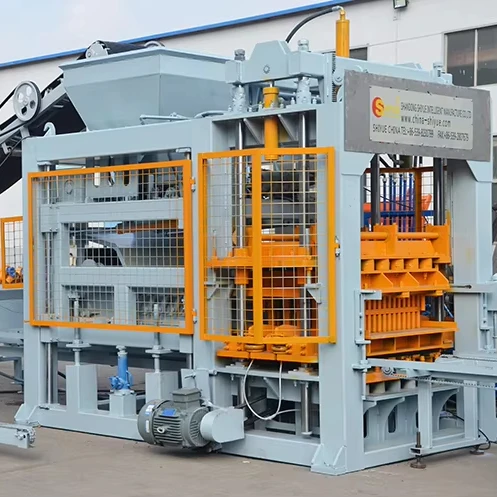
| Product Type | Automatic Cement Interlocking Block Making Machine |
| Host Machine Dimensions | 5870 × 2220 × 2850 mm |
| Host Machine Weight | 10 Tons |
| Molding Area | 950 × 900 mm |
| Workshop Area | 200 ㎡ (basis to be confirmed) |
| Host Machine Power | 47 kW |
| Vibration Force | 100 kN |
| Vibration Frequency | 2800–4500 times/min |
| Vibration Method | Hydraulic + Platform Vibration |
| Pallet Size | 950 × 900 × 25 mm |
| Molding Period | 15 seconds (basis not stated in source — confirm block format and material) |
| Control System | Siemens PLC with independently developed control program |
| Travel Switch | France Schneider / Japan Omron |
| Motor | Germany SIEMENS brand or CE standard brand |
| Voltage | 220 / 380 / 415 / 440 V (customized to destination grid) |
| Mould Treatment | Heat treatment and carburizing, 54–58 HRC, lifespan over 100,000 cycles |
| Welding Standard | Carbon dioxide protection welding, international CE standard materials |
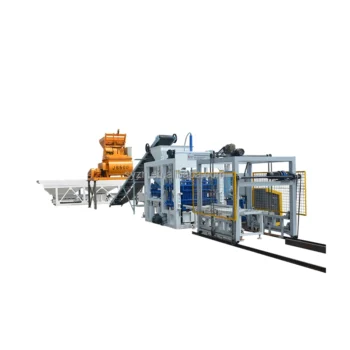
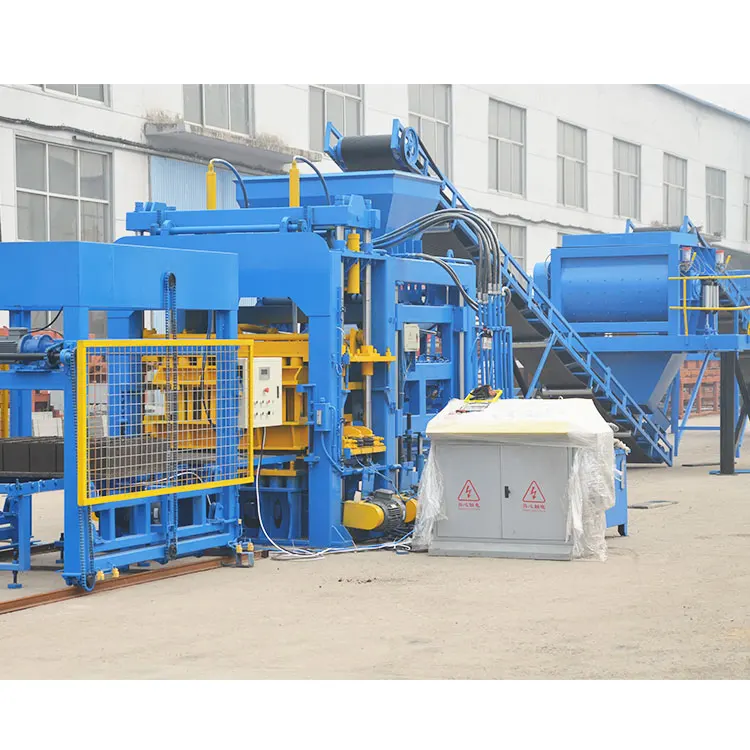
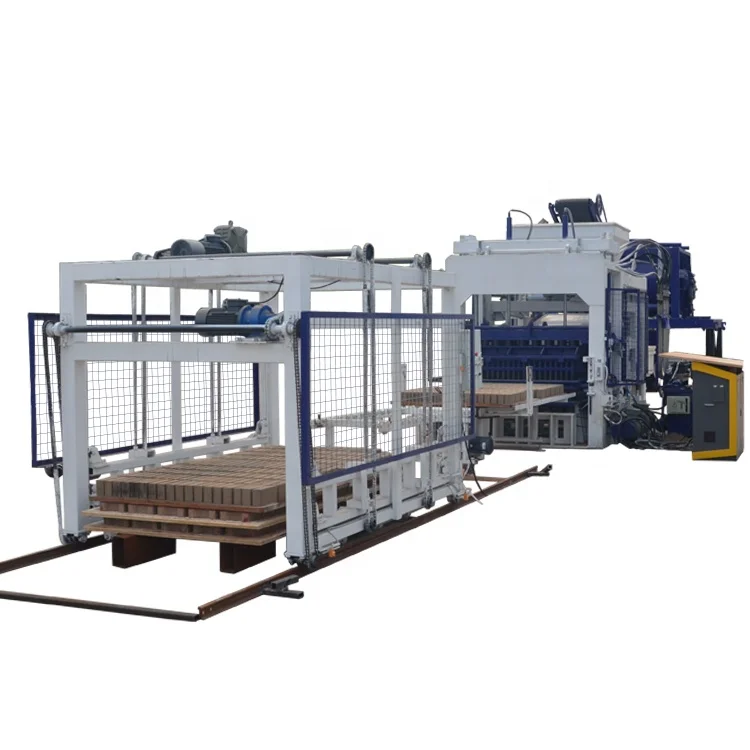
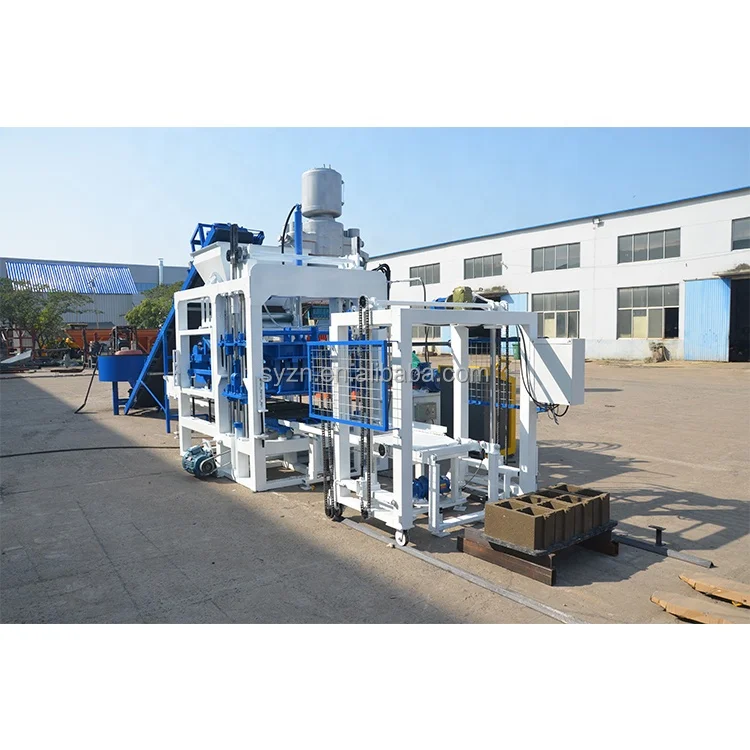
| Line Configuration | QT8-15 host, pallet feeder, brick receiver, hydraulic station, PLD1200 batching machine, JS500 mixer, conveyor belt, hydraulic trolley, SY-8 stacker (3 kW, 600 kg capacity) |
| Color Paver Option | Available with add-on color feeding system |
| Warranty | 1 year for the whole machine (excluding spare parts) |
Application Suitability
| Application | Material or Output |
|---|---|
| Hollow block production | Crushed stone, cement, sand, and fly ash blends |
| Solid brick manufacturing | Dense aggregate mixes for load-bearing walls |
| Interlocking brick production | Graded aggregate with cement for dry-stack assembly |
| Paving brick and paver output | Fine aggregate and cement with optional color layer |
| On-site contractor block making | Locally sourced sand and gravel with Portland cement |
| Building material distributor stock | Multiple format runs across hollow, solid, and paver types |
What the Stocked QT8-15 Automatic Block Making Machine In Stock Means for Your Deadline
A machine on the floor is a machine on the vessel — no waiting for a production slot to open.
Project schedules in construction do not move. When your site foreman is counting days until block supply begins, every week of manufacturing lead time is a week your masons stand idle or you pay penalties. The QT8-15 automatic block making machine in stock is available for dispatch from inventory, which shifts the timeline conversation from "when will it be built" to "when will it clear your port." [NEED_CITE: typical container transit times from Chinese ports to West Africa and Southeast Asia] Buyers working against housing project milestones or infrastructure handover dates find that eliminating the production queue is often the single largest time saving in the entire procurement cycle.
Dispatch Timeline and Container Planning
Buyers on tight project deadlines need certainty, not estimates. With the QT8-15 automatic block making machine in stock, the critical path shortens to pre-shipment inspection, electrical confirmation, and container booking. The host machine, hydraulic station, batching unit, mixer, and SY-8 stacker are configured as one matched line, so the packing plan covers a defined set of components rather than an open-ended list. Your quotation will state the container count and an arrival estimate tied to the sailing schedule at the time of order, not a vague multi-week range.
Electrical Verification Before the Crate Closes
I have stood on a shipping floor watching a 440 V / 60 Hz panel get crated for a destination that runs 380 V / 50 Hz, and the cost of catching that mistake at the port was nothing compared to the cost of not catching it at all. Every stocked QT8-15 unit goes through a final electrical cross-check against the buyer’s confirmed grid parameters before dispatch. The Siemens PLC program, motor nameplate, and hydraulic pump rating are all verified against the destination voltage and frequency. [NEED_CITE: voltage and frequency standards by export market] This is the step that separates a machine that runs on day one from one that sits under a tarp waiting for a replacement variable-frequency drive.
Reading the Specs That Actually Matter on Site
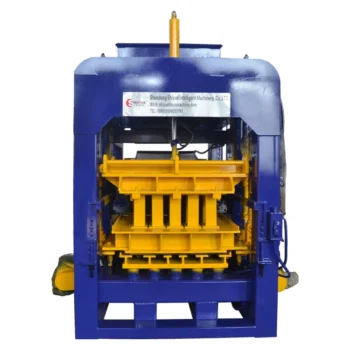
The 100 kN vibration force combined with hydraulic pressure determines how densely the concrete is compacted in the mould, which directly affects block compressive strength and surface finish. A mould area of 950 × 900 mm sets the pallet footprint, and that pallet size must match the curing racks and forklifts you already have on site — ordering a pallet size without checking your handling equipment is a mistake that surfaces only after the first production run. The Siemens PLC with the independently developed control program stores cycle parameters per mould, so when your operator switches from hollow blocks to pavers, the machine recalls the vibration frequency, pressure hold time, and feed cycle for that format rather than relying on manual adjustment. The 47 kW host power draw tells your electrician what dedicated circuit and breaker sizing to prepare before the container arrives. Moulds treated to 54–58 HRC through carburizing hold their dimensional accuracy across extended production runs, meaning block dimensions stay within tolerance longer before a mould swap is needed.
The Cost of Skipping the Voltage Conversation
I once tracked a shipment where the voltage was left as "standard" on the order sheet and nobody asked the buyer to confirm the local grid. The machine arrived, the operator threw the main breaker, and the PLC threw a fault code within seconds. A replacement drive had to ship air freight from the manufacturer, and the buyer’s block laying crew sat idle for the better part of a month. [NEED_CITE: common commissioning delays caused by voltage and frequency mismatch on imported machinery] The QT8-15 automatic block making machine in stock supports 220, 380, 415, and 440 V configurations, and confirming this before the machine leaves the factory is a five-minute conversation that prevents a multi-week standstill.
Why Buyers Source This Line Here
Block machinery is the single product focus, so the QT8-15 host, pallet feeder, stacker, batching machine, and mixer are specified as one integrated line rather than pulled from separate suppliers and hoped to communicate. The line configuration is set against your target block format and local aggregate availability, not a catalogue default that assumes materials you cannot source. Moulds are designed and manufactured in-house for the formats your market actually sells, with custom drawings accepted when standard formats do not match. The automation level on the line is selectable — buyers can take delivery with the SY-8 stacker now and add further pallet handling automation later without replacing the press. Pre-shipment documentation includes factory test records on your specified block format, so you see cycle performance before the machine is crated, not after it is bolted to your floor.
Documentation & Verification
- Factory test record run on your specified block format before crating
- Electrical schematic confirming voltage, frequency, and PLC display language
- Mould drawing and format list matching your order configuration
- Hydraulic circuit diagram for on-site maintenance troubleshooting
- Packing photographs documenting component condition at container loading
- CE declaration and customs documentation support for destination clearance
Installation, Commissioning & Support
- Foundation plan sized to the 5870 × 2220 mm host footprint and 10-ton operating weight
- Dedicated 47 kW power circuit with breaker sizing matched to your confirmed voltage
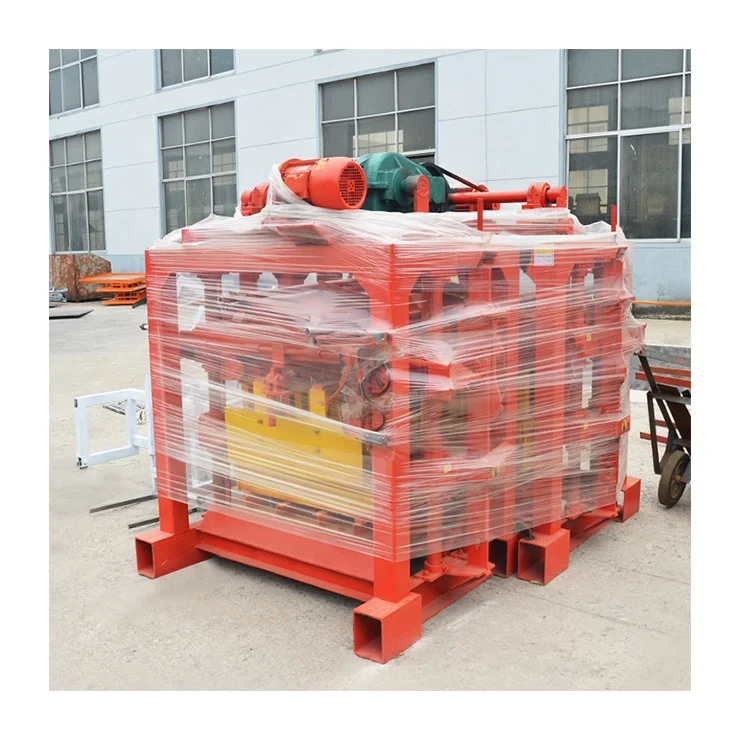
- Machine dismantled into defined modules for container loading with reassembly guide
- PLC parameter set loaded for your block format during on-site commissioning
- Operator training covering mould change procedure and daily maintenance checklist
- Wear parts list provided with first-order spare parts recommendation
Before You Request a Quote
Tell us the block formats your market sells, the daily volume your site requires, and the raw materials available locally — aggregate type, cement grade, and whether you plan to use fly ash or other supplementary materials. Confirm your site voltage, frequency, and preferred PLC display language so the electrical package is locked before dispatch. If you have existing curing racks, forklifts, or pallet stocks, share the dimensions so the line is configured around what you already own rather than forcing new handling equipment.
Frequently Asked Questions
Q: What does the standard stocked QT8-15 configuration include, and which items require a production run?
A: Stocked units typically include the host machine, hydraulic station, pallet feeder, brick receiver, PLD1200 batching machine, JS500 mixer, conveyor belt, hydraulic trolley, and SY-8 stacker as a matched set. Custom mould formats, non-standard voltage configurations outside the 220–440 V range, and add-on color feeding systems for pavers may require a short production lead. Your quotation will clearly separate stocked items from made-to-order components.
Q: How is container loading planned, and can I see the packing scheme before dispatch?
A: The line is dismantled into defined modules — host machine, hydraulic station, mixer, batching unit, and stacker — and a packing photograph set is taken at the time of loading. Your quotation includes the container count and type, and an arrival estimate is provided based on current sailing schedules from the port of shipment to your destination.
Q: Can the voltage and PLC language be confirmed before the machine ships?
A: Yes, and this is a mandatory step in the dispatch process. The buyer confirms destination voltage, frequency, and preferred PLC display language before the electrical package is finalized. The Siemens PLC program is loaded with the correct parameters, and the motor and hydraulic pump ratings are verified against the confirmed grid specification.
Q: Do standard moulds ship with the stocked machine, and what about first-order spare parts?
A: Standard moulds matching the stocked configuration are included and ship in the same container as the host machine. A wear parts list is provided with the quotation, and buyers are encouraged to include a first-order spare parts package in the same shipment to avoid a separate air freight order when the first replacement cycle arrives.
Q: How is the arrival estimate calculated, and what can delay it?
A: The arrival estimate is based on current vessel schedules from the loading port to your destination port at the time of order confirmation. Delays typically arise from incomplete customs documentation, unconfirmed electrical parameters that hold the machine at pre-shipment inspection, or destination port congestion. Providing complete import documentation early keeps the timeline intact.