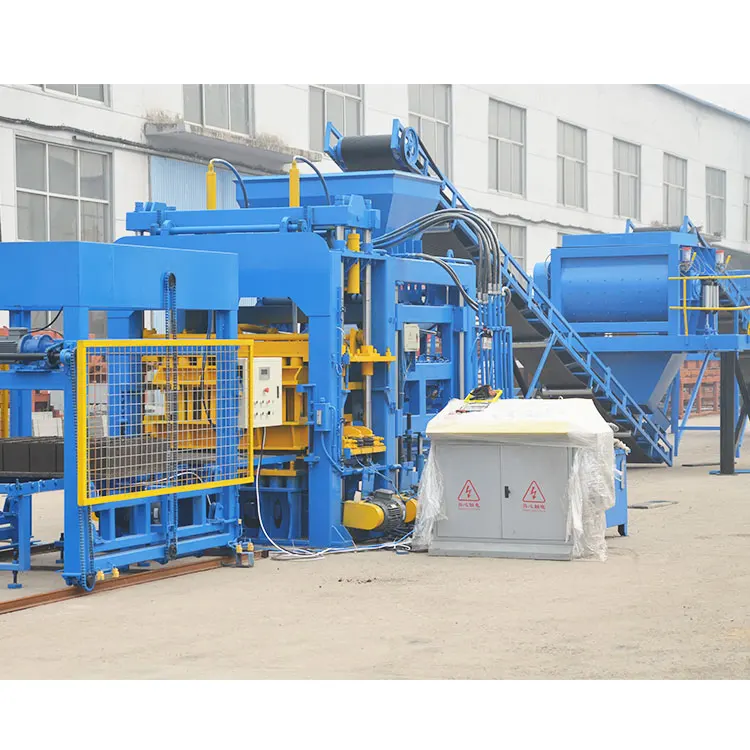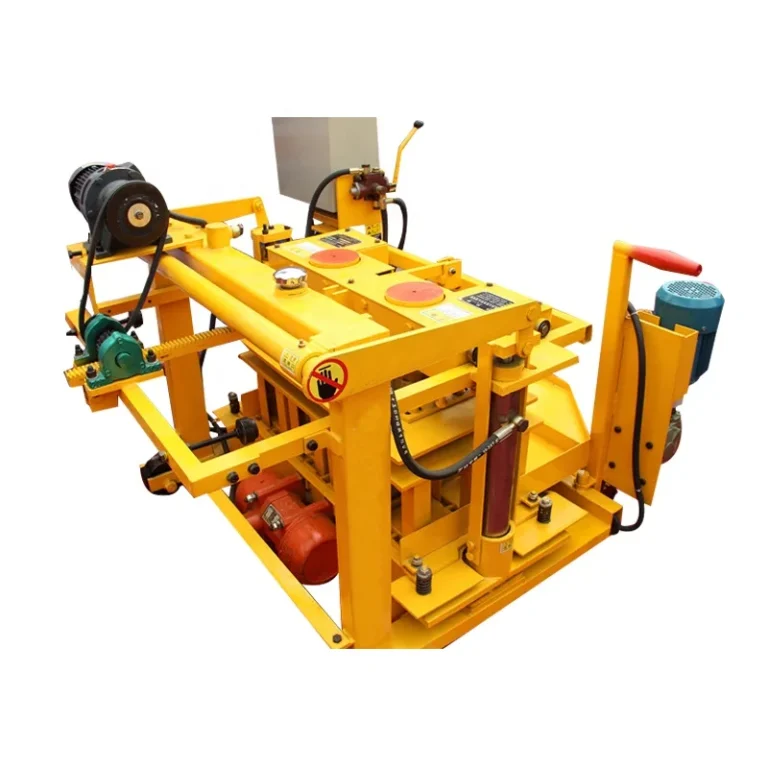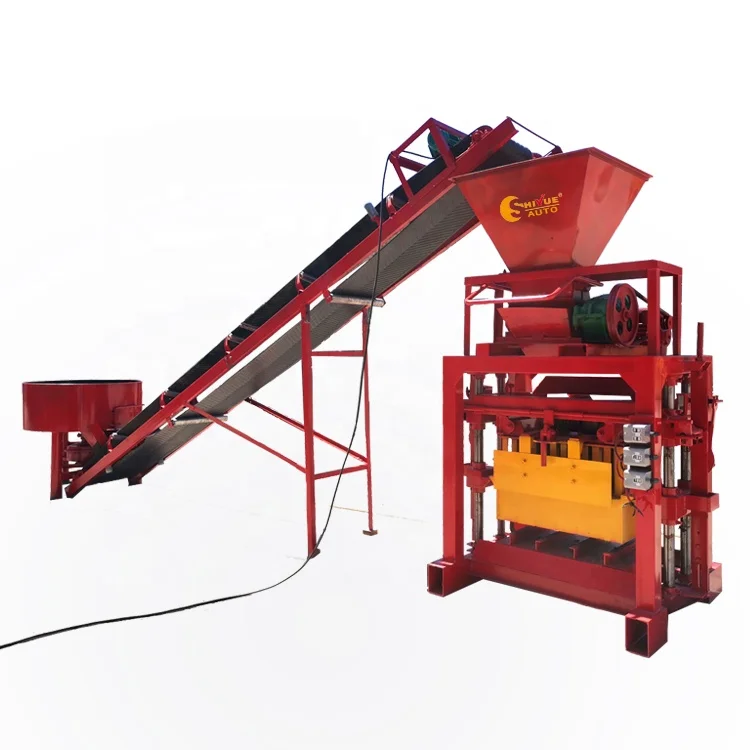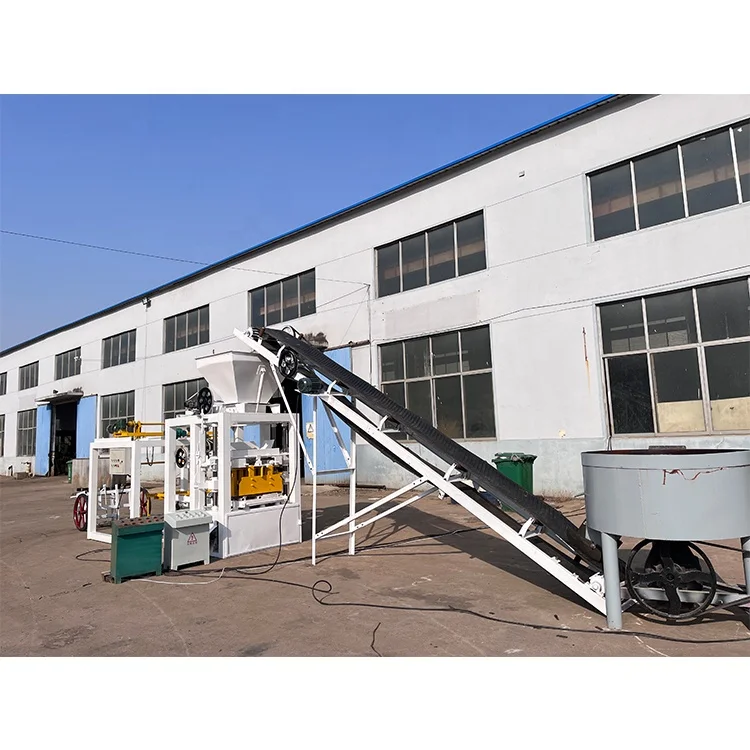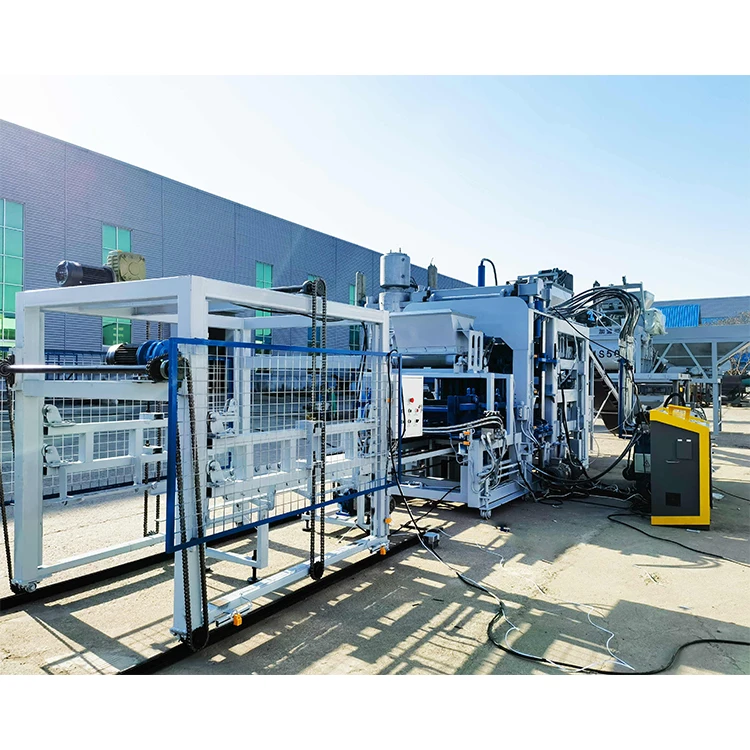

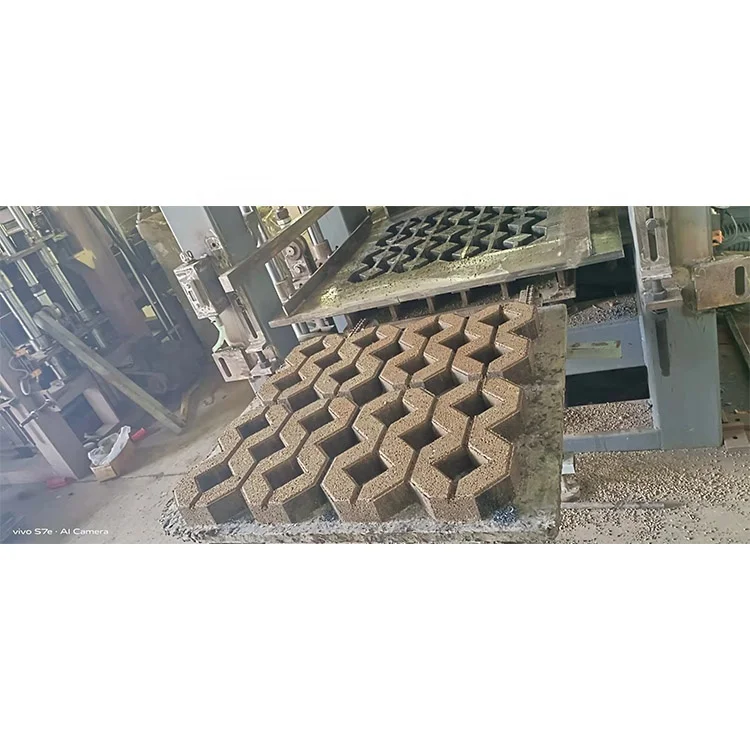


Description
Ready-to-Dispatch Equipment — the QT8-15 block machine in stock status is verified before quotation, ensuring container loading schedules align with your project timeline rather than factory backlog.
Technical Specifications
| Parameter | Value |
|---|---|
| Model | QT8-15 |
| Product Type | Automatic Hydraulic Concrete Block Making Machine |
| Overall Dimensions (L×W×H) | 8300 × 1860 × 3000 mm |
| Total Mass | 9 T |
| Rated Pressure | 21 MPa |
| Main Vibration Form | Platform Vibration |
| Vibration Frequency | 2800–4500 r/min |
| Vibration Force | 60 kN |
| Pallet Size | 950 × 900 mm |
| Molding Cycle | 15–25 s (basis not stated in source — confirm block format) |
| Overall Power | 55.5 kW |
| Demolding Method | Hydraulic |
| General Water Consumption | 12 T/Day |
| Control System | PLC with human-machine interface dialogue system |
| Automation Level | Fully automatic (material feeding, block stacking) |
| Certification | CE (verify applicability for shipped unit) |
Application Suitability
| Application | Material or Output |
|---|---|
| Hollow block production for residential and commercial walls | Crushed stone, sand, cement, fly ash blends |
| Solid block manufacturing for load-bearing structures | Gravel, sand, cement with standard moisture content |
| Paving block and colored paver runs for walkways and plazas | Fine aggregates, cement, pigment additives |
| Interlocking block and curbstone forming for infrastructure | Coarse aggregate mixes, slag, dust, cement |
| On-site production for housing project contractors | Locally sourced sand, gravel, and cement |
Why Lead Time Matters More Than Catalogue Output Figures
A machine sitting in a warehouse ready for container loading will start producing blocks weeks before a higher-output unit still on the assembly floor.
When buyers focus exclusively on quoted cycle times, they often overlook the gap between order confirmation and actual arrival at the port. A 15–25 second molding cycle only matters once the press is installed, commissioned, and running with your local mix [NEED_CITE: typical international freight transit times for heavy machinery]. I once worked with a contractor in East Africa who had a housing milestone tied to a specific month. The machine arrived six weeks later than expected because the factory needed to build his voltage configuration from scratch. If a QT8-15 block machine in stock matches your electrical standard and pallet size, the real advantage is not the cycle speed — it is the calendar days you recover.
Stock Configuration and What It Means for Your Timeline
When a QT8-15 block machine in stock is listed as available, the configuration reflects a standard build: 950 × 900 mm pallets, platform vibration at 60 kN, and PLC control with human-machine interface. This standard build eliminates the engineering lead time that custom voltage or non-standard pallet dimensions would introduce. Buyers with project deadlines benefit because the machine can move from factory floor to container within a compressed window, rather than waiting for component sourcing or control panel rewiring.
Dispatch Logistics and Container Loading Realities
The QT8-15 weighs 9 tonnes and measures over 8 meters in length, which means dismantling for container loading is unavoidable [NEED_CITE: standard container internal dimensions for heavy industrial equipment]. The main frame, hydraulic station, and control cabinet are separated and secured with steel bracing inside a 40-foot open-top or flat-rack container. Pallets and mould sets are bundled and loaded alongside. Knowing the machine is already assembled, factory-tested, and then broken down for shipment means the reassembly sequence on site follows a known procedure rather than a first-time fit.
How Platform Vibration and Hydraulic Pressure Interact on This Press
The 21 MPa rated pressure and 60 kN vibration force work together during each molding cycle. The hydraulic system compresses the concrete mix from above while the platform vibration at 2800–4500 r/min rearranges aggregate particles to eliminate voids. If your local sand carries high clay content, the vibration frequency may need adjustment within that range to achieve proper compaction without segregating the fines. The 950 × 900 mm pallet determines how many blocks are formed per cycle — a standard hollow block layout and a paver layout will produce different quantities per press stroke, which is why the 15–25 second cycle time cannot be translated into a single daily output number without specifying the format.
The Hidden Cost of Ordering a Machine That Is Not Yet Built
When a block press is built to order, the lead time extends beyond assembly. The factory must source the specific voltage transformer, wire the control panel for your frequency, and program the PLC display in your preferred language [NEED_CITE: electrical standard variations across African and Middle Eastern markets]. If any of these specifications are confirmed late, the machine sits partially assembled while components are procured. I have seen situations where a buyer lost an entire curing season because the machine arrived after the rainy period, when block demand peaks. A unit already in stock with your required electrical standard bypasses this risk entirely.
What Stock Procurement Actually Secures
The factory tests each QT8-15 before dismantling for shipment, so the hydraulic circuits, vibration motors, and PLC logic have already run under load. Mould options — hollow, solid, paver, interlocking, curbstone — are matched to standard pallet dimensions, so replacement moulds fit without modification. The 55.5 kW total power draw is documented in advance, allowing you to arrange the dedicated electrical circuit at your site before the container arrives. Standard documentation packages accompany each unit, reducing customs delays at destination ports where paperwork gaps can hold equipment for days.
Documentation & Verification
- Factory test record confirming hydraulic pressure and vibration performance before dismantling
- Packing photographs showing container loading configuration and bracing method
- Voltage and frequency confirmation sheet matching destination country electrical standard
- PLC display language verification documented prior to dispatch
- Mould drawing and format list for all included mould sets
- CE declaration where applicable to shipped configuration
Installation, Commissioning & Support
- Foundation must support 9-tonne static load across 8300 × 1860 mm footprint
- Dedicated 55.5 kW circuit with voltage and frequency confirmed before wiring
- Machine arrives dismantled; reassembly follows factory-documented sequence
- PLC human-machine interface calibrated on site with your local mix design
- Operator training covers mould change procedure and daily vibration system checks
- Hydraulic wear parts list provided with recommended first-order quantities
- Pallet handling and stacking system commissioned alongside the press
Preparing Your Inquiry
To confirm whether a QT8-15 block machine in stock matches your project window, share your target block format, daily volume requirement, and the raw materials available locally. Specify your site voltage, frequency, and preferred PLC display language so the factory can cross-reference available stock units. Include your pallet size preference and the curing area dimensions you have planned, as these determine whether the standard 950 × 900 mm pallets integrate with your existing forklift and rack layout.
Frequently Asked Questions
Q: Which QT8-15 units and mould formats are currently in stock and ready for dispatch?
A: Stock availability changes as orders are confirmed, so the factory verifies current inventory at the time of your inquiry. Standard mould sets for hollow blocks, solid blocks, and pavers on 950 × 900 mm pallets are typically held alongside complete machines. Requesting a stock check with your target format listed will return a confirmed availability status and the earliest possible dispatch date.
Q: What is the typical lead time from order confirmation to container loading?
A: When a QT8-15 block machine in stock is confirmed for your configuration, the window from payment receipt to container loading is measured in days rather than weeks. The machine undergoes a final factory test, dismantling, and securing for shipment. Custom electrical or control language requirements may extend this timeline if the stock unit does not already match your destination market standard.
Q: How is the machine dismantled and loaded into a shipping container?
A: The 8300 mm main frame, hydraulic station, and control cabinet are separated for loading into a 40-foot container. Steel bracing prevents movement during ocean transit. Pallets and moulds are bundled and secured alongside. Packing photographs are taken at each stage so your receiving team knows the dismantling sequence for reassembly on site.
Q: What documentation is provided for customs clearance at the destination port?
A: Each shipment includes a commercial invoice, packing list, bill of lading, and CE declaration where applicable. Voltage and frequency confirmation documents, factory test records, and the operation manual are also provided. If your destination port requires specific certificates or declarations, the factory prepares these before dispatch to avoid clearance delays.
Q: Can voltage and control language be confirmed and matched before the machine leaves the factory?
A: Yes. The factory confirms your site voltage, frequency, and preferred PLC display language before selecting a stock unit or adjusting the configuration. This step is completed before the final factory test so the QT8-15 runs under your actual electrical conditions. Confirming these details early prevents commissioning delays after the machine arrives at your block plant.