

Description
Stocked Dispatch Readiness — every QTJ4-24 unit leaves the Linyi yard only after electrical specs, control language, and spare parts lists are verified against the destination country, avoiding the three-week on-site rewiring delays I have seen stall earlier shipments.
Technical Specifications
| Parameter | Value |
|---|---|
| Model | QTJ4-24 |
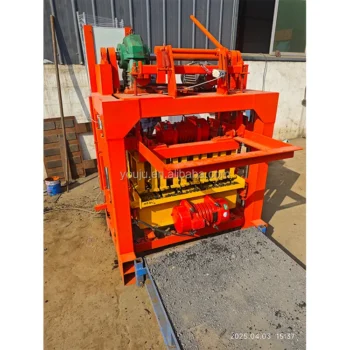
| Product Type | Semi-Automatic Concrete Block Making Machine |
| Machine Type | Stationary, Platform Vibration |
| Overall Dimensions (L×W×H) | 3600mm × 1700mm × 2560mm (working state) |
| Total Mass | 1750 kgs |
| Overall Power | 14.25 kW |
| Vibration System | Lower platform (2 × 3 kW motors) + Upper vibration (1.5 kW attached device) |
| Pallet Size | 850mm × 450mm |
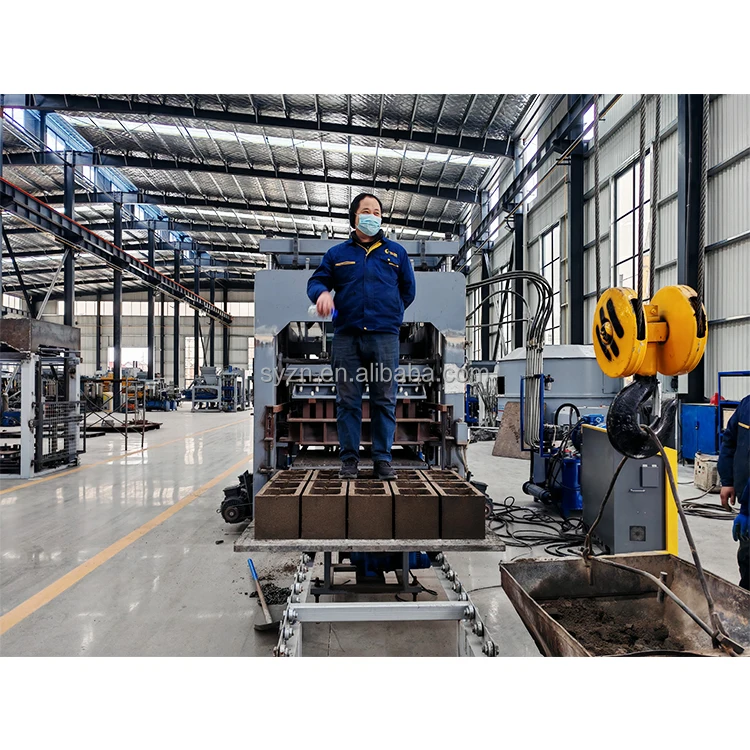
| Mould Format Examples | 390×190×190mm (4 pcs/mould); 240×115×53mm (21 pcs/mould) |
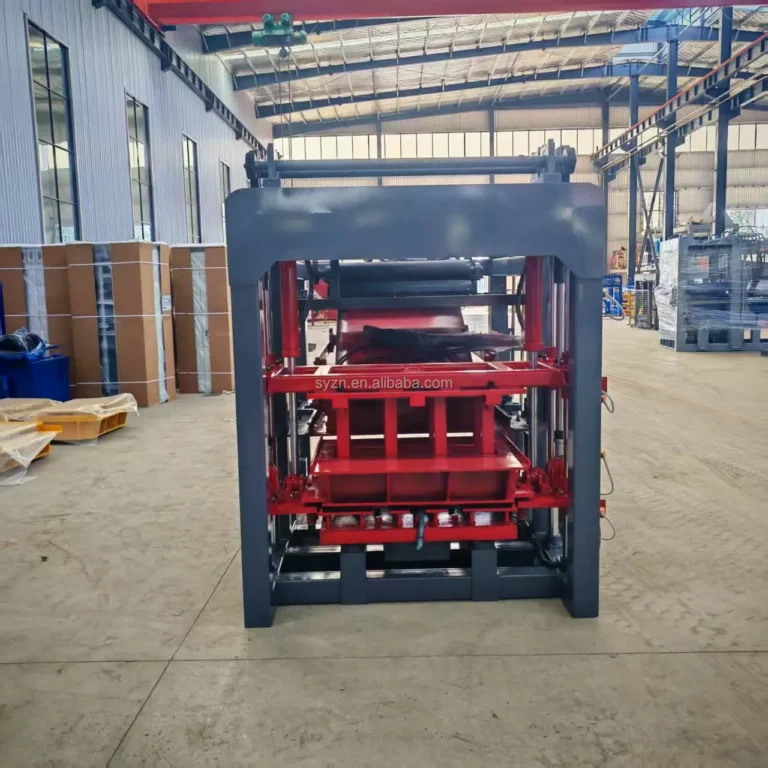
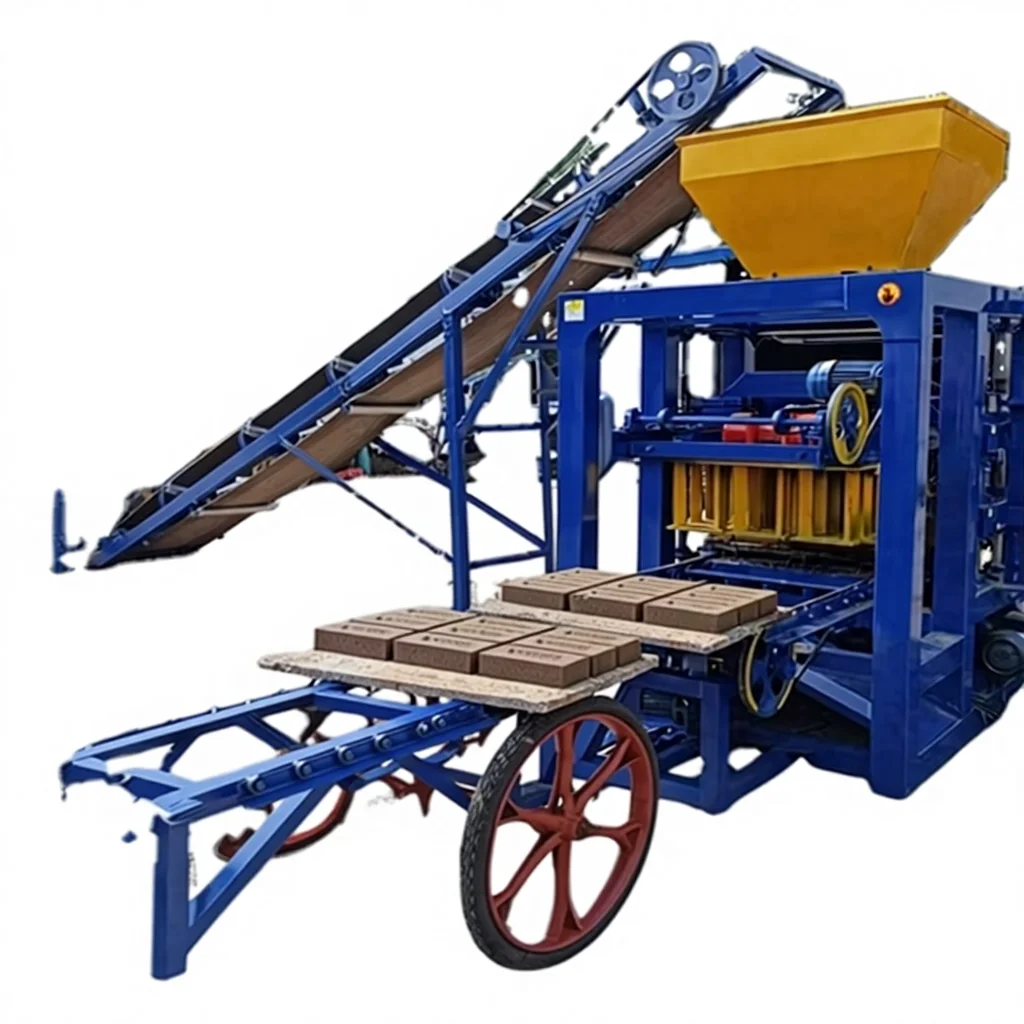
| Frame Construction | Dragon gate style, super steel, four wear-resisting vertical shafts |
| Elevating System | Cone-shape motor + JZQ250 speed reducer + V-belt drive |
| Delivery Device | Cycloidal pin wheel speed reducer + chain + V-belt + self-conveying frame |
| Material Feeding | Material releasing hopper + material storing hopper (bolted to frame) |
| Cycle Time | 24 seconds (basis not stated in source — confirm block format / material / thickness) |
| Control System | Electronic controlling part (PLC type to be confirmed) |
| Voltage & Frequency | To be confirmed before ordering |
| Stacking Method | Manual pallet handling; optional auto stacker available |
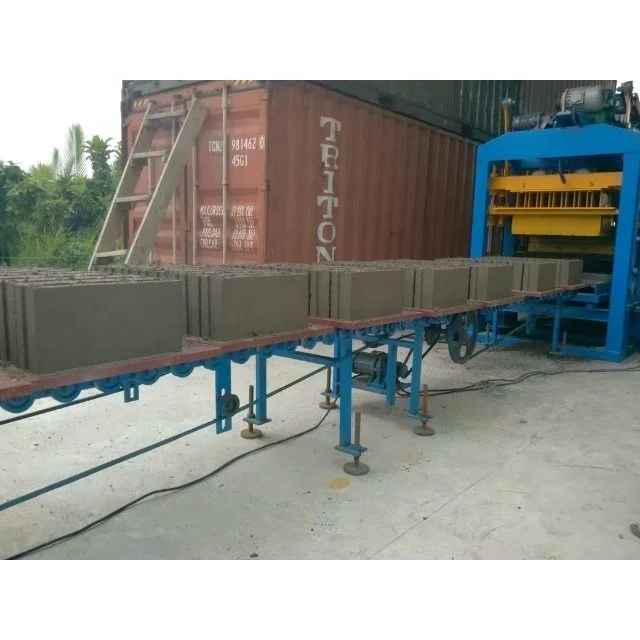
| Supporting Equipment (Basic) | JQ350 pan mixer, 6m belt conveyor, hand trolley |
Application Suitability
| Application | Material or Output |
|---|---|
| Small-scale hollow block production | Crushed stone, sand, and cement mixes for local construction |
| Solid brick manufacturing | Fly ash, clay, or aggregate blends for masonry walls |
| On-site contractor block making | Locally sourced aggregate with standard Portland cement |
| First plant entrepreneur setup | Low-investment entry using regional sand and gravel |
Why Voltage Confirmation Must Precede the Bill of Lading
A QTJ4-24 block machine in stock can ship within days, but an unchecked voltage spec will halt your project for weeks once the container arrives.
I watched a 4-24 unit sit idle on an African job site for three weeks last year because the local supply was single-phase 220V while the machine had been wired for three-phase 380V at the factory. The rewinding work had to be done locally, costing the contractor both downtime and a second electrician call-out. That delay is entirely avoidable when the electrical check happens before the crate is closed. Every export-bound unit should carry a tag showing confirmed voltage, frequency, and motor winding configuration matched to the buyer’s grid [NEED_CITE: voltage and frequency standards by export market].
Dispatch Timing and What "In Stock" Actually Means
When buyers search for a QTJ4-24 block machine in stock, the question is not just whether the press exists on a warehouse floor. It is whether the mixer, belt conveyor, pallet set, and control panel are also staged and matched to the same destination voltage. A complete basic line — the JQ350 pan mixer, 6-meter belt conveyor, and hand trolley — travels in the same container, so the plant can begin producing blocks as soon as the foundation cures. Confirming stock availability in writing, with a dispatch lead time and estimated arrival date, turns a catalogue promise into a project schedule.
Container Loading and Machine Dismantling for Shipment
The 3600mm × 1700mm × 2560mm working envelope of the QTJ4-24 does not go into a container as one piece. The frame, vibration platform, hopper assembly, and elevating system are broken down into labeled sub-assemblies. Each sub-assembly gets photographed before crating, and a packing list with piece count travels with the shipment. Buyers working to a tight project deadline need this dismantling plan confirmed before dispatch so that the reassembly sequence on site matches the order in which components are unloaded [NEED_CITE: container loading practices for heavy industrial machinery].
Platform Vibration, Pallet Size, and Block Density
The QTJ4-24 uses a dual-motor lower platform vibration system rated at 2 × 3 kW, supplemented by a 1.5 kW upper vibration device. This combination compacts the concrete mix from both directions, which matters when you are producing hollow blocks at 390×190×190mm where wall thickness is limited and density must be uniform. The 850mm × 450mm pallet size determines how many blocks sit on each board and, critically, whether those loaded pallets fit the curing racks and forklift tines the buyer already owns. Mismatched pallet dimensions are a frequent cause of bottleneck at the curing stage, not at the press itself. The dragon gate frame with four wear-resisting vertical shafts keeps the mould aligned through thousands of vibration cycles, preventing the uneven wall thickness that leads to block rejection.
The Hidden Cost of Skipping the Pallet and Curing Audit
Ordering a block press without verifying pallet compatibility means you may receive a machine that produces perfectly good blocks — and then has nowhere to put them. If the 850×450mm pallets do not match the spacing on your existing curing racks, every wet block must be restacked by hand before it enters the curing area. On a semi-automatic line with manual pallet handling, that restacking step adds labor and breaks the rhythm of the press cycle, which is why the first question I ask is always about the curing yard, not just the machine footprint [NEED_CITE: pallet handling and curing area planning for block plants].
Why Procurement Through This Dispatch Channel Works
Stock availability is confirmed in writing with a named dispatch date, not a range. The QTJ4-24 leaves as a matched system — press, mixer, conveyor, and trolley — rather than assembled from separate suppliers who ship on different schedules. Electrical specifications, control language, and PLC display settings are locked to the buyer’s country before the factory test runs. Packing photographs and a container loading plan are shared before the container doors close, so the buyer can verify dismantling and bracing. Moulds and wear parts lists are included in the documentation package, meaning the first replacement cycle does not become a search for components.
Documentation & Verification
- Factory test record run on your specified block format before dispatch
- Voltage, frequency, and control language confirmation sheet signed pre-shipment
- Machine specification sheet with pallet size and mould format list
- Packing photographs and container loading plan shared before departure
- Operation and maintenance manual in the confirmed control language
- Wear parts and mould list with part numbers for reordering
Installation, Commissioning & Support
- Foundation must support 1750 kgs total mass plus dynamic vibration load across the 3600mm footprint
- Dedicated three-phase circuit required matching confirmed voltage and frequency before energizing the 14.25 kW total load
- Machine arrives dismantled; reassembly follows labeled sub-assembly sequence with V-belt tensioning and chain alignment checks
- First production run verifies cycle timing and block density against the buyer’s local aggregate and cement mix
- Operator training covers mould change procedure, hopper feeding rhythm, and manual pallet handling workflow
- Wear parts list identifies vertical shaft bushings, vibration motor mounts, and V-belts for initial spare stock
What to Include in Your Inquiry
To confirm stock availability and match the QTJ4-24 to your project timeline, share the block formats you intend to produce, the local aggregate and cement type available, and your destination voltage and frequency. Include the curing area dimensions and forklift specifications you already have on site so the pallet size can be validated. If you need the control panel display in a specific language, state that upfront so the electronic controlling part is configured before the factory test.
Frequently Asked Questions
Q: Is the QTJ4-24 currently in stock and what is the dispatch lead time?
A: Stock status and dispatch timing are confirmed in writing at the inquiry stage. The basic line — press, JQ350 pan mixer, 6m belt conveyor, and hand trolley — ships together. Dispatch lead time depends on the electrical and language configuration required for your destination, which must be finalized before the factory test and container loading.
Q: What block formats can this machine produce and how many pcs per mould?
A: Standard mould examples include 390×190×190mm hollow blocks at four pieces per mould and 240×115×53mm solid bricks at twenty-one pieces per mould. Custom moulds are available to buyer drawings. Confirm which format you will produce most often so that daily output calculations are based on the correct cycle and pallet count.
Q: What supporting equipment is included and what needs to be sourced locally?
A: The basic package includes the JQ350 pan mixer, 6m belt conveyor, and a hand trolley. Optional items such as an auto stacker, block clamper, diesel generator, wheel loader, or forklift can be added or sourced on arrival. Buyers typically source cement, aggregate, water supply, and curing area infrastructure locally.
Q: Can the voltage and frequency be confirmed for my country’s electrical standard before shipping?
A: Yes, voltage and frequency are confirmed during the inquiry stage and locked before production or final assembly. The motor winding configuration and control panel settings are matched to your grid specification. This step is mandatory before the factory test and is documented in the pre-shipment verification sheet.
Q: How is the machine packed and loaded into a container for shipment?
A: The QTJ4-24 is dismantled into labeled sub-assemblies including the frame, vibration platform, hopper, and elevating system. Each piece is photographed and listed on a packing sheet. The container loading plan is shared with the buyer before the container doors are sealed, so the unloading and reassembly sequence is clear on arrival.