


Description
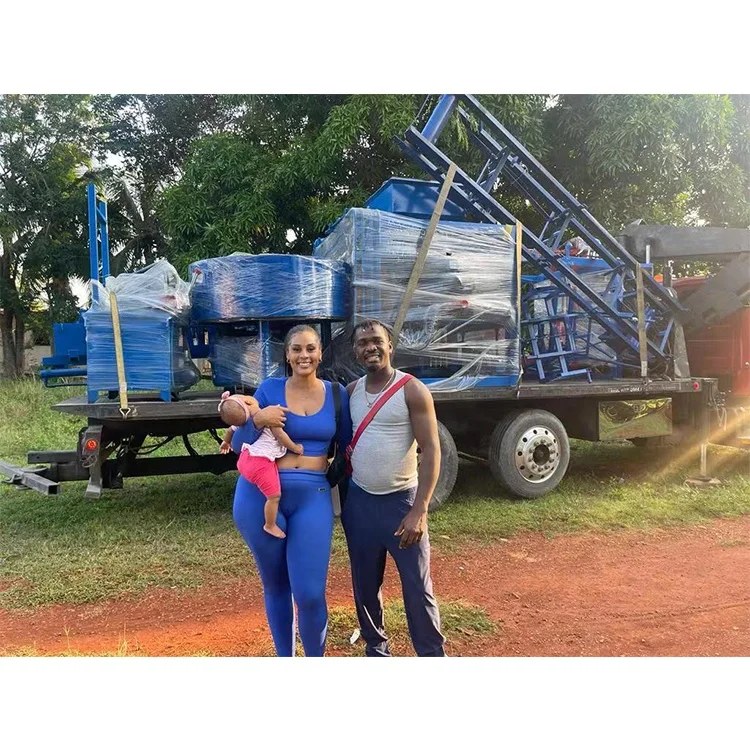
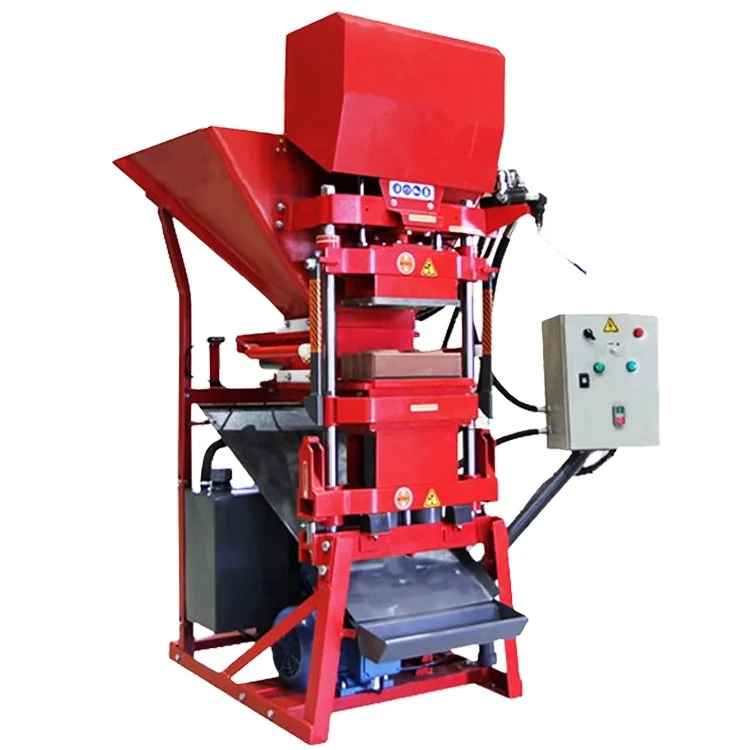
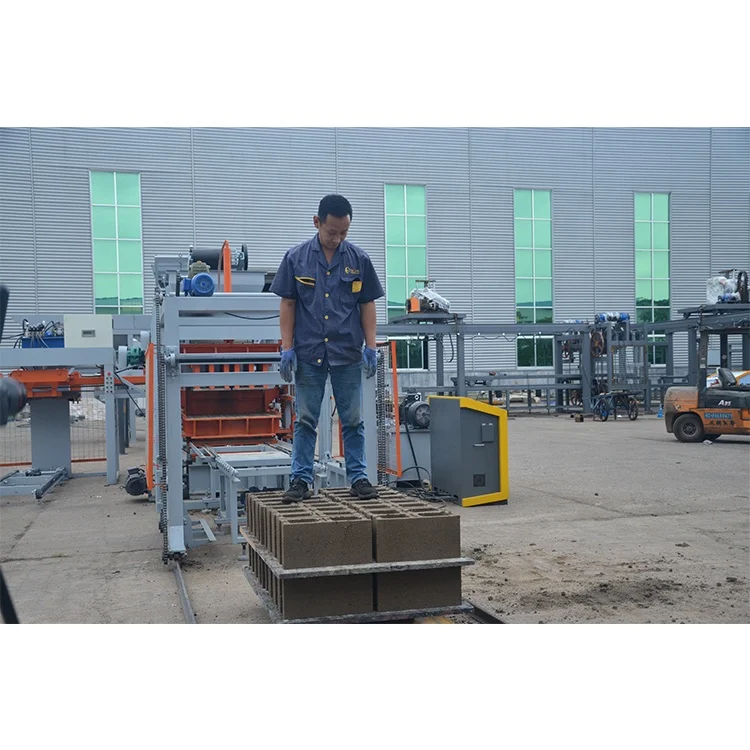
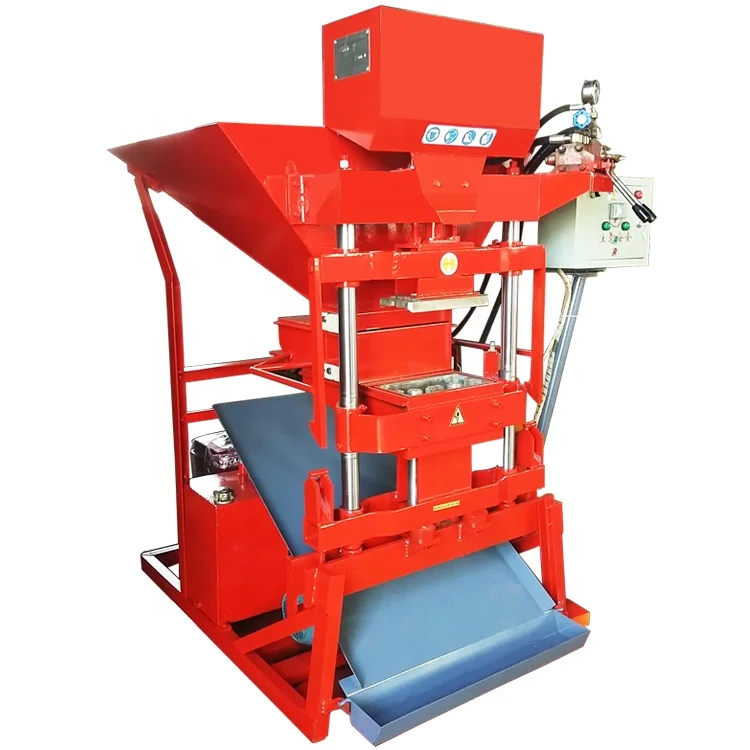
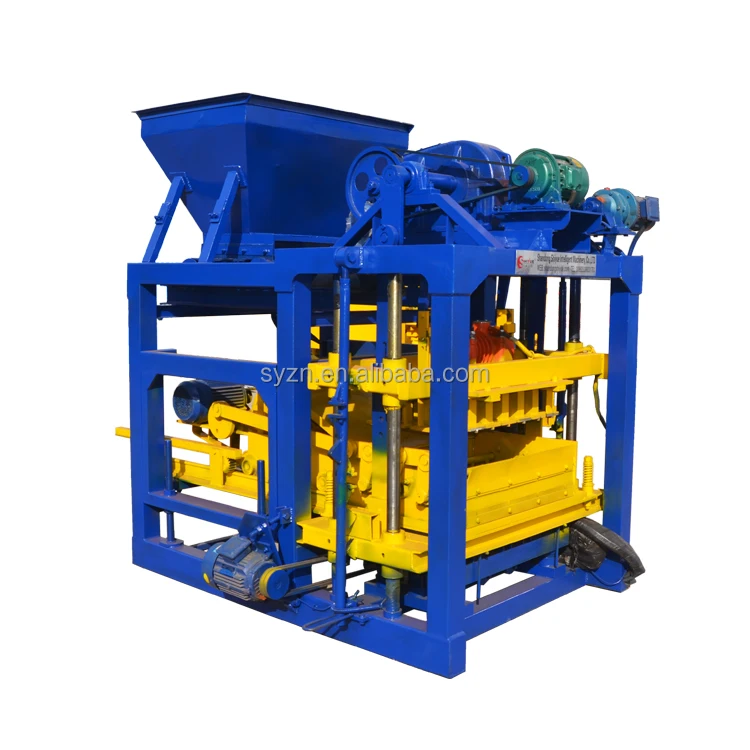
Stocked readiness — QTJ4-25 block manufacturing machine held in inventory for prompt container loading and dispatch to meet your project timeline.
Technical Specifications
| Parameter | Value |
|---|---|
| Model | QTJ4-25 |
| Product Type | Semi-Automatic Concrete Block Making Machine |
| Overall Dimensions (L×W×H) | 3060×1730×2580 mm |
| Net Weight | 4 T |
| Vibration Force | 45 kN |
| Cycle Time | 25 s |
| Pallet Size | 850×550 mm |
| Block Height Range | 40–280 mm |
| Workshop Area | 50–150 m² |
| Material Storage Area | 300–500 m² |
| Belt Conveyor Length | 8 m |
| Mixer Model | JQ500 |
| Motor Brand | Siemens or ABB |
| Automation Level | Semi-automatic |
| Voltage & Frequency | 380V / 3-phase / 50Hz (customizable to local voltage) |
| Control System | Electric control |
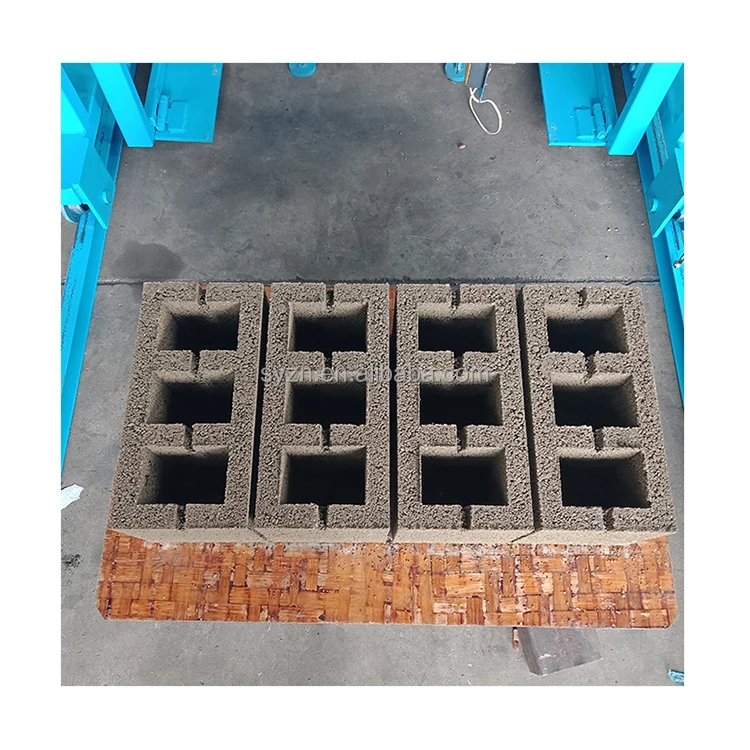
| Theoretical Output Capacity | 480 pcs/h based on 400×200×200mm hollow block, 4 pcs/mould |
| Theoretical Output Capacity | 600 pcs/h based on 400×150×200mm hollow block, 5 pcs/mould |
| Theoretical Output Capacity | 840 pcs/h based on 400×100×200mm hollow block, 7 pcs/mould |
| Theoretical Output Capacity | 2880 pcs/h based on 240×115×53mm solid brick, 24 pcs/mould |
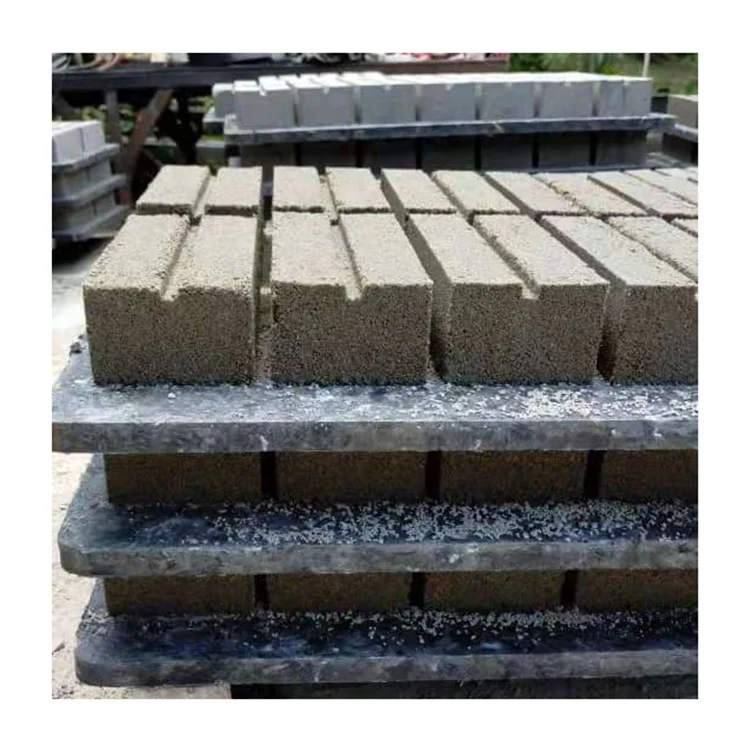
| Mould Format Compatibility | Hollow block, solid block, paver, interlocking block, curbstone, colored paver, riverside brick, revetment brick, grassed brick |
| Mould Change Method | Manual |
| Warranty | 1 year (excluding wearing parts) |
| Assembly State | Fully assembled, nude pack or plastic wrap |
Application Suitability
| Application | Material or Output |
|---|---|
| Small to medium block production plants | Hollow blocks and solid bricks from cement, fly ash, and local aggregate |
| On-site construction block production | Pavers and interlocking blocks produced directly at housing project locations |
| First block plant for entrepreneurs | Mixed format output including curbstones and grassed bricks with low initial setup |
| Building material distributors | Inventory-ready machine for quick resale or in-house production of colored pavers |
| Contractor producing for development projects | Riverside and revetment bricks from crushed stone and cement blends |
What "Ready to Ship" Actually Means for Your Deadline
A machine on the floor today is worth more than a catalogue promise next quarter.
When a housing project stalls because blocks are not curing in time, the cost compounds daily — crews standing by, formwork sitting idle, penalties ticking. I have watched contractors lose entire phases because a block machine sat in a factory waiting for a component that was never in stock. The QTJ4-25 block machine in stock fast delivery matters because the dispatch clock starts the moment payment clears, not weeks later when production finally slots your order. [NEED_CITE: project delay costs in block construction timelines]
Dispatch Timing and Container Loading for the QTJ4-25
The QTJ4-25 ships fully assembled with nude packing or plastic wrap, meaning no reassembly of the main frame is required at your site. This semi-automatic configuration reduces the on-site commissioning window since the JQ500 mixer, 8 m belt conveyor, and electric control cabinet are pre-wired and tested before the QTJ4-25 block machine in stock fast delivery leaves the warehouse.
Arrival Estimates Quoted Before You Commit
Container loading plans are confirmed at the inquiry stage, including how the 3060×1730×2580 mm frame fits within standard container dimensions and whether partial dismantling of the hopper or conveyor is needed. We provide packing photographs before the container doors close, so you see exactly what arrives at your port. Arrival estimates factor in destination port and typical shipping lanes, quoted in writing before production finalization. [NEED_CITE: container loading standards for industrial block machinery]
Reading the Specs That Determine Your Daily Output
The 25-second cycle time governs every format this machine produces, but actual hourly output shifts with the block you choose. At 480 pieces per hour on 400×200×200mm hollow blocks with 4 cavities per mould, a single shift delivers a predictable volume. Switch to 240×115×53mm solid bricks at 24 cavities per mould, and the same cycle time yields 2880 pieces per hour — yet the curing area demand changes entirely. The 850×550 mm pallet size must align with the forklift and curing racks already on your site; a mismatch here means pallets sit unstacked while workers shuffle them by hand. The 45 kN vibration force works in concert with the hydraulic system to compact the mix, and if your local aggregate is volcanic ash or lightweight pumice rather than crushed granite, the vibration duration and pressure may need adjustment to achieve target block strength. Motor selection between Siemens and ABB affects spare part availability in your region — a detail that matters the first time a replacement is needed.
When Fast Delivery Meets the Wrong Configuration
Ordering a stocked machine is only half the equation. If the voltage confirmed at inquiry does not match what your site actually receives, commissioning halts the moment the electrician opens the panel. I have seen a 380V machine arrive at a site running 415V, and the motor protection tripped within minutes of the first cycle. Similarly, if the 850×550 mm pallets do not match the curing rack spacing your existing forklift was bought for, every pallet becomes a manual handling problem. These are not warranty claims — they are configuration oversights that no amount of stock availability can fix once the container is sealed. [NEED_CITE: voltage mismatch incidents in exported machinery]
Why Buyers Source This Model Through Our Stock Program
Block machinery is our single focus, so the QTJ4-25 is specified as a matched system — machine, mould, pallet, mixer, and conveyor — rather than assembled from separate suppliers. Configuration is set against your actual mix design and local aggregate, not a catalogue default. Moulds for the formats your market sells are included, with custom drawings available when standard formats do not match. Voltage, frequency, and control language are confirmed in writing before dispatch, eliminating the commissioning delays that plague machines shipped with assumptions. Installation support and operator training are part of the delivery scope, not an afterthought. [NEED_CITE: block machine commissioning best practices for export markets]
Documentation & Verification
- Line layout showing the 50–150 m² workshop footprint with conveyor and mixer placement
- Capacity calculation stating the block format assumed for each output tier
- Voltage and control language confirmation signed off before dispatch
- Factory test record on your specified block format before container loading
- Packing photographs showing machine condition before container doors close
- Customs documentation package supporting smooth port clearance at destination
Installation, Commissioning & Support
- 50–150 m² workshop area required with level concrete floor to support the 4 T net weight
- 380V 3-phase 50Hz supply with dedicated circuit; voltage confirmed to your local standard before shipment
- Machine arrives fully assembled; conveyor and hopper may require minor on-site positioning
- First cycle run with your local aggregate and mix design to verify block density and strength
- Operator training covering mould change procedure and JQ500 mixer loading sequence
- Wear parts list provided at delivery with reorder lead times for hydraulic and vibration components
What We Need to Confirm Before Loading
Tell us which block format your market actually moves — hollow, solid, paver, or interlocking — and the daily volume your project requires. Share your local aggregate type and particle size, since the 45 kN vibration force must be matched to your mix. Confirm your site voltage and frequency so the motor and control panel arrive ready to run.
Frequently Asked Questions
Q: What models are currently in stock and how soon can they ship?
A: The QTJ4-25 semi-automatic block machine is held in inventory and can be prepared for container loading once voltage and control specifications are confirmed in writing. Dispatch lead time depends on whether custom moulds or voltage adjustments are required. We provide a written arrival estimate covering the shipping lane to your destination port before you commit.
Q: How is the machine packed and loaded into the container?
A: The QTJ4-25 ships fully assembled with nude packing or plastic wrap. The 3060×1730×2580 mm frame may require partial dismantling of the hopper or belt conveyor to fit standard container dimensions. Packing photographs are shared before the container is sealed, and a loading plan is confirmed at the inquiry stage.
Q: What is the estimated arrival time from dispatch to destination port?
A: Arrival estimates are quoted in writing based on your destination port and typical shipping lane durations. We factor in container booking lead time and port congestion where known. The estimate is provided before payment so you can plan your project timeline around a confirmed delivery window.
Q: Can voltage and frequency be matched to my country’s standard before shipment?
A: Yes. The standard 380V 3-phase 50Hz configuration is customizable to your local voltage and frequency. This is confirmed in writing before dispatch to prevent commissioning delays. Motor selection between Siemens and ABB is also matched to spare part availability in your region.
Q: What documentation is included for customs clearance?
A: Each QTJ4-25 shipment includes customs documentation support, a factory test record, voltage and control confirmation, and packing photographs. Where applicable, a CE declaration is provided. All documents are prepared before dispatch to support smooth clearance at your destination port.