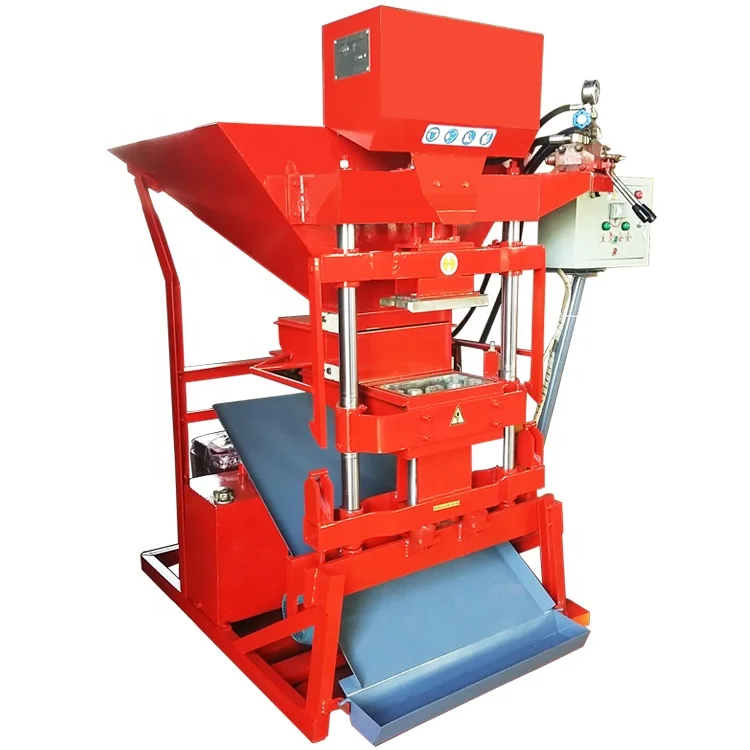
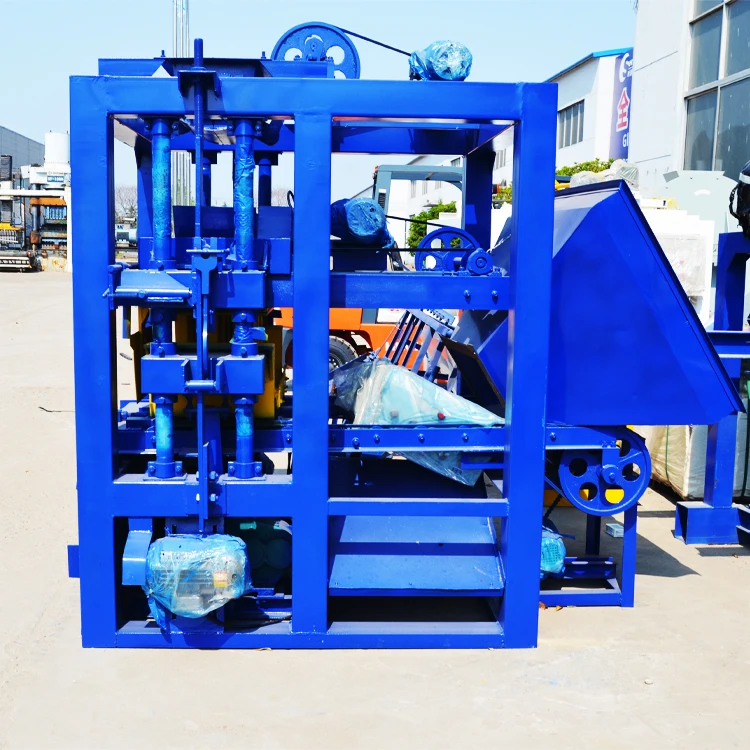
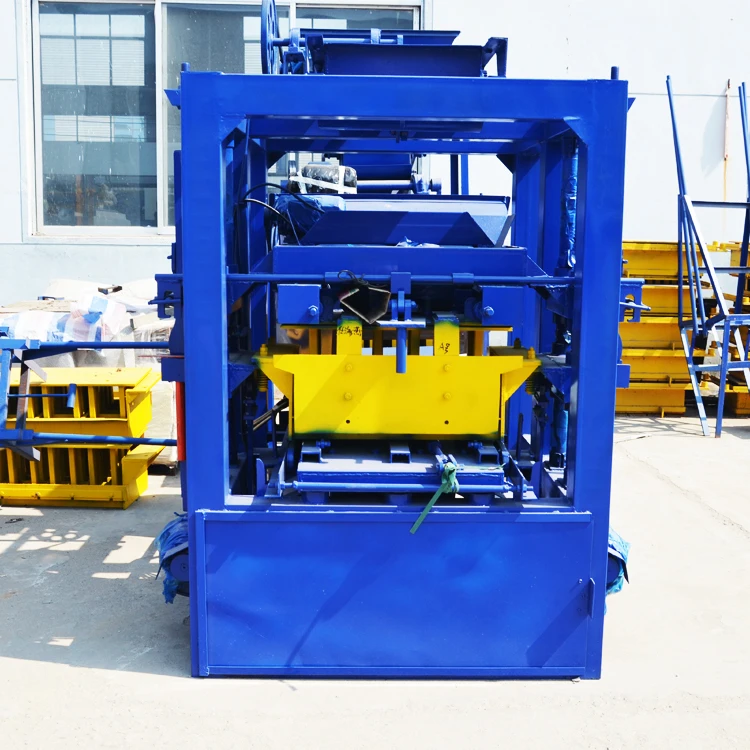


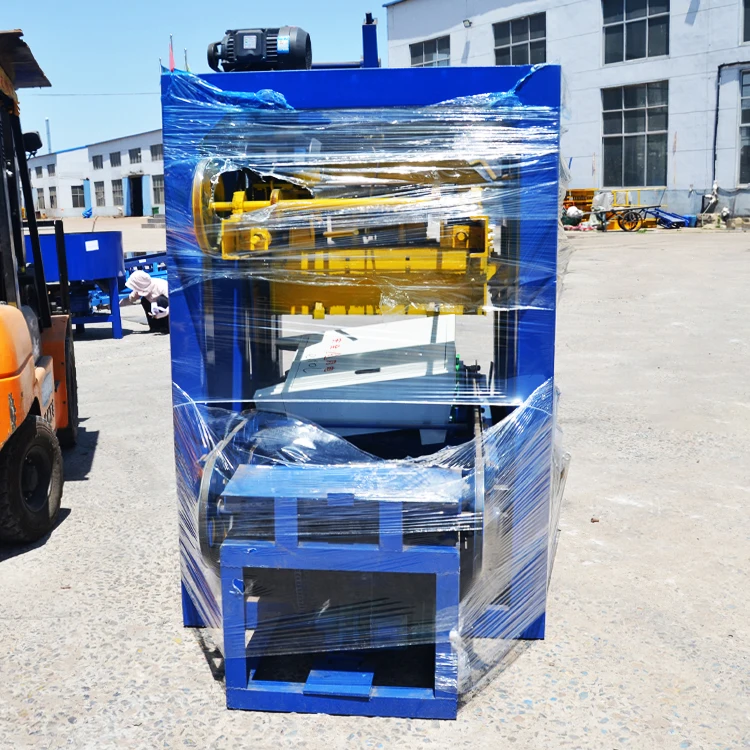
Description
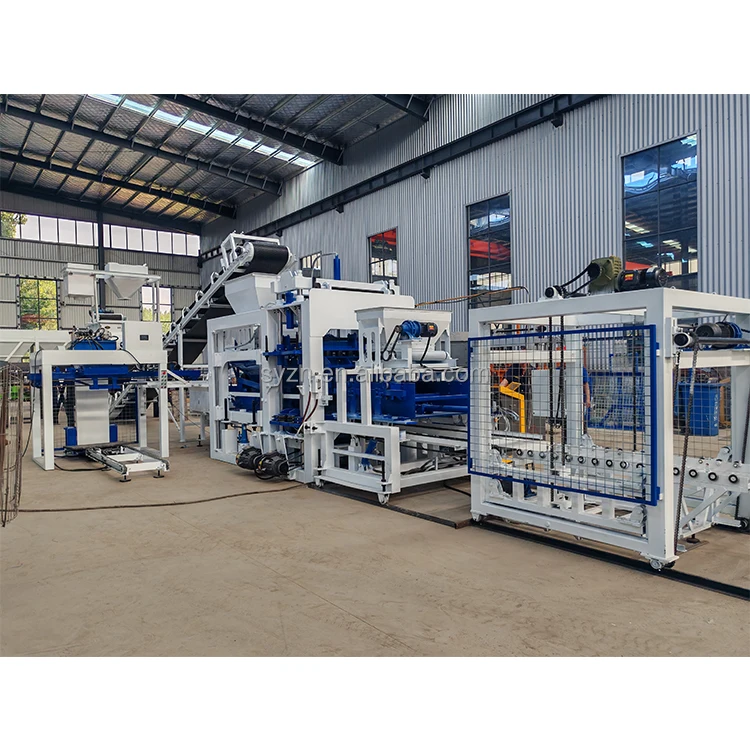
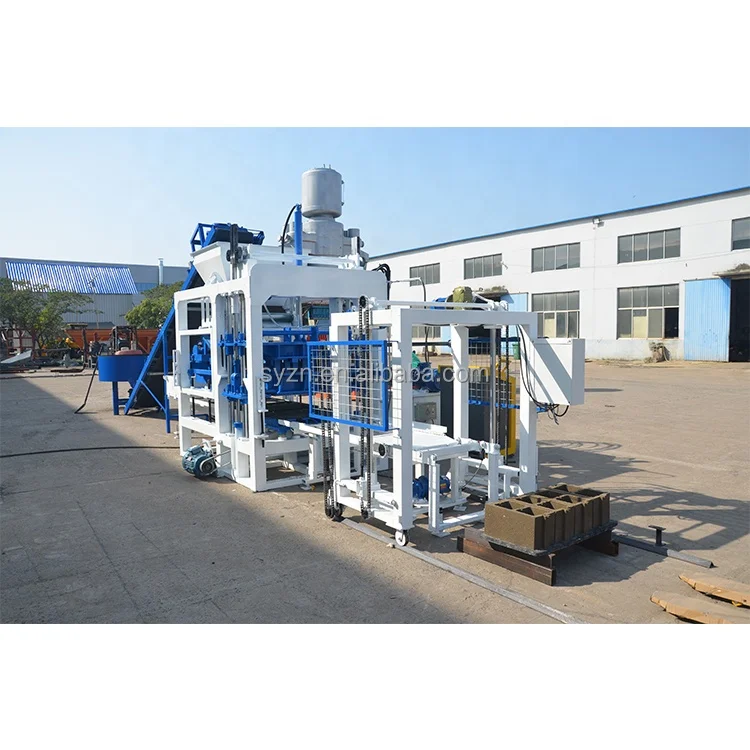
Dispatch-Ready Configuration — the QTJ4-26 block making machine ships as a tested, container-loadable system rather than a built-to-order project, keeping your site timeline intact.
Technical Specifications
| Parameter | Value |
|---|---|
| Model | QTJ4-26 |
| Product Type | Semi-Automatic Concrete Block Making Machine |
| Overall Dimensions | 2060 × 1730 × 2580 mm |
| Net Weight | 1800 kg |
| Moulding Cycle | 26 s |
| Vibration Frequency | 4200 r/min |
| Exciting Power (Vibration Force) | 35.5 kN |
| Total Power | 14.25 kW |
| Mixer Model | JQ350 |
| Pallet Size | 850 × 450 × 20 mm |
| Automation Level | Semi-automatic, four guide pillars, automatic mould movement |
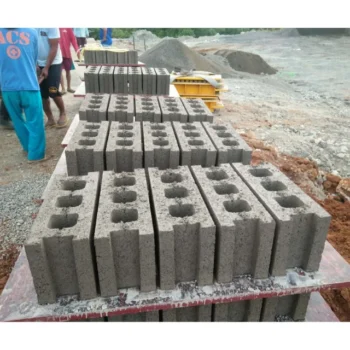
| Applied Products | Concrete hollow blocks (8 inch, 6 inch), solid bricks |
| Raw Materials | Crushed stones, sand, cement, dust, fly ash |
| Output — Hollow Block 390×190×190 mm | 4 pcs/mould, 480 pcs/h, 3800 pcs/8 hr (basis: stated format) |
| Output — Hollow Block 400×150×200 mm | 5 pcs/mould, 600 pcs/h, 4800 pcs/8 hr (basis: stated format) |
| Output — Solid Brick 240×115×53 mm | 18 pcs/mould, 2100 pcs/h, 17000 pcs/8 hr (basis: stated format) |
| Voltage & Frequency | Configurable to buyer’s local grid (basis to be confirmed) |
| Control System / PLC Language | Configurable (basis to be confirmed) |
Application Suitability
| Application | Material or Output |
|---|---|
| Small-scale hollow block plant | 8 inch and 6 inch concrete hollow blocks from crushed stone, sand and cement |
| On-site contractor block production | Solid bricks and hollow blocks using locally sourced aggregates and fly ash |
| Distributor product range expansion | Mixed-format runs of hollow blocks and solid bricks for regional supply |
| First block plant for entrepreneurs | Entry-level semi-automatic production with manageable footprint and power draw |
Why "In Stock" Matters More Than Cycle Time When a Deadline Is Real
A stocked QTJ4-26 block making machine eliminates the production lead time that pushes site schedules past their breaking point.
Contractors and first-time plant owners often compare machines on cycle seconds and theoretical output, then discover the unit they chose has a multi-week build queue. By the time it clears customs, the project phase that needed blocks has already passed. [NEED_CITE: typical lead time impact on construction project phases] With the QTJ4-26 block machine in stock, the conversation shifts from "when will it be built" to "when will it arrive," and that distinction changes how you plan labour and material procurement around the delivery date.
Dispatch Logistics Built Around a Single Container
The QTJ4-26 block machine in stock configuration fits inside a standard 20GP container along with approximately 500 production pallets. This means the press, mixer, and pallet supply travel as one consolidated shipment rather than split across multiple bookings. For buyers working against a project deadline, a single container simplifies customs clearance and reduces the chance of partial shipments sitting at port while the remaining cargo is still in transit.
Arrival Timing You Can Quote to Your Site Manager
Once the QTJ4-26 block making machine is loaded and dispatched, the ocean transit window becomes the primary variable. We quote an arrival estimate upfront based on your destination port, so your site team can schedule foundation work, power connection, and operator availability around a known date rather than a vague production completion notice. [NEED_CITE: ocean freight transit variables by destination region]
Dismantling Method and Packing Transparency
The machine is dismantled into container-loadable sections before dispatch. We provide packing photographs showing how each component is secured, which blocks occupy which position, and how the pallets are stacked around the main frame. This documentation lets your unloading crew plan crane or forklift positioning before the container door opens, cutting idle time on arrival day.
Specifying What Actually Affects Your Block Output
The 35.5 kN vibration force works alongside upper mould pressing to compact the mix into consistent density across each cavity. This is a vibration-based compaction system rather than a high-pressure hydraulic press, which keeps the total power requirement at 14.25 kW — manageable on a standard site generator or small transformer connection. The 26-second moulding cycle holds across the listed hollow block and solid brick formats, giving you a predictable rhythm for pallet handling and curing area rotation. Pallet dimensions at 850 × 450 × 20 mm determine your curing rack spacing and forklift tine width, so confirming these match your existing setup avoids a situation where new pallets cannot be moved with your current equipment.
The Cost of Overlooking Dispatch Details Before You Order
Buyers who confirm a machine order without locking down voltage, frequency, and control display language often discover on arrival that the electrical panel does not match the local grid or the operator cannot read the interface. Commissioning stalls while replacement components are sourced. [NEED_CITE: common commissioning delays from unconfirmed electrical specifications] Similarly, pallets specified without regard to the curing area layout force the plant to rearrange its entire drying zone or buy a different forklift — costs that never appeared in the original quotation.
Why Buyers Source This Model Through Our Stock Channel
Every QTJ4-26 in our stock is a matched system: the press, JQ350 mixer, and pallets are specified together so cycle times align and the press is not left waiting for material or pallets. We confirm voltage, frequency, and control language against your local grid before the machine leaves the factory, not after it arrives. Moulds for the block formats your market actually sells ship with the machine, including custom drawings when standard formats do not cover your requirement. Documentation — from factory test records to packing photographs — accompanies every dispatch so you can verify condition and completeness before the container is sealed.
Documentation & Verification
- Factory test record showing moulding cycle and block density on your specified format
- Packing photographs documenting dismantling method and container load arrangement
- Voltage, frequency, and control language confirmation sheet signed before dispatch
- Pallet specification matched to your curing area dimensions and forklift capacity
- Customs documentation package supporting your destination country import requirements
- Operation and maintenance manual covering daily servicing intervals
Installation, Commissioning & Support
- Foundation pad sized to the 2060 × 1730 mm footprint with level tolerance for four-pillar alignment
- Power connection matched to confirmed voltage and the 14.25 kW total draw, on a dedicated circuit
- Machine reassembled from dismantled sections with guide pillars and mould movement calibrated on site
- First production run supervised to verify 26-second cycle and block density against your mix design
- Operator training covering mould change procedure, pallet feeding sequence, and daily vibration motor inspection
- Wear parts list with recommended first-order quantities for hydraulic seals and vibration components
Before You Request a Quote
Tell us your target block format, daily volume requirement, and the raw materials available at your site. Confirm your local voltage and frequency, the control language your operators need, and whether your curing area and forklift can accommodate the 850 × 450 mm pallet size. If you have an existing mixer or pallet stock, let us know so we can adjust the package accordingly.
Frequently Asked Questions
Q: Is the QTJ4-26 currently in stock, and what is the dispatch lead time?
A: Yes, this model is held in stock for fast dispatch. Lead time covers final inspection, dismantling for container loading, and customs paperwork preparation. Confirm current stocked quantity at the time of your inquiry, as availability changes with order volume throughout each quarter.
Q: How is the machine dismantled and loaded into a 20GP container?
A: The QTJ4-26 is broken down into major assemblies — frame, vibration table, mould station, and mixer — then secured inside a 20GP container alongside approximately 500 pallets. Packing photographs are provided before the container is sealed so your team can plan unloading equipment and positioning in advance.
Q: What is the estimated arrival time to my port?
A: Arrival estimates depend on your destination port and current shipping schedules. We quote a transit window at the time of order confirmation based on the booking date, so you can align your site preparation and operator availability around a realistic timeline.
Q: Are pallets included in the container load, and how many?
A: Approximately 500 pallets sized 850 × 450 × 20 mm are loaded into the same container as the machine. This quantity provides enough production stock for the initial curing cycle rotation. Confirm pallet material and specification match your existing forklift and curing rack setup before shipment.
Q: What customs documentation is provided with the shipment?
A: The shipment includes commercial invoice, packing list, bill of lading, and any certificates required by your destination country. We prepare these documents in coordination with your customs broker to ensure the paperwork matches the container contents and declared values accurately.