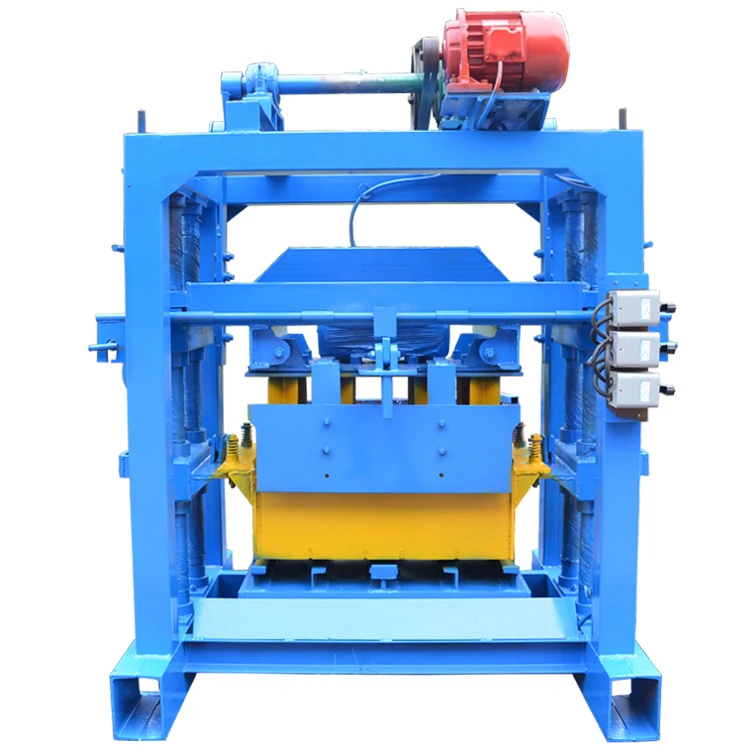
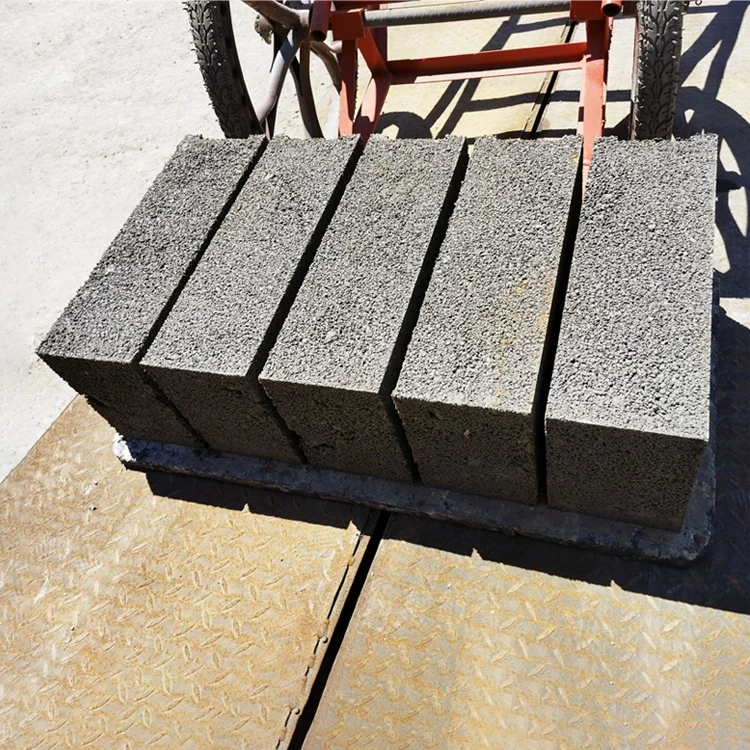
Description
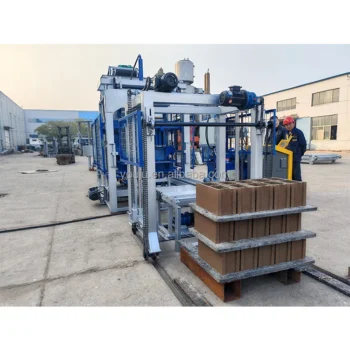
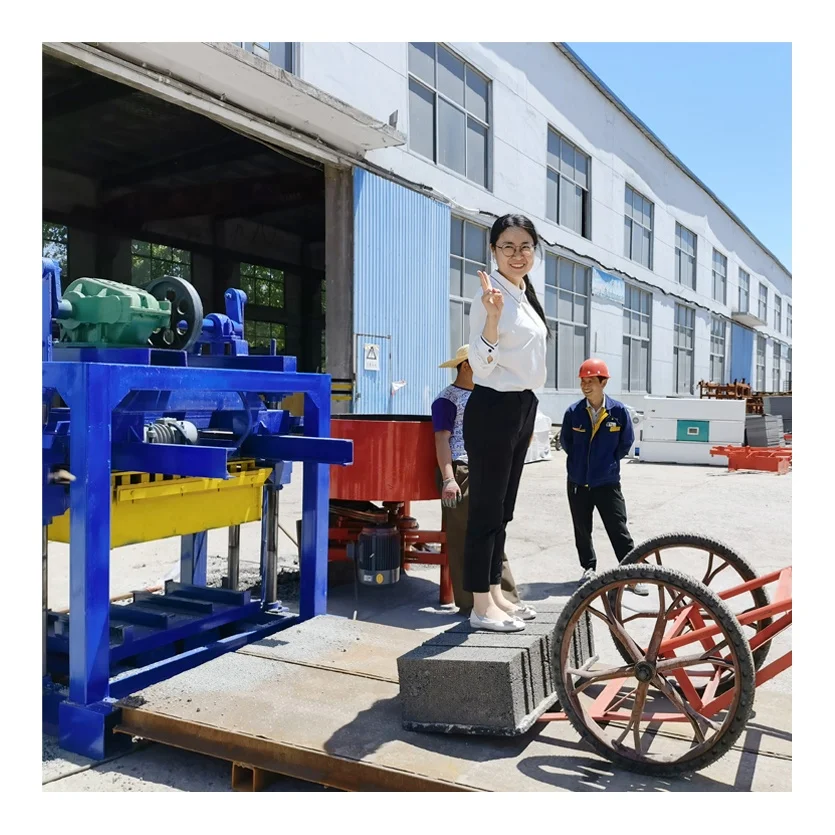
Dispatch-Ready Stock — Every QTJ4-40 block machine in our warehouse is matched to standard moulds and pallets before loading, so a buyer working to a project deadline gets a machine that can produce on arrival rather than waiting weeks for parts.
Technical Specifications
| Parameter | Value |
|---|---|
| Model | QTJ4-40 |
| Product Type | Manual Concrete Block Making Machine |
| Overall Dimensions (L×W×H) | 1350 x 1460 x 1800 mm |
| Pallet Size | 850 x 450 mm |
| Rated Power | 9.5 kW |
| Vibration Frequency | 2800 RPM |
| Vibration Force | 35 kN |
| Output Capacity | 2880 pcs/day (basis not stated in source — confirm block format, material and thickness) |
| Control System | Mechanical and electric combination (no PLC) |
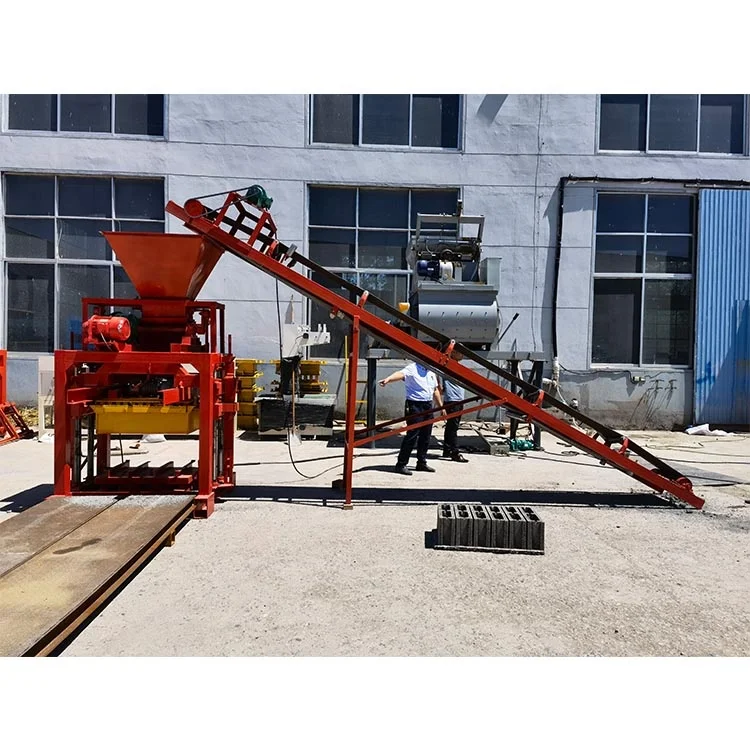
| Assembly State | Stationary, small platform |
| Recommended Mixer Type | Vertical type 350 |
| Utility Requirement | Three-phase four-wire, 100A electric leakage protector |
| Key Features | Mould change by manual swap, manual pallet handling, vibration-only compaction |
Application Suitability
| Application | Material or Output |
|---|---|
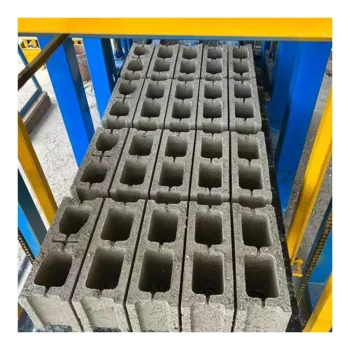
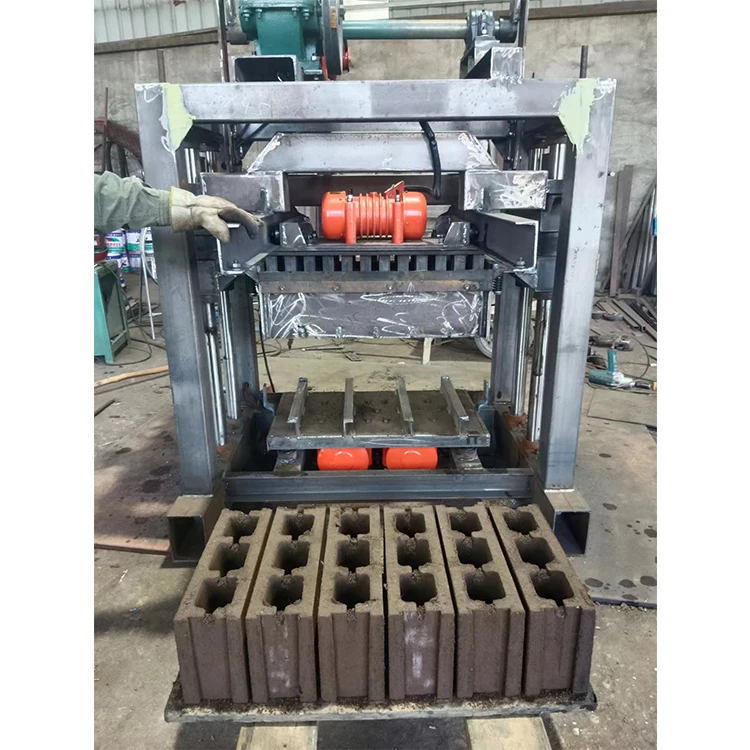
| Hollow block production for small masonry contractors | Crushed stone, sand, and Portland cement mixes |
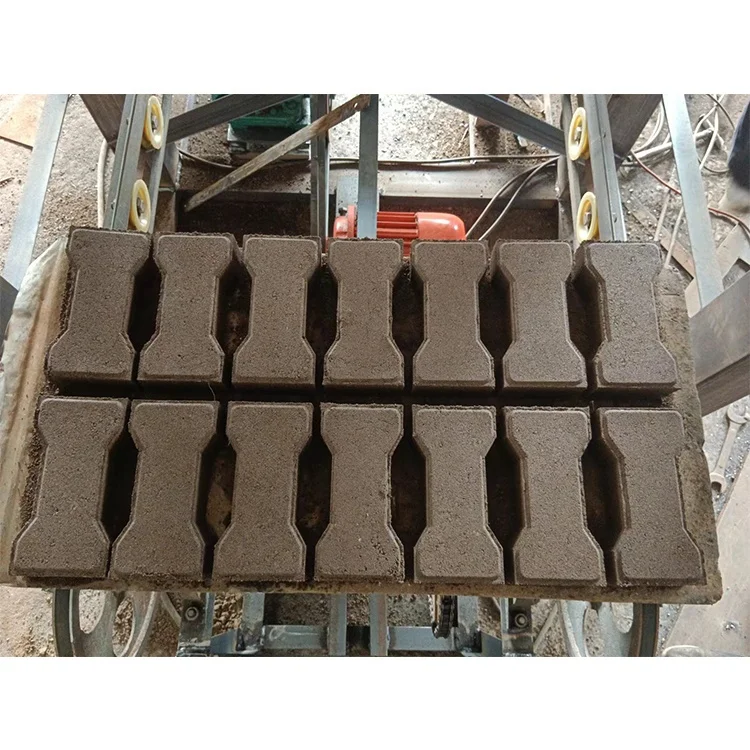
| Paver block runs for walkways and light-traffic yards | Fine aggregate with cement binder, pigmented or plain |
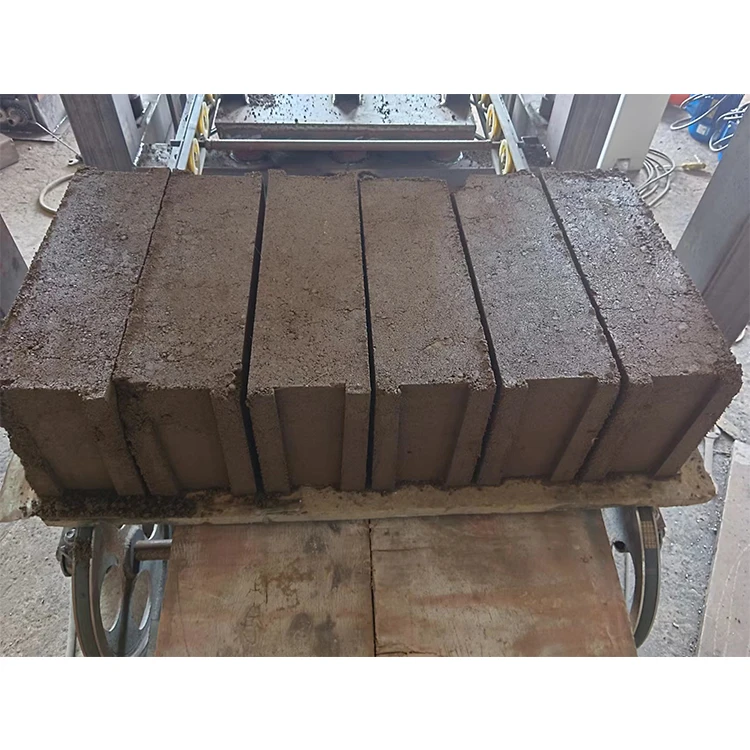
| Solid cement block output for load-bearing walls | Coarse aggregate blended with cement at standard water-cement ratio |
| On-site block making for remote construction projects | Locally sourced river sand or quarry dust with cement |
Why the Voltage Question Must Come Before the Container Booking
A stocked QTJ4-40 block machine in stock fast delivery is useless on site if the motor winding does not match the local grid.
I have watched crews in West Africa stand around a brand-new block press because the three-phase supply on site was 415V 50Hz while the stock motor was wired for a different configuration. The machine was physically perfect, the moulds were on the pallet, and nobody could throw the breaker. Before we release any QTJ4-40 from the yard, the motor junction box is opened and the winding diagram is checked against the destination country voltage and frequency. This single step prevents the most common arrival-day failure that no amount of spare parts can fix [NEED_CITE: voltage and frequency standards by export market].
Container Loading and Dispatch Sequence
When a buyer needs a QTJ4-40 block machine in stock fast delivery, the first conversation is about the loading plan, not the price. The machine is dismantled to platform level, the hopper and vibration motor are secured, and the unit is strapped to a timber skid that fits a standard 20-foot container alongside moulds and a pallet stack. Every bolt and hydraulic fitting goes into a labelled bag taped inside the hopper so nothing is lost during ocean transit.
Arrival Timing and What Controls It
Dispatch lead time depends on whether the requested mould set and pallet specification are already on the shelf. Standard hollow and solid block moulds ship with the machine; custom paver formats may add a short mould-fabrication window. We quote the container loading date, the estimated port-to-port transit, and the customs documentation package together so the buyer can plan crane hire and concrete pad curing around a known arrival window [NEED_CITE: typical ocean freight transit times to West and East African ports].
What the Numbers Mean on the Shop Floor
The 35 kN vibration force at 2800 RPM is generated by an eccentric block on the vibration shaft. For a standard cement-aggregate mix, this force level compacts the material enough to produce blocks that hold their shape immediately after demoulding, which matters because the QTJ4-40 has no hydraulic top pressure to assist. The operator relies entirely on vibration density and mix moisture. The 850 x 450 mm pallet size determines the maximum block footprint per cycle — four standard hollow blocks or a larger count of pavers — and it must match the curing racks the buyer already uses, or the blocks will need to be restacked by hand, adding labour the machine was supposed to eliminate.
The Cost of Skipping Pallet and Voltage Checks
When a pallet arrives at site and does not fit the buyer’s existing curing rack, blocks pile up on the ground, crack under their own weight, and the first production week is written off. When voltage is wrong, the motor burns out within minutes of first run, and the buyer faces a multi-week wait for a replacement winding. Both failures are entirely preventable and both turn a fast-delivery purchase into the slowest project on site [NEED_CITE: common causes of block machine commissioning delay].
Why Buyers Source This Model From Our Stock
We keep QTJ4-40 units configured with standard mould sets so dispatch is measured in days, not production cycles. The motor junction box is verified against the destination grid before the machine leaves the floor. Pallet dimensions and material are confirmed against the buyer’s curing area and forklift capacity. Standard moulds for hollow, solid, and paver formats ship from the same rack, eliminating separate procurement. Every machine is photographed at each packing stage so the buyer tracks the exact unit that arrives at port.
Documentation & Verification
- Factory test record with the buyer’s requested block format before dispatch
- Motor winding and voltage confirmation sheet signed at the junction box
- Container loading photographs showing skid, strapping, and mould placement
- Pallet specification matched to the buyer’s curing rack dimensions
- Packing list with labelled spare bolt and fitting bags inside the hopper
Installation, Commissioning & Support
- 1350 x 1460 mm footprint requires a level concrete pad with anchor bolt provisions
- 9.5 kW rated power demands a dedicated 100A three-phase breaker at the panel
- Machine ships partially dismantled; hopper and vibration shaft reassembled on site
- First-run vibration frequency checked with a hand tachometer against the 2800 RPM spec
- Operator trained on manual pallet feeding rhythm and mould change sequence
- Vertical type 350 mixer recommended for consistent batch sizing per cycle
Before You Request a Quote
Tell us the block format you plan to run first, the local aggregate type available near your site, and the three-phase voltage and frequency at your utility connection. If you already have curing racks or a forklift, share the pallet dimensions they accept. This lets us confirm stock compatibility and quote a realistic dispatch date instead of a catalogue promise.
Frequently Asked Questions
Q: What is the actual dispatch lead time for the QTJ4-40 from stock?
A: Units configured with standard hollow or solid block moulds are typically container-loaded within a short window after order confirmation, provided the destination voltage matches a stock motor configuration. Custom mould formats or non-standard pallet materials may extend the lead time slightly while fabrication is completed. We quote the exact loading date at the time of order.
Q: How is the machine dismantled and loaded into a container for shipment?
A: The QTJ4-40 is broken down to platform level, with the hopper secured and vibration motor protected. All fasteners are bagged and stored inside the hopper. The unit is strapped to a timber skid and loaded into a 20-foot container alongside moulds and pallets, with loading photographs provided at each stage.
Q: What voltage and frequency options are available for immediate dispatch units?
A: Stock motors are typically wound for common three-phase industrial voltages. Before release, we open the junction box and verify the winding matches your destination country supply. If the stock motor does not match, a rewind or replacement adds a short delay, which we quote transparently before you commit.
Q: Which block formats and moulds are in stock alongside the QTJ4-40?
A: Standard hollow block, solid block, and common paver block moulds are held on the shelf for immediate pairing with the machine. Custom interlocking or kerbstone formats may require a brief fabrication period. We confirm the exact mould set available at the time of your inquiry.
Q: What arrival estimate can be quoted based on destination port?
A: Ocean transit varies by destination and shipping line schedule. We provide the container loading date, the estimated port-to-port transit, and a full customs documentation package so you can plan site preparation, crane hire, and concrete pad curing around a realistic arrival window.