

Description
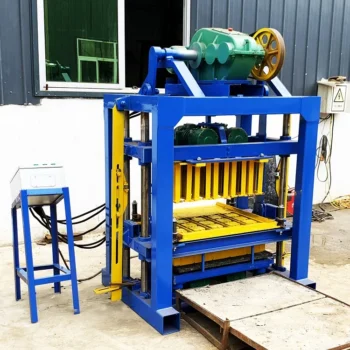
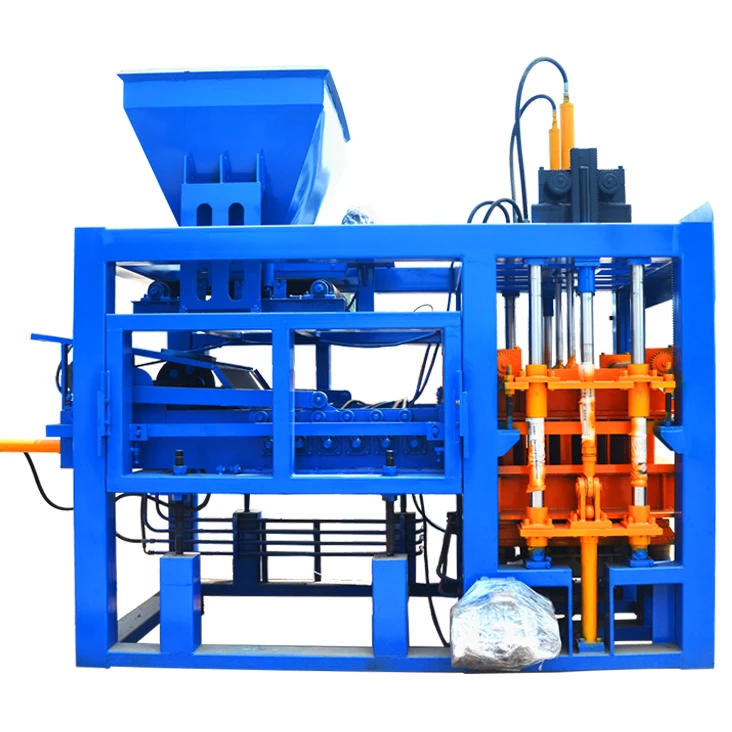
Ready for Dispatch — the QTJ4-40 block making machine ships with pallet size, voltage, and mould format confirmed before it leaves the factory floor.
Technical Specifications
| Parameter | Value |
|---|---|
| Model | QTJ4-40 |
| Product Type | Semi-Automatic Concrete Block Making Machine |
| Overall Dimensions (L×W×H) | 1350×1460×1800 mm |
| Machine Power | 10.4 kW |
| Molding Cycle | 40 s |
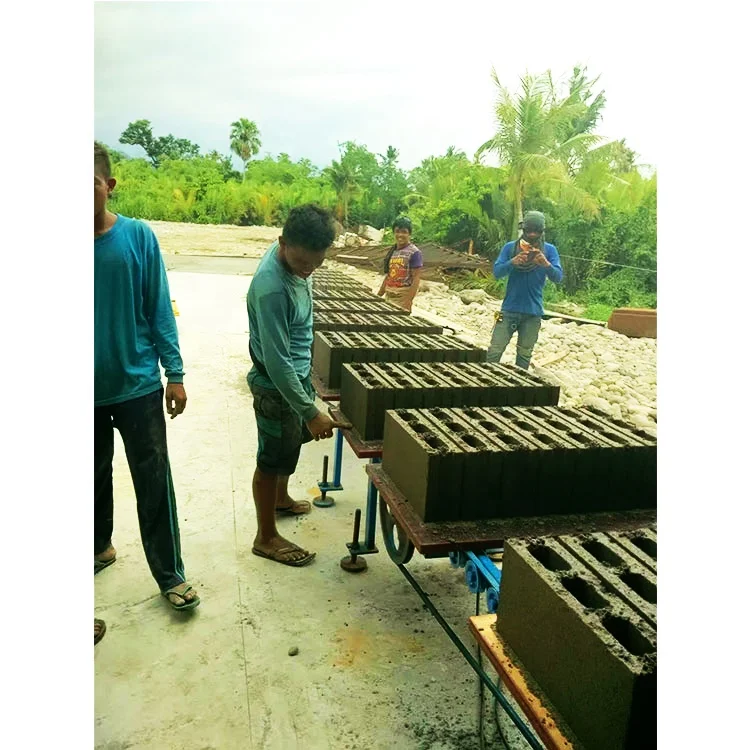
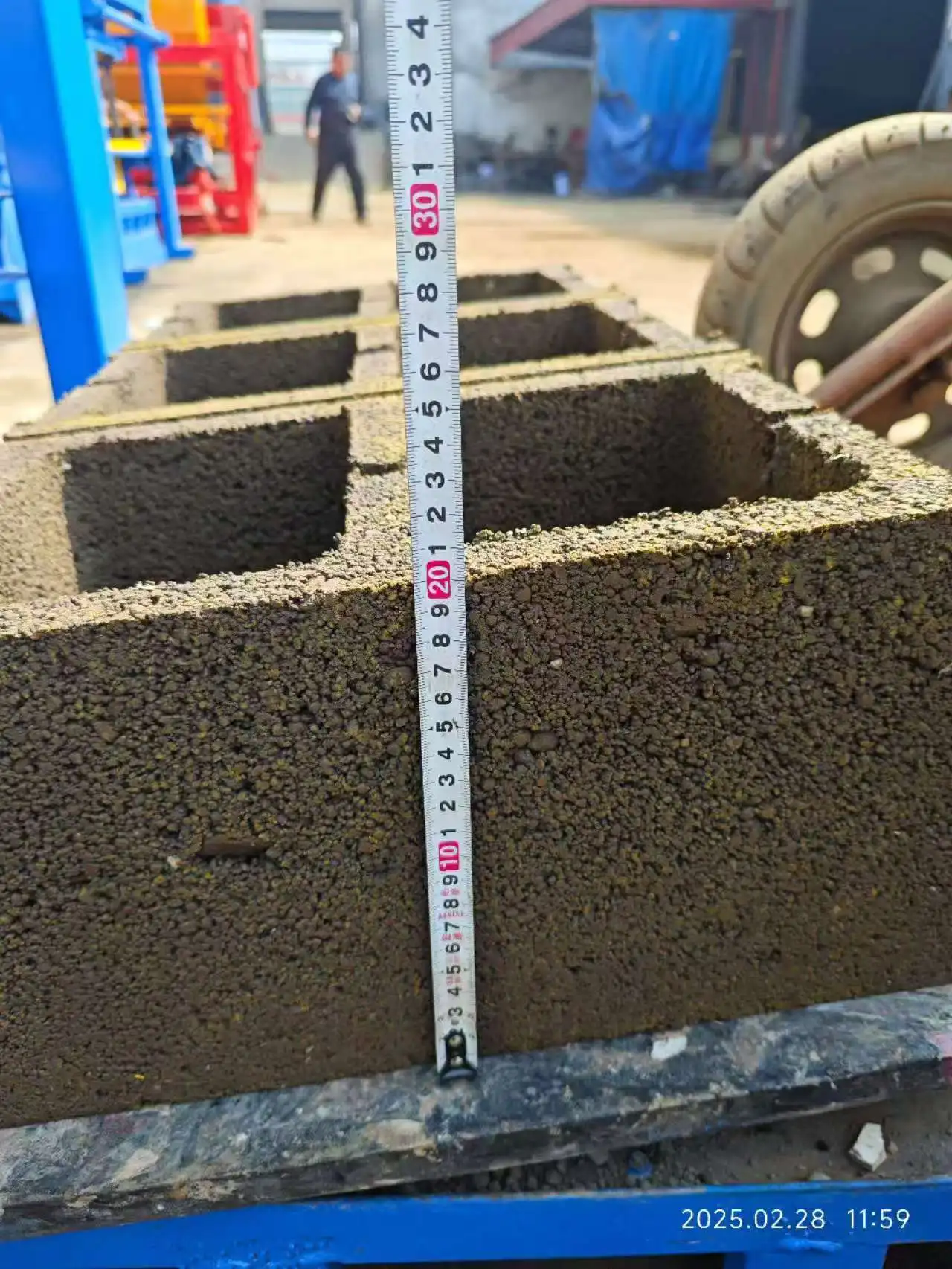
| Output Capacity (Hollow 400×200×200 mm) | 4 pcs/mould, 360 pcs/hour, 2880 pcs/day |
| Output Capacity (Hollow 400×150×200 mm) | 5 pcs/mould, 450 pcs/hour, 3600 pcs/day |
| Output Capacity (Solid 225×112.5×60 mm) | 9 pcs/mould, 800 pcs/hour, 6400 pcs/day |
| General Output Capacity | 2000–2500 pcs/8 hours (basis not stated in source) |
| Raw Material | Concrete, sand, cement, fly ash, lime, gypsum |
| Machine Weight | 1.2 T |
| Pallet Size | 850×450×20 mm |
| Voltage | Configurable to local supply standard |
| Automation Level | Semi-automatic |
| Vibration System | Bed mould vertical vibration and upper mould compression vibration |
| Required Line Equipment | Mixer, host machine, block mould, pallets |
Application Suitability
| Application | Material or Output |
|---|---|
| Hollow block production for load-bearing walls | Concrete, sand, cement with local crushed stone aggregate |
| Solid block manufacturing for infill and partition walls | Fly ash, lime, gypsum mixed with cement binder |
| Paver and slab production for site landscaping | Concrete with fine sand and pigment additives |
| Small to medium workshop-based block plants | Semi-automatic operation with manual pallet handling |
| On-site production for housing and development projects | Locally sourced aggregates to avoid material transport cost |
Why Quoted Capacity Rarely Matches Your First Week of Production
The QTJ4-40 block making machine in stock is ready to ship, but capacity numbers only matter when tied to your actual block format. Output per shift changes entirely depending on which mould is mounted and what your local aggregate allows. I have watched containers arrive at project sites where the buyer ordered based on a headline figure, only to find the machine was rated on a block size they never intended to produce. The cycle stays at 40 seconds, but if your mix design does not cure fast enough or your sand carries too much clay, the press spends half the day waiting rather than pressing [NEED_CITE: common causes of block machine output shortfall on export projects]. Stating output per format — 2880 hollow blocks at 400×200×200 mm, 3600 at the 150 mm width, 6400 solid blocks — means you plan your site schedule against a number that actually belongs to your product.
Stock Availability and What Dispatch Really Means
When a buyer needs a QTJ4-40 block making machine in stock against a project deadline, the conversation should start with what is physically on the floor and how many days until it sits in a container. This model is compact enough at 1.2 tonnes and 1350×1460×1800 mm to fit a standard container without partial dismantling, which shortens the loading window and reduces the chance of damage during stuffing. Lead time here means days to dispatch, not weeks to build.
Matching Voltage and Frequency Before the Crate Is Nailed Shut
Arriving with the wrong voltage is one of the most preventable commissioning delays in machinery exports [NEED_CITE: voltage and frequency standards by export market]. The QTJ4-40 draws 10.4 kW, which is a meaningful load on a site generator or a workshop panel. Confirming three-phase voltage, frequency, and plug standard before production means the electrician on the receiving end is not improvising on day one. This confirmation is documented in writing, not assumed from the destination country alone.
What the 40-Second Cycle and Vibration System Mean for Block Density
The QTJ4-40 uses bed mould vertical vibration combined with upper mould compression vibration to compact the mix. In a semi-automatic machine at this scale, vibration force and hydraulic pressure together determine whether a hollow block holds its shape when demoulded and reaches the strength the local building code requires. The 850×450×20 mm pallet size is small enough for manual handling but still needs to match the curing racks and the forklift tine width already on site. A mismatch here means buying new racks or watching pallets pile up on the floor [NEED_CITE: pallet handling and curing area planning for small block plants]. The 40-second moulding cycle is consistent across formats, so daily throughput shifts come down to how many cavities each mould carries — four for the 200 mm hollow, five for the 150 mm, nine for the solid.
The Cost of Skipping the Pallet and Mixer Conversation
When a quotation lists only the host machine and mould, the buyer is left to source pallets, a mixer, and handling equipment separately, often discovering incompatibilities after arrival. Pallets that are too thin warp under vibration; a mixer that cannot keep up with a 40-second cycle leaves the press idle every other round. These are not machine faults — they are line gaps. The semi-automatic configuration here bundles mixer, host, mould, and pallets as a matched set so the cycle is not broken by a bottleneck the quotation never mentioned.
Why Buyers Source This Model Through Our Dispatch Desk
Block machinery is the single focus of this operation, so the QTJ4-40 leaves the factory as a matched system — machine, mould, pallet, and mixer specified together rather than assembled from separate suppliers. Configuration is set against the buyer’s actual mix and target block format, not pulled from a catalogue default. Mould design covers the formats the buyer’s market sells, with custom drawings available when local standards call for a non-standard dimension. Voltage and control language are confirmed in writing before dispatch. Packing photographs and a container loading plan are shared before the crate is sealed, so the buyer knows exactly how the machine sits in the container and what to expect when the doors open.
Documentation & Verification
- Capacity calculation sheet stating block format for each output figure
- Voltage and frequency confirmation signed off before dispatch
- Pallet size and material specification matched to buyer curing setup
- Factory test record on buyer’s target block format before shipment
- Packing photographs and container loading plan provided pre-shipment
- Operation and maintenance manual in buyer’s preferred language
Installation, Commissioning & Support
- Foundation pad sized to 1350×1460 mm footprint with level tolerance noted
- Dedicated circuit for 10.4 kW load with breaker rating confirmed to local code
- Machine arrives assembled; only pallet guide and hopper require on-site fitting
- First-run parameter setting for vibration duration and feed timing per mould
- Operator training covers mould change, mix adjustment, and daily greasing points
- Wear parts list includes vibration springs, mould liners, and pallet guides
What to Share When You Request a Dispatch Quote
Send the block format your market sells most — hollow or solid, and the exact dimensions — along with your daily target and the aggregate you can source locally. Confirm your site voltage and frequency, and whether your curing area already has racks sized for the 850×450 mm pallet. The more specific the input, the more accurate the dispatch timeline and the less time spent adjusting after arrival.
Frequently Asked Questions
Q: What is the realistic daily output for my specific block format?
A: Output depends entirely on which mould is mounted. At a 40-second cycle, the QTJ4-40 produces 2880 pieces per eight-hour shift with the 400×200×200 mm hollow block mould (4 cavities), 3600 with the 400×150×200 mm hollow mould (5 cavities), and 6400 with the 225×112.5×60 mm solid mould (9 cavities). Your actual daily figure also depends on mix consistency and operator pace.
Q: Is the QTJ4-40 currently in stock and what is the dispatch timeline?
A: Stock status is confirmed at inquiry. When available, the compact 1.2-tonne machine loads into a standard container without dismantling, which keeps dispatch lead time measured in days rather than production weeks. Container loading plans and packing photographs are shared before the shipment leaves.
Q: How is voltage confirmed before shipment to avoid delays?
A: Three-phase voltage, frequency, and plug type are confirmed in writing during the order stage, not assumed from the destination country. The 10.4 kW motor is wound to the agreed specification so the site electrician can connect directly on arrival without transformers or rewiring.
Q: What pallet options are available and can I source them locally?
A: The standard pallet is 850×450×20 mm. Material options are discussed at order to match your curing environment and handling method. If you plan to source pallets locally, the exact dimensions and thickness tolerance are provided so your supplier can match the specification without trial and error.
Q: Which moulds ship with the machine and can I add more?
A: The mould included is chosen based on the block format you confirm at inquiry. Additional moulds for other formats can ship in the same container, taking advantage of the remaining space. Mould change on this semi-automatic model is manual and straightforward once the operator is trained.