

AAC Block Machine Troubleshooting: Factory-Direct Support & Parts
Most cutting failures are not mechanical; they are thermal.
The primary cause of AAC block machine troubleshooting issues is rarely a defect in the cutting wire or mold alignment, but rather inconsistent green strength caused by poor condensate management in the autoclave. Resolving these stoppages requires physical inspection of steam traps and drainage valves, not just remote parameter checks on the PLC.
I spent years on the buyer side in Jakarta, evaluating equipment for local investors before moving to the supply side. The shift in perspective was jarring. In a project near Bekasi, a new line suffered catastrophic waste rates at the cutting station just months after commissioning. The坯体 (green cakes) collapsed upon contact with the cutting wires. Remote diagnostics from the manufacturer showed all hydraulic pressures were nominal. It was only when I stood next to the autoclave, feeling the uneven heat distribution and checking the discharge valves, that the root cause became clear: blocked condensate drains had distorted the curing curve, leaving the core of the blocks too soft. This is a common pitfall in AAC block machine troubleshooting that cannot be solved from an office desk.

Understanding this distinction between mechanical symptoms and thermal causes is the first step toward reducing downtime. The following sections detail how to diagnose these issues systematically, focusing on the often-overlooked details that determine production stability.
Why Do AAC Blocks Collapse During Cutting?
Cutting collapse is frequently misdiagnosed as a wire tension issue when it is actually a green strength deficit.
When green cakes fail during the cutting phase, the immediate instinct is to adjust the cutting wire tension or replace the wires. However, in many cases, the wires are functioning correctly, but the material lacks the structural integrity to withstand the cutting force. This weakness stems from the pre-curing and autoclaving stages, not the cutting station itself. Effective AAC block machine troubleshooting begins with verifying the green strength before the block ever reaches the cutter.
The green strength is determined by the initial curing environment and the subsequent steam cure. If the temperature rise in the autoclave is too rapid, or if condensate is not properly drained, the heat transfer becomes uneven. The outer shell of the block may harden while the core remains porous and weak. When the cutting wires pass through, the internal structure collapses, leading to high waste rates. [NEED_CITE: relationship between autoclave heating rate and green strength development]
In tropical climates like Indonesia or Vietnam, ambient humidity further complicates this process. High moisture content in the raw mix can lead to variance in the final water-to-cement ratio if not adjusted for local conditions. A variance of even a small percentage can significantly alter the setting time and final strength. Operators must adjust pre-curing times based on daily humidity readings, a practice often overlooked in standard operating procedures provided by manufacturers.
| Factor | Impact on Green Strength | Diagnostic Check |
|---|---|---|
| Condensate Drainage | Uneven curing, soft core | Inspect steam traps for blockage |
| Pre-curing Time | Insufficient initial set | Verify time vs. ambient humidity |
| Mix Moisture | Variable density and strength | Test slurry density before pouring |
| Wire Tension | Mechanical cut quality | Check tension gauge readings |
A case from a plant in Southeast Asia illustrates this. The operator reported frequent cutting failures. After replacing wires and adjusting tension with no improvement, we inspected the autoclave drainage system. Several traps were clogged with scale, causing water hammer and uneven temperature distribution. Once the drainage system was cleaned and the heating curve adjusted to a slower ramp-up, the green strength improved markedly, and cutting waste dropped noticeably. This highlights why AAC block machine troubleshooting must include a thorough review of the curing process, not just the cutting mechanics.
How to Diagnose Autoclave Curing Defects?
Pressure instability is often a symptom of valve calibration drift, not boiler failure.
Autoclave curing is the heart of AAC production. Any deviation in pressure or temperature profiles can lead to cracking, incomplete curing, or dimensional instability. Diagnosing these defects requires a methodical approach to monitoring the thermal curve and managing condensate. Many operators rely solely on the PLC display, but physical verification of key components is essential for accurate AAC block machine troubleshooting.
One common issue is pressure fluctuation during the curing cycle. If the pressure varies beyond a narrow tolerance, it indicates a problem with the safety valves or the steam supply regulation. Often, this is due to calibration drift in the safety valves, which can occur over time due to thermal cycling and mineral buildup. Regular calibration against certified gauges is necessary to ensure accuracy. [NEED_CITE: standard tolerance for autoclave pressure fluctuation]
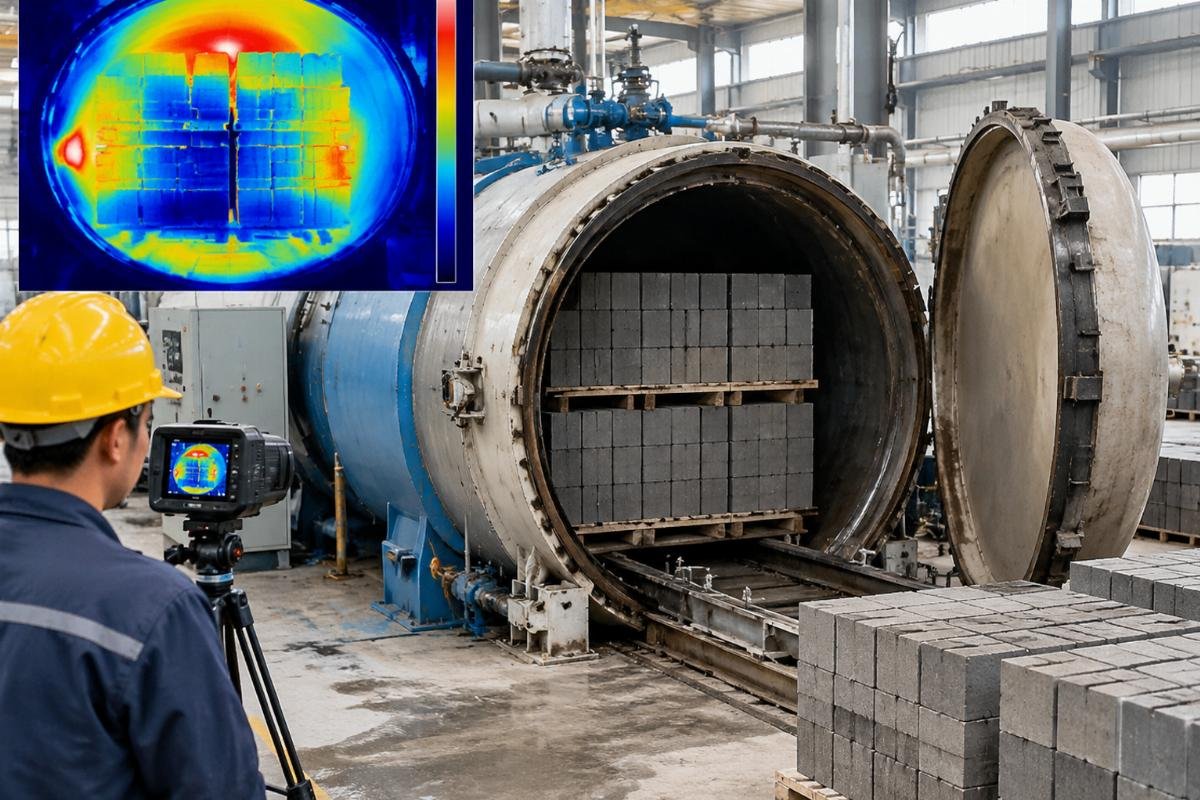
Another critical aspect is condensate management. As steam condenses inside the autoclave, it releases latent heat, which is crucial for curing. However, if the condensate is not drained efficiently, it can accumulate at the bottom of the vessel, creating cold spots and leading to uneven curing. This manifests as blocks that are harder on top and softer on the bottom, or vice versa, depending on the drain location.
To verify steam trap efficiency, technicians can use temperature differentials. By measuring the temperature at the inlet and outlet of the steam traps, one can determine if the trap is opening and closing correctly. A significant difference in temperature may indicate a failed trap, allowing live steam to escape or condensate to back up. This simple check can prevent major curing defects.
In a project in Latin America, a plant experienced consistent cracking during demolding. The initial diagnosis pointed to mold release agents, but further investigation revealed that the autoclave pressure was dropping prematurely during the cooling phase. This was caused by a leaking vacuum valve, which allowed air to enter the vessel too quickly, creating thermal shock. Replacing the valve and adjusting the cooling curve resolved the issue. This example underscores the importance of comprehensive AAC block machine troubleshooting that covers the entire curing cycle, not just the heating phase.
What Maintenance Prevents Frequent Downtime?
Daily physical inspections outperform remote monitoring for preventing unexpected stops.
While modern AAC lines come with sophisticated PLC systems that monitor various parameters, they cannot replace the value of daily physical inspections. Sensors can fail, and data can be misinterpreted. A hands-on approach to maintenance is crucial for identifying early signs of wear and tear that could lead to significant downtime. Effective AAC block machine troubleshooting relies on a disciplined routine of checking pumps, valves, and cutting wires.
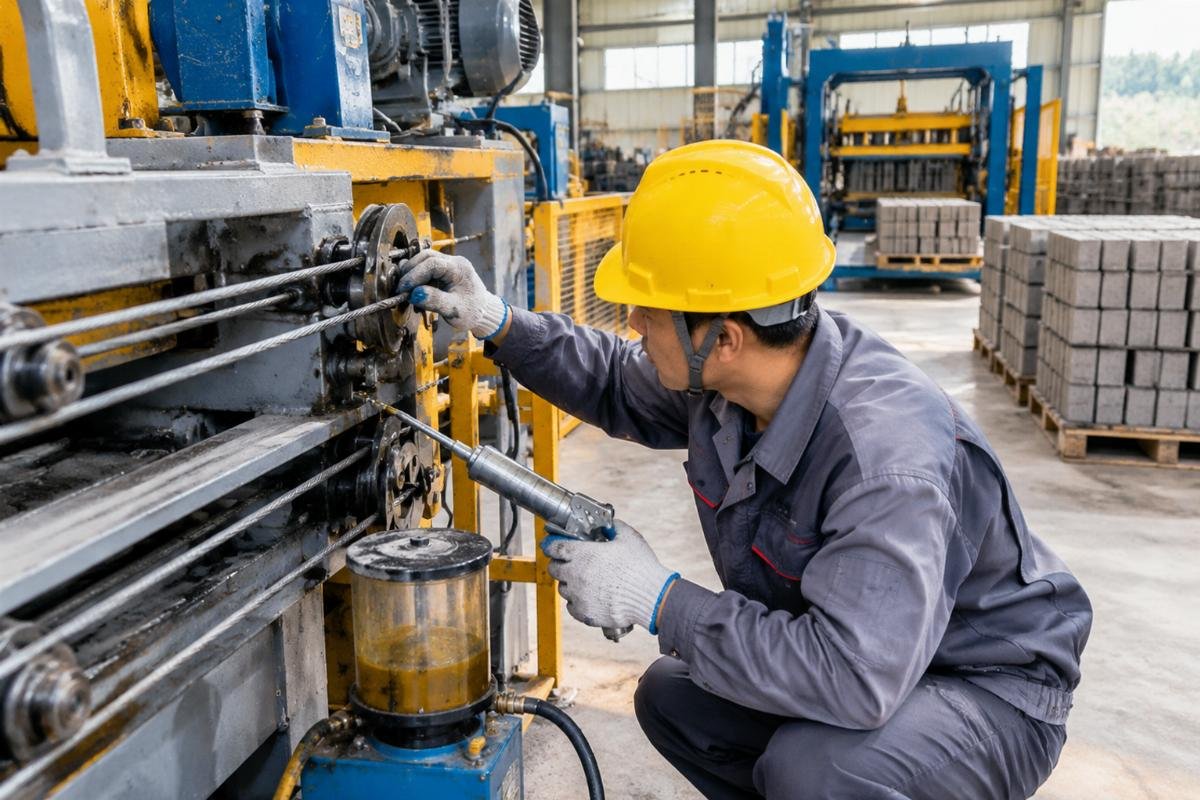
The cutting wire system is particularly vulnerable. Wires stretch and wear over time, affecting cut precision. Daily checks should include measuring wire tension and inspecting for signs of fatigue or corrosion. Lubrication of the wire guide rollers is also essential to prevent friction-induced breakage. A simple checklist can help operators maintain consistency in these checks.
Similarly, the hydraulic systems that drive the molds and cutting frames require regular attention. Leaks in hydraulic hoses or seals can lead to pressure drops and erratic movement. Inspecting these components for signs of wear, such as cracks or fluid residue, can prevent sudden failures. [NEED_CITE: recommended frequency for hydraulic system inspection in AAC plants]
Pumps and valves are another critical area. Feed pumps must deliver a consistent slurry mixture, and any variation in flow rate can affect block density. Checking pump seals and impellers for wear ensures consistent performance. Valves, especially those controlling steam and water flow, should be inspected for leaks and proper operation. Sticking valves can disrupt the entire production cycle.
A plant in Africa implemented a rigorous daily maintenance checklist after experiencing frequent unplanned stops. The checklist included visual inspections of all critical components, lubrication of moving parts, and verification of sensor readings against physical measurements. Within a few months, the frequency of breakdowns decreased significantly, and overall equipment effectiveness improved. This demonstrates that proactive maintenance is a key component of successful AAC block machine troubleshooting.
| Component | Check Frequency | Key Indicator | Action if Faulty |
|---|---|---|---|
| Cutting Wires | Daily | Tension, Corrosion | Replace or Retension |
| Hydraulic Seals | Weekly | Leaks, Pressure Drop | Replace Seal |
| Steam Traps | Monthly | Temperature Differential | Clean or Replace |
| Feed Pump | Weekly | Flow Rate Consistency | Inspect Impeller |
How to Optimize Production in Humid Climates?
Standard curing cycles fail in tropical environments without moisture compensation.
Operating an AAC plant in a humid climate presents unique challenges. High ambient humidity affects the drying rate of the green cakes and the efficiency of the autoclave curing process. Standard operating procedures developed for temperate climates may not be suitable for tropical regions, leading to quality issues and reduced productivity. Adapting the production process to local conditions is a vital aspect of AAC block machine troubleshooting.
One major issue is the extended drying time required for green cakes in high humidity. If the cakes are not sufficiently dried before entering the autoclave, excess moisture can lead to cracking during the heating phase. Adjusting the pre-curing time and increasing airflow in the drying chamber can help mitigate this. Additionally, using dehumidifiers in the pre-curing area can control the ambient moisture level.
The autoclave curing cycle also needs adjustment. In humid conditions, the steam saturation point is higher, which can affect the heat transfer efficiency. Extending the holding time at peak pressure and temperature ensures that the core of the block receives sufficient heat for complete curing. Monitoring the moisture content of the final product is essential to verify the effectiveness of these adjustments.
Furthermore, raw material storage must be managed carefully. Sand and other aggregates can absorb moisture from the air, altering the mix consistency. Covering storage areas and monitoring the moisture content of raw materials before mixing helps maintain consistent batch quality.
In a facility in Thailand, operators struggled with high rejection rates during the rainy season. By extending the pre-curing time by several hours and adjusting the autoclave heating curve to account for higher initial moisture content, they were able to stabilize production. This experience highlights the need for flexible operational strategies in AAC block machine troubleshooting when dealing with variable climatic conditions.
Conclusion
Effective troubleshooting prioritizes physical verification over digital assumptions.
Resolving issues in AAC production requires a deep understanding of the interplay between mechanical, thermal, and environmental factors. Relying solely on remote diagnostics often misses the root causes hidden in condensate management, green strength development, and local climate impacts. By adopting a hands-on approach to maintenance and adapting processes to specific site conditions, plant managers can significantly reduce downtime and waste.
Shiyue’s turnkey solutions emphasize on-site operator training to instill these diagnostic habits from day one, ensuring that your team can identify and resolve these common maintenance oversights before they escalate into production stoppages. This practical, field-tested approach is what separates a functioning plant from a highly efficient one.

Leave a Reply