

QT Hollow Block Machine for Compressed Earth Block Manufacturer
Heavy vibration does not equal better compaction; unbalanced force destroys the frame.
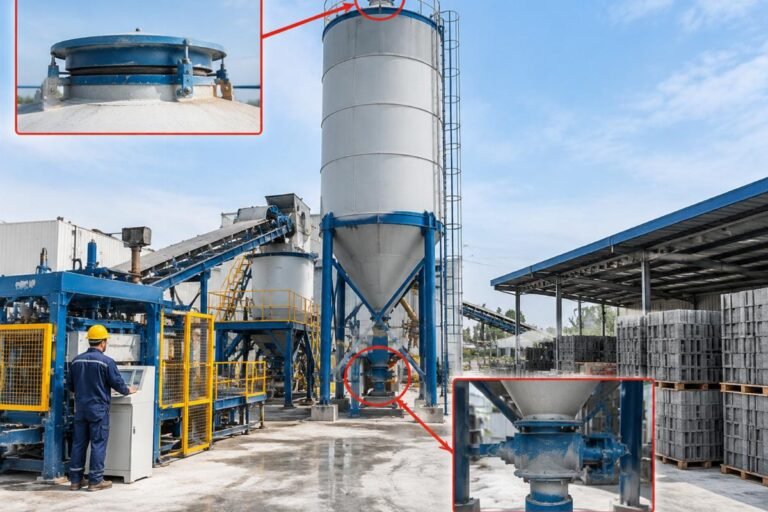
Proper installation and routine maintenance are critical for achieving designed density and output. Neglecting foundation leveling or hydraulic sealing leads to immediate quality failure and costly downtime. A level base within tight tolerances and a sealed hydraulic system are non-negotiable prerequisites for stable production, especially in humid or tropical climates where environmental factors accelerate wear and misalignment.
I still remember the humidity in a factory near Monterrey, Mexico. The air was thick, and the concrete floor seemed to sweat. I was there to commission a new unit, but the blocks coming off the line were crumbling at the edges. The local operator insisted the machine was fine because the vibration felt powerful. It was powerful, but it was wrong. The foundation had settled unevenly in the first few days due to the soft subsoil common in that region. The mold was twisting slightly with every cycle, creating micro-gaps that prevented proper compaction. We spent days shimming the base plates until the level was perfect. Once the frame was true, the same mix produced dense, sharp-edged blocks. This experience reinforced a hard truth: the machine is only as good as its foundation. [NEED_CITE: impact of foundation leveling on machinery alignment and product consistency]
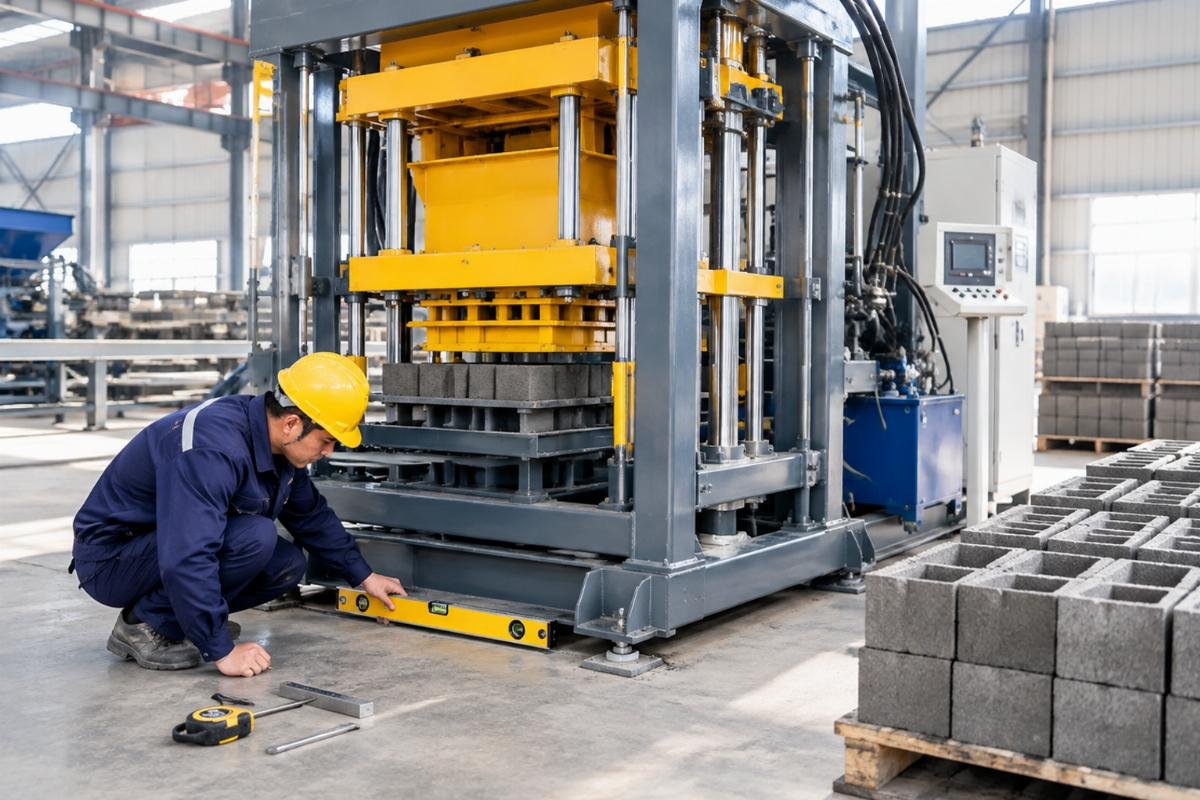
Getting the hardware right is just the start. The real challenge lies in maintaining that precision over time. Many buyers focus heavily on the initial purchase price but underestimate the technical rigor required for daily operation. In emerging markets, where power fluctuations and dust are common, a Hollow Block Machine Installation must be treated as an ongoing engineering process, not a one-time event.
Why Does Foundation Quality Determine Brick Density?
An uneven base causes mold wear and inconsistent block height, regardless of hydraulic pressure.
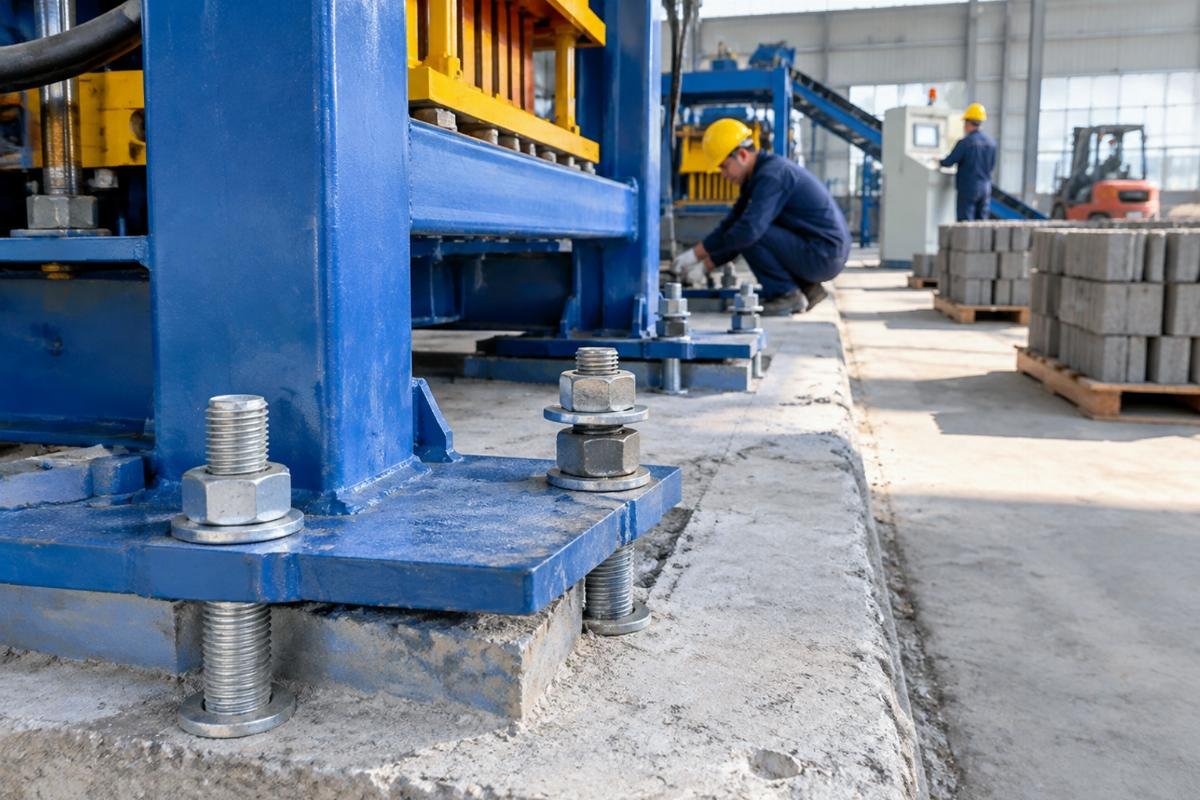
The foundation is the skeleton of your production line. If it shifts, everything else fails. In many Latin American and African regions, soil conditions vary significantly between dry and wet seasons. A foundation that looks solid in July might settle by December. When the base is not level, the main frame of the machine twists under load. This torsion forces the mold boxes out of parallel alignment.
During the molding cycle, the upper mold must descend perfectly into the lower mold. Even a deviation of a few millimeters can cause the mold walls to scrape against each other. This friction generates heat and wears down the hardened steel surfaces rapidly. More importantly, it creates uneven gaps where concrete leaks through, resulting in blocks with rough edges and variable dimensions. [NEED_CITE: mechanical tolerance requirements for concrete block molding equipment]
To prevent this, the installation team must verify the levelness within the first 48 hours after the concrete cures. The tolerance should be minimal. In tropical zones like Brazil, where thermal expansion and soil moisture change frequently, regular checks are essential. Use high-precision spirit levels or laser leveling tools across the main beam and the vibration table supports. If you detect any tilt, shim the base plates immediately. Do not wait for visible cracks in the floor.
| Foundation Check Point | Risk if Ignored | Recommended Action |
|---|---|---|
| Base Plate Levelness | Mold misalignment and uneven block height | Verify with laser level; tolerance <2mm |
| Anchor Bolt Torque | Frame vibration loosening bolts | Retorque after first week of operation |
| Subsoil Stability | Uneven settling during rainy season | Compact subgrade thoroughly before pouring |
A client in Chile once ignored minor settling because production targets were high. Within months, the mold guide rods bent, requiring a complete replacement of the molding assembly. The cost of the new molds far exceeded the expense of proper initial foundation work. A correct Hollow Block Machine Installation starts with the ground beneath it.
How to Calibrate the Hydraulic System for Optimal Pressure?
Correct pressure settings prevent cylinder damage and ensure uniform compaction.
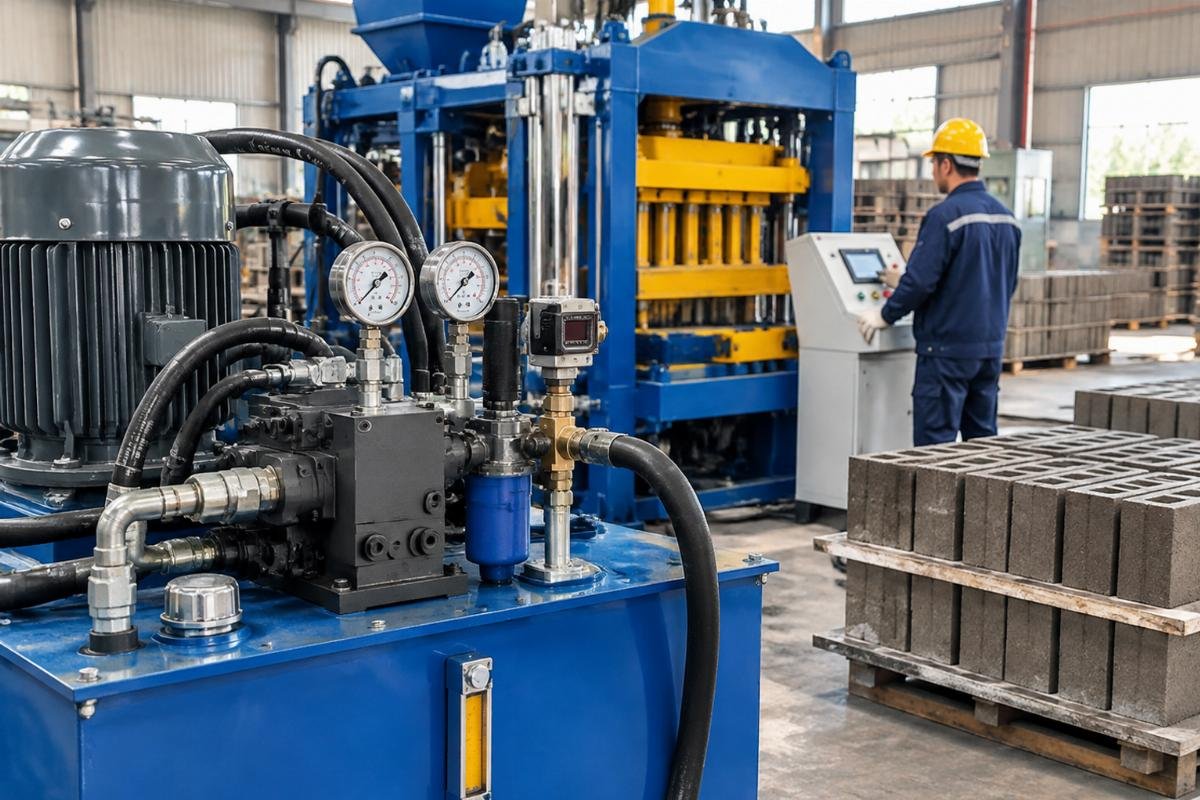
The hydraulic system is the muscle of the machine. It drives the mold box, the feed car, and the pallet conveyor. In hot climates, ambient temperatures can push hydraulic oil well beyond its optimal operating range. High heat thins the oil, reducing its ability to seal internal components. This leads to pressure drops and sluggish movement. Conversely, if the pressure is set too high to compensate, it strains the seals and hoses, leading to bursts and leaks.
Many operators believe that higher pressure means denser blocks. This is a misconception. Density comes from the combination of vibration and controlled pressure. Excessive hydraulic force can actually crush the aggregate structure of the concrete mix, leading to weak spots. The goal is to find the sweet spot where the mold compresses the mix uniformly without over-stressing the system. [NEED_CITE: hydraulic pressure optimization for concrete compaction efficiency]
Start by checking the oil temperature regularly. Install a thermometer if one is not present. Monitor the rise in temperature during continuous operation. If the oil gets too hot, consider adding a cooling fan or increasing the reservoir size. Check for leaks weekly during the initial run-in period. Small drips from cylinder rods are early warnings of seal wear. Replace seals proactively rather than waiting for a major failure.
In dusty environments, filters clog quickly. A clogged filter restricts oil flow, causing the pump to cavitate. This creates noise and damages the pump internals. Change filters more frequently than the manual suggests if the site is dusty. A clean hydraulic system ensures smooth, repeatable movements, which is vital for consistent block quality. Proper maintenance of the hydraulic components is a key part of any Hollow Block Machine Installation strategy.
What Are the Critical Checks for Vibration Motors?
Proper wiring and balancing maximize output while minimizing structural stress.
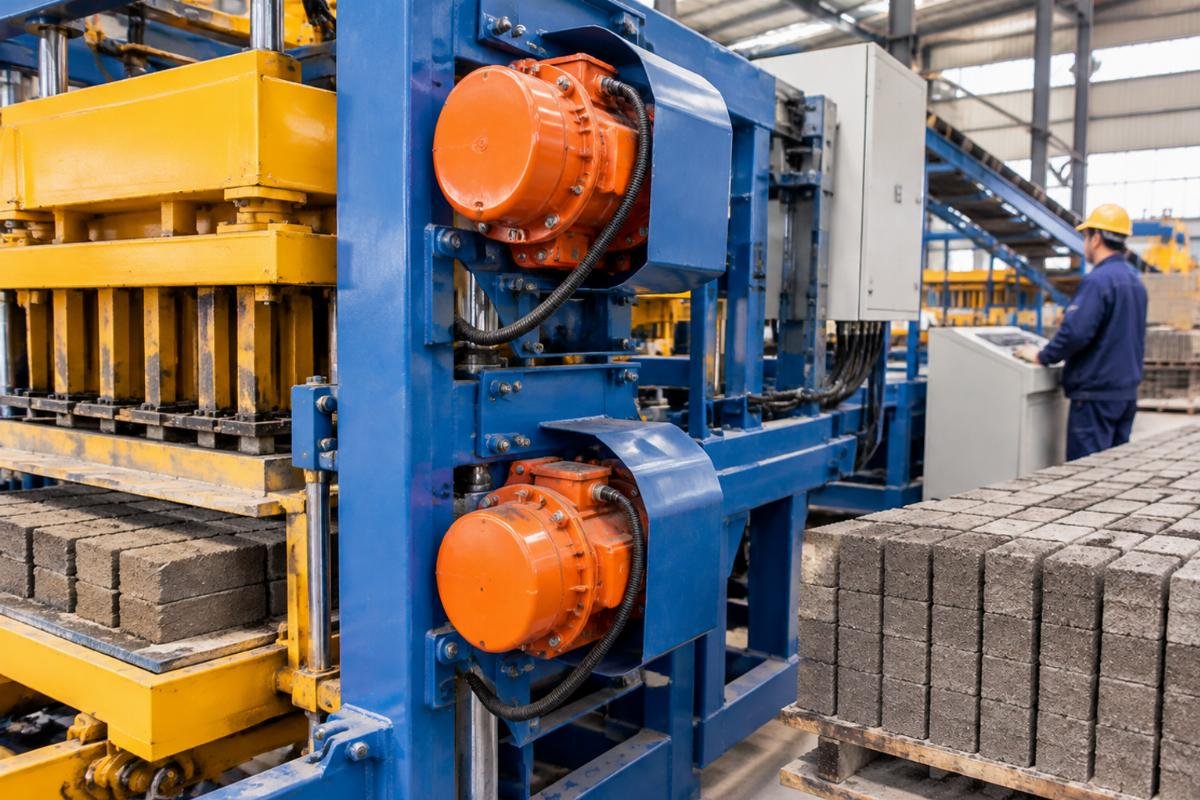
Vibration is the heart of the block making process. It fluidizes the concrete mix, allowing it to flow into every corner of the mold. However, vibration must be balanced. Unbalanced vibration does not compact better; it shakes the machine apart. It transfers destructive energy into the frame, loosening bolts and cracking welds.
One common mistake is incorrect motor phase sequence. If the electrical wiring is reversed, the vibration motors may work against each other or produce irregular patterns. This results in low-density blocks because the energy is not directed vertically into the mix. I once saw a plant in Nigeria where the blocks were so porous they could be crushed by hand. The issue was not the mix design but the electrical connection. The motors were out of sync. Verifying the amperage draw against the nameplate rating helps identify such issues. [NEED_CITE: electrical phase sequence impact on vibration motor performance]
Adjust the vibration time in small increments. Start with the manufacturer’s recommended setting and adjust by half-second intervals. Listen to the sound of the machine. A healthy vibration sounds like a steady hum. A rattling or grinding noise indicates loose components or bearing wear. Check the vibration motor bearings daily. They operate under extreme stress and are prone to failure if not lubricated properly.
Also, inspect the mold clearance. If the mold is not centered, the vibration will be uneven. Ensure the guide rods are clean and lubricated. Sticky rods cause the mold to hang up, disrupting the vibration cycle. Regular cleaning of the mold area prevents buildup that can interfere with movement. These checks are simple but critical for maintaining the integrity of the Hollow Block Machine Installation.
Which Maintenance Routine Prevents Unexpected Downtime?
Daily lubrication and filter checks extend component life significantly.
Maintenance is not just about fixing what is broken; it is about preventing breakage. A disciplined routine saves money and keeps production running. Many plant owners think oil changes are only needed annually. In reality, in hot and dusty environments, oil degrades faster, and filters clog in weeks. Neglecting this leads to pump failure, which can stop production for days while waiting for parts.
Create a daily checklist. Include points for lubrication, visual inspection, and cleaning. Lubricate all moving parts, including guide rods, bearings, and chain drives. Use the recommended grease type. Wrong grease can harden in heat or wash away in rain. Visually inspect hoses for cracks and fittings for leaks. Tighten any loose bolts you find. Vibration loosens fasteners over time.
Clean the machine daily. Concrete buildup on the mold or vibration table adds weight and unbalances the system. It also interferes with the sealing surfaces. Use air guns or water jets, but avoid spraying water directly into electrical panels or motor housings. Keep the control cabinet clean and dry. Dust inside the panel can cause short circuits and erratic behavior.
Remote diagnostic support can help troubleshoot issues quickly. If a problem arises, having access to technical experts who understand the machine’s specifics can reduce downtime. They can guide local technicians through complex repairs via video call. This support is invaluable for plants in remote locations. A proactive maintenance routine, supported by expert guidance, ensures the longevity of your Hollow Block Machine Installation.
Conclusion
Stability comes from precision, not just power.
Achieving consistent block quality requires a holistic approach to installation and maintenance. From the foundation to the hydraulic seals, every component plays a role. Neglecting any part of the system leads to inefficiency and failure. By focusing on levelness, hydraulic integrity, and balanced vibration, plant owners can ensure their equipment performs as designed. Regular maintenance and attention to detail are the keys to long-term success in block manufacturing.


Leave a Reply