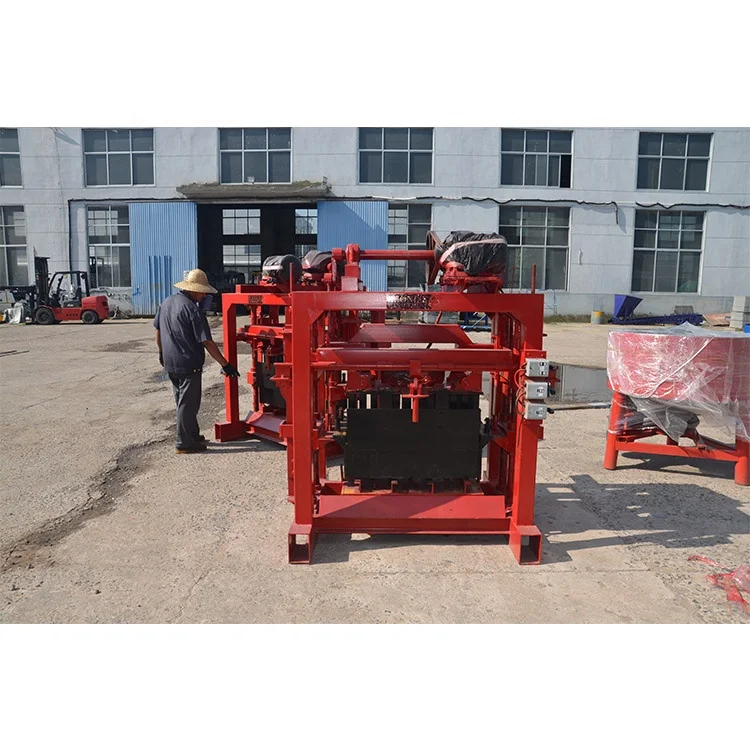


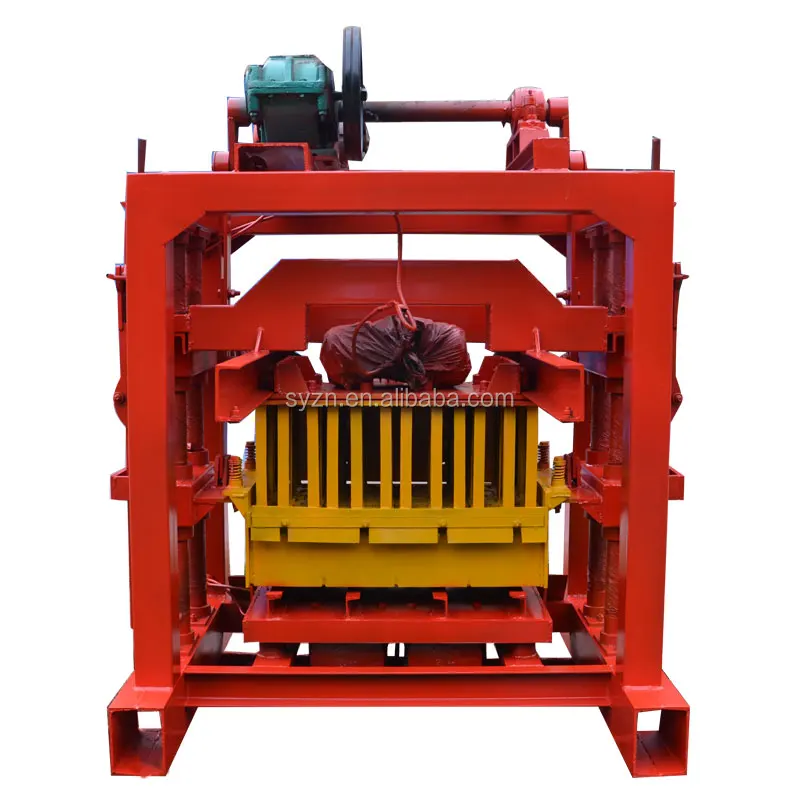

Description
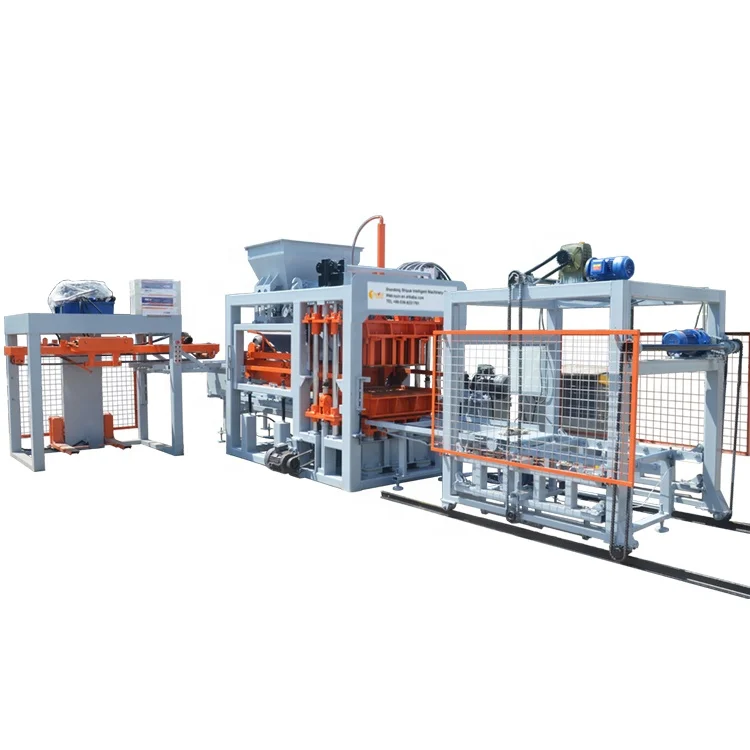
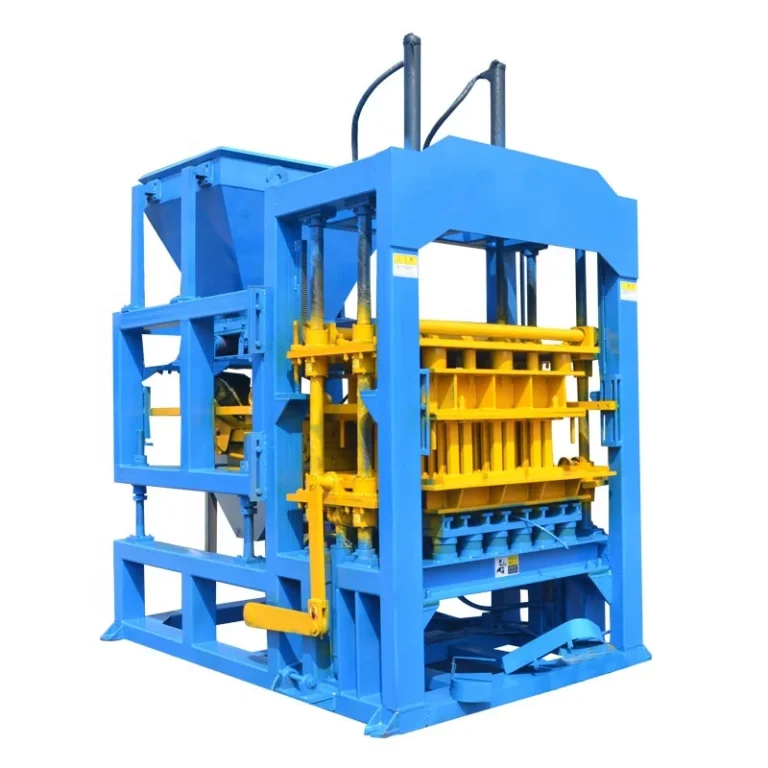
Stocked block lines — QTJ4-40 units and standard moulds kept in ready-to-dispatch inventory so your container loads on schedule, not on a production queue.
Technical Specifications
| Parameter | Value |
|---|---|
| Model | QTJ4-40 |
| Product Type | Semi-Automatic Concrete Block Making Machine |
| Overall Dimensions (L×W×H) | 1350×1460×1800 mm |
| Machine Power | 10.4 kW |
| Molding Cycle | 40 s |
| Output (Hollow 400×200×200 mm) | 4 pcs/mould, 360 pcs/hour, 2880 pcs/day |
| Output (Hollow 400×150×200 mm) | 5 pcs/mould, 450 pcs/hour, 3600 pcs/day |
| Output (Solid 225×112.5×60 mm) | 9 pcs/mould, 800 pcs/hour, 6400 pcs/day |
| Pallet Size | 850×450×20 mm |
| Machine Weight | 1.2 T |
| Vibration Type | Bed mould vertical vibration + upper mould compression vibration |
| Mould Compatibility | Hollow, solid, paver (8", 6", 5", 4", custom sizes available) |
| Assembly State | Host machine + mixer + block mould + pallets (mixer and pallets optional) |
Application Suitability
| Application | Material or Output |
|---|---|
| Hollow block production for wall construction | Concrete, sand, cement, fly ash |
| Solid brick manufacturing for load-bearing structures | Concrete, lime, gypsum, cement |
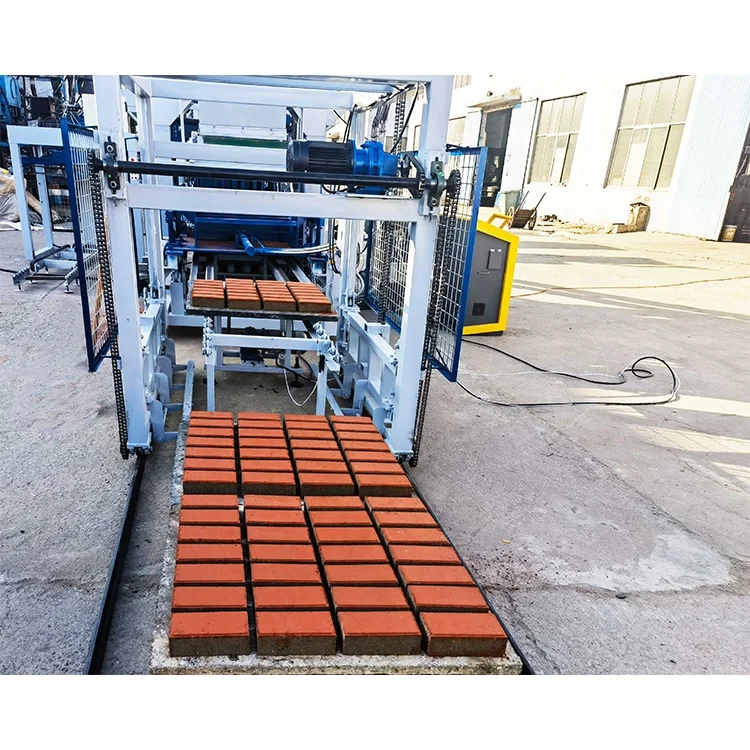
| Paving block production for walkways and yards | Crushed stone, cement, sand |
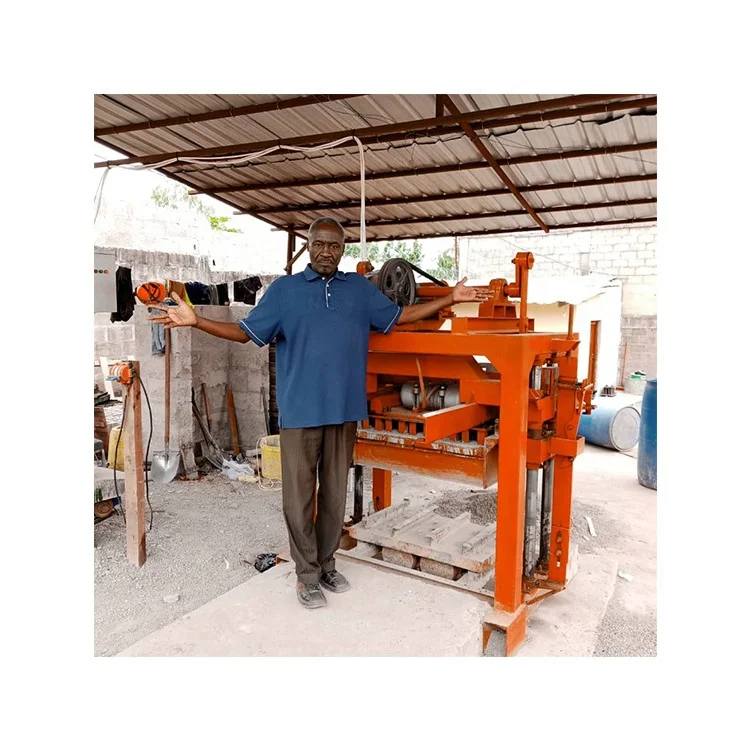
| On-site block production for housing projects | Local aggregate and cement |
What "2880 Pieces per Day" Leaves Out When Format Changes
Output figures are only honest when tied to a specific block size.
The QTJ4-40 block machine in stock lists 2,880 pieces per eight-hour shift, but that assumes a 400×200×200 mm hollow block. Switch to a 400×150×200 mm hollow block and the count rises; move to a 225×112.5×60 mm solid brick and the figure multiplies further. Sellers who quote a single daily number without naming the format leave you guessing what lands on the pallet at day’s end. I have seen contractors plan a month’s build around a number that only held true for a block they never intended to run. [NEED_CITE: standard practice for quoting block machine capacity per format]
Dispatch Timing That Matches Your Project Schedule
The QTJ4-40 block machine in stock is held in assembled and tested condition so the gap between order confirmation and container loading stays measured in days, not months. Standard mould sets for common hollow and solid formats ship from the same warehouse, cutting the wait for matched tooling that would otherwise add another production cycle.
Pallet and Voltage Confirmed Before the Crate Closes
Pallet size at 850×450×20 mm is confirmed against your existing curing racks and forklift before the machine leaves the yard. Voltage and frequency are set to your local supply specification at the factory so commissioning on arrival is a matter of connection, not rewiring. [NEED_CITE: voltage and frequency standards by export market]
Mould Change and Cycle Time in the Field
The 40-second molding cycle governs how many cycles the operator completes each shift. Mould changes on this class of semi-automatic press are manual and require bolt work rather than hydraulic clamping, so format flexibility is real but measured in minutes, not seconds. If your market runs three or four block formats in a single week, factor that changeover time into your weekly schedule. The vibration system combines bed mould vertical vibration with upper mould compression vibration, which helps densify the mix even when local sand carries a higher fines content.
When Pallet Size Does Not Match the Curing Yard
Ordering a block machine without confirming pallet dimensions against your curing area means pallets stack unevenly or forklifts cannot reach the top rows. Workers end up handling blocks by hand off the pallet, adding labour that the semi-automatic press was supposed to remove. A mismatched pallet also shifts the block’s position relative to the mould drop, causing edge damage that accumulates across a full day’s output. [NEED_CITE: block curing yard layout and pallet handling logistics]
Why Buyers Come Back for a Second Line
Block machinery is our single focus, so the press, mould, pallet and handling items are specified as one matched set rather than assembled from separate suppliers. The configuration is set against your actual mix design and local aggregate, not a catalogue default. Moulds for the formats your market actually sells are designed and supplied from the same source, including custom drawings. The semi-automatic design allows a buyer to start with manual pallet handling and add a mixer or pallet feeder later. Installation support and operator training travel with the machine so your crew runs the first shift with confidence.
Documentation & Verification
- Machine specification sheet confirming pallet size and vibration ratings
- Mould drawing and format list for every mould shipped with the press
- Voltage and control language confirmation recorded before dispatch
- Factory test record on your target block format before crating
- Packing photographs showing dismantling state and pallet placement
Installation, Commissioning & Support
- Foundation pad sized to the 1350×1460 mm footprint with anchor bolt layout
- Dedicated electrical circuit rated for the 10.4 kW motor starting current
- Host machine arrives separate from mixer for site-level reassembly
- First-run cycle parameter adjustment with your local aggregate sample
- Operator training on mould change procedure and pallet feed sequence
- Wear parts list covering vibration springs and mould liner plates
What to Send With Your Inquiry
Tell us the block formats your market sells most and the daily count you need for each. Share your local raw material source so the mix can be matched before the machine ships. Confirm your site voltage and frequency so the electrical panel is wired correctly before it leaves the yard.
Frequently Asked Questions
Q: Which QTJ4-40 models and moulds are currently in stock?
A: The QTJ4-40 semi-automatic press with standard hollow and solid block moulds is held in ready-to-dispatch inventory. Standard pallets in the 850×450×20 mm size are stocked alongside. Custom mould sizes require a separate production slot, and lead time is quoted at inquiry based on drawing complexity.
Q: What is the dispatch lead time from order to container loading?
A: Stocked QTJ4-40 units and standard moulds move to container loading once voltage confirmation and payment terms are settled. This typically means a matter of days rather than a production queue. The exact loading date is quoted in the proforma invoice so you can book the vessel in parallel.
Q: How is the machine packed and dismantled for shipment?
A: The host machine is separated from the mixer and pallet stack for container loading. Moulds are wrapped and secured to prevent movement during transit. Packing photographs showing the dismantled state and container arrangement are shared before the doors are sealed so you can plan the unload sequence.
Q: Can voltage and frequency be matched to my country before dispatch?
A: Voltage and frequency are confirmed during the order stage and the electrical panel is wired to your local supply before the machine is crated. Control labels and display language are also set at this point so the operator can read instructions on arrival without waiting for a translator or rewiring work.
Q: What arrival estimate can I expect after shipment?
A: Arrival timing depends on the destination port and the vessel schedule chosen at booking. The dispatch date is fixed on our end, and the shipping agent provides an estimated arrival once the container is on board. Customs documentation is prepared in advance to avoid delays at destination clearance.