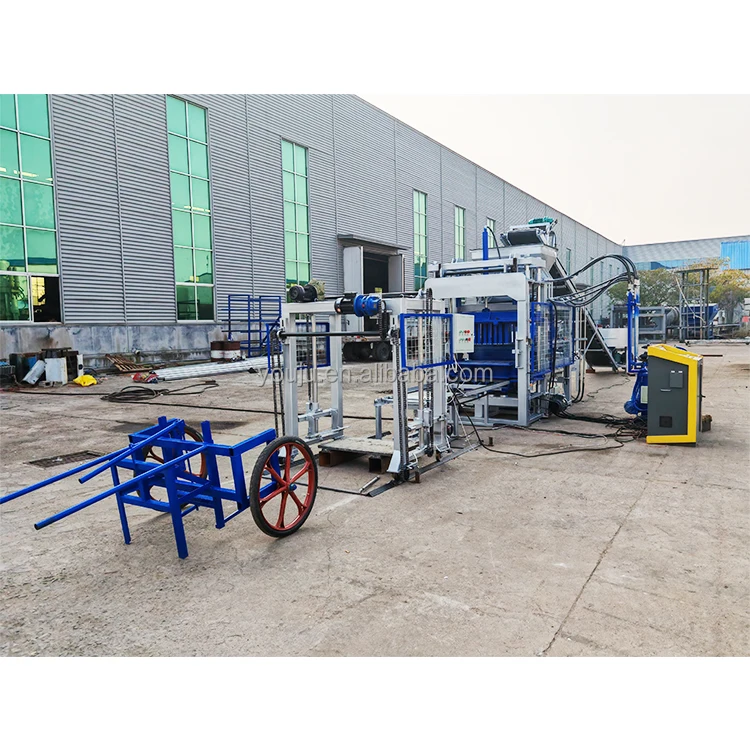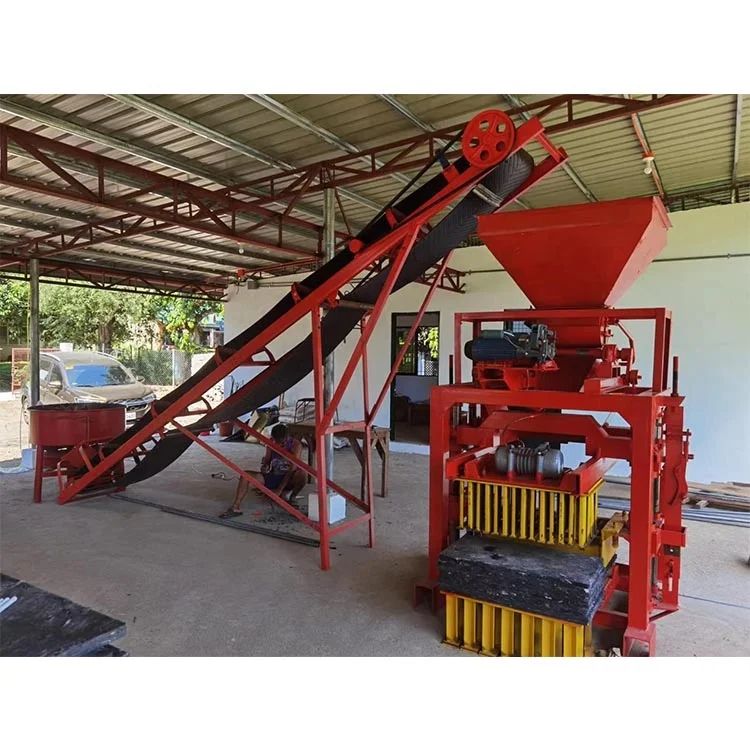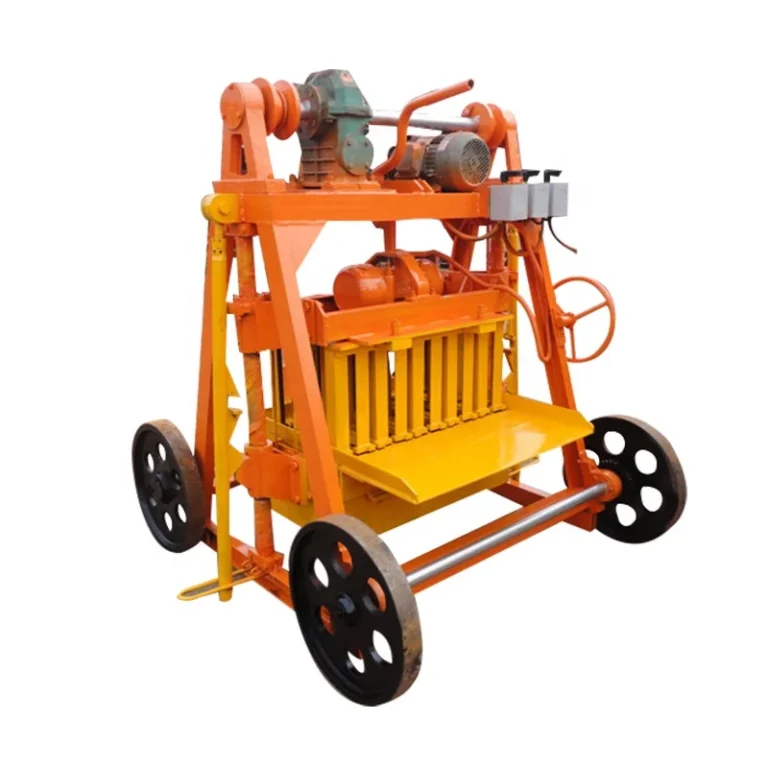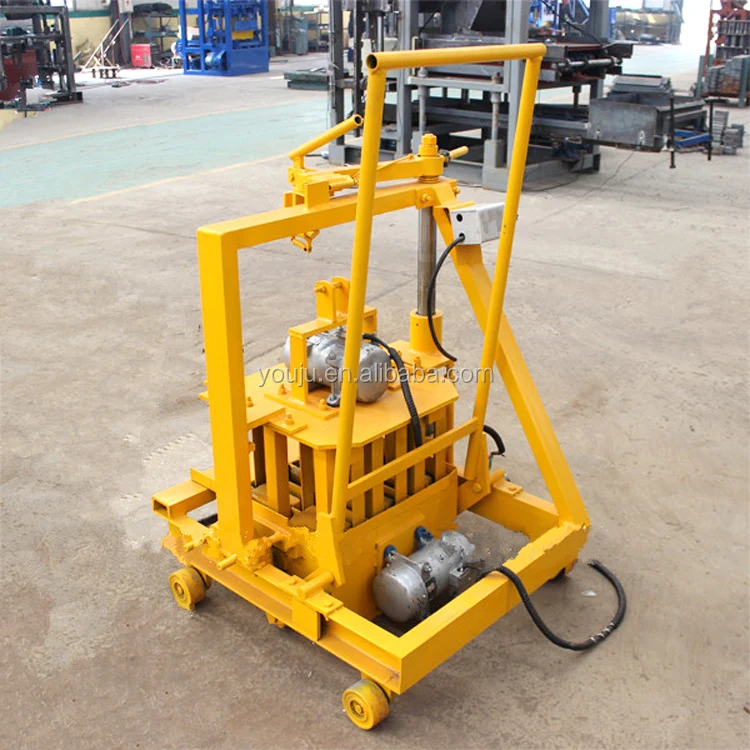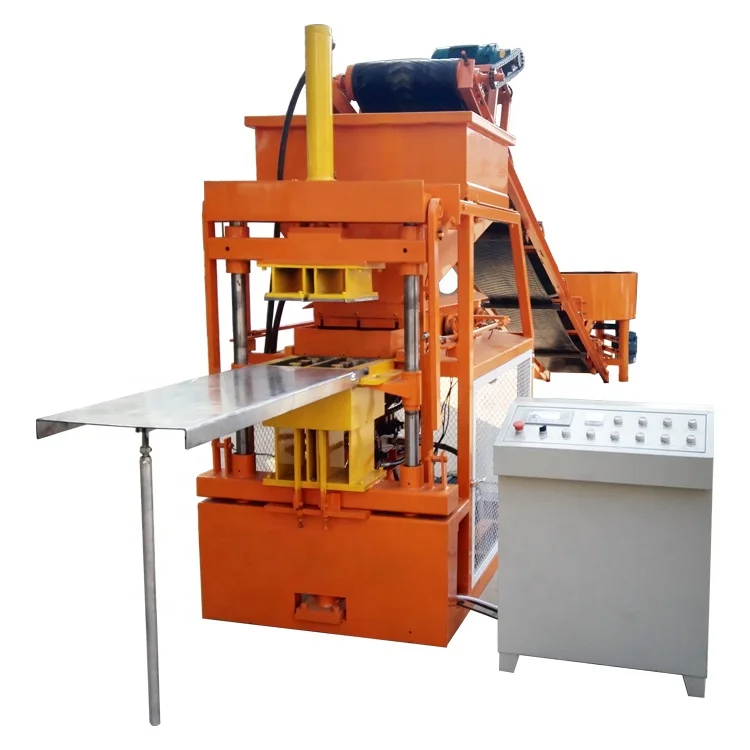


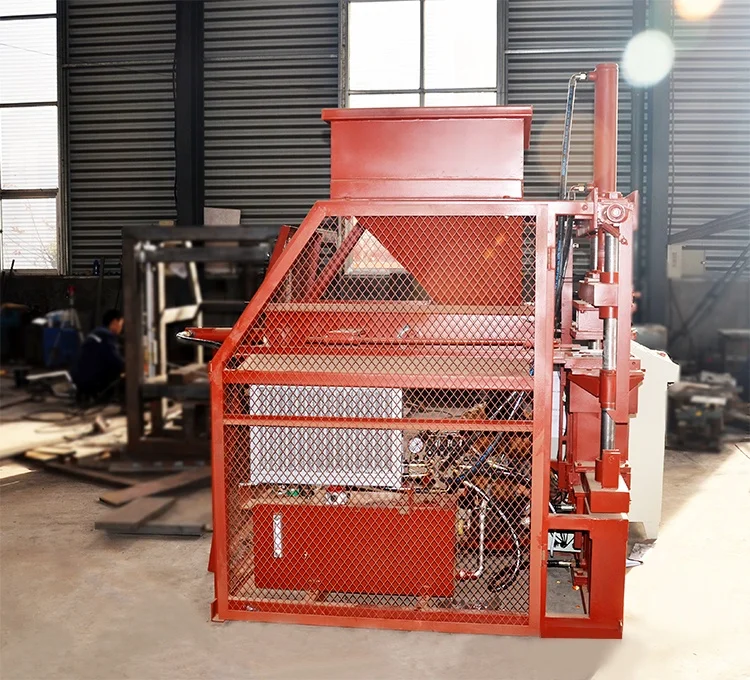


Description
Dispatch-Ready Availability — The LY2-10 hydraulic interlocking brick machine in stock ships within days of balance payment, not weeks after a custom build cycle begins.
Technical Specifications
| Parameter | Value |
|---|---|
| Model | LY2-10 |
| Product Type | Hydraulic Interlocking Clay Brick Making Machine |
| Overall Dimensions (L×W×H) | 1300×1800×2400 mm |
| Net Weight | 1200 kg |
| Power Source | Electric motor or Diesel engine |
| Rated Power | 7.5 kW (electric) / 12 HP (diesel) |
| Hydraulic Pressure | 16 MPa |
| Cycle Time | 10 seconds per press |
| Mould Output | 2 pcs per cycle |
| Mould Formats | 300×150×100 mm / 250×125×60 mm interlocking brick |
| Pallet Requirement | Palletless (egg-laying type) |
| Automation Level | Configurable semi-automatic or automatic |
| Voltage & Frequency | 380V, 3-phase, 50Hz default (customizable) |
| Warranty | 1 year (excluding wearing parts) |
Application Suitability
| Application | Material or Output |
|---|---|
| Interlocking clay brick production | Clay + cement mix (80-90% clay, 6-8% cement, 3% water) |
| Full clay brick production | 97% clay, 3% water |
| Interlocking paver production | Standard paver mix designs |
| On-site block production | Palletless design for mobile site operation |
| Small to medium brick plants | Contractors and entrepreneurs launching first operations |
What "Stock Availability" Actually Means for Your Project Timeline
Confirming what sits in the warehouse beats trusting a production calendar when deadlines are tight.
I have watched contractors in Brazil and Colombia commit to machines quoted at 5760 pieces per day, only to discover upon arrival that the figure assumed a block format their market does not buy. The output capacity for the LY2-10 hydraulic interlocking brick machine in stock is listed at 5760 pcs/day over an 8-hour shift, but the basis — which specific block format, mix design, and curing conditions produce that number — must be confirmed against your actual product before the machine ships [NEED_CITE: capacity calculation methodology for block making machines]. A machine sitting in a warehouse ready to dispatch solves your timeline problem; a machine that arrives configured for the wrong format creates a new one.
Eliminating Pallet Costs Before the First Brick Drops
The palletless egg-laying design of the LY2-10 removes the single largest consumable cost in block production. Every pallet that a conventional machine requires represents purchase expense, storage space, breakage loss, and forklift handling time. This LY2-10 hydraulic interlocking brick machine in stock places bricks directly onto the curing floor, which means your yard layout and curing area must be planned before arrival, not after.
Diesel or Electric: Matching Power to Site Reality
The dual power source option exists because not every construction site or rural yard has reliable three-phase grid access. The 7.5 kW electric motor suits fixed yard operations where power is stable. The 12 HP diesel engine serves remote housing projects where grid extension would cost more than the machine itself. Voltage and frequency customization must happen before dispatch — a 380V/50Hz machine arriving in a 220V/60Hz market will not run until a transformer or motor swap is arranged [NEED_CITE: voltage and frequency standards by export market].
Hydraulic Pressure and Cycle Time in Practice
The 16 MPa hydraulic pressure and 10-second cycle time work together to determine brick density and daily throughput. Higher pressure compresses the clay-cement mix more tightly, producing bricks with greater compressive strength — critical for load-bearing interlocking walls where mortar joints are minimal or absent. The 10-second cycle with 2 bricks per mould defines the theoretical press speed; actual daily output depends on how fast the operator feeds material, moves the machine forward, and manages the curing area. Hydraulic pressure must be matched to your specific clay composition, because a sandy clay behaves differently under compression than a high-plasticity clay.
Container Loading and What Arrives at Your Port
The 1200 kg net weight and 1300×1800×2400 mm dimensions determine how the LY2-10 fits inside a standard shipping container. The machine may need partial dismantling — typically the hydraulic ram assembly or hopper — to clear container door height and internal width constraints. Buyers working to a project deadline need the container loading plan confirmed before payment, because a machine that arrives in one piece but cannot exit the container door adds days of on-site disassembly that no schedule accounts for [NEED_CITE: container loading specifications for industrial machinery].
What Happens When Voltage Confirmation Gets Skipped
The default 380V/50Hz/3-phase configuration serves markets with Chinese or European electrical standards. Shipped to a destination running 220V/60Hz without motor or control modification, the machine will either fail to start or run at incorrect speed, producing bricks with inconsistent density because the hydraulic pump operates outside its designed RPM range. Voltage confirmation is a ten-minute conversation that prevents a multi-week delay and an expensive motor replacement on site.
Why Buyers Source the LY2-10 Here
Block machinery as a single focus means the machine, mould, and pallet configuration are specified as one matched system rather than assembled from separate suppliers. Configuration is set against your actual mix design and target block format, not a catalogue default — so when you request the LY2-10 hydraulic interlocking brick machine in stock, the moulds and hydraulic settings match what your local clay actually requires. Standard interlocking brick moulds for 300×150×100 mm and 250×125×60 mm formats ship with the machine. Automation level is selectable, so a buyer starting semi-automatic can plan an upgrade path without replacing the press. Dispatch lead time and arrival estimates are quoted upfront, before the order is placed.
Documentation & Verification
- Factory test record running your specified interlocking brick format before dispatch
- Machine specification sheet confirming hydraulic pressure, cycle time, and power source selection
- Mould drawing and format list for 300×150×100 mm and 250×125×60 mm interlocking bricks
- Voltage and frequency confirmation document signed before container loading
- Operation and maintenance manual with wearing parts and mould replacement list
Installation, Commissioning & Support
- Flat concrete curing area required for palletless egg-laying operation, sized to daily output
- 3-phase power supply at confirmed voltage, or diesel fuel supply for 12 HP engine option
- Partial dismantling may apply for container loading; reassembly guided by hydraulic schematic
- First-run parameter setting adjusted to your local clay-cement mix composition on site
- Operator training covers mould change, hydraulic pressure adjustment, and daily maintenance routines
- Wearing parts list provided at dispatch for local sourcing or direct reorder
Requesting the Right Quote
Provide your destination port, local voltage and frequency, and which interlocking brick format your market sells — 300×150×100 mm or 250×125×60 mm, or a custom size requiring a separate mould lead time. Confirm whether your site has three-phase power or requires the diesel engine option. State your project start date so dispatch and shipping time can be matched to your deadline.
Frequently Asked Questions
Q: Which LY2-10 configurations are currently in stock and ready to ship?
A: Standard LY2-10 machines configured with either the 7.5 kW electric motor or 12 HP diesel engine, fitted with interlocking brick moulds in 300×150×100 mm or 250×125×60 mm format, are available for dispatch. Stock status changes with orders, so confirm current availability at inquiry to match your specific format and power requirement.
Q: What is the dispatch lead time after balance payment, and how is the machine packed?
A: Stocked machines dispatch within days of balance receipt, subject to container booking availability. The LY2-10 may require partial dismantling of the hydraulic assembly to fit standard container dimensions, and the loading plan is confirmed before shipment so you know exactly what arrives and how to reassemble it.
Q: Can the motor voltage be customized to my local standard before shipment?
A: Voltage and frequency customization is confirmed during the order process, before the machine enters the container. If your destination market runs on a different standard than the default 380V/50Hz, the motor and any control components are adjusted to match, preventing commissioning delays upon arrival.
Q: What is the estimated arrival time at my destination port?
A: Arrival estimates depend on your destination port and current shipping schedules, and are quoted upfront before you place the order. Transit times vary by route and carrier, so the estimate provided at inquiry gives you a realistic timeline to plan site preparation and operator training around.
Q: Are standard interlocking brick moulds included, or do they need separate lead time?
A: Stocked LY2-10 machines ship with interlocking brick moulds in the standard 300×150×100 mm or 250×125×60 mm format already fitted. Custom mould sizes designed to your drawings require separate production lead time, which is confirmed at inquiry alongside machine availability.