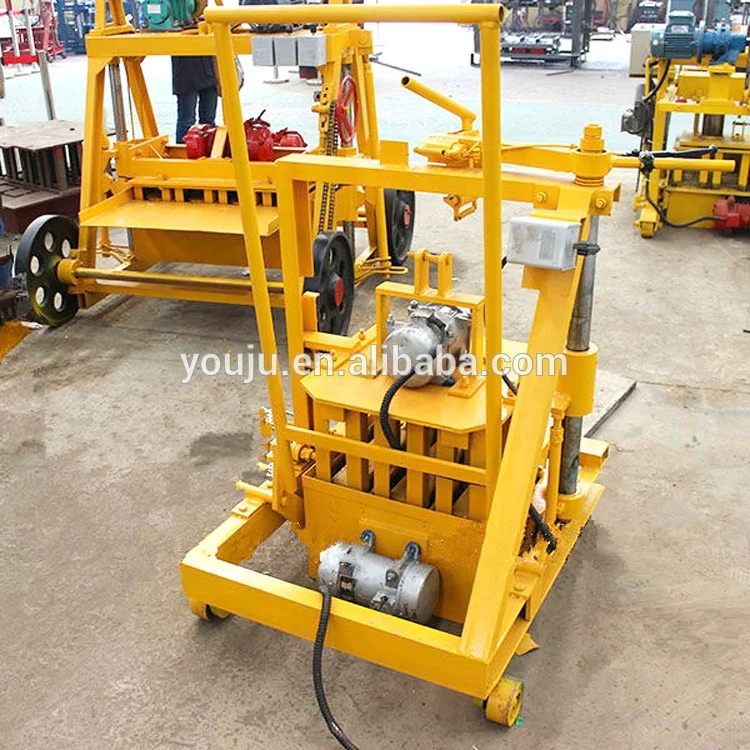
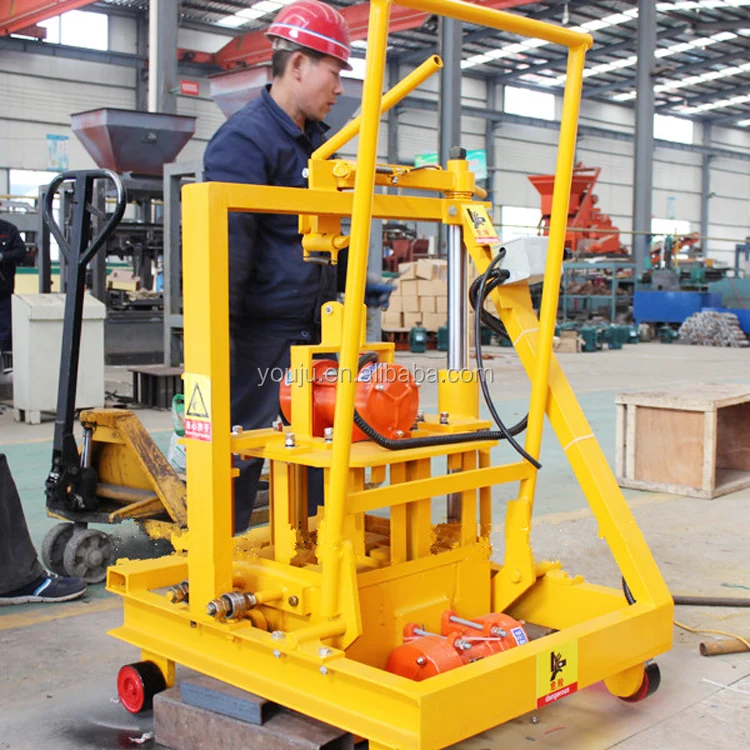
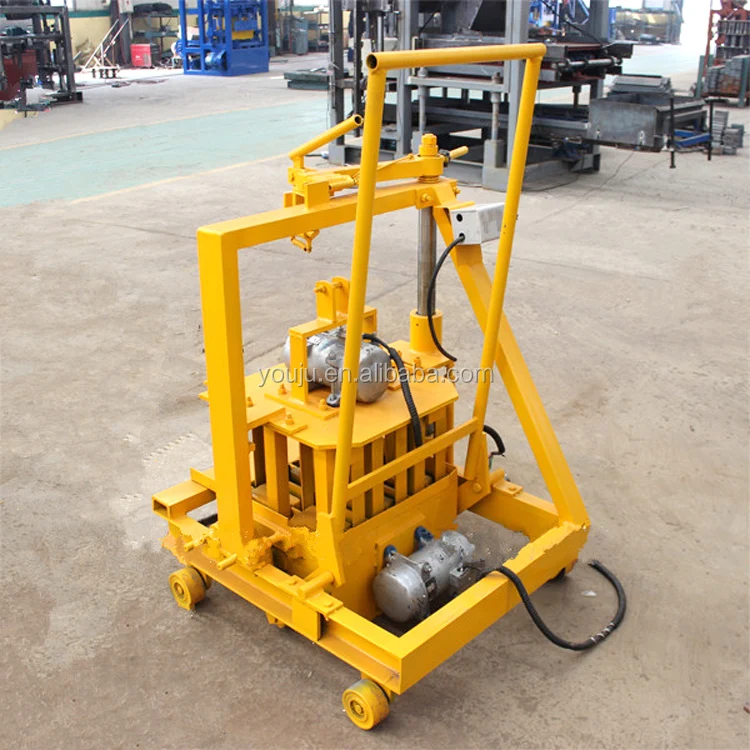
Description
Fast Dispatch Readiness — QMJ2-45 mobile block machines are assembled, electrically tested, and staged for container loading, so your project site is not waiting on a production slot that was never confirmed.
Technical Specifications
| Parameter | Value |
|---|---|
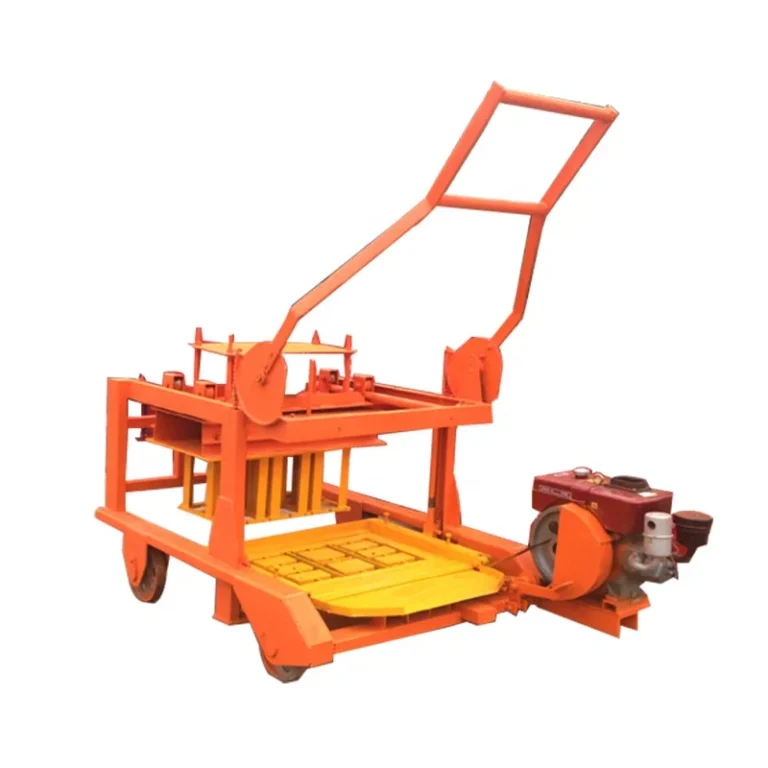
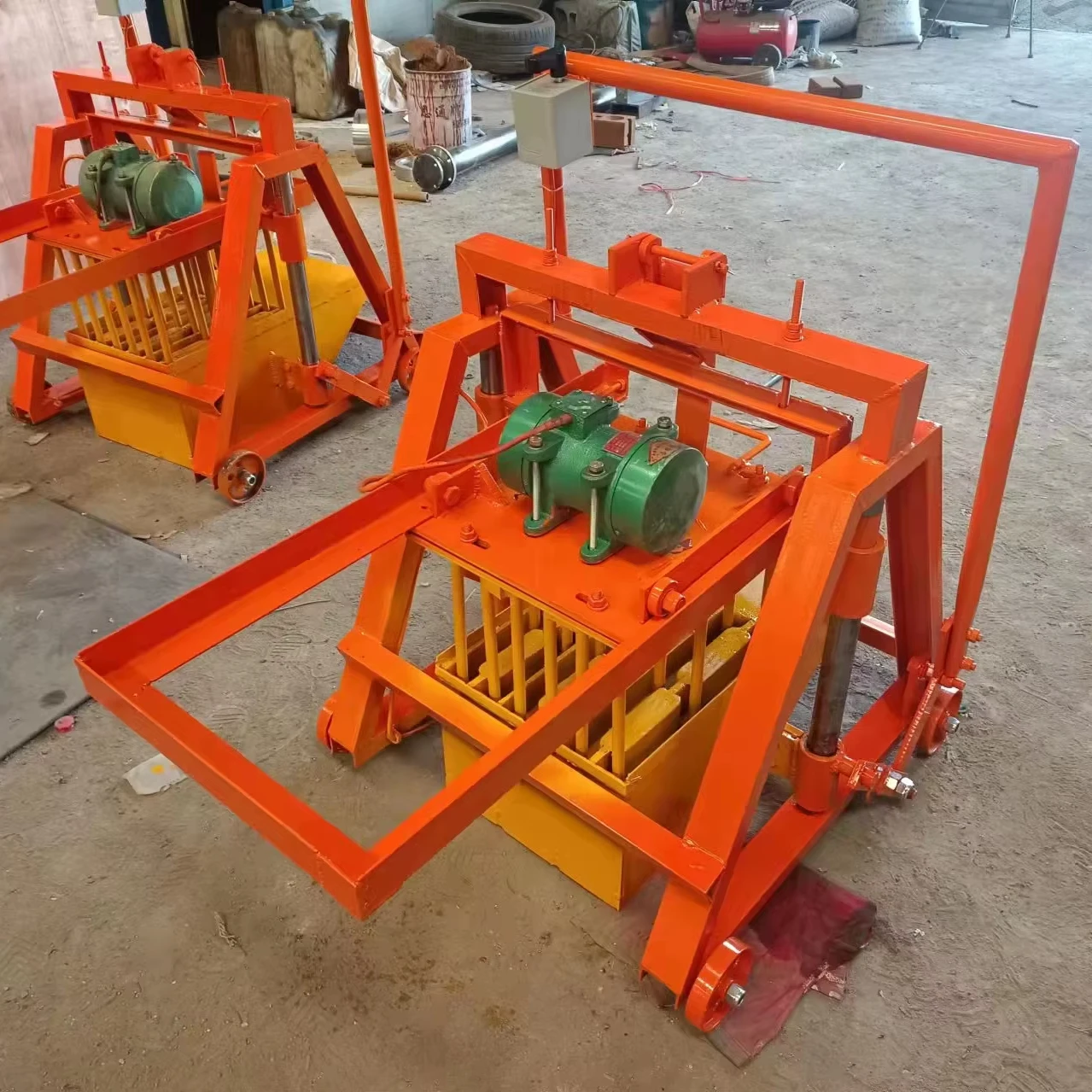
| Model | QMJ2-45 |
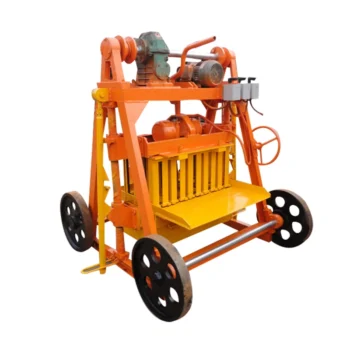
| Product Type | Mobile Concrete Hollow Block Making Machine |
| Automation Level | Manual / Motorized hand-pushed |
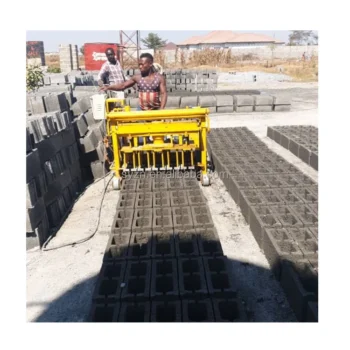
| Pallet Requirement | None (blocks laid directly on ground) |
| Power Source | Electric motor |
| Labor Requirement | 1 to 3 workers |
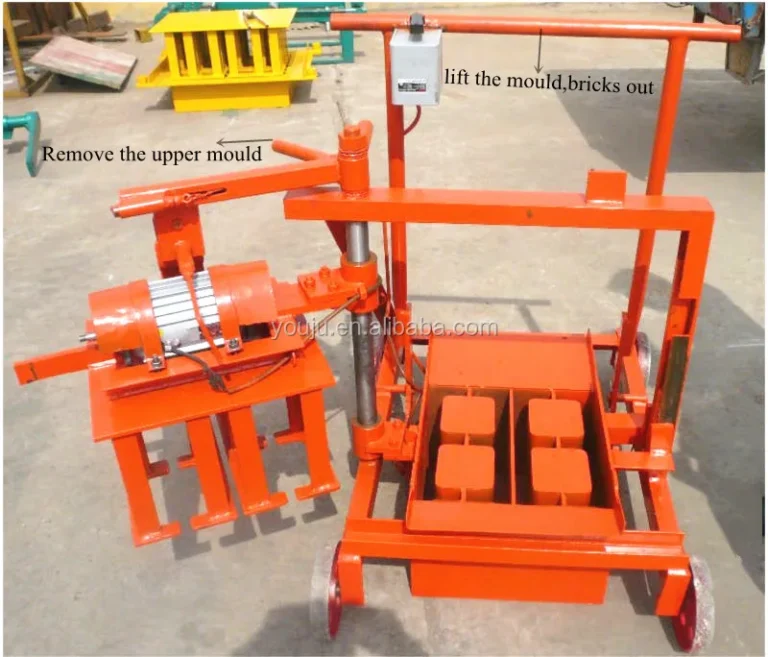
| Mould Change | Interchangeable moulds for different hollow brick formats |
| Cycle Time | 25–30 seconds per mould |
| Output Capacity | 2 pcs/mould, 160 pcs/h, 1280 pcs/8hr (based on 400×200×200mm hollow brick) |
| Output Capacity | 3 pcs/mould, 240 pcs/h, 1920 pcs/8hr (based on 400×150×200mm hollow brick) |
| Output Capacity | 4 pcs/mould, 320 pcs/h, 2560 pcs/8hr (based on 400×100×200mm hollow brick) |
| Mould Format Options | 400×200×200mm / 400×150×200mm / 400×100×200mm hollow brick |
| Mobility | Hand-pushed mobile, free movement on site |
| Operating Space | Small footprint suitable |
| Mould Heat Treatment | Carburization technology applied |
| Certification | ISO 9001:2000, CE |
Application Suitability
| Application | Material or Output |
|---|---|
| Small-scale on-site hollow block production | Crushed stone, sand, cement, and water mix |
| Project-location block making by contractors | Hollow bricks in 200mm, 150mm, and 100mm widths |
| First block plant for entrepreneurs with limited space | Pallet-free ground-laid curing on compacted soil or concrete slab |
| Rural and remote site block making | Local aggregate with cement binder, no pallet logistics required |
Why the Voltage Question Must Come Before the Container Booking
A mobile block machine that cannot plug into your site’s grid is a heavy metal sculpture, not a production asset.
I have watched a QMJ2-45 sit idle on a Middle East project site for three weeks because the voltage at the factory was set for a different standard than what the local generator supplied. The crew had concrete mixed, workers on payroll, and a deadline burning cash every day. The motor was fine — the mismatch was purely an electrical configuration oversight that a five-minute confirmation would have prevented [NEED_CITE: voltage and frequency standards by export market]. Every mobile block machine in stock that leaves our Linyi workshop now has its motor nameplate cross-checked against the buyer’s written site supply specification before it is bolted to the container floor.
Stock Position and Dispatch Timing
When a construction contractor has a pour schedule waiting on hollow blocks, a sixty-day production lead time plus ocean transit is not a timeline — it is a project failure. The QMJ2-45 mobile block machine in stock is built, motor-tested, and mould-fitted before the inquiry arrives, not after. Dispatch lead time is quoted against actual warehouse inventory at the point of order, so the buyer knows the calendar date the container will be sealed, not an estimate based on a production queue that shifts weekly.
Container Loading and Machine Dismantling
The QMJ2-45 is compact enough that the main frame, mould assembly, and motor unit can be broken down and loaded into a standard container without special flat-rack surcharges. Each dismantled section is photographed during loading, and those images are shared with the buyer before the container doors close. This is not cosmetic — it is the only way the receiving crew can verify what was loaded matches what was invoiced, and it speeds up customs clearance at destination [NEED_CITE: container loading documentation for industrial machinery exports].
Reading the Cycle Time Against Your Block Format
The 25–30 second cycle time is measured per mould, but the output it produces depends entirely on which hollow brick format the mould is forming. A 400×200×200mm mould yields 2 blocks per cycle, while a 400×100×200mm mould yields 4 blocks in the same window. Buyers who compare daily output figures across suppliers without checking which block format the number assumes will overestimate their production by half or more. The carburization heat treatment on the QMJ2-45 moulds extends wear life under abrasive aggregate, keeping dimensional accuracy across thousands of cycles without the block walls thinning or corners rounding off.
What Happens When Dispatch Details Are Skipped
Skipping pre-shipment electrical confirmation means the machine arrives and the site electrician discovers the motor winding does not match the local three-phase supply. The fix involves rewinding or replacing the motor locally, which takes weeks in regions where industrial motor shops are sparse. Similarly, if the container loading plan is not shared with the buyer, the receiving team has no reference for reassembly sequence, and the first production day becomes a puzzle-solving exercise instead of a startup [NEED_CITE: common commissioning delays in exported construction equipment].
Why Buyers Source This Machine Through Our Dispatch Desk
The QMJ2-45 is specified as a matched unit — frame, motor, and mould set are confirmed together before it is listed as in stock, so there is no post-order discovery that the mould format you need is on a six-week lead. Voltage and frequency are locked against your written site supply before the machine leaves the workshop, eliminating the most common cause of idle-on-arrival delays. Container loading plans are drafted per shipment with dismantling photographs, so the receiving crew has a visual reassembly guide. Arrival estimates are quoted against the destination port at the time of order, not after the container is already on the water.
Documentation & Verification
- Factory test record confirming motor rotation and cycle timing before dispatch
- Voltage and frequency confirmation sheet matched to your site supply specification
- Container loading photographs showing dismantled sections and securing arrangement
- Mould format list with dimensional drawings for each included hollow brick size
- Packing list with item weights for destination customs clearance
Installation, Commissioning & Support
- No fixed foundation required — operate on compacted ground or concrete slab with the hand-pushed mobile frame
- Single electric motor connection — confirm three-phase voltage and frequency before wiring on site
- Machine arrives partially dismantled for container loading — reassembly requires basic hand tools and the supplied loading photographs as reference
- First-cycle mould setup and block ejection adjustment demonstrated during operator orientation
- Carburized mould surfaces inspected and wear pattern guidance provided at startup
- Mould interchange procedure for switching between 200mm, 150mm, and 100mm hollow brick formats covered in training
What to Include With Your Inquiry
Send the hollow brick dimensions your market requires, the daily output target for that specific format, and your site’s confirmed voltage and frequency. Include the destination port so transit time can be estimated against current sailing schedules, and note whether additional mould formats beyond the standard set will be needed for the same machine.
Frequently Asked Questions
Q: Is the QMJ2-45 currently in stock, and what is the earliest dispatch date?
A: Stock status is confirmed at the time of inquiry against live warehouse inventory, not a general catalog listing. The dispatch date is quoted in writing once the mould format and voltage configuration are locked to your specification, so the date reflects an actual machine on the floor rather than a production estimate.
Q: How is the machine packed for container shipment, and do you provide loading photographs?
A: The QMJ2-45 is partially dismantled to fit standard container dimensions, with each section secured against movement during transit. Loading photographs are taken at each stage and shared with the buyer before the container is sealed, providing both a packing verification record and a reassembly visual guide for the receiving team.
Q: Which hollow brick formats are included as standard moulds, and what is the lead time for additional moulds?
A: The standard set covers 400×200×200mm, 400×150×200mm, and 400×100×200mm hollow brick formats, all with carburized wear surfaces. Additional or custom mould formats are quoted separately with a lead time confirmed at order, so they can be included in the same container if timing aligns with the machine dispatch.
Q: What voltage and frequency options are available, and can you confirm compatibility with my grid before shipping?
A: The electric motor can be configured to match your site’s three-phase supply, and the exact voltage and frequency must be confirmed in writing before the machine leaves the workshop. This confirmation step is non-negotiable in our dispatch process to prevent the most common cause of commissioning delay on arrival.
Q: What is the estimated transit time to my destination port, and do you handle customs documentation?
A: Transit time is estimated based on the destination port and current carrier sailing schedules at the time of order, not a fixed number. Customs documentation support including packing list, commercial invoice, and certificate of origin is prepared and provided alongside the shipping documents to clear import formalities at destination.