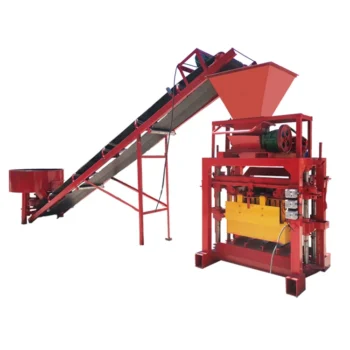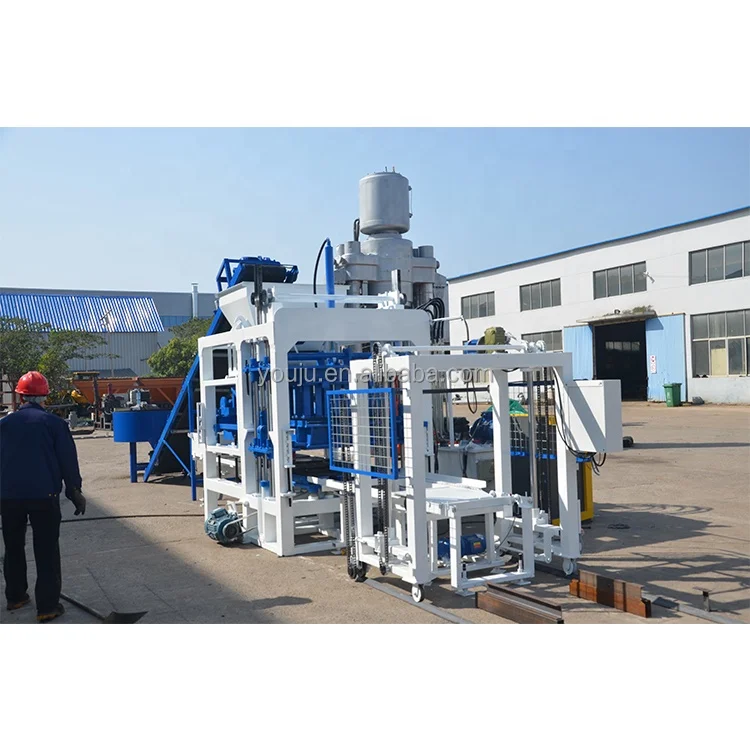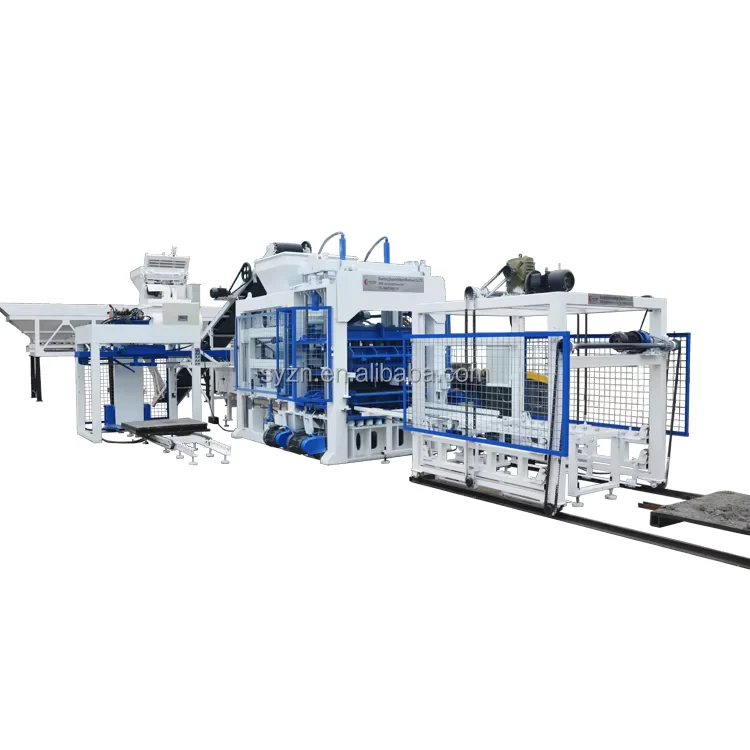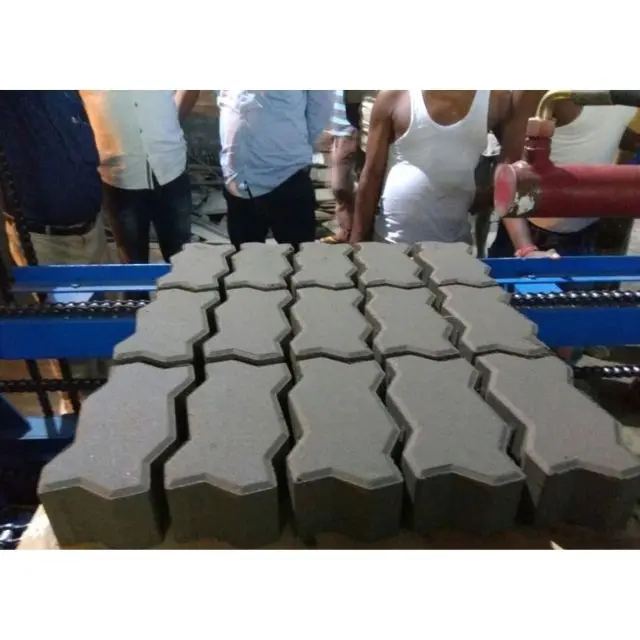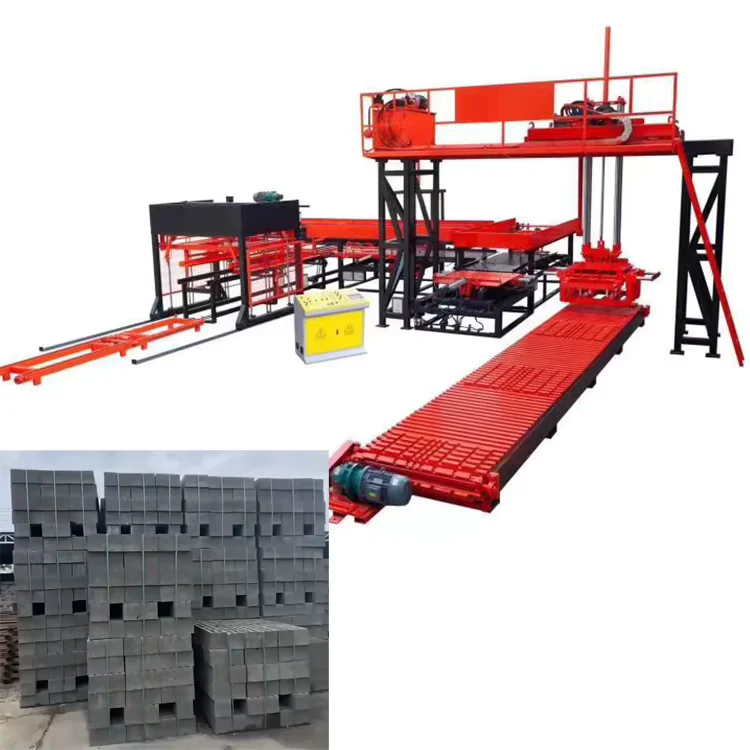

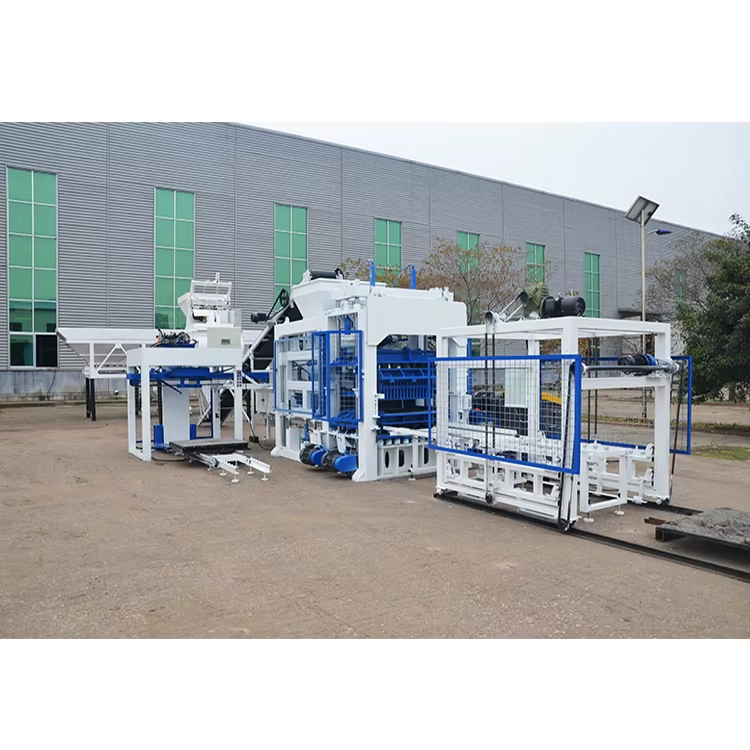
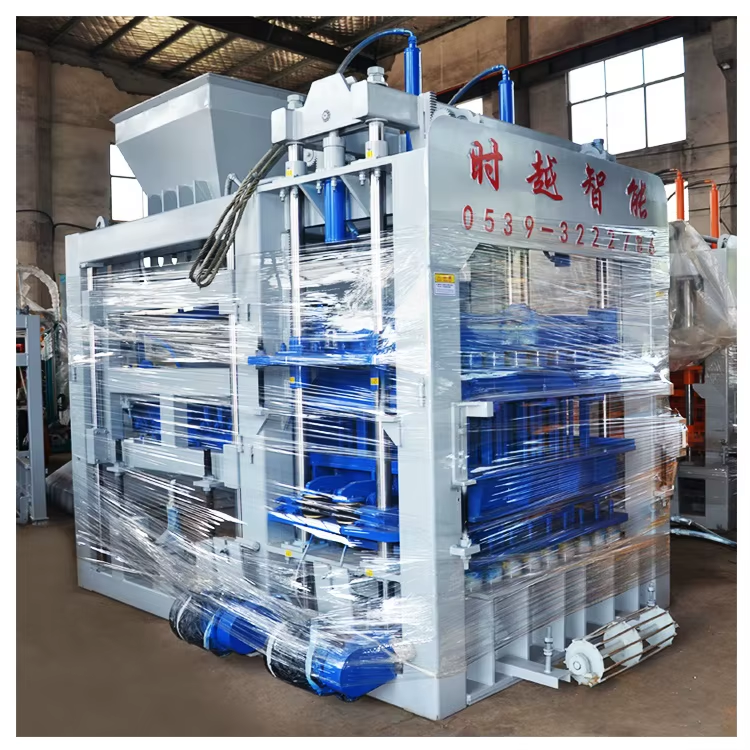
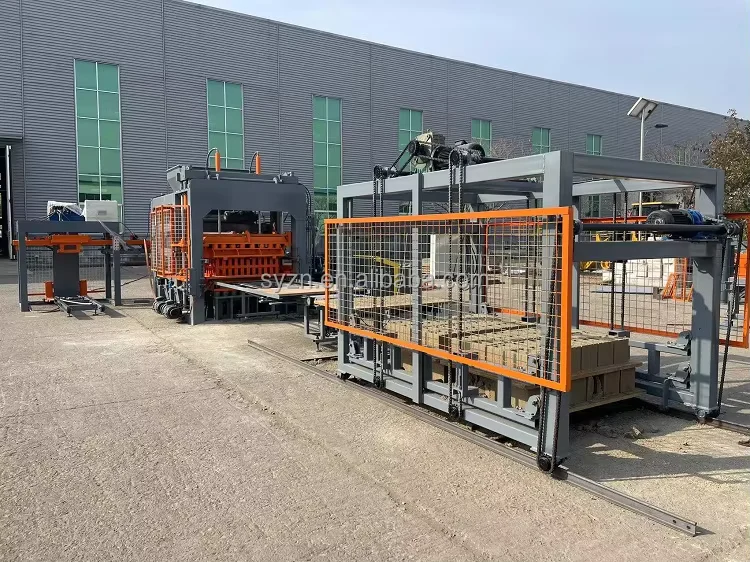
Description
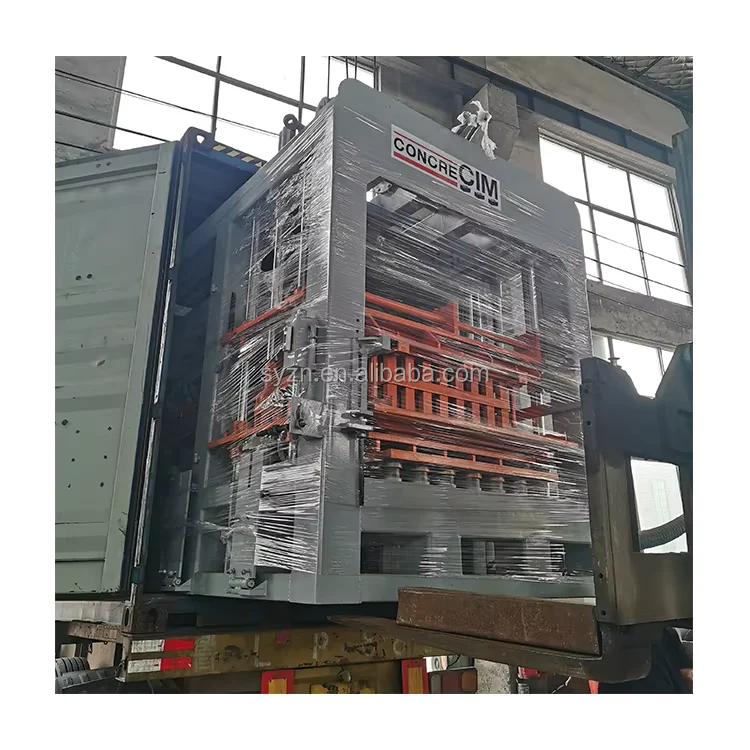
Dispatch readiness — standard moulds and the main press are kept in inventory so container loading begins immediately after order confirmation.
Technical Specifications
| Parameter | Value |
|---|---|
| Model | QT10-15 |
| Product Type | Fully Automatic Hydraulic Block Machine |
| Forming Method | Hydraulic pressure with vibration |
| Overall Dimensions (L×W×H) | 935023202950mm |
| Net Weight | 10000 kg |
| Hydraulic Pressure | 20 MPa |
| Shaping Cycle | 15-20s (basis not stated in source) |
| Mould Formats Supported | 400200200mm, 20010060mm, and 8 other standard sizes |
| Power Source | Electric motor |
| Voltage | Configurable to local grid (to be confirmed prior to dispatch) |
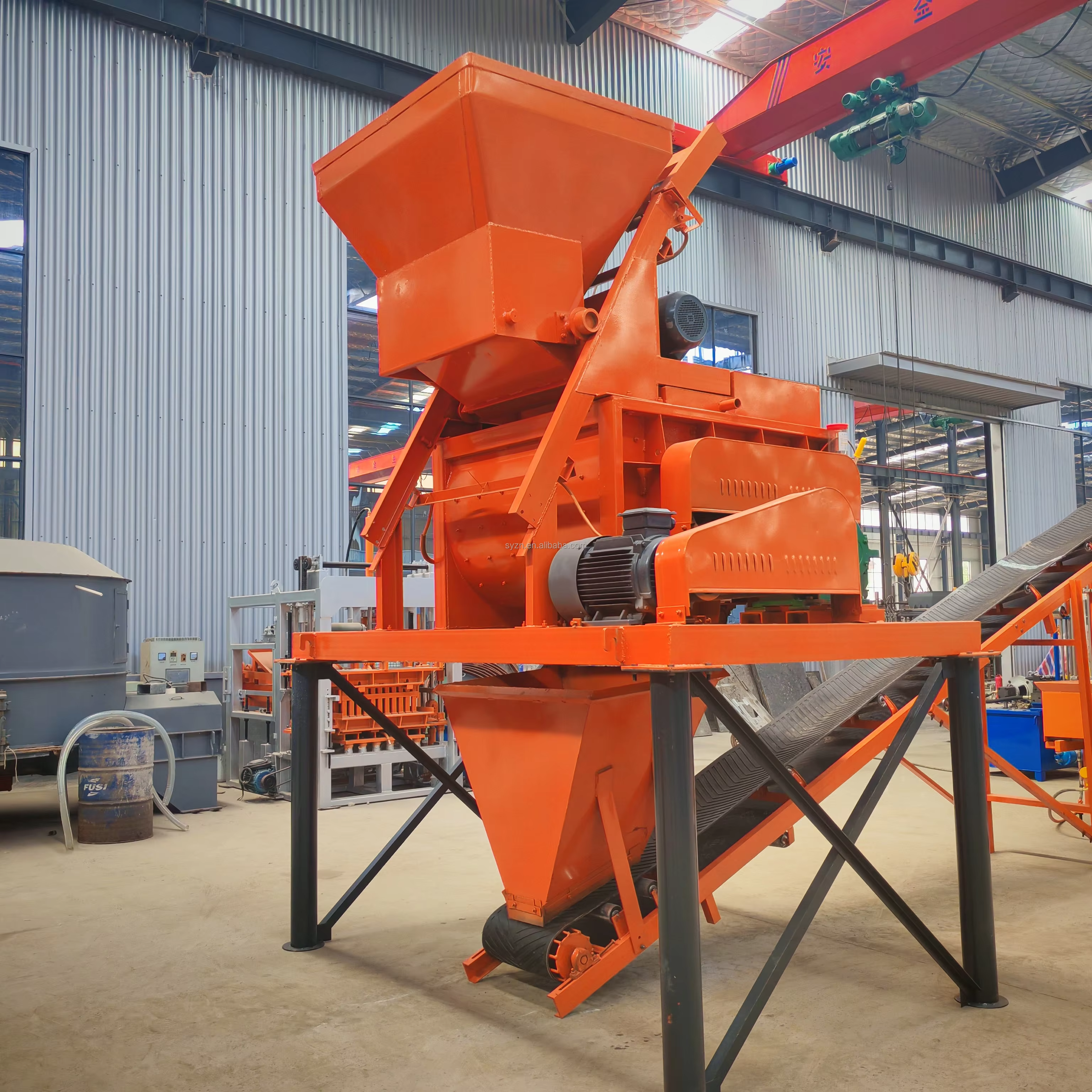
| Concrete Mixer | Optional |
| Labor Requirement | 1-3 people |
| Core Components | Motor, Pump |
| Warranty | 1 Year |
| Inspection Documentation | Machinery Test Report and Video outgoing-inspection |
Application Suitability
| Application | Material or Output |
|---|---|
| Housing project block supply | Concrete hollow blocks and solid blocks |
| Road and walkway paving | Paving blocks and interlocking blocks |
| Infrastructure curbing | Curbstone blocks |
| Urban permeable surfaces | Porous blocks |
Why Electrical Confirmation Dictates Your Arrival Schedule
Securing a QT10-15 block machine in stock only solves half the delivery equation if the electrical configuration delays the final dispatch. I spent years running the Latin American service route, and the most frustrating delays never happened at the port; they happened because a 60Hz voltage requirement was overlooked during the rush to ship. When a motor built for the wrong frequency arrives on site, it simply refuses to start, turning a fast delivery into a multi-week wait for replacement parts or inverter retrofits. Locking down the exact voltage and PLC language before the crate is sealed is the only way to guarantee the equipment actually runs upon arrival [NEED_CITE: voltage and frequency standards by export market].
Standard Inventory and Immediate Loading
Having the main press and standard moulds physically available means we bypass the typical manufacturing queue. When a project deadline is tight, waiting for a custom build is not an option. The QT10-15 block machine in stock is prepared for immediate dismantling and loading. We match the available standard mould formats to your immediate production needs, ensuring the most critical block sizes are in the container alongside the main unit.
Dismantling and Container Space Optimization
A machine measuring over 9.3 meters in length and weighing 10,000 kg requires precise dismantling to fit standard ocean freight containers. The host frame, hydraulic station, and control cabinets are separated strategically. This dismantling process is documented with loading photographs before the doors are sealed. Proper space optimization ensures the QT10-15 block machine in stock and its accompanying standard pallets arrive intact, avoiding the delays caused by damaged components during transit [NEED_CITE: standard ocean freight container dimensions and loading practices].
Interpreting the Physical and Hydraulic Footprint
The 20 MPa hydraulic pressure combined with vibration forces the raw material into dense, stable shapes, but this force requires a solid foundation at your site. The 935023202950mm overall dimensions dictate the minimum clearance needed inside your facility or under your curing shed. While the shaping cycle is listed at 15-20 seconds, the actual daily output depends entirely on how fast your local material handling can feed the mixer and clear the finished blocks. The 1-3 person labor requirement assumes a steady flow of materials and pallets, meaning your site logistics must be ready the day the machine is bolted down.
The Hidden Cost of Rushing the Voltage Check
Skipping the electrical verification step to save a few days on the front end often results in catastrophic delays on the back end. If the control panel language does not match your local operators, or if the motor frequency is mismatched, the machine sits idle while you source local electricians to rewire the system. This completely erases the advantage of fast delivery, turning a quick installation into a prolonged troubleshooting exercise that pushes your project completion date back by weeks [NEED_CITE: common electrical mismatches in exported industrial machinery].
Why Procuring From Our Stock Matters
We keep block machinery as our single focus, meaning the main press, standard moulds, and handling equipment are specified as one matched system from our inventory. You receive a machine configured for rapid deployment rather than a catalogue default assembled from separate suppliers. We provide clear dispatch lead times and container loading plans upfront, so you know exactly when the equipment will leave our floor. Our documentation includes factory test records and outgoing-inspection videos specific to your unit, ensuring the stock equipment is verified and ready before it ships.
Documentation & Verification
- Factory test record and video outgoing-inspection specific to your unit before dispatch.
- Machinery test report confirming hydraulic pressure and vibration force ratings.
- Container loading photographs documenting the dismantling and securing process.
- Voltage, frequency, and PLC display language confirmation sheet signed prior to crating.
- Standard mould format list matching the inventory included in your shipment.
Installation, Commissioning & Support
- Foundation must support the 10000 kg net weight and 20 MPa hydraulic vibration forces.
- Dedicated electrical circuit required matching the confirmed local voltage and frequency.
- Host frame and hydraulic station reassembled on-site following the provided dismantling layout.
- PLC display language verified with local operators during the initial power-on sequence.
- Standard wear parts and mould maintenance guidelines provided for immediate operational readiness.
Preparing Your Site for Immediate Integration
To ensure the equipment integrates smoothly into your project timeline, we need to know your local voltage, frequency, and the required PLC display language. Please also confirm your available workshop footprint and the specific standard block formats you need to produce first. This allows us to finalize the container loading plan and dispatch the correct inventory without delay.
Frequently Asked Questions
Q: What standard moulds are currently in stock for this model?
A: The inventory includes standard formats such as 400200200mm hollow blocks and 20010060mm paving blocks. We match the available standard moulds to your immediate project needs and load them in the same container. Custom mould designs require a separate manufacturing lead time and are not part of the immediate stock dispatch.
Q: How is the machine prepared for ocean freight?
A: The 9.35-meter host frame and hydraulic stations are strategically dismantled to fit standard shipping containers. We take detailed loading photographs during the container stuffing process to document how the 10,000 kg equipment is secured, ensuring you have a clear guide for reassembly upon arrival at your port.
Q: Can the electrical system be adjusted before dispatch?
A: Yes, but the exact voltage, frequency, and PLC language must be confirmed before we seal the container. I have seen machines sit idle for weeks because a 60Hz requirement was missed during a rushed order. We lock these details down first to guarantee the motors and controls run immediately upon site connection.
Q: What does the 15-20 second shaping cycle actually mean for my site?
A: That cycle time reflects the press operation itself, but your actual daily output depends on how fast your site can feed raw materials and clear the finished blocks. The 1-3 person labor requirement assumes your material handling and pallet circulation are fully prepared to keep the press running without waiting.