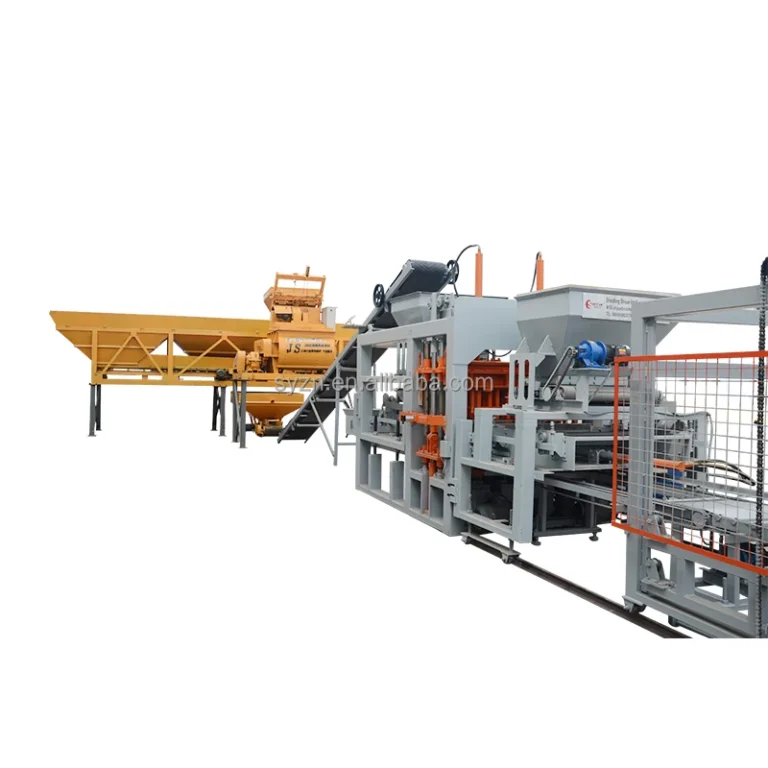
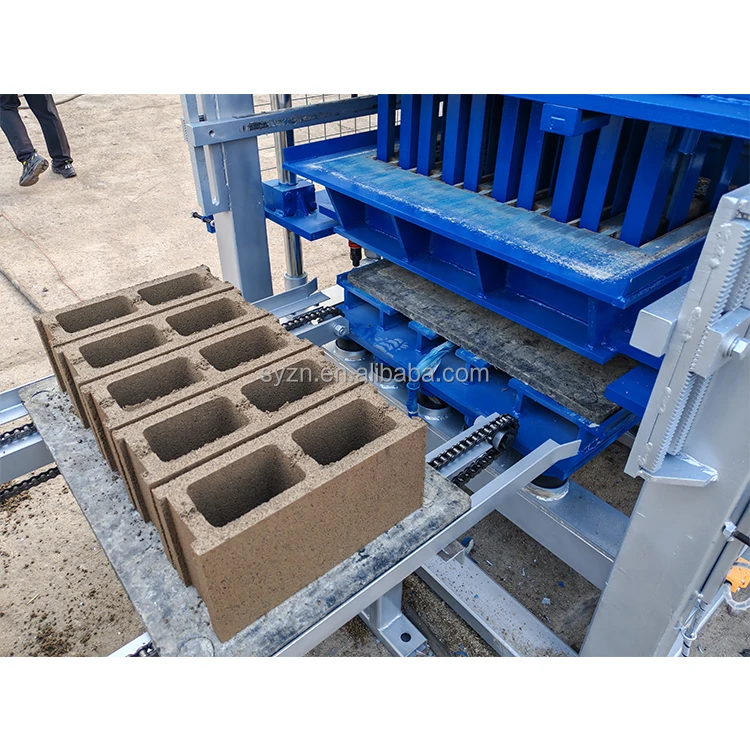
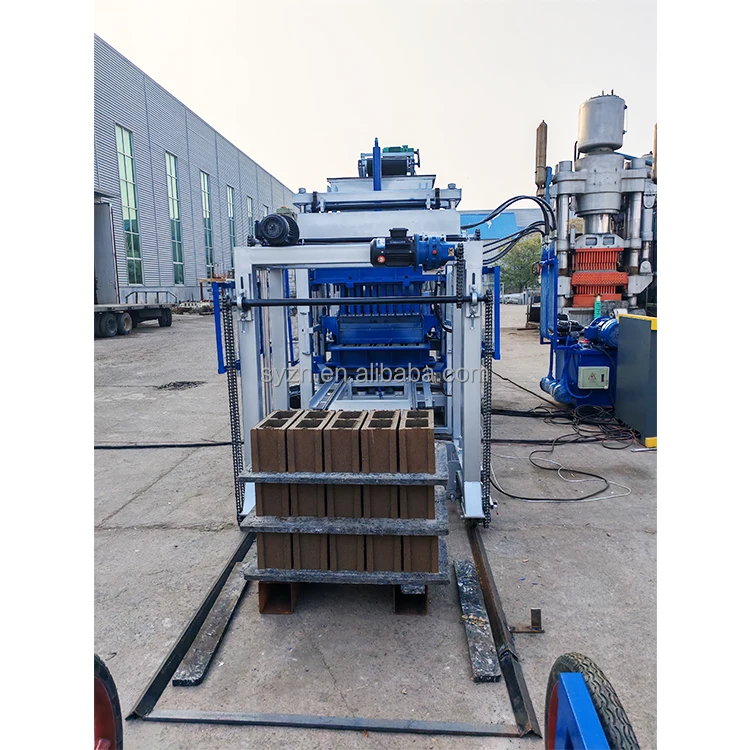
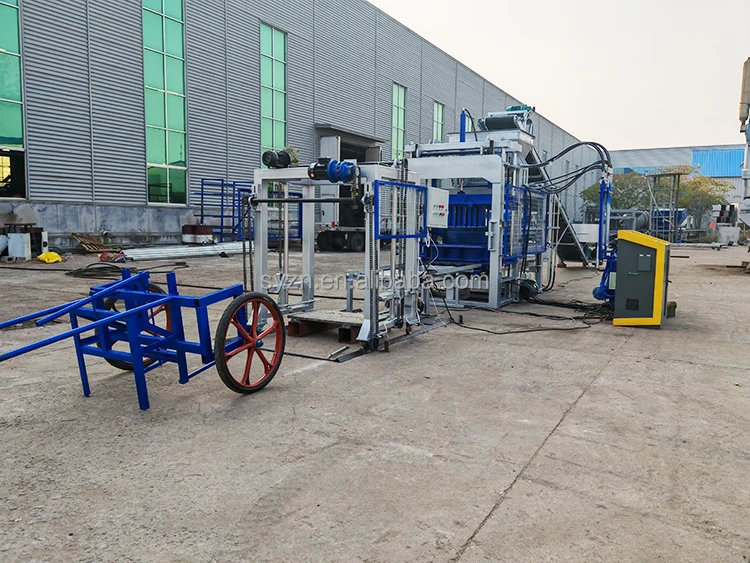
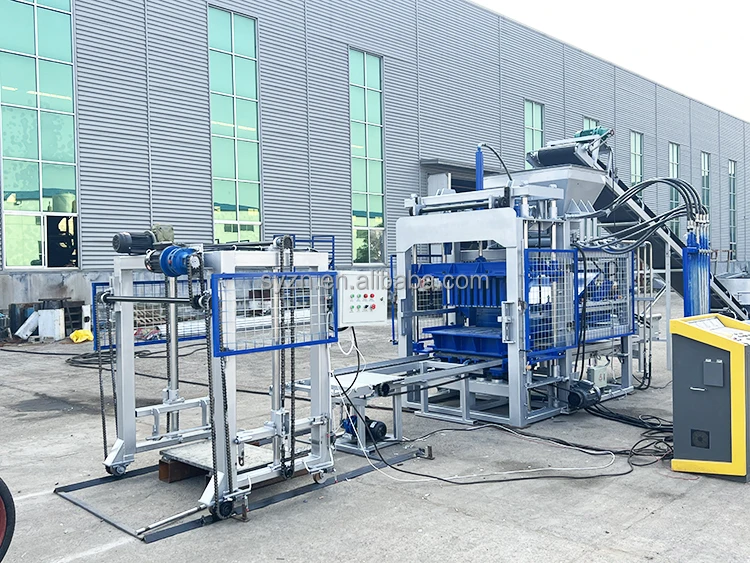
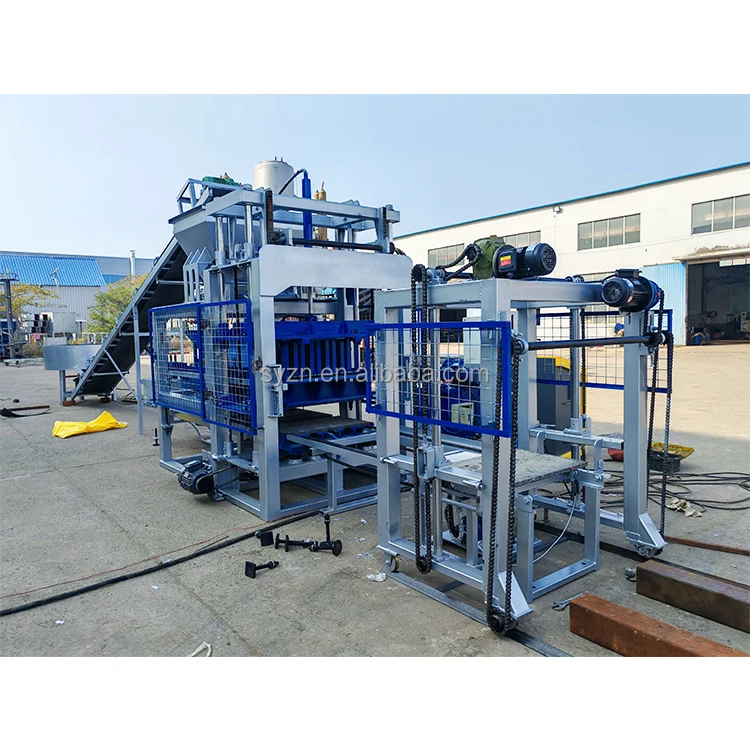
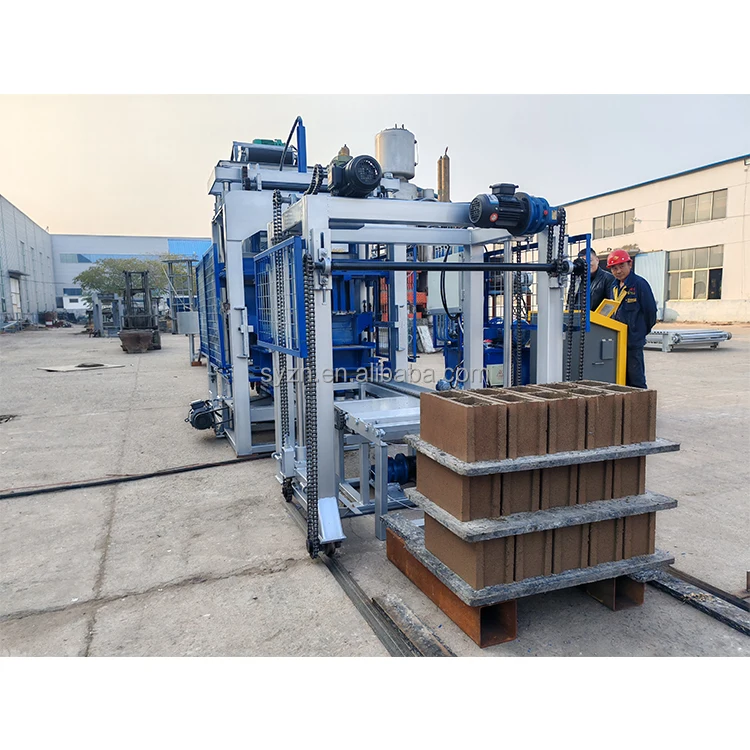
Description
Stock Ready, Spec Verified — every QT4-15 held in our warehouse ships only after voltage, frequency, and control language match your site’s grid and operator panel requirements.
Technical Specifications
| Parameter | Value |
|---|---|
| Model | QT4-15A |
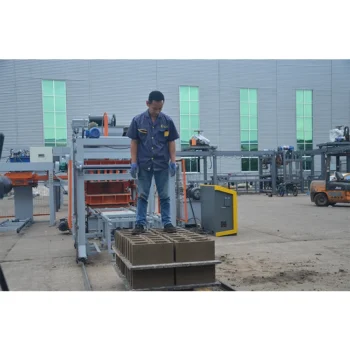
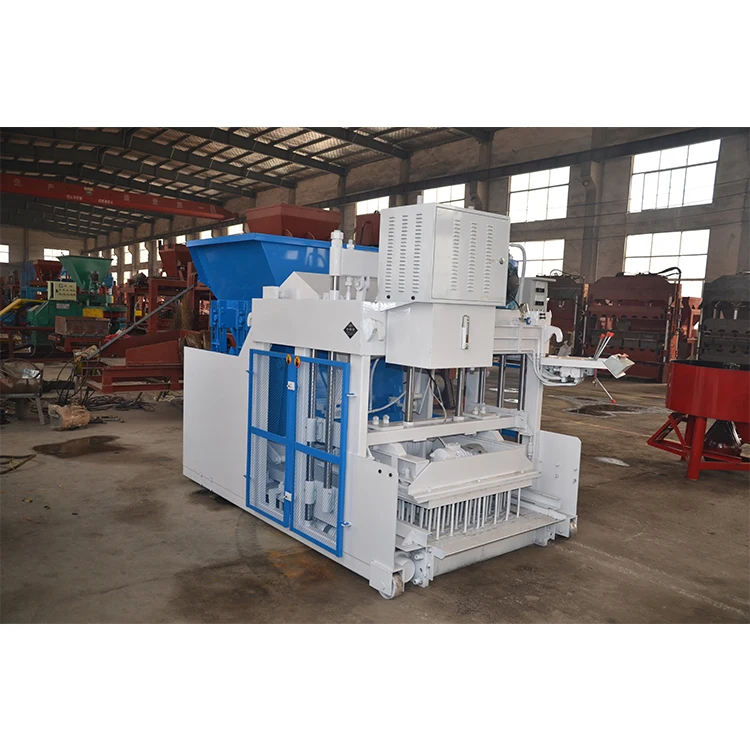
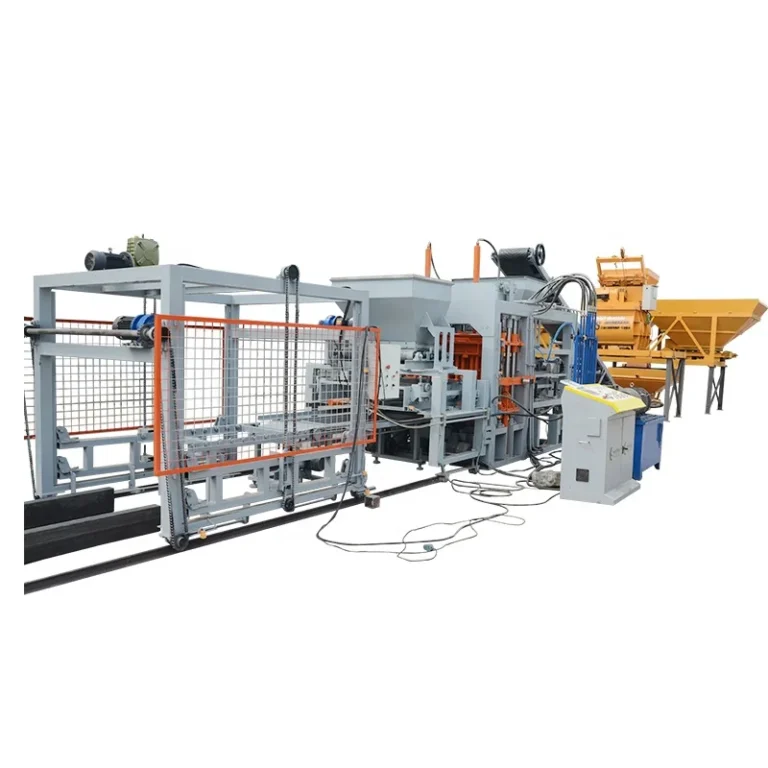
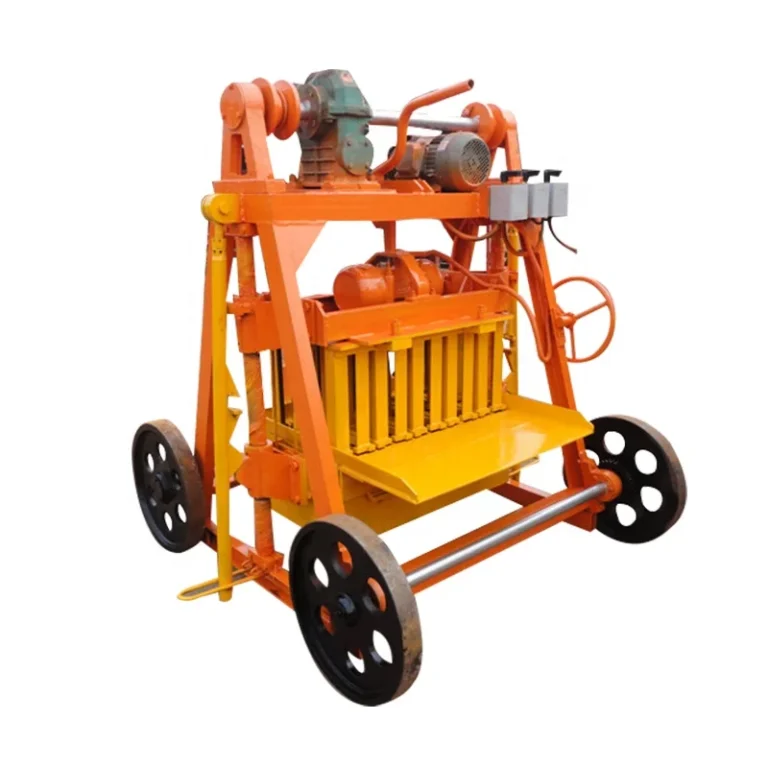
| Product Type | Fully Automatic Concrete Block Making Machine |
| Overall Dimensions | 4100 × 1600 × 2600 mm |
| Total Mass | 4 T |
| Rated Pressure | 16–21 MPa |
| Main Vibration Form | Platform Vibration |
| Vibration Frequency | 4200 r/min |
| Vibration Force | 55 kN |
| Pallet Size | 880 × 550 mm |
| Molding Cycle | 25–30 s (basis to be confirmed against target block format and material) |
| Overall Power | 18.45 kW |
| Demolding Method | Hydraulic |
| Automation Level | Fully Automatic |
| Warranty | 1 Year |
Application Suitability
| Application | Material or Output |
|---|---|
| Hollow and solid block production | Crushed stone, sand, cement, fly ash, gravel, slag |
| Paving block and colored paver runs | Aggregate blends with pigment additives |
| Interlocking brick and kerbstone manufacturing | Standard concrete mixes with local coarse aggregate |
| On-site production for housing projects | Locally sourced sand, dust, and cement |
Why the Voltage Question Must Come Before Dispatch
A block machine sitting unpowered on your dock is just four tonnes of steel — confirming voltage and frequency before the container leaves our warehouse removes the most common arrival-day failure.
Machinery importers and project contractors repeatedly encounter the same problem: a QT4-15 block machine in stock arrives at a job site, the electrician opens the panel, and the local grid does not match the motor rating or control transformer. Rewinding motors or sourcing step-down transformers on short notice stalls commissioning for weeks [NEED_CITE: voltage and frequency standards by export market]. In regions operating on 60 Hz power, a machine wound for 50 Hz runs at higher RPM, overheating hydraulic pumps and vibrating at amplitudes the frame was not tested for.
Dispatch Readiness Starts Before the Inquiry
When a contractor needs a QT4-15 block machine in stock for a project that broke ground last month, waiting for a build-to-order lead time is not an option. Our dispatch workflow begins the moment a stock unit is matched to a buyer — pallet dimensions, container loading plan, and machine dismantling sequence are documented before the quotation is finalized, so the buyer knows exactly when the equipment reaches the destination port.
Container Loading and Machine Dismantling for Shipment
A QT4-15 block machine in stock fits within a standard 40HQ container once the hydraulic press frame, vibration platform, and feeder assembly are separated at their bolted joints. Each sub-assembly receives packing photographs before the container doors close, giving the buyer a visual record for customs inspection and dock-side condition verification. The 4 T total mass is distributed across axle-rated blocking inside the container to prevent shift during ocean transit [NEED_CITE: container loading standards for heavy industrial machinery].
Reading the Numbers That Actually Matter on Site
The 55 kN vibration force paired with 16–21 MPa hydraulic pressure determines how densely the concrete mix compacts inside each mould cavity — higher compaction yields stronger blocks but demands a well-graded aggregate that fills voids efficiently. The 880 × 550 mm pallet size dictates how many blocks sit on each board and how those boards stack in the curing area; if the buyer’s existing forklift tines and curing racks were sized for a different pallet, the entire downstream handling flow requires rework. A 25–30 s moulding cycle applies to a specific block format and wall thickness that must be confirmed at order stage, because taller or more complex shapes require longer vibration and pressing intervals. The 18.45 kW overall power draw tells the site electrician whether a dedicated feeder circuit is necessary or whether the machine can share a panel with the mixer and conveyor.
What Happens When Arrival Specs Do Not Match Site Reality
A control panel display showing error codes in a language the operator cannot read turns a minor sensor fault into a full production halt. Mismatched voltage causes variable frequency drives to trip repeatedly, masking genuine mechanical issues behind nuisance alarms. If the pallet size was chosen without checking the curing rack dimensions already on site, blocks must be restacked by hand — a labour cost the buyer never budgeted for [NEED_CITE: common commissioning delays in imported block making equipment].
Why Buyers Source This Model Through Our Dispatch Channel
We hold QT4-15 configurations as a matched system — press, mould, pallet, and handling stations specified together rather than assembled from separate supplier quotations. Each stock unit is cross-checked against the buyer’s stated voltage, frequency, and PLC display language before the packing list is issued. Standard mould formats for hollow blocks, solid blocks, and pavers ship with the machine, eliminating the wait for a second container. Factory test records specific to the buyer’s target block format accompany every dispatch. Lead time and arrival estimates are quoted at inquiry stage, not revised after payment.
Documentation & Verification
- Factory test record on buyer’s stated block format before dispatch
- Packing photographs of each dismantled sub-assembly in container
- Voltage, frequency, and PLC language confirmation sheet signed at order
- Hydraulic and electrical schematic matching the shipped configuration
- Wear parts and mould compatibility list for the included format set
Installation, Commissioning & Support
- Foundation pad sized for 4100 × 1600 mm footprint with anchor bolt template provided
- Dedicated circuit required for 18.45 kW load at confirmed site voltage
- Bolted sub-assemblies re-join at marked flanges with torque specification sheet
- Hydraulic pressure set to buyer’s mix density during on-site commissioning
- Operator training covers mould change procedure and PLC fault code reading
- Wear parts list identifies items to reorder before the first production month ends
Start With Your Site Facts, Not a Catalogue Page
To move from stock listing to confirmed dispatch, share your target block format, daily output requirement, local aggregate type, and available curing area dimensions. Confirm your site voltage, frequency, and preferred control panel language. If you already own pallets, forklifts, or curing racks, send their dimensions so the pallet size and handling interface can be verified before the container is sealed.
Frequently Asked Questions
Q: Which QT4-15 configurations and moulds are currently in stock?
A: Stock includes the QT4-15A press with standard moulds for hollow blocks, solid blocks, and paving blocks. Pallet sets sized at 880 × 550 mm ship with each unit. Buyers requesting interlocking or kerbstone moulds should confirm availability at inquiry stage, as these formats may require separate dispatch timing.
Q: What is the dispatch lead time and estimated arrival for my port?
A: Stocked QT4-15 units are prepared for container loading once voltage, frequency, and control language are confirmed. Dispatch lead time covers dismantling, packing, and inland transport to the port of shipment. Arrival estimates depend on the destination port and are quoted with the initial proposal.
Q: How is the machine loaded into a container for ocean freight?
A: The 4 T machine is separated into bolted sub-assemblies that fit within a standard 40HQ container. Each component is blocked and braced to axle-rated specifications. Packing photographs document the loading sequence for customs and dock-side inspection upon arrival.
Q: Can voltage and control language be confirmed before shipment?
A: Yes — voltage, frequency, and PLC display language are verified against the buyer’s site specification before the machine leaves the warehouse. This step is part of the standard dispatch workflow and is documented on the confirmation sheet included with shipping papers.
Q: What spare parts ship with the machine for first-month production?
A: A wear parts list accompanies each dispatch, identifying hydraulic seals, vibration isolators, and mould liner inserts that experience the most wear during initial production runs. The list specifies part numbers so replacements can be reordered before stock runs out.