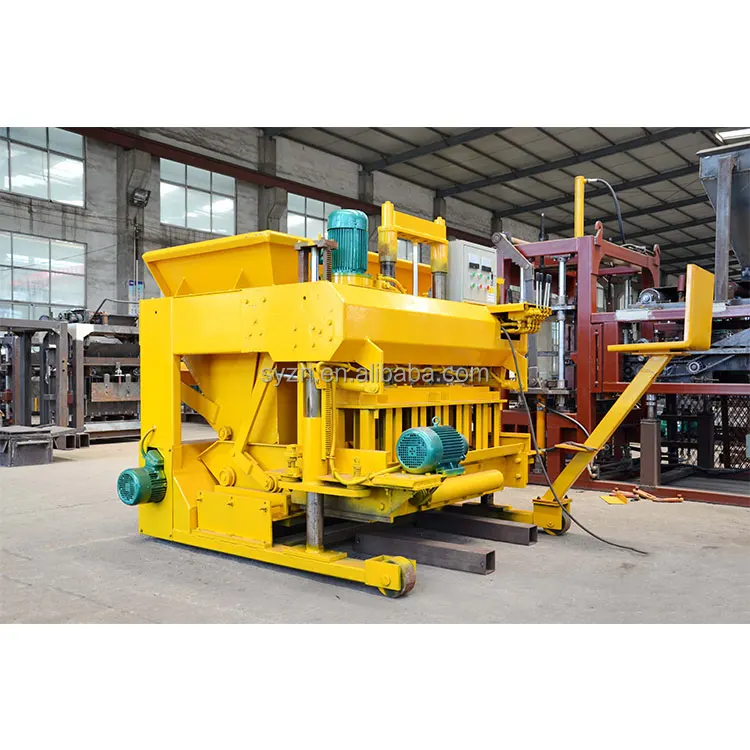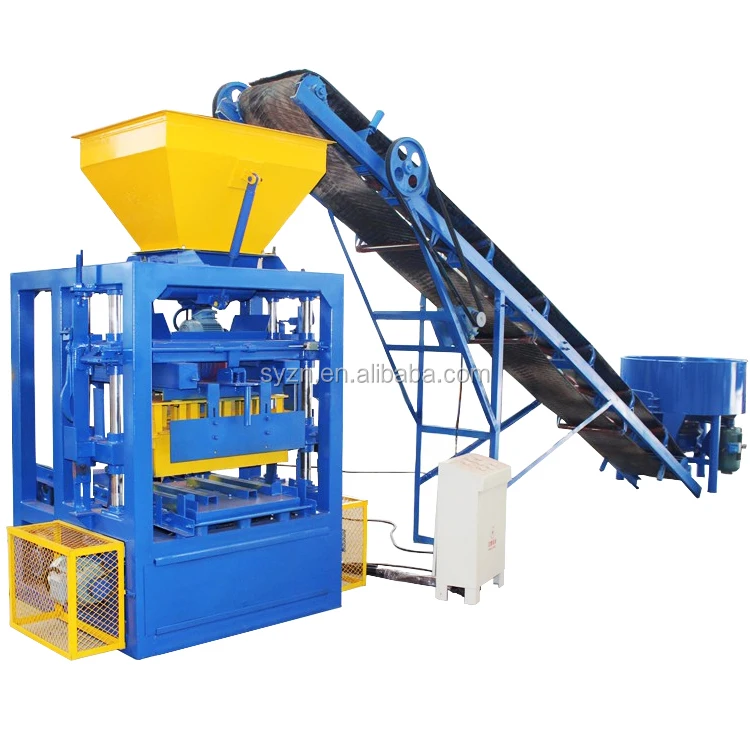
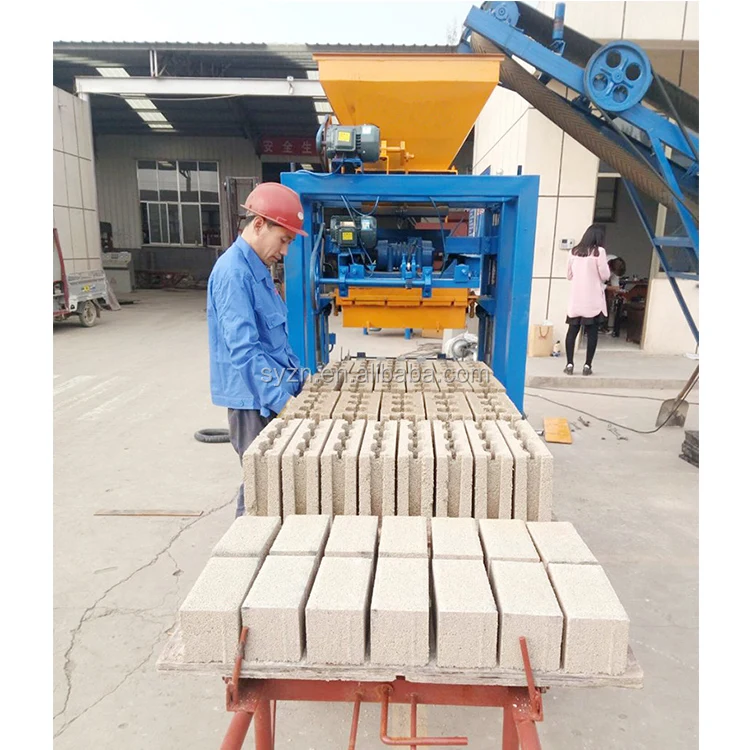
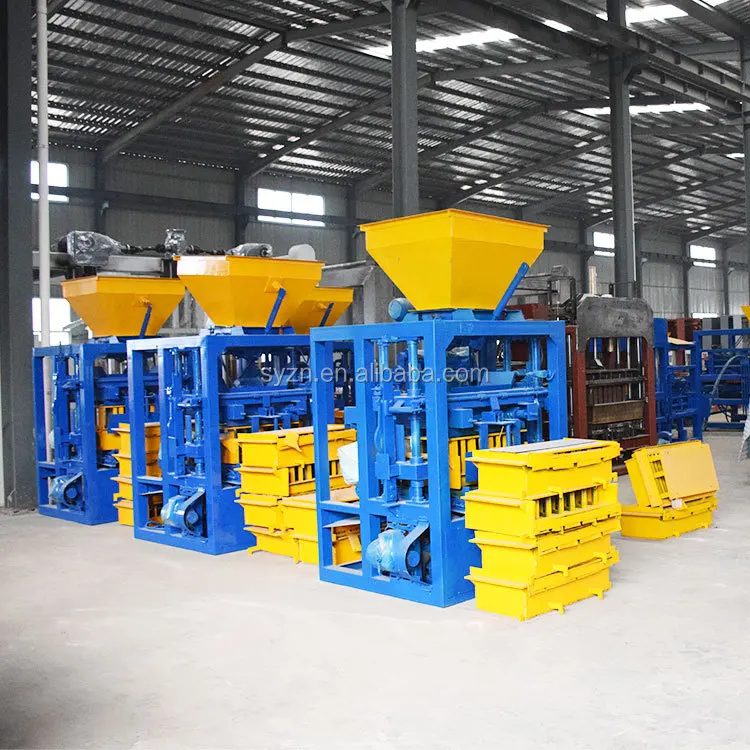


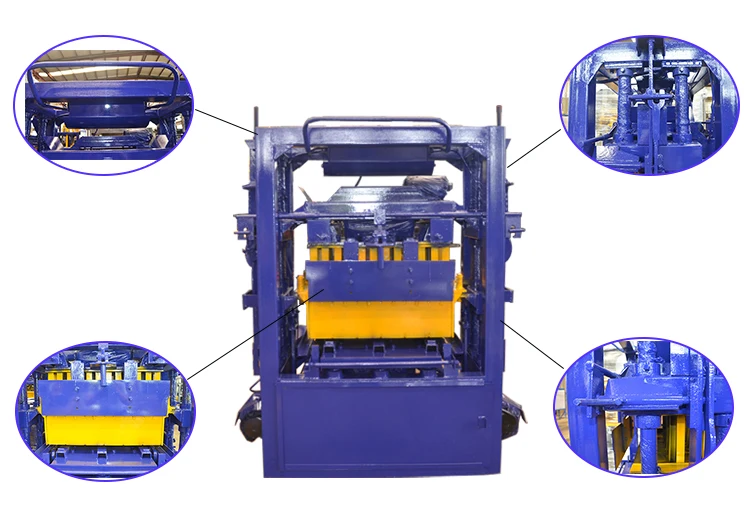
Description
Container loading verified before dispatch — every Qt4-26 semi-automatic block machine ships with a dismantling and pallet plan matched to standard container dimensions, preventing on-site delays.
Technical Specifications
| Parameter | Value |
|---|---|
| Model | Qt4-26 |
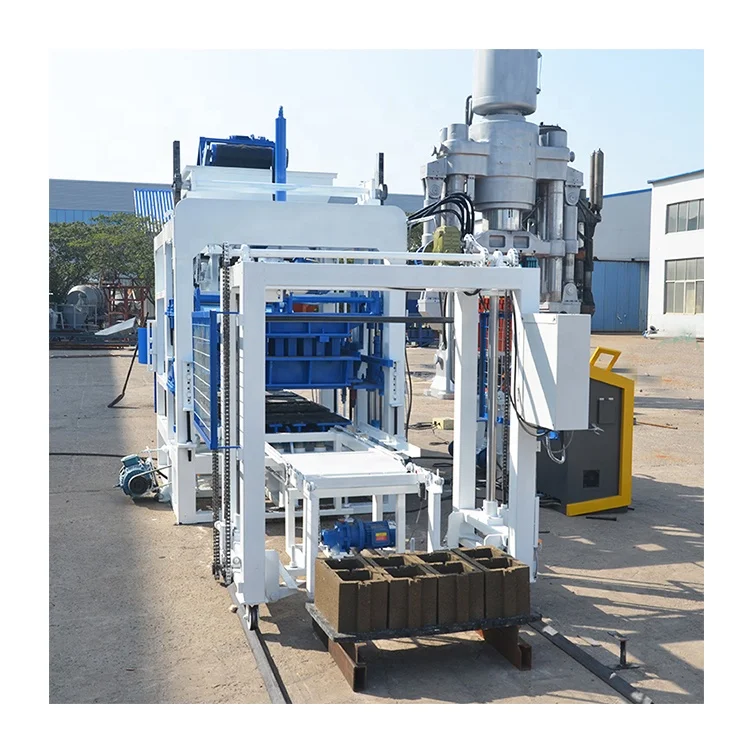
| Product Type | Semi-Automatic Concrete Block Making Machine |
| Overall Dimensions (L×W×H) | 2060×1730×2580 mm |
| Rated Pressure | 26 MPa |
| Vibration Force | 40 kN |
| Vibration Frequency | 4500 r/min |
| Main Vibration Form | Platform Vibration |
| Pallet Size | 880×480×25 mm |
| Moulding Cycle | 15–20 s (basis not stated in source — confirm block format / material / thickness) |
| Total Power | 19.75 kW |
| Host Machine Power | 14.25 kW |
| Total Mass | 2 T |
| Demolding Method | Semi-automatic |
| Mixer Model | JQ350 |
| Applied Products | Concrete blocks, hollow/solid blocks, pavers, interlocking blocks, curbstone, colored pavers |
| Raw Materials | Crushed stone, sand, cement, dust, fly ash, gravel, slag |
| Applied Fields | Buildings, road pavers, squares, gardens, landscaping |
| Certification | CE |
Application Suitability
| Application | Material or Output |
|---|---|
| Hollow block production for residential walls | Crushed stone, sand, cement, fly ash |
| Solid block manufacturing for load-bearing structures | Gravel, sand, cement mix |
| Interlocking paver production for walkways and squares | Colored concrete with fine aggregate |
| Curbstone forming for road and garden edges | Coarse aggregate with standard cement binder |
| Landscaping block runs for garden and public space projects | Slag, dust, and cement blends |
Why Dispatch Timing Matters More Than Cycle Time on Paper
A quoted cycle means nothing if the machine is still waiting at the port while your crew stands idle.
Project contractors and first-time plant operators often fixate on moulding cycle numbers, yet the gap between order confirmation and container arrival decides whether a site stays on schedule. When a semi-automatic block machine fast delivery promise is vague, the real cost shows up in extended equipment rentals, delayed masonry starts, and penalty clauses. I have watched a site lose nearly two weeks because the loading plan was not checked against container door clearance before the crate left the factory. [NEED_CITE: typical port congestion and inland transit variability in export shipping]
Stock Availability and Lead Time Transparency
When you need a semi-automatic block machine fast delivery becomes the first question, not an afterthought. The Qt4-26 is maintained as a stocked unit with standard moulds ready for dispatch, so the conversation starts with a confirmed shipping date rather than a production queue estimate. Container loading plans are prepared before payment, including frame dismantling points and pallet stacking sequence, so there are no surprises when the crate reaches the destination port.
Container Loading Discipline
Every Qt4-26 shipment is planned against the internal dimensions of the assigned container before the machine is crated. The host machine, JQ350 mixer, pallets, and moulds are mapped into a loading diagram that accounts for door clearance and weight distribution. This discipline grew from hard experience: one shipment arrived with the pallet stack exceeding door height, forcing on-site re-rigging and eleven days of crew downtime. [NEED_CITE: container loading best practices for heavy industrial machinery]
Reading the Specification Sheet Against Your Site Conditions
The rated pressure of 26 MPa and vibration force of 40 kN at 4500 r/min define how densely the Qt4-26 compacts concrete into the mould cavity. Platform vibration transfers energy through the pallet rather than the mould walls, which suits the 880×480×25 mm pallet format and keeps block faces consistent across the full surface. Total power draw of 19.75 kW means the machine runs on a dedicated three-phase circuit common in most industrial zones, but voltage and frequency must be locked in before the motor is wired at the factory. Mismatched electrical supply is one of the most frequent causes of commissioning delay after arrival.
The Cost of Skipping Pre-Shipment Checks
When pallet size is chosen without measuring the buyer’s existing curing racks and forklift tines, pallets arrive that do not stack properly in the yard. When control panel language is not confirmed, operators spend the first week guessing at fault codes instead of producing blocks. These are not engineering failures — they are communication gaps that turn a semi-automatic block machine fast delivery advantage into a slow, frustrating startup. [NEED_CITE: common commissioning issues for imported concrete block machinery]
Why Buyers Source This Machine Here
Block machinery is the single focus, so the Qt4-26 arrives as a matched system — host press, JQ350 mixer, pallets, and moulds specified together rather than assembled from separate invoices. Configuration is set against the buyer’s local aggregate and target block format, not a catalogue default. Standard mould inventory covers hollow blocks, solid blocks, pavers, and interlocking formats, with custom drawings available when the local market demands a non-standard shape. Dispatch lead time and arrival estimate are confirmed in writing before order placement. Installation support and operator training are included so the first production run happens days after arrival, not weeks.
Documentation & Verification
- Factory test record run on your specified block format before crating
- Container loading diagram showing dismantling points and weight balance
- Pallet specification sheet matched to your curing rack dimensions
- Voltage, frequency, and control language confirmation form signed before wiring
- Operation and maintenance manual in your operator’s language
- CE declaration documentation for customs clearance
Installation, Commissioning & Support
- Foundation pad leveled for 2060×1730 mm footprint with anchor bolt template provided
- Dedicated 19.75 kW three-phase circuit with voltage confirmed before motor wiring
- Host machine and JQ350 mixer arrive dismantled with reassembly markings on each joint
- First moulding run supervised on-site to verify 26 MPa pressure and vibration tuning
- Operator training covers mould change procedure and daily lubrication points
- Wear parts list with hydraulic seal and vibration spring part numbers included
What to Prepare Before Requesting a Quote
Share the block formats your market sells most, the daily volume you need to hit, and the aggregate sources available near your site. Confirm your facility voltage and frequency, the control panel language your operators read, and whether you already have curing racks and forklifts with specific tine dimensions. If you are working to a project deadline, state the latest acceptable arrival date so the dispatch schedule can be built backward from that point.
Frequently Asked Questions
Q: Is the Qt4-26 currently in stock and when can it ship?
A: The Qt4-26 is maintained as a stocked semi-automatic block machine fast delivery unit with standard moulds available from inventory. Dispatch lead time is confirmed in writing before you commit, and the loading plan is prepared so the container can be booked immediately after factory testing is completed.
Q: How is the machine packed and loaded into a container for sea freight?
A: The host frame is dismantled at designated joints, and the JQ350 mixer, pallets, and moulds are stacked according to a loading diagram that respects container door clearance. This prevents on-site re-rigging and keeps the unloading sequence straightforward at the destination port.
Q: What standard moulds are available from stock with this machine?
A: Standard mould inventory covers hollow blocks, solid blocks, interlocking pavers, and curbstone formats commonly sold in construction markets. Custom mould designs are also available from buyer drawings when local demand requires non-standard block shapes or dimensions.
Q: What voltage and frequency options are available for immediate dispatch?
A: Voltage and frequency are confirmed before the motor is wired at the factory, matching the electrical grid at your facility. Control panel display language is also locked in at this stage so operators can read fault codes and cycle parameters from the first day of production.
Q: How long from order confirmation to arrival at destination port?
A: The arrival estimate depends on the destination port and current shipping schedules, but dispatch from stock shortens the factory-side timeline. A written arrival estimate is provided before order confirmation so you can plan site preparation and crew mobilization around a known date.