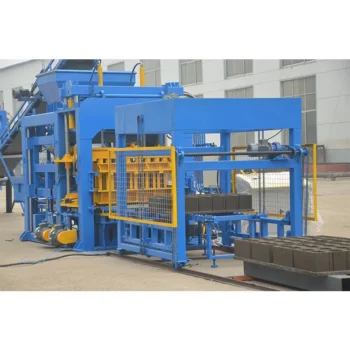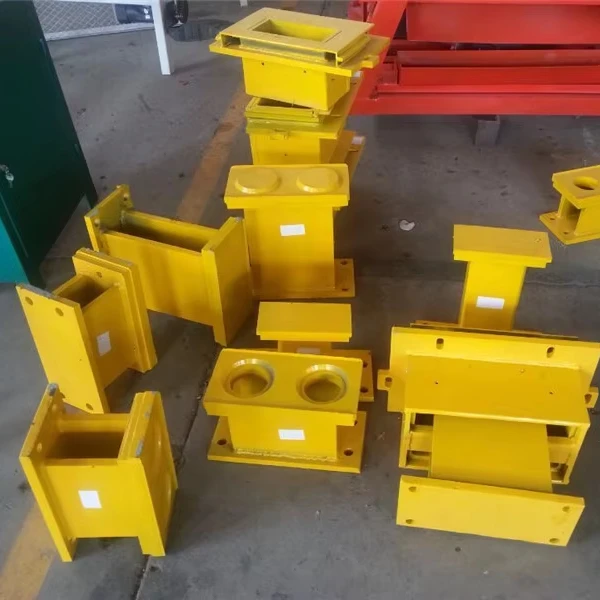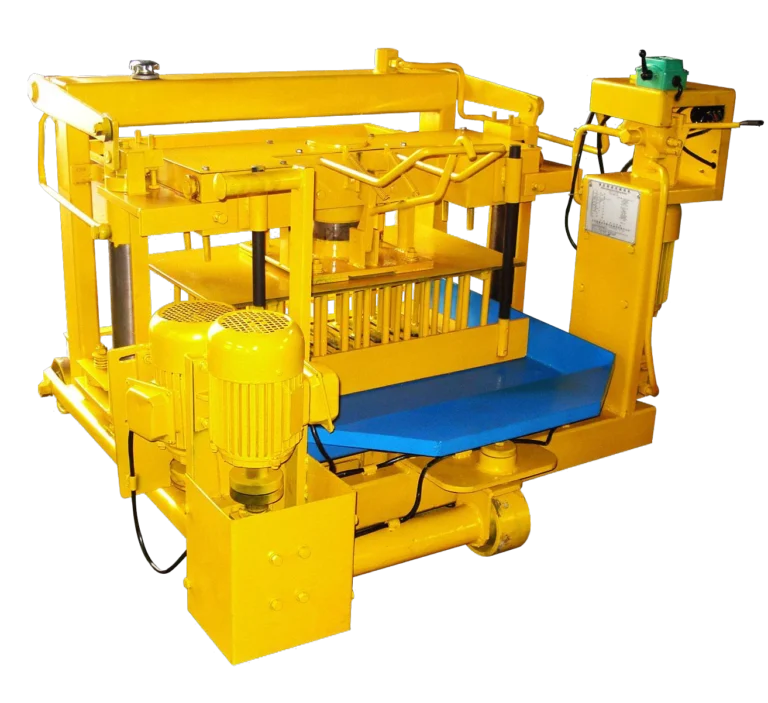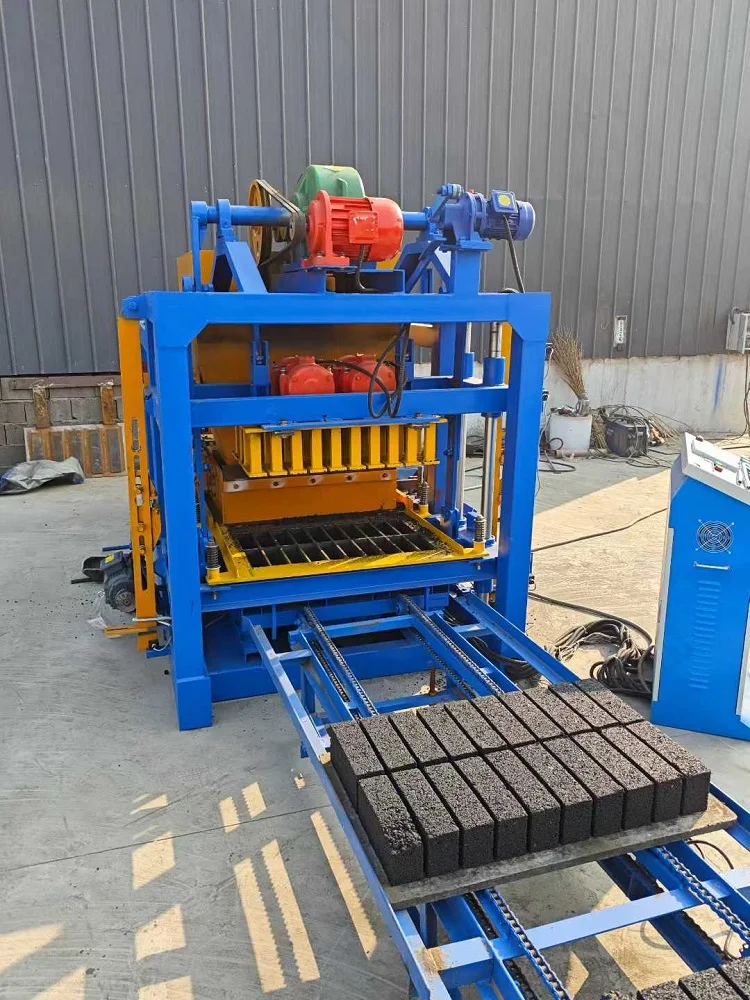

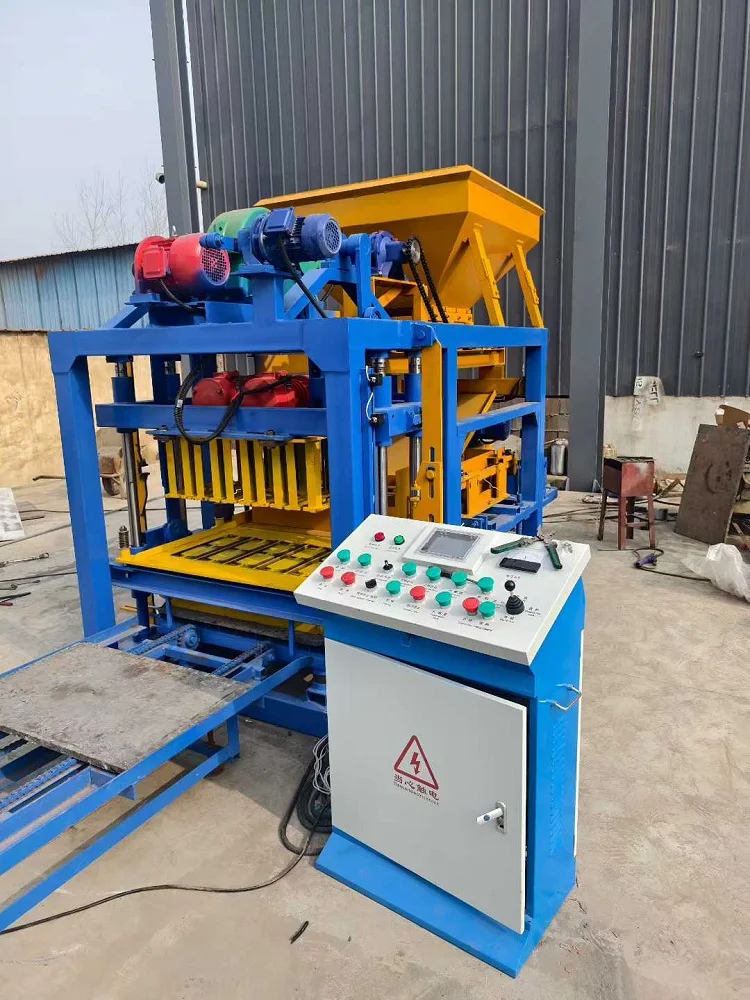
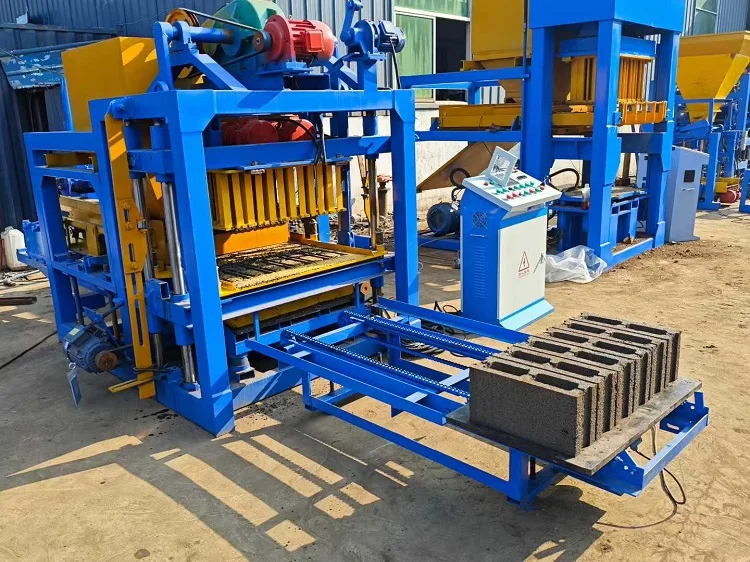
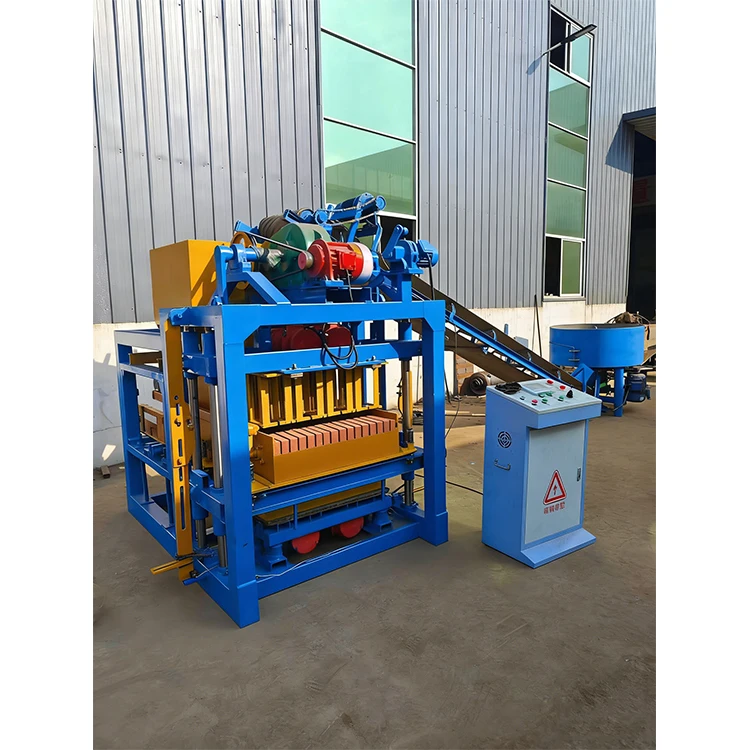

Description
Stock and Lead Time Clarity — every QTJ4-25 automatic block machine in stock or short lead is quoted with a confirmed dispatch date and container loading plan before payment.
Technical Specifications
| Parameter | Value |
|---|---|
| Product Type | Automatic Concrete Block Making Machine |
| Model | QTJ4-25 |
| Control System | PLC controlled, fully automatic |
| Machine Power | 16.58 kW |
| Molding Cycle | 25 seconds per cycle |
| Output Capacity | 4,600 pcs / 8 hours (basis not stated in source — confirm block format, material and thickness) |
| Pallet Size | 850 × 480 mm |
| Machine Weight | 5,000 kg |
| Overall Dimensions | 6,400 × 1,500 × 2,700 mm |
| Vibration System | Vibration motor with large vibration box (non-hydraulic) |
| Motor Brand | Siemens motor |
| Frame Construction | Thick steel welded frame |
| Key Features | Automatic pallet feeding, automatic material feeding and scraping, automatic block stacker |
| Raw Materials | Concrete, sand, cement, fly ash, crushed stone, lime, water |
| Voltage | Configurable to local voltage (frequency and phase to be confirmed) |
| Warranty | One year (parts supply included) |
Application Suitability
| Application | Material or Output |
|---|---|
| Hollow block production for commercial building walls | Crushed stone, sand, cement blends |
| Solid block and brick manufacturing for load-bearing structures | Concrete and fly ash mixtures |
| Paver stone brick production for driveways and walkways | Fine aggregate and cement with high-density vibration |
| Medium-scale block factory mass production | Continuous three-shift operation with automatic pallet circulation |
Why "In Stock" Must Include Commissioning Readiness
An automatic block machine in stock only saves time if the voltage, control language, and pallet size already match your site.
Buyers chasing a project deadline often secure fast dispatch, only to find the PLC display shows a language their operators cannot read, or the voltage mismatch requires a transformer that delays startup by weeks. I have seen machines sit on-site for an entire rainy season because the frequency was wrong for the local grid. That lost time is rarely factored into the purchase decision [NEED_CITE: voltage and frequency standards by export market].
Dispatch Timeline and Container Loading Plan
When a buyer needs an automatic block machine in stock or with a short production lead, the real question is how quickly it can run blocks after arrival. Our dispatch process starts with a confirmed container loading plan that accounts for the frame dimensions and the dismantling method required for shipment. The QTJ4-25 is factory-assembled for testing, then partially dismantled for container loading and reassembled at destination, a sequence we document step by step so your crew is never guessing.
Arrival Estimate and Pre-Shipment Verification
The arrival estimate is quoted upfront based on your port and current shipping schedules, not after the order is placed. Before the machine leaves the factory, you receive a complete factory test record and packing photographs showing every component secured for transit. This is the automatic block machine in stock model where paperwork moves as fast as the equipment itself, keeping your project timeline intact [NEED_CITE: international shipping documentation requirements for heavy machinery].
Matching Vibration Force to Your Local Aggregate
The QTJ4-25 uses a vibration motor with a large vibration box rather than hydraulic pressure, which changes how it compacts different raw materials. If your local sand has high clay content or your crushed stone is angular rather than rounded, the vibration frequency and amplitude must be matched to that specific mix to achieve consistent block density. Running a standard cycle on a non-standard mix will produce blocks with variable strength across the same batch. This is why we request your raw material photos and mix proportions before confirming the molding cycle parameters, so the machine arrives already tuned to what you will actually feed it.
What Happens When the Pallet Size Is Wrong
The 850 × 480 mm pallet is the interface between the press and your curing area. If your existing curing racks or forklift were sized for a different pallet dimension, every block will need to be re-handled manually before it enters the curing cycle. This defeats the purpose of the automatic pallet feeding and stacking system. A buyer who skips confirming pallet compatibility before ordering may save days on lead time but lose that advantage during the first week of production [NEED_CITE: pallet handling compatibility in block production lines].
Why This Source Shortens Your Path to Production
We specify the QTJ4-25 as part of a matched system: the pallet size, the automation level, and the electrical configuration are all confirmed against your site conditions before the quotation is issued. Every automatic block machine in stock or built to short lead ships with the voltage, frequency, and PLC display language already set for your market, so commissioning is not delayed by electrical rework. The factory test is run on a mix design that mirrors your local materials, and the test record is shared with you before dispatch. One-year warranty coverage includes wear parts supply, so your first mould or hydraulic seal replacement does not stall production while you search for spares.
Documentation & Verification
- Machine specification sheet stating the block format assumed in the capacity calculation
- Factory test record run on a mix representative of your local aggregate
- Packing photographs showing dismantling method and container loading sequence
- Voltage, frequency, and PLC language confirmation record signed before production
- Operation and maintenance manual with pallet and mould change procedures
Installation, Commissioning & Support
- Foundation pad sized to the 6,400 × 1,500 mm footprint with vibration isolation provisions
- Dedicated power circuit rated for the 16.58 kW motor load at your confirmed voltage and frequency
- Machine reassembled on-site from container-dismantled state with step-by-step alignment checks
- PLC display language and automatic stacker timing verified during first commissioning run
- Operator training covering mould change, pallet loading, and vibration box adjustment
- Wear parts list provided with one-year warranty for timely reordering before stockout
What We Need From Your Side Before Quoting
To give you a confirmed dispatch date rather than an estimate, we need your target block format and daily output requirement, the voltage and frequency at your site, and the pallet size your existing curing racks and forklift can handle. If you are setting up a first plant, share your raw material source and any available mix proportions so we can run the factory test on something representative before the machine ships.
Frequently Asked Questions
Q: What is the dispatch lead time and is the QTJ4-25 in stock or built to order?
A: Availability depends on current stock levels at the time of inquiry. When in stock, the dispatch lead time is quoted upfront and includes the container loading plan and machine dismantling schedule. If built to short lead, the production timeline and estimated arrival date at your port are confirmed before you commit, so there are no surprises on the project schedule.
Q: How is the machine dismantled for container loading and reassembled on-site?
A: The QTJ4-25 is factory-assembled for a full production test, then partially dismantled to fit the container configuration. Each dismantling step is photographed and documented. On arrival, reassembly follows the same sequence in reverse, with alignment checks on the thick steel frame and vibration box before the first production run begins.
Q: Can voltage, frequency, and PLC language be confirmed before shipment?
A: Yes. We confirm your local voltage, frequency, and phase requirements and the PLC display language before the machine enters production or is prepared for dispatch. This is recorded in a signed confirmation document so the control system matches your site electrical supply and your operators can read the interface from day one.
Q: What pallet size is included and can it be changed?
A: The standard pallet size is 850 × 480 mm, matched to the automatic pallet feeding and stacking system. If your existing curing racks or forklift require a different dimension, the pallet size can be adjusted to match, and this change is confirmed during the quotation stage so there is no manual re-handling after arrival.
Q: What does the one-year warranty cover and how are replacement parts shipped?
A: The one-year warranty covers parts supply, including wear components and mould elements. When a replacement part is needed, it is shipped via the fastest available method to minimize downtime. A complete wear parts list is provided at delivery so you can plan reordering before any component reaches the end of its service life.