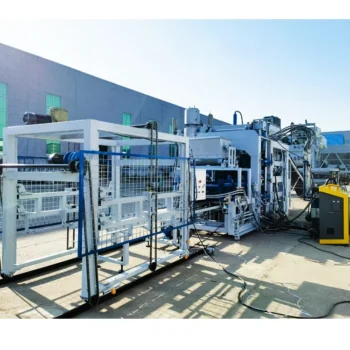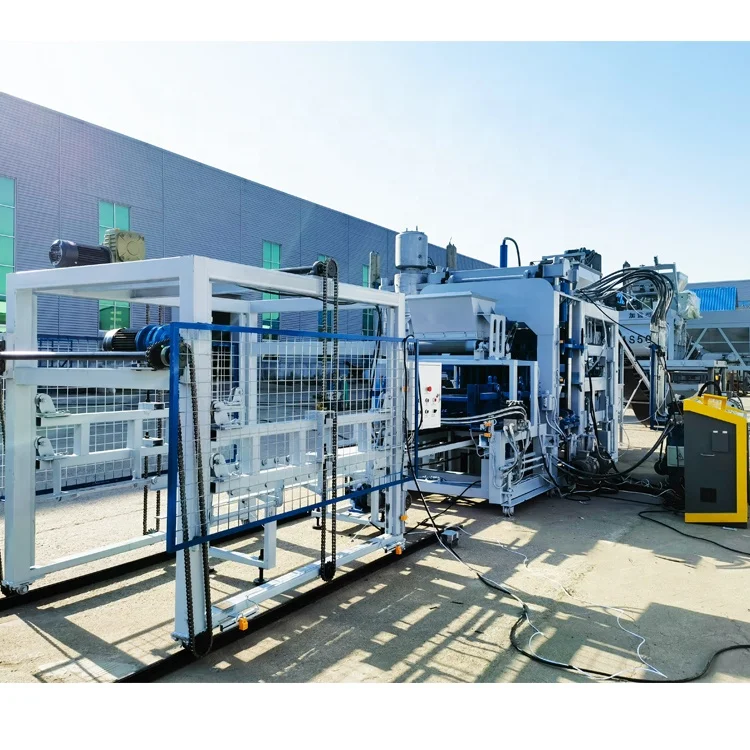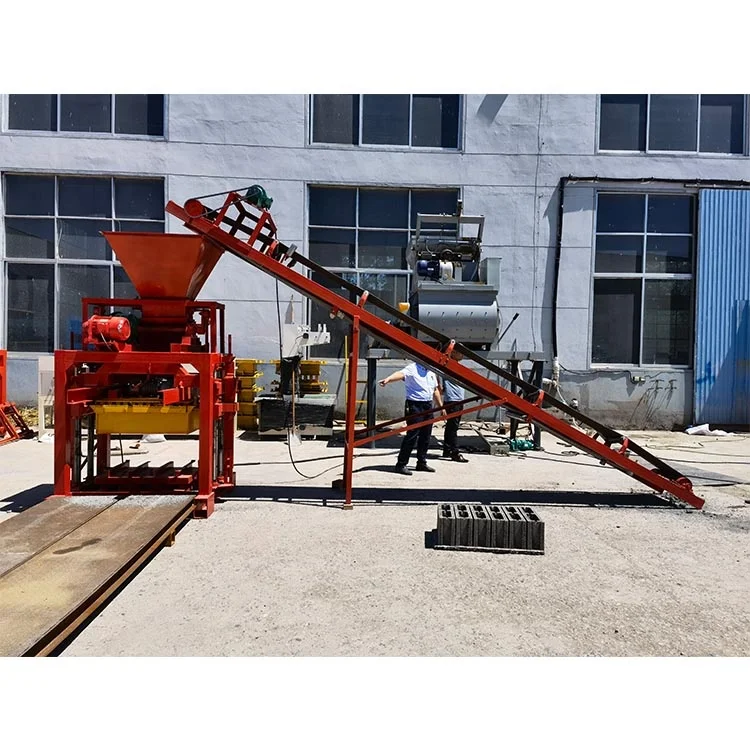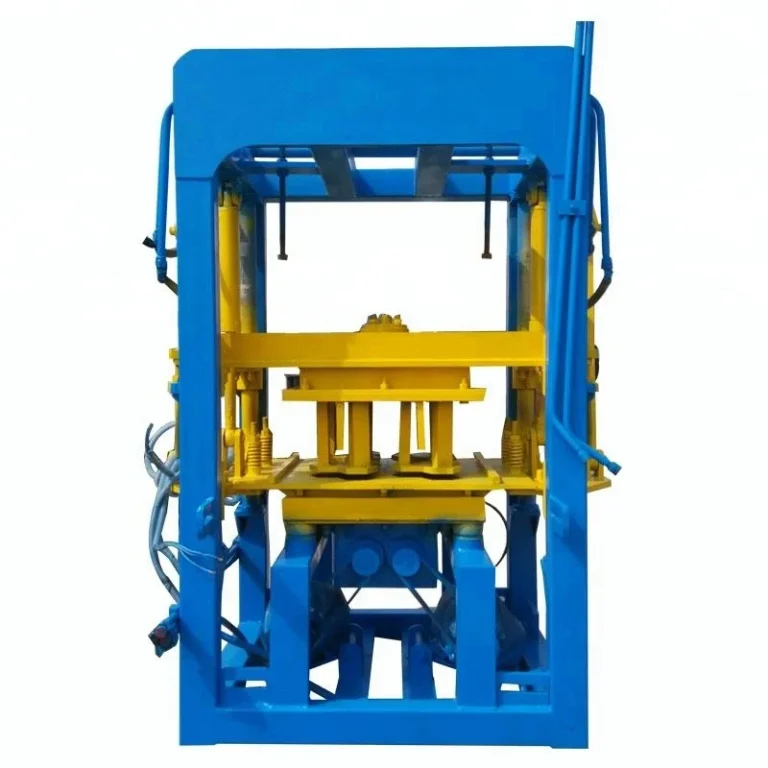
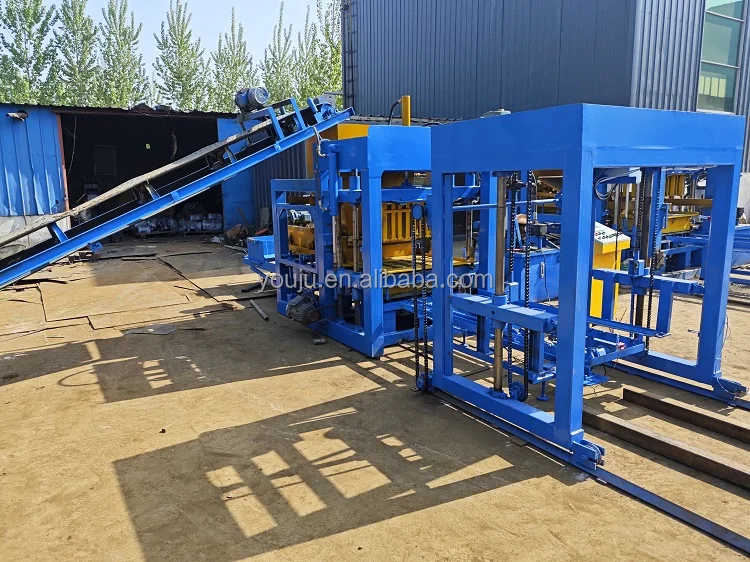
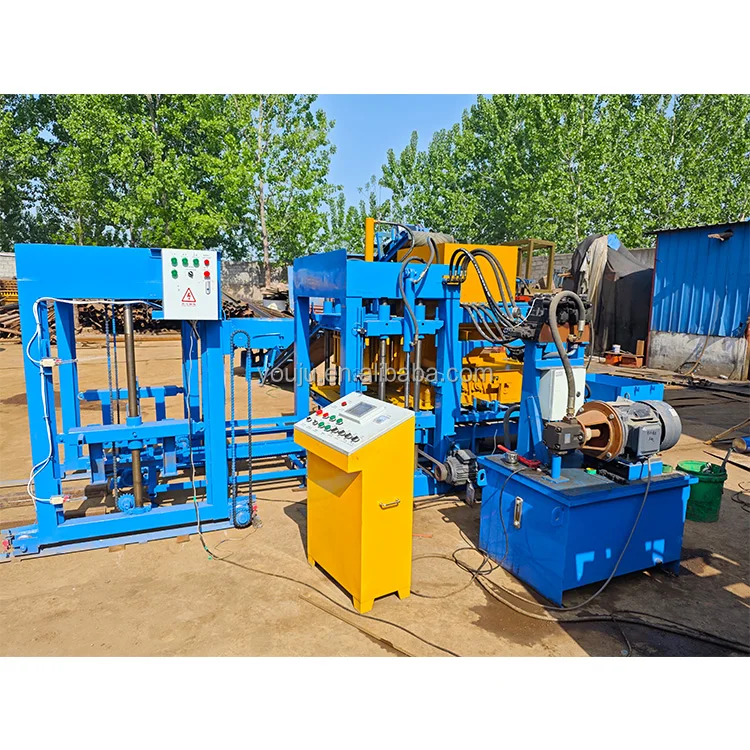

Description
Dispatch-Ready Configuration — every QTJ4-25 in our Linyi warehouse completes a pre-ship cycle matched to the buyer’s local aggregate before it is cleared for loading, so arrival timing is quoted on a machine that actually fits your mix.
Technical Specifications
| Parameter | Value |
|---|---|
| Model | QTJ4-25 |
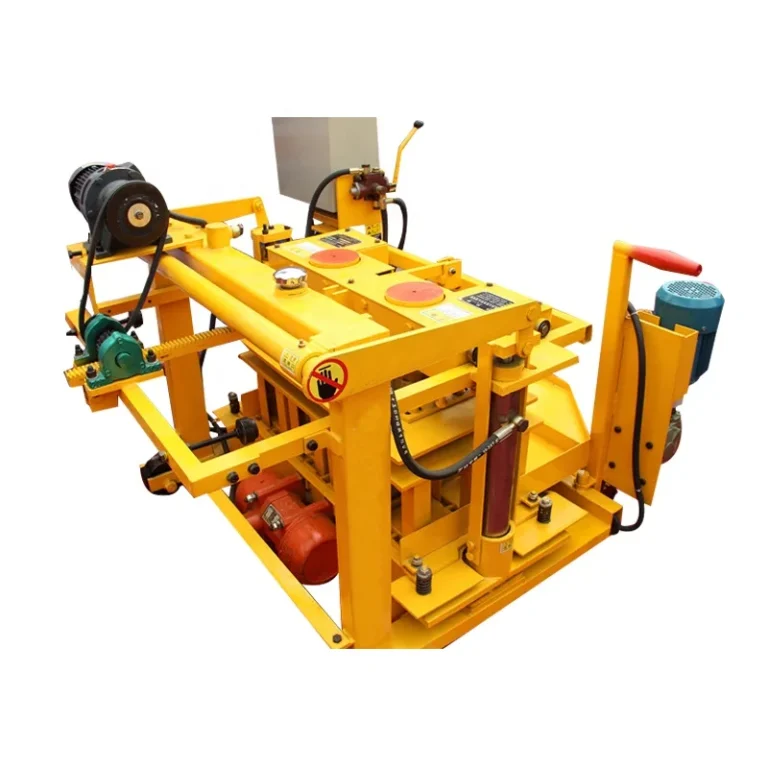
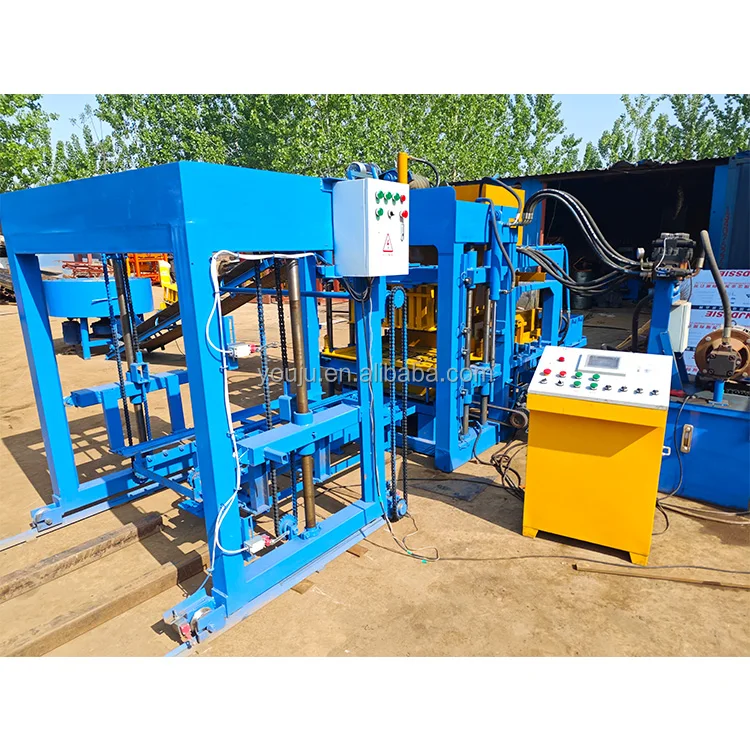
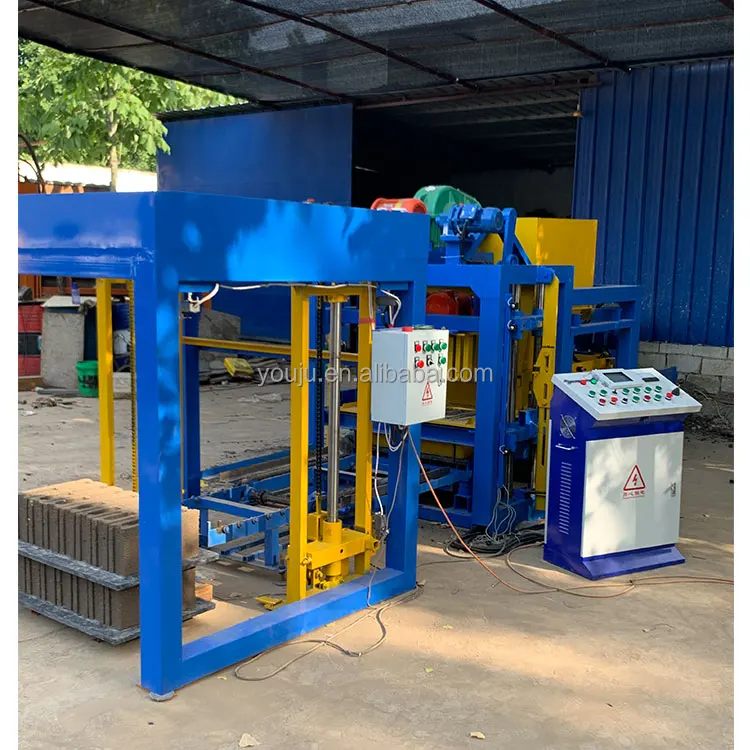
| Product Type | Semi-Automatic Concrete Block Making Machine |
| Category | Stationary block machine |
| Rated Power | 17.9 kW |
| Overall Dimensions (L×W×H) | 6400 × 1500 × 2700 mm |
| Total Mass | 2500 kg |
| Molding Cycle | 25 s |
| Pallet Size | 850 × 550 × 20 mm |
| Vibration Frequency | 2800 r/min |
| Vibration Force | 60 kN |
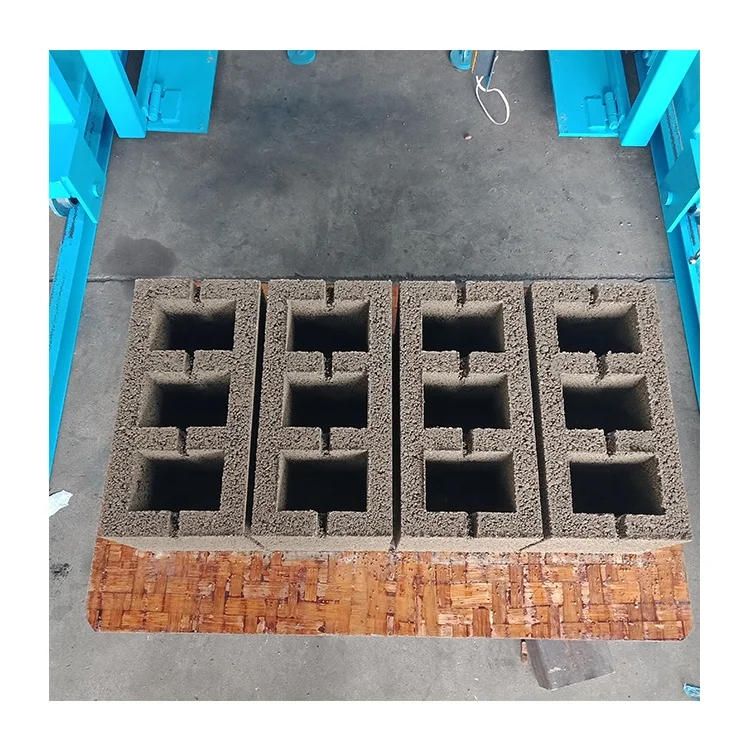
| Output Capacity | 960 pcs/h (basis: 400×200×200 mm hollow block, 4 pcs/mould) |
| Daily Output | 7680 pcs/day (basis: 400×200×200 mm hollow block, 4 pcs/mould) |
| Control System | Hydraulic station with motor-driven vibration |
| Automation Level | Semi-automatic |
| Mixer Included | JQ350 pan mixer |
| Assembly State | Skid-mounted, on-site assembly required |
| Voltage & Frequency | Configurable per destination market |
| PLC Display Language | Configurable per buyer requirement |
Application Suitability
| Application | Material or Output |
|---|---|
| Small block production plant | Hollow blocks from crushed stone, river sand, and cement |
| On-site production for contractors | Solid blocks using locally sourced aggregate blends |
| First-time plant setup | Paver blocks and kerbstones with interchangeable moulds |
| Distributor inventory replenishment | Standard 8-inch, 6-inch, 5-inch, and 4-inch hollow block formats |
Why "Available Now" Means Nothing Without the Right Vibration Setting
A machine that ships fast but arrives misconfigured to your aggregate costs more than one that ships a week later with parameters already tuned.
I have watched a containerized QTJ4-25 concrete block making machine in stock sit at a destination port because the default vibration force was set for standard river sand while the buyer used volcanic scoria. The blocks cracked during curing, the contractor missed a pour schedule, and three weeks passed before we resolved it remotely. That experience reshaped how we handle every stocked unit here in Linyi. [NEED_CITE: aggregate gradation and vibration frequency compatibility for concrete block production]
When you ask whether this model can ship immediately, the honest answer depends on whether the vibration frequency and hydraulic pressure have been matched to your actual raw material. A quick dispatch that ignores your local aggregate is not fast at all — it simply moves the delay from the factory to your job site.
Container Loading and Dismantling for Shipment
The QTJ4-25 concrete block making machine in stock ships on a skid-mounted frame that fits within a standard 20-foot container once the upper gantry and hopper are unbolted. The dismantling points are designed so that reassembly on-site requires only basic hand tools and a forklift — no specialized rigging crew is needed. Before loading, we photograph every crate and the container interior so you have a visual record for insurance and customs purposes.
Arrival Estimate Quoted Before You Commit
Every inquiry we receive for a QTJ4-25 concrete block making machine in stock gets a dispatch lead time stated in days and a port-to-port transit estimate based on your destination. [NEED_CITE: typical ocean freight transit times from Qingdao to major global ports] We do not quote a departure date without also telling you when the container is expected to arrive. For buyers working against a construction deadline, knowing the machine clears customs in week four rather than "sometime next month" changes how you schedule labor and material deliveries.
How Vibration Force and Cycle Time Shape Your Daily Output
The 60 kN vibration force at 2800 r/min works with the 25-second molding cycle to compact the concrete mix into the mould cavity. On the standard 400×200×200 mm hollow block format with four cavities per mould, this combination yields 960 blocks per hour. However, if your local aggregate is lighter — such as pumice or expanded clay — the vibration force may need adjustment to prevent over-compaction that fractures the block walls. The hydraulic station provides consistent pressure across each cycle, which matters when operators are running multiple shifts and fatigue introduces manual inconsistency. The JQ350 pan mixer included in the line keeps the mix homogeneous so that each board entering the press carries the same water-cement ratio.
The Cost of Skipping the Pre-Ship Material Match
Buyers who confirm dispatch without providing their aggregate sample often discover on arrival that the default pallet handling rhythm does not match their curing area layout. The 850 × 550 × 20 mm pallet size is chosen to work with standard block trolleys, but if your existing forklift cannot turn in the curing yard, pallets pile up and the press waits idle. [NEED_CITE: pallet handling bottlenecks in small-scale block production] We have seen contractors lose an entire first week of production because the pallet return loop was never discussed before the machine left the warehouse.
Why Buyers Source This Model from Our Linyi Warehouse
Our focus stays on block machinery alone, so the press, mould, pallet, and handling equipment are specified as one matched system. Each QTJ4-25 unit gets a pre-ship test cycle run on material parameters you provide, not a generic factory default. Mould formats are selected against the block sizes your local market actually purchases, including custom drawings when your region demands non-standard dimensions. Voltage and control language are confirmed before production so that commissioning does not stall on a mismatched frequency or an unreadable display. Packing photographs and full customs documentation are provided before the container is sealed. [NEED_CITE: CE machinery directive requirements for concrete block making equipment]
Documentation & Verification
- Factory test record run on your specified aggregate blend before dispatch
- Mould drawing and format list confirming every block size in your order
- Voltage, frequency, and control language confirmation sheet signed prior to build
- Pallet specification matched to your existing curing rack and forklift dimensions
- Hydraulic and electrical schematic for on-site troubleshooting
- Packing photographs taken at container loading for customs and insurance records
Installation, Commissioning & Support
- Foundation pad sized to the 6400 × 1500 mm footprint with anchor bolt template provided
- Dedicated 17.9 kW power circuit with correct voltage and frequency confirmed before arrival
- Skid-mounted assembly with gantry and hopper bolted on-site using basic tools
- First-run parameter tuning against your local aggregate and target block strength
- Operator training covering mould change, pallet feeding, and daily lubrication points
- Wear parts list with hydraulic seal and vibration motor brush replacement intervals
What We Need to Confirm Your Dispatch Date
Tell us the block formats your market sells, the local aggregate type you plan to use, and your destination port. Share your site voltage, frequency, and preferred control language so we can match the electrical configuration before the machine leaves the warehouse.
Frequently Asked Questions
Q: Is the QTJ4-25 currently in stock and how soon can it ship?
A: Standard configurations of this model are held in our Linyi warehouse. Dispatch lead time is quoted in days once we confirm your voltage, frequency, and mould format requirements. We run a pre-ship test cycle on your aggregate parameters before clearing the unit for container loading.
Q: What is the estimated arrival time at my destination port?
A: We provide a port-to-port transit estimate based on your specific destination at the quotation stage. This allows you to schedule site preparation, labor, and raw material procurement around a known arrival window rather than an open-ended timeline.
Q: How is the machine loaded into the container?
A: The upper gantry and hopper are unbolted so the skid-mounted frame fits a standard 20-foot container. Reassembly on-site requires only basic hand tools and a forklift. Packing photographs are taken before sealing for your records.
Q: Can I order standard moulds and pallets from stock with the machine?
A: Yes. Standard moulds for common hollow block formats are available from inventory. Pallets in the 850 × 550 × 20 mm size ship alongside the press. Custom mould drawings can be processed if your market requires non-standard dimensions.
Q: What documents arrive with the shipment for customs clearance?
A: Each shipment includes a commercial invoice, packing list, bill of lading, and certificate of origin. Technical documentation covers the machine specification sheet, hydraulic and electrical schematics, and operation manual in your confirmed language.