

QT15 Fully Auto Line Buyer Checklist: Factory-Direct Manufacturer Guide
Lower initial quotes often hide higher long-term costs through component incompatibility.
A successful QT15 fully automatic block machine buyer checklist prioritizes technical integration verification over superficial price comparison. True factory-direct value is realized only when PLC protocols match hydraulic response times, mold steel grades align with aggregate hardness, and the supply chain transparency eliminates hidden trader markups. Buyers must verify joint debugging certificates, request mill test reports for critical wear parts, and structure payment terms that link final release to on-site commissioning metrics rather than just shipment completion.
The shift from manual to fully automatic production is a capital-intensive decision for plant investors in emerging markets. Many procurement managers focus intensely on the output capacity stated in brochures, assuming that a higher tonnage rating guarantees better profitability. However, the real bottleneck in high-volume production is not the theoretical maximum output but the stability of the cycle time and the consistency of brick density. When I was managing procurement for a construction project in Jakarta, I learned this lesson the hard way. We sourced a complete line through a local intermediary who promised factory-direct pricing. The equipment arrived with impressive specifications on paper, but once installed, the hydraulic station and the PLC control system failed to communicate effectively. The signal latency caused inconsistent vibration pressure, leading to a batch of bricks with varying densities. We spent weeks waiting for technicians to fly in from another province to reprogram the system, costing us far more in downtime than we had saved on the initial purchase. This experience reshaped how I evaluate machinery, moving from price-centric to integration-centric verification.
Why Do "Factory-Direct" QT15 Lines Fail After Installation?
Component incompatibility is frequently masked by low initial quotes provided by trading companies.
The core issue with many seemingly attractive offers is that traders assemble components from different suppliers without ensuring seamless integration. A QT15 fully automatic block machine buyer checklist must therefore start with a deep dive into the compatibility of the core subsystems. The PLC (Programmable Logic Controller) acts as the brain of the machine, sending signals to the hydraulic valves to control pressure and movement. If the communication protocol between the PLC and the hydraulic valve brand is not perfectly matched, the machine will suffer from delayed responses or erratic movements. [NEED_CITE: common causes of PLC-hydraulic communication failures in industrial automation]
In one case, a buyer in Southeast Asia purchased a line that appeared to be a bargain. The trader had substituted a top-tier hydraulic brand with a generic alternative to lower the cost, but the PLC software was still configured for the original brand’s specific response curve. The result was a significant drop in production efficiency and frequent system alarms. To avoid this, buyers should request joint debugging videos that show the machine running under load, not just idle tests. These videos should demonstrate the smooth transition between molding, lifting, and feeding phases. Additionally, asking for protocol matching documents from the manufacturer can provide evidence that the components were tested together before shipment.
Another hidden risk is the substitution of critical wear parts. Traders may quote high-grade mold steel but deliver standard-grade material to increase their margin. This leads to rapid wear and tear, requiring frequent mold replacements and increasing operational costs. A robust QT15 fully automatic block machine buyer checklist includes a requirement for mill test reports that verify the hardness and composition of the mold steel. Without this documentation, it is impossible to confirm whether the materials meet the required standards for durability.
How to Verify PLC and Hydraulic System Integration?
Request joint debugging videos and protocol matching documents to ensure seamless operation.
Verifying the integration of the PLC and hydraulic system requires more than just checking brand names. It involves understanding how these components interact under real-world conditions. The hydraulic system provides the force needed for compaction, while the PLC controls the timing and sequence of operations. Any mismatch in signal latency can lead to inconsistent brick quality. [NEED_CITE: impact of signal latency on hydraulic system performance in automated manufacturing]
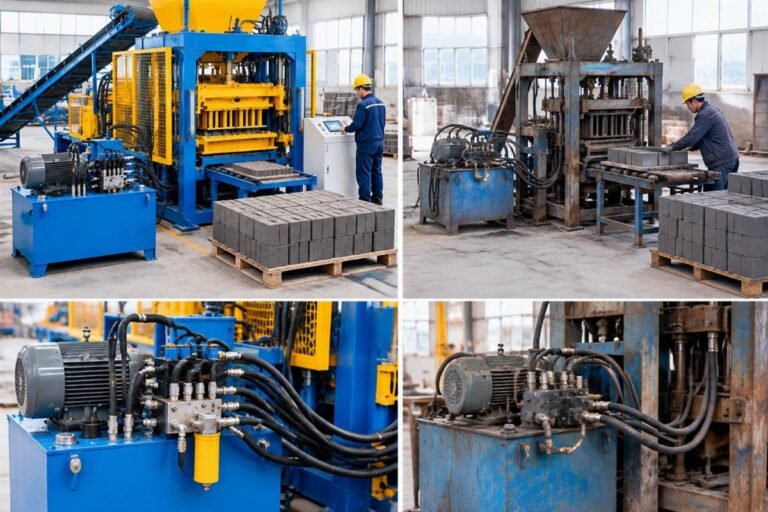
When evaluating a supplier, ask for specific details about the PLC model and the hydraulic valve brand. Then, request evidence that these two components have been tested together. This could be in the form of a video showing the machine performing a full cycle, with close-ups of the control panel displaying real-time data. Look for smooth acceleration and deceleration of the hydraulic cylinders, as jerky movements often indicate poor tuning or incompatible components.
| Verification Item | High-Risk Indicator | Recommended Standard |
|---|---|---|
| PLC-Hydraulic Protocol | Mismatched communication standards | Verified joint debugging certificate |
| Hydraulic Response | Jerky or delayed cylinder movement | Smooth, consistent acceleration curves |
| Control Interface | Generic or unbranded HMI screen | Branded interface with real-time diagnostics |
| Spare Parts Availability | No clear list of critical spares | Detailed kit including seals and sensors |
A practical step in the QT15 fully automatic block machine buyer checklist is to ask the manufacturer to simulate a power failure or emergency stop during the video demonstration. This test reveals how quickly the system can recover and whether there are any safety mechanisms in place to protect the hydraulic components from pressure spikes. Suppliers who are confident in their integration will readily provide this evidence, while those relying on assembled parts may hesitate or provide vague explanations.
Furthermore, inquire about the software version and update policy. Some manufacturers use proprietary software that requires specific tools for updates or troubleshooting. Ensuring that you have access to this software and the necessary training can prevent long downtimes in the future. A transparent supplier will offer remote diagnostic support and provide clear documentation on how to perform basic troubleshooting tasks.
What Material Specs Actually Determine Brick Quality?
Focus on mold steel grade and vibration motor power consistency, not just machine weight.
Many buyers mistakenly believe that a heavier machine produces better bricks. While structural integrity is important, the quality of the final product is primarily determined by the precision of the mold and the consistency of the vibration energy. The mold steel must be hard enough to withstand the abrasive nature of concrete aggregates without deforming. [NEED_CITE: recommended hardness ranges for mold steel in concrete block production]
Standard carbon steel may suffice for soft aggregates, but for harder materials like crushed stone or recycled concrete, high-alloy steel with a higher hardness rating is essential. Requesting mill test reports allows you to verify the actual hardness of the steel used. These reports should include details on the chemical composition and heat treatment process, ensuring that the material meets international standards.
| Material Component | Low-Quality Indicator | High-Quality Standard |
|---|---|---|
| Mold Steel | Standard carbon steel, no heat treatment | High-alloy steel, verified hardness (HRC) |
| Vibration Motors | Unbranded, inconsistent power output | Branded, synchronized dual motors |
| Hydraulic Seals | Generic rubber, prone to leakage | Brand-name polyurethane, high-pressure rated |
| Frame Structure | Thin-walled tubing, visible weld defects | Heavy-duty steel plate, reinforced joints |
Another critical factor is the vibration motor. In a QT15 line, synchronized dual motors are typically used to generate uniform vibration across the mold table. If the motors are not properly synchronized or if their power output fluctuates, the concrete mix will not compact evenly, leading to weak spots in the bricks. Ask the manufacturer for data on the vibration frequency and amplitude, and ensure that these parameters are adjustable to suit different mix designs.
In my experience, buyers who skip these material checks often face premature wear issues. A plant owner in Latin America reported that his molds lasted only a few months before needing replacement, whereas industry standards suggest a much longer lifespan. Upon investigation, it was found that the supplier had used lower-grade steel to cut costs. By including material verification in your QT15 fully automatic block machine buyer checklist, you can avoid such costly surprises and ensure that your production line operates efficiently for years.
Which Questions Expose Trading Companies Masquerading as Factories?
Ask for raw material purchase records and specific workshop photos to verify true manufacturing capability.
Distinguishing between a genuine manufacturer and a trading company can be challenging, especially when both present professional websites and similar product catalogs. Trading companies often add a significant markup to the price while offering little technical support or quality control. To identify the true source of the equipment, you need to ask probing questions that only a factory can answer confidently.
One effective method is to request photos or videos of the production workshop, specifically showing the machining processes for key components like the mold frame or hydraulic manifold. Ask for images that include date stamps or specific details that prove they were taken recently. A genuine factory will have no issue providing this evidence, as it showcases their production capabilities. In contrast, a trading company may struggle to provide specific workshop images or may send generic stock photos that do not match the equipment being quoted.
Another telling question is about the supply chain for raw materials. Ask the supplier to share purchase records for major components like PLCs, hydraulic pumps, or steel plates. While they may not disclose exact prices, they should be able to provide invoices or delivery notes that show the origin of these materials. This transparency helps verify that they are assembling the machines themselves rather than sourcing finished units from other factories.
Additionally, inquire about the after-sales support structure. Genuine manufacturers usually have dedicated technical teams who are familiar with the specific design and assembly of their machines. Ask to speak with a technical engineer directly, rather than just a sales representative. During the conversation, ask detailed questions about the machine’s design features, such as how the hydraulic system is protected from overheating or how the PLC handles error codes. A trading company’s sales staff may lack the technical depth to answer these questions accurately, whereas a factory engineer will provide precise and confident responses.
Including these verification steps in your QT15 fully automatic block machine buyer checklist ensures that you are dealing with a reliable partner who can provide long-term support. At Shiyue, for instance, we provide transparent supply chain documentation and live workshop access to help buyers verify our true factory-direct status, eliminating the guesswork and risk associated with intermediaries.
How to Structure a Risk-Free Payment Term for QT15 Lines?
Link final payment to successful on-site commissioning metrics rather than just shipment completion.
Payment terms are a critical lever for managing risk in international machinery purchases. Standard practices often require a large deposit before production and the balance before shipment. However, this structure leaves the buyer vulnerable if the equipment fails to perform as expected upon arrival. A more balanced approach is to negotiate payment terms that tie the final installment to successful on-site commissioning.
This means that a portion of the payment is released only after the machine has been installed, tested, and proven to meet the agreed-upon production metrics. These metrics should include not just the number of bricks produced per hour, but also the consistency of quality, such as dimensional accuracy and compressive strength. [NEED_CITE: standard commissioning acceptance criteria for concrete block production lines]
| Payment Milestone | Typical Risk | Mitigation Strategy |
|---|---|---|
| Deposit (30%) | Supplier delays production | Clear contract with penalty clauses |
| Pre-shipment (60%) | Equipment fails on arrival | Third-party inspection before loading |
| Commissioning (10%) | Poor performance or defects | Link payment to verified output metrics |
To implement this, you need to define what "successful commissioning" means in the contract. Specify the duration of the test run, the type of concrete mix to be used, and the acceptable range of variation in brick quality. Having a third-party inspector or your own technical team present during the commissioning phase adds an extra layer of objectivity.
While some suppliers may resist this structure, it is a reasonable request for high-value equipment. It demonstrates that the supplier is confident in their product and willing to stand behind its performance. For buyers, it provides peace of mind and ensures that the supplier remains engaged until the machine is fully operational. Incorporating this strategy into your QT15 fully automatic block machine buyer checklist can significantly reduce the financial risk associated with large-scale equipment purchases.
Conclusion
True factory-direct value lies in technical compatibility, not just the lowest initial price.
By focusing on PLC-hydraulic integration, verifying material grades through mill test reports, and structuring payments around performance metrics, buyers can secure a reliable and efficient production line. This QT15 fully automatic block machine buyer checklist serves as a practical tool to navigate the complexities of direct procurement, ensuring that your investment delivers consistent quality and long-term profitability.
Leave a Reply