

QMY10-15 Mobile Layer Block Machine Manufacturer for Sale
Stop comparing theoretical output per hour. The real cost driver in remote infrastructure projects is not how many blocks a machine produces in ideal conditions, but how quickly it recovers from site changes and mold swaps.
The QMY10-15 mobile block machine specifications prioritize structural mobility and hydraulic integration over raw speed, making it the optimal choice for contractors who need to eliminate pallet dependency and reduce infrastructure capital expenditure by nearly half compared to fixed lines.
I still remember the smell of burnt hydraulic oil mixed with desert dust at a project site in North Africa. A client had invested heavily in a high-end European stationary line, convinced that higher automation meant higher profit. But every time the road paving crew moved ten kilometers down the highway, the entire production halted for days. They had to dismantle feed hoppers, recalibrate sensors, and wait for concrete foundations to cure at the new spot. Meanwhile, a local contractor using a simpler mobile unit was already producing curbstones while the "premium" team was still unpacking tools. That discrepancy wasn’t about brand prestige; it was about understanding the operational reality of mobile construction. [NEED_CITE: comparative downtime analysis for fixed vs mobile block making in linear infrastructure projects]
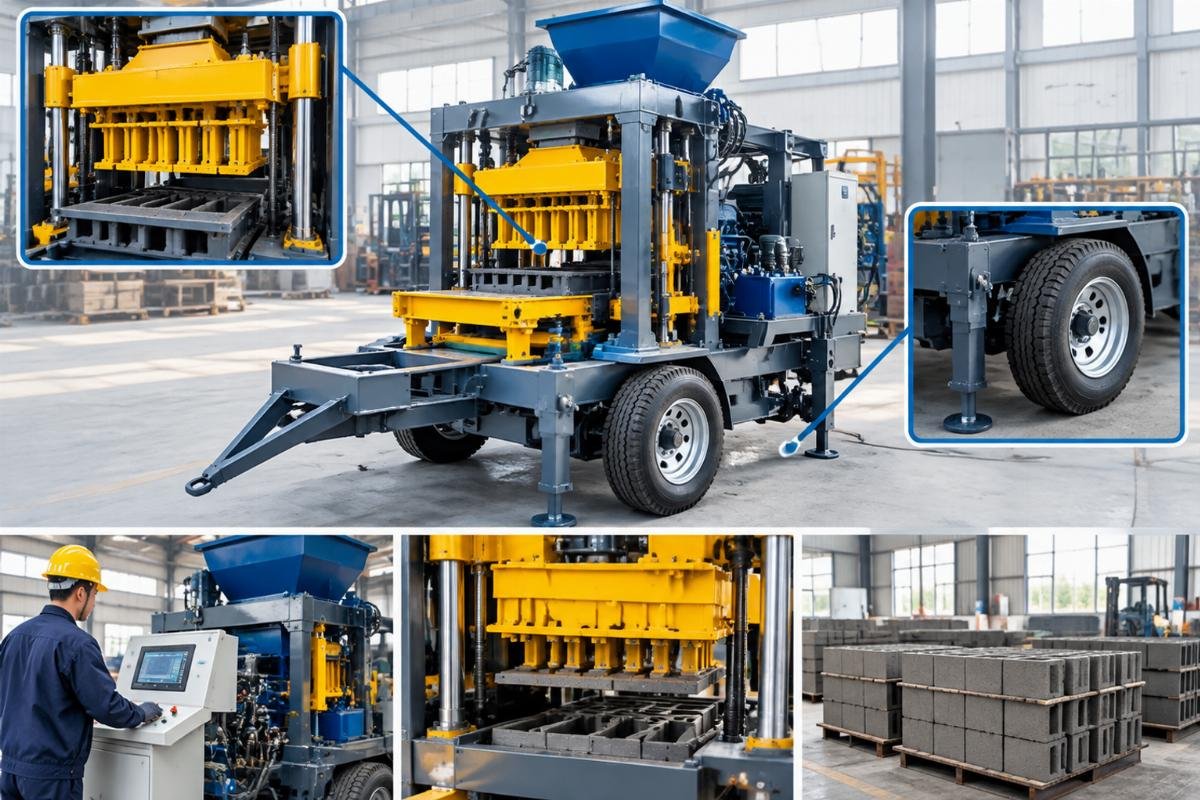
This realization drives how I evaluate equipment today. When buyers ask for the QMY10-15 mobile block machine specifications, they are often looking for a number on a datasheet. But the true value lies in the engineering decisions that allow this machine to operate without a permanent factory shell. It is not just a smaller version of a stationary plant; it is a different category of asset designed for agility.
Why QMY10-15 Outperforms Traditional Fixed Lines in Remote Projects?
Eliminating the need for pallets and permanent foundations reduces initial setup costs and logistical complexity significantly.
In traditional stationary block making, the pallet system is a hidden cost monster. You need thousands of steel or bamboo pallets, a curing yard with precise leveling, and a complex return conveyor system. For a project in a remote area of Southeast Asia or an island nation, importing these pallets adds substantial freight volume and cost. The QMY10-15 mobile block machine specifications are built around the "egg-layer" principle, where the machine moves over the freshly molded blocks, leaving them to cure directly on the ground.
This design choice has profound implications for ROI. Without pallets, you remove the maintenance cost of repairing broken pallets and the labor required to clean and stack them. More importantly, you free up valuable yard space. In dense urban renewal projects or constrained sites in Latin America, the ability to produce and cure in the same footprint is a game-changer.
| Feature | Traditional Stationary Line | QMY10-15 Mobile Unit |
|---|---|---|
| Foundation Requirement | Heavy concrete foundation | Compact, level ground only |
| Pallet Dependency | High (thousands required) | None (ground curing) |
| Setup Time | Weeks to months | Days |
| Relocation Ease | Complex dismantling | Simple transport |
| Initial Infrastructure CAPEX | High | Noticeably reduced |
[NEED_CITE: cost breakdown comparison of palletized vs non-palletized block production systems]
I recall a housing project in East Africa where the terrain was uneven and rocky. Pouring a massive concrete foundation for a stationary QT series machine would have required extensive earthworks and additional cement, eating into the budget for the actual houses. By opting for a mobile solution, the contractor simply leveled small patches of ground. The QMY10-15 mobile block machine specifications include a robust chassis that can tolerate minor ground irregularities better than sensitive stationary vibrators, which require perfect alignment to prevent premature bearing failure.
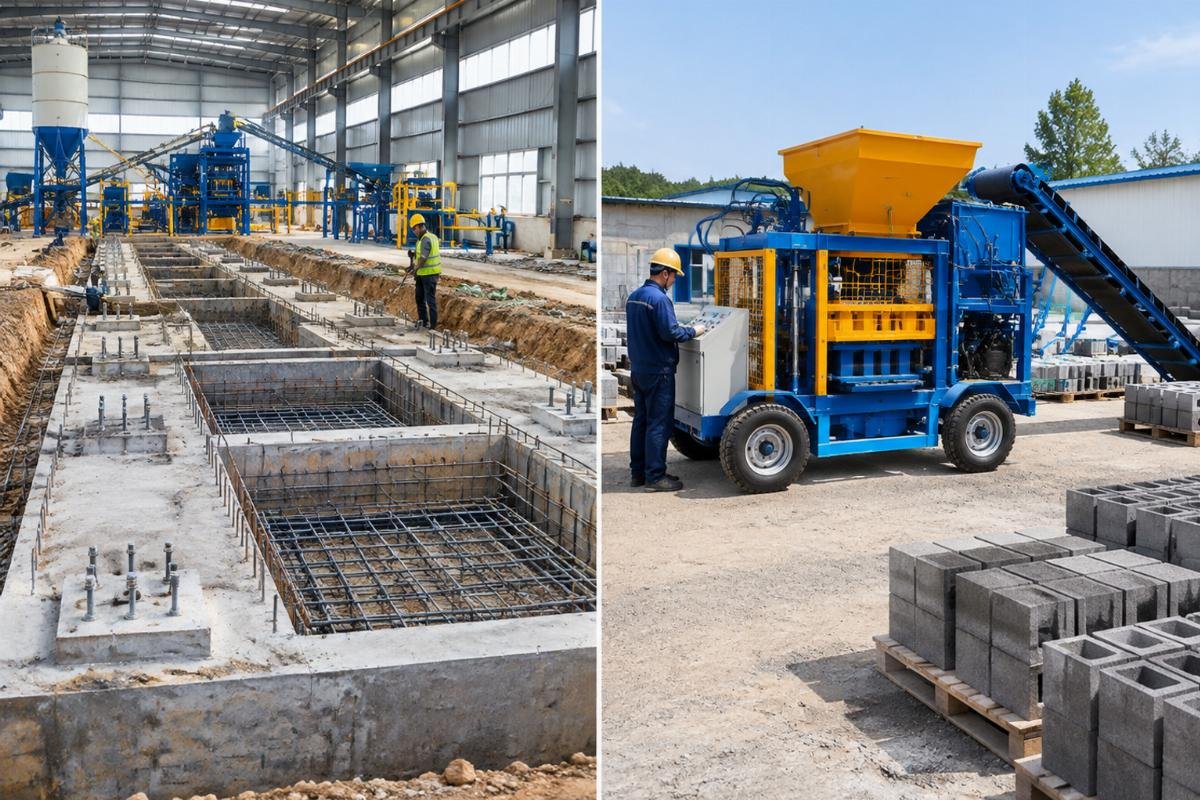
The mobility also means you can follow the construction progress. If a road project stretches over hundreds of kilometers, the production site moves with the paving crew. This reduces the distance for transporting heavy finished blocks, cutting fuel costs and breakage rates. It is a logistical efficiency that static numbers on a brochure rarely capture.
Critical Specifications: What to Check Beyond the Nameplate Capacity?
Focus on mold change efficiency and hydraulic system integration rather than just theoretical hourly output.
Many buyers get fixated on the number of blocks per hour. However, in real-world operations, the bottleneck is often how fast you can switch from producing hollow blocks to solid bricks or pavers. The QMY10-15 mobile block machine specifications must be evaluated based on its quick-change capability. A machine that takes hours to change molds will spend more time idle than working if your product mix is diverse.
Look closely at the bolt layout and positioning pins. In well-engineered units, the mold frame uses precision locating pins that ensure alignment without manual measurement. This reduces the risk of misalignment, which can cause uneven wall thickness and weak blocks. I have seen operators struggle with poorly designed frames where they had to hammer parts into place, damaging the threads and leading to long-term maintenance issues.
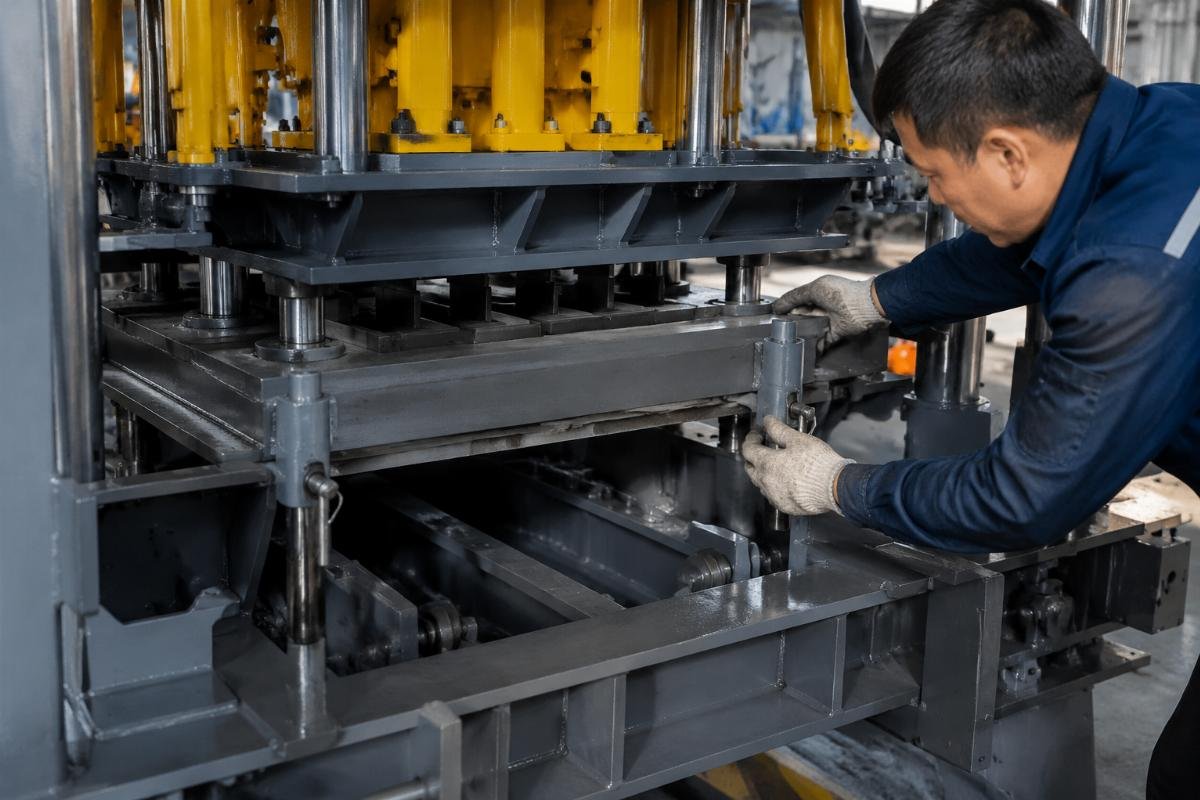
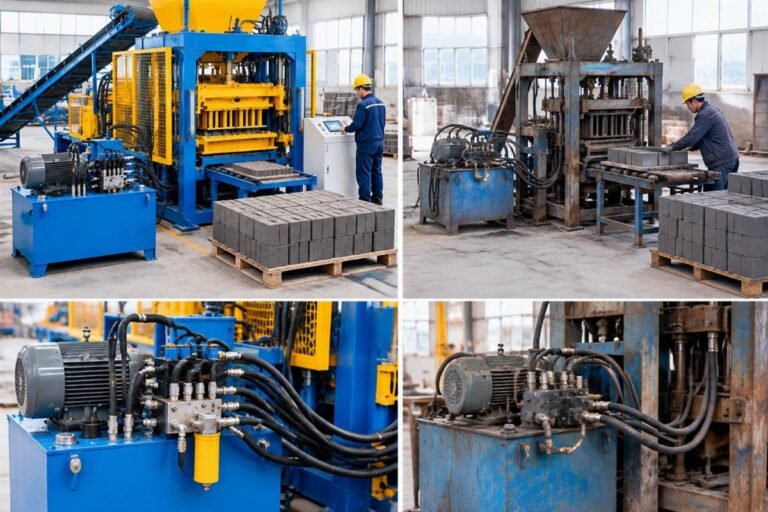
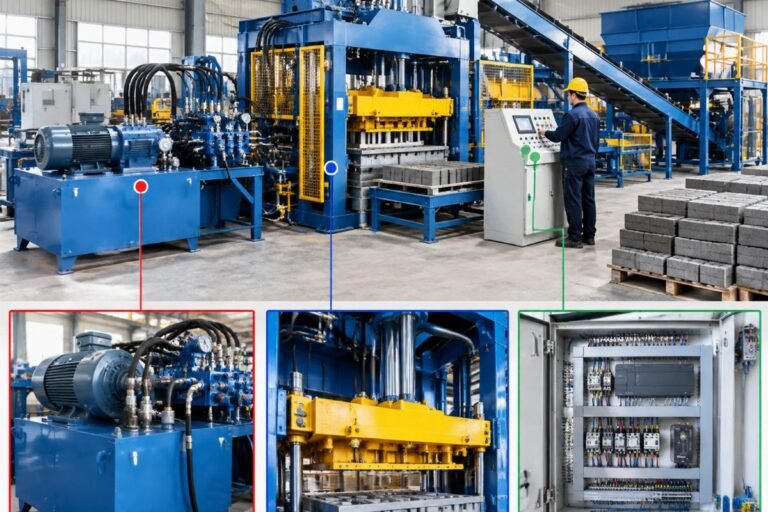
Hydraulic stability is another critical factor. The QMY10-15 mobile block machine specifications should detail the type of valve group used. It is not necessarily about having the most expensive brand name, but about the match between the pump flow and valve response. A mismatched system leads to overheating and inconsistent vibration intensity. In hot climates like the MENA region, oil temperature control is vital. Integrated cooling systems and clean oil circuit designs prevent the common issue of hydraulic lag during continuous operation.
| Component | Basic Configuration | Optimized Configuration |
|---|---|---|
| Mold Change Mechanism | Manual bolt tightening | Quick-lock pins with standardized bolts |
| Hydraulic Valves | Standard generic | Integrated manifold with matched flow |
| Cooling System | Passive air cooling | Active oil cooler for high ambient temps |
| Structural Welding | Standard fillet welds | Reinforced key stress points |
[NEED_CITE: impact of hydraulic oil temperature on block density consistency]
When reviewing the QMY10-15 mobile block machine specifications, ask about the welding process at key stress points. The machine undergoes significant vibration during operation. If the main frame welds are not done with proper penetration and technique, cracks can develop over time. High-quality manufacturers use specific steel grades and welding protocols that ensure the frame withstands years of cyclical loading. This is not something you can see from a photo, but it is evident in the machine’s longevity and resale value.
Real-World ROI: How Mobility Translates to Profit in Africa & MENA?
Reduced downtime and faster project completion drive higher actual returns than theoretical capacity.
Let us look at a case from a road protection project in North Africa. The contractor needed to produce thousands of interlocking blocks for slope stabilization along a new highway. Using a stationary plant would have required setting up multiple batch plants along the route or transporting blocks over long distances, both of which are costly and risky. With the QMY10-15 mobile block machine specifications designed for easy transport, the team moved the unit every few weeks as the road progressed.
The time saved in translocation was substantial. Instead of days of dismantling and reassembly, the mobile unit was loaded onto a truck and ready to produce within a day at the new site. This continuity meant that the supply of blocks never interrupted the paving schedule. In contract work, penalties for delay can erase margins quickly. The ability to maintain steady production despite location changes protected the project’s profitability.
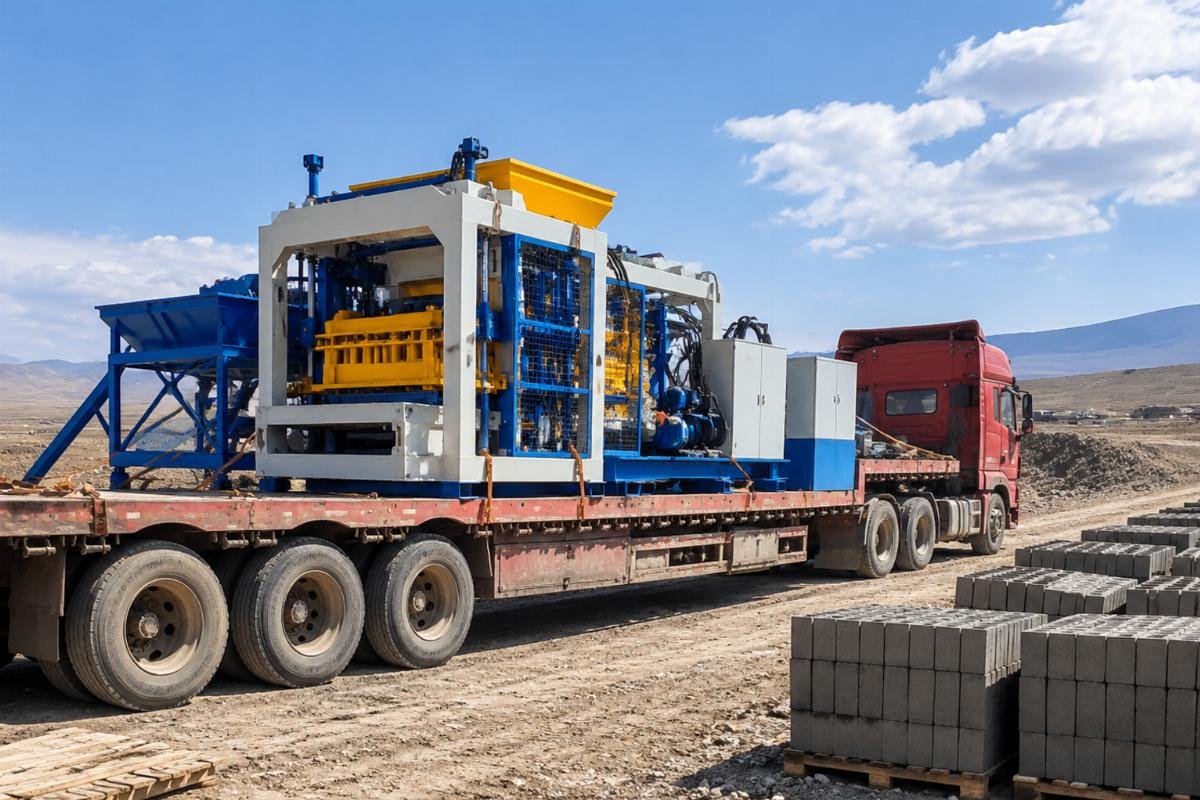
Another example comes from an island nation in Southeast Asia. Space is limited, and demand varies between tourist resorts needing decorative pavers and local communities needing standard building blocks. The operator used the QMY10-15 mobile block machine specifications to their advantage by swapping molds frequently. Because the mold change process was streamlined, they could produce small batches of different products without losing a full day’s production. This flexibility allowed them to capture niche markets that larger, rigid factories could not serve efficiently.
[NEED_CITE: case studies on flexible manufacturing in small-scale concrete product businesses]
The ROI calculation here includes not just the machine cost, but the savings on infrastructure, pallets, and logistics. For investors in emerging markets, these operational savings often outweigh the higher initial price of some premium stationary lines. The QMY10-15 mobile block machine specifications reflect a design philosophy that values total cost of ownership over headline-grabbing output figures.
Maintenance & Durability: Avoiding Common Pitfalls in Mobile Units?
Accessible service points and standardized spare parts are crucial for minimizing downtime in remote locations.
Mobile machines operate in harsher environments than stationary ones. They are exposed to dust, rain, and rough handling during transport. Therefore, the QMY10-15 mobile block machine specifications must include considerations for ease of maintenance. Components like filters, grease points, and hydraulic hoses should be easily accessible without removing major panels. I have seen designs where changing a simple filter requires unbolting half the machine, which discourages regular maintenance and leads to premature failure.
Standardization of parts is another key aspect. Using common hydraulic fittings and electrical components means that replacements can be sourced locally if necessary. Proprietary parts that can only be shipped from the manufacturer create long lead times. In regions with less developed logistics networks, this can mean weeks of downtime. A well-designed QMY10-15 mobile block machine specifications package includes a list of commonly used spare parts that are compatible with global standards.
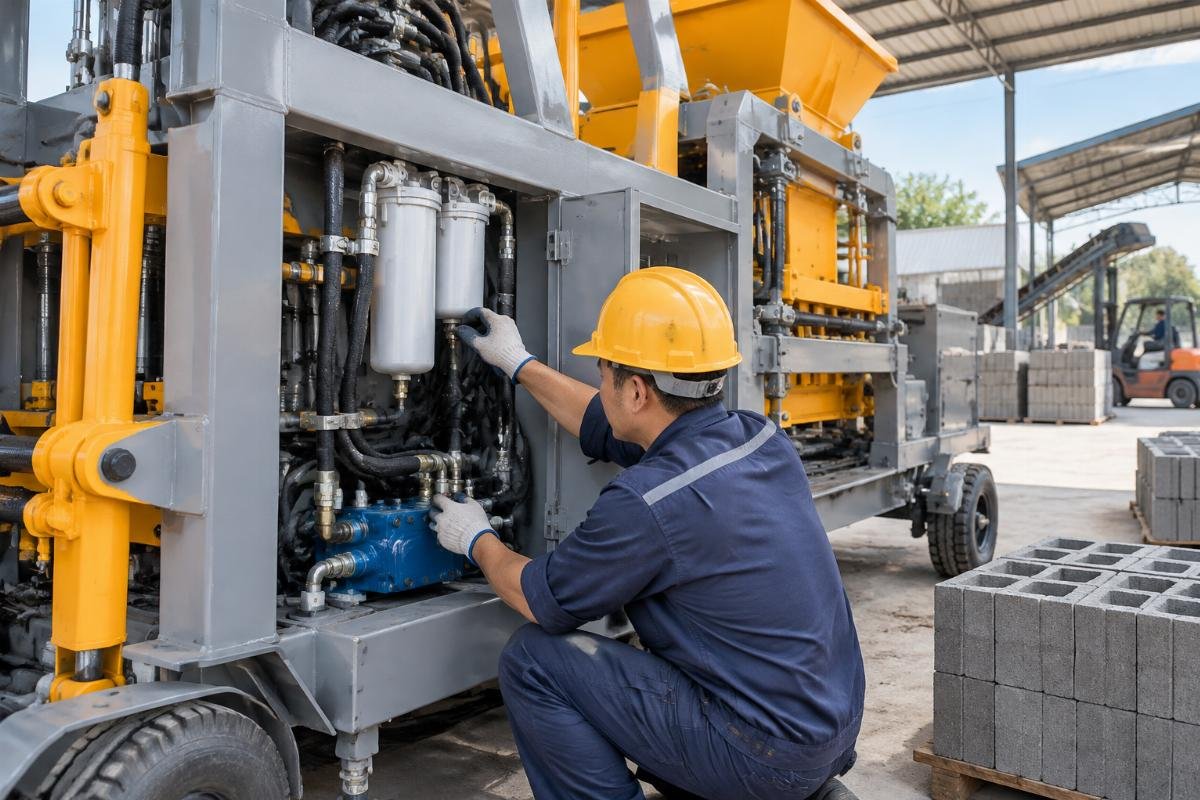
Regular inspection of the vibration system is also vital. The eccentric shafts and bearings take a beating. Checking for unusual noise or heat buildup can prevent catastrophic failures. Operators should be trained to listen to the machine and recognize early signs of wear. This proactive approach extends the service life meaningfully and ensures consistent block quality.
[NEED_CITE: best practices for preventive maintenance of vibrating concrete machinery]
Conclusion
Mobility is a strategic advantage, not just a convenience.
The QMY10-15 mobile block machine specifications offer a balanced solution for contractors who value flexibility and lower infrastructure costs. By focusing on quick mold changes, robust hydraulic integration, and ease of maintenance, this machine type delivers real-world performance that stationary lines often cannot match in dynamic project environments. Understanding these technical nuances allows buyers to make informed decisions that align with their operational realities and financial goals.
Leave a Reply