Description
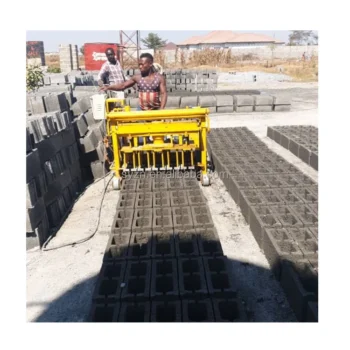
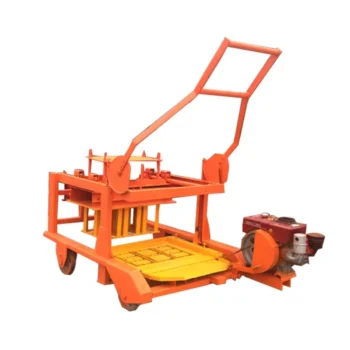
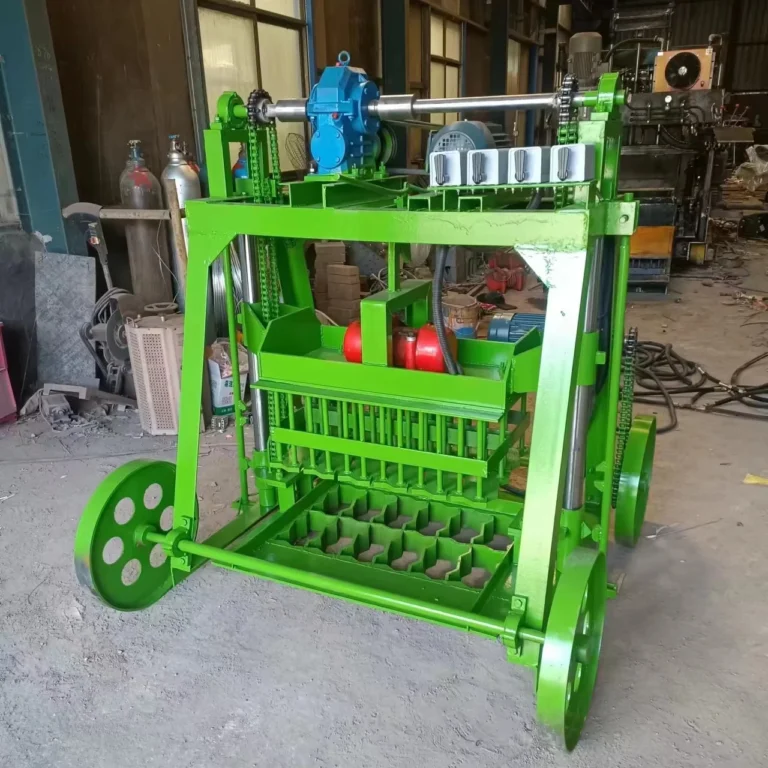
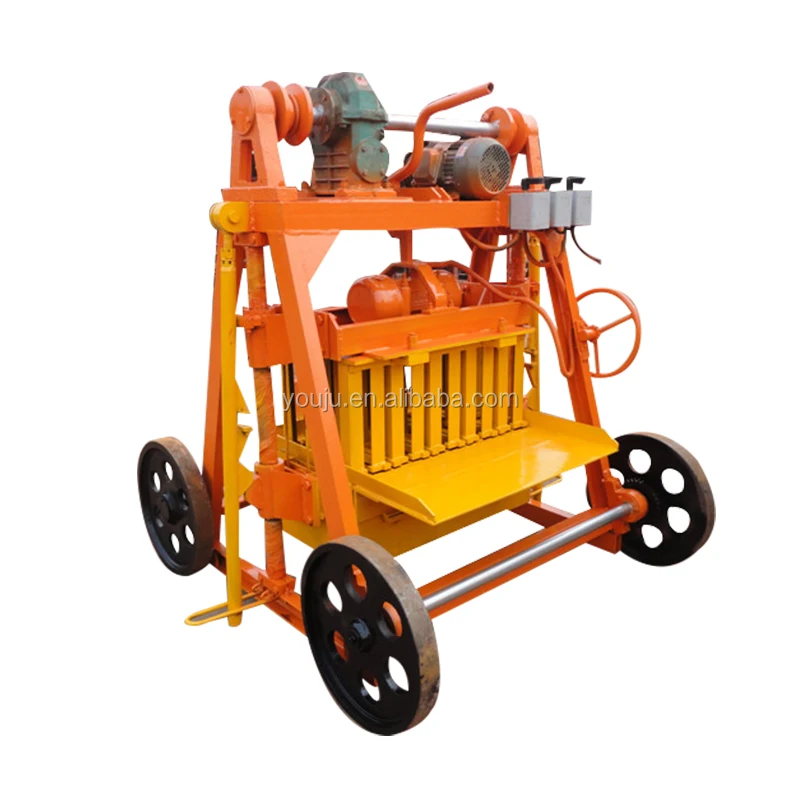
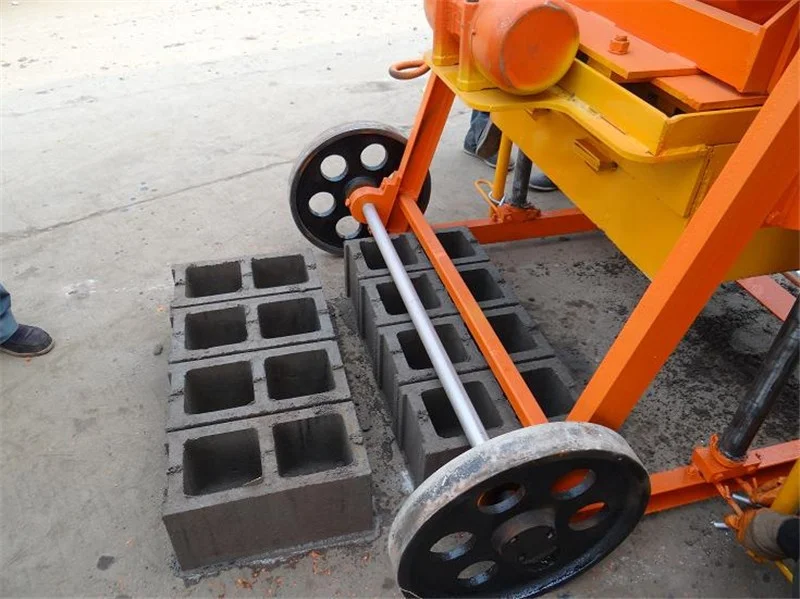
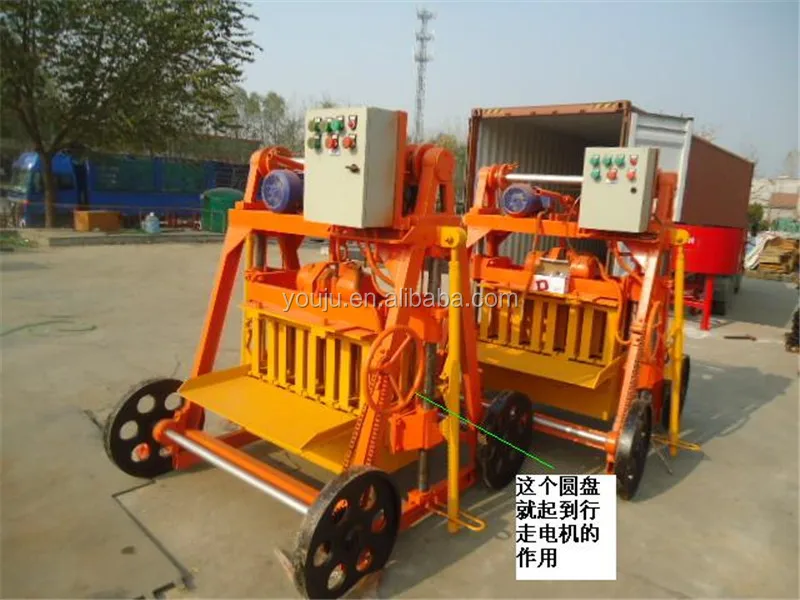
Stock readiness and dispatch speed — QMJ4-45 mobile block machine units and standard moulds staged for container loading so your site does not wait on factory lead times.
Technical Specifications
| Parameter | Value |
|---|---|
| Model | QMJ4-45 |
| Product Type | Mobile Egg Laying Block Making Machine |
| Forming Method | Mold vibration |
| Vibration Frequency | 2400 r/min |
| Molding Cycle | 40–45 seconds |
| Demold Method | Manual |
| Turning Method | Manual |
| Total Power | 6 kW |
| Power Source | Diesel / petrol engine |
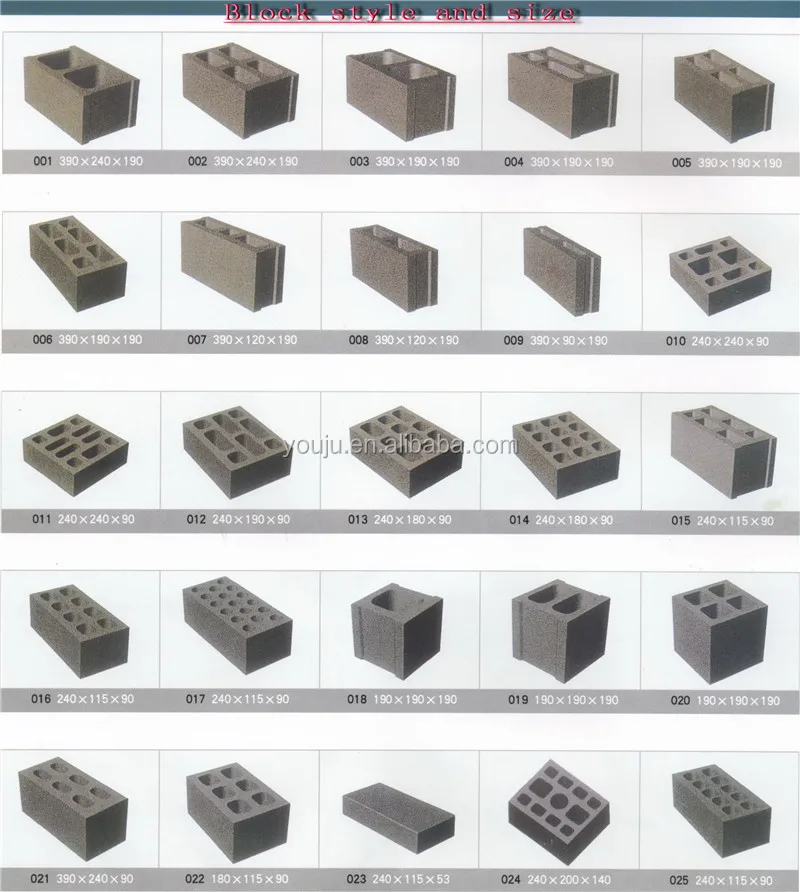
| Hollow Block Output (400×200×200 mm) | 4 pcs/mould, approx. 3000 pcs/day over 8 hours |
| Hollow Block Output (400×150×200 mm) | 5 pcs/mould, approx. 3500 pcs/day over 8 hours |
| Hollow Block Output (400×120×200 mm) | 6 pcs/mould, approx. 4500 pcs/day over 8 hours |
| Automation Level | Manual / egg-laying (no fixed pallet line) |
| Voltage & Frequency | Not applicable (engine-driven) |
| Warranty | One year for the whole machine |
Application Suitability
| Application | Material or Output |
|---|---|
| On-site hollow block production for building projects | Cement, crushed stone, sand, water |
| Remote housing development without grid power | Engine-driven operation on local aggregate |
| Small-scale paver and standard brick runs | Interchangeable moulds on the same chassis |
| First block plant with minimal capital outlay | Manual demold, no pallet line required |
Why the Dispatch Date Matters More Than the Cycle Time
A mobile block machine in stock only helps if it leaves the yard before your project deadline.
Contractors lose entire shifts waiting for equipment that was promised fast but still sits in production. I have watched site crews stand idle because a machine was quoted from stock yet needed a voltage conversion or a custom mould that pushed dispatch back by weeks [NEED_CITE: impact of late equipment arrival on construction schedules]. The QMJ4-45 avoids the most common delay trap: it runs on a diesel or petrol engine, so there is no motor rewinding or transformer order holding up the container. What you see in the yard is what gets loaded.
Engine Drive Eliminates the Electrical Bottleneck
Grid power is unreliable on many early-stage project sites. The QMJ4-45 sidesteps this entirely with its engine-driven configuration, meaning the 6 kW total power requirement is met on-site without waiting for a temporary supply connection. For a mobile block machine in stock, this removes one of the longest pre-commissioning tasks and lets the crew start laying blocks as soon as the machine is offloaded and fuelled.
Dispatch Logistics From Stock to Container
The egg-laying design means no pallet conveyor, no stacking station, and no curing rack system to dismantle for shipment. The QMJ4-45 ships as a compact single-unit press with its standard mould bolted on or crated alongside. Container loading is straightforward because the overall footprint stays within a standard 20-foot box, and the engine is drained and secured per shipping regulations before the doors close.
Reading the Capacity Figures Honestly
The quoted daily outputs — 3000 pieces for 400×200×200 mm, 3500 for the 150 mm variant, and 4500 for the 120 mm wall — all assume an 8-hour shift, a consistent mix feed, and a 40–45 second cycle [NEED_CITE: factors affecting actual block output on egg-laying machines]. In practice, mould changes, mix preparation pauses, and crew rotation will bring real daily numbers below the theoretical ceiling. The vibration frequency of 2400 r/min and manual demold cycle are consistent across all three formats, so the main variable is how many moulds your crew can cycle in a shift.
What Happens When You Order Built-to-Order Instead
Choosing a machine built from scratch rather than pulled from stock seems safer because you specify every detail. The trade-off is a multi-week production window followed by a factory test, which compresses your site timeline dangerously. If the project has a hard deadline — a foundation pour that must close, a housing phase that must hand over — a stocked QMJ4-45 with standard hollow block moulds reduces the gap between purchase order and first block on the ground [NEED_CITE: typical lead time differences between stock and custom-built block machines].
Why Buyers Choose This Yard for Mobile Block Machines
Stock availability is confirmed before the quotation, not after the deposit. Dispatch lead time is stated in calendar days against actual yard inventory. Container loading plans include dismantling details and packing photographs so you know exactly how the machine sits inside the box. Customs documentation support covers the export paperwork side so the machine clears origin port without a hold. The one-year warranty covers the entire machine, giving you a defined support window from the date of arrival.
Documentation & Verification
- Factory test record on your chosen hollow block format before dispatch
- Packing photographs showing QMJ4-45 secured inside the container
- Engine specification sheet confirming fuel type and power rating
- Mould drawing and format list for every standard mould included
- Operation and maintenance manual with engine service intervals
Installation, Commissioning & Support
- Unload onto level ground; no fixed foundation or anchor bolts required for the QMJ4-45
- Fill engine with specified fuel and oil per the included operation manual before first start
- First production run supervised with mix ratio guidance matching your local aggregate
- Mould swap procedure trained on-site so format change takes minutes instead of hours
- Wear parts list provided with part numbers for vibration springs and mould liners
What to Tell Us Before You Order
Send the block format your site needs most — wall thickness and overall dimensions — so we can confirm the matching mould is physically in the yard. Confirm your project deadline and destination port so the arrival estimate lines up with your construction schedule. If you plan to run additional formats later, let us know now so spare moulds ride in the same container.
Frequently Asked Questions
Q: Which QMJ4-45 units and standard moulds are currently in stock?
A: Yard inventory changes weekly. We confirm which QMJ4-45 machines and hollow block moulds are physically staged before issuing the quotation, so the stock status you see is real at the point of order rather than a catalogue claim.
Q: What is the dispatch lead time and estimated arrival date?
A: Once the engine specification is confirmed and the deposit is received, a stocked QMJ4-45 can be containerised within days. We quote an arrival estimate against your destination port at the time of order so you can measure it against your project deadline.
Q: How is the machine dismantled and loaded for container shipment?
A: The QMJ4-45 ships as a single press unit with the engine drained of fuel for safety. The standard mould is either bolted to the machine or crated alongside. Packing photographs are taken before the container doors close and shared with the buyer.
Q: What block formats can I produce on day one with the standard moulds?
A: The three standard hollow block sizes — 400×200×200 mm, 400×150×200 mm, and 400×120×200 mm — cover most structural wall applications. Each format change is manual and takes only a few minutes on the QMJ4-45.
Q: Do you supply diesel engine or petrol engine — can I specify?
A: Both options are available. We confirm fuel type with the buyer before loading because diesel and petrol engines have different maintenance schedules and fuel availability depending on the project region.