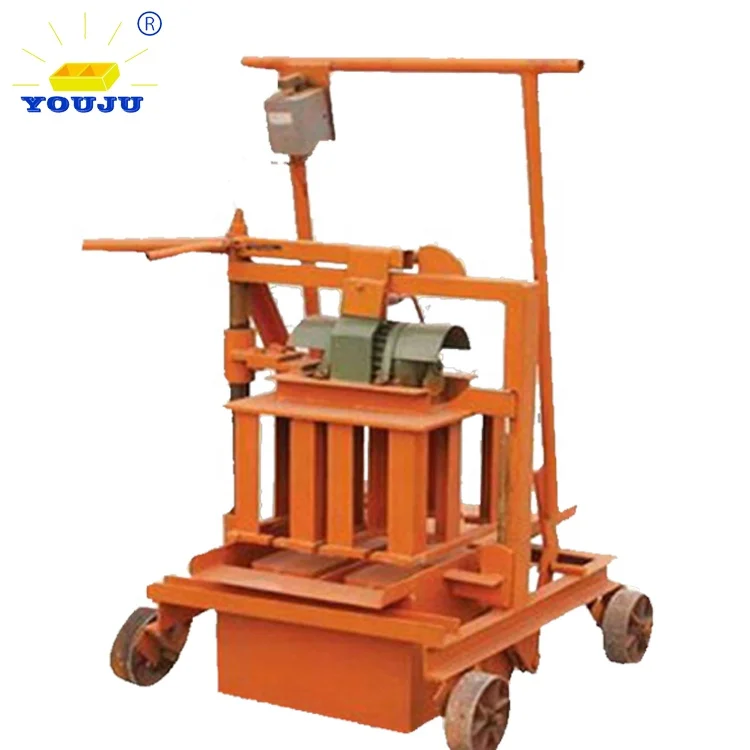
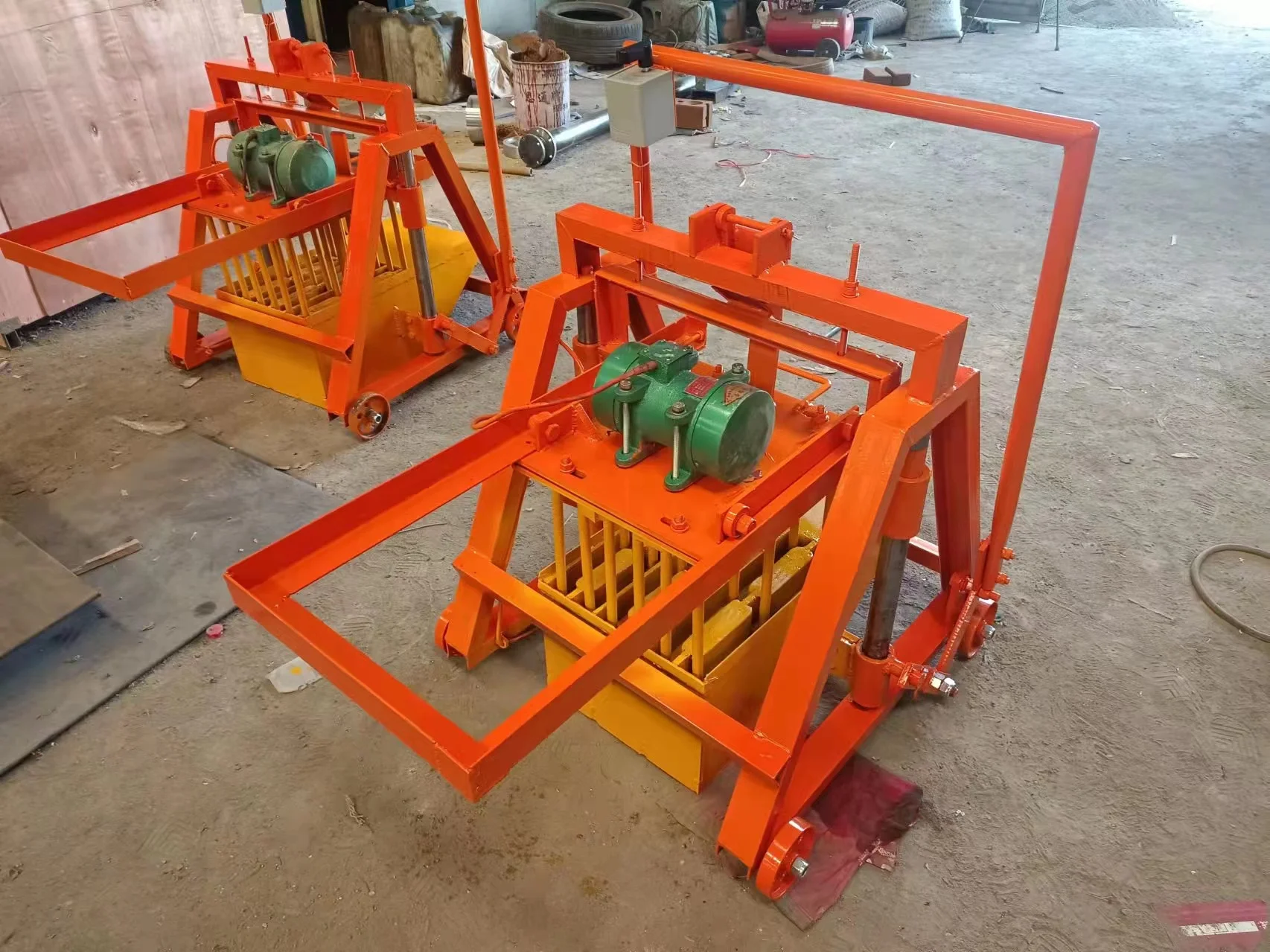
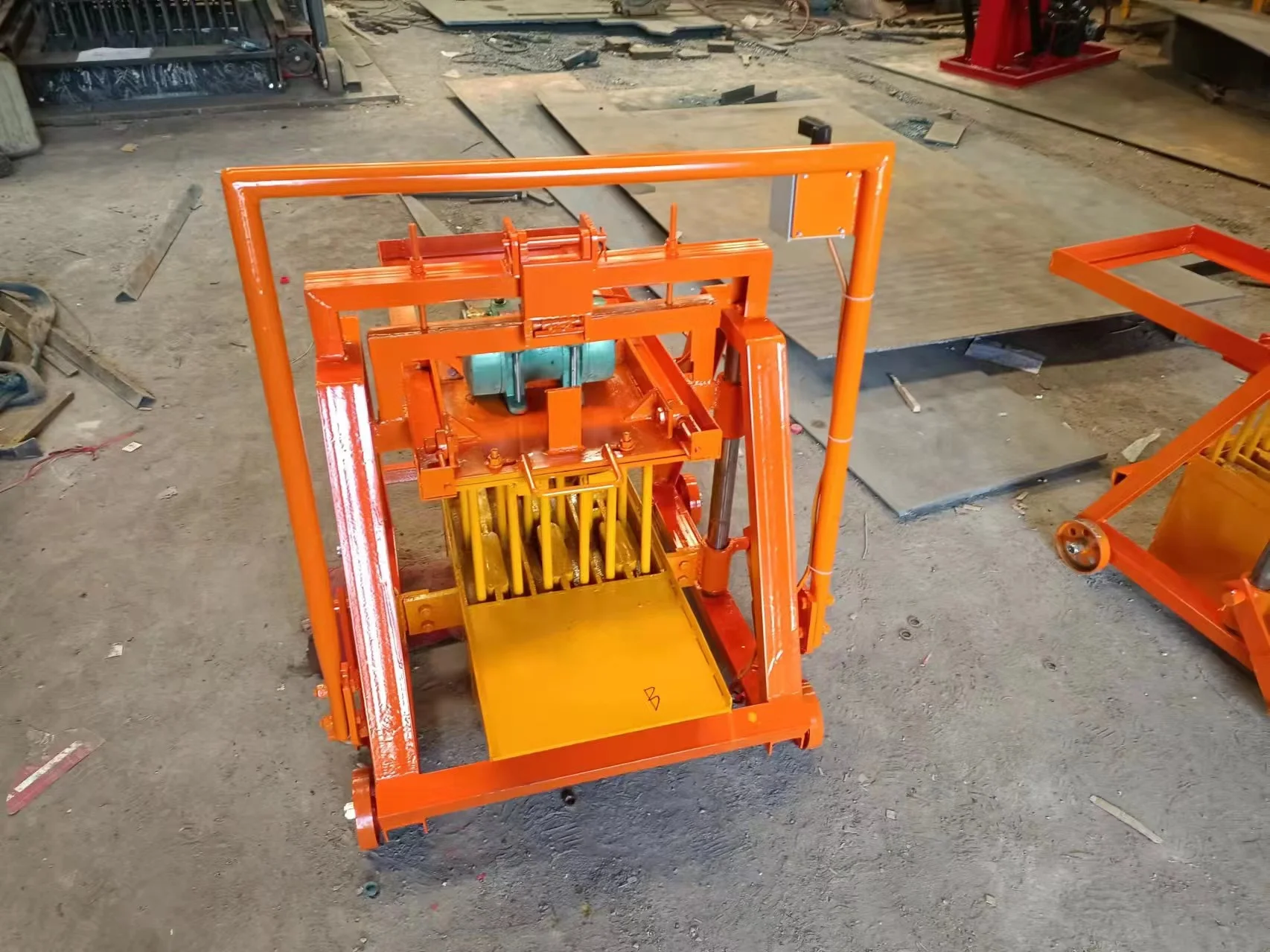
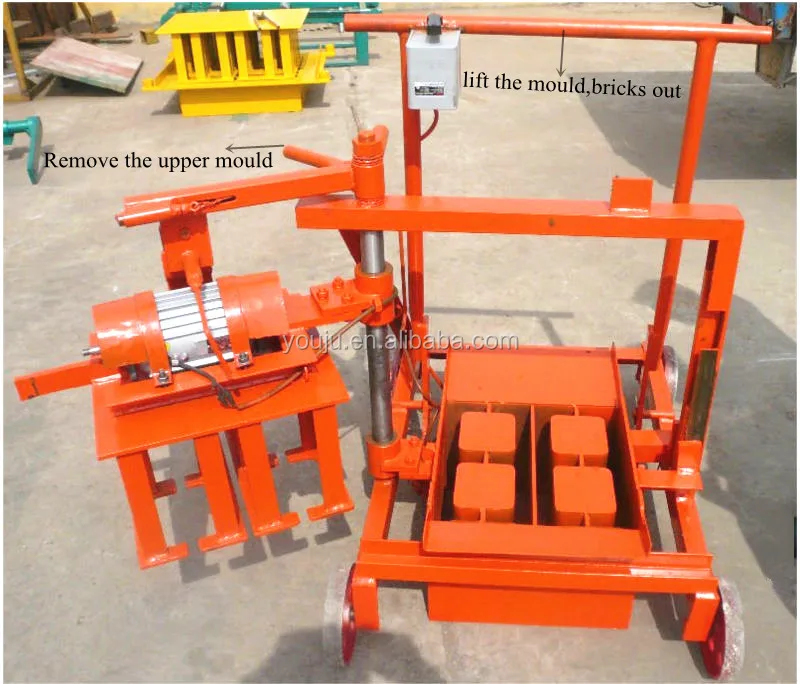
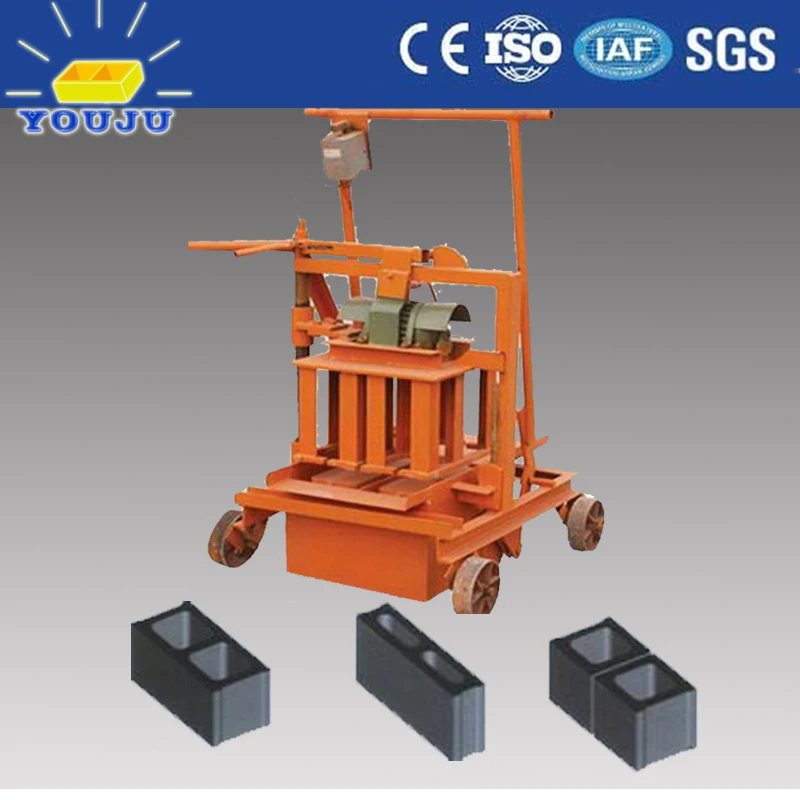

Description
Dispatch readiness confirmed before payment — Every QMJ2-45 mobile block machine in stock is photographed, pallet-free, and container-loading planned before you commit, so project deadlines are not gambled on factory lead times.
Technical Specifications
| Parameter | Value |
|---|---|
| Model | QMJ2-45 |
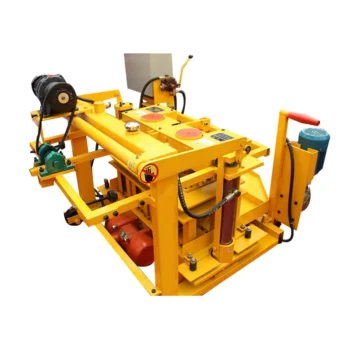
| Product Type | Mobile Concrete Block Making Machine |
| Machine Operation | Hand-pushed mobile egg-laying type |
| Pallet Requirement | No pallets required |
| Labor Requirement | 1 to 3 workers |
| Cycle Time | 25–30s per mould |
| Output Capacity | 160 pcs/h (based on 400×200×200mm hollow brick, 2 pcs/mould) |
| Output Capacity | 240 pcs/h (based on 400×150×200mm hollow brick, 3 pcs/mould) |
| Output Capacity | 320 pcs/h (based on 400×100×200mm hollow brick, 4 pcs/mould) |
| Daily Output (8hr) | 1280 pcs (based on 400×200×200mm hollow brick) |
| Daily Output (8hr) | 4800 pcs (based on 400×150×200mm hollow brick) |
| Daily Output (8hr) | 2560 pcs (based on 400×100×200mm hollow brick) |
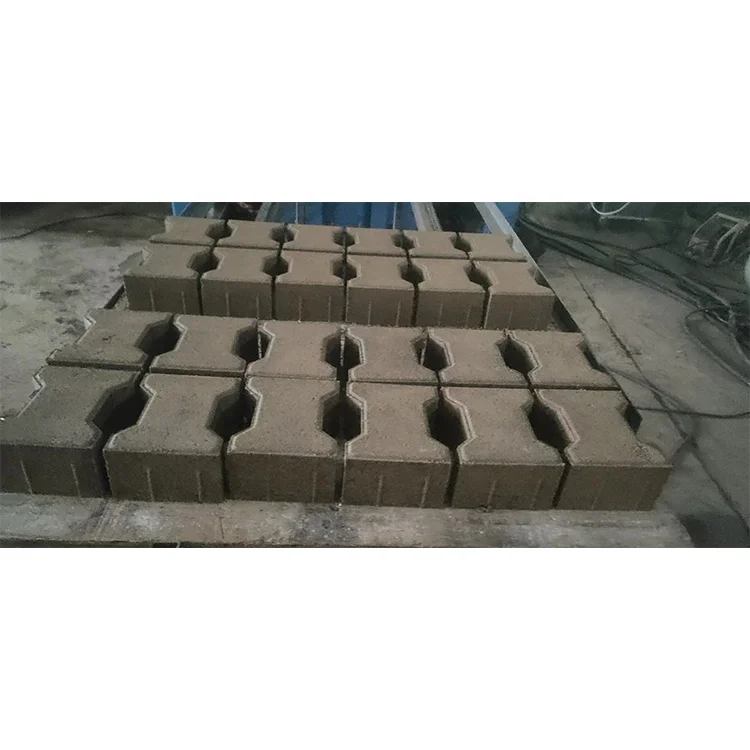
| Mould Format Options | 400×200×200 / 400×150×200 / 400×100×200mm hollow brick |
| Mould Technology | Heat treatment & carburization |
| Power Source | Confirm motor type / voltage / manual operation (basis not stated in source) |
| Operating Space | Small footprint, free movement on site |
| Assembly State | Fully assembled mobile unit |
| Standards | ISO 9001:2000, CE |
Application Suitability
| Application | Material or Output |
|---|---|
| On-site hollow concrete block production | Concrete mix using locally sourced sand, crushed stone, or volcanic ash |
| Small-scale block production for contractors | Standard cement-aggregate mixes without a fixed batching plant |
| Remote or off-grid construction sites | Manual operation where external power supply is unavailable |
| Low-investment block manufacturing entry | First-time entrepreneurs using basic locally available raw materials |
Why "In Stock" Only Matters When Container Loading Is Already Planned
A mobile block machine in stock means nothing if the loading method, dismantling state, and vessel schedule are not confirmed alongside the machine itself.
I have watched project teams lose entire foundation-pouring windows because a supposedly ready machine spent extra weeks in a port warehouse while the forwarder figured out how to wedge a fully assembled frame into a 20-foot container. Dispatch speed only counts when the destination port, customs paperwork, and site arrival sequence are locked before the order is signed. Buyers working to a project deadline need a mobile block machine in stock with the logistics path already mapped. [NEED_CITE: Typical ocean freight transit times vary significantly by destination port and shipping line schedule adherence]
Container Loading Method That Protects the Machine at Sea
The QMJ2-45 is a fully assembled unit, but loading it intact without dismantling wastes container volume and drives freight cost per machine higher. Our standard procedure is to separate the mould box, power unit, and main frame into three secured zones inside the container, each braced with timber chocking and steel strapping to prevent shifting during rough-sea transit.
Every mobile block machine in stock is photographed at each loading stage — empty container floor, frame placement, chocking installation, mould box securing, and final door closure. These packing photographs are sent to the buyer before the vessel departs, providing visual proof that the machine was loaded in the condition agreed upon. This eliminates the arrival-surprise problem where damage is only discovered after customs clearance. [NEED_CITE: Container loading and cargo securing standards for heavy industrial machinery]
Dispatch Lead Time Quoted Before You Commit
When you inquire about a stocked QMJ2-45, the dispatch lead time is stated in writing — not estimated verbally and revised later. This written lead time covers factory preparation, container booking, customs export documentation, and the date the machine clears the port of loading. Arrival estimates are then calculated based on your specific destination port, using current shipping line schedules rather than generic transit-time averages.
The point is simple: a buyer with a project deadline needs to know the machine will be on site by the date the foundation crew is scheduled, not approximately around that time. We quote arrival estimates upfront so you can build backwards from your construction timeline.
Reading the Specs That Actually Determine On-Site Performance
The 25–30 second cycle time per mould is the operational heartbeat of this machine, but it only translates into the stated output figures when the operator maintains a consistent rhythm and the mix consistency stays uniform between batches. The hand-pushed egg-laying design means the operator physically moves the machine forward after each cycle, depositing the block directly on the ground — so surface preparation of the production area directly affects block alignment and dimensional accuracy.
Heat treatment and carburization on the moulds matters because untreated mild steel moulds wear quickly when abrasive aggregates like crushed river gravel are used, causing block dimensions to drift outside tolerance within weeks. The three mould format options — 400×200×200, 400×150×200, and 400×100×200mm — cover the hollow brick sizes that dominate load-bearing wall construction in most developing markets. Mould change is a manual swap, and the time required depends on operator familiarity rather than any quick-release mechanism.
Power source configuration is a point we always clarify before dispatch because the spec sheet leaves motor type and voltage open to confirmation. A machine sent to a site with only single-phase 220V supply cannot run a three-phase motor without a phase converter, and discovering this at arrival halts commissioning entirely.
The Hidden Cost of Assuming Stock Means Ready-to-Run
A machine described as in stock can still arrive on site missing the correct voltage motor, lacking the mould format the local market actually buys, or shipped without customs documentation that matches the import regulations of the destination country. These are not manufacturing defects — they are configuration and documentation gaps that turn a fast-dispatch advantage into a multi-week delay at the worst possible moment. [NEED_CITE: Import documentation requirements vary by country and port authority]
Buyers who order a stocked machine without confirming these details often find themselves paying for emergency air-freight of replacement motors, waiting for additional moulds on the next container, or hiring local customs brokers to resolve paperwork discrepancies — all of which erase whatever time the stock availability was supposed to save.
Why Sourcing This Machine Here Reduces Delivery Risk
Stock availability is confirmed at the inquiry stage with written lead time, not assumed from a website label — because inventory changes daily and we verify before quoting. Container loading plans and dismantling methods are provided before the order is placed, so you know exactly how many machines fit per container and how each is secured. Arrival estimates are quoted upfront based on your destination port, using current carrier schedules. Customs documentation and packing photographs are supplied for every shipment, giving you the paperwork and visual evidence needed before the vessel sails. Moulds and wear parts can be added to the same container, arriving together rather than on a separate delayed shipment.
Documentation & Verification
- Factory test record showing cycle times on each of the three hollow brick mould formats before dispatch
- Packing photographs documenting every loading stage from empty container to door closure
- Customs export documentation prepared to match destination country import requirements
- Voltage and motor type confirmation sheet signed off before production or stock allocation
- Operation manual covering mould change procedure and daily maintenance intervals
Installation, Commissioning & Support
- Flat hardened ground surface required for egg-laying operation; no foundation or fixed plant construction needed
- Power source confirmed before dispatch — motor type and voltage matched to site electrical supply
- Machine arrives with main frame, mould box, and power unit separated; on-site assembly by two workers
- First production run supervised to verify cycle rhythm and mix consistency match expected output
- Mould format changeover demonstrated during commissioning so operators build switching competence
- Heat-treated moulds reduce wear-part replacement frequency, but spare mould inventory should be planned locally
What to Include in Your Inquiry
To get a firm dispatch date and arrival estimate, share your destination port, the hollow brick format your local market sells most, and the type of aggregate available at your project site. If your site has power, confirm the voltage and phase; if it is off-grid, we need to discuss manual operation configuration. Also tell us whether additional mould formats or spare wear parts should be loaded into the same container.
Frequently Asked Questions
Q: Is this QMJ2-45 currently in stock or built to order?
A: Stock status is confirmed at the inquiry stage with written verification, because inventory changes with daily shipments. We do not rely on a static website label — each inquiry triggers a physical warehouse check and a written confirmation of availability, dispatch readiness, and the specific mould formats currently held in stock alongside the machine.
Q: What is the dispatch lead time from order confirmation to container loading?
A: Dispatch lead time is quoted in writing before you place the order and covers factory preparation, container booking, and customs export clearance. The exact timeline depends on current container availability at the port of loading and shipping line schedules. We provide this as a written commitment at the quotation stage, not as a verbal estimate subject to later revision.
Q: Which standard moulds ship with the machine, and can additional formats be added to the same shipment?
A: The QMJ2-45 supports 400×200×200mm, 400×150×200mm, and 400×100×200mm hollow brick moulds. The formats included in the standard shipment are confirmed at inquiry. Additional moulds and spare wear parts can be loaded into the same container, arriving together with the machine so production can begin without waiting for a separate freight consignment.
Q: How is the machine dismantled and secured inside the container for ocean freight?
A: The main frame, mould box, and power unit are separated into three zones within the container, each braced with timber chocking and steel strapping to prevent transit damage. Packing photographs are taken at each loading stage and sent to the buyer before the vessel departs, providing visual confirmation of the securing method used for the specific shipment.
Q: What customs documentation and packing photographs will I receive before the vessel departs?
A: You receive the full customs export documentation package matched to your destination country requirements, along with a complete set of packing photographs covering every loading stage. These documents are provided before the vessel sails so any discrepancies can be corrected before the container leaves the port of loading, avoiding clearance delays at destination.