Description
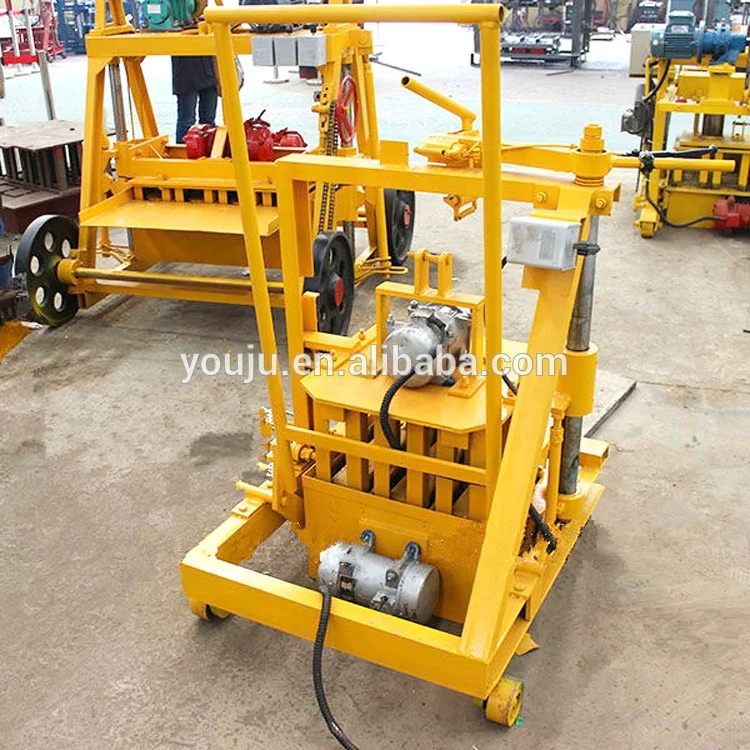
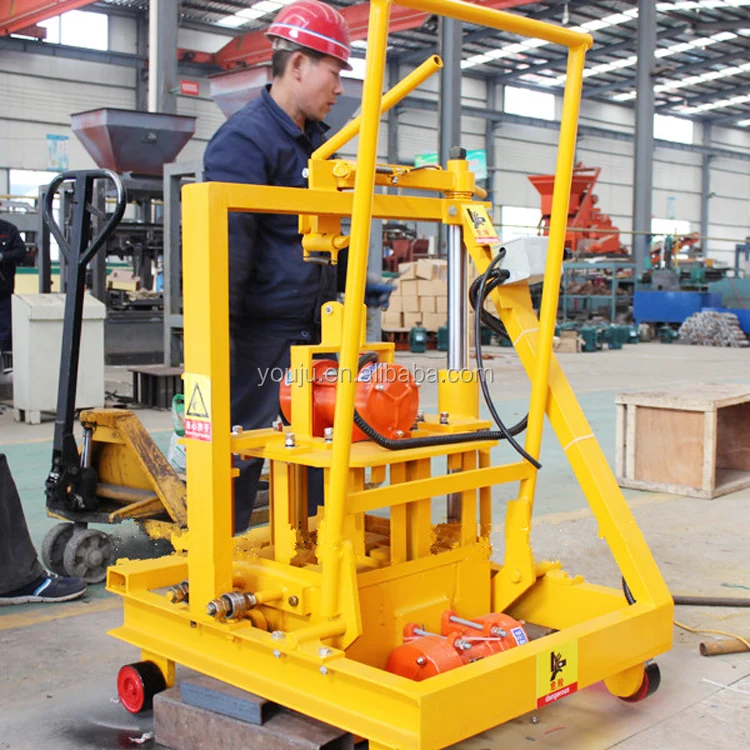
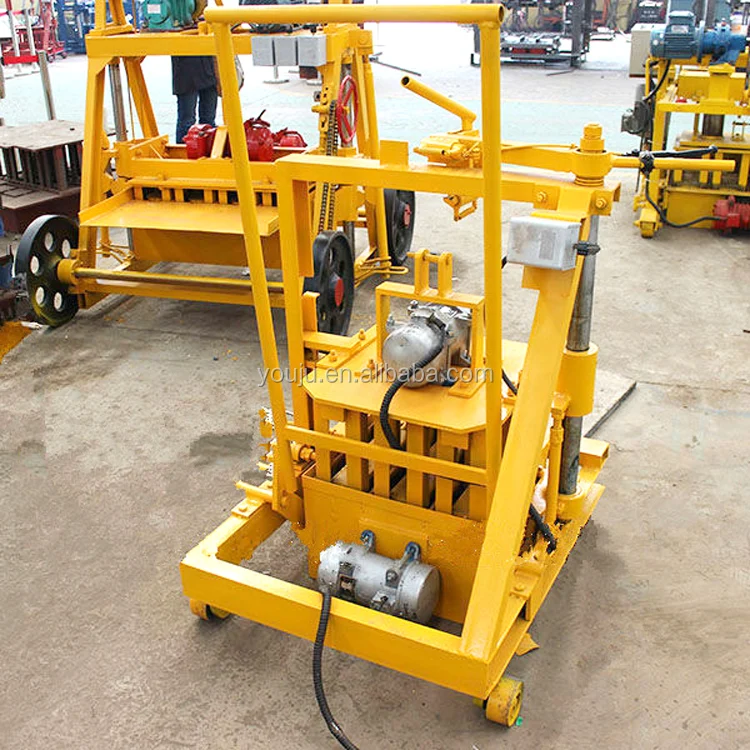
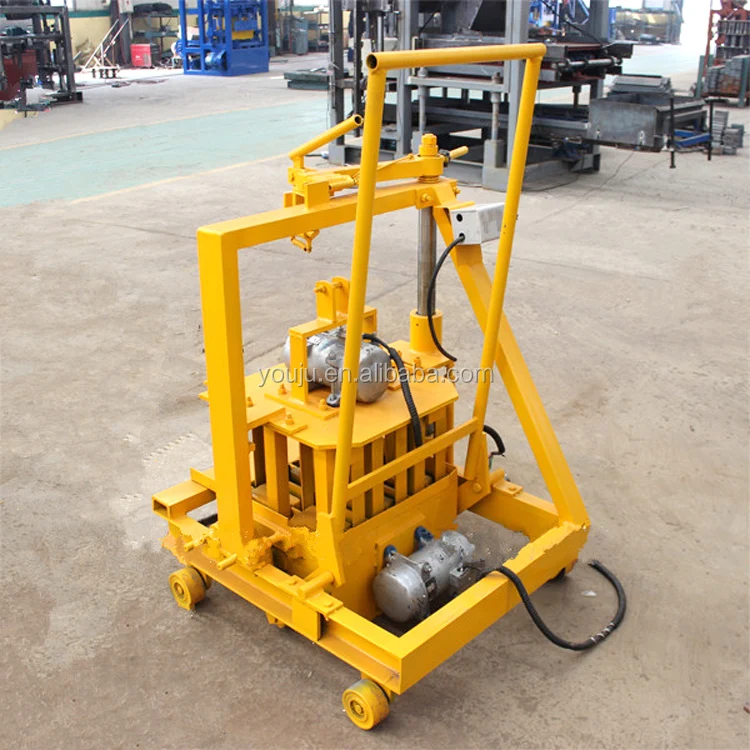
QMJ2-45 Mobile Concrete Block Making Machine – In Stock
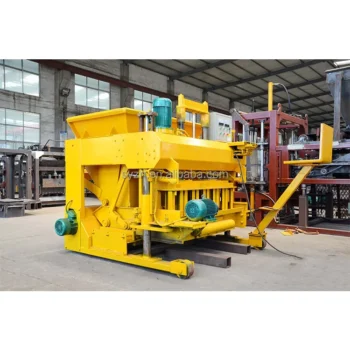
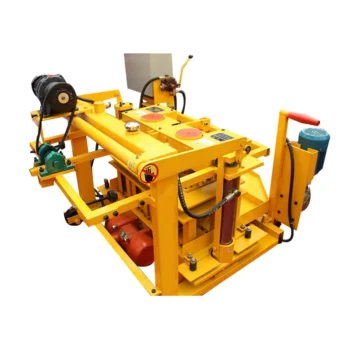
Dispatch-Ready Mobile Unit — the QMJ2-45 mobile block machine ships with motor, mould and wiring configured to your site voltage before it leaves the floor, not after it arrives.
Technical Specifications
| Parameter | Value |
|---|---|
| Model | QMJ2-45 |
| Product Type | Mobile Concrete Block Making Machine |
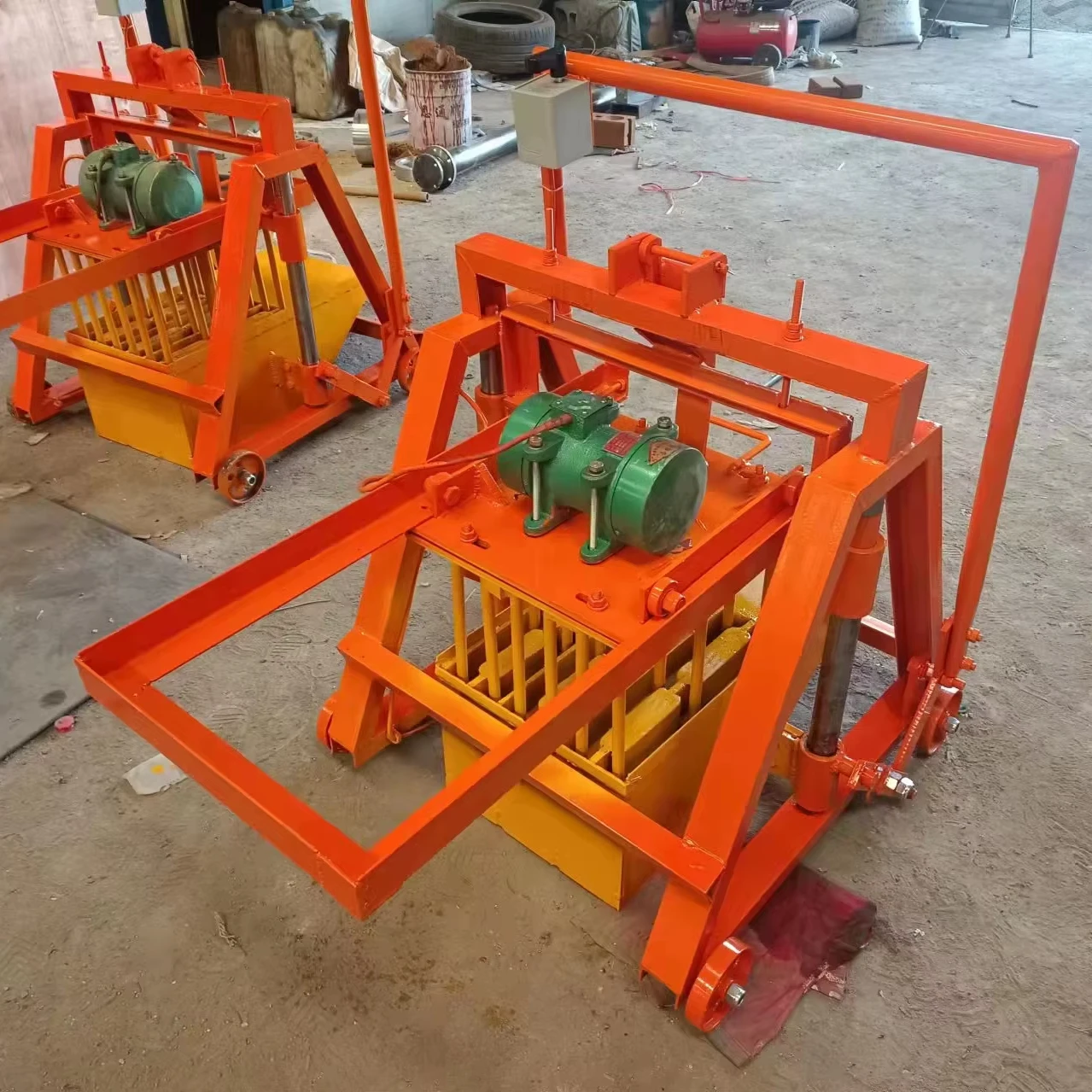
| Machine Type | Manual mobile egg-laying block machine |
| Block Formats | Hollow brick (multiple sizes via mould change) |
| Mould Change | Manual, interchangeable moulds |
| Pallet Requirement | No pallets required (egg-laying / mobile type) |
| Power Source | Electric motor (motorized, hand-pushed) |
| Labor Requirement | 1 to 3 workers |
| Cycle Time | 25–30s (basis: hollow brick formats listed below) |
| Output — 400×200×200mm hollow brick | 2 pcs/mould, 160 pcs/h, 1280 pcs/8hr |
| Output — 400×150×200mm hollow brick | 3 pcs/mould, 240 pcs/h (basis to be confirmed) |
| Output — 400×100×200mm hollow brick | 4 pcs/mould, 320 pcs/h, 2560 pcs/8hr |
| Automation Level | Manual (hand-pushed, motorized vibration) |
| Standards | ISO 9001:2000, CE |
Application Suitability
| Application | Material or Output |
|---|---|
| Small-scale hollow block production on construction sites | Crushed stone, sand, cement, water |
| Mobile on-site block manufacturing | Local aggregate blended with Portland cement |
| Low-investment block production for entrepreneurs | Standard concrete mix without admixtures |
| Confined-space production where fixed plant is not feasible | Cement-stabilized granular fill |
Why the Voltage Question Comes Before the Price
The QMJ2-45 mobile block machine in stock fast delivery only matters if the motor actually starts when you plug it in. Confirming voltage and frequency before dispatch prevents the most common on-site failure we see across export markets. I once had a QMJ2-45 arrive at a job site in Ecuador wired for 380V/50Hz while the local supply ran 110V/60Hz. The motor tripped instantly, and the crew stood idle for two weeks waiting on a replacement. That delay cost more than the machine itself. Every unit we dispatch now goes through a voltage and frequency check against the destination grid before it is crated [NEED_CITE: voltage and frequency standards by export market].
What Stock Really Means for Your Project Timeline
When a contractor is mid-build and blocks are the bottleneck, lead time is the only number that counts. Our QMJ2-45 mobile block machine in stock fast delivery approach means the frame, motor, and standard hollow brick moulds are assembled and tested before your inquiry arrives. We do not start building after you pay; we configure the electrical system to your grid and ship. This cuts the typical multi-week production wait down to a dispatch window measured in days.
How the Egg-Laying Design Removes Pallet Logistics
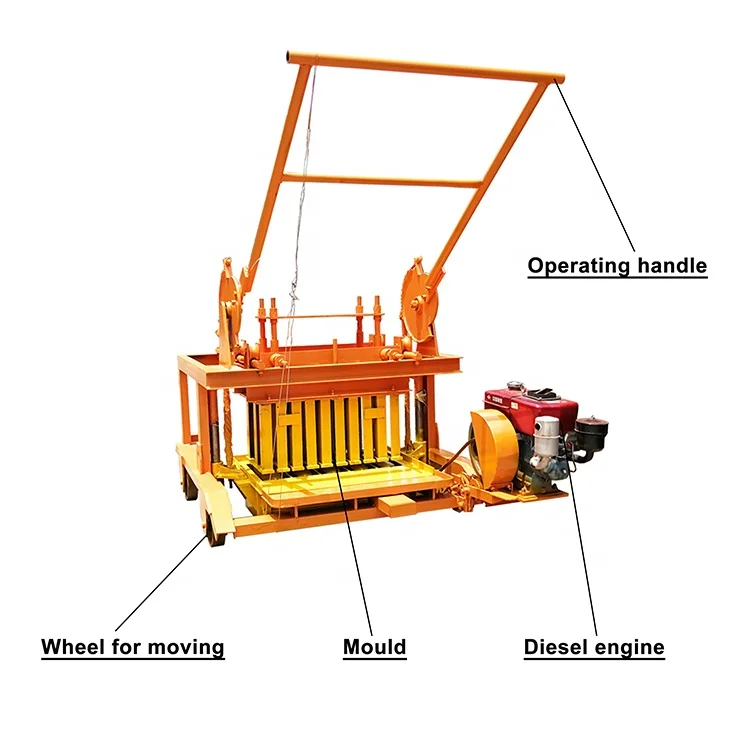
The QMJ2-45 lays blocks directly onto a prepared ground surface, which eliminates the need to purchase, store, rotate, and replace wooden or PVC pallets entirely. For a remote housing project or a contractor working on a tight urban lot, this means one less material to source locally and one less handling step between the press and the curing area. The machine rolls forward after each cycle, leaving a row of freshly formed hollow blocks to cure in place [NEED_CITE: typical pallet replacement frequency for small block operations].
Reading the Capacity Numbers Honestly
Cycle time on the QMJ2-45 sits at 25–30 seconds per mould, but what that translates into per hour depends entirely on which block format you are running. At the 400×200×200mm format, each cycle produces 2 pieces, yielding 160 per hour. Switch to the 400×100×200mm format and the same cycle delivers 4 pieces, reaching 320 per hour. The machine does not change speed; the block size does. Any supplier quoting a single output figure without naming the assumed format is leaving out the most important variable in the equation. The manual mould change is straightforward but takes time, so format switching should be planned around production runs rather than done every hour.
The Hidden Cost of Skipping Pre-Shipment Electrical Checks
Sending a machine across borders without matching the motor to the destination grid is a gamble that always loses. A motor wound for the wrong frequency overheats within hours, insulation breaks down, and the winding burns out. The contractor then faces a choice between air-freighting a replacement motor at several times its original cost or sourcing a local rewind shop whose quality is unknown. Either path stalls the project. Confirming voltage, frequency, and plug type at the quotation stage removes this risk entirely and costs nothing [NEED_CITE: CE machinery directive requirements for industrial equipment].
Why Source This Machine Here
Block machinery is our single focus, so the QMJ2-45 is specified as a matched unit — motor, vibration assembly, and mould tested together rather than assembled from separate suppliers. We set the electrical configuration against your actual site supply, not a default catalogue value. Standard hollow brick moulds ship with the machine, and custom formats can be added from drawings you provide. The unit arrives dismantled for container loading with packing photographs provided so you can verify condition before it reaches your port.
Documentation & Verification
- Factory test record running your specified hollow brick format before crating
- Voltage and frequency confirmation sheet signed against your site electrical data
- Mould drawing and format list showing included standard sizes
- Operation manual covering manual mould change and daily maintenance steps
- CE declaration where applicable to your import market requirements
Installation, Commissioning & Support
- No fixed foundation needed; level compacted ground is sufficient for the QMJ2-45 egg-laying operation
- Confirm dedicated circuit matching the motor rated voltage and frequency before first start
- Machine ships partially dismantled for container loading with reassembly guidance provided
- First-cycle test run with your local aggregate mix to verify block density and dimensions
- Operator training covers manual mould change, vibration timing, and ground preparation
- Wear parts list included so you can plan first reorder before production starts
What We Need From You to Dispatch
To move a QMJ2-45 mobile block machine in stock fast delivery from our floor to yours, share the hollow brick formats your market demands, the voltage and frequency at your site, and your target daily output so we can confirm which stock moulds match. If you have existing curing space or a forklift on site, let us know so we can advise on layout. We will respond with a dispatch timeline, container loading plan, and packing photographs before shipment.
Frequently Asked Questions
Q: Which QMJ2-45 units and standard moulds are currently in stock and ready to ship?
A: We keep assembled QMJ2-45 frames with standard hollow brick moulds in 400×200×200mm, 400×150×200mm, and 400×100×200mm formats. Motors are configured to your destination voltage after order confirmation. Dispatch typically follows within days once electrical specifications are locked in, not weeks.
Q: What is the dispatch lead time and how is the machine packed for container loading?
A: Once voltage and frequency are confirmed, stocked units are crated and loaded within a short dispatch window. The QMJ2-45 is partially dismantled to fit standard container dimensions. We provide packing photographs and a loading plan so you can verify condition and placement before the container seals.
Q: How do I confirm voltage, frequency, and plug type match my site before the machine ships?
A: Share your site electrical specification — voltage, phase, frequency, and plug standard — at the inquiry stage. We match the motor winding and control wiring to those values and provide a confirmation sheet. This step prevents the most common commissioning delay we see on export deliveries.
Q: What hollow brick formats are included as standard moulds and which require custom order?
A: The three standard moulds cover 400×200×200mm, 400×150×200mm, and 400×100×200mm hollow bricks. If your market requires a different dimension or a non-standard wall thickness, we can produce a custom mould from your drawings. Standard moulds ship with the machine; custom moulds add a short production lead.
Q: When is the first replacement of wear parts due, and are spares shipped with the machine?
A: The QMJ2-45 is a mechanical unit with few wear points. The mould interior and vibration components see the most contact. A wear parts list is included with every shipment so you can identify what to reorder and when. Moulds and spares can be ordered separately and shipped alongside your next container or via express if urgent.