

Description
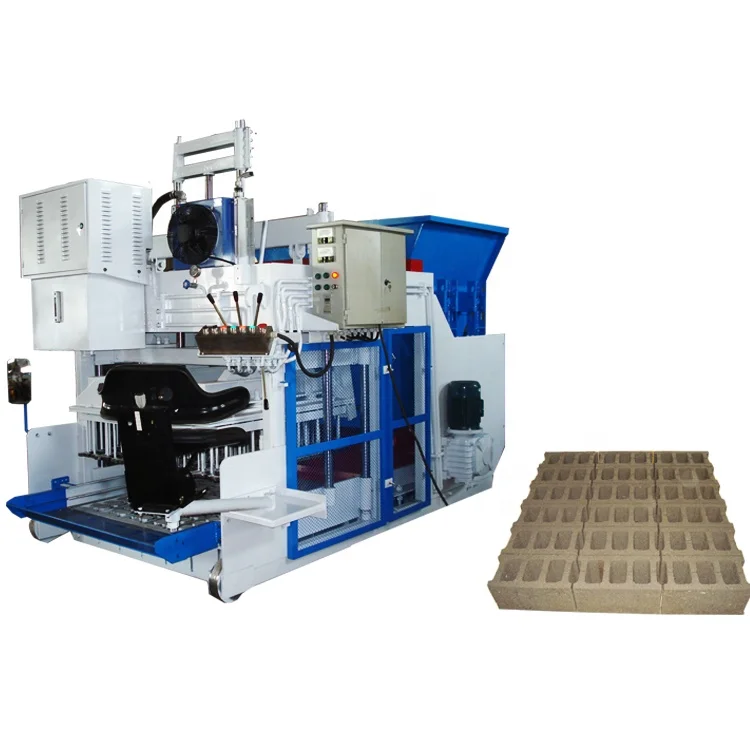
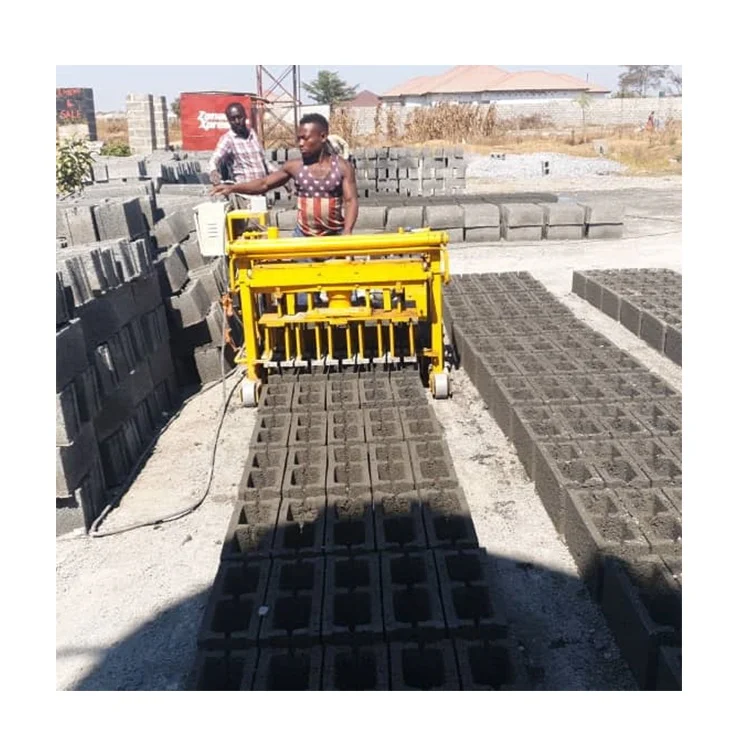
Quick Dispatch — stocked QMY4-30 mobile egg-laying block machine ships as a single matched unit, not assembled from separate suppliers after payment.
Technical Specifications
| Parameter | Value |
|---|---|
| Model | QMY4-30 |
| Product Type | Mobile Block Making Machine |
| Rated Power | 5 kW |
| Control System | Manual operation |
| Overall Dimensions | 1200×1200×1100 mm |
| Net Weight | 950 kg |
| Cycle Time | 30 seconds |
| Mould Format | 400×200×200 mm (4 pcs/mould), 400×150×200 mm (5 pcs/mould), 400×100×200 mm (7 pcs/mould) |
| Output Capacity | 480 pcs/h for 400×200×200 mm hollow block; 600 pcs/h for 400×150×200 mm block; 840 pcs/h for 400×100×200 mm block |
| Pallet Size | Not applicable (mobile egg-laying type) |
| Automation Level | Manual / mobile egg-laying |
| Stacking Method | On-site curing without pallet (egg-laying) |
| Raw Materials | Cement, sand, crushed stones, slag |
| Assembly State | Fully assembled |
| Warranty | Five year guarantee |
Application Suitability
| Application | Material or Output |
|---|---|
| Construction site hollow block production | Cement, sand and crushed stone mixes for 200 mm hollow blocks |
| Housing project solid brick runs | Local aggregate and cement blends for 100 mm and 150 mm solid blocks |
| Entrepreneur start-up block plant | Low-capital on-site production without pallet investment or fixed factory build |
| Remote site block making | 5 kW power draw suits generator-fed locations with limited grid capacity |
What "Pieces per Hour" Actually Means on a Job Site
Every output figure on this page is tied to a specific block format — no single headline number hiding a smaller reality.
A mobile block making machine in stock often gets quoted at its highest format output, which happens to be the smallest solid brick. On a real site where hollow blocks are what sells, that number is irrelevant. With the QMY4-30, the 30-second cycle stays constant, but what you actually stack each hour shifts from 840 pieces down to 480 the moment you move from 100 mm solid bricks to 200 mm hollow blocks. I have watched contractors arrive at a site expecting the headline figure only to discover they are producing barely half [NEED_CITE: typical output expectations versus actual block format mix on construction sites]. The cycle time does not change; the block format does, and that alone reshapes your daily count.
Dispatch Timing That Matches Your Project Calendar
The QMY4-30 mobile block making machine in stock is held as a fully assembled unit with standard moulds, which means the gap between order confirmation and container loading is measured in days rather than production weeks. When a housing project has a foundation deadline approaching, waiting on a built-to-order press is not an option. We confirm dispatch lead time before you commit, and the container loading plan — including how the machine is secured for transit — is quoted alongside the machine itself.
Arrival Planning Without Guesswork
Machine dismantling for shipment and container loading details are documented up front so you can calculate your own arrival estimate based on your port of entry. I have seen buyers lose weeks because the supplier quoted a shipping date but never specified whether the unit travels whole or broken down into components that need re-assembly before first use. With a 950 kg net weight and a 1200×1200×1100 mm frame, the QMY4-30 loads as a single piece into standard container space [NEED_CITE: container loading dimensions for mobile block machines under 1000 kg]. You know what arrives, and you know what you need to do the day it clears customs.
Reading the Spec Sheet for Real Site Decisions
The 5 kW rated power draw is the number that matters when you are sizing a generator for a site with no grid connection — it tells you the entire machine, motor and vibration system combined, stays within the output of a small portable generator set. The 30-second cycle time is constant across all three mould formats, which means your planning variable is mould swaps, not machine speed. Mould changeovers between the 400×200×200, 400×150×200 and 400×100×200 mm formats are manual, and that is worth knowing before you commit to a schedule that assumes rapid format switching multiple times per shift. The manual operation and egg-laying design together mean no pallet inventory, no pallet return conveyor, and no curing rack system — your blocks cure directly on the ground where the machine lays them. For a contractor producing on their own site, this removes the single largest piece of supporting infrastructure a stationary plant would require. The 950 kg weight and compact 1200 mm square footprint mean the machine can be repositioned within a job site by a small loader as production areas shift, without dismantling.
When the Wrong Configuration Reaches Your Site
Arriving with a machine configured for a mix you cannot source locally forces a material change before the first block is produced, and that delay compounds every day your crew sits idle. I once spent two weeks on a site in Zambia retuning vibration force and pressure curves because the local sand carried far more clay than the sample used during factory testing [NEED_CITE: impact of local aggregate variation on block integrity after demoulding]. The blocks were cracking straight out of the mould. That kind of re-tuning is possible on a machine you can access physically, but it still costs you time and credibility with your own project timeline.
Why Buyers Source This Machine Here
Block machinery is the only thing this operation builds, which means the QMY4-30 is specified as a matched system of machine, mould and output calculation rather than a catalogue entry. Stock availability is confirmed before you order, not discovered after payment. Voltage and frequency are documented and locked in before production, so commissioning on arrival is a matter of connection rather than discovery. Factory test records and packing photographs are shared prior to shipment so you see exactly what is going into the container. The five-year guarantee covers a machine that left the factory fully assembled and tested, not a kit that relies on your site crew to complete the build.
Documentation & Verification
- Factory test record showing cycle time and block output on your specified format before dispatch
- Voltage and frequency confirmation sheet matching your site power supply
- Mould drawing and format list for all three included block sizes
- Packing photographs documenting machine condition and securing method before container loading
- Operation and maintenance manual covering mould change, daily checks and consumable replacement
Installation, Commissioning & Support
- Arrives fully assembled — position on level ground and connect your 5 kW power source
- Manual operation requires no PLC programming or control language setup at commissioning
- Mould change between three included formats demonstrated during on-site handover
- Five-year guarantee covers core structural and hydraulic components from first day of operation
- Wear parts and mould replacement list provided so you can plan first reorder before stock runs out
What We Need to Confirm Before Shipping
To lock in the right configuration for your site, share the block format your market actually buys and the daily volume you need to hit your project milestones. Let us know your local voltage and frequency so the electrical side is matched before the machine leaves the factory. If you have a specific raw material source — local sand type, aggregate grading, cement availability — send us a sample description or test data so we can confirm the QMY4-30 mobile block making machine in stock is set up for your mix before it ships.
Frequently Asked Questions
Q: How is the capacity figure calculated and for which block format?
A: Each capacity number is measured on a specific block size with a 30-second cycle. The QMY4-30 produces 480 pieces per hour on 400×200×200 mm hollow blocks, 600 per hour on 400×150×200 mm blocks, and 840 per hour on 400×100×200 mm solid blocks. Your real daily output depends on which format you run and how many hours you operate.
Q: What voltage and frequency options are available for my site?
A: Voltage and frequency are confirmed with you before the machine enters final preparation for dispatch. This ensures the electrical system matches your local grid or generator output. We document the agreed specification so there is no mismatch when the unit arrives and you connect power for the first time.
Q: How long is dispatch lead time from order confirmation?
A: Stocked QMY4-30 units and standard moulds are held ready for quick dispatch. Lead time is confirmed before you place your order, along with container loading details and an estimated arrival window based on your destination port, so your project schedule stays intact.
Q: What raw materials does the QMY4-30 accept and do I need to adjust my mix?
A: The machine runs cement, sand, crushed stones and slag. Local aggregate variation, particularly clay content in sand, affects block strength after demoulding. We recommend sharing your local material profile so we can advise on mix adjustments before the machine ships rather than discovering issues on site.
Q: What moulds are included and how long does a mould change take?
A: Three mould formats ship with the machine: 400×200×200 mm, 400×150×200 mm and 400×100×200 mm. Mould changes are manual on this egg-laying model. The exact swap time depends on operator familiarity, and we recommend planning format runs in batches rather than switching multiple times per shift.