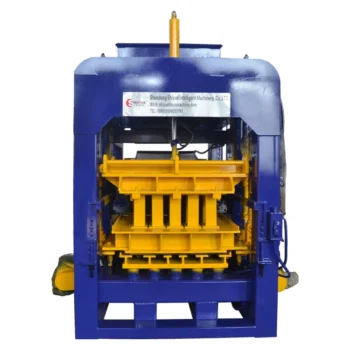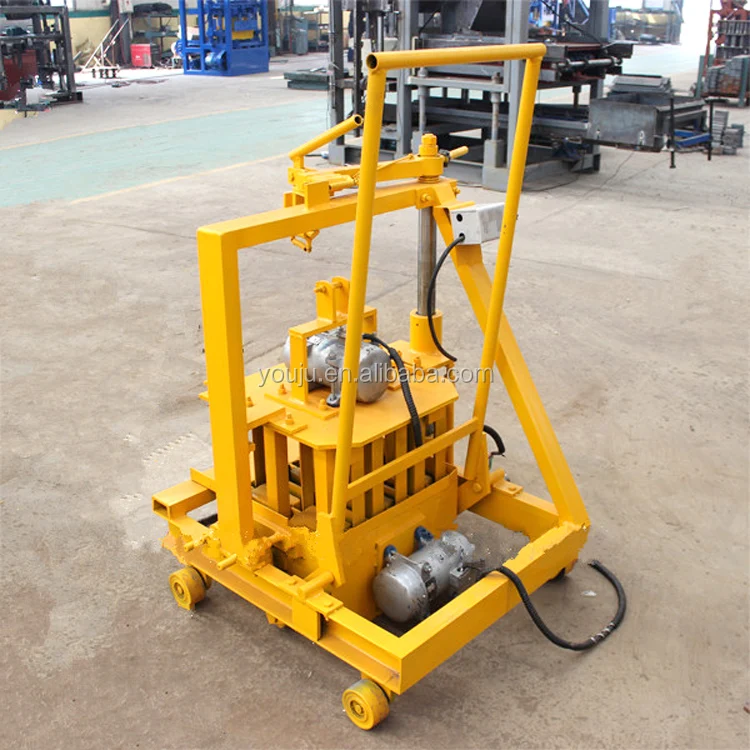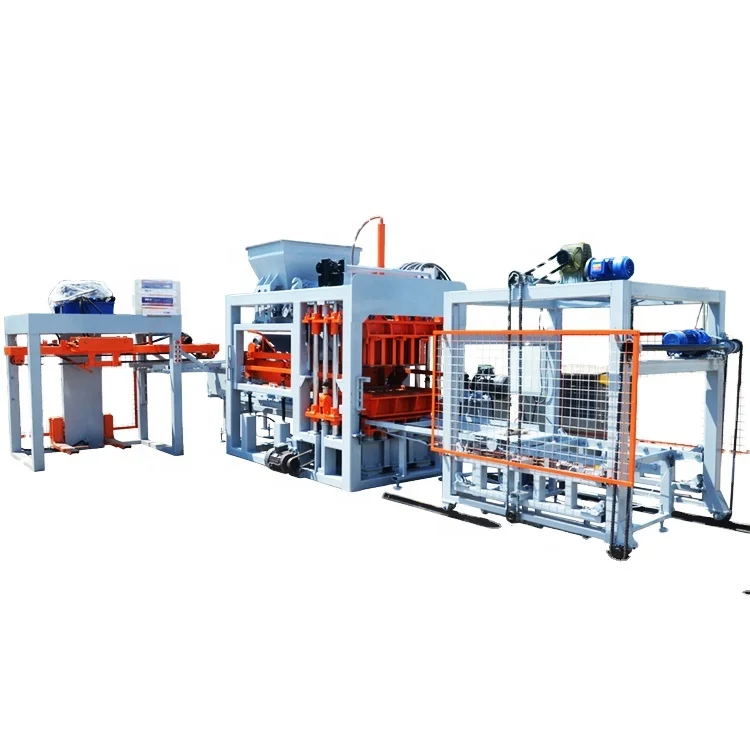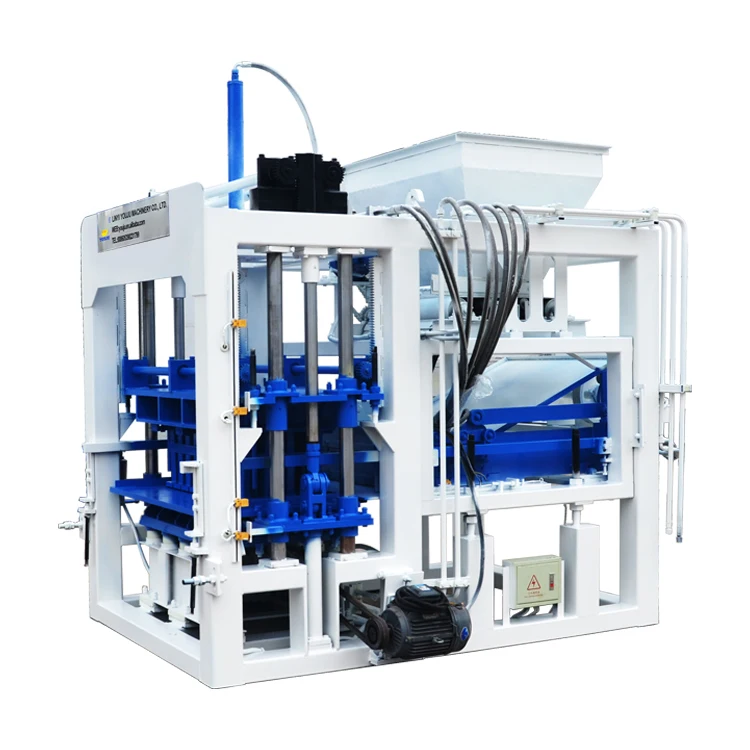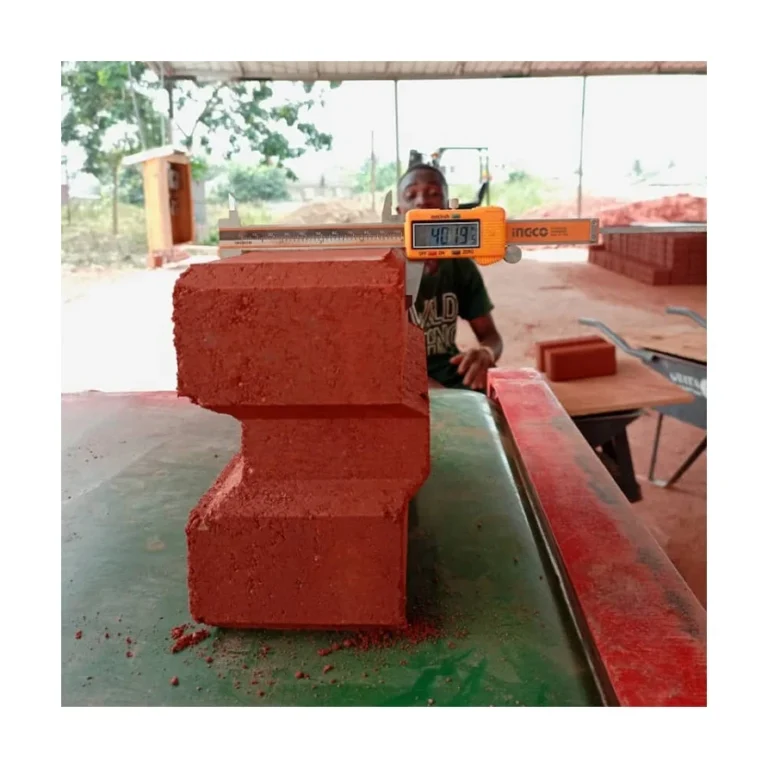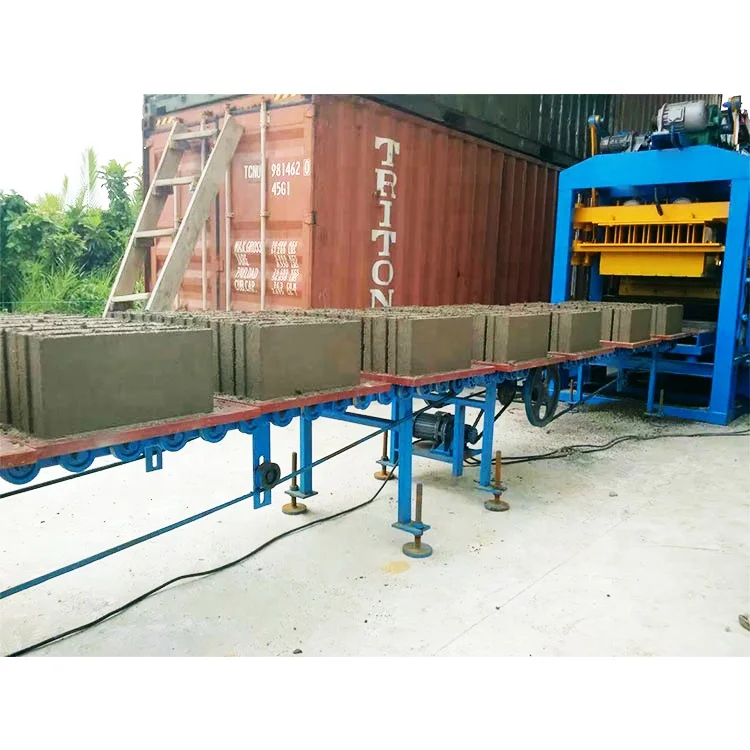
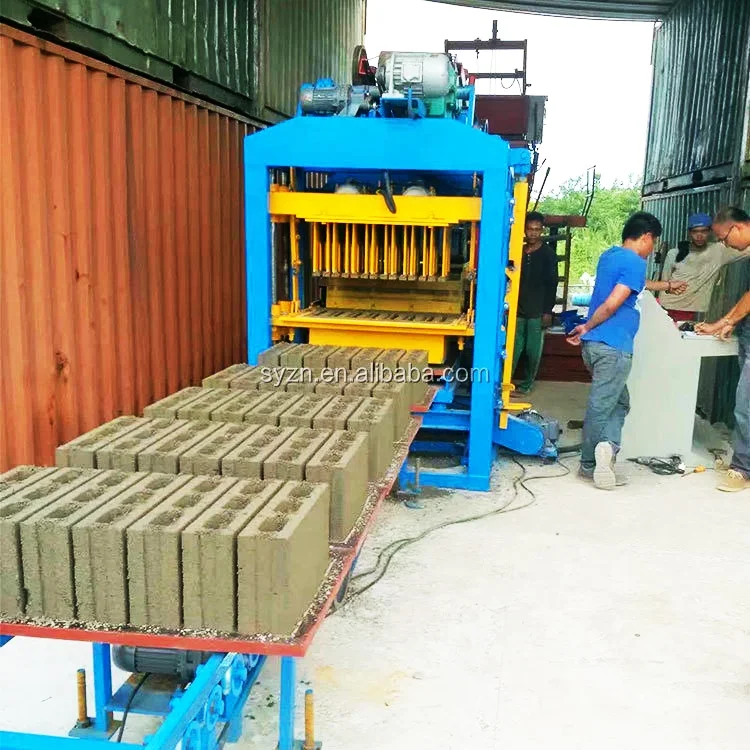
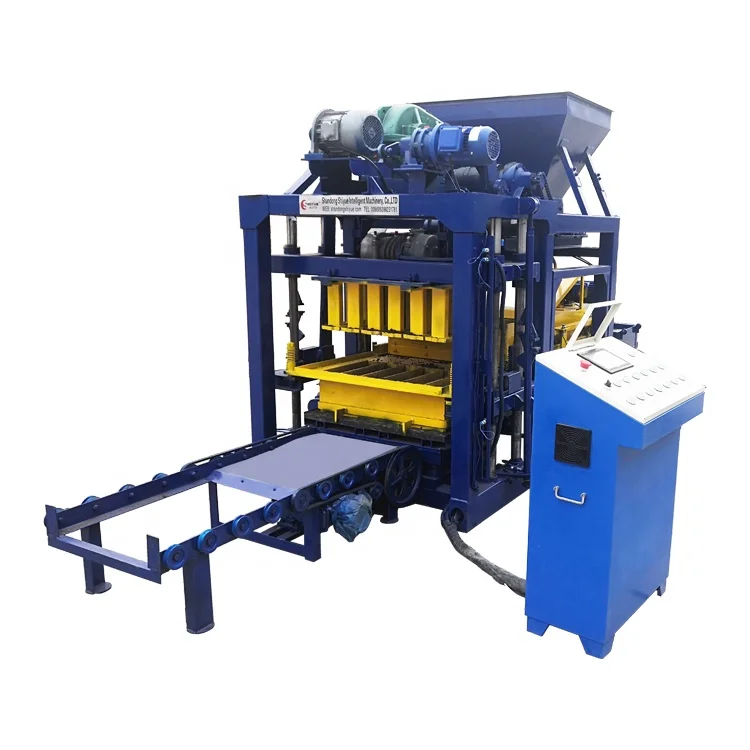
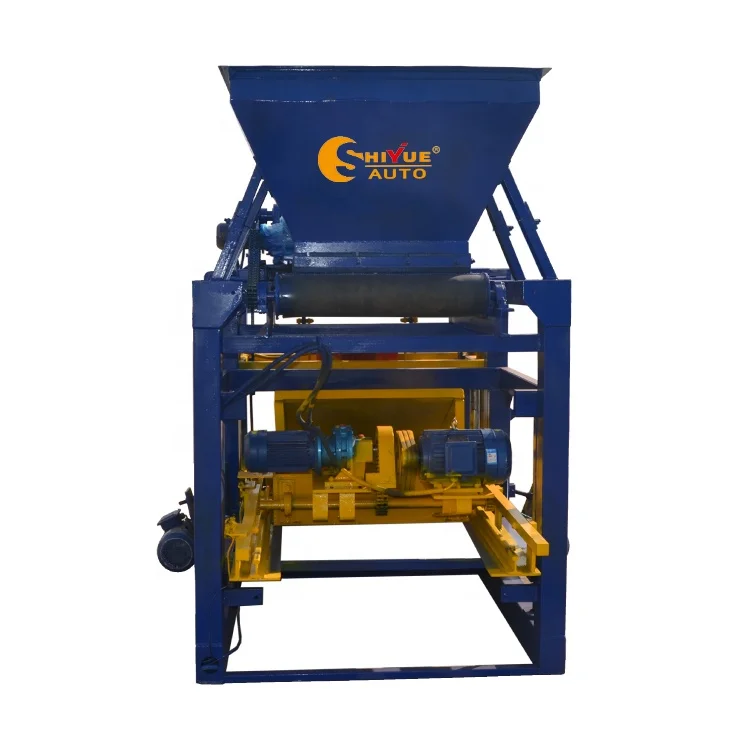
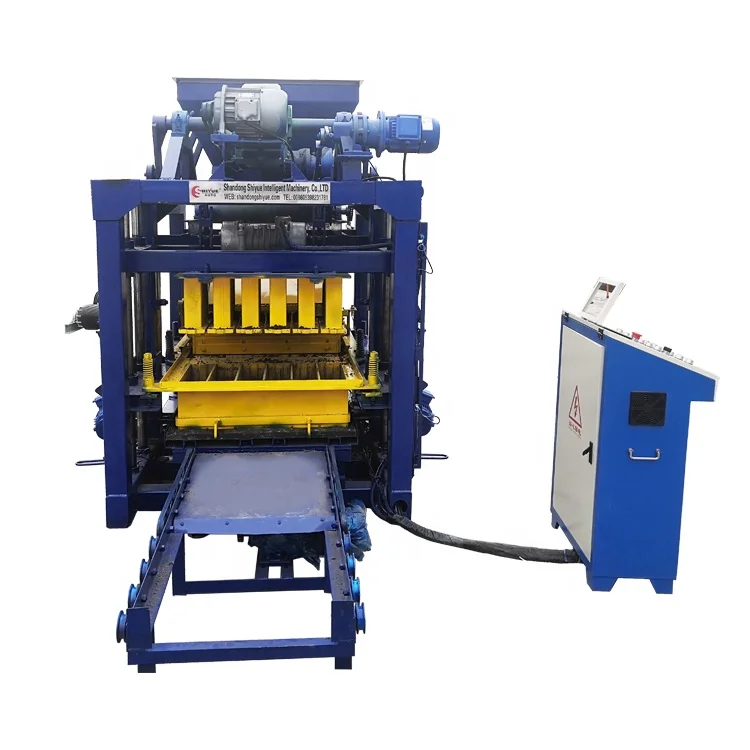

Description
Matched Pallet System — We confirm the 850×550 mm pallet size against your curing area layout and forklift fork dimensions before releasing the QTJ4-25 from stock, so the machine arrives compatible with your existing handling setup.
Technical Specifications
| Parameter | Value |
|---|---|
| Model | QTJ4-25 |
| Product Type | Semi-Automatic Hollow Block Making Machine |
| Overall Dimensions (L×W×H) | 3060×1730×2580 mm |
| Total Weight | 4 T |
| Cycle Time | 25 s |
| Vibration Force | 45 kN |
| Pallet Size | 850×550 mm |
| Block Height Range | 40–280 mm |
| Workshop Area | 50–150 m² |
| Material Storage Area | 300–500 m² |
| Belt Conveyor Length | 8 m |
| Mixer Model | JQ500 |
| Motor Brand | Siemens or ABB |
| Voltage & Frequency | 380V, 3-phase, 50Hz (customizable to local voltage) |
| Automation Level | Semi-automatic |
| Mould Change | Manual |
| Output Capacity (Hollow Block) | 480 pcs/h based on 400×200×200mm block, 4 pcs/mould |
| Output Capacity (Hollow Block) | 600 pcs/h based on 400×150×200mm block, 5 pcs/mould |
| Output Capacity (Hollow Block) | 840 pcs/h based on 400×100×200mm block, 7 pcs/mould |
| Output Capacity (Solid Brick) | 2880 pcs/h based on 240×115×53mm brick, 24 pcs/mould |
| Key Features | Electric control, container-ready shipping, manual pallet handling |
| Warranty | 1 year (excluding wearing parts) |
| Certification | CE (declared where applicable) |
Application Suitability
| Application | Material or Output |
|---|---|
| Small to medium block production plants | Hollow, solid, and interlocking blocks from cement, sand, and fly ash |
| On-site production for construction contractors | Paving blocks and kerbstones using locally sourced aggregate |
| First-time block plant entrepreneurs | Standard concrete masonry units for local housing projects |
| Building material distributors | Replenishing stock with colored pavers and grass bricks |
| Housing project contractors | Rapid mobilization for immediate site development needs |
The Dispatch Deadline and the "Ready to Ship" Illusion
A machine listed as "in stock" only meets your deadline if the voltage and control language are verified before it leaves the factory floor.
Many buyers focus on the dispatch date, assuming the equipment is ready to run the moment it arrives at the port. However, a standard 380V/50Hz configuration will stall commissioning if your local grid operates on different parameters. For a buyer working to a project deadline, the QTJ4-25 block machine in stock must be more than just physically available; it must be technically synchronized with your site’s infrastructure. [NEED_CITE: international voltage and frequency standards for industrial machinery]
Container Loading and Dismantling Logistics
The QTJ4-25 is designed for efficient dismantling to fit standard sea containers. With overall dimensions of 3,060×1,730×2,580 mm and a total weight of 4 T, the main frame and mixer components are separated to maximize space and ensure stability during transit. This pre-planned loading strategy prevents last-minute delays at the port.
Verifying Stock vs. Production Status
When you request a QTJ4-25 block machine in stock, we provide immediate confirmation of the specific units available for dispatch. Unlike built-to-order models that require a full production cycle, our stocked inventory includes the JQ500 mixer and standard belt conveyor. We prioritize speed and simplicity, ensuring that the equipment you see in our inventory list is the exact equipment that gets loaded onto your transport. [NEED_CITE: typical lead times for semi-automatic block machinery]
Understanding the Cycle Time and Output Reality
The 25-second cycle time is a mechanical constant, but your daily output depends on the specific mould installed. While the machine can technically reach 2,880 pcs/h when producing 240×115×53mm solid bricks, a shift running 400×200×200mm hollow blocks will see a different throughput. We provide capacity calculations based on your target format, not just the fastest theoretical cycle.
The Hidden Costs of Mismatched Pallets
If the 850×550 mm pallet size is not confirmed against your existing curing racks and forklifts, you may face unexpected costs upon arrival. A mismatch forces manual restacking or the purchase of new handling equipment, negating the speed advantage of buying a stocked machine. [NEED_CITE: block plant pallet handling and curing area logistics]
Why Source From Our Dispatch Hub
We focus on the logistics of the block line as a matched system. Our inventory includes the specific wear parts and standard moulds that pair with the QTJ4-25 block machine in stock. We provide packing photographs and customs documentation support as part of the shipping process, ensuring that the arrival timing we quote is the arrival timing you get.
Documentation & Verification
- Factory test record showing cycle consistency on your target block format.
- Voltage and frequency confirmation sheet signed before dispatch release.
- Container loading plan and packing photographs for insurance and customs.
- Operation manual with language options confirmed for your operators.
- CE declaration of conformity for applicable export markets.
Installation, Commissioning & Support
- Site preparation guide for the 50–150 m² workshop area and material storage.
- Electrical schematic for the 380V system to assist local electricians with hookup.
- Dismantling and reassembly instructions for the 4 T main frame and mixer.
- On-site operator training focused on manual mould change and pallet feeding.
- Wear parts list identifying high-friction components for your first reorder.
- Maintenance schedule for the JQ500 mixer and belt conveyor tensioning.
Moving From Inquiry to Dispatch
To secure a unit from our current inventory, please provide your target block format, local voltage specifications, and required control language. This information allows us to finalize the configuration check and issue a proforma invoice with a confirmed loading date. We focus on getting the right machine to your site as quickly as possible.
Frequently Asked Questions
Q: Is the QTJ4-25 currently in stock or built to order?
A: The QTJ4-25 is a core model that we maintain in our dispatch inventory. Standard configurations with the JQ500 mixer and 850×550 mm pallet system are typically available for immediate allocation. However, specific voltage customizations or non-standard mould packages may require a brief preparation period to ensure they meet your site’s requirements before shipment.
Q: What is the dispatch lead time from order to port?
A: Once the voltage and control language are confirmed, a stocked unit can be moved to the loading bay within days. The actual departure date depends on container availability and your chosen freight forwarder. We provide a loading schedule and packing photographs as soon as the machine is secured in the container, keeping you informed of the arrival timing.
Q: Which moulds ship with the machine and are others available?
A: The machine typically ships with one standard mould, often a hollow block format. Additional moulds for paving blocks, interlocking bricks, or solid bricks can be included if they are in our current stock. We recommend confirming your required formats early so we can bundle them with the main unit for a single dispatch.
Q: How is the machine dismantled and loaded into a container?
A: The QTJ4-25 is dismantled into major sub-assemblies, including the host frame, mixer, and conveyor, to fit into standard sea containers. Our team handles the loading and provides photographs of the secured cargo. This process ensures the 4 T weight is distributed correctly to prevent damage during ocean transit.
Q: What voltage confirmation is needed before dispatch?
A: We require your local grid specifications (voltage, phase, and frequency) to ensure the Siemens or ABB motor and control system are compatible. If your site requires a non-standard configuration, we must verify this before the machine leaves the factory to avoid commissioning delays upon arrival.