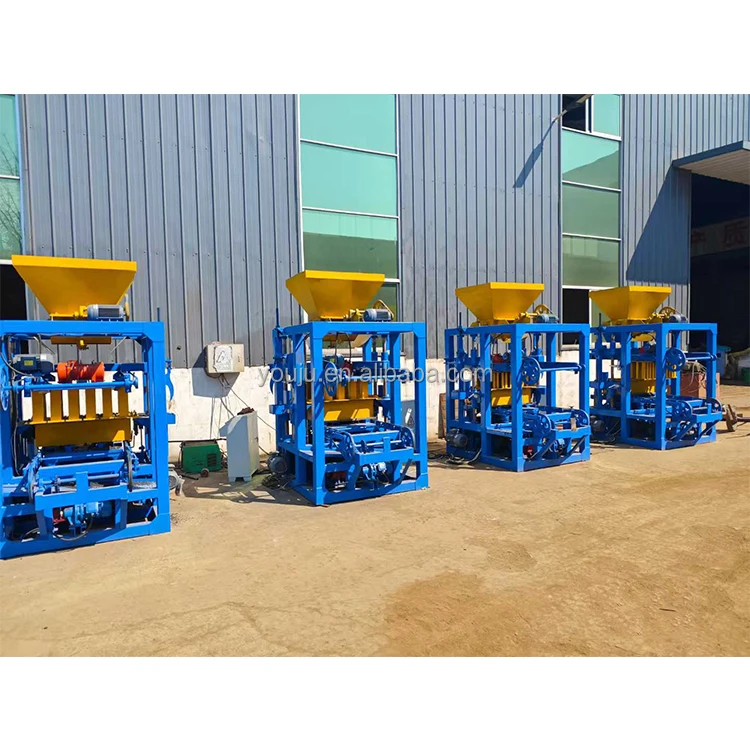
Description
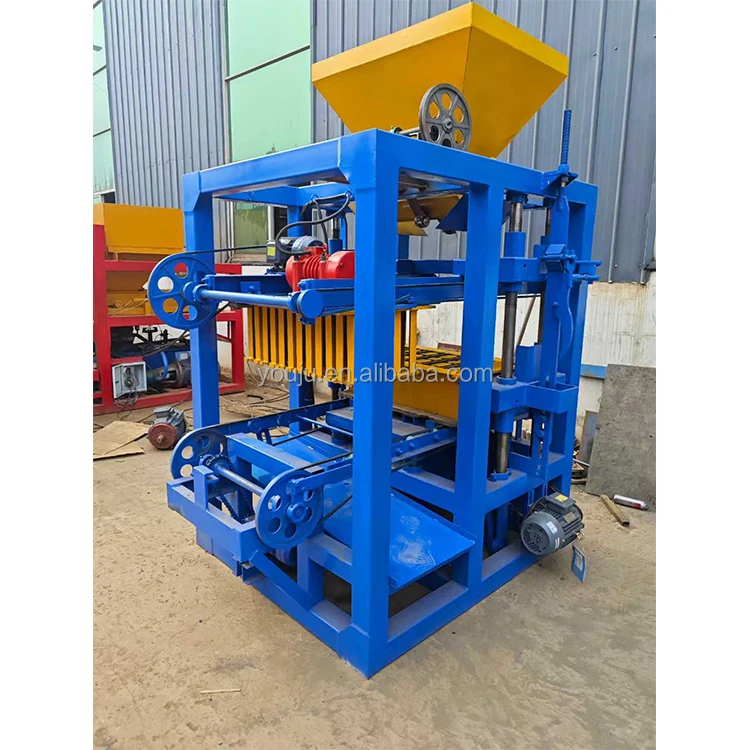
Dispatch-ready stock — every QTJ4-26 semi-automatic block machine leaves the yard with container loading plan and port arrival estimate already on the quotation sheet.
Technical Specifications
| Parameter | Value |
|---|---|
| Model | QTJ4-26 |
| Product Type | Semi-Automatic Concrete Block Making Machine |
| Molding Type | Platform Vibration |
| Overall Dimensions (L×W×H) | 3600 mm × 1700 mm × 2560 mm (working state) |
| Total Mass | 1750 kg |
| Pallet Size | 850 mm × 450 mm |
| Overall Power | 14.25 kW |
| Vibration System | Lower platform: 2 × 3 kW motors; Upper: 1.5 kW attached vibrator |
| Elevating System | Cone-shape motor with JZQ250 speed reducer, V-belt drive |
| Delivery Device | Cycloidal pin wheel speed reducer, chain and V-belt drive |
| Material Storing Device | Material releasing hopper + material storing hopper (bolted to frame) |
| Mould Format | 390 × 190 × 190 mm — 4 pcs/mould; 240 × 115 × 53 mm — 21 pcs/mould |
| Automation Level | Semi-automatic |
| Stacking Method | Manual pallet handling; optional auto stacker available (3–6 layers) |
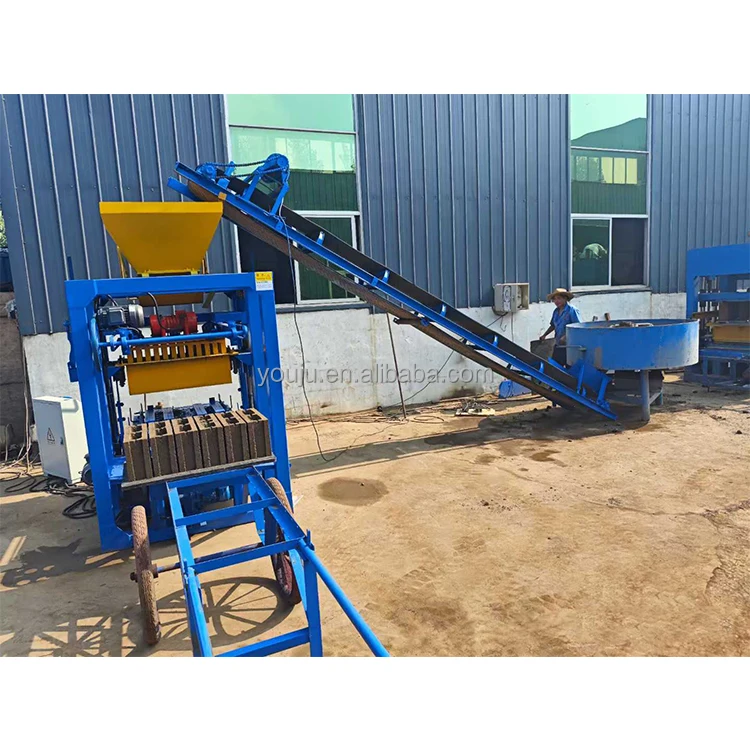
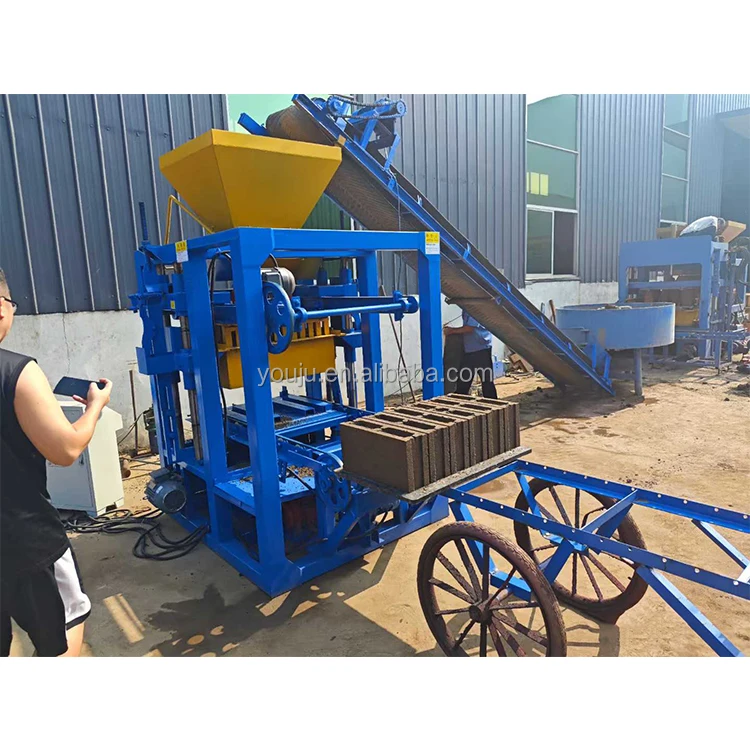
| Supporting Equipment (included) | JQ350 pan mixer, 6 m belt conveyor, trolley |
| Supporting Equipment (optional) | Auto stacker, block clamper, diesel generator, wheel loader, forklift |
| Hydraulic Pressure | Not applicable (mechanical vibration type) |
| Voltage & Frequency | Configurable to buyer’s site supply (basis to be confirmed) |
| Cycle Time | Varies by block format and material (basis to be confirmed) |
| Output Capacity | Varies by block format, mix design, and material (basis to be confirmed) |
Application Suitability
| Application | Material or Output |
|---|---|
| Hollow block production | Crushed stone, cement, sand, and water mix for 390 × 190 × 190 mm units |
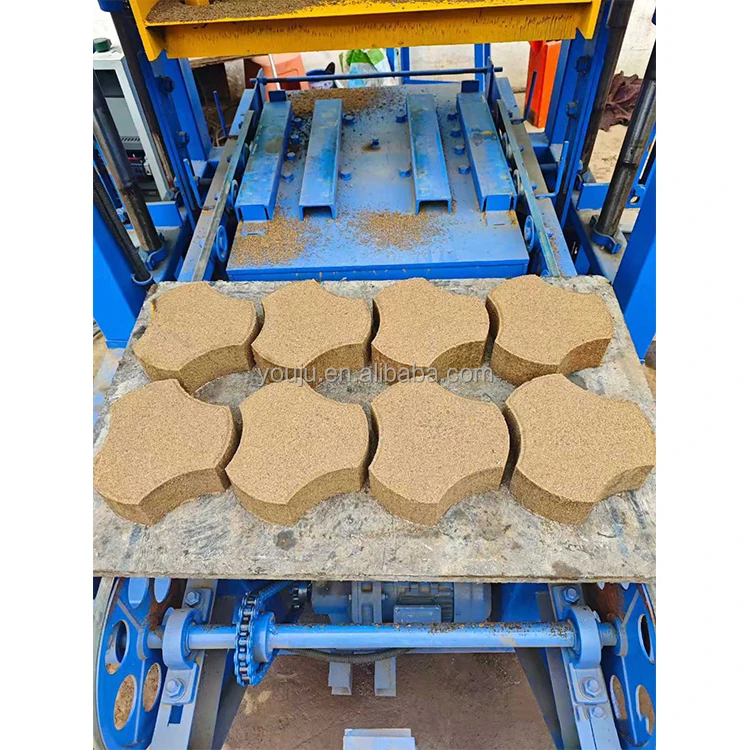
| Solid brick production | Fine aggregate and cement blend for 240 × 115 × 53 mm standard bricks |
| Small-scale block plant | Workshop-level output for local building material supply |
| On-site construction supply | Block and brick making at housing project locations |
| First block plant setup | Lower-investment entry for entrepreneurs entering masonry production |
Why "Ready to Ship" Matters More Than You Think
A machine sitting in a factory warehouse does not help a contractor who needs blocks before the next slab pour.
When a project timeline is slipping, the lead time on the block machine itself becomes the critical path. I have watched site managers burn through weeks waiting for equipment to be built, tested, and booked onto a vessel — while crews stood idle and penalty clauses started ticking. The QTJ4-26 block machine in stock status changes that equation entirely. When the unit is already assembled and factory-tested, the conversation shifts from production scheduling to container booking and vessel transit [NEED_CITE: typical ocean freight transit windows by destination region]. That difference alone can determine whether a contractor hits their milestone or faces liquidated damages.
What "In Stock" Actually Means for This Machine
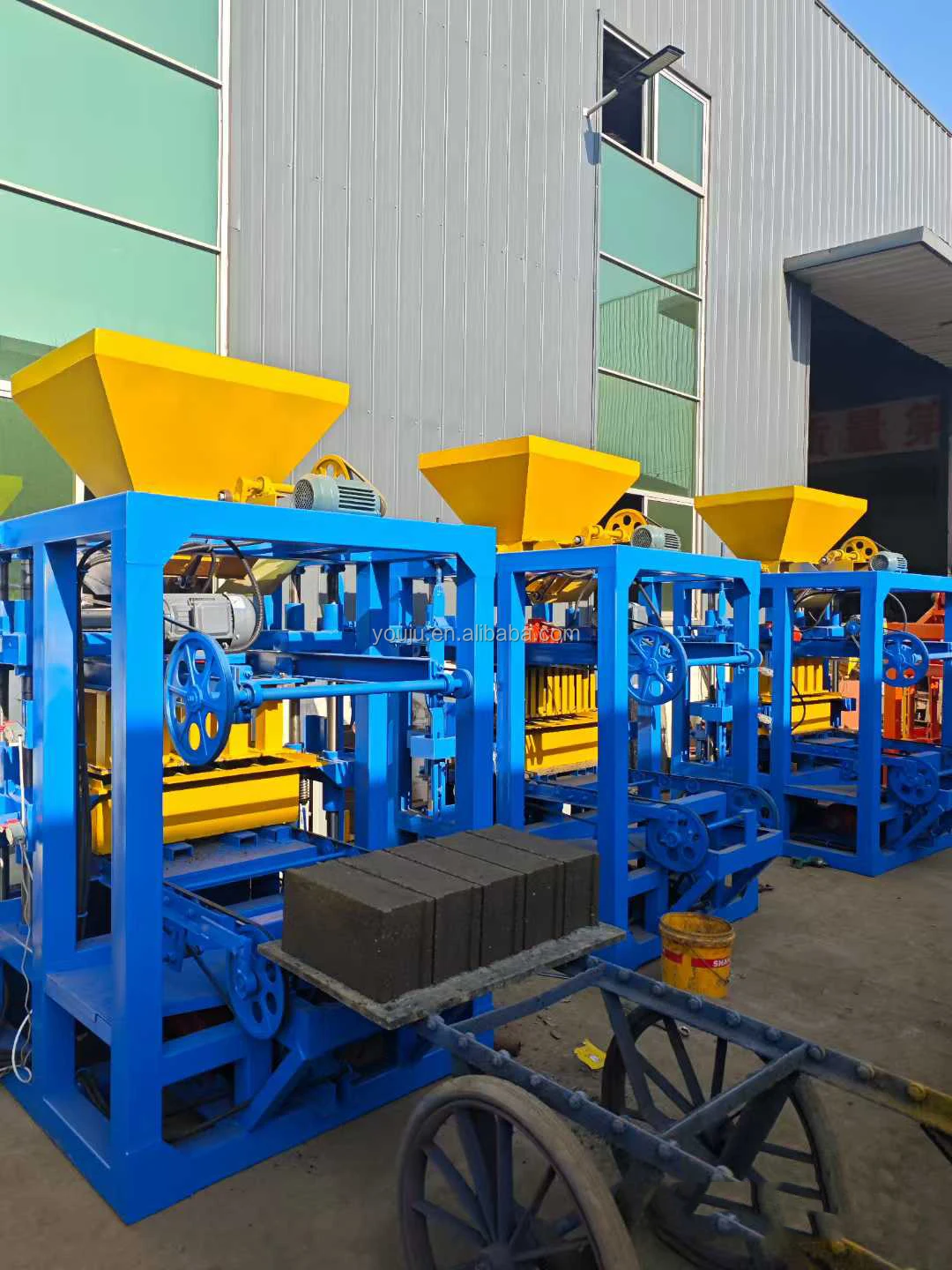
The QTJ4-26 block machine in stock is not a bare press waiting on peripheral components. The complete basic line — JQ350 pan mixer, 6 m belt conveyor, and material trolley — ships together so production can begin the day the container is unpacked. The platform vibration system with its dual 3 kW lower motors and 1.5 kW upper vibrator is already assembled and run-tested at the factory, meaning the vibration tuning has been verified against standard concrete mixes before crating.
Container Loading and Dismantling for Transit
A 1750 kg machine with a 3600 mm footprint does not simply roll into a container whole. The dismantling scheme determines whether the QTJ4-26 block machine in stock travels in a 20-foot or 40-foot container, and how many pallets, mould sets, and spare parts can share the same box. Each component is secured against transit vibration and salt-air exposure. Packing photographs are taken before the container doors close, giving the buyer a visual record for insurance and customs clearance purposes [NEED_CITE: container loading best practices for heavy industrial machinery].
Reading the Specs That Affect Your Site
The 850 × 450 mm pallet size dictates the curing rack layout and forklift capacity the buyer already has — or needs to acquire. Mismatching pallet dimensions to existing handling equipment forces a capital spend that never appeared in the original budget. The mechanical vibration design, with no hydraulic system, eliminates the need for hydraulic oil changes, filter replacements, and temperature-dependent warm-up routines. That simplicity suits sites where ambient temperatures swing widely or where hydraulic maintenance skills are scarce. The optional auto stacker, handling 3–6 layers, lets a buyer start with manual pallet handling and add stacking automation later without replacing the press.
The Cost of Overlooking Dispatch Details
A machine ordered without confirming voltage and frequency against the site supply arrives as dead weight. I have seen a 380 V motor sit unpowered on a 220 V site for days while a step-up transformer was sourced locally at premium cost. Control panel language is another detail that gets skipped — an operator staring at fault codes in an unfamiliar language cannot troubleshoot, and every hour of confusion is an hour of lost production. Customs documentation gaps can hold a container at the destination port, accumulating demurrage charges that erase any delivery time advantage [NEED_CITE: common customs hold reasons for industrial equipment imports].
Why Buyers Source This Machine Here
Block machinery is the single focus of this operation, so the press, moulds, pallets, and handling equipment are specified as a matched system rather than assembled from unrelated suppliers. Configuration decisions are made against the buyer’s actual block format and local aggregate, not against a catalogue default. Mould supply covers the formats the buyer’s market actually sells, with custom drawings available when standard formats do not match. The automation path is open: a buyer can start with manual pallet handling on the QTJ4-26 and add the auto stacker when volume justifies it. Dispatch lead time and arrival estimate are quoted at the inquiry stage, not buried in fine print after the order is placed.
Documentation & Verification
- Factory test record on buyer’s target block format before dispatch
- Container loading plan with pallet count and packing photographs
- Voltage, frequency, and control language confirmation sheet
- Customs documentation package matched to destination port requirements
- Mould drawing and format list for all included mould sets
Installation, Commissioning & Support
- Foundation must support 1750 kg operating mass with level tolerance for the 3600 × 1700 mm footprint
- Power supply must deliver 14.25 kW at the confirmed voltage and frequency with a dedicated circuit breaker
- Machine arrives partially dismantled; reassembly and alignment verified before first production run
- Vibration motor tuning adjusted to buyer’s local aggregate and mix design during commissioning
- Operator training covers mould change procedure for both 4-cavity hollow block and 21-cavity brick formats
- Spare wear parts list provided with recommended reorder intervals based on operating hours
Before You Request a Quote
To move from inquiry to confirmed dispatch date quickly, share the block format your market demands, the daily volume you need to sustain, and the raw materials available locally. Confirm the voltage and frequency at your site, the control panel language your operators require, and the destination port for transit estimation. If you already have pallets, curing racks, or forklifts on site, provide their specifications so the configuration fits your existing infrastructure.
Frequently Asked Questions
Q: Which QTJ4-26 configurations and moulds are currently in stock?
A: Standard configurations with the 4-cavity hollow block mould and 21-cavity solid brick mould are held in stock. The basic line package including the JQ350 pan mixer and 6 m belt conveyor ships with the press. Optional auto stackers and additional mould formats are available with separate lead times. Exact stock levels are confirmed at inquiry.
Q: How is dispatch lead time and arrival estimate calculated?
A: Dispatch lead time covers factory release, container booking, and customs export clearance. Arrival estimate adds ocean transit time based on the destination port and current shipping schedules. Both figures are stated on the quotation so buyers can plan site preparation and crew scheduling against a known timeline.
Q: How is the machine dismantled and loaded into a container?
A: The QTJ4-26 is partially dismantled to fit container dimensions, with the frame, vibration assembly, and material hoppers separated. The loading plan specifies component placement, securing method, and pallet count per container. Packing photographs document the load before container doors are sealed.
Q: Can voltage and control language be confirmed before dispatch?
A: Yes. Voltage, frequency, and PLC or relay display language are confirmed with the buyer before the machine leaves the factory. This step prevents commissioning delays caused by electrical mismatches or operator confusion at the control panel.
Q: What customs documentation and packing support is included?
A: The documentation package includes commercial invoice, packing list, certificate of origin where applicable, and CE declaration. Customs documentation is prepared to match destination port requirements. Packing photographs and container loading records support insurance claims and clearance procedures.