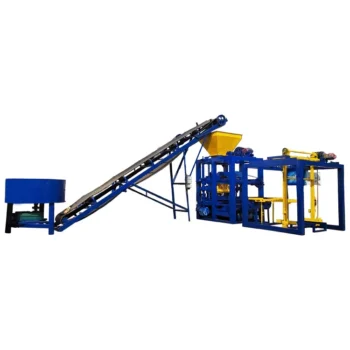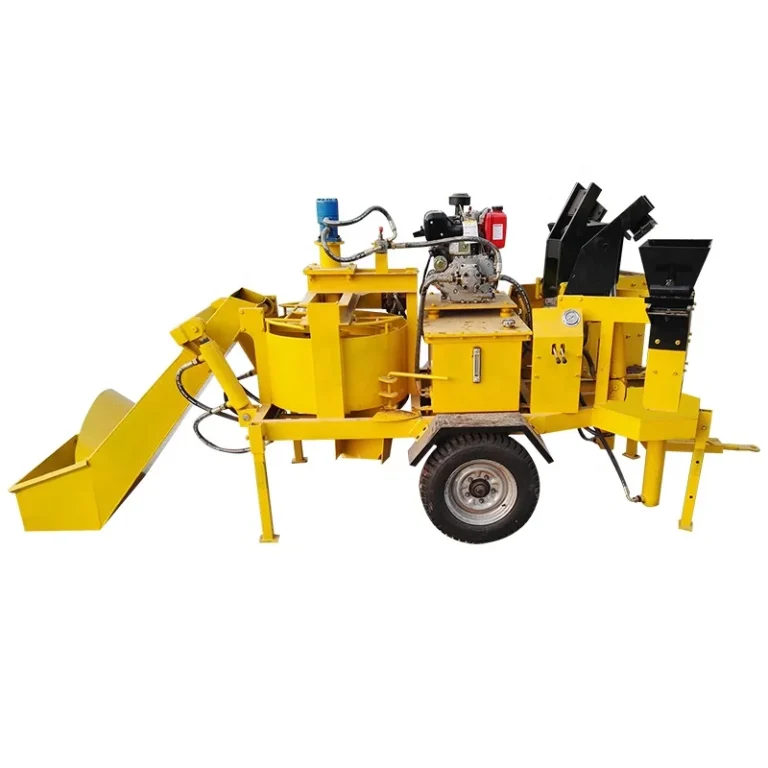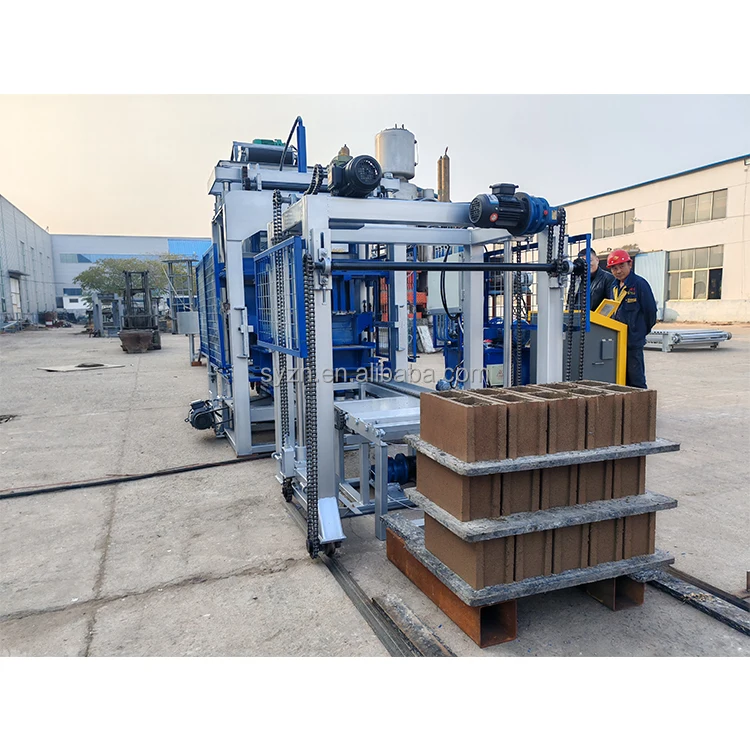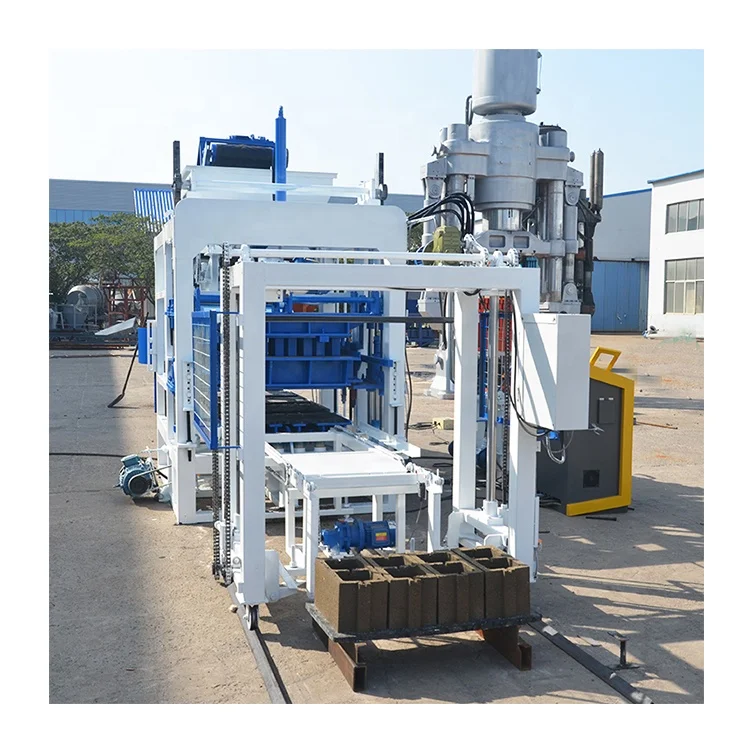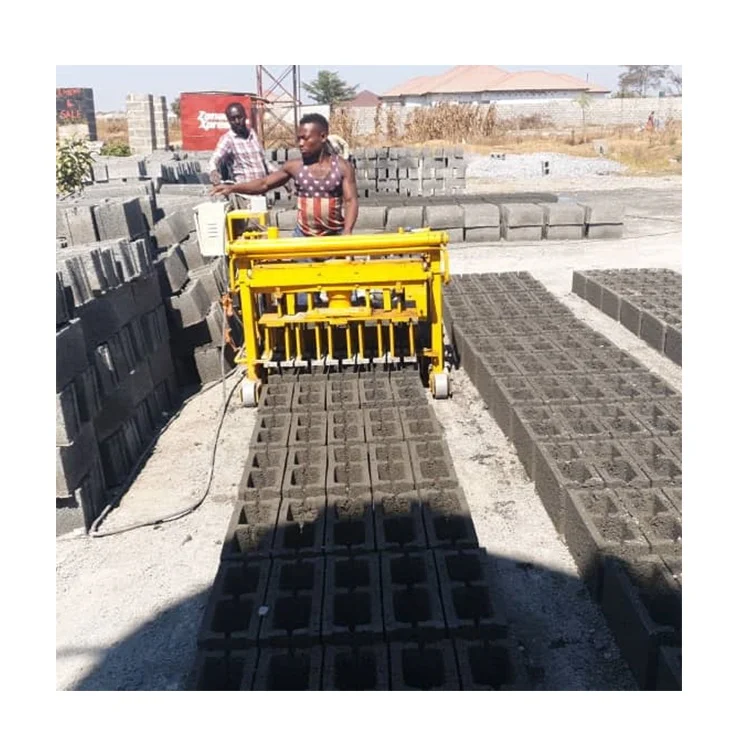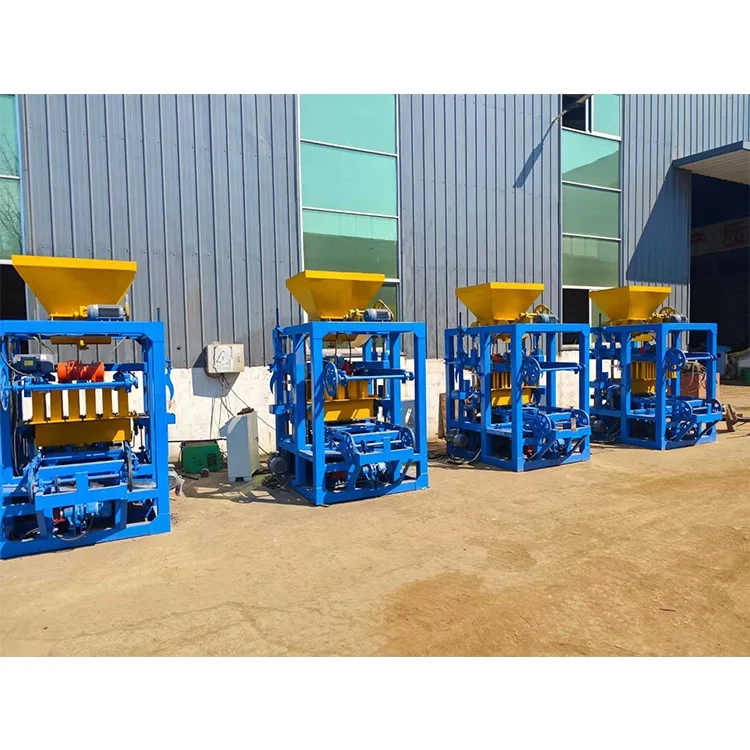
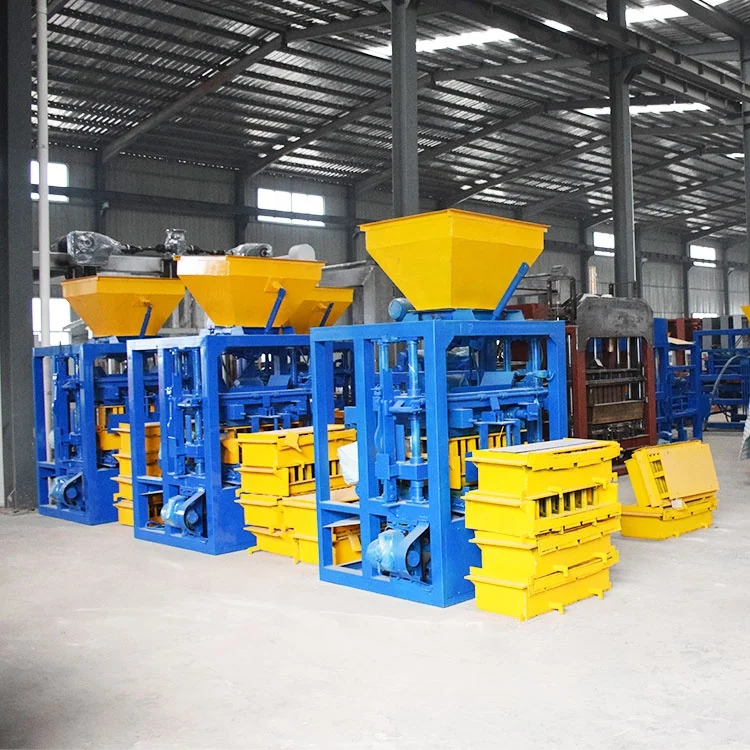


Description
Immediate Stock Dispatch — the QTJ4-24 block making machine ships with standard moulds and verified lead times so your project start date holds.
Technical Specifications
| Parameter | Value |
|---|---|
| Model | QTJ4-24 |
| Product Type | Semi-Automatic Concrete Block Making Machine |
| Main Machine Power | 11.95 kW |
| Overall Dimensions (L×W×H) | 3600 mm × 1700 mm × 2560 mm |
| Total Mass | 3.5 T |
| Pallet Size | 900 mm × 450 mm |
| Molding Cycle | 24–26 s |
| Mould Format Options | 400×200×200 mm (4 pcs/mold), 390×240×190 mm (3 pcs/mold), 390×120×190 mm (6 pcs/mold), 240×115×53 mm (21 pcs/mold) |
| Output Capacity | (basis to be confirmed — depends on block format, material, and thickness) |
| Automation Level | Semi-automatic, mechanical table vibration with manual feeding |
| Vibration Type | Table vibration feeding, fluctuation vibration molding |
| Recommended Line Equipment | J350 or JQ500 Mixer, 6 m or 8 m Belt Conveyor |
| Control System | Electrical control cabinet with mechanical interworking |
| General Power Wire | 3×16 mm² |
| Main Machine Wire | 3×6 mm² |
| Mixer Wire | 3×4 mm² |
| Conveyor Wire | 3×2.5 mm² |
| Voltage & Frequency | (source value not stated — confirm against target market) |
| Assembly State | Stationary installation on precast concrete ground |
| Warranty | 1 year for whole machine (excluding spare parts) |
Application Suitability
| Application | Material or Output |
|---|---|
| Hollow block production for housing projects | Crushed stone, river sand, cement blends |
| Standard solid brick manufacturing | Fly ash, sand, and cement mixtures |
| Multi-cellular brick runs | Lightweight aggregate with cement binder |
| Paving brick fabrication | Dense aggregate and cement under table vibration |
What "In Stock" Actually Means Before You Wire the Deposit
A stocked QTJ4-24 block machine is only useful if the moulds, voltage, and pallet size match your site on day one.
I have watched containers arrive at a port with a machine inside that the buyer could not run. The voltage did not match the local grid, the pallet dimensions did not fit the curing racks already welded on-site, and the standard moulds in the crate were for a block format nobody in that region was buying. Stock availability solves the timing problem but creates a configuration problem if nobody asked the right questions before dispatch [NEED_CITE: common commissioning delays from voltage mismatch in exported machinery].
Dispatch Timing That Matches Your Project Calendar
The QTJ4-24 block making machine in stock status is confirmed per serial number before quotation, so you know exactly which unit is allocated to your order rather than a catalogue promise. Standard mould formats ship bolted inside the same container as the main press, which removes the second-shipment delay that typically stalls first production runs. Dispatch lead time is stated on the proforma invoice, not estimated after payment clears.
Container Loading and Dismantling for Shipment
The main frame, vibration table, and control cabinet dismantle into defined sub-assemblies that fit a standard 20-foot container alongside the recommended J350 mixer and belt conveyor. Container loading photographs are taken before the doors close, and the packing list references each sub-assembly by position so your clearing agent can reconcile the manifest on arrival [NEED_CITE: container loading standards for heavy industrial machinery exports].
Reading the Spec Sheet Against Your Local Conditions
The 900 mm × 450 mm pallet size must be checked against the curing area footprint and forklift tine width you already operate. Mould format options cover four standard dimensions, but if your market sells a format outside that list, a custom mould is quoted separately with its own lead time — and that lead time is longer than the machine dispatch itself. The 24–26 second molding cycle is measured at the press; your actual daily output depends on which block format is loaded, how your local aggregate responds to table vibration, and whether your mixer can keep the press fed without pauses.
The Cost of Skipping the Raw Material Conversation
I once shipped a semi-automatic block machine to a site where the river sand had a clay content the buyer never mentioned. The blocks crumbled at the stacking rack, and daily output dropped by roughly half until we re-tuned the vibration pressure and adjusted the mix ratio. Since then, I ask every buyer for a local aggregate description before I release a dispatch date, because a QTJ4-24 block machine in stock is worthless if the blocks it produces fail a drop test on your yard [NEED_CITE: effect of aggregate clay content on concrete block compressive strength].
Why Sourcing From a Single-Focus Block Line Supplier Matters
Block machinery is our only product category, so the press, mould, pallet, and handling equipment are specified as one matched system rather than assembled from unrelated vendors. The mould inventory stocked alongside the main machine covers the formats that regional markets actually purchase, and custom drawings are quoted with realistic tooling lead times. Machine configuration is set against your stated mix design and local aggregate, not a catalogue default that assumes washed sand. Dispatch timing is quoted upfront with a confirmed serial number, and the container loading plan accounts for the supporting equipment in the same shipment. Factory test records accompany every unit before it leaves the workshop floor.
Documentation & Verification
- Stock confirmation letter with machine serial number and included mould list
- Container loading photographs and packing list before vessel departure
- Factory test record on the standard mould format you intend to run first
- Electrical schematic with wire specifications for each line component
- Customs documentation package formatted for your import clearance requirements
Installation, Commissioning & Support
- Precast concrete ground required; overall footprint 3600 mm × 1700 mm with clearance for manual pallet handling
- Dedicated power circuit for the 11.95 kW main motor plus separate circuits for mixer and conveyor
- Sub-assemblies re-bolt on-site; mechanical interworking cabinet aligns with press vibration table
- First-run molding cycle verified at 24–26 seconds with your local aggregate mix
- Operator training covers mould change procedure and manual feeding rhythm
- Wear parts list provided for hydraulic and vibration components at first replacement cycle
What We Need to Confirm Before Dispatch
Send us the block format your market buys most, the aggregate source available near your site, and the voltage and frequency of your local grid. If your curing area and forklift are already in place, share the pallet dimensions you are currently handling so we can confirm the 900 mm × 450 mm pallet is compatible or propose an adjustment before the machine ships.
Frequently Asked Questions
Q: Is the QTJ4-24 currently in stock or made to order, and what is the dispatch lead time?
A: Current stock status is confirmed per serial number at the quotation stage, and the dispatch date is written on the proforma invoice. Units in stock ship with standard moulds already matched to the press. If your required format is not in the standard mould inventory, a custom mould is quoted with its own separate lead time that typically extends beyond the machine dispatch date.
Q: Which standard moulds ship with the machine, and what is the lead time for custom formats?
A: The four stocked mould formats are 400×200×200 mm hollow, 390×240×190 mm multi-cellular, 390×120×190 mm hollow, and 240×115×53 mm solid brick. These ship inside the same container as the main press. Custom moulds to buyer drawings are quoted separately, and their tooling lead time runs longer than the machine dispatch, so early drawing submission is important.
Q: How is the machine dismantled for container loading, and what is the arrival estimate?
A: The main frame, vibration table, and control cabinet separate into defined sub-assemblies that load into a standard 20-foot container alongside the recommended J350 mixer and belt conveyor. Loading photographs and a position-referenced packing list are provided before departure. Arrival estimate depends on your destination port and shipping line schedule.
Q: What voltage options are available, and can the control display match my language?
A: Voltage and frequency are confirmed against your target market before dispatch, as stock units may carry a default specification that requires adjustment. The electrical control cabinet uses mechanical interworking rather than a PLC display, so language configuration mainly affects documentation and wiring labels rather than screen menus. Confirm these details at the inquiry stage.
Q: Are spare pallets and wear parts available from stock for the first replacement?
A: Pallets in the 900 mm × 450 mm size and a wear parts list covering vibration and hydraulic components are available for ordering alongside the main machine. Including these in the initial shipment avoids a second logistics cycle when the first replacement is due, which is especially relevant for remote project sites.