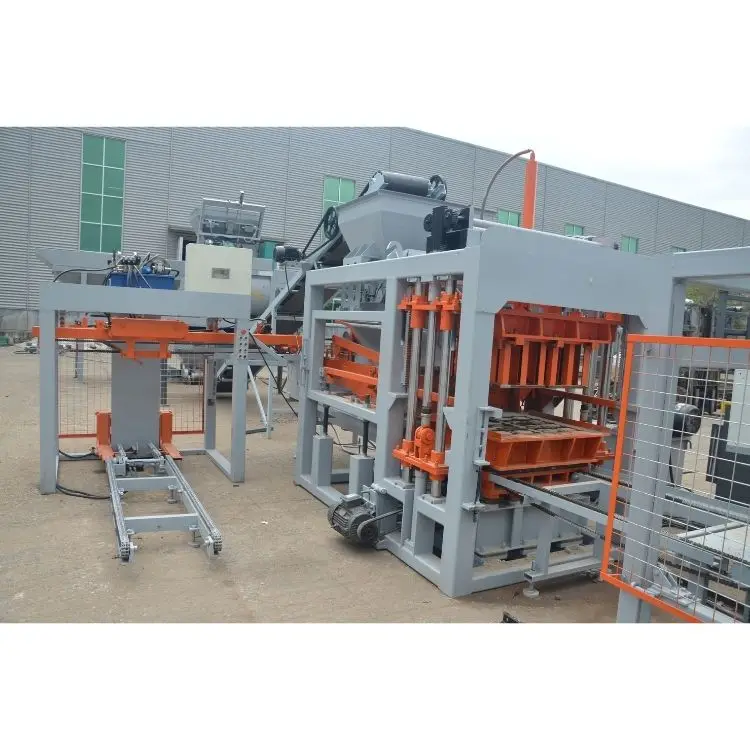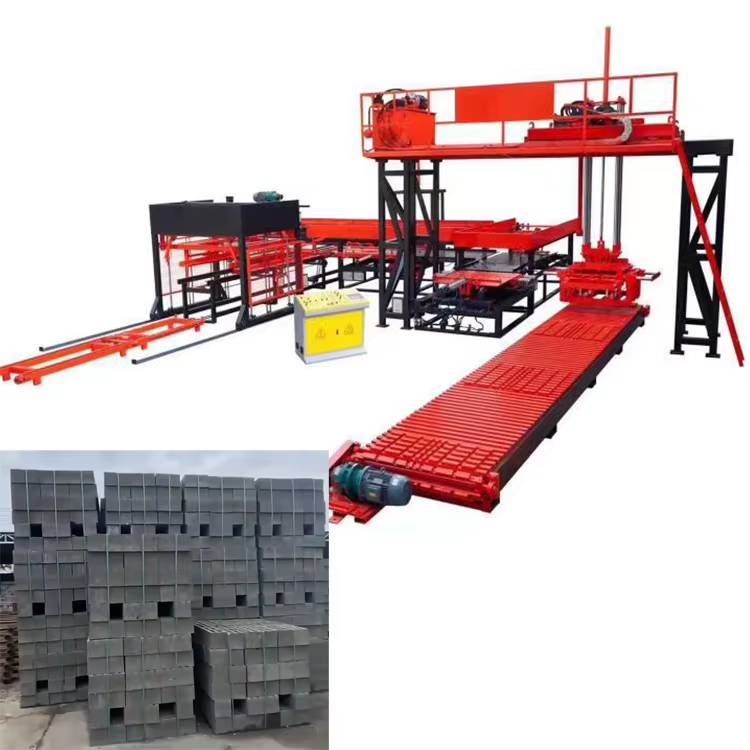


Description
Rapid dispatch readiness — The QT10-15 is dismantled, tested, and prepped for immediate container loading to meet strict project deadlines.
Technical Specifications
| Parameter | Value |
|---|---|
| Model | QT10-15 |
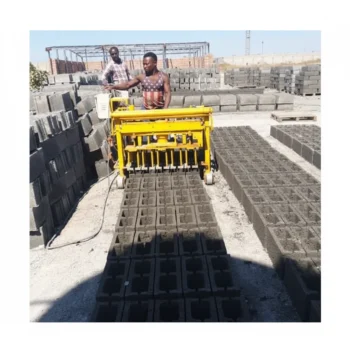
| Product Type | Hydraulic Automatic Concrete Block Making Machine |
| Overall Dimensions (L×W×H) | 9350x2320x2950mm |
| Net Weight | 9500 kg |
| Forming Method | Hydraulic pressure |
| Voltage | 380V |
| Automation Level | Fully Automatic |
| Mould Formats | 400x200x200mm, 400x150x200mm, 400x120x200mm, 400x100x200mm, 300x150x100mm, 240x115x90mm, 230x220x115mm, 200x200x60mm, 200x100x60mm, 150x150x100mm |
| Raw Materials | Concrete, cement, clay, crushed stone, sand |
| Core Components | Motor, Pump |
| Output Capacity | Subject to confirmation (basis not stated in source) |
| Molding Cycle | Varies by format (basis to be confirmed) |
| Color Options | Customized to customer’s demand |
| Warranty | More Than 5 Years |
Application Suitability
| Application | Material or Output |
|---|---|
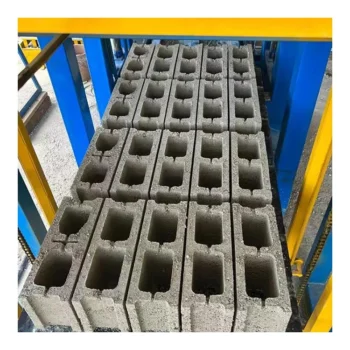
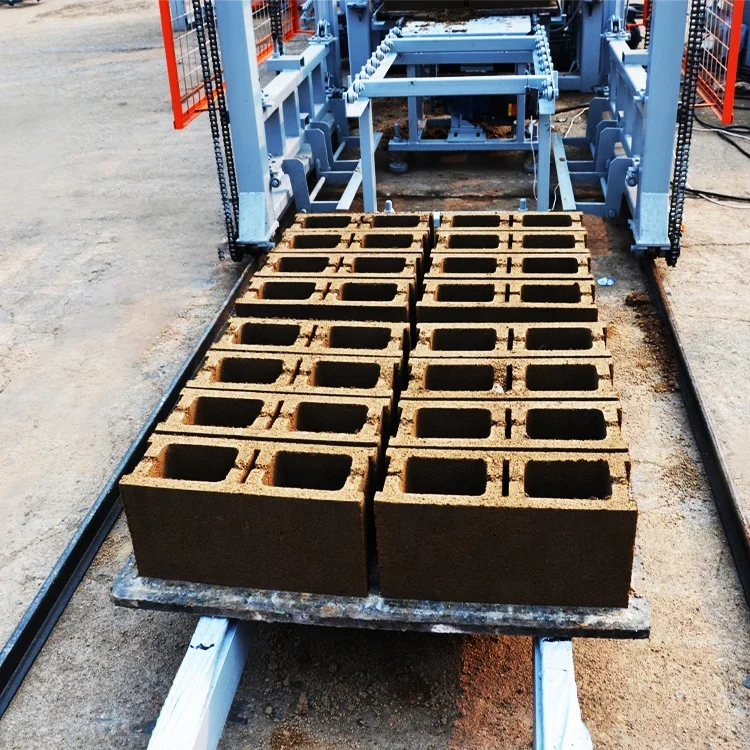
| Building construction | Hollow blocks from concrete and crushed stone |
| Landscaping and roads | Paving blocks and interlock blocks from sand and cement |
| Infrastructure projects | Curbstone blocks from heavy aggregate mixes |
Why Voltage Verification Must Precede Dispatch
Confirming local grid specs prevents a three-week site standstill.
When a QT10-15 block machine in stock arrives at a foreign port, the physical delivery is only half the battle. Years ago, I oversaw an installation in South Asia where the local frequency and voltage were assumed rather than verified; the main motor could not start, and the crew waited weeks for a step-down transformer while the foundation cured in the sun. Securing a fast delivery automatic brick machine requires locking in the 380V electrical configuration and control language before the crate is sealed [NEED_CITE: international voltage and frequency standards for heavy industrial machinery]. This upfront alignment ensures the machine powers up the moment it is reassembled.
Container Loading and Dismantling Strategy
Shipping a 9500 kg hydraulic press requires precise spatial planning. The 9350x2320x2950mm footprint means the mainframe and hydraulic station must be strategically separated to fit standard shipping containers without damaging the hoses or wiring harnesses. Having a QT10-15 block machine in stock means the dismantling sequence is already mapped out, allowing the loading crew to secure the heavy components against transit vibration.
Transparent Arrival Estimates and Dispatch
Project contractors cannot afford vague shipping windows. Once the factory test record and video outgoing-inspection are approved, the dispatch lead time is finalized. Providing an upfront arrival estimate allows the receiving team to schedule their forklifts and rigging equipment for the exact day the container clears customs [NEED_CITE: standard maritime freight transit variables and port clearance procedures]. This speed and simplicity of ordering keeps the construction schedule intact.
Matching Dimensions to Transit and Site Constraints
The physical footprint and weight dictate both the ocean freight costs and the on-site foundation requirements. The 9500 kg net weight necessitates a reinforced concrete slab to absorb the hydraulic pressure and vibration during operation. Understanding these dimensions before the fast delivery automatic brick machine leaves the factory ensures the buyer has the correct curing area and lifting equipment ready upon arrival. Furthermore, verifying the 380V power supply matches the site’s dedicated industrial circuit prevents immediate commissioning delays.
The Hidden Cost of Rushed Electrical Checks
Assuming standard electrical outputs without checking the destination grid leads to catastrophic delays. If a 380V system is shipped to a region with unstable frequency or differing phase standards, the core motor and pump will overheat or fail to start. This turns a rapid deployment into a prolonged site outage, forcing the contractor to source local transformers or rewind motors, completely erasing the time saved by purchasing a QT10-15 block machine in stock [NEED_CITE: impact of voltage mismatch on industrial hydraulic motors].
Why Procure This Unit Here
Our single focus on block machinery means the press, pallets, and handling equipment are dispatched as a matched system. We provide upfront arrival estimates and transparent dispatch lead times so you can plan your site work accurately. Every unit undergoes a rigorous factory test and video outgoing-inspection before dismantling. The machine is broken down specifically for optimized container loading, and we supply complete customs documentation to prevent border hold-ups.
Documentation & Verification
- Factory test record confirming hydraulic pressure and motor function before dismantling.
- Video outgoing-inspection showing the exact unit being loaded into the container.
- Electrical schematic confirming 380V configuration and control panel language.
- Detailed dismantling and container loading plan for site reassembly.
- Complete customs documentation support to expedite port clearance.
Installation, Commissioning & Support
- Reinforced concrete foundation required to support the 9500 kg net weight and hydraulic vibration.
- Dedicated 380V industrial circuit needed to power the main motor and hydraulic pump.
- Pre-planned dismantling sequence ensures rapid reassembly of the 9350x2320x2950mm frame.
- On-site commissioning includes verifying hydraulic pressure and testing standard mould formats.
- Operator training covers the fully automatic control interface and daily maintenance routines.
- Wear parts list provided to ensure continuous operation after the initial production run.
Preparing Your Site for Immediate Commissioning
To ensure the equipment integrates smoothly into your operation, please provide your destination port, local voltage and frequency standards, and the specific block formats you intend to run first. Confirming your site’s lifting capacity and foundation readiness allows us to finalize the loading plan and dispatch schedule without delay.
Frequently Asked Questions
Q: What is the current stock status and dispatch lead time for the QT10-15?
A: The QT10-15 block machine in stock is fully assembled, tested, and ready for dismantling. Once your electrical and destination details are confirmed, the dispatch lead time is locked in immediately, allowing us to provide a firm departure date and keep your project on schedule.
Q: How is the machine dismantled and loaded into containers for shipment?
A: The 9500 kg mainframe and hydraulic stations are separated according to a strict loading plan. This ensures the 9350x2320x2950mm structure fits securely into standard containers, protecting vital components during ocean transit and making on-site reassembly straightforward for your rigging crew.
Q: What is the estimated arrival time to my destination port?
A: We provide an upfront arrival estimate based on your specific destination port and current shipping routes. This transparent timeline allows you to schedule your local transport, forklifts, and installation team well before the fast delivery automatic brick machine clears customs.
Q: Do you provide complete customs documentation for smooth clearance?
A: Yes, we supply all necessary customs documentation, including the machinery test report, commercial invoices, and packing lists. This comprehensive paperwork prevents administrative delays at the border, ensuring your equipment moves from the port to your construction site without interruption.
Q: Are standard moulds for the QT10-15 currently in stock for immediate inclusion?
A: Standard mould formats, such as the 400x200x200mm and 400x100x200mm, are available for immediate inclusion in your shipment. Confirming your required formats early ensures they are packed alongside the main press, eliminating secondary shipping waits.