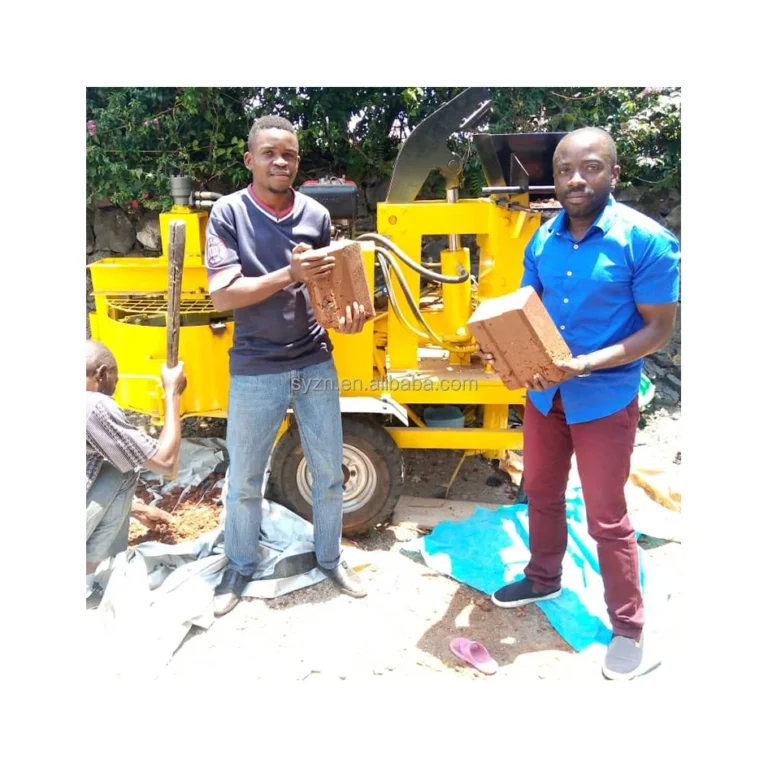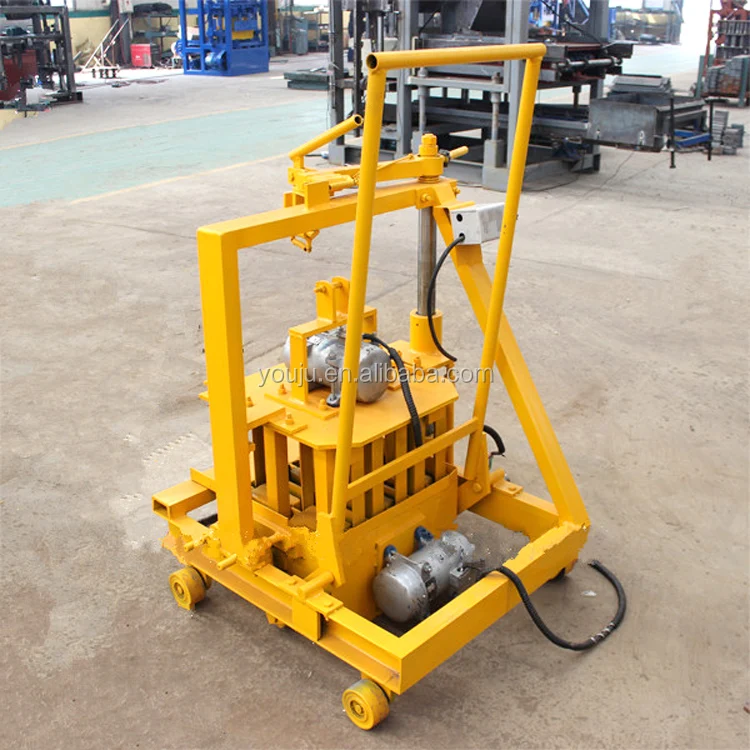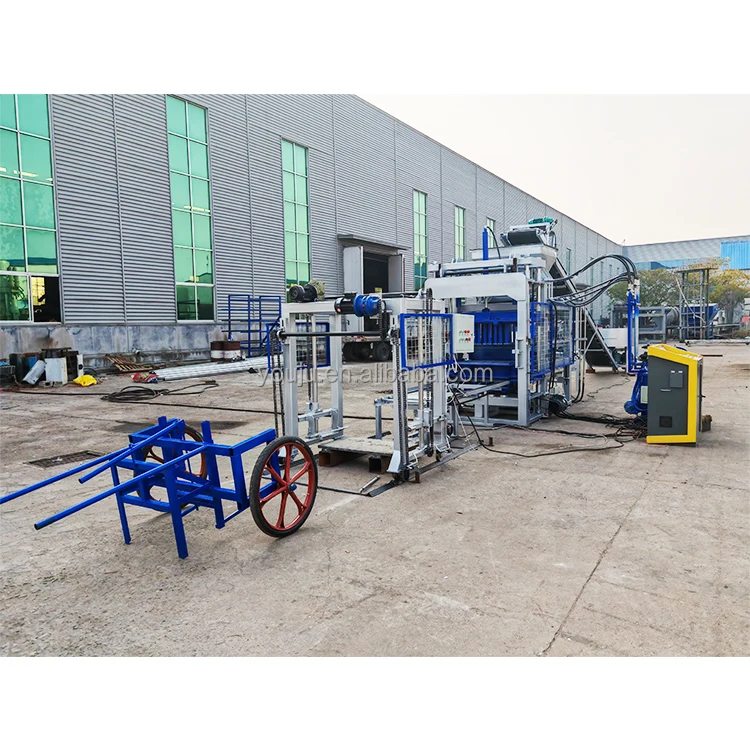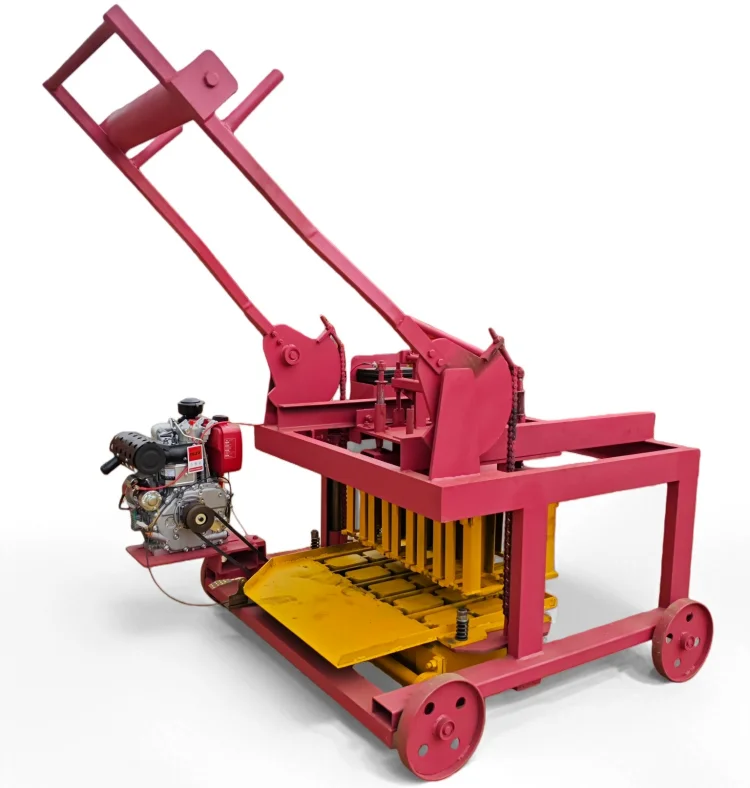
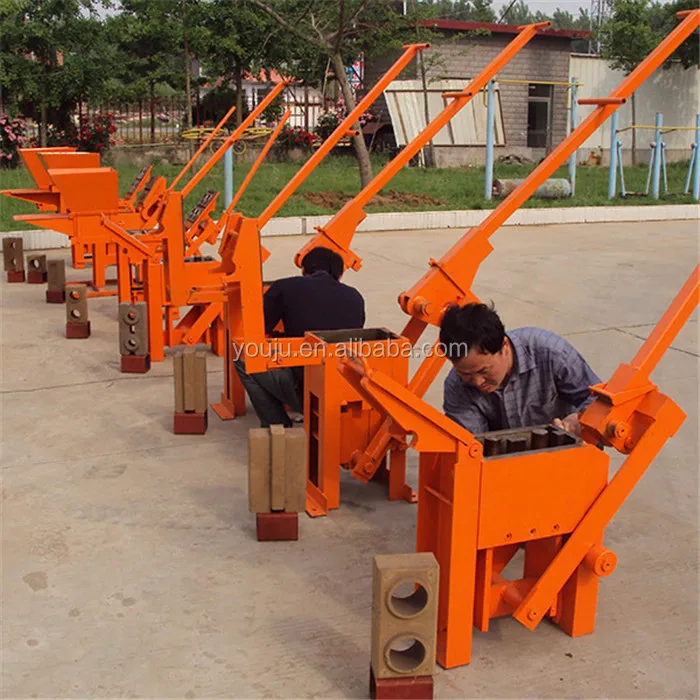
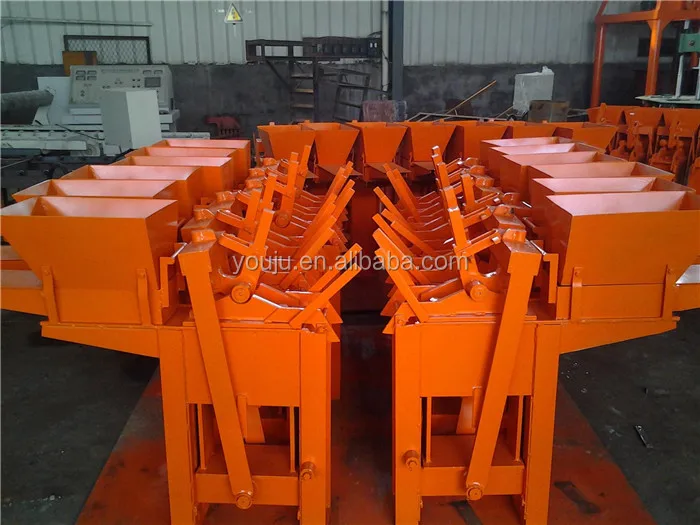
Description
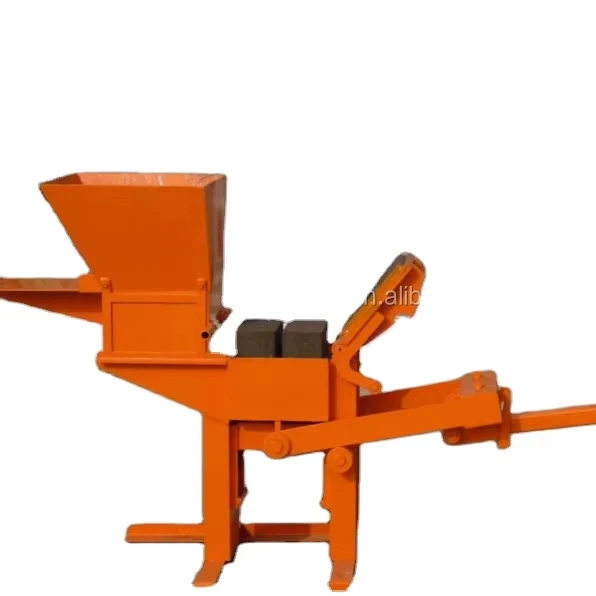
Immediate Dispatch Readiness — LY2-40 manual clay interlocking brick machine units are assembled, tested, and staged for container loading rather than built after order confirmation.
Technical Specifications
| Parameter | Value |
|---|---|
| Model | LY2-40 |
| Product Type | Manual Clay Interlocking Brick Making Machine |
| Overall Dimensions (L×W×H) | 1600 x 700 x 1200 mm |
| Net Weight | 200-240 kgs |
| Rated Power | No Power, Completely Manual |
| Control System | Manual Operation |
| Molding Cycle | 30-40s |
| Output Capacity | 400-1000 pcs/day (basis not stated in source — confirm block format / material / thickness) |
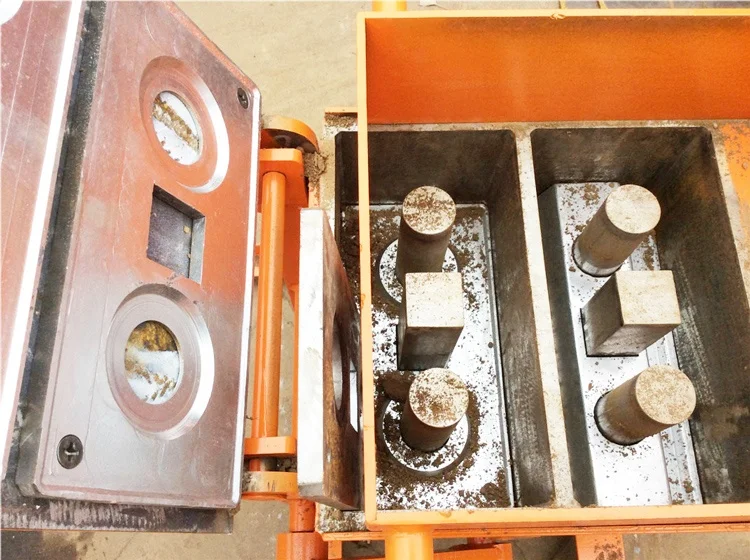
| Mould Format | Interlocking brick, changeable for various blocks |
| Automation Level | Completely Manual |
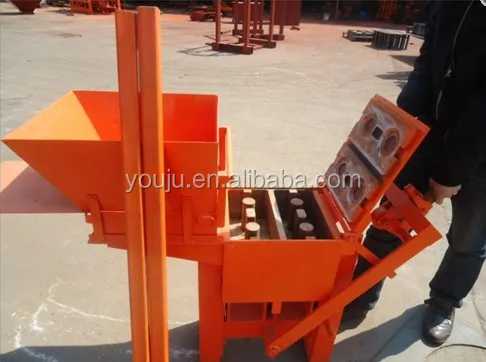
| Mobility | Steel wheels for mobile on-site use |
| Lifting System | Manual |
| Assembly State | Fully assembled |
| Warranty | 1 Year |
| Key Features | No power supply required, off-grid operation capable, basic equipment options include JFA-1 or JQ350 mixer |
Application Suitability
| Application | Material or Output |
|---|---|
| Rural housing projects | Local clay and soil mixed with cement for interlocking bricks |
| Remote construction sites | Off-grid brick production without electrical infrastructure |
| Low-investment block plants | Manual soil-cement ecological brick forming for community building |
| Development contractor staging areas | On-site interlocking brick production to match construction pace |
When "Ready to Ship" Still Means Weeks of Delay
A Manual Clay Interlocking Brick Machine in stock only matters if the dispatch timeline, container loading plan, and customs documentation are confirmed before payment. Availability without a loading schedule is just a warehouse position.
I have seen project contractors lose an entire curing cycle because the machine sat at the port of origin waiting for a missing packing list or an incorrect HS code on the commercial invoice. The LY2-40 is compact enough to share container space with moulds, a mixer, and spare parts, but that consolidation only works when the loading sequence is planned around your destination port’s inspection requirements [NEED_CITE: standard export documentation requirements for construction machinery]. Rush orders collapse when documentation is treated as an afterthought rather than a parallel workstream.
Stock Position and Dispatch Lead Time
The LY2-40 manual clay interlocking brick machine is held in fully assembled condition, meaning the lead time from order confirmation to container loading is measured in days rather than production weeks. A Manual Clay Interlocking Brick Machine in stock at this tier avoids the typical multi-week fabrication queue that delays smaller equipment orders. Dispatch timing is quoted against your vessel closing date, not against a generic production schedule.
Container Loading and Machine Dismantling
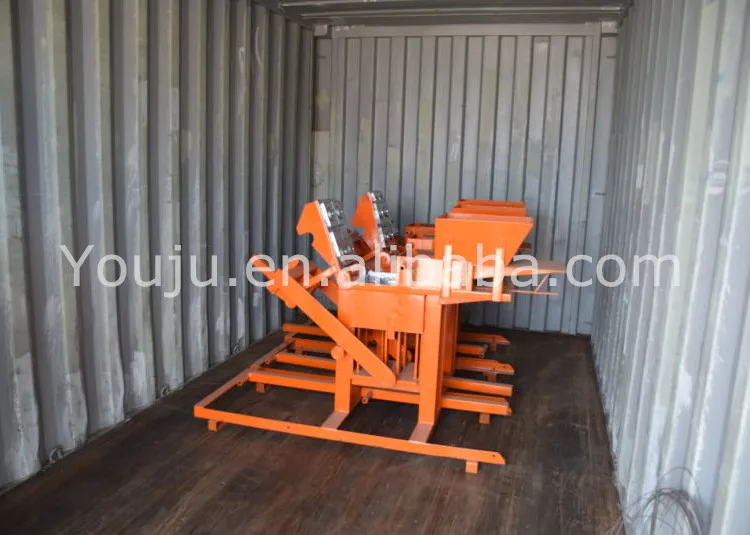
The overall dimensions of 1600 x 700 x 1200 mm and a net weight of 200-240 kgs allow the LY2-40 to fit within standard 20-foot container capacity alongside a JFA-1 or JQ350 mixer, spare moulds, and pallet stock. The machine ships fully assembled on its steel wheels, so on-site deployment requires no reassembly of the press frame or molding mechanism. Loading photographs are captured and shared before the container is sealed [NEED_CITE: container loading inspection standards for industrial machinery exports].
How Cycle Time and Mould Format Shape Real Daily Output
The 30-40 second molding cycle applies to the interlocking brick format under consistent manual operation with pre-mixed material at the correct moisture content. Daily output of 400-1000 pieces depends entirely on the block dimensions selected, the operator’s rhythm in feeding and releasing, and the curing arrangement available on site. A smaller interlocking format with thinner walls completes faster than a larger hollow variant using the same press. Mould changeover is manual, so format flexibility on a given production day depends on how many changeovers your crew can absorb without losing cycle rhythm. The completely manual operation means output is directly proportional to labour endurance across a shift, especially in high-temperature environments where operator fatigue shortens effective production hours.
The Hidden Cost of Skipping Pre-Shipment Verification
Ordering on arrival urgency without confirming voltage compatibility does not apply to this manual machine, but the equivalent trap is failing to verify that your local clay composition and moisture range match the test conditions used to set the quoted output [NEED_CITE: soil moisture content impact on manual brick compressive strength]. I have watched a site in West Africa lose three full production days because the clay arriving at their location had a different moisture profile than the sample tested before shipment. The machine worked exactly as designed; the input material did not match the assumptions. Without pre-shipment testing against your actual raw material, even a fast-dispatch machine becomes a deadline risk rather than a deadline solution.
Why Procurement Through This Channel Reduces Arrival Risk
Block machinery as a single focus means the LY2-40, its changeable moulds, optional JFA-1 or JQ350 mixer, and pallet specifications are quoted as one matched set rather than sourced from separate suppliers who ship on independent timelines. Configuration is confirmed against your target block format and local clay type, not a catalogue default that may not suit your site conditions. Mould design covers the interlocking formats your market actually sells, with custom drawings available before the machine leaves the factory. Dispatch lead time is stated upfront alongside the quotation, so your project scheduler works from a real date rather than an estimate. Packing photographs, customs documentation, and factory test records are included as standard deliverables, not requested as extras after the order is placed.
Documentation & Verification
- Factory test record showing cycle time on your specified interlocking brick format before dispatch
- Machine specification sheet confirming dimensions, weight, and manual operation parameters
- Mould drawing and format list for every changeable mould included in your order
- Packing photographs documenting machine condition and container loading sequence
- Customs documentation support including HS code and commercial invoice for destination clearance
Installation, Commissioning & Support
- Fully assembled delivery on steel wheels eliminates on-site press frame reassembly
- No electrical connection required; manual operation begins immediately after unloading
- Optional JFA-1 or JQ350 mixer requires local power supply confirmation before dispatch
- Mould changeover procedure covered during operator training for format flexibility
- Wear parts list and mould replacement schedule provided with the operation manual
What to Include in Your Inquiry
To receive a confirmed dispatch date rather than a generic lead time, specify your target interlocking brick dimensions, the clay and cement mix ratio you plan to use locally, and your destination port for container routing. Indicate whether you need the optional mixer included and confirm the electrical supply available at your site for mixer operation. State your intended daily output and the number of operators you plan to assign, so the quotation reflects realistic capacity rather than theoretical maximums.
Frequently Asked Questions
Q: Is the LY2-40 currently in stock and what is the dispatch lead time?
A: The LY2-40 manual clay interlocking brick machine is held in fully assembled condition, and dispatch lead time is quoted against your vessel closing date at the time of order confirmation. Lead time covers final inspection, packing photographs, and export documentation preparation rather than fabrication.
Q: How is the machine packed for container shipment and what is the arrival estimate?
A: The machine ships fully assembled on its steel wheels within a standard container, typically alongside the optional mixer and spare moulds. Arrival timing depends on your destination port and chosen shipping line, and is estimated at the quotation stage based on current sailing schedules.
Q: What block formats can the changeable molds produce and how many pieces per day realistically?
A: Moulds are changeable for various interlocking brick formats. Daily output of 400-1000 pieces depends on the specific block dimensions, material mix, and operator rhythm at a 30-40 second molding cycle. Realistic output should be confirmed against your chosen format and local clay conditions.
Q: Are spare molds and wear parts shipped with the machine or available separately?
A: Spare moulds and wear parts can be included in the same container shipment if specified at the order stage. A wear parts list is provided with the machine documentation, and replacement moulds are available for reorder with custom drawings matched to your block format.
Q: What documentation is provided for customs clearance at destination?
A: Export documentation includes the commercial invoice, packing list, and HS code for customs clearance. Factory test records and machine specification sheets are included. Additional documentation required by specific destination countries is confirmed during the quotation stage to avoid port delays.