Description
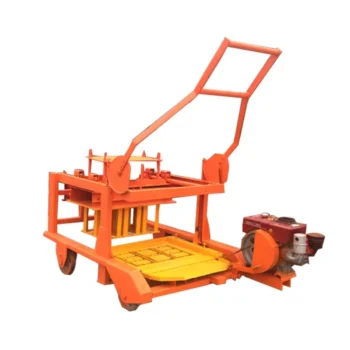
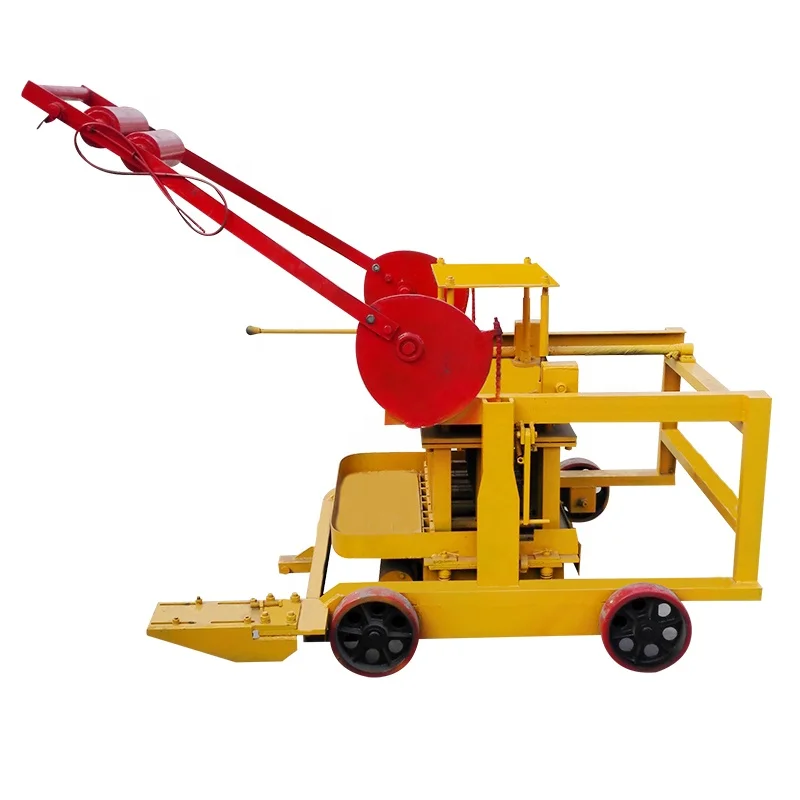
Stocked Dispatch Capability — Every QMR4-45 leaving the yard has run the buyer’s actual raw material sample through a full molding cycle before crating, ensuring the diesel engine, vibration force, and moisture tolerance match what waits at the destination site.
Technical Specifications
| Parameter | Value |
|---|---|
| Model | QMR4-45 |
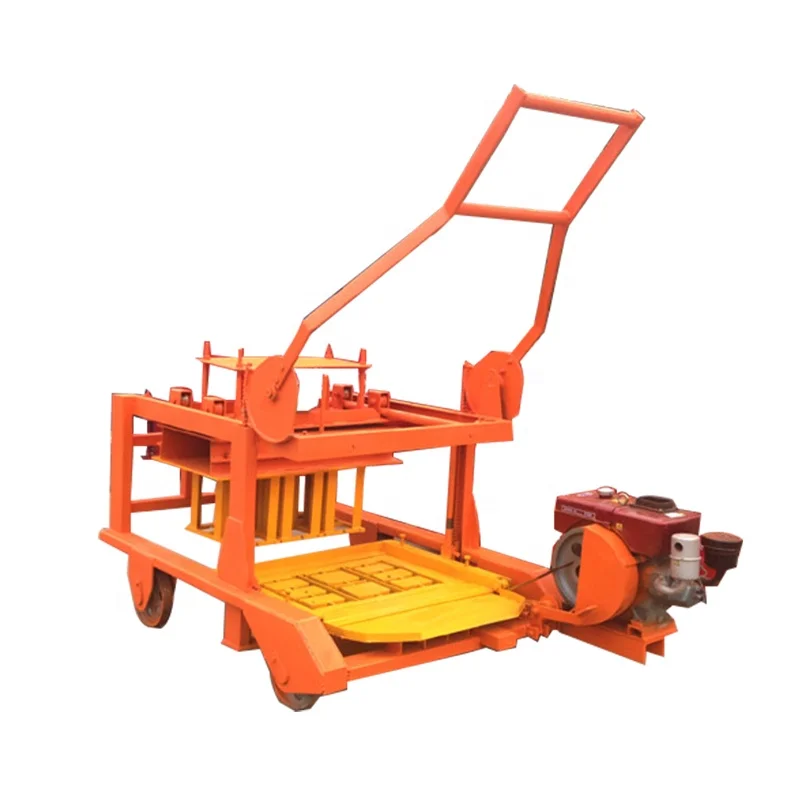
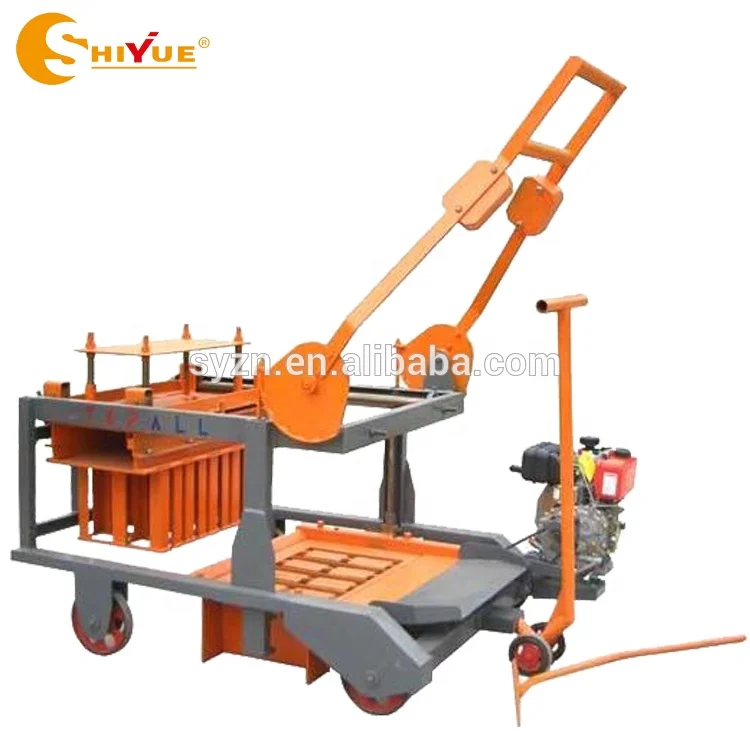
| Product Type | Mobile Concrete Block Making Machine |
| Power Source | Diesel |
| Engine Power | 8 hp |
| Molding Cycle | 45s (basis not stated in source — confirm block format / material / thickness) |
| Molding Form | Vibration and Pressure |
| Vibration Force | 60 KN |
| Total Weight | 800 kg |
| Overall Dimensions (L×W×H) | 2420 × 1320 × 1650 mm |
| Pallet Requirement | No pallet required (egg-laying type) |
| Automation Level | Manual / Mobile |
| Basic Equipment Included | JZC350 Diesel Concrete Mixer or JQ350 Diesel Concrete Mixer (Electric Generating Unit); Trolley |
| Mould Format Options | Paver brick, hollow block, concrete block, solid brick, fly ash brick (specific mould dimensions to be confirmed) |
Application Suitability
| Application | Material or Output |
|---|---|
| On-site hollow block production for housing projects | Crushed stone, sand, cement, water |
| Remote-area paver brick manufacturing without grid power | River sand, granite dust, cement |
| Small-scale solid brick runs for rural contractors | Fly ash, lime, sand, cement |
| Infrastructure site block supply | Local aggregate, quarry dust, cement |
Why "45-Second Cycle" Needs a Block Format Attached
A cycle time means nothing until you know which block, which mix, and which thickness it was measured on.
I have watched containers leave the yard with buyers convinced they would pull thousands of blocks a day, only to learn on site that the 45-second figure was timed on a thin paver, not the 200 mm hollow block their market actually buys. The QMR4-45 mobile block machine in stock today ships with that conversation already settled — we confirm your target format, run your material sample, and state the realistic cycle before you pay. Vibration force at 60 KN behaves very differently on a low-cement fly ash mix versus a dense crushed-stone blend, and moisture content shifts everything [NEED_CITE: effect of moisture content on concrete block compaction and curing]. This machine does not hide behind a single headline number.
Dispatch Timing That Matches Your Project Calendar
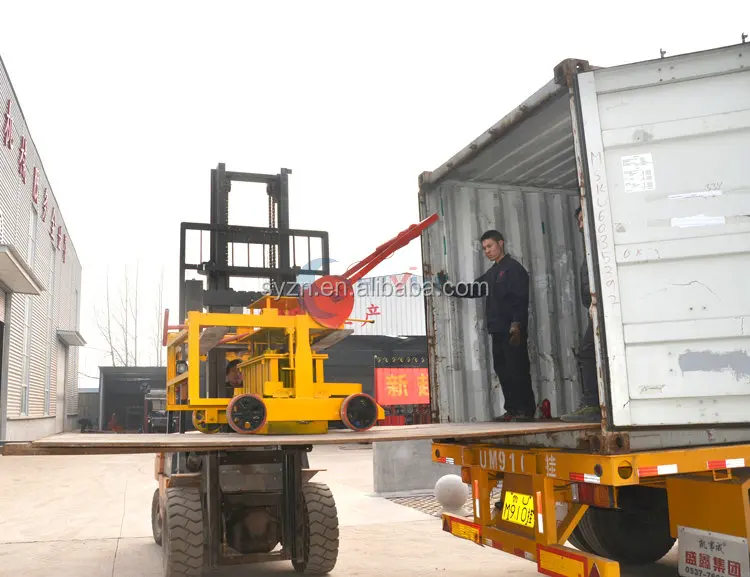
Buyers working against a construction deadline cannot absorb a twelve-week production queue. This QMR4-45 mobile block machine is held in stock at the Linyi yard, meaning the conversation moves straight from configuration confirmation to container booking. The dispatch lead time is quoted at the proposal stage, not discovered after the deposit clears. Dismantling for shipment, loading photographs, and customs paperwork are handled before the truck leaves the gate.
Diesel Independence for Off-Grid Project Sites
Grid power is a luxury many project sites simply do not have. The 8 hp diesel engine on the QMR4-45 removes the need for a generator set or a temporary power connection, letting contractors start producing blocks the day the machine is uncrated. The included JZC350 diesel concrete mixer keeps the entire batching and mixing loop self-sufficient [NEED_CITE: diesel-powered construction equipment deployment in off-grid regions]. When the project phase ends, the 800 kg frame and trolley let a small crew relocate the machine to the next site without a low-bed trailer.
Reading the Specs That Actually Matter on Site
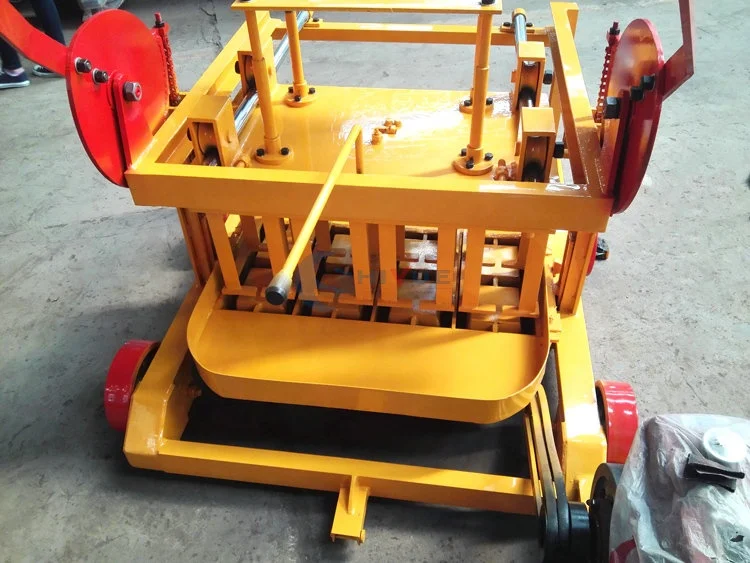
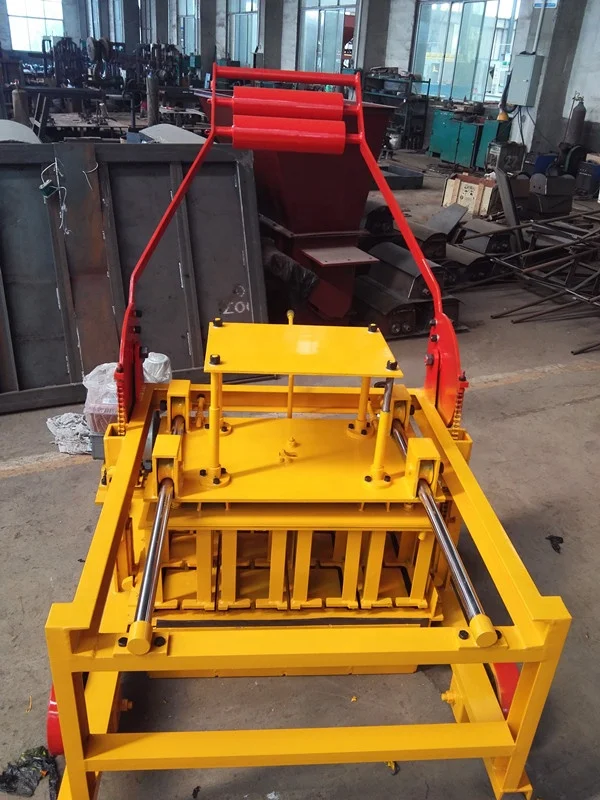
The 60 KN vibration force works in tandem with mechanical pressure to compact the mix inside the mould box. On an egg-laying machine like the QMR4-45, the freshly formed block sits directly on the ground, so the vibration must be strong enough to achieve density yet controlled enough to prevent the block from slumping before the machine rolls forward. The 45-second moulding cycle is achievable on lighter formats; heavier hollow blocks with thicker webs demand a longer vibration window, which your sample test will confirm. Overall dimensions of 2420 × 1320 × 1650 mm keep the footprint narrow enough to work along a trench line or inside a partially built structure. Because no pallets are required, there is no pallet inventory to manage, no curing rack to build, and no forklift to source — the ground itself becomes the curing surface.
The Cost of Skipping the Material Sample Run
I once watched a QMR-class machine ship to a West African site where the local laterite soil carried a clay content far above what the standard vibration setting could handle. Blocks cracked during curing, and the buyer spent weeks adjusting water ratios by trial and error while the project schedule slipped. Running the buyer’s actual aggregate and cement through the machine before crating eliminates that guesswork [NEED_CITE: impact of clay content in local aggregate on concrete block strength]. A sample test costs a few hours at the factory and saves a container-load of failed blocks on the other side.
Why Buyers Source This Machine Here
Block machinery is the single focus of the Linyi facility, so the QMR4-45, its mixer, trolley, and moulds leave as one matched set rather than an assembly of separate purchases. Stocked units mean the arrival estimate is real, not a projection built on a production slot that has not been confirmed yet. Mould formats are selected around the block types that actually sell in the buyer’s market, and custom mould drawings are available when standard sizes do not fit. Every machine ships with a factory test record documenting performance on the buyer’s specific material, not a generic bench run.
Documentation & Verification
- Factory test record run on buyer’s own aggregate and cement blend before dispatch
- Machine specification sheet confirming engine power, vibration force, and dimensions
- Mould drawing and format list for every mould included in the shipment
- Packing and container loading photographs taken at the yard before sealing
- Customs documentation package prepared for destination port clearance
Installation, Commissioning & Support
- Flat ground with a compacted surface is sufficient; no concrete foundation required for the 800 kg frame
- Diesel engine eliminates the need for a dedicated electrical circuit at the site
- Machine ships partially dismantled; trolley and mixer reattach with standard hand tools on arrival
- First production run supervised remotely or via on-site guidance to dial in vibration timing for your mix
- Operator training covers mould change procedure, engine maintenance intervals, and daily greasing points
- Wear parts list and mould inventory provided so replacements can be ordered before stock runs out
What to Send with Your Inquiry
To move from stock confirmation to a firm dispatch date, share your target block format and dimensions, the local aggregate type you plan to use, and the daily output you need to keep the project on schedule. If you have a preference between the JZC350 diesel mixer and the JQ350 electric generating unit variant, note that as well so the correct package is reserved.
Frequently Asked Questions
Q: What is the realistic daily output of the QMR4-45, and for which block format?
A: Output depends entirely on the block format, mix design, and crew workflow. The 45-second cycle reference must be matched to your specific block size and thickness. We run your material sample before dispatch and provide a documented output figure tied to that exact format, so the number you plan around is the number the machine delivers on your site.
Q: Is the machine in stock, and how soon can it be dispatched after order?
A: The QMR4-45 is held as a stocked mobile block machine at the Linyi yard. Once configuration and material sample testing are complete, the dispatch lead time is quoted in the proposal. Container booking follows immediately, and the arrival estimate is confirmed before payment so your project timeline stays intact.
Q: What container size is required, and is dismantling needed for shipment?
A: The QMR4-45 and its included mixer and trolley typically fit within a standard 20-foot container after partial dismantling. Loading photographs are taken at the yard to document the packing arrangement, and reassembly on site requires only basic hand tools and a small crew.
Q: Can the diesel engine be serviced or replaced locally in my country?
A: The 8 hp diesel engine used on the QMR4-45 is a widely distributed industrial type with service networks across most regions. We confirm engine model compatibility with your local parts availability before shipment, and the operation manual includes the maintenance schedule and consumable part numbers.
Q: What moulds ship with the machine, and how fast can additional moulds be delivered?
A: Standard moulds for hollow block, solid brick, and paver formats are available from stock and can ship with the machine. Custom mould dimensions are produced to buyer drawings, with lead time quoted at the order stage. A mould and wear parts list is included in the documentation package so you can plan reorder timing.