Description
Stocked & Dispatch-Ready — Every QMY18-15 unit undergoes voltage confirmation with your site electrician before leaving our Linyi workshop, so it starts producing blocks the day it arrives instead of sitting idle waiting for a panel rewir
Technical Specifications
| Parameter | Value |
|---|---|
| Model | QMY18-15 |
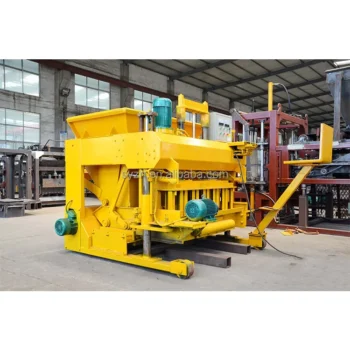
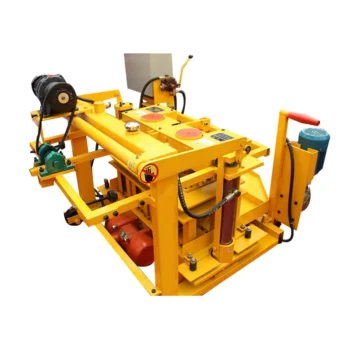
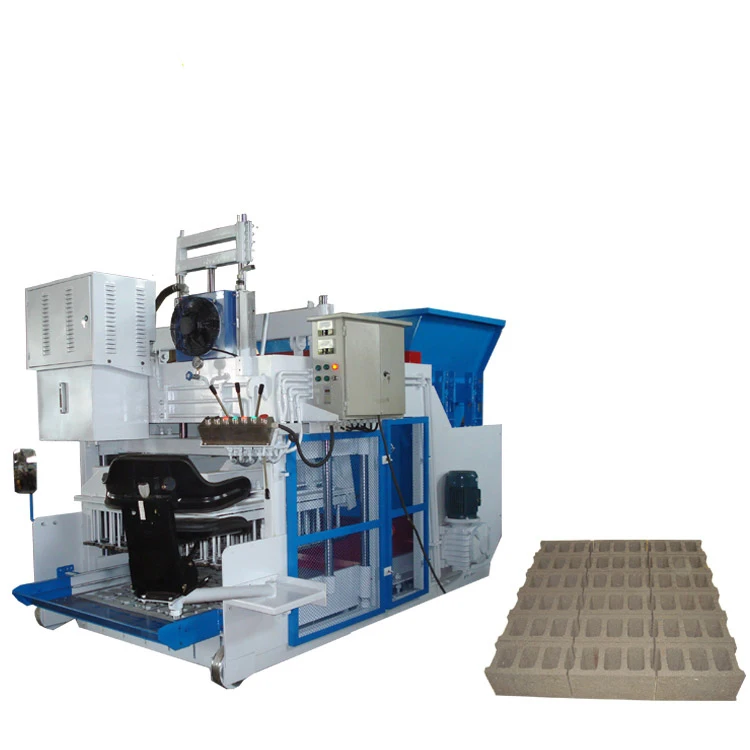
| Product Type | Hydraulic mobile egglaying block machine |
| Base Design | Upgraded from QMY12-15 chassis |
| Pallet Requirement | No pallet required (egglaying operation) |
| Operation Mode | Manual / semi-automatic (man-machine unity) |
| Forming Method | Hydraulic pressure with vibration |
| Block Density Capability | High density (basis to be confirmed with mix design) |
| Block Dimensional Accuracy | Accurate size (basis to be confirmed per mould) |
| Output Capacity | basis not stated in source — confirm block format, material and thickness |
| Cycle Time | basis not stated in source — confirm block format |
| Hydraulic Pressure Rating | basis not stated in source — confirm MPa rating |
| Vibration Force | basis not stated in source — confirm kN rating |
| Compatible Mould Formats | basis not stated in source — confirm block types required |
| Mould Change Procedure | Manual swap (basis not stated in source) |
| Rated Power | basis not stated in source |
| Voltage & Frequency | Configurable per destination market — confirm before dispatch |
| Control System | basis not stated in source |
| Overall Dimensions | basis not stated in source |
| Net Weight | basis not stated in source |
| Automation Level | Low — mobile egglaying, no pallet handling system |
| Stacking Method | Manual, blocks laid directly on ground and cured in place |
| Assembly State | Fully assembled mobile unit |
Application Suitability
| Application | Material or Output |
|---|---|
| On-site block production at construction projects | Hollow and solid blocks from local crushed stone, sand and cement |
| Small-scale block yard start-up | Paving blocks and kerbstones from standard concrete mix |
| Housing development producing blocks locally | Load-bearing and non-load-bearing wall blocks on the building site |
| Contractor producing blocks without a fixed plant | Interlocking bricks and porous blocks using available aggregate |
| Low-investment block operation for entrepreneurs | Solid blocks and pavers laid directly on prepared ground |
What Buyers Overlook When Comparing Mobile Block Machines on Lead Time
The difference between a project running on schedule and one stalled for weeks often comes down to whether the machine was in stock or built-to-order.
I spent years commissioning machines on site across the Middle East, and the pattern is predictable: a contractor chooses a mobile block machine based on price or a glossy brochure, then waits six to eight weeks for production while the masonry crew sits idle. The QMY18-15 mobile block machine in stock avoids that gap entirely — it is assembled, tested and ready for container loading. But stock availability means nothing if the electrical configuration is wrong. I once watched a QMY18-15 arrive at a site wired for 415V three-phase while the machine was built for 380V; the main breaker tripped on first start-up and the entire brick-laying schedule slid by two weeks [NEED_CITE: voltage and frequency standards by export market]. That single experience reshaped how we handle every dispatch: the buyer’s site electrician confirms voltage and frequency before the machine leaves the workshop.
Immediate Dispatch Without Assembly Delays
The QMY18-15 arrives as a fully assembled mobile unit. There is no factory floor to build, no foundation to pour and no fixed conveyor to install. The operator drives the machine to the production area, connects power and begins laying blocks directly on prepared ground. For a contractor who needs output this week rather than next quarter, that matters. The QMY18-15 mobile block machine in stock is loaded into a container with its standard mould secured, and the dispatch timeline is measured in days from order confirmation, not production weeks.
Ground-Level Egglaying Eliminates the Pallet Supply Chain
Every pallet-based block machine needs a stock of pallets — timber, PVC or bamboo — that must be purchased, rotated, stored and eventually replaced. The QMY18-15 skips that entire loop. It lays each freshly pressed block directly on the ground and moves forward to the next position. On a remote housing site where the nearest building material supplier is hours away, removing the pallet dependency removes a failure point that stops lesser-equipped operations cold. The curing area simply needs to be flat, swept and level [NEED_CITE: egglaying block machine ground preparation requirements].
How Hydraulic Pressure and Vibration Shape Block Quality on Site
Hydraulic pressure and vibration force must work together to compact the concrete mix into a dense, dimensionally accurate block. In a mobile egglaying machine like the QMY18-15, the vibration table sits directly beneath the mould box while the hydraulic ram applies downward pressure during the press cycle. If vibration is too weak relative to the pressure, the mix does not fluidise and air pockets remain; if pressure is too low, the block emerges friable and loses its edges when the mould lifts. The QMY18-15 mobile block machine in stock is configured with a hydraulic station and vibration motor matched to each other at the factory, but the final block strength also depends on the buyer’s specific cement-to-aggregate ratio and the moisture content of the local sand and crushed stone. A simple adjustment to water dosage at the mixer can shift block compressive strength noticeably.
The Hidden Cost of Skipping Voltage Verification Before Shipment
A mobile block machine that arrives with the wrong voltage configuration does not just sit idle — it cascades delays across every trade waiting for blocks. The masonry crew has no units to lay, the plastering team cannot start, and the project’s critical path stretches. Rewiring an electrical panel on site in a country where the correct contactors are not stocked locally can add weeks. I learned this the hard way when a QMY18-15 arrived at a 415V site configured for 380V; three mixers upstream had nowhere to send their output. The cost was not the panel swap itself but the idle labour and extended site overhead [NEED_CITE: electrical commissioning failures on imported machinery]. Every QMY18-15 mobile block machine in stock now ships only after the buyer’s site electrician confirms the exact voltage and frequency in writing.
Why Buyers Source This Mobile Block Machine Here
Single-focus machinery supply means the QMY18-15 is specified as a complete system — mould, hydraulic station and egglaying frame matched to one production goal rather than assembled from unrelated vendors. Stock availability is genuine, with container loading plans and dispatch lead times quoted upfront so buyers can plan around a real date. Moulds are available for the block formats the buyer’s local market actually demands, with custom drawings accommodated when standard inventory does not cover a required shape. The sales process locks in voltage, frequency and PLC display language before production begins, removing the most common cause of on-site commissioning delays. Factory test records and packing photographs are provided for every unit, giving the buyer visual proof of condition before the container doors close.
Documentation & Verification
- Factory test record showing block output on your specified mould format before dispatch
- Voltage and frequency confirmation sheet signed off by your site electrician
- Mould drawing and compatible block format list for your QMY18-15
- Hydraulic and electrical schematic for on-site troubleshooting
- Container loading plan and packing photographs before shipment
Installation, Commissioning & Support
- Level ground preparation required; the QMY18-15 operates on flat swept surfaces without a poured foundation
- Dedicated power circuit sized to the machine’s rated load — confirm amperage with your electrician before connection
- Fully assembled dispatch — no on-site mechanical assembly required, only electrical connection and mould fitting
- First-run block test with your local mix to verify density and dimensional accuracy before full production starts
- Mould change training included so operators can swap formats without extended downtime
- Wear parts list provided covering vibration table springs and hydraulic seals specific to the QMY18-15
What We Need to Move Your Order Forward
To confirm stock and prepare a QMY18-15 for your site, share the block format and dimensions you need to produce, your local voltage and frequency, and the type of aggregate available near your project. If you have an existing mixer, let us know its batch capacity so the feeding rhythm matches the press cycle. The more detail you provide about your curing area and daily output target, the better we can confirm that this QMY18-15 mobile block machine in stock is the right fit for your timeline.
Frequently Asked Questions
Q: Is the QMY18-15 currently in stock and how fast can it ship?
A: The QMY18-15 mobile block machine is held in stock as a fully assembled unit. Once you confirm voltage, frequency and mould format, the machine is prepared for container loading. Dispatch lead time is quoted in days from order confirmation, not weeks. We provide a container loading plan and packing photographs before the shipment leaves the workshop.
Q: What site preparation is needed before the machine can produce blocks?
A: You need a flat, swept and level ground area for egglaying operation, a dedicated electrical circuit matching the confirmed voltage and frequency, and a concrete mixer positioned to feed the machine at its cycle rhythm. No poured foundation or fixed plant structure is required. The QMY18-15 is connected, fitted with its mould, and tested on your local mix before full production begins.
Q: Will the voltage and frequency match my country’s standard?
A: Voltage and frequency are confirmed in writing with your site electrician before the QMY18-15 leaves the factory. This step prevents the most common commissioning failure on imported machinery — a mismatched electrical panel that delays the entire site schedule. The motor, contactors and control wiring are set to your exact supply specification.
Q: Which block moulds are available from stock, and can I order a custom format?
A: Standard moulds for common hollow block, solid block and paving formats are available alongside the QMY18-15. If your market requires a shape outside the standard range, we work from your drawings to produce a custom mould. Lead time for a custom mould is communicated at the enquiry stage so you can plan your product launch accordingly.
Q: Is the machine shipped fully assembled or dismantled for container loading?
A: The QMY18-15 is designed to fit into a standard shipping container as a fully assembled mobile unit, though certain protruding components may be detached for transport and reattached on site within hours. We provide a dismantling and reassembly guide with photographs so your team can have the machine positioned and ready for electrical connection the day it clears customs.