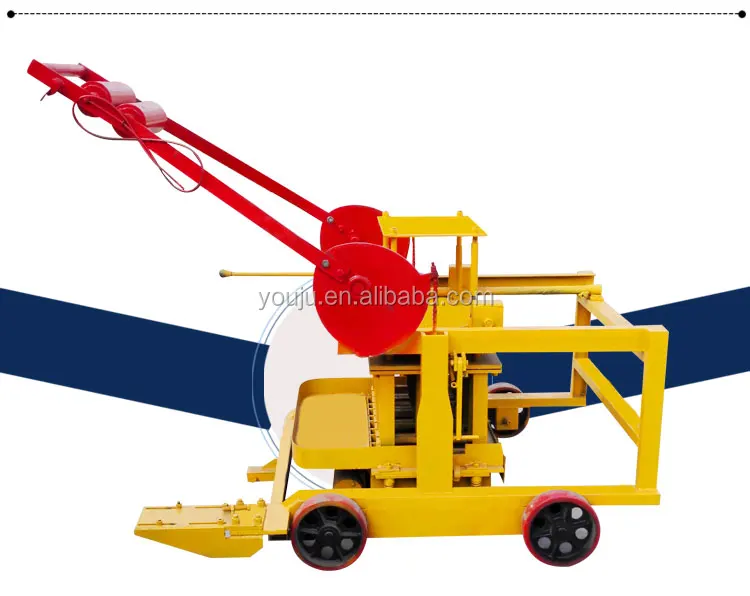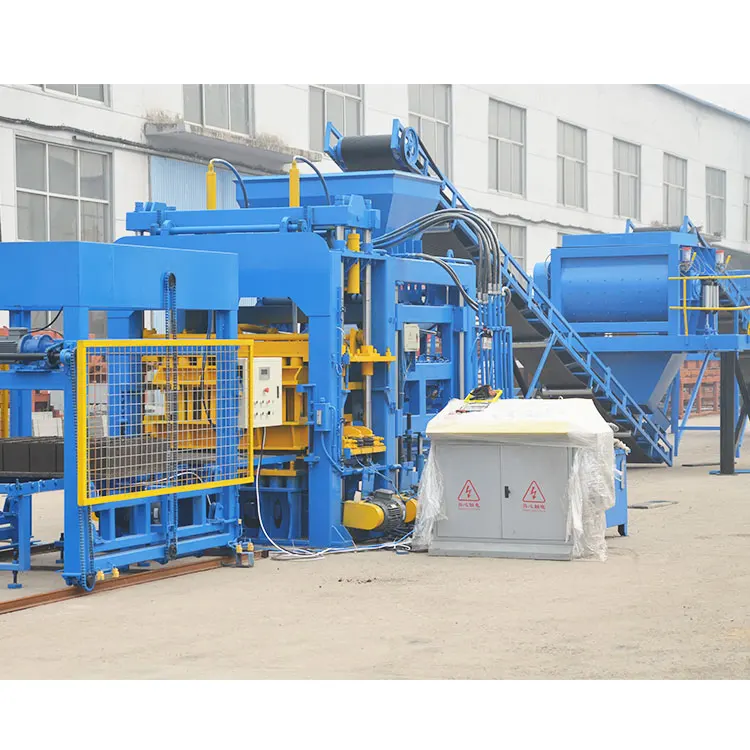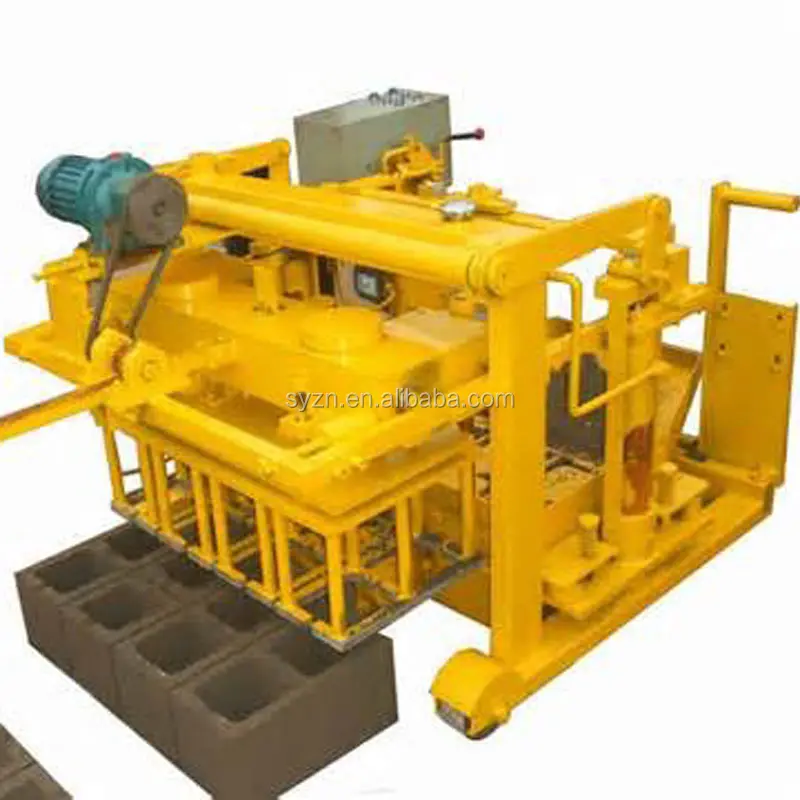
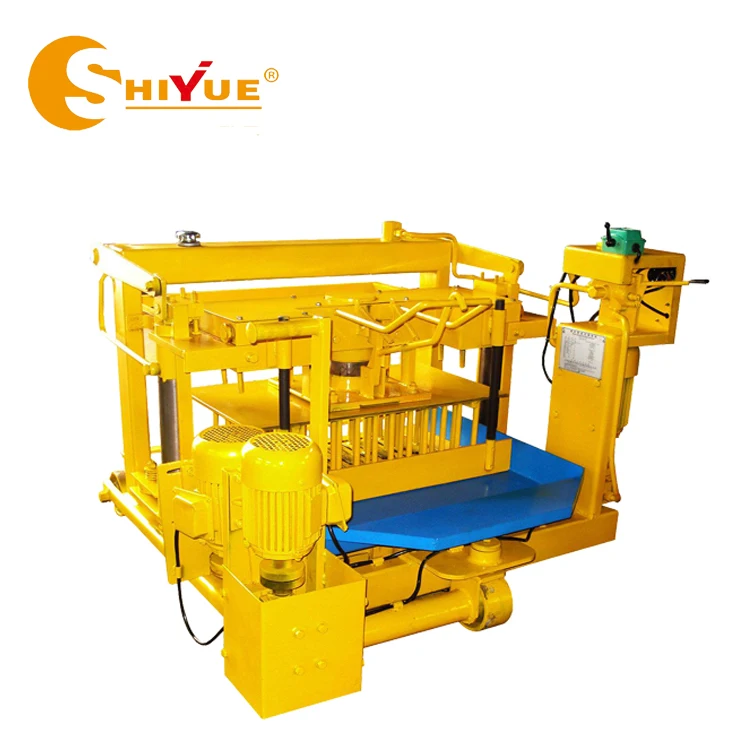
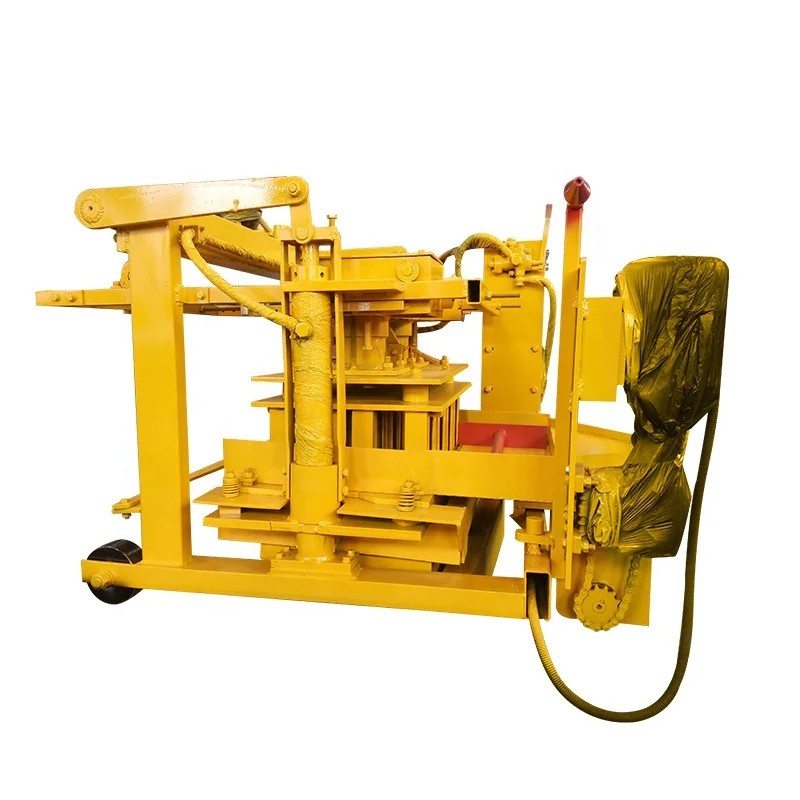
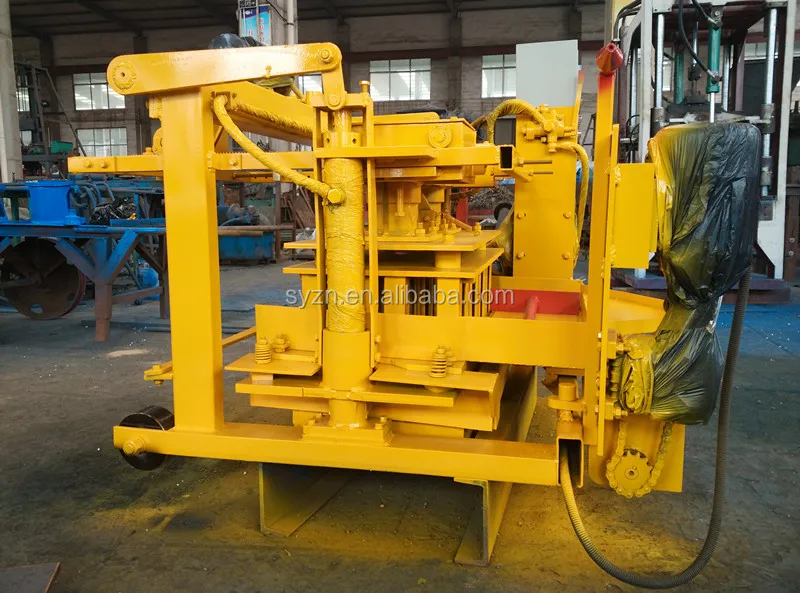
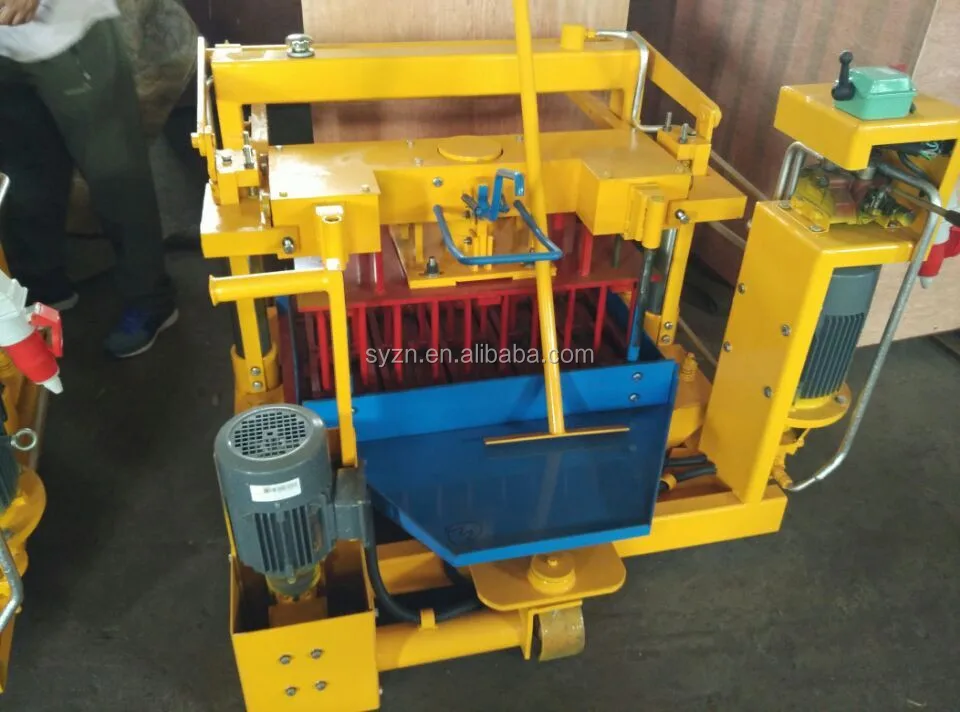

Description
Stock-backed dispatch — the QMY4-30 mobile block machine is held in inventory for immediate container loading, eliminating the typical production wait for contractors racing a project timeline.
Technical Specifications
| Parameter | Value |
|---|---|
| Model | QMY4-30 |
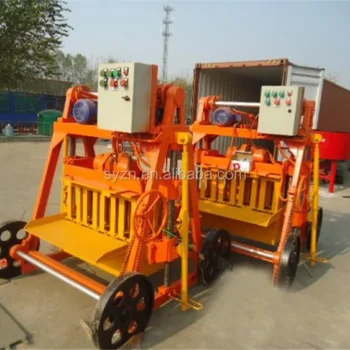
| Product Type | Mobile Egg Laying Concrete Block Making Machine |
| Hydraulic Method | Mould vibration |
| Demold Method | Hydraulic |
| Molding Cycle | 30 seconds |
| Total Power | 5.95 kW |
| Vibration System | Mould box excitation |
| Transmission | Hydraulic |
| Pallet Requirement | Palletless (egg-laying mobile type) |
| Output for 400×200×200mm Hollow Block | 4 pcs/mould, 480 pcs/hour, 3840 pcs/8hr |
| Output for 400×150×200mm Hollow Block | 5 pcs/mould, 600 pcs/hour, 4800 pcs/8hr |
| Output for 400×100×200mm Solid Block | 7 pcs/mould, 840 pcs/hour, 6720 pcs/8hr |
| Applicable Terrain | Mountainous, hilly, industrial mining, desert and coastal areas |
| Standards | ISO 9001:2000, CE |
Application Suitability
| Application | Material or Output |
|---|---|
| Remote housing development sites | Crushed stone, sand, cement and water mix for load-bearing hollow blocks |
| On-site contractor block production | Local aggregate and cement for partition and wall blocks without fixed plant |
| Small-scale block yard start-ups | Standard concrete mix for 400×200×200mm, 400×150×200mm and 400×100×200mm formats |
| Roadside kerb and paving projects | Denser concrete mix for solid block formats laid directly on compacted ground |
Why "In Stock" Matters More Than the Brochure Lead Time
A mobile block machine in stock means your site crew can be laying blocks within weeks, not months. Project timelines in remote construction rarely pause for factory production queues, and waiting for a machine to be built from scratch often costs more in idle labour than the equipment itself.
I have stood on sites where the foundation crew finished two weeks early but sat idle because the block machine was still in production. By the time the container arrived and cleared customs, the wet season had started and the ground turned to mud. Sourcing a mobile block machine in stock from existing inventory collapses that gap. The QMY4-30 units we hold ready for dispatch have already passed factory testing, so the only variables left are shipping transit and your site preparation [NEED_CITE: typical ocean freight transit times by destination region].
What "Egg-Laying" Actually Means for Your Ground Preparation
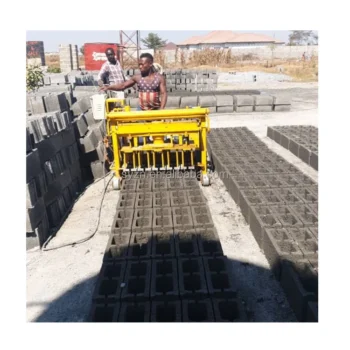
The QMY4-30 places freshly pressed blocks directly onto the ground surface and moves forward on wheels, leaving a row of curing blocks behind it. This palletless design removes the entire cost and logistics chain of buying, storing, rotating and replacing wooden or bamboo pallets. However, it transfers the quality burden to your ground condition.
The surface must be flat, compacted and capable of bearing the weight of wet concrete blocks without settlement. A concrete slab is ideal, but well-compacted gravel or hardened earth can work. If the ground is soft or uneven, the machine will tilt during the pressing cycle and the blocks will deform or collapse before the cement hydrates. I once watched a contractor try to run an egg-laying machine on freshly graded soil that had not been compacted — every block in the first row slumped on one side and the entire day’s output was scrap.
Stock Availability Versus Custom Build Timelines
Ordering a mobile block machine in stock eliminates the production scheduling conversation entirely. The unit has already been assembled, wired, hydraulically tested and run through a production cycle at the factory. What remains is a final inspection against your voltage and control language requirements before dismantling for container loading.
This matters because custom-built units must pass through fabrication, assembly, painting, electrical wiring and testing in sequence, and any delay in one stage pushes the entire delivery. A stocked QMY4-30 bypasses the fabrication queue and moves straight to pre-shipment verification. The trade-off is that configuration options are limited to what the stocked unit carries — but for a machine in this class, the standard configuration covers the vast majority of site production needs [NEED_CITE: standard lead time comparison between stock and custom-built block machines].
Reading the Power and Vibration Specs for Site Reality
The QMY4-30 draws 5.95 kW total, which sits comfortably within the output range of a standard portable diesel generator set commonly found on construction sites. This means the machine does not require a dedicated grid connection to operate, making it genuinely viable for off-grid and remote terrain applications. The mould box excitation system concentrates vibration energy directly into the mould cavity rather than the entire machine frame, which improves block density consistency while keeping overall power consumption low.
The 30-second molding cycle applies across all three standard block formats — 400×200×200mm, 400×150×200mm and 400×100×200mm — meaning the hourly output difference between formats comes purely from the number of cavities per mould, not from cycle time changes. Hydraulic demolding ensures the mould lifts cleanly off the freshly pressed block without dragging or tearing the edges, which is critical when the block is sitting unsupported on the ground with no pallet beneath it. The hydraulic transmission also provides smoother forward movement between pressing positions, reducing the risk of bumping into and damaging the row just laid.
The Ground Condition Mistake That Wastes Entire Production Runs
Egg-laying machines are unforgiving about surface preparation, and this is where most on-site block production failures originate. A contractor who skips ground compaction to save a day of site prep will lose multiple days of block output to deformed, cracked or collapsed products. The blocks have no pallet support during the critical first hours of curing, so any differential settlement in the ground beneath them translates directly into block damage.
Beyond the ground itself, failing to confirm the site’s power supply compatibility before the machine arrives can leave a fully functional unit sitting idle. A 5.95 kW machine needs a generator rated for at least that continuous load plus starting surge, and the voltage and frequency must match the motor winding configuration. I have seen machines arrive at sites where the only available generator was undersized, and the block production waited another week while a larger unit was sourced locally at a premium [NEED_CITE: generator sizing requirements for electric motor starting current].
Why Buyers Source This Machine Through Our Stock Programme
Our single focus on block machinery means the QMY4-30 units held in stock are configured as complete working systems, not bare presses. Every stocked machine includes the standard mould set for the three most common block formats, so production can begin the day the machine is reassembled on site.
Configuration is verified against your site conditions before dispatch — voltage, frequency and control language are confirmed so the machine does not sit waiting for an electrician after arrival. Container loading plans are prepared with machine dismantling dimensions matched to the container type, so there are no surprises at the port of loading. Dispatch lead time is quoted in days from order confirmation, not weeks, because the fabrication stage is already complete. Arrival estimates include transit time to your destination port, quoted upfront so your site mobilization schedule can be planned around a known delivery window [NEED_CITE: container loading and ocean freight scheduling best practices].
Documentation & Verification
- Factory test record confirming 30-second cycle time across all three block formats before dispatch
- Machine specification sheet with total power, vibration method and hydraulic demolding details
- Voltage and control language confirmation document signed off before container loading
- Mould drawing and format list for 400×200, 400×150 and 400×100 block sizes included in stock unit
- CE declaration and ISO 9001:2000 compliance documentation for customs clearance at destination
Installation, Commissioning & Support
- Ground surface must be flat and compacted to bearing capacity before the QMY4-30 begins egg-laying production
- Power supply requires minimum 5.95 kW continuous capacity from grid connection or site generator set
- Machine ships dismantled for container loading with reassembly guide for on-site mechanical and hydraulic connections
- First production run supervised to verify mould vibration intensity and hydraulic demolding timing against your concrete mix
- Operator training covers mould change procedure between the three standard block formats and daily hydraulic inspection points
- Wear parts list identifies mould liner and vibration components with recommended replacement intervals
Before You Request a Quote
To confirm stock availability and match the QMY4-30 to your project, we need your target block format and daily output requirement, your site ground condition and available space for curing rows, and your power supply voltage and frequency. Share your destination port for a transit time estimate and your preferred control panel language so the stocked unit can be verified against your requirements before loading.
Frequently Asked Questions
Q: Is the QMY4-30 currently in stock and when can it ship?
A: QMY4-30 units are held in inventory and available for dispatch after pre-shipment inspection and voltage confirmation. The exact quantity ready for immediate loading varies, so we confirm current stock position at the time of your inquiry. Dispatch lead time is counted in days from order confirmation, covering final verification, dismantling and container loading at the port.
Q: What container size is needed and how is the machine packed?
A: The QMY4-30 is dismantled into its main assemblies — frame, mould box, hydraulic unit and electrical panel — for container loading. A standard container type is sufficient given the machine’s compact footprint and total power class. The loading plan with dismantling dimensions is provided with the quotation so you can verify container requirements before confirming the order.
Q: Can the QMY4-30 run on a diesel generator at the site?
A: Yes, the 5.95 kW total power requirement is within the output range of commonly available portable diesel generator sets used on construction sites. The generator must be rated for the continuous load plus motor starting surge. We confirm your generator specifications against the machine’s motor winding configuration before dispatch to avoid compatibility issues on arrival.
Q: Which block formats come as standard moulds with the stocked unit?
A: The stocked QMY4-30 includes moulds for 400×200×200mm hollow blocks at 4 pieces per mould, 400×150×200mm blocks at 5 pieces per mould, and 400×100×200mm solid blocks at 7 pieces per mould. These cover the most common construction formats. Additional or custom moulds can be discussed separately if your project requires other dimensions.
Q: What is the estimated arrival time at my destination port?
A: Transit time depends on your destination port and current shipping schedules. We quote the arrival estimate upfront alongside the dispatch lead time so you have a complete timeline from order confirmation to port arrival. This allows your site team to plan ground preparation and material procurement around a known delivery window rather than guessing.