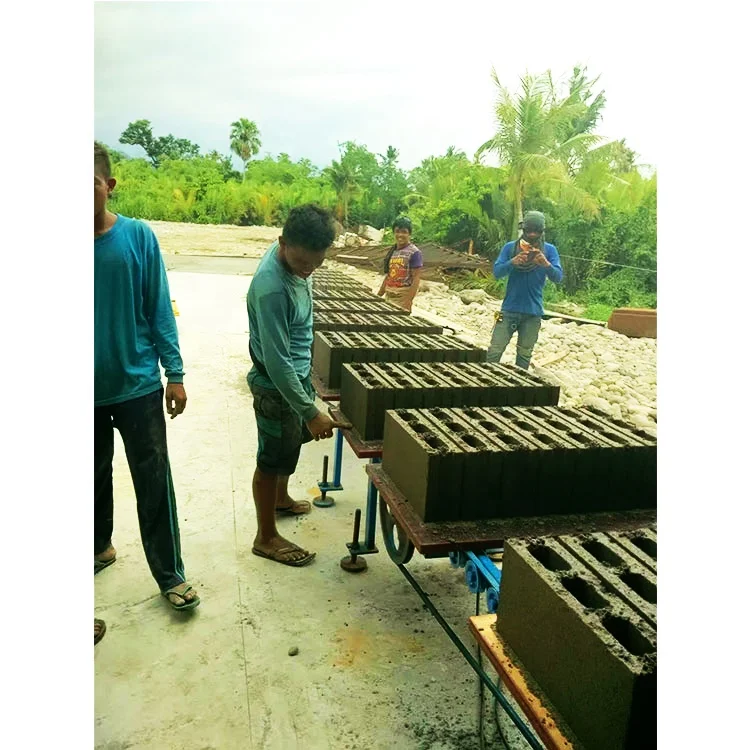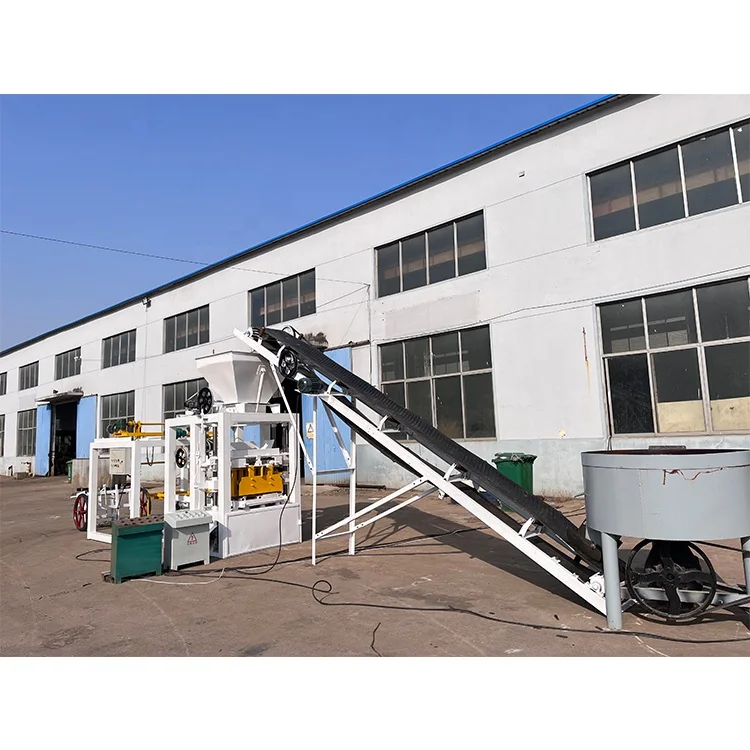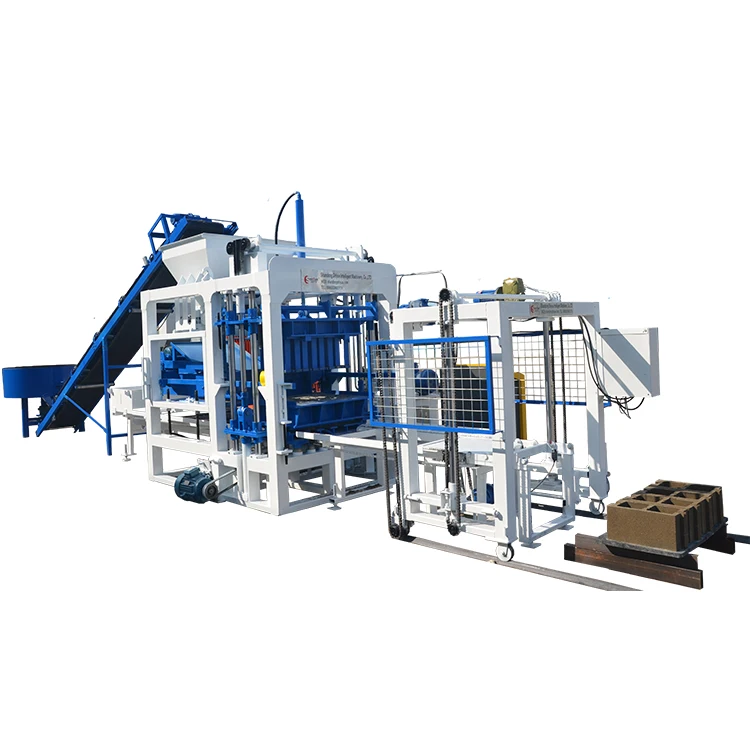
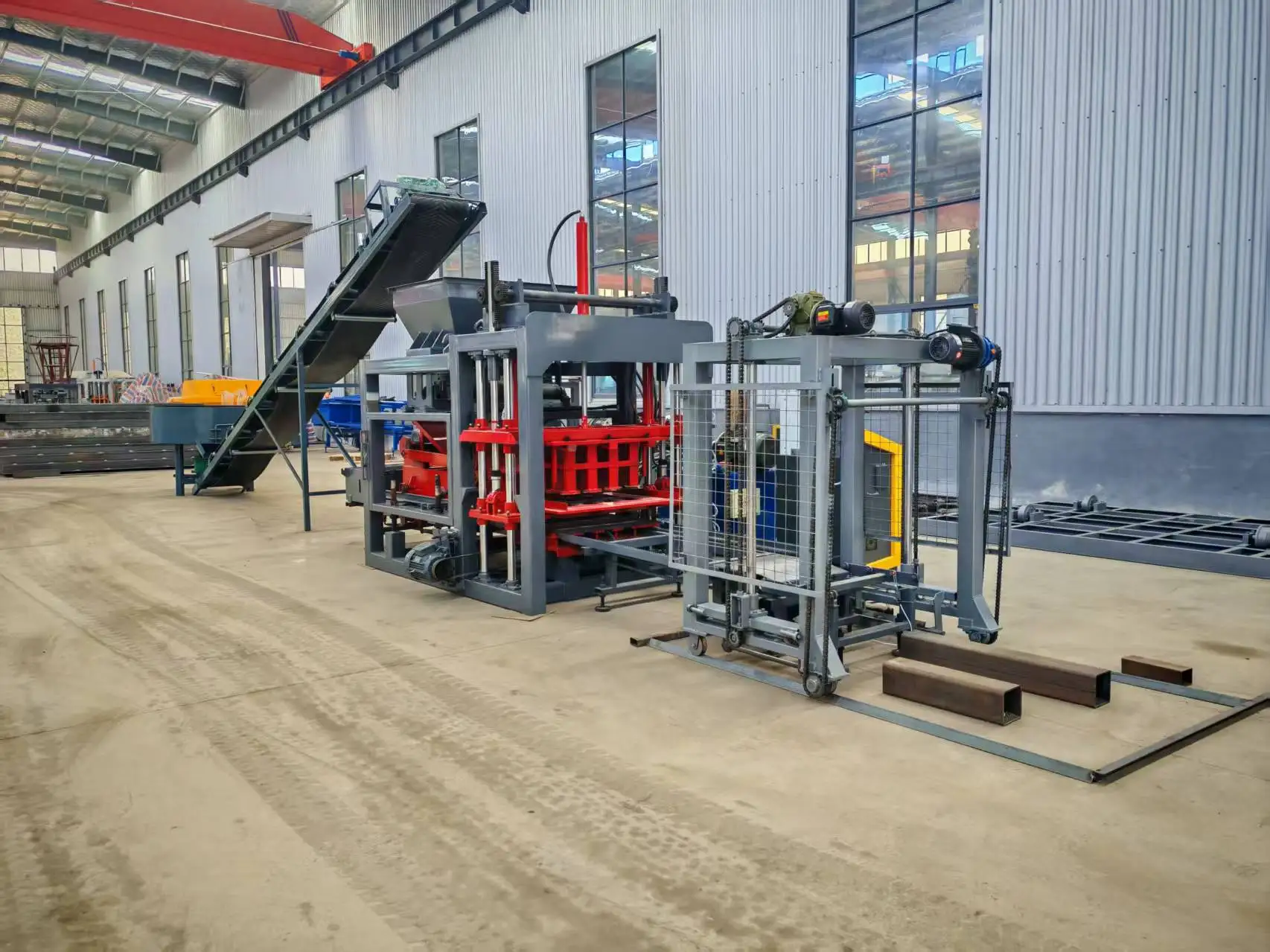
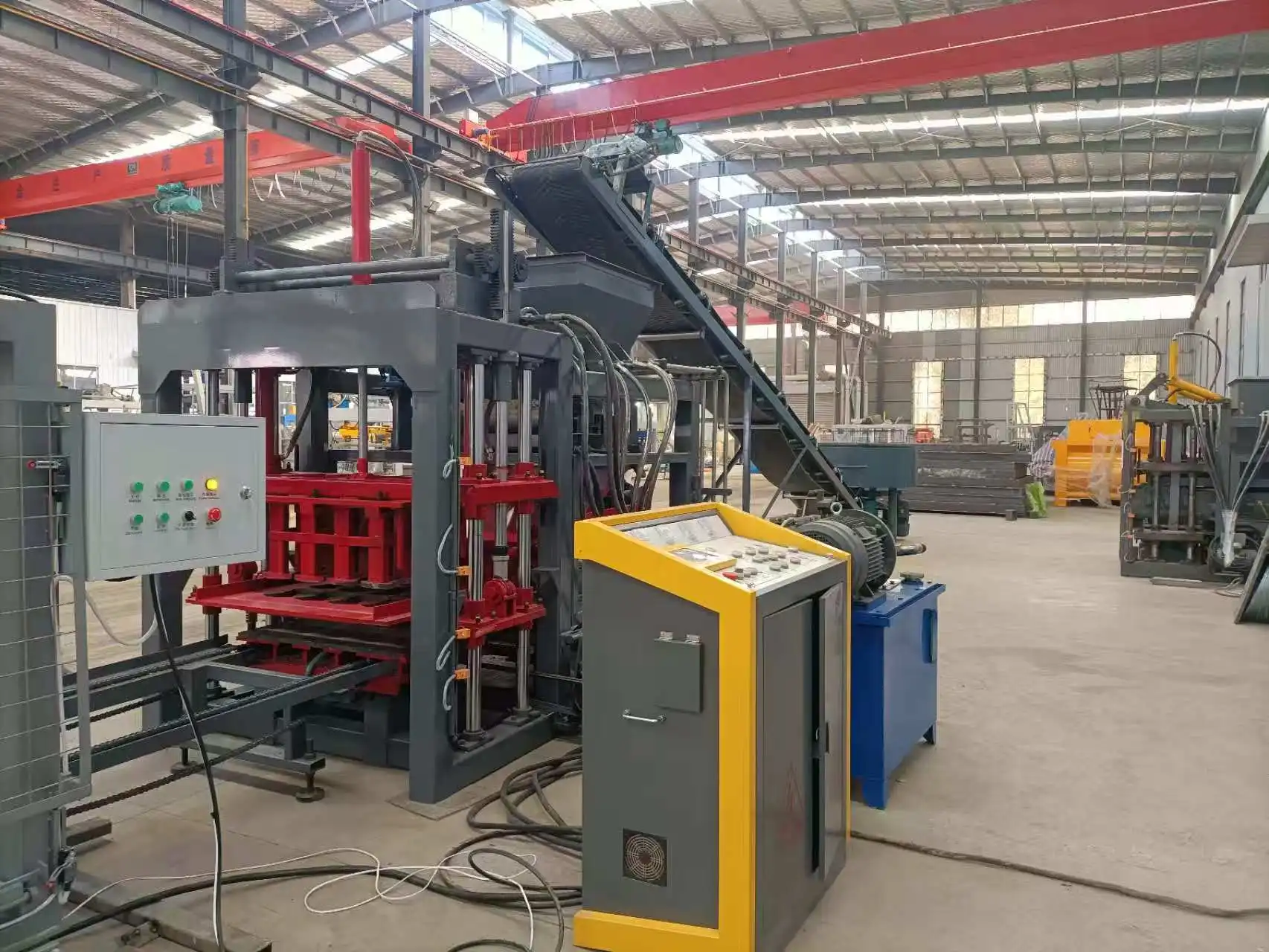
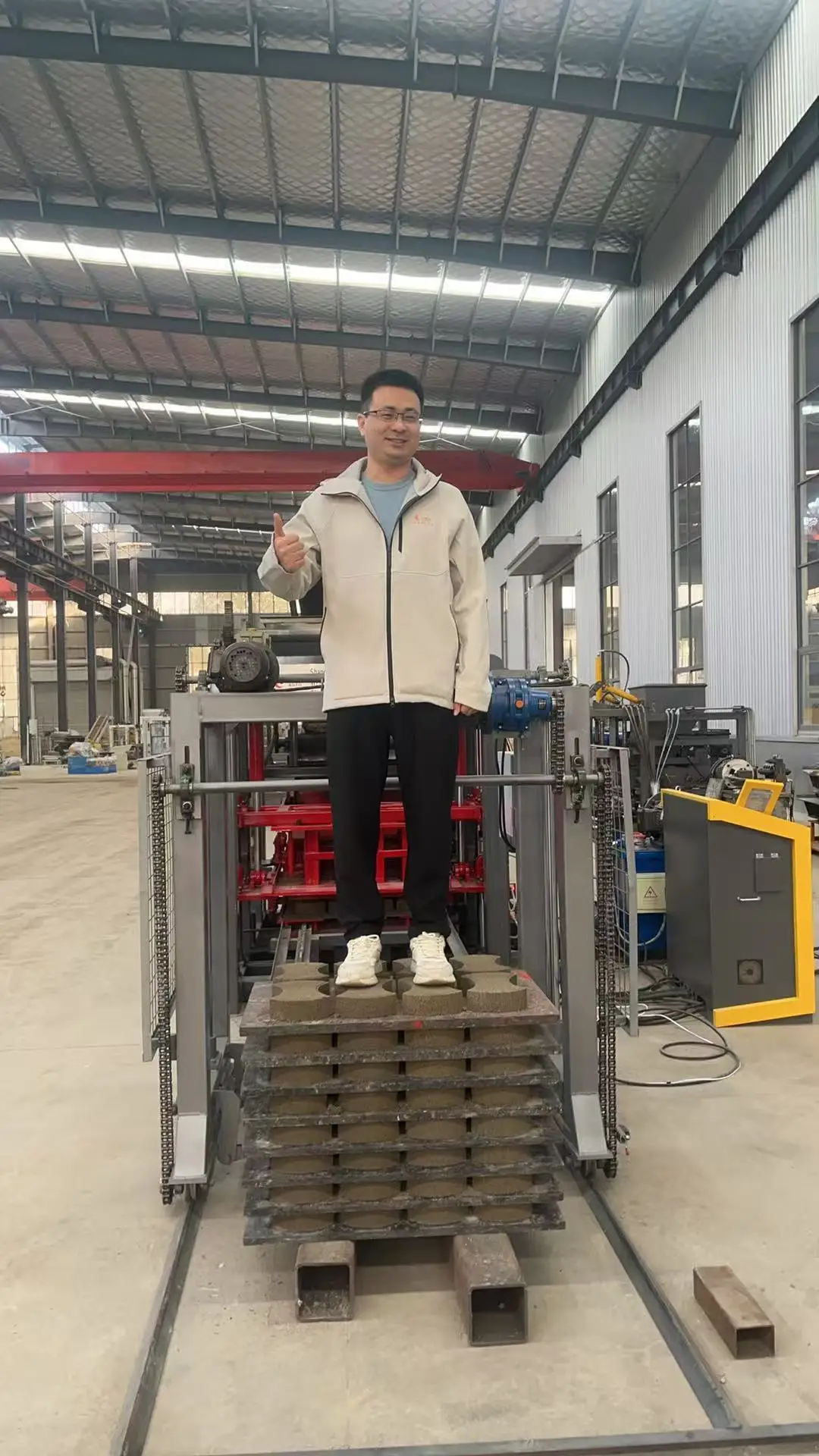

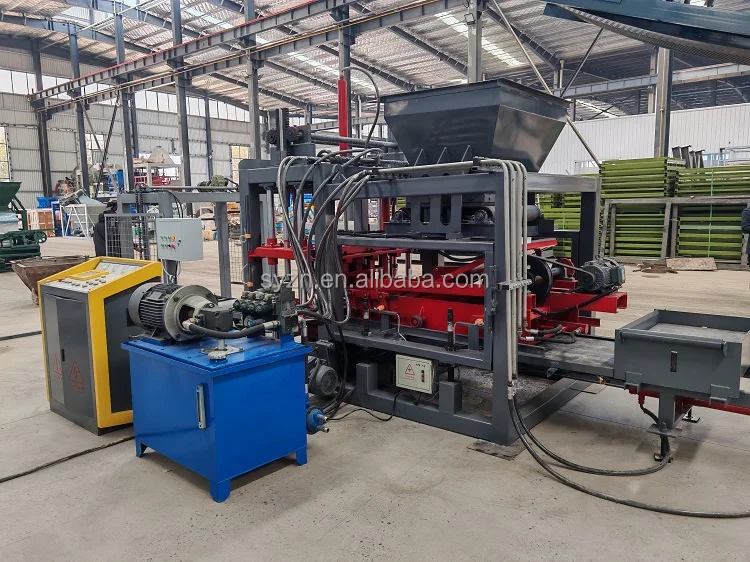
Description
Stocked for immediate dispatch — the QT4-15 block machine ships within a defined lead time and arrives with voltage, control language, and container loading confirmed before it leaves the factory floor.
Technical Specifications
| Parameter | Value |
|---|---|
| Model | QT4-15 |
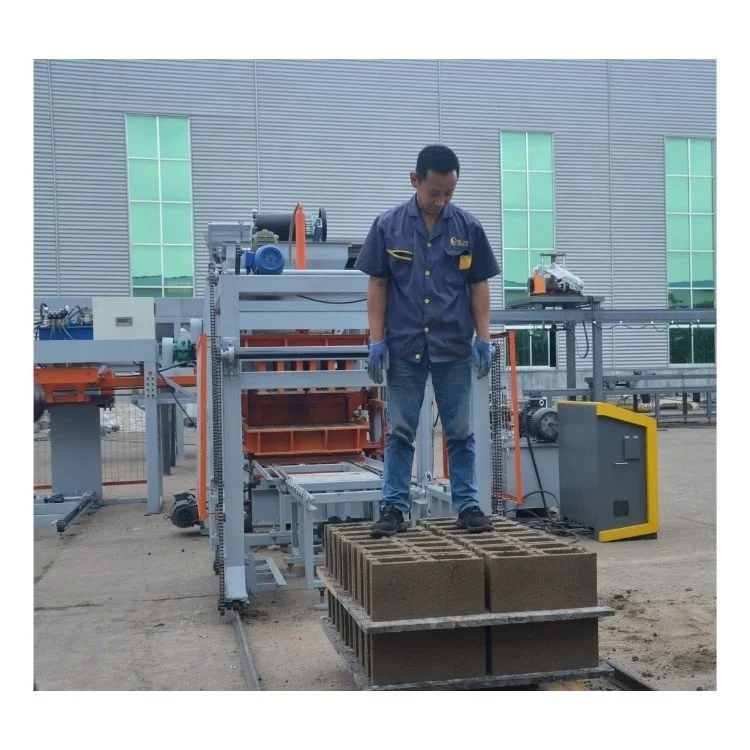
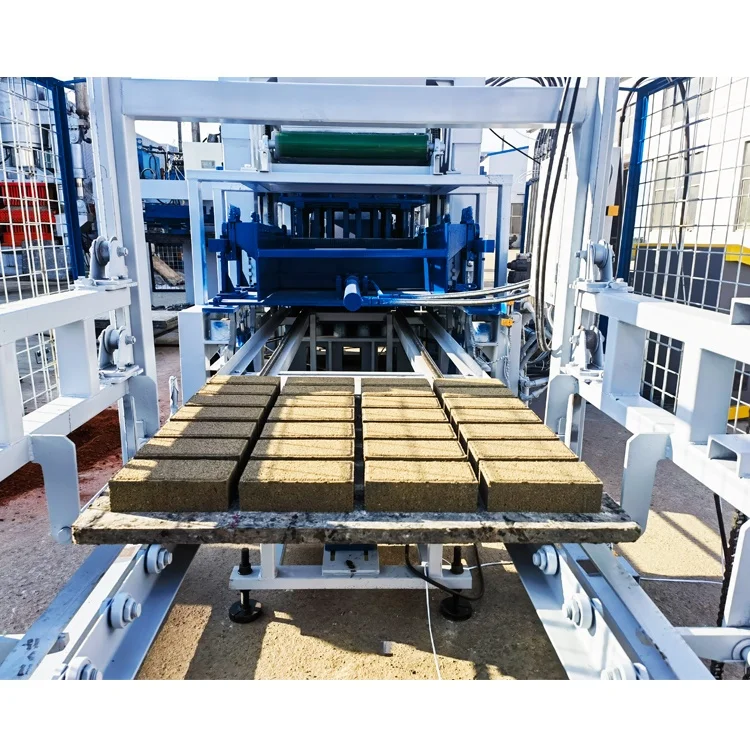
| Product Type | Fully Automatic Concrete Block Making Machine |
| Overall Dimensions (L×W×H) | 4100×1600×2600 mm |
| Rated Pressure | 16–21 MPa |
| Main Vibration Form | Platform Vibration |
| Vibration Frequency | 4200 r/min |
| Vibration Force | 55 kN |
| Pallet Size | 880×550 mm |
| Molding Cycle | 25–30 s per press (basis not stated in source — confirm block format) |
| Overall Power | 18.45 kW |
| Demolding Method | Hydraulic |
| Total Mass | 4 T |
| Required Factory Area | 300 m² |
| Automation Level | Fully Automatic |
| Loading Requirement | 1×40HQ container (basic equipment) |
| Warranty | 1 year (excluding spare parts) |
Application Suitability
| Application | Material or Output |
|---|---|
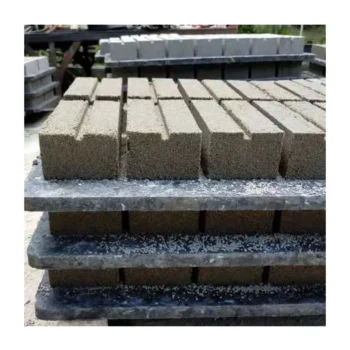
| Hollow block production for wall construction | Crushed stone, sand, cement, fly ash |
| Solid block manufacturing for load-bearing structures | Gravel, sand, cement, slag |
| Paver and interlocking brick production for landscaping | Colored aggregates, cement, dust |
| Curbstone and kerb production for road infrastructure | High-grade crushed stone, cement |
| On-site block production for housing projects | Locally sourced aggregate and cement |
Why the Voltage Question Must Precede the Shipment Date
An incorrect voltage specification can halt a project before the first block is ever pressed.
I handled a QT4-15 block machine in stock order last year destined for a West African construction site. The buyer’s local grid operated on a different standard than our default configuration, and this mismatch was caught only during the final pre-dispatch audit. The delay required a transformer solution on-site, pushing the project timeline back by weeks while the contractor’s crew waited. [NEED_CITE: voltage and frequency standards by export market]. When you are working against a project deadline, the electrical confirmation is not a paperwork detail — it is the single factor that decides whether the machine runs on day one or sits idle.
Dispatch Timing That Matches Your Project Calendar
Buyers working to a construction deadline need a supplier who quotes the QT4-15 block machine in stock with a realistic dispatch window, not an estimate that shifts after the deposit clears. Our quotation includes the lead time from order confirmation to container gate-out, along with the vessel transit estimate to your destination port. This lets you align foundation work, raw material procurement, and operator hiring to a known arrival date rather than a guess.
Container Loading and Machine Dismantling
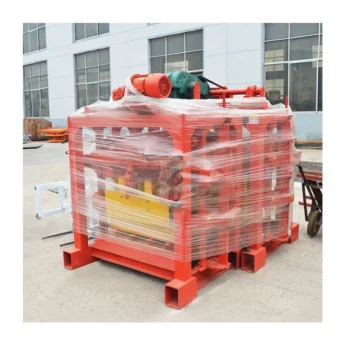
The QT4-15 ships in a single 40HQ container for the basic equipment set. The machine is partially dismantled for loading — the hydraulic station, vibration platform, and mould frame are separated and secured to prevent transit damage. We provide packing photographs showing the exact container layout before the doors are sealed, so your clearing agent and logistics team know what to expect at the port. [NEED_CITE: container loading standards for heavy industrial machinery].
Reading the Specs That Actually Matter on Site
The rated pressure of 16–21 MPa working together with the 55 kN vibration force determines how densely the concrete mix is compacted inside the mould cavity. Higher compaction produces blocks with greater compressive strength and lower water absorption, which matters when your local building code requires a minimum strength class. The platform vibration at 4200 r/min distributes this force across the entire 880×550 mm pallet area, ensuring uniform density from corner to corner. If the vibration force is too low for the mix design, blocks emerge with weak edges and inconsistent weight. The hydraulic demolding system then lifts the mould box cleanly without cracking the freshly pressed block, which is critical when producing thin-walled hollow formats. The 300 m² factory area requirement accounts for the press itself plus space for pallet circulation and initial curing racks.
The Cost of Skipping Pre-Shipment Confirmation
When a block machine arrives with the wrong PLC display language, the operator cannot read fault codes or adjust cycle parameters. This turns commissioning into a slow exercise in guesswork while the project clock keeps running. Equally, if the machine is configured for a raw material blend the buyer cannot source locally, the entire production recipe must be reworked after arrival — costing time, material waste, and lost production days. [NEED_CITE: common causes of commissioning delays in exported block machinery].
Why Buyers Source This Model Through Our Desk
Block machinery is our sole focus, which means the QT4-15 is specified as a matched system of press, mould, pallet, and handling rather than a standalone unit. We confirm the buyer’s local aggregate type and target block format before the machine enters production, so the mould and vibration settings align with actual site conditions. Mould design covers the formats the buyer’s market demands, including custom drawings when standard options do not fit. Automation level is selectable, allowing a buyer to start with the current configuration and plan future upgrades. Installation and commissioning support includes operator training so the crew is producing saleable blocks within the first shift.
Documentation & Verification
- Factory test record showing cycle performance on your specified block format before dispatch
- Machine specification sheet with confirmed voltage, frequency, and PLC language
- Mould drawing and format list matching your market requirements
- Hydraulic and electrical schematic for on-site maintenance reference
- Packing photographs documenting container loading condition before seal
- Customs documentation support for smooth port clearance at destination
Installation, Commissioning & Support
- Foundation pad must accommodate 4100×1600 mm footprint with level tolerance for vibration platform stability
- Dedicated power circuit required matching confirmed voltage and frequency for the 18.45 kW total load
- Machine arrives partially dismantled with hydraulic station and mould frame separated for container transit
- Commissioning includes mould alignment, pressure calibration, and cycle parameter tuning on your raw material
- Operator training covers mould change procedure, fault code reading, and daily lubrication schedule
- Wear parts list and recommended spares provided so first replacement does not halt production
What We Need to Quote Your Shipment Accurately
Provide the block formats you intend to produce along with your target daily output, and we will match the mould configuration and confirm realistic cycle times. Share your local voltage and frequency standard plus the preferred PLC display language so these are locked in before production. If you have existing pallet inventory or curing rack dimensions, let us know so the machine settings align with your current handling equipment.
Frequently Asked Questions
Q: What is the dispatch lead time for the QT4-15 and is it currently in stock?
A: Stock availability for the QT4-15 block machine in stock is confirmed at the time of inquiry, and dispatch lead time is quoted in the proposal alongside the vessel transit estimate to your destination port. This gives project-deadline buyers a reliable timeline from order to arrival without needing to chase updates after the deposit is placed.
Q: How is the machine dismantled and loaded into a 40HQ container?
A: The QT4-15 is partially dismantled for shipment, with the hydraulic station, vibration platform, and mould frame separated and secured inside a single 40HQ container. Packing photographs are taken before the container doors close, giving your logistics team a clear record of loading condition for insurance and customs purposes.
Q: What arrival estimate can I expect from order confirmation to port delivery?
A: The quotation includes both the factory lead time and the estimated sea freight transit to your named port, so you can plan site preparation, raw material ordering, and crew scheduling around a known arrival window rather than an open-ended guess.
Q: Are voltage and control language confirmed before shipment to avoid commissioning delays?
A: Yes. Voltage, frequency, and PLC display language are confirmed and documented before the machine enters production. This prevents the situation where a machine arrives unable to connect to the local grid or with unreadable fault codes on the control screen.
Q: What wear parts and moulds ship with the machine so production can start immediately?
A: The shipment includes the mould set specified for your target block format, along with an initial wear parts package listed in the documentation. This ensures the machine can begin producing saleable blocks from the first shift without waiting for a separate spare parts order.