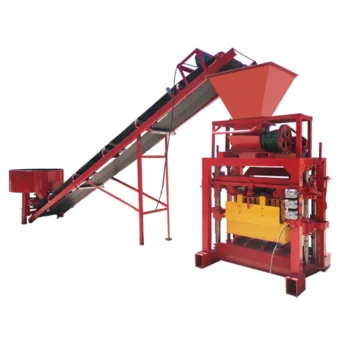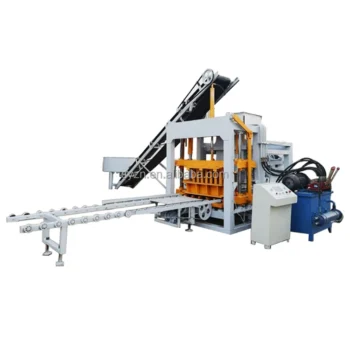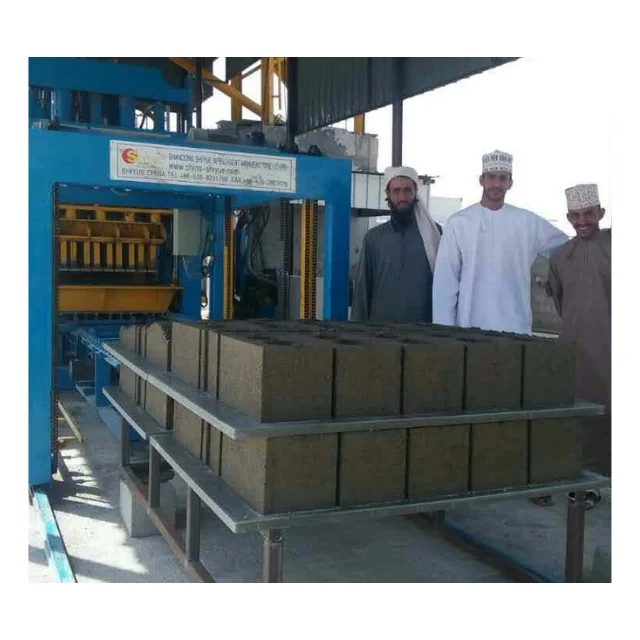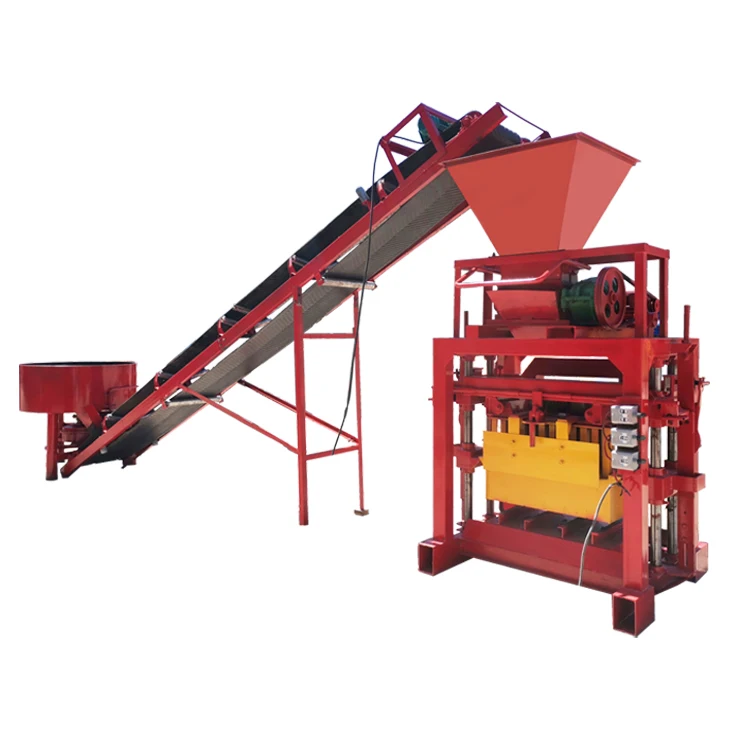
Description
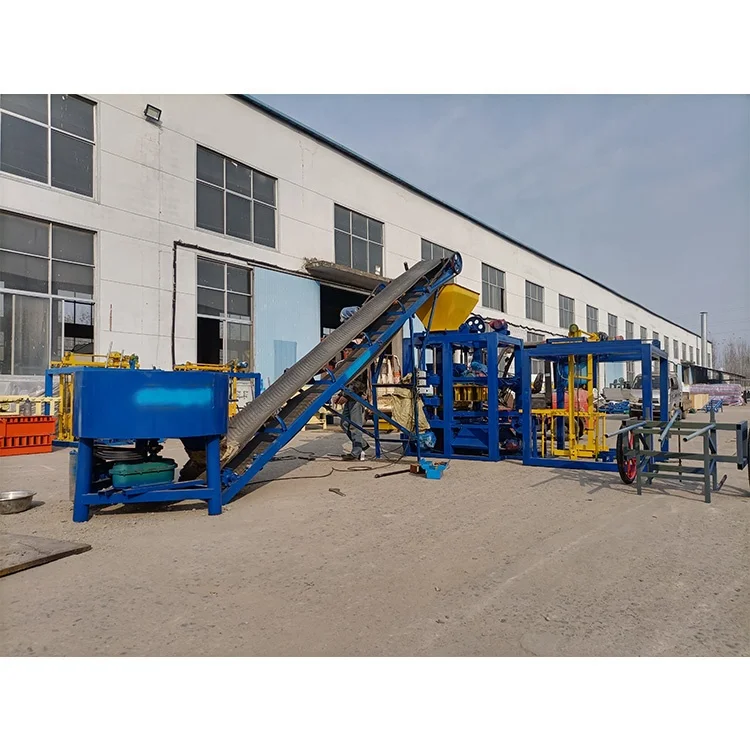
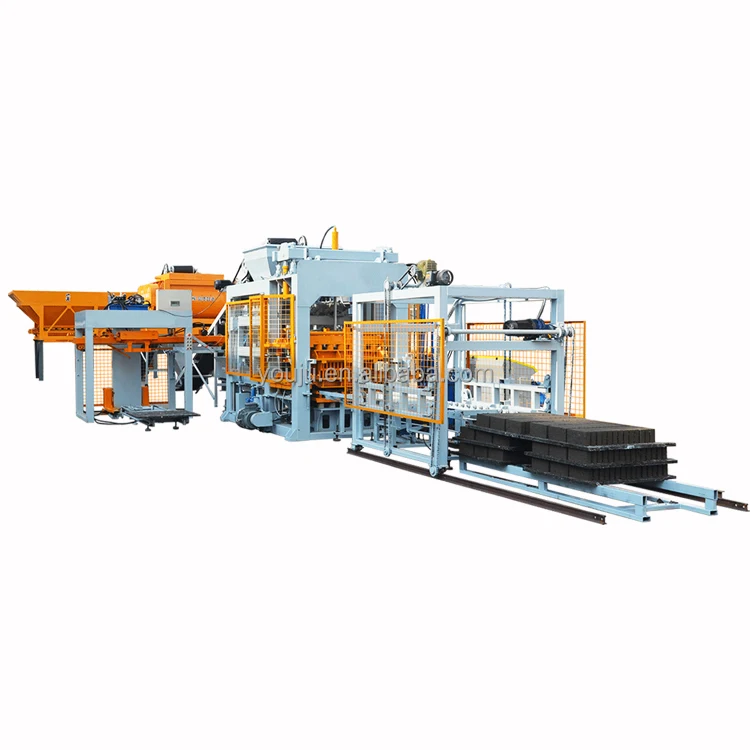
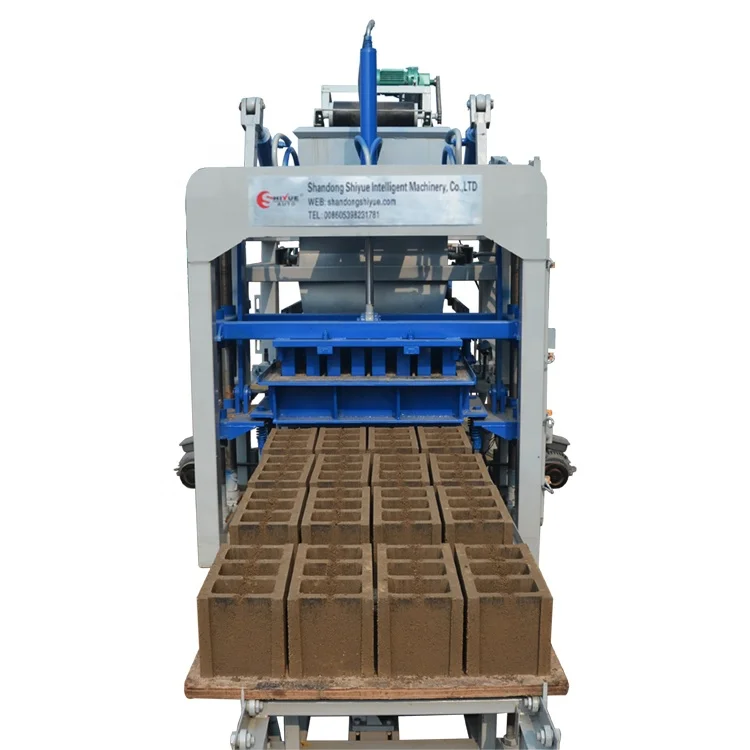
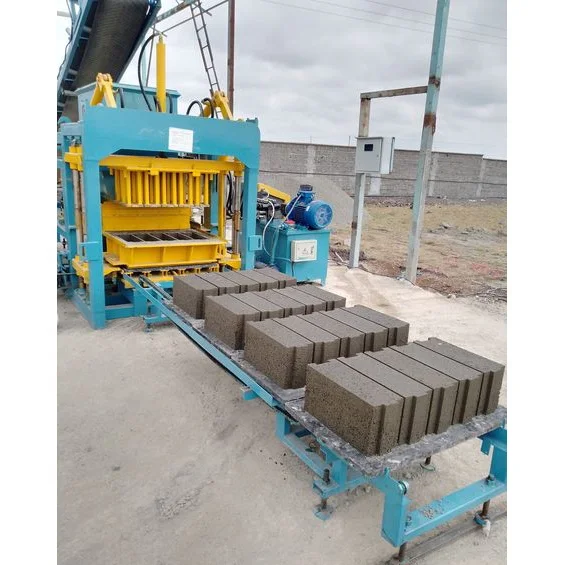
Stocked QT4-15 Dispatch — current availability status confirmed before you commit, with pallet size 1020×850 mm verified against your curing racks and forklift.
Technical Specifications
| Parameter | Value |
|---|---|
| Model | QT4-15 |
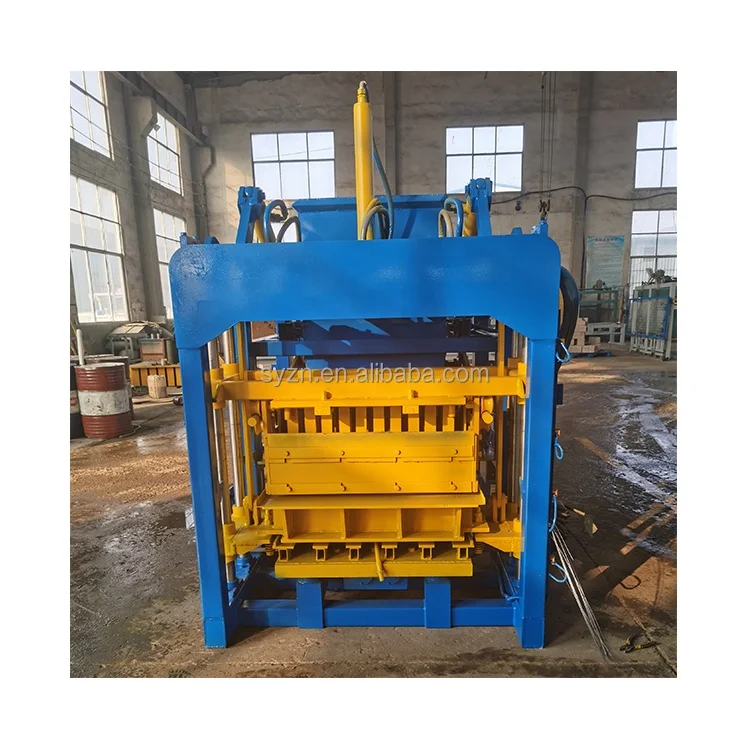
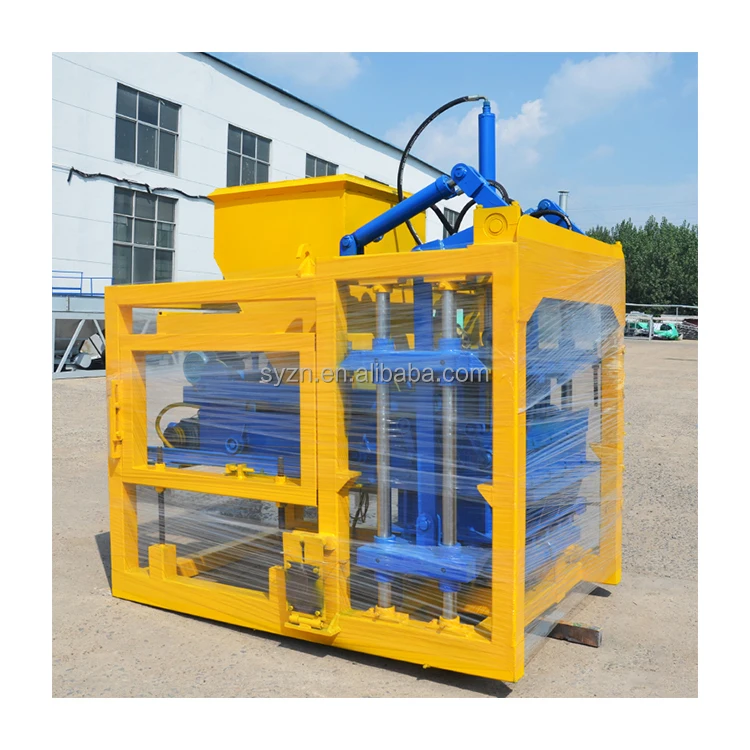
| Product Type | Fully Automatic Concrete Block Making Machine |
| Overall Dimensions (L×W×H) | 7100 × 1600 × 2610 mm |
| Net Weight | 5800 kg |
| Rated Power | 27.5 kW |
| Voltage & Frequency | 380V or customized to buyer requirement |
| Vibration Force | 60 kN |
| Pallet Size | 1020 × 850 × 40 mm |
| Output: Hollow Block 400×200×200 mm | 4 pcs/mould, 960 pcs/hour, 7680 pcs/8h shift |
| Output: Hollow Block 400×150×200 mm | 6 pcs/mould, 1440 pcs/hour, 11520 pcs/8h shift |
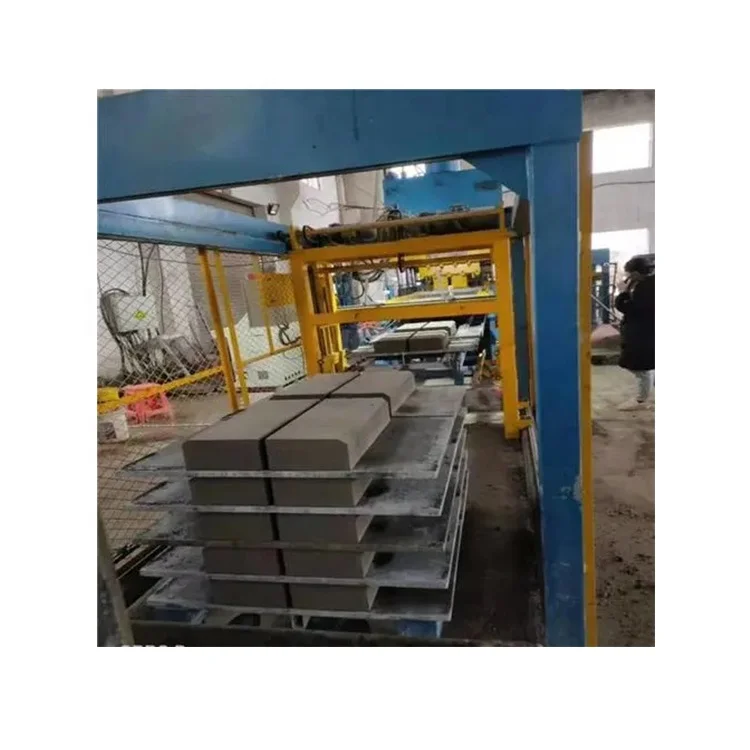
| Output: Solid Brick 225×112.5×53 mm | 16 pcs/mould, 3840 pcs/hour, 30720 pcs/8h shift |
| Mould Compatibility | Hollow, solid, interlocking, paving blocks |
| Automation Level | Fully automatic |
| Warranty | 1 year |
| Certification | ISO 9001:2008, CE |
Application Suitability
| Application | Material or Output |
|---|---|
| Hollow block production | Crushed stone, cement, sand aggregate mix |
| Solid brick production | Cement with fly ash or stone dust filler |
| Interlocking paver production | Pigmented face mix over standard base concrete |
| On-site contractor block making | Local aggregate blended to project specification |
What "960 Pieces per Hour" Actually Means for Your Plant
Capacity only matters when the block format is named alongside the number.
Sellers quote cycle speed without telling you which block size that speed was measured on. A buyer expecting 3,000 hollow blocks daily based on a brochure headline receives far less when the machine is set to a larger format. With the QT4-15 block making machine in stock, we state the hourly and daily figures against each specific mould — 960 hollow blocks (400×200×200 mm) per hour, or 3,840 solid bricks (225×112.5×53 mm) per hour — both calculated on an 8-hour shift [NEED_CITE: block format assumptions in machinery capacity quoting].
I once watched a project stall because a supplier quoted a single capacity number. The buyer’s market demanded 400×150×200 mm hollow blocks, but the brochure figure assumed a smaller brick. Daily revenue fell short from week one.
Dispatch Timing You Can Plan Around
A fast delivery block machine is only valuable if the lead time is stated in the quotation, not estimated over the phone. We list current availability of the QT4-15 block making machine in stock and provide the dispatch window at the point of order. Container loading method, machine dismantling for shipment, and an arrival estimate are confirmed before you sign, so your foundation work and crew hiring align with the actual delivery date.
Voltage and Control Language — Cleared Before Dispatch
Local supply standards vary widely across export markets [NEED_CITE: voltage and frequency standards by export market]. The QT4-15 ships with 380V as default, but we reconfigure the motor winding, control transformer, and PLC display language to match your site before the machine leaves our floor. Skipping this step has cost buyers weeks of idle time while waiting for an external transformer to arrive locally.
How Pressure and Vibration Shape Block Density
The 60 kN vibration force works in tandem with hydraulic pressure to compact the concrete mix inside the mould cavity. Higher vibration frequency settles fine aggregate into voids while hydraulic pressure holds the head plate down to prevent overfill. If the pressure is too low relative to vibration, blocks emerge with uneven tops. If vibration is weak relative to pressure, the mix does not flow into mould corners. Both values must match your specific aggregate gradation and cement ratio. The 1020×850×40 mm pallet size determines the total mould area covered per cycle, which directly governs how many blocks of any given format the press can form at once.
The Cost of Skipping Pre-Shipment Confirmation
When pallet dimensions are chosen without checking the buyer’s existing curing racks, the buyer either builds new racks or wastes floor space. When control panel language is not confirmed, operators cannot navigate the PLC menus during commissioning. I have seen a three-week project delay caused entirely by a control cabinet displaying in a language the site electrician could not read [NEED_CITE: commissioning delays caused by control language mismatch]. These are not machine defects — they are specification gaps that fast delivery alone cannot fix.
Why Source This Machine Here
We treat the QT4-15 as one matched system: press, mould, pallet, and handling specified together so cycle times align across every station. Dispatch lead time is confirmed at quotation stage, not guessed after payment. Pallet size 1020×850 mm is verified against the curing area and forklift you already operate. Voltage, frequency, and PLC language are recorded on the order sheet and checked again during factory test. Every stocked unit ships with packing photographs so you see container loading before the doors close.
Documentation & Verification
- Factory test record showing cycle times on your specified block format before dispatch
- Pallet dimension drawing matched to your curing rack spacing and forklift fork width
- Voltage, frequency, and PLC language confirmation sheet signed before production
- CE declaration and ISO 9001:2008 certificate copy for customs clearance at destination port
- Packing photographs documenting machine dismantling and container loading sequence
Installation, Commissioning & Support
- Foundation plan sized to the 7100×1600 mm footprint with vibration isolation notes
- Power circuit spec for the 27.5 kW rated load with dedicated breaker sizing guidance
- Assembly sequence from SKD shipment state to first production run
- PLC parameter setup for your chosen block format and cycle time during commissioning
- Operator training covering mould change procedure and daily maintenance checkpoints
- Wear parts list with hydraulic seals and mould liner replacement intervals
What We Need From You to Finalize the Order
Share the exact block formats your market demands, your local voltage and frequency, and the dimensions of your existing curing area and forklift. Tell us your project start date so we can confirm whether the QT4-15 block making machine in stock matches your timeline or if a scheduled build suits you better.
Frequently Asked Questions
Q: Which QT4-15 models and moulds are currently in stock and ready for immediate dispatch?
A: Availability changes as orders are placed. At the inquiry stage we list the exact QT4-15 units and standard mould formats currently on the floor, along with a confirmed dispatch date. This lets you plan container booking and site preparation against a real timeline rather than an estimate.
Q: What is the quoted lead time from order to container loading?
A: Lead time depends on stock status and any voltage or language customization required. We state the number of working days from order confirmation to container loading in the quotation. For fully stocked units with no electrical reconfiguration, dispatch can follow quickly after payment clearance and documentation completion.
Q: How is the machine dismantled and packed for container shipment?
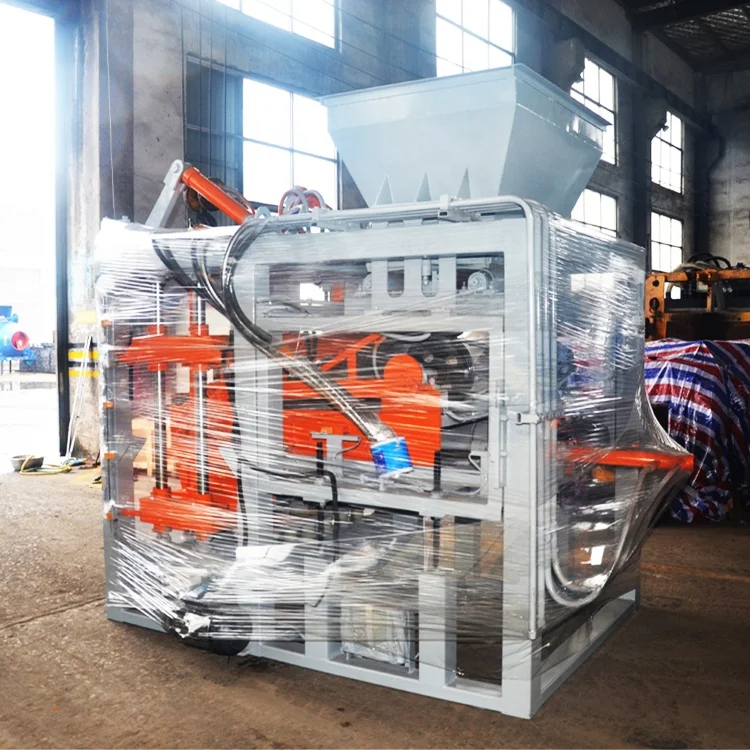
A: The QT4-15 is partially dismantled to fit standard container dimensions. The hydraulic station, control cabinet, and mould are separated from the main frame. Packing photographs are taken during loading so you can verify securing methods and reassembly reference points before the container leaves the port.
Q: Is voltage, frequency, and control language confirmed before the machine ships?
A: Yes. We record your site voltage, frequency, and preferred PLC display language on the order confirmation. The motor, control transformer, and HMI are configured accordingly during assembly and verified during the factory test. This prevents the multi-week delays that occur when a machine arrives with incompatible electrical specifications.