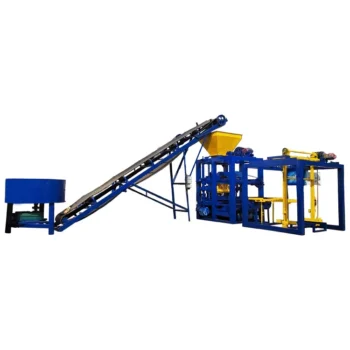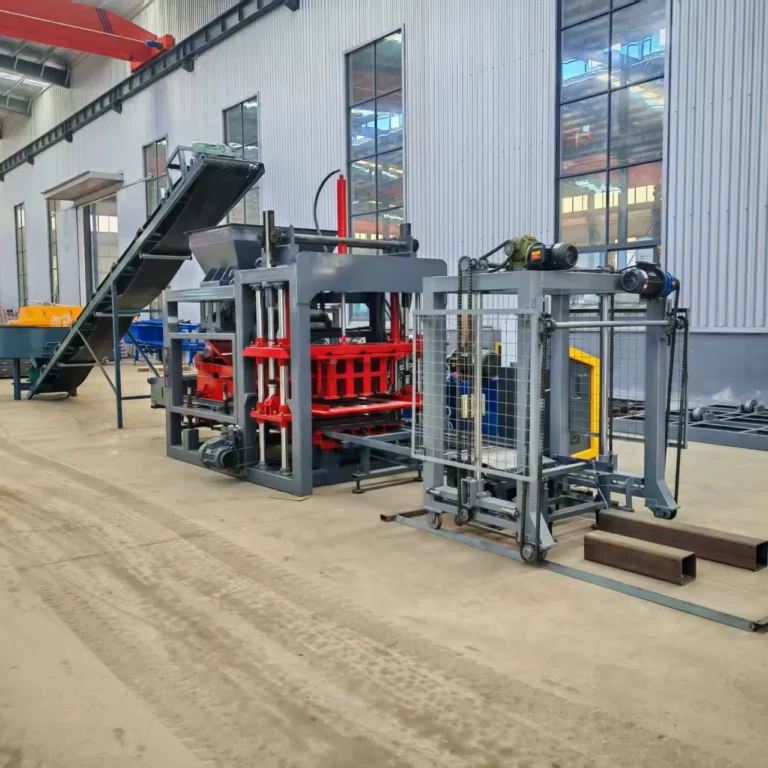

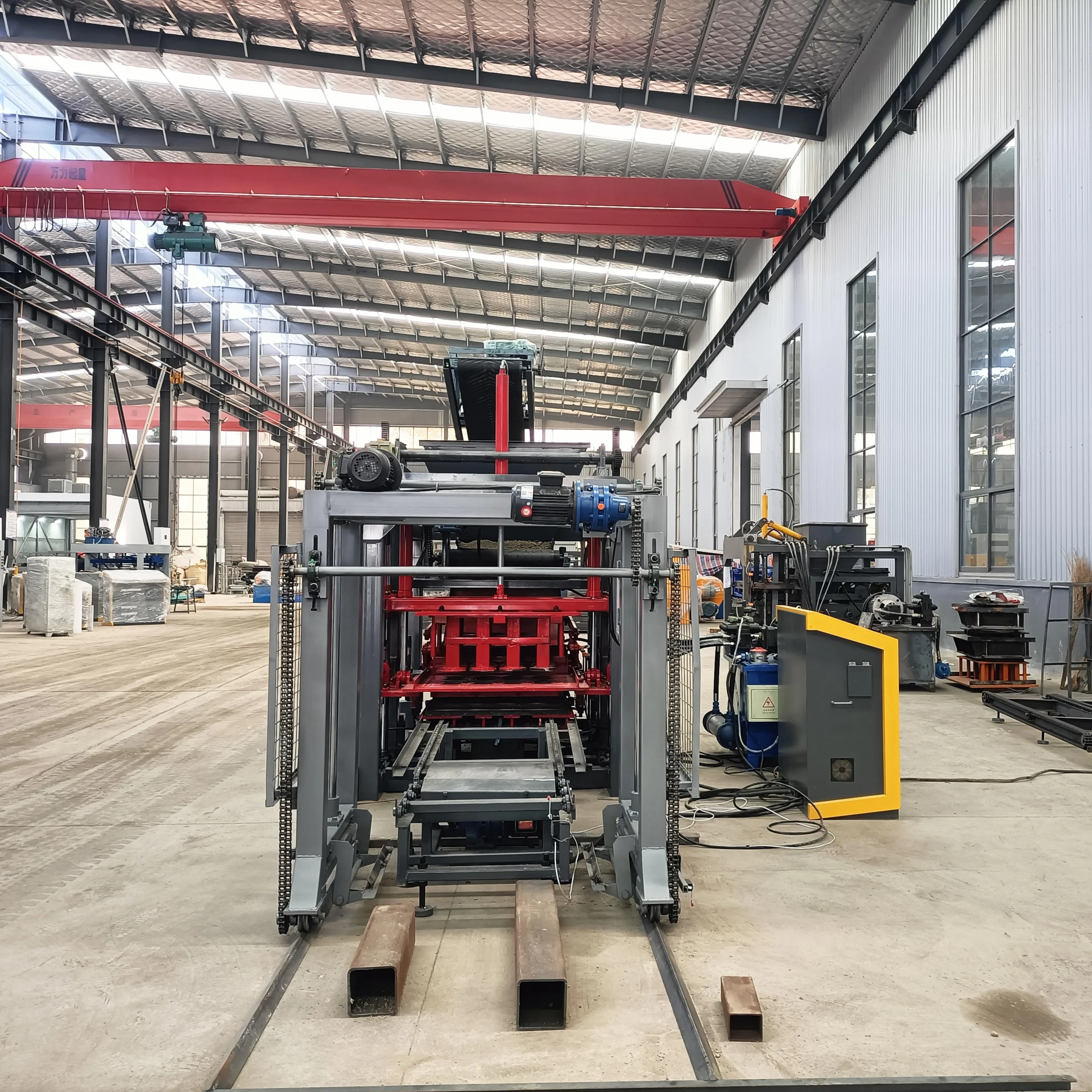
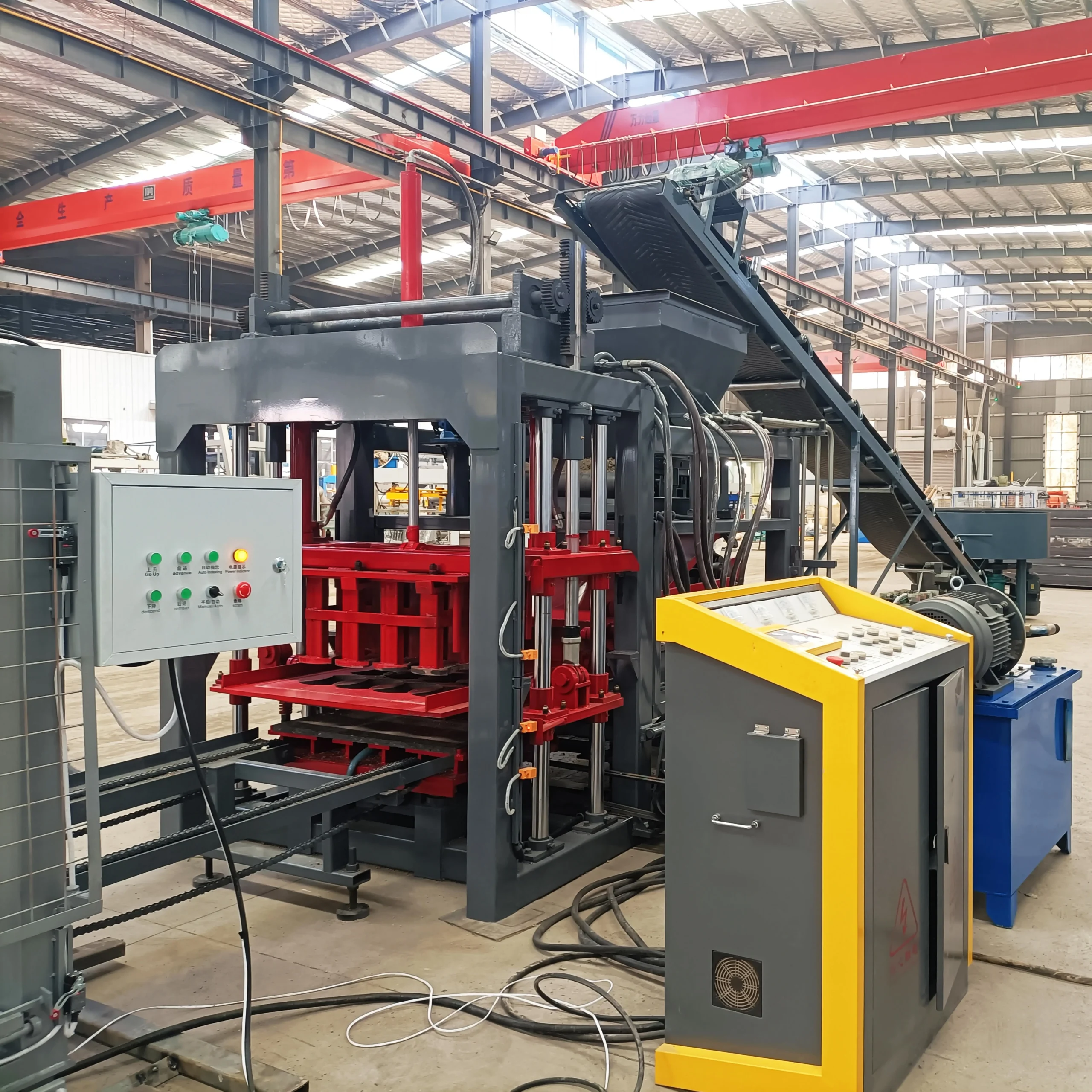
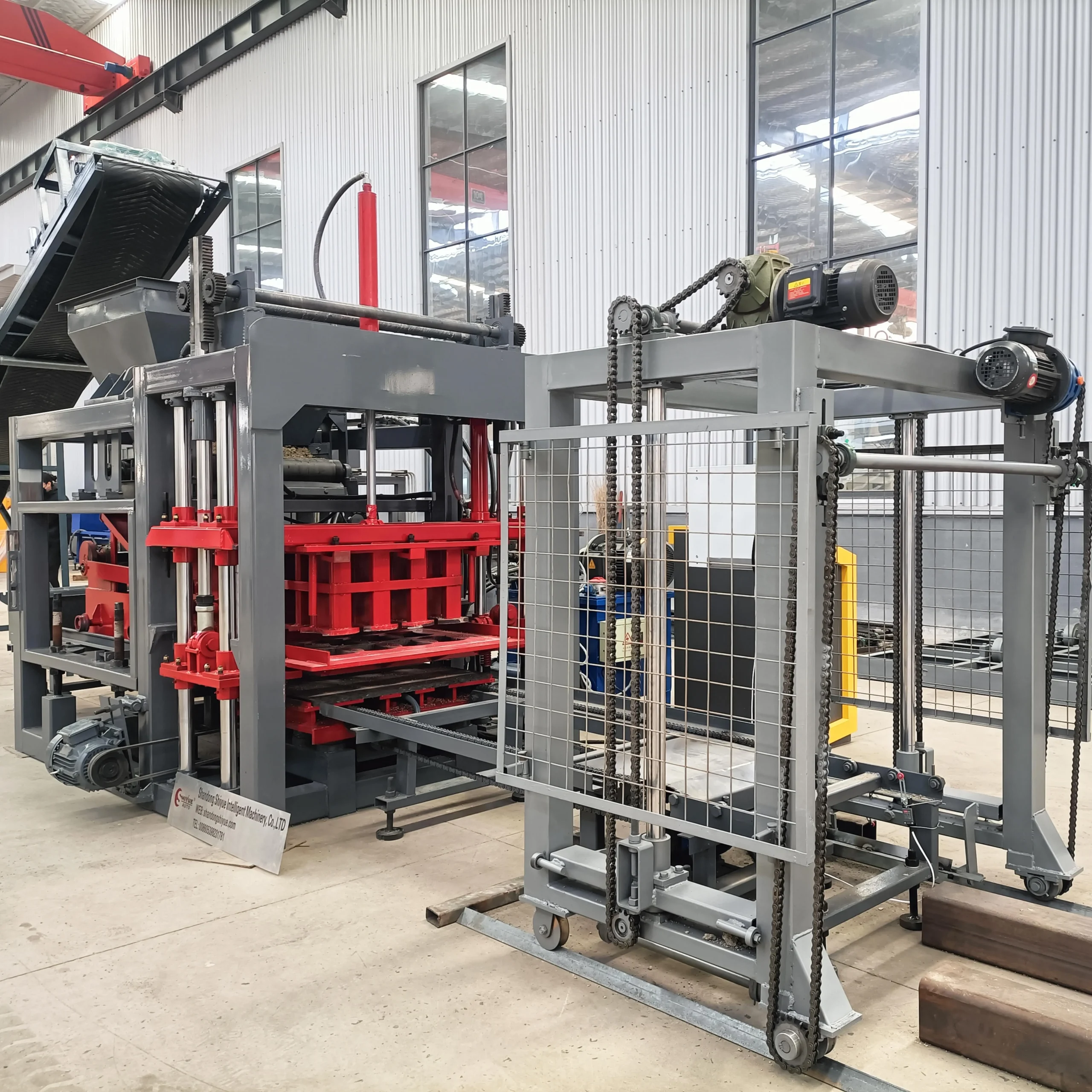
Description
Stocked for Dispatch — the QT4-15A is held in inventory so you can lock in a container slot and receive an arrival estimate before committing to the order.
Technical Specifications
| Parameter | Value |
|---|---|
| Model | QT4-15A |
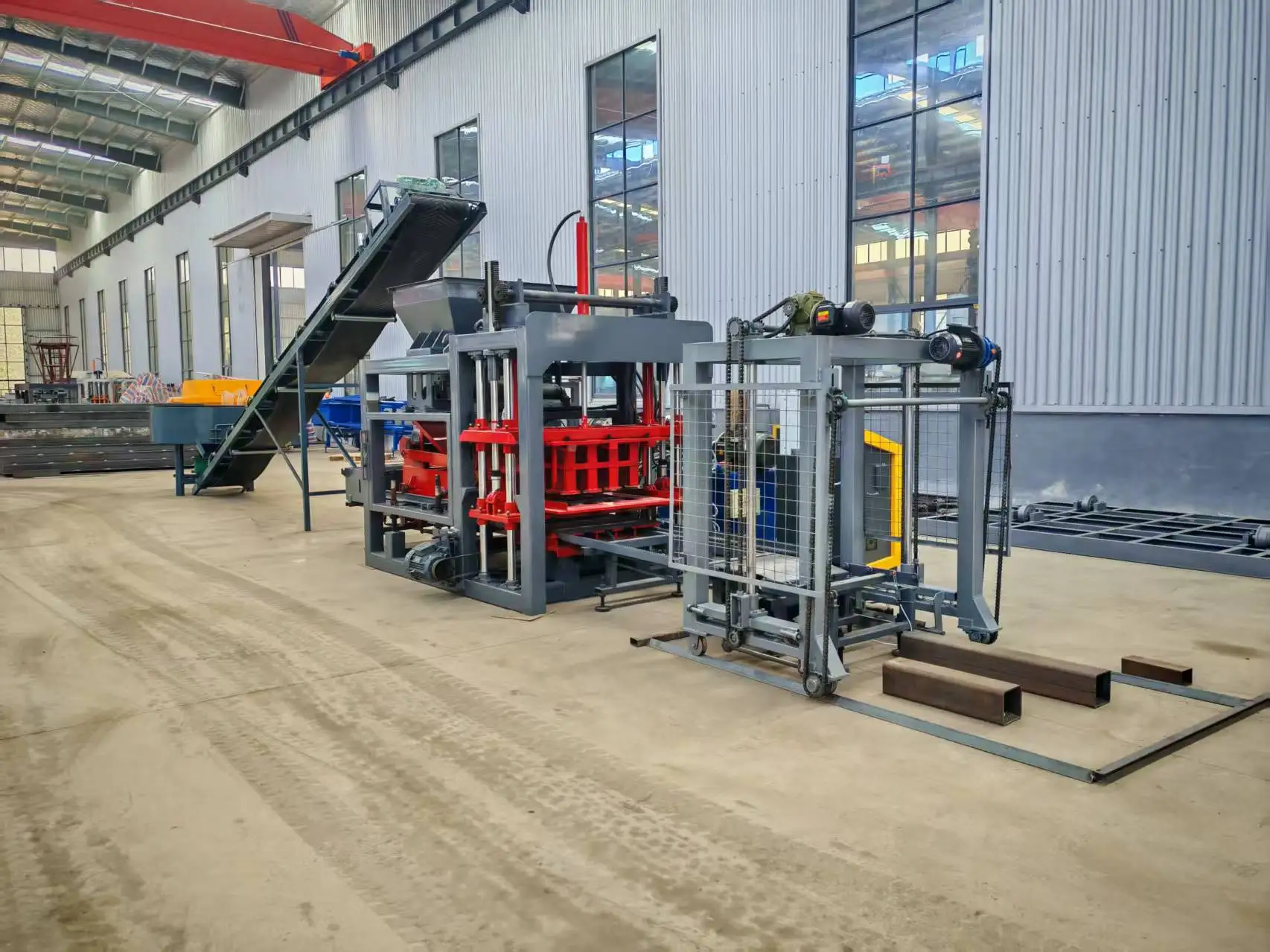
| Product Type | Fully Automatic Concrete Block Making Machine |
| Overall Dimensions (L×W×H) | 4100×1600×2600 mm |
| Rated Pressure | 16–21 MPa |
| Main Vibration Form | Platform Vibration |
| Vibration Frequency | 4200 r/min |
| Vibration Force | 55 kN |
| Pallet Size | 880×550 mm |
| Molding Cycle | 25–30 s per pallet (basis to be confirmed at inquiry) |
| Overall Power | 18.45 kW |
| Total Mass | 4 T |
| Demolding Method | Hydraulic |
| Factory Area Required | 300 m² |
| Automation Level | Fully automatic |
Application Suitability
| Application | Material or Output |
|---|---|
| Hollow block production | Crushed stone, sand, cement, fly ash |
| Solid block manufacturing | Gravel, slag, cement blends |
| Paving block and colored paver runs | Fine aggregates with pigment additives |
| Interlocking brick and curbstone forming | Coarse aggregate mixes with cement binder |
Why Arrival Timing Matters More Than Machine Price
A block machine that sits in customs or arrives late costs more per day in idle labor than any discount on the purchase.
Project contractors and plant owners alike have learned the hard way that a quoted price means little when the QT4-15A block machine in stock arrives three weeks after the masonry crew was scheduled to start. Missed deadlines cascade: scaffolding rentals extend, labor sits idle, and penalty clauses trigger. I have watched entire housing phases slip because a single container was held at the port of origin waiting for a missing certificate [NEED_CITE: customs documentation requirements for industrial machinery exports]. When you are working against a construction calendar, knowing the exact dispatch date and container loading plan before you sign is not a luxury — it is the baseline for planning.
How Stock Availability Shortens Your Project Timeline
When a buyer commits to a QT4-15A block machine in stock, the conversation shifts from production lead time to logistics lead time. That distinction matters. A machine built to order typically requires a multi-week manufacturing window before it even reaches the packing bay. A stocked unit, by contrast, moves directly to container loading once voltage, frequency, and PLC language are confirmed. For contractors racing to break ground on a housing development or plant owners replacing a press that failed mid-season, those saved weeks translate directly into blocks on pallets and walls going up.
Container Loading and Machine Dismantling for Shipment
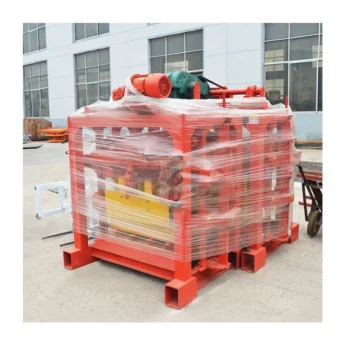
Shipping a four-tonne press inside a 40HQ container demands a dismantling plan that the factory executes before loading. The QT4-15A fast delivery timeline includes pre-shipment steps like removing the hydraulic station and upper vibration assembly so the main frame fits through the container doors. Without this step, the machine either rides on a flat rack at a significantly higher freight cost or sits on the quay waiting for space on the next vessel. We photograph every stage of packing so the buyer can verify condition before the container is sealed [NEED_CITE: standard container loading practices for heavy industrial equipment].
Reading the Specs That Affect Your Daily Output
Hydraulic demolding at 16–21 MPa paired with platform vibration at 55 kN and 4200 r/min is the combination that determines block density and surface finish. Higher pressure alone can produce a dense block, but without sufficient vibration the aggregate does not settle uniformly, leaving weak zones that fail under load. The 880×550 mm pallet size defines the maximum molding area per cycle; if your curing racks and forklift are sized for a different pallet dimension, you will face a mismatch that slows the entire line. The 25–30 s molding cycle per pallet gives a theoretical rhythm, but actual daily output depends on the block format, mix moisture, and operator pacing — all of which must be confirmed before quoting capacity [NEED_CITE: relationship between vibration force and concrete block compressive strength].
The Hidden Cost of Skipping Pre-Shipment Checks
Buyers who skip voltage and PLC language confirmation before dispatch often discover on arrival that the control panel displays text in a language the operators cannot read, or that the motor winding does not match the local three-phase supply. Rewinding a motor on-site or reprogramming a PLC after installation adds days of downtime and specialist travel costs. A pallet size chosen without measuring the curing area means blocks are double-handled — once off the machine and again onto racks that do not match. These are not theoretical problems; they show up repeatedly when the pre-order checklist is rushed [NEED_CITE: common commissioning delays caused by voltage mismatch].
What Sets This Supply Channel Apart
Block machinery is the single focus here, which means the QT4-15A ships as a matched system — press, moulds, pallets, and handling equipment specified together rather than sourced separately. Configuration is set against the buyer’s actual mix design and local aggregate, not pulled from a generic catalog. Moulds are designed for the formats the buyer’s market actually sells, with custom drawings available when standard formats do not cover local demand. Stocked models and standard moulds are held so dispatch can happen within days rather than months. Arrival estimates are quoted before the order is placed, giving buyers a reliable date to plan crews and materials around.
Documentation & Verification
- Factory test record on your target block format before dispatch
- Voltage and control language confirmation sheet signed before packing
- Packing photographs showing dismantling and container loading stages
- Customs documentation package for smooth port clearance at destination
- Operation and maintenance manual with wear parts and mould list included
Installation, Commissioning & Support
- Foundation pad sized to the 4100×1600 mm footprint with anchor bolt template provided
- Three-phase power supply matching confirmed voltage and frequency with dedicated circuit breaker
- Machine arrives partially dismantled; reassembly of hydraulic station and vibration platform on-site
- First-run commissioning covers molding cycle tuning and pressure calibration for your mix
- Operator training covers mould change procedure and daily maintenance checkpoints
- Wear parts list and mould drawings supplied for local reorder planning
What to Include in Your Inquiry
Share the block format you intend to produce, your target daily output, and the raw materials available locally so the machine can be matched to your mix. Provide your workshop door height and internal clearance so the dismantling plan ensures the press fits through on arrival. Confirm your site voltage, frequency, and preferred PLC display language to avoid commissioning delays.
Frequently Asked Questions
Q: Is the QT4-15A currently in stock and what is the dispatch lead time?
A: The QT4-15A is held as a stocked model. Once voltage, frequency, and PLC language are confirmed, the unit moves to packing and container loading. Dispatch lead time is quoted at the time of inquiry based on current inventory and your destination port schedule.
Q: How is the machine packed and loaded into a 40HQ container?
A: The main frame, hydraulic station, and vibration assembly are partially dismantled to fit through container doors. Every packing stage is photographed. The loading plan accounts for weight distribution and securing points so the press arrives without transit damage.
Q: What arrival estimate can I expect once the machine ships?
A: Arrival depends on the destination port and shipping line schedule. An estimated arrival date is provided before you commit, based on the carrier’s published transit time from the port of loading to your discharge port.
Q: Can I add standard moulds and pallets to the same shipment?
A: Yes. Standard moulds and pallets for common block formats can be loaded into the same 40HQ container. This keeps all production-ready components in one shipment and avoids separate freight charges for follow-on orders.
Q: What voltage and control language will be configured before dispatch?
A: Voltage, frequency, and PLC display language are confirmed with the buyer before the machine leaves the factory. The control panel is configured to match the destination site’s electrical supply and the operator’s preferred language.