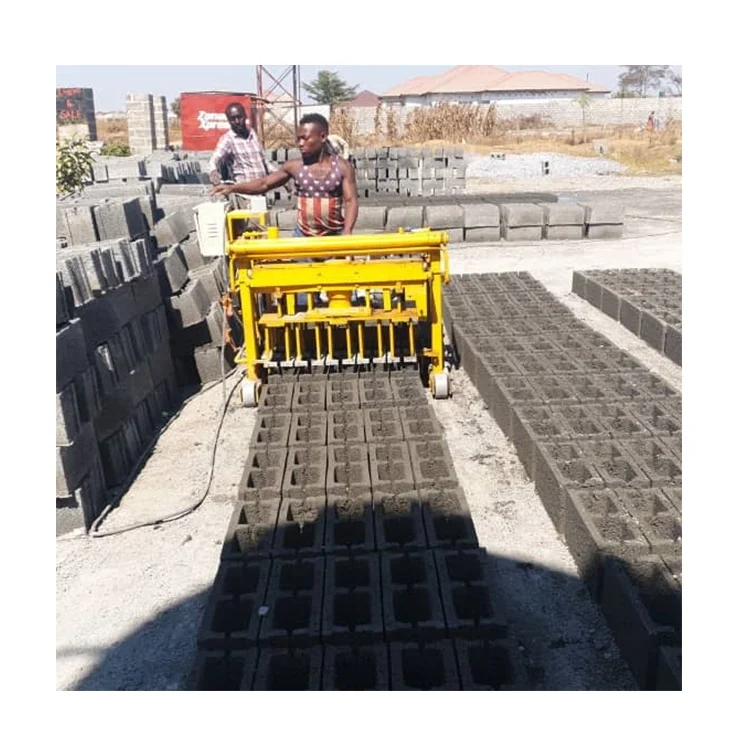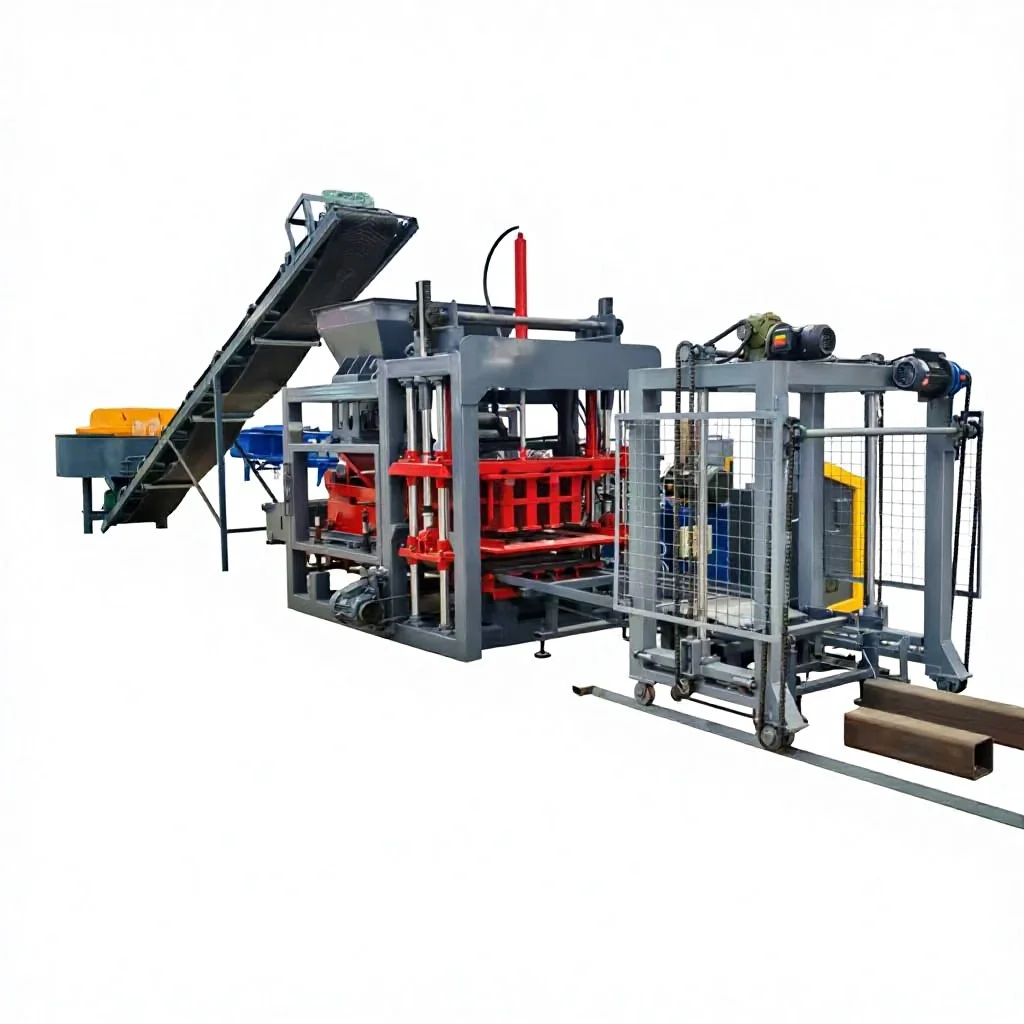
Description
Dispatch-ready configuration — the QT4-15A ships from our Linyi warehouse with container loading plans and arrival estimates confirmed before your deposit clears.
Technical Specifications
| Parameter | Value |
|---|---|
| Model | QT4-15A |
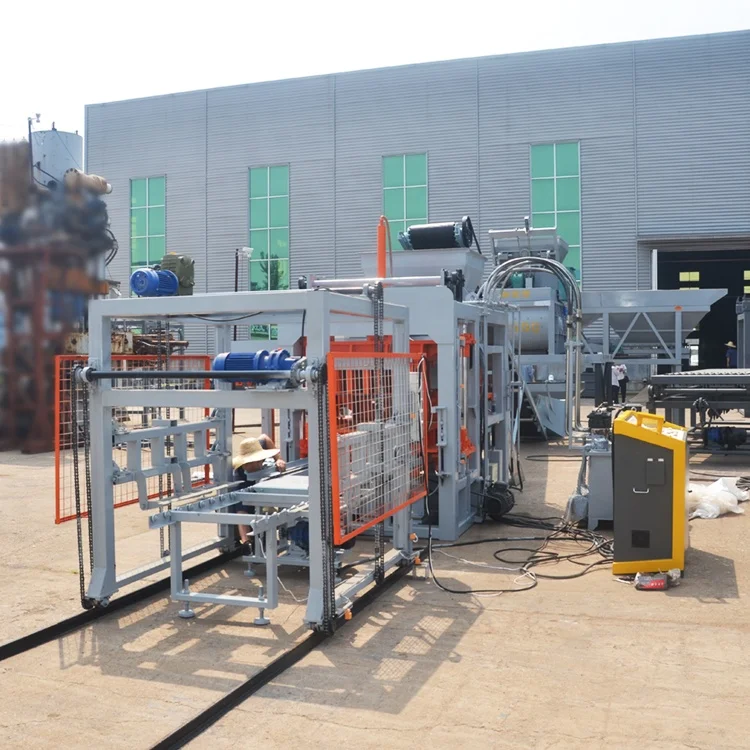
| Product Type | Fully Automatic Hydraulic Concrete Block Making Machine |
| Overall Dimensions (L×W×H) | 4100×1600×2600 mm |
| Rated Pressure | 16–21 MPa |
| Main Vibration Form | Platform Vibration |
| Vibration Frequency | 4200 r/min |
| Vibration Force | 55 kN |
| Pallet Size | 880×550 mm |
| Molding Cycle | 25–30 s (basis not stated in source — confirm block format / material / thickness) |
| Overall Power | 18.45 kW |
| Total Mass | 4 T |
| Demolding Method | Hydraulic |
| Factory Area Required | 300 m² |
| Automation Level | Fully automatic |
Application Suitability
| Application | Material or Output |
|---|---|
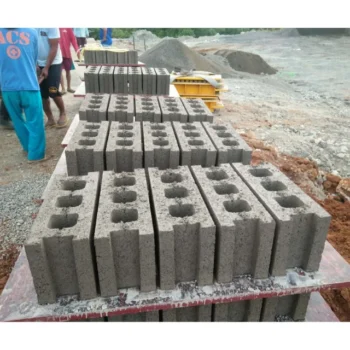
| Hollow block production for wall construction | Crushed stone, sand, cement, fly ash |
| Solid block manufacturing for load-bearing structures | Gravel, slag, cement blends |
| Interlocking paver and colored paver runs | Fine aggregate with pigment additives |
| Kerbstone and curbstones for roadworks | Coarse aggregate with high cement content |
What "Ready to Ship" Actually Means for the QT4-15A Block Machine in Stock
Stock status and dispatch lead time are confirmed in writing before any deposit changes hands.
I have watched project timelines collapse because a machine quoted as "in stock" turned out to need a four-week build cycle once the PLC language and voltage were clarified. When buyers search for a QT4-15A block machine in stock / fast delivery, they usually have a construction deadline breathing down their neck. [NEED_CITE: typical project delay costs for construction equipment arriving off-schedule] The gap between a verbal promise and a written dispatch date is where most of those delays hide.
Dispatch Timing You Can Build a Schedule Around
The QT4-15A block machine in stock is staged for container loading once the buyer’s voltage, frequency, and control language are locked in. We dismantle specific assemblies to fit the main frame and pallet system into a single 40HQ, and every dismantling step is photographed before the crate seals. That record travels with the shipping documents so reassembly on site follows a visual checklist, not guesswork.
How the Container Loading Plan Prevents Arrival Surprises
A 4 T machine with a 4100 mm frame length requires careful orientation inside the container, and the hydraulic power unit is secured separately to prevent transit damage. Buyers receive a loading diagram before the container is booked, showing exactly which components occupy which section. [NEED_CITE: standard container loading practices for heavy industrial machinery] This eliminates the common scenario where a forklift operator at the destination port discovers the main frame is wedged behind a pallet rack with no clear extraction path.
Reading the Specs Against Your Actual Block Format
The rated pressure of 16–21 MPa combined with 55 kN vibration force at 4200 r/min produces dense, consistent blocks when the mix design matches the machine’s hydraulic profile. The 880×550 mm pallet size must align with the curing racks and forklift tines already in your yard; a mismatch here means new curing infrastructure before the first block is produced. The 25–30 s molding cycle is a reference point that shifts depending on block thickness, aggregate size, and whether the format is a hollow block or a thin interlocking paver. The 300 m² factory area requirement covers the press, mixer, and pallet return path but not the curing yard, which often doubles the total footprint.
The Hidden Cost of Skipping Voltage Confirmation
A machine wired for 380V/50Hz that arrives at a site running 440V/60Hz will not commission without a transformer or a full motor swap, and neither option is fast. [NEED_CITE: voltage and frequency standards by export market] We have seen buyers lose weeks because the PLC display arrived in a language their operators could not read, forcing a panel swap while the production deadline passed. These are entirely preventable delays, but only when the confirmation happens before the machine leaves Linyi, not after it clears customs.
Why Buyers Source This Machine Through Our Dispatch Channel
Single-focus block machinery sourcing means the press, moulds, pallets, and handling equipment ship as a matched set, not as components from separate suppliers that may never align. Every dispatch includes a factory test record run on the buyer’s stated block format, so the molding cycle and block density are verified before crating. Mould design follows the formats that sell in the buyer’s local market, with custom drawings available when standard options do not cover regional sizes. Voltage, frequency, and PLC display language are confirmed as written line items on the proforma, not as afterthoughts. Container loading plans and packing photographs are standard documentation, not special requests. [NEED_CITE: CE machinery directive requirements for industrial block making equipment]
Documentation & Verification
- Factory test record showing molding cycle on your specific block format
- Container loading diagram with dismantling photographs before crate sealing
- Voltage and control language confirmation sheet signed before production
- Packing photographs and customs documentation package with every shipment
- Mould drawing and format list matched to your market’s standard block sizes
Installation, Commissioning & Support
- 300 m² factory area preparation guide covering floor load and drainage for the 4 T frame
- Dedicated power circuit specification for the 18.45 kW total draw at your confirmed voltage
- Reassembly checklist tied to the dismantling photographs taken before dispatch
- First-run parameter tuning against your local aggregate and mix design on site
- Operator training covering mould change procedure and hydraulic system daily checks
- Wear parts and mould reorder list with lead times for your specific format range
What We Need Before Quoting Dispatch Timing
Send us the block formats your market actually buys, the daily output you need to meet your project schedule, and the voltage and frequency at your site. Include your available curing yard dimensions and the forklift capacity you already operate, so the 880×550 mm pallet system integrates without new equipment. If your local aggregate has unusual properties — high clay content, oversized particles, or recycled material — share a sample analysis so the hydraulic pressure and vibration settings are matched before the machine ships.
Frequently Asked Questions
Q: Is the QT4-15A currently in stock, or built to order?
A: Stock status is confirmed in writing at the quotation stage, including the specific configuration available. If your voltage, frequency, or PLC language requirement differs from the stocked unit, a partial build cycle applies and the dispatch date is adjusted accordingly. We quote the realistic dispatch date upfront rather than promising immediate shipment on a machine that still needs configuration work.
Q: How is the machine loaded into a 40HQ container?
A: The main frame and hydraulic unit are oriented to fit the container length, with specific assemblies dismantled and secured separately. A loading diagram and dismantling photograph set are provided before the container is sealed. On arrival, the reassembly follows those photographs as a visual guide, and our commissioning team supports the process either remotely or on site depending on your preference.
Q: What voltage and frequency options are available?
A: The QT4-15A can be configured for the voltage and frequency standard at your site, and this is confirmed as a written line item before production begins. The PLC display language is also confirmed at this stage. Machines built for a specific electrical standard that differs from your site supply will require transformers or motor replacements, so early confirmation prevents costly delays at commissioning.
Q: Which moulds ship with the machine as standard?
A: Standard mould packages vary by stock configuration, and the included formats are listed on the quotation. Additional moulds for formats specific to your market are produced to custom drawings, with lead times quoted alongside the machine dispatch date. We recommend confirming your best-selling block sizes early so the initial mould set covers your highest-volume products from day one.
Q: What is the arrival estimate once the machine leaves the factory?
A: Transit time depends on the destination port and shipping line schedule, and we provide an estimated arrival window when the container is booked. Customs clearance at the destination is typically handled by the buyer’s local agent, and we supply all required export documentation to support that process. The written dispatch and transit estimate allows you to schedule site preparation and raw material procurement against a known timeline.