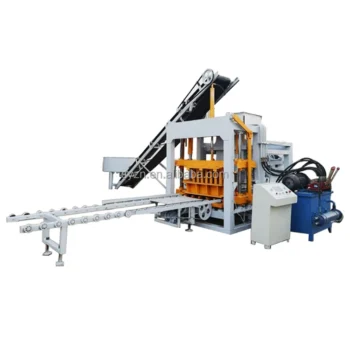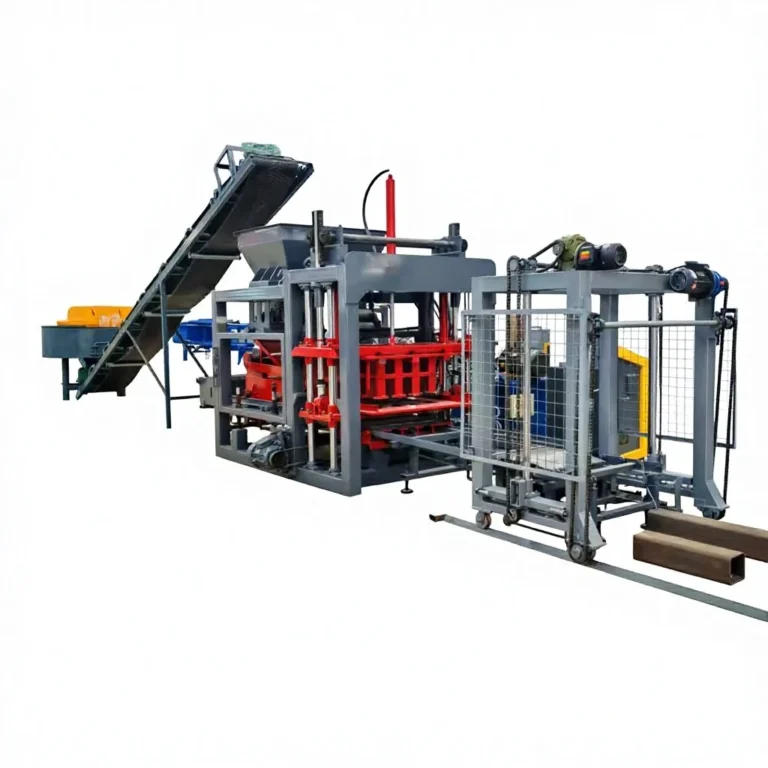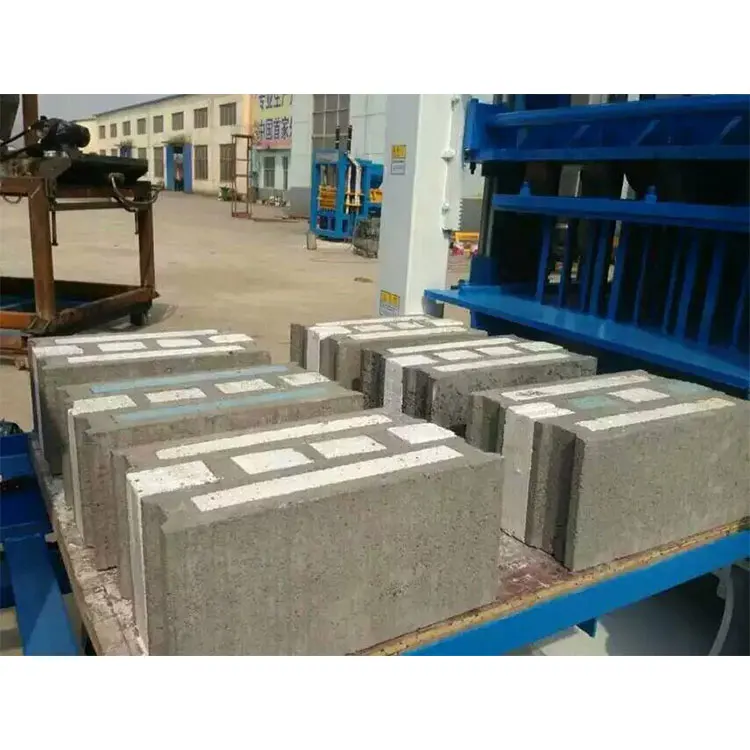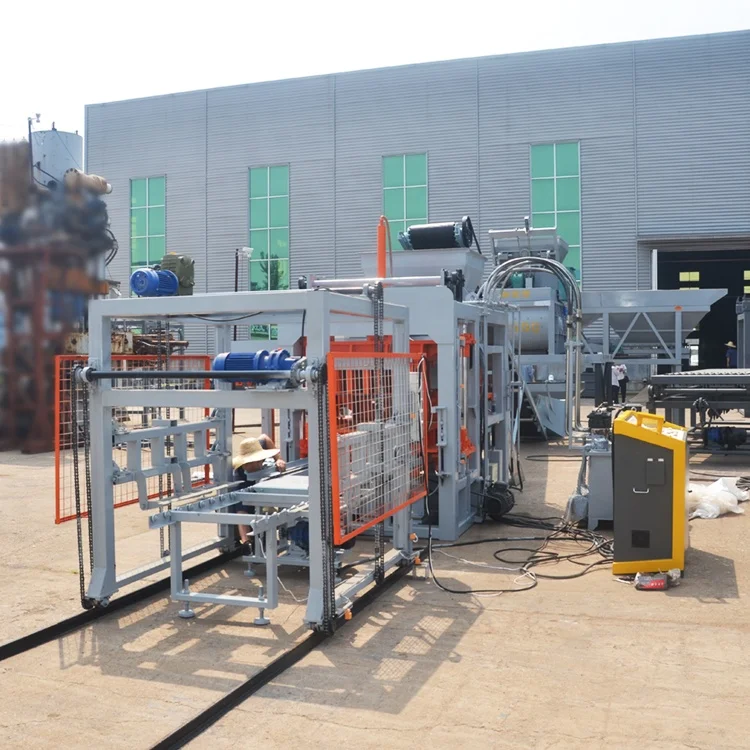

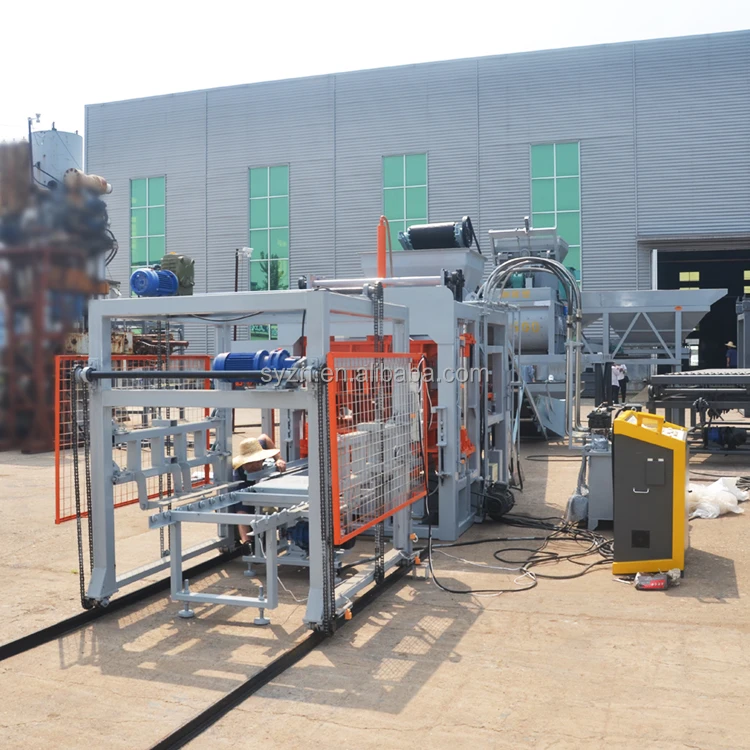

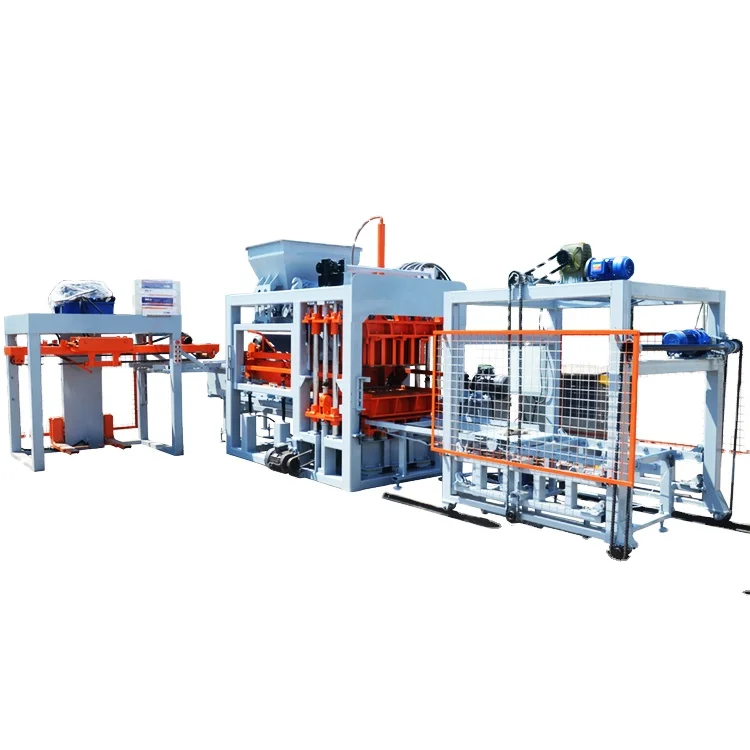
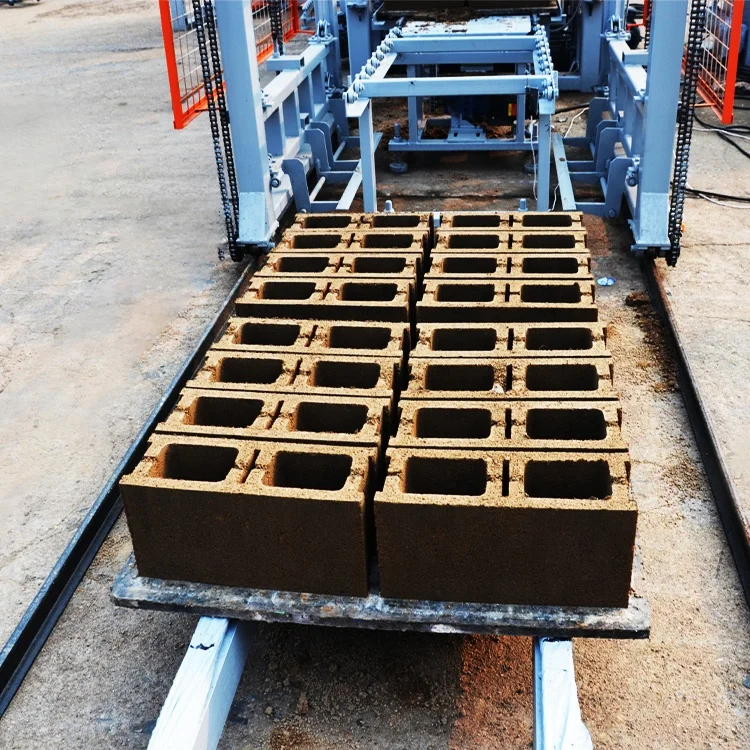
Description
Stocked dispatch readiness — QT6-15 units and standard moulds are staged for container loading with confirmed lead times so your site schedule stays intact.
Technical Specifications
| Parameter | Value |
|---|---|
| Model | QT6-15 |
| Product Type | Concrete Block Making Machine |
| Overall Dimensions (L×W×H) | 8200 × 1700 × 2950 mm |
| Total Mass | 7 T |
| Vibration Form | Platform Vibration |
| Vibration Frequency | 0–60 Hz |
| Vibration Force | 45 kN |
| Moulding Mode | Automatic loading, vibration moulding |
| Demolding Method | Hydraulic |
| Hydraulic System | Independent integrated hydraulic station |
| Pallet Size | 880 × 850 mm |
| Molding Cycle | 15–20 s |
| Overall Power | 37 kW |
| Control System | PLC (Programmable Controller) with touch screen HMI |
| Fault Diagnosis | Built-in fault diagnosis with safe logic interlock circuit |
| Output — Hollow block 400×200×200 mm | 1080–1440 pcs/hour (basis: 6 pcs/mould, 15–20 s cycle) |
| Output — Hollow block 400×150×200 mm | 1440–1920 pcs/hour (basis: 8 pcs/mould, 15–20 s cycle) |
| Output — Solid brick 240×115×53 mm | 5760–7680 pcs/hour (basis: 32 pcs/mould, 15–20 s cycle) |
| Output — Rectangular paver 200×100×60 mm | 2160–2880 pcs/hour (basis: 21 pcs/mould, 20–25 s cycle) |
| Output — Zigzag paver 225×112.5×60 mm | 2160–2880 pcs/hour (basis: 15 pcs/mould, 20–25 s cycle) |
| Block Compressive Strength | >15 MPa |
| Required Factory Area | 1200 m² |
| Voltage & Frequency | Configurable to buyer’s local grid (confirmed before dispatch) |
| Warranty | 1 year for whole machine (excluding spare parts) |
Application Suitability
| Application | Material or Output |
|---|---|
| Hollow block production | Crushed stone, sand, cement, and waste ash blends for load-bearing and partition walls |
| Solid brick production | Dense aggregate and cement mixes for structural masonry |
| Rectangular paving brick | Fine aggregate surface layers with coarser base for pedestrian and light-traffic areas |
| Zigzag interlocking paver | Graded aggregate and cement for driveways, walkways, and public-space landscaping |
Why Arrival Date Matters More Than Cycle Time
A fast press that sits in a container for weeks still costs you money.
Buyers working to a project deadline often focus on cycles per hour and overlook the gap between dispatch and the day the QT6-15 block machine in stock actually makes its first block. I have watched contractors miss foundation-curing windows because the equipment they ordered on paper was still being built when their crew showed up. The QT6-15 block machine in stock model shortens that gap: the frame, hydraulic station, and PLC cabinet are pre-assembled and tested, so the dispatch clock starts from container booking, not from the first weld [NEED_CITE: typical shipping lead times for containerized heavy machinery].
Dispatch Transparency From Inquiry to Port
When you request a quote on the QT6-15 block machine in stock, the reply includes a realistic dispatch date tied to current floor inventory, not a generic production window. Standard mould sets are matched to the block formats your market moves fastest, and they travel in the same container. This removes the common situation where the press arrives but the moulds follow weeks later on a separate shipment.
Container Loading and Dismantling Plan
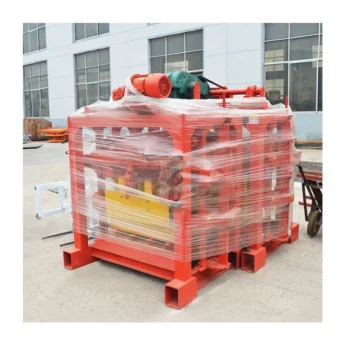
The 7-tonne frame is dismantled at defined bolt points so the main press, hydraulic station, and pallet feeder fit into a standard 40-foot high-cube container. Packing photographs are shared before the doors close, giving you a visual record for insurance and customs [NEED_CITE: container loading standards for industrial machinery]. The overall length of 8200 mm means the frame is split mid-length; reassembly on site is bolt-and-pin work, not field welding.
Reading the Specs That Affect Daily Output
Platform vibration at 0–60 Hz paired with 45 kN of vibration force determines how densely the mix is compacted before hydraulic demolding takes over. Higher frequency suits fine-aggregate paver mixes; lower frequency with longer dwell handles coarse hollow-block blends. The 880 × 850 mm pallet size sets the curing-area footprint — if your existing racks are sized for 900 × 700 mm pallets, you need to know that mismatch before the QT6-15 ships, not after. The independent hydraulic station sits away from the vibration table, which keeps seals and hoses out of the dust zone and extends service intervals between planned maintenance stops.
The Cost of Overlooking Dispatch Details
Ordering a block press without confirming voltage and frequency can add weeks of idle time: the motor is built for one grid standard, and rewinding or replacing it on site is both slow and expensive. I once saw a buyer in coastal West Africa receive a machine wired for 380 V / 50 Hz when the local grid ran 440 V / 60 Hz; the transformer they improvised overheated within a month [NEED_CITE: voltage and frequency standards by export market]. A similar risk applies to the PLC display language — if the touch screen boots up in a script your operators cannot read, commissioning stalls until a firmware swap is arranged.
Why Source This Model Here
Block machinery is the single focus of this operation, so the QT6-15 is specified as a matched system: press, mould, pallet, and handling equipment are verified together rather than assembled from separate suppliers. Stock status is checked against live floor inventory, giving you a dispatch date you can put on a project Gantt chart. Standard moulds ship inside the same container, so format flexibility is available from day one. Factory test records cover your target block format and mix design before the machine is dismantled for loading. Customs documentation, including CE declaration where applicable, is prepared in advance so port clearance does not become the next bottleneck.
Documentation & Verification
- Factory test record on your specified hollow block and paver formats before dispatch
- Mould drawing pack showing cavity count, wear-plate material, and change-over procedure
- Hydraulic and electrical schematic with valve and sensor tag numbers for field troubleshooting
- Voltage, frequency, and PLC display language confirmation signed off before production
- Packing photographs and container loading plan shared prior to container door seal
- CE declaration included where required by destination-country regulations
Installation, Commissioning & Support
- Foundation drawing sized to 8200 × 1700 mm footprint and 7-tonne operating mass
- Dedicated 37 kW circuit with confirmed voltage and frequency before cable sizing
- Bolt-point dismantling plan so reassembly avoids field welding or cutting
- First-run parameter setting on PLC touch screen with your mix and pallet stock
- Operator training covering mould change sequence and fault-diagnosis interlock logic
- Wear-parts list with hydraulic seal and vibration-spring reorder codes for local stocking
What to Include in Your Inquiry
Send the block formats your market moves daily, the aggregate types available within hauling distance of your plant, and the local grid voltage and frequency. Add the curing-area dimensions and forklift capacity you already run so pallet compatibility is verified before the QT6-15 block machine in stock leaves the floor. If you are working to a fixed construction deadline, state the date so the dispatch window is quoted against a real calendar.
Frequently Asked Questions
Q: Is this model currently in stock, and what is the realistic dispatch date?
A: Inventory is checked at inquiry stage. When a QT6-15 is on the floor, the dispatch date is tied to container booking rather than a build schedule. If the exact configuration you need requires a short build run, that timeline is stated in the initial quote so your project calendar stays accurate.
Q: How is the machine dismantled for container loading, and which container type is required?
A: The frame is split at bolt points to fit a 40-foot high-cube container. The hydraulic station, PLC cabinet, and pallet feeder travel as separate skids. Flat-rack shipping is an option if destination-port crane capacity is limited. Packing photographs document every skid before doors close.
Q: What is the estimated arrival time from dispatch to destination port?
A: Sea-freight transit depends on origin-destination pairing and current sailing schedules. A typical range is quoted alongside the dispatch date so you can add inland transport and customs days. Arrival estimates are updated if the vessel schedule changes before sailing.
Q: Are standard moulds shipped with the machine, and can additional formats share the container?
A: One standard mould set matched to your fastest-moving block format ships inside the same container. Additional moulds can be added if space allows; the loading plan confirms how many extra cavities fit without affecting the press skid placement or weight distribution.
Q: What documentation is provided for customs clearance, and is a CE declaration included?
A: Each shipment includes a commercial invoice, packing list, bill of lading, and origin certificate. A CE declaration is supplied where required by the destination market. All electrical and hydraulic schematics are included so local inspectors can verify compliance without requesting extra paperwork.