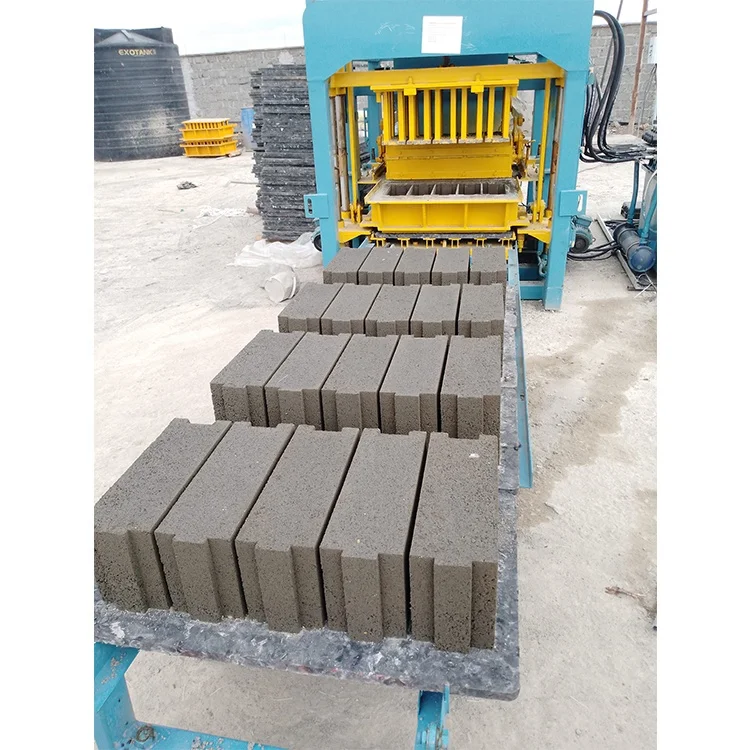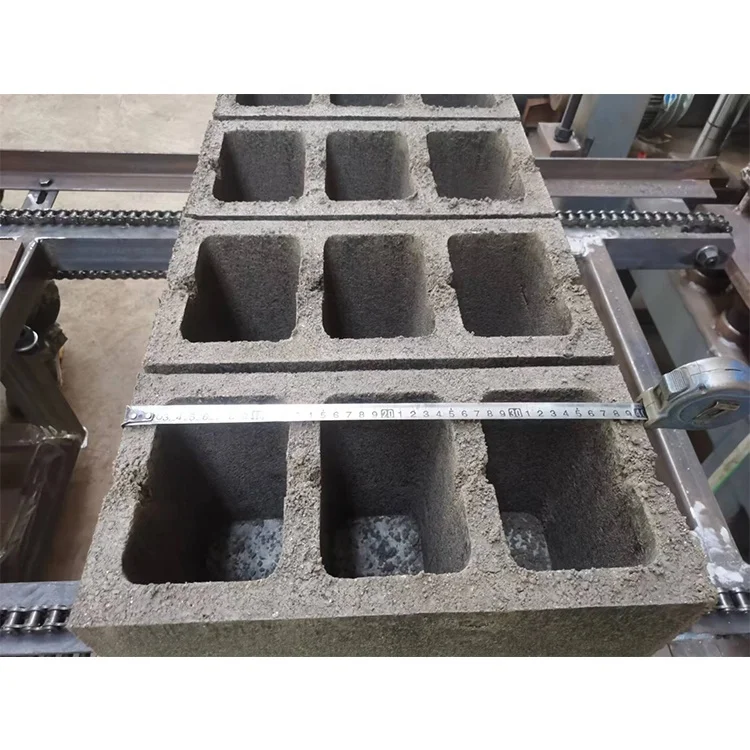
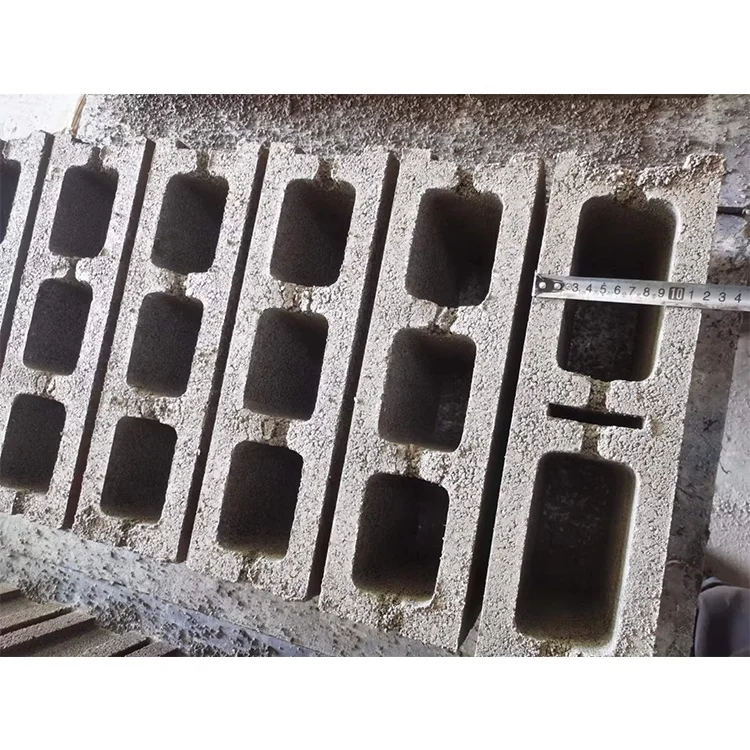
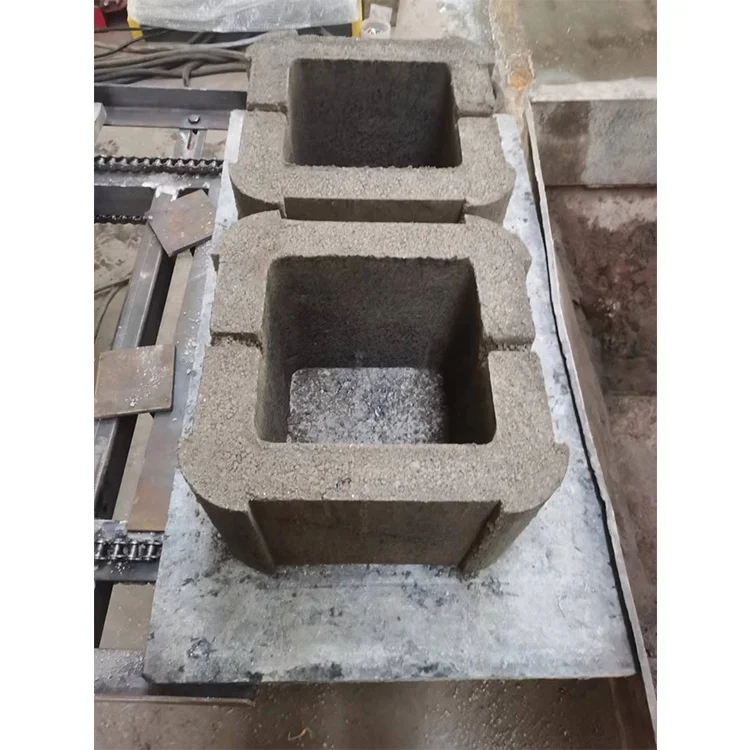
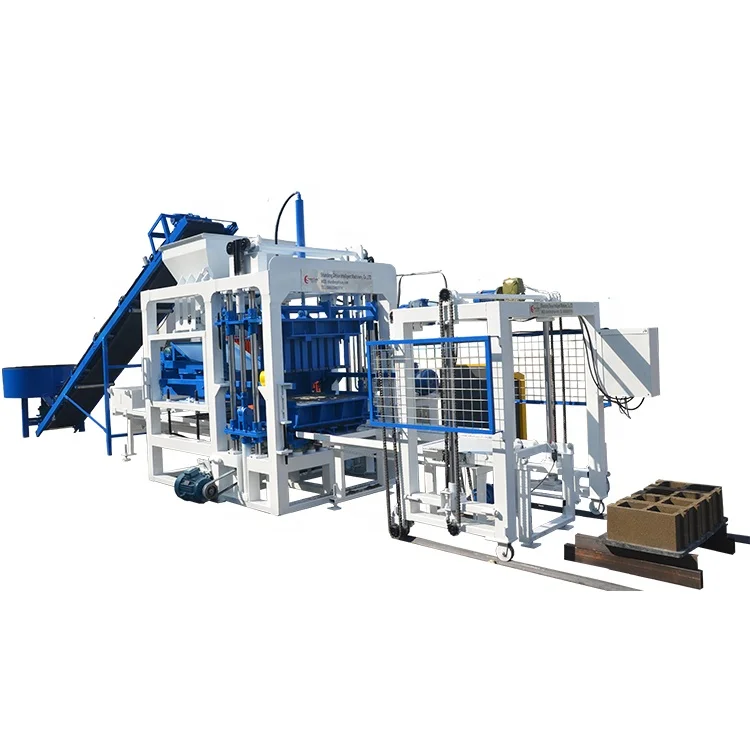
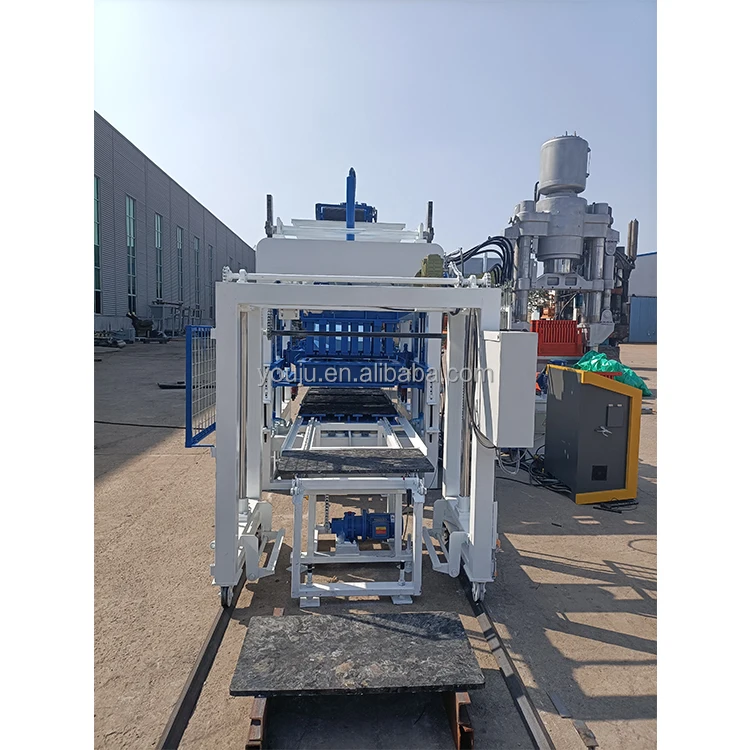

Description
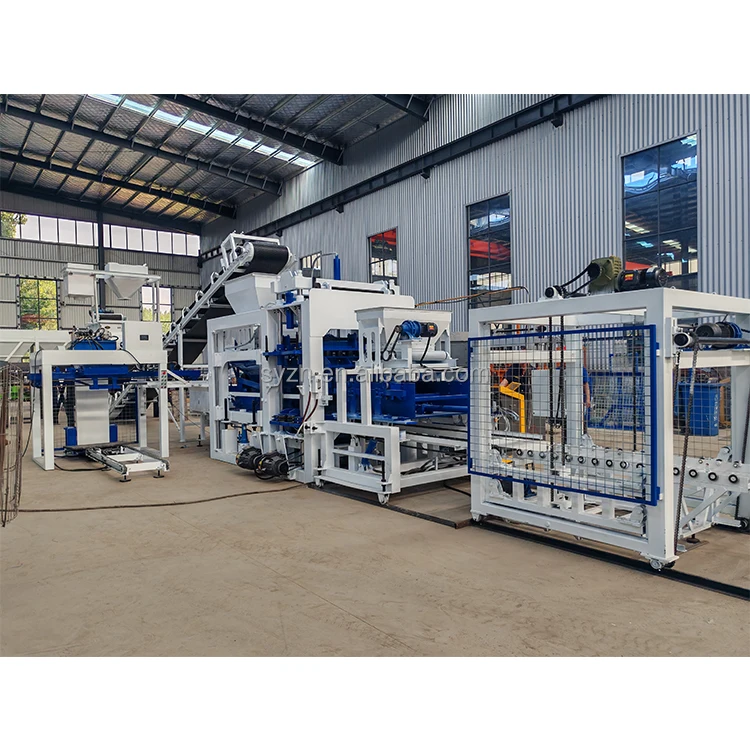
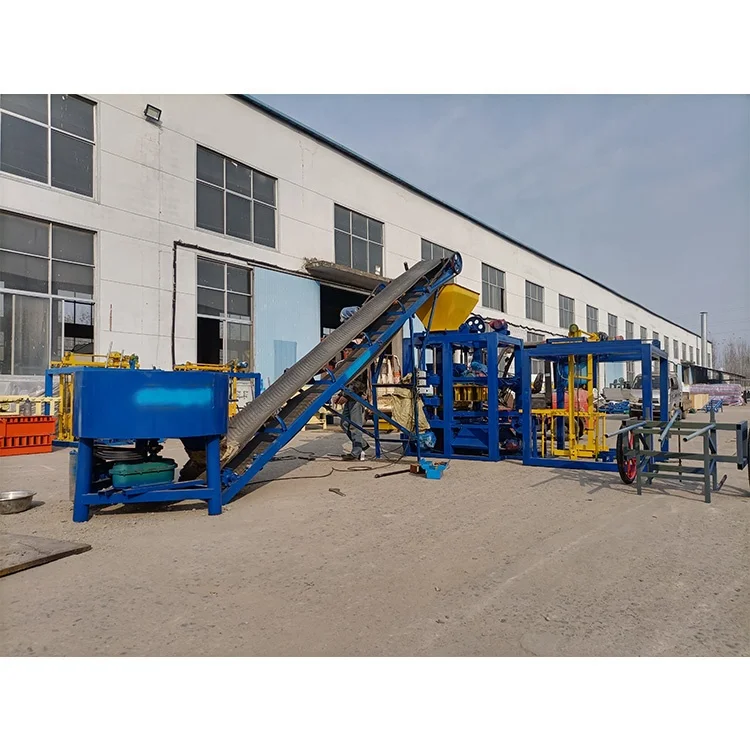
Dispatch-Ready Inventory — The QT4-16 block making machine in stock ships with standard moulds and a container loading plan confirmed before payment, so your project timeline stays intact.
Technical Specifications
| Parameter | Value |
|---|---|
| Model | QT4-16 |
| Product Type | Stationary Concrete Block Making Machine |
| Overall Dimensions (L×W×H) | 7400×1950×2800 mm |
| Total Mass | 5 T |
| Rated Pressure | 21 MPa |
| Main Vibration Form | Platform Vibration |
| Vibration Frequency | 2800–4500 r/min |
| Vibration Force | 40 kN |
| Pallet Size | 900×550 mm |
| Molding Cycle | 15–20 s (basis not stated in source — confirm block format / material / thickness) |
| Demolding Method | Hydraulic |
| Factory Area Required | 600 m² |
| Control System | PLC intelligent control with man-machine interface, fault diagnosis, remote control function |
| Automation Level | Full automatic |
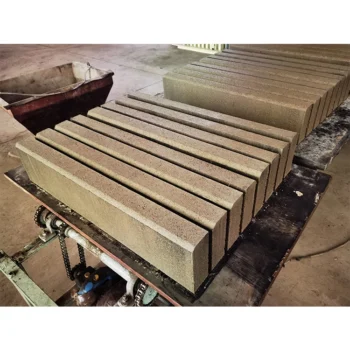
| Applied Products | Concrete blocks, hollow/solid blocks, pavers, interlocking blocks, curbstone, colored pavers |
| Raw Materials | Crushed stone, sand, cement, dust, fly ash, gravel, slag |
| Voltage & Frequency | Configurable — confirm destination standard before dispatch |
| PLC Display Language | Configurable — confirm before shipment |
Application Suitability
| Application | Material or Output |
|---|---|
| Hollow block production for housing projects | Crushed stone, sand, cement, fly ash blends |
| Solid block manufacturing for load-bearing walls | Gravel, cement, and slag mixes |
| Paving block and colored paver runs | Fine aggregate with pigment additives |
| Interlocking brick and curbstone formats | Standard concrete mixes with mould change |
| On-site block production for contractors | Locally sourced aggregate and cement |
Why the Voltage Question Must Come Before the Container Booking
Confirm your site voltage and frequency before the machine leaves the factory floor.
I learned this the hard way when a QT4-16 block making machine in stock arrived at a South African port wired for a different supply standard than the buyer’s workshop. The electricians stood around a silent machine for three weeks while a transformer was sourced locally. That delay cost the contractor more than any production quota discussion ever could. Every export-bound press now goes through a voltage and frequency check against the destination country’s grid before crating [NEED_CITE: voltage and frequency standards by export market]. It is a small step on paper, but it separates a machine that runs on day one from one that sits under a tarp.
Stock Availability and Dispatch Timing
When a housing project falls behind schedule or a distributor needs to replenish a block plant quickly, waiting through a full production cycle is not an option. The QT4-16 block making machine in stock is held in standard configuration with common mould formats already paired, which means the dispatch conversation starts from availability rather than lead-time estimation. Standard moulds for hollow blocks, solid blocks, and pavers are typically matched to the machine before packing, reducing the window between order confirmation and container loading.
Container Loading and Shipment Preparation
A five-tonne stationary press does not simply roll into a container. The QT4-16 is dismantled into major assemblies — frame, vibration platform, hydraulic station, and control cabinet — and secured with bracing designed for ocean transit. A loading plan is prepared showing how each component sits within the container footprint, so the receiving team knows what to expect when the doors open [NEED_CITE: container loading practices for heavy industrial machinery]. This planning step prevents port-side surprises where a forklift operator discovers an oversized frame section that needs a different unloading approach.
Vibration, Pressure, and Block Density
The platform vibration system operates between 2800 and 4500 r/min, delivering up to 40 kN of vibration force alongside 21 MPa of hydraulic pressure. In block making, vibration compacts the mix into the mould cavity while hydraulic pressure closes and holds the mould head during the cycle. If vibration force is too low for a stiff mix, blocks emerge with voids and weak edges. If pressure is insufficient, the block height varies across the pallet. The QT4-16 pairs both forces within a range that covers most standard concrete mixes, but the actual density result depends on the buyer’s specific aggregate grading and cement ratio. Pallet size at 900×550 mm must align with the curing racks and forklift tines already on site — a mismatch here creates handling bottlenecks downstream of the press.
The Cost of Skipping Pre-Shipment Verification
Buyers who skip voltage confirmation, pallet compatibility checks, or PLC language selection before dispatch regularly face commissioning delays that stretch into weeks. A machine wired for 380V/50Hz arriving at a 440V/60Hz site requires transformer procurement and rewiring before the first test cycle [NEED_CITE: electrical commissioning delays in exported machinery]. Similarly, if the PLC display language does not match the operator team, fault diagnosis becomes guesswork. These are not engineering failures — they are verification gaps that turn a fast-delivery advantage into a slow-start penalty.
Why Source This Machine Here
Block machinery is our single focus, which means the QT4-16 is specified as a matched system — press, mould, pallet, and handling equipment — rather than assembled from unrelated suppliers. Configuration is set against the buyer’s actual mix design and target block format, not pulled from a catalogue default. Stock availability eliminates the production-queue risk that delays time-sensitive projects. Standard mould formats ship with the machine, so buyers do not discover back-ordered tooling after the press arrives. Dispatch lead time and arrival estimates are quoted in writing before commitment, keeping project schedules honest.
Documentation & Verification
- Line layout with capacity calculation stating the block format assumed for the QT4-16
- Factory test record run on your specified mix and target block dimensions before crating
- Voltage, frequency, and PLC language confirmation sheet signed before container loading
- Hydraulic and electrical schematic matching the as-shipped QT4-16 configuration
- Mould drawing and format list for every mould included in the shipment
- Packing photographs showing component bracing and securing inside the container
Installation, Commissioning & Support
- Foundation must support the 5 T mass across the 7400×1950 mm footprint with level tolerance
- Dedicated power circuit matching confirmed voltage and frequency before the QT4-16 is energized
- Major assemblies reassembled on-site with frame, vibration platform, and hydraulic station aligned
- PLC fault diagnosis and remote control function tested during first commissioning cycle
- Pallet feeding path verified against 900×550 mm pallet size and your curing rack layout
- Operator training covers mould change procedure and hydraulic demolding sequence
Before You Request a Quote
Send us your target block format, daily output requirement, and the raw materials available at your site. Include your local voltage and frequency standard, preferred PLC display language, and the pallet handling equipment you already operate. If you are working to a fixed project deadline, state the required on-site date so we can confirm whether a stocked QT4-16 block making machine in stock aligns with your timeline.
Frequently Asked Questions
Q: Which QT4-16 models and standard moulds are currently available for immediate dispatch?
A: Standard QT4-16 units are held in stock with common mould formats including hollow blocks, solid blocks, and pavers. Specific mould availability varies by current inventory. Request the stock list at inquiry to confirm which formats can ship with your machine without waiting for a separate production run.
Q: What is the dispatch lead time and how is the machine loaded for shipment?
A: Stocked units can be prepared for container loading within a short window after order confirmation. The QT4-16 is dismantled into major assemblies — frame, vibration platform, hydraulic station, and control cabinet — with a loading plan provided so your receiving team knows exactly what arrives and how to unload it.
Q: What arrival estimate should I plan for at my destination port?
A: Arrival estimates depend on the destination port and current shipping schedules. We quote the estimated arrival date in writing at the time of order, so you can plan site preparation and commissioning around a known timeline rather than guessing transit durations.
Q: Are voltage, frequency, and PLC display language confirmed before the machine ships?
A: Yes. Every QT4-16 destined for export goes through a voltage and frequency check against the buyer’s local grid standard, and the PLC display language is set to match the operator team. This confirmation is documented and signed off before the machine is crated for dispatch.
Q: Is the 900×550 mm pallet compatible with my existing curing area and forklift?
A: Compatibility depends on your current curing rack dimensions and forklift tine spacing. Confirm these measurements at inquiry stage so we can verify whether the standard pallet size works with your setup or whether an alternative pallet specification is needed before shipment.