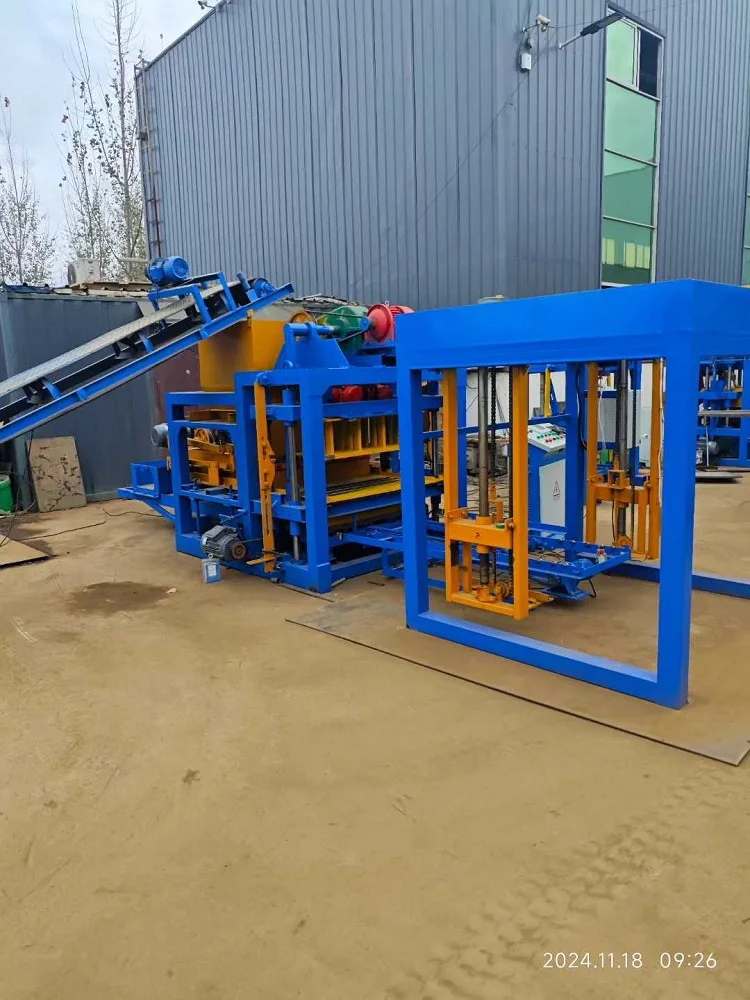
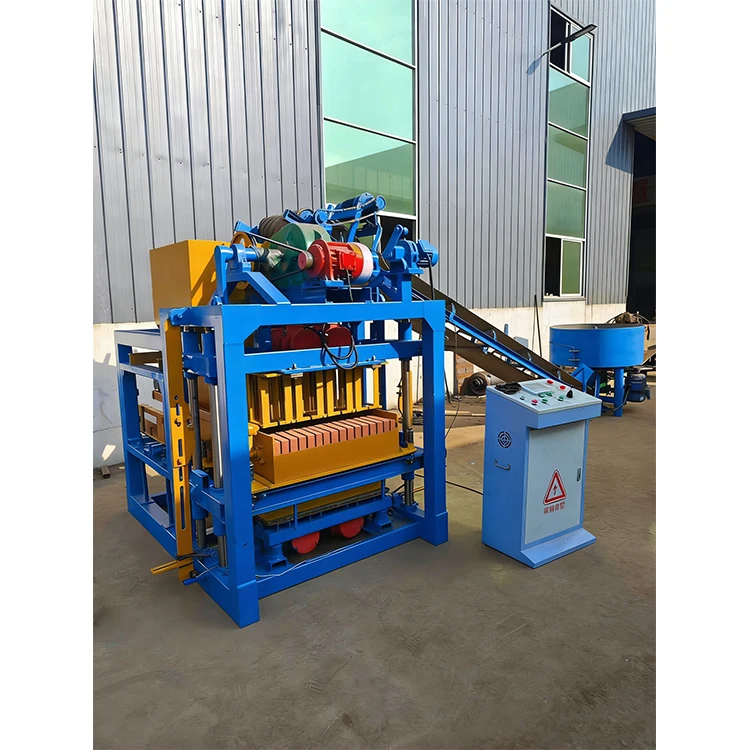
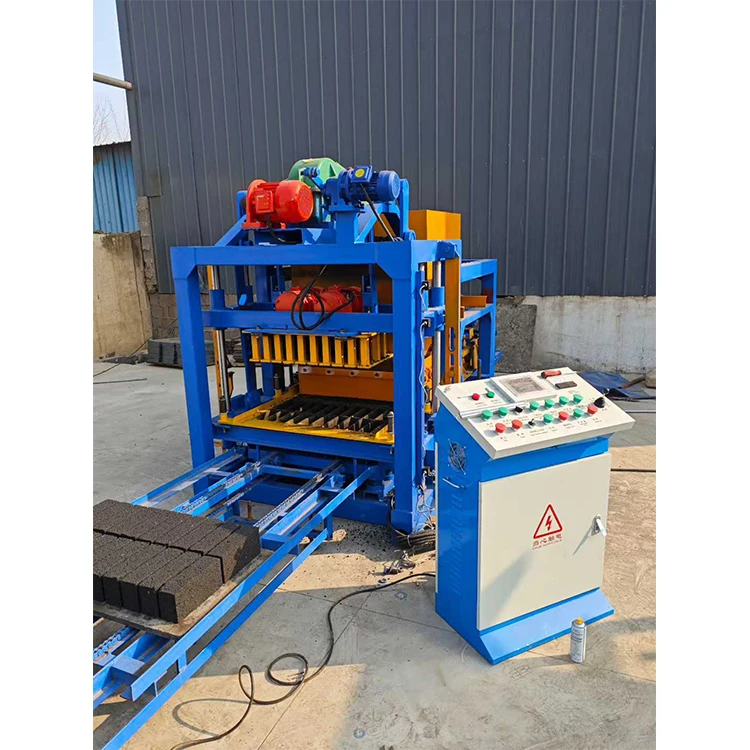
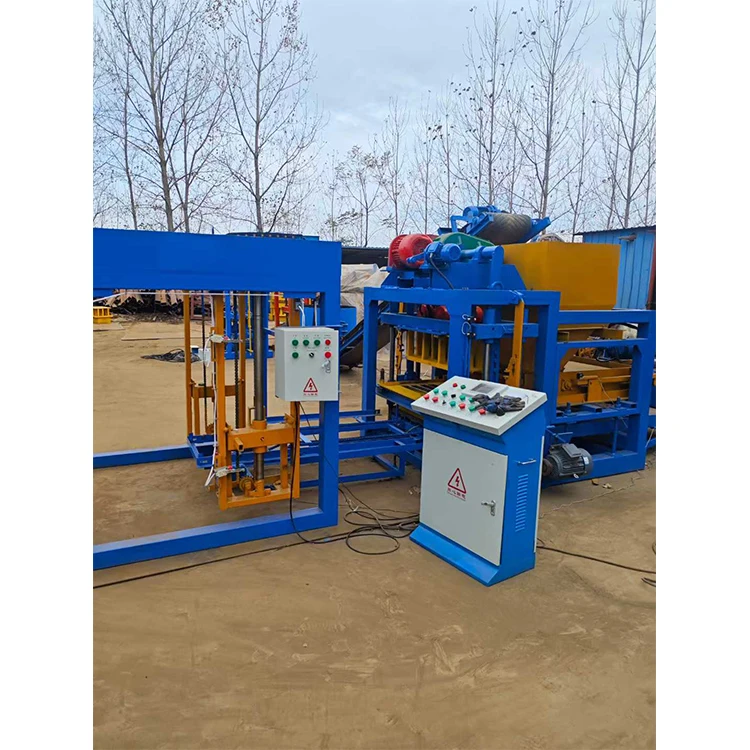
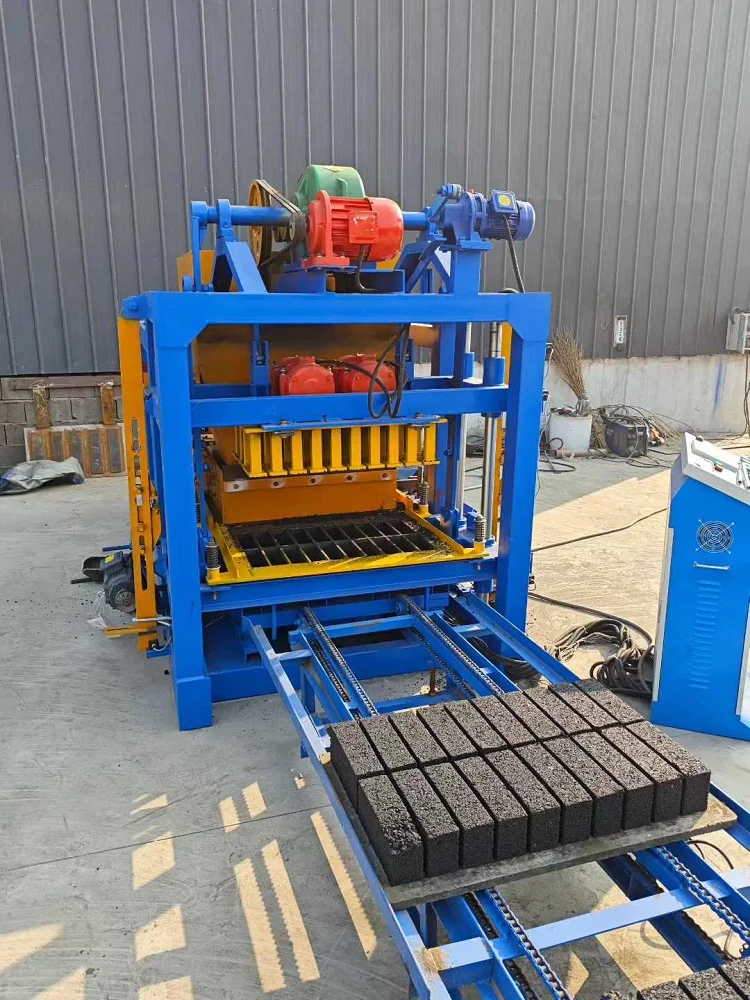
Description
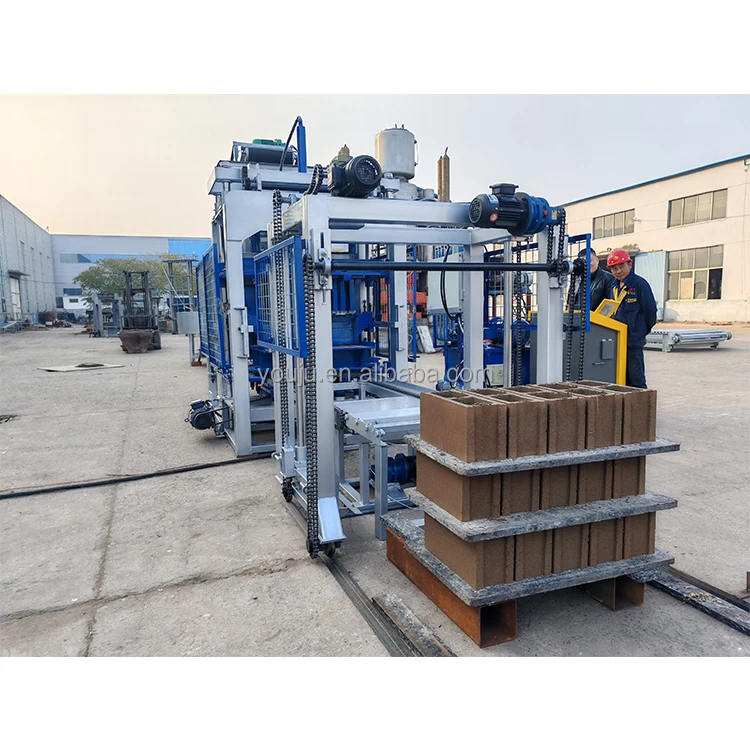
Stocked Configuration — the QTJ4-25 ships from existing inventory with standard moulds and pallets, so project-deadline buyers receive a confirmed dispatch date rather than a production queue estimate.
Technical Specifications
| Parameter | Value |
|---|---|
| Model | QTJ4-25 |
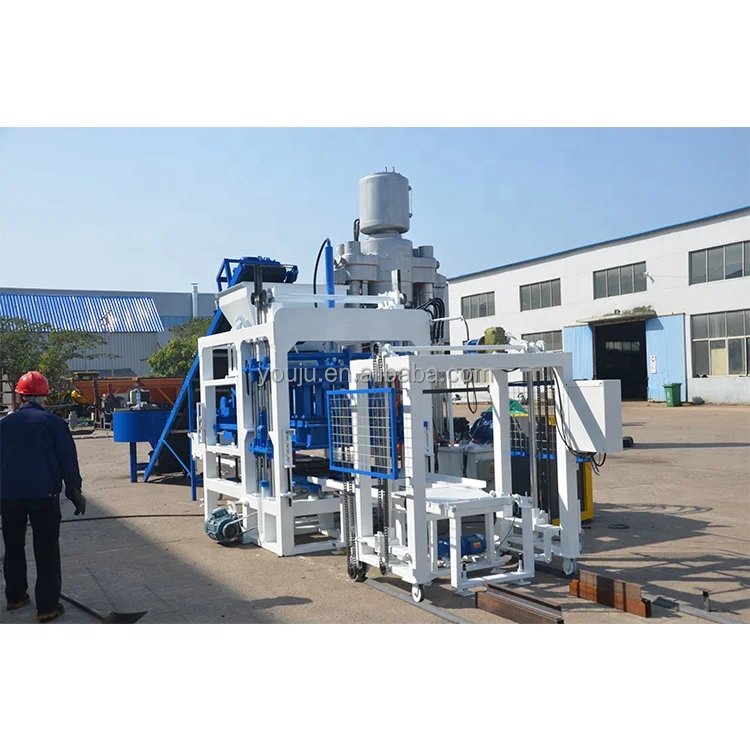
| Product Type | Automatic Concrete Block Making Machine |
| Machine Power | 16.58 kW |
| Molding Cycle | 25 seconds |
| Output Capacity | 4600 pcs/8 hours (basis not stated in source — confirm block format / material / thickness) |
| Machine Weight | 5000 kgs |
| Overall Dimensions (L×W×H) | 6400 × 1500 × 2700 mm |
| Pallet Size | 850 × 480 mm |
| Control System | PLC controlled, fully automatic |
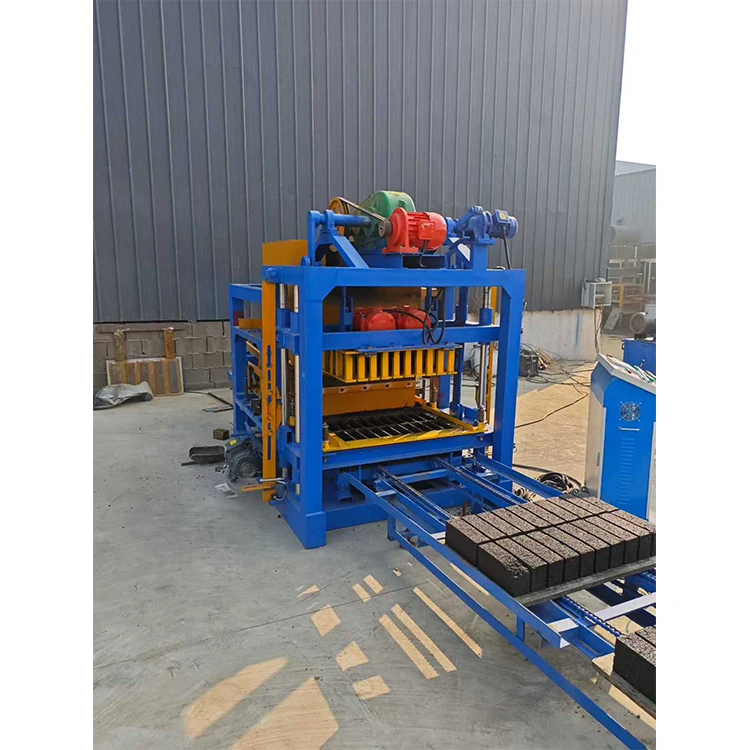
| Vibration System | Vibration motor with large vibration box |
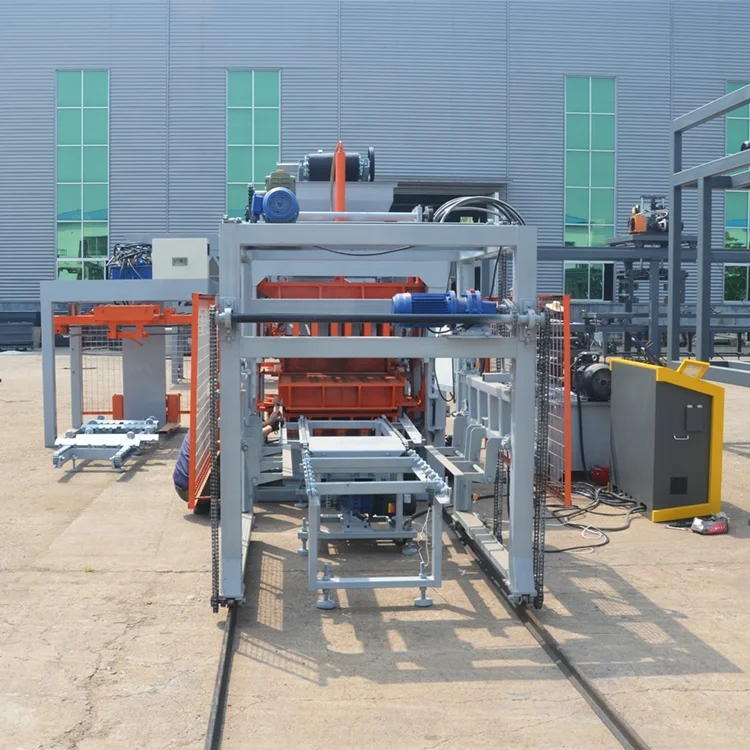
| Frame Construction | Thickened steel frame |
| Motor Brand | Siemens motor |
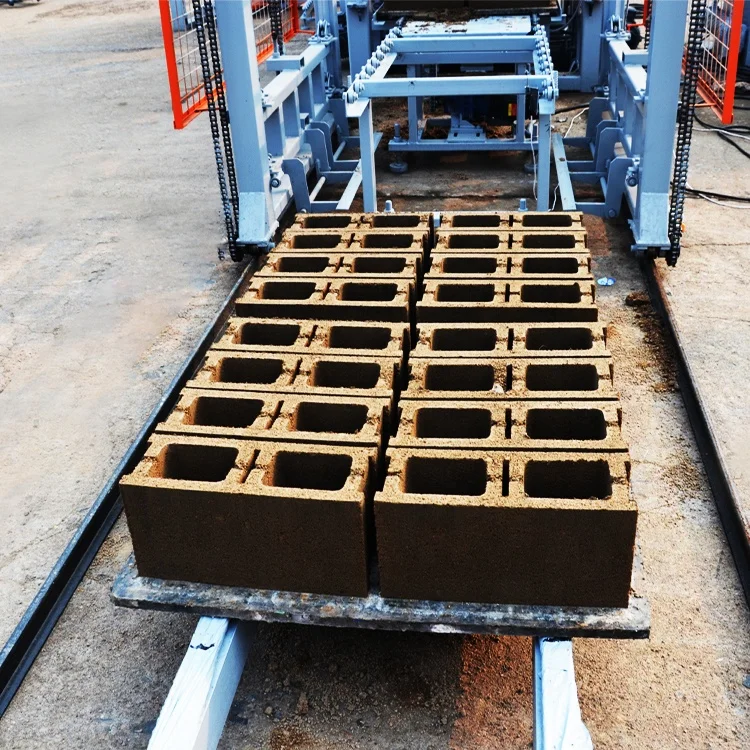
| Automation Level | Automatic pallet feeding, automatic material feeding and scraping, automatic block stacker |
| Raw Materials | Concrete, sand, cement, fly ash, crushed stone, lime, water |
| Voltage | Configurable to buyer local voltage |
| Warranty | One year |
Application Suitability
| Application | Material or Output |
|---|---|
| Medium-scale hollow block production | Concrete mix with sand and crushed stone aggregate |
| Solid block manufacturing for masonry walls | Cement, sand, and water standard mix |
| Paver stone brick runs for pedestrian areas | Fly ash blended with cement and fine aggregate |
| On-site block production for construction contractors | Locally sourced aggregate with cement binder |
What "Available Now" Actually Means for Your Project Timeline
Dispatch lead time should be the first number you receive, not the last.
When buyers request a QTJ4-25 block machine in stock fast delivery, the quoted arrival date often assumes a production slot that has not yet opened. A machine listed as available may still require voltage rewinding, pallet resizing, or mould fabrication before it can ship. The gap between "in stock" and "loaded into container" is where project schedules slip [NEED_CITE: typical export documentation and port clearance timelines]. Asking for a factory test record and packing photographs before payment confirms the physical machine exists in the configuration you ordered, rather than a base unit waiting to be customized.
Container Loading and Machine Dismantling for Shipment
The QTJ4-25 block machine in stock fast delivery arrives at the port as a dismantled assembly, not a fully erected unit. The frame, vibration box, stacker, and pallet magazine travel as separate packages within the container, which means your receiving team must plan for reassembly on arrival. A complete loading plan should show which components fit into the container and which require flat-rack or open-top handling.
Arrival Estimate and Port Clearance Variables
Once the QTJ4-25 block machine in stock fast delivery leaves the port of origin, the arrival estimate depends on shipping lane, transshipment stops, and destination customs processing. Buyers working to a fixed project deadline should request a vessel schedule with the specific port pairing rather than a generic transit window [NEED_CITE: ocean freight transit variability by trade lane].
Dispatch Timing Versus Production Queue
A stocked QTJ4-25 avoids the multi-week production queue that custom-configured machines require. However, stock availability must be confirmed against your voltage, frequency, and PLC display language before the dispatch date holds. A machine physically present in the warehouse still needs electrical panel adjustment if the destination country runs on a different standard than the default build.
Voltage and Frequency Confirmation Before Loading
Export markets run on varying voltage and frequency standards, and a QTJ4-25 block machine in stock fast delivery must match the buyer’s local grid before the container seals. The PLC display language also needs setting to the operator’s working language. These are pre-shipment tasks, not on-site surprises [NEED_CITE: voltage and frequency standards by export market].
Pallet Size and Curing Area Compatibility
The 850 × 480 mm pallet size on the QTJ4-25 dictates the footprint of your curing area and the forklift tine spacing. If your existing curing racks were built for a different pallet dimension, the mismatch surfaces only after the machine arrives. Confirming pallet compatibility before dispatch prevents idle inventory while new racks are fabricated.
The Cost of Skipping the Pre-Shipment Check
Buyers who accept a dispatch date without verifying voltage, mould format list, and pallet dimensions often face commissioning delays. The machine arrives, the electrician discovers the voltage does not match the panel rating, and the first production run waits for a transformer or a new motor. These delays compress the very project schedule the buyer tried to protect by choosing a stocked unit [NEED_CITE: machinery commissioning delays from electrical mismatch].
Why Source the QTJ4-25 Through This Channel
Block machinery is the single focus here, meaning the QTJ4-25 machine, mould, pallet, and handling equipment are specified as one matched system. Stock models ship with confirmed pallet sizes, standard mould formats, and PLC panels configured to the buyer’s language and voltage. The configuration is set against the buyer’s actual mix design and target block format, not a catalogue default. Dispatch lead times are stated upfront, with container loading plans and dismantling methods shown before order confirmation.
Documentation & Verification
- Factory test record on your specified block format before dispatch
- Pallet specification sheet confirming 850 × 480 mm dimensions and material
- Voltage and control language confirmation document signed before loading
- Mould drawing and format list matching your order configuration
- Packing photographs showing dismantled components inside container
Installation, Commissioning & Support
- Foundation pad sized for 6400 × 1500 mm footprint and 5000 kg static load
- Dedicated circuit rated for 16.58 kW continuous draw with correct voltage and frequency
- Reassembly of dismantled frame, vibration box, and stacker by trained technician
- PLC parameter setting and cycle time verification on your block format
- Operator training on pallet feeding, material scraping, and automatic stacking sequence
- Wear parts list covering vibration motor and mould liners for first replacement cycle
Information Needed to Confirm Your Dispatch Date
Provide your target block format, daily output requirement, and local aggregate type so the mould configuration matches your actual production. Confirm your site voltage, frequency, and preferred PLC display language before the QTJ4-25 leaves the warehouse.
Frequently Asked Questions
Q: What is the actual dispatch lead time for the QTJ4-25 from order to port?
A: Stocked QTJ4-25 units can be prepared for container loading within a short window once voltage, frequency, PLC language, and mould format are confirmed. The dispatch date is quoted against the physical machine in the warehouse, not a production slot. Request a factory test record and packing photographs to verify readiness before shipment.
Q: How is the machine packed and dismantled for container loading?
A: The QTJ4-25 is dismantled into its main assemblies — frame, vibration box, stacker, and pallet magazine — for container loading. A loading plan shows component placement and securing methods. Buyers receive the plan before the container seals so the receiving team can prepare reassembly tools and lifting equipment.
Q: Which moulds are stocked and ship together with the machine?
A: Standard stocked moulds include common hollow block and solid block formats. The exact format list is confirmed before dispatch based on your market requirements. Custom moulds require additional lead time for fabrication and testing. The mould drawing and format list document is provided before shipment.
Q: What voltage and frequency options are available off the shelf?
A: The QTJ4-25 motor and PLC panel can be configured to match the buyer’s local voltage and frequency before dispatch. This adjustment is completed at the factory, not on site. Confirming your electrical standard at the inquiry stage prevents commissioning delays after the machine arrives at your facility.
Q: How is arrival time estimated once the machine ships?
A: Arrival estimates are based on the specific port-to-port shipping lane and vessel schedule, not a generic transit window. Transshipment stops and destination customs clearance add variability. Request a vessel schedule with your exact port pairing to build a realistic project timeline around the machine arrival.