

Description
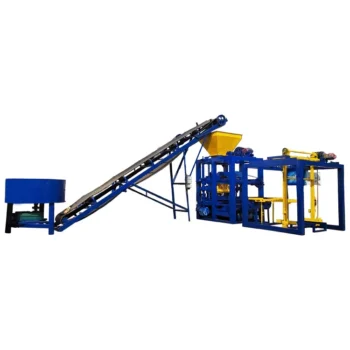
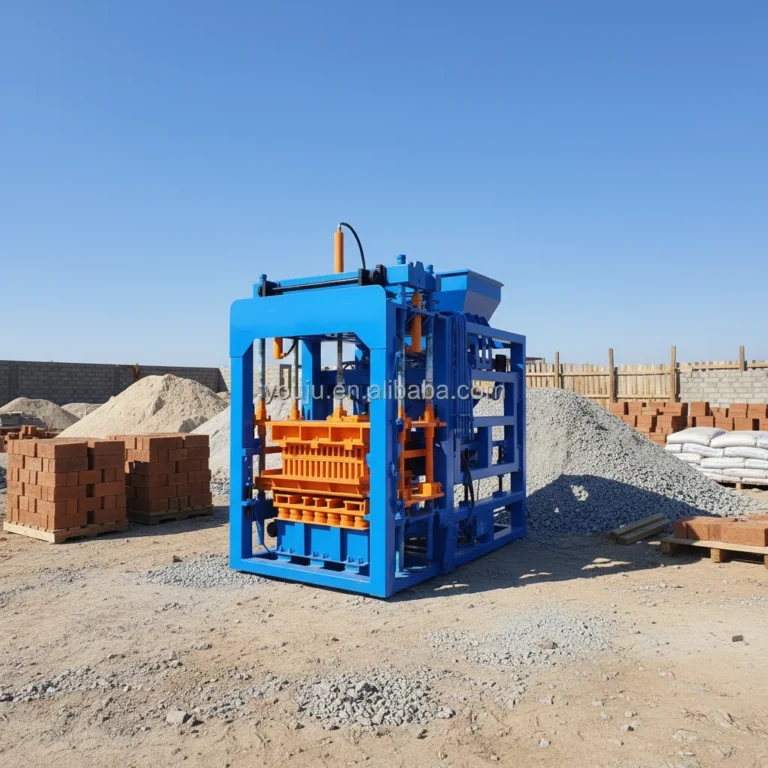
Block machinery as a single focus — every QT5-15 unit ships with pallet size, hydraulic rating, and mould count verified against your block format before the container is booked.
Technical Specifications
| Parameter | Value |
|---|---|
| Model | QT5-15 |
| Product Type | Fully Automatic Concrete Block Making Machine |
| Overall Dimensions | 7400 × 1950 × 2800 mm |
| Total Mass | 5000 kg |
| Overall Power | 32 kW |
| Vibration Form | Platform Vibration |
| Vibration Frequency | 0–60 Hz |
| Vibration Force | 80 kN |
| Moulding Mode | Automatic loading with vibration moulding |
| Demolding Method | Hydraulic |
| Pallet Size | 1100 × 550 mm |
| Molding Cycle | 15–20 s (basis to be confirmed per block format) |
| Control System | PLC with touch screen interface |
| Hydraulic System | Independent integrated hydraulic station |
| Recommended Factory Area | 1000 m² |
| Raw Material Compatibility | Fly ash (up to 70%), slag, gangue, sand, crushed stone, cement, water |
| Block Compressive Strength | >15 MPa |
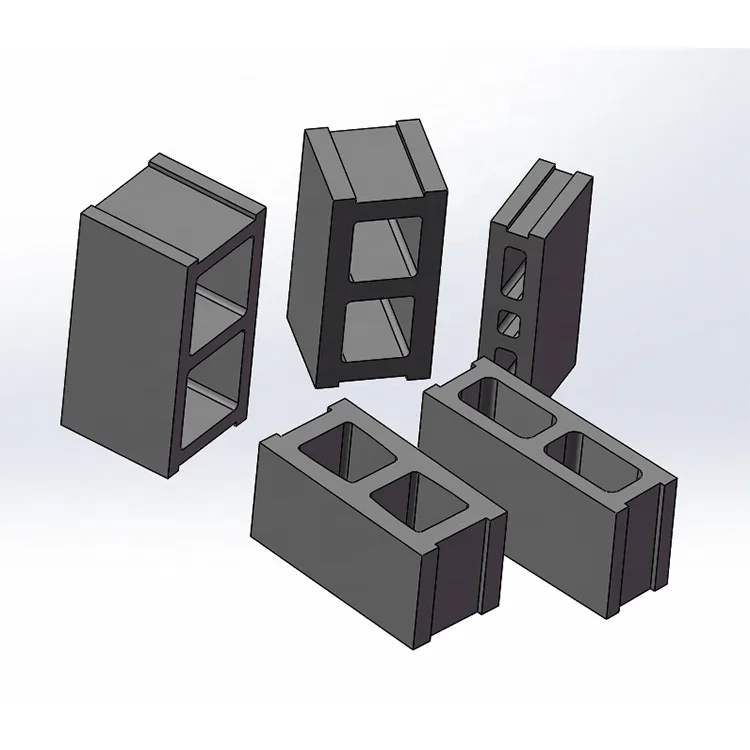
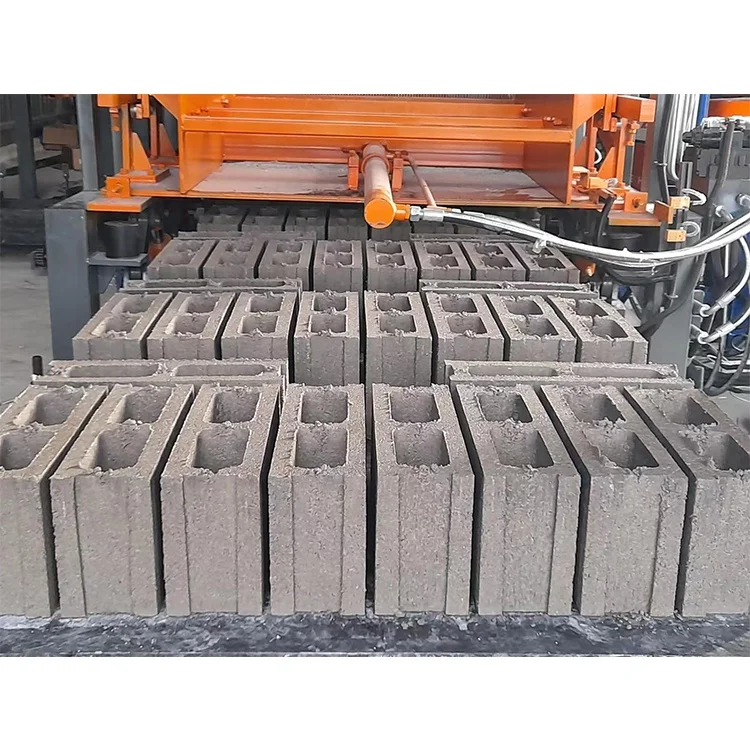
| Output — Hollow Block 400×200×200 mm | 7200–9600 pcs/8 hr (based on 5 pcs/mould, 15–20 s cycle) |
| Output — Hollow Block 400×150×200 mm | 8640–11520 pcs/8 hr (based on 6 pcs/mould, 15–20 s cycle) |
| Output — Solid Brick 240×115×53 mm | 46080–61440 pcs/8 hr (based on 32 pcs/mould, 15–20 s cycle) |
| Output — Rectangular Paver 200×100×60 mm | 28800–36000 pcs/8 hr (based on 25 pcs/mould, 20–25 s cycle) |
| Output — Zigzag Paver 225×112.5×60 mm | 18432–23040 pcs/8 hr (based on 16 pcs/mould, 20–25 s cycle) |
| Assembly State | Fully assembled with factory test before shipment |
| Warranty | 1 year for whole machine (excluding spare parts) |
Application Suitability
| Application | Material or Output |
|---|---|
| Hollow block production for wall construction | Crushed stone, sand, cement, fly ash blends at 400×200×200 mm or 400×150×200 mm formats |
| Solid brick manufacturing for load-bearing and partition walls | Sand, gangue, slag, and cement mixes at 240×115×53 mm standard brick format |
| Paving block production for driveways, walkways, and yards | Rectangular 200×100×60 mm and interlocking zigzag 225×112.5×60 mm formats in high-density concrete |
| Fly ash and industrial residue utilization | Mixes containing up to 70% fly ash combined with binding agents for structural block production |
| Mid-capacity block plant operations | Daily output scaled across hollow blocks, solid bricks, and pavers within a 1000 m² recommended factory area |
What "9600 Blocks per Shift" Actually Means on Site
A capacity number without its mould count and cycle time is a guess, not a quotation.
I once shipped a QT5-15 block machine in stock fast delivery to a contractor who read the hollow block figure on the spec sheet and planned his entire pour schedule around it. When the machine arrived, his local volcanic ash aggregate required a different vibration force setting than the factory test had used. The blocks came out at half the expected strength, and daily output dropped to roughly half of what he had budgeted for. That mismatch cost him two weeks of re-tuning before the line ran at the rated cycle. Every QT5-15 block machine in stock fast delivery we dispatch now carries a capacity sheet that names the exact block format, mould cavity count, and cycle time behind each number — so the buyer sees the same figures the factory test produced [NEED_CITE: block compressive strength testing standards by region].
Dispatch Timing You Can Plan Around
The QT5-15 block machine in stock fast delivery is held as a complete press assembly with its hydraulic station, PLC cabinet, and pallet feed unit ready for container loading. Buyers working to a project milestone need a confirmed dispatch date at quotation stage, not after production finishes. We state which configurations are available immediately and which require a build cycle before the machine moves to the loading bay.
Container Loading and Machine Dismantling
A 5000 kg press with a 7400 mm frame length does not fit a standard container without planned dismantling. The hydraulic unit separates from the main frame, the PLC cabinet ships in a dedicated crate, and the hopper and conveyor sections bolt down for flat stacking. Every dismantling joint is photographed before the container doors close, and those images go to the buyer so the reassembly sequence on arrival matches what left the factory floor. This is how a QT5-15 block machine in stock fast delivery reaches a job site without surprises [NEED_CITE: container loading standards for heavy industrial machinery].
Reading the Numbers That Actually Matter
The 80 kN vibration force paired with an independent integrated hydraulic station defines how densely the QT5-15 compacts each block. Platform vibration at 0–60 Hz transmits energy through the pallet into the mix, while the hydraulic system applies downward pressure during the moulding cycle — the two forces together determine whether a hollow block exits the press above the 15 MPa compressive threshold or cracks during curing. The 1100 × 550 mm pallet size must match the curing racks and forklift tines the buyer already has on site; a mismatch here means buying new handling equipment or re-pouring curing slabs. The PLC touch screen controls the entire sequence from pallet feeding through demoulding, and the display language must be confirmed before shipment so the operator can read fault codes on day one. Moulding cycle ranges from 15 to 20 seconds for standard blocks and extends to 25 seconds for denser paver formats, which directly sets the hourly output for each product type.
The Cost of Skipping the Voltage Conversation
A machine wired for a voltage and frequency that does not match the destination grid will not start on arrival — and re-wiring a 32 kW PLC-controlled press on site takes days, not hours. Buyers who skip confirming the local electrical standard before the QT5-15 ships end up paying for an electrician to reconfigure motor windings and control transformers while the project schedule slips. I have seen a container sit at port for over a week while the buyer arranged a variable frequency drive that should have been specified at order stage [NEED_CITE: voltage and frequency standards by export market].
Why Buyers Come Back for the Second Line
Block machinery is our single focus, which means the QT5-15 press, its moulds, pallets, and handling equipment are specified as one matched system rather than assembled from separate suppliers. Configuration is set against the buyer’s actual mix design and local aggregate, not pulled from a catalogue default. Mould design covers the formats the buyer’s market sells, including custom drawings when standard cavities do not match local demand. Automation level is selectable so a buyer can start with semi-automatic pallet handling and upgrade to full stacking later. Factory test records accompany every machine, and installation support includes operator training on the specific block formats that came with the shipment.
Documentation & Verification
- Line layout and capacity calculation stating the exact block format and cycle time assumed for the QT5-15
- Machine specification sheet with voltage, frequency, and PLC display language confirmed for the destination country
- Mould drawing and format list showing cavity count per block type included in the shipment
- Factory test record on the buyer’s specified raw material mix before dispatch
- Packing photographs documenting dismantling state and container loading sequence
- Customs documentation support matched to the destination port import requirements
Installation, Commissioning & Support
- Foundation plan sized for the 7400 × 1950 mm footprint and 5000 kg mass of the QT5-15 press
- Dedicated electrical circuit rated for 32 kW overall power at confirmed voltage and frequency
- Hydraulic station reconnected to the main frame using pre-marked fittings from the dismantling photographs
- PLC touch screen language verified and molding cycle parameters set for the buyer’s first block format
- Operator training covering mould change procedure, pallet feed alignment, and daily maintenance intervals
- Wear parts list with hydraulic seals and vibration motor bearings identified for first reorder
Before You Request a Quote
To match the right QT5-15 configuration to your site, tell us the block formats your market buys and the daily volume you need to sustain. Include your local aggregate type — whether that is river sand, crushed granite, volcanic ash, or fly ash from a nearby plant — and the curing space you have available. Confirm the voltage, frequency, and control language at your facility so the machine arrives ready to run.
Frequently Asked Questions
Q: Which QT5-15 configurations are currently available for immediate dispatch?
A: Standard QT5-15 units with hollow block moulds and basic pallet feed are typically held in stock for faster turnaround. Configurations that include custom mould sets, specific pallet materials, or upgraded automatic stacking require a build cycle. We confirm which elements are ready and which need lead time at the quotation stage, so the dispatch date is fixed before you commit.
Q: How is the QT5-15 dismantled and loaded into containers?
A: The hydraulic station separates from the main frame, the PLC cabinet is crated independently, and the hopper and conveyor bolt flat for stacking. Each joint is photographed before loading. These images go to the buyer so the reassembly sequence matches the factory dismantling order and no time is lost searching for connection points on arrival.
Q: What arrival estimate can I expect from order confirmation?
A: Stocked configurations ship within days of payment clearance, with transit time depending on the destination port. Built-to-order units require a production cycle before dispatch. We quote the estimated arrival date at quotation stage based on the shipping route and current vessel schedules, not after the machine enters production.
Q: Are standard moulds included in stock or do they need separate lead time?
A: Common hollow block and solid brick moulds matching the 1100 × 550 mm pallet size are generally available with the machine. Paver moulds, interlocking formats, and custom drawings require a separate production window. We list every mould included in the shipment and state the lead time for any additional sets at quotation.
Q: What customs documentation comes with the shipment?
A: Each QT5-15 ships with a CE declaration where applicable, commercial invoice, packing list, and bill of lading. We provide customs documentation support matched to the destination country’s import requirements, including machinery classification codes. Specific certification documents are confirmed at the order stage based on the buyer’s local regulations.