
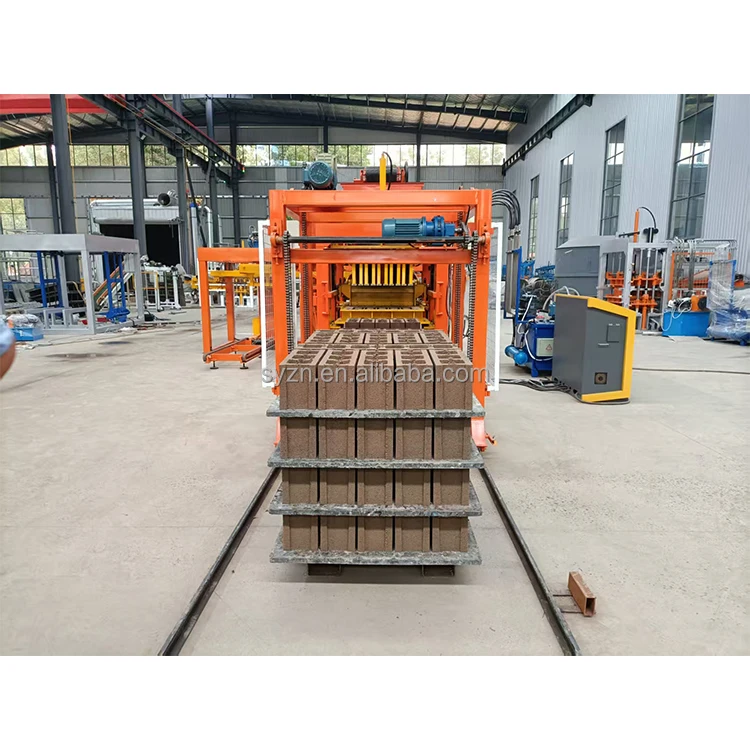
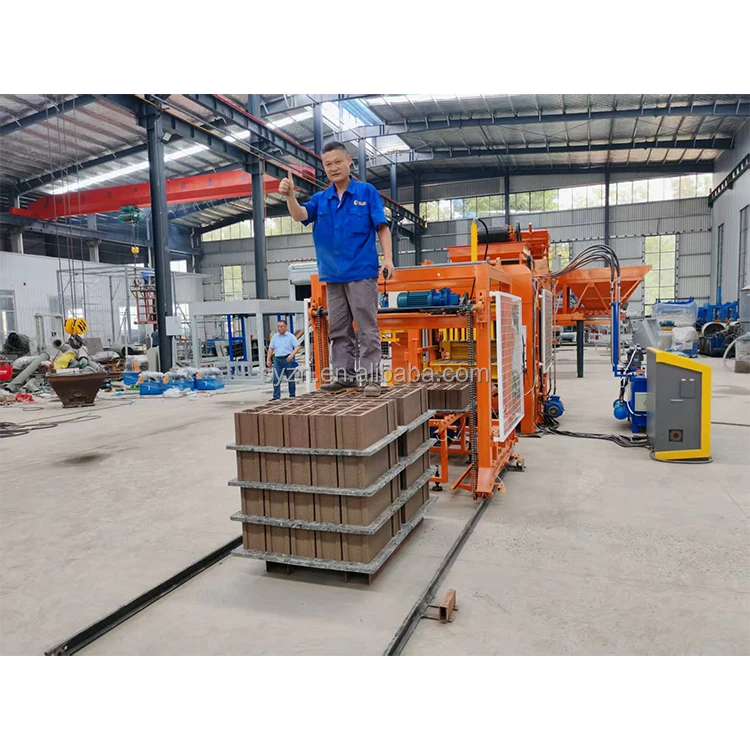
Description
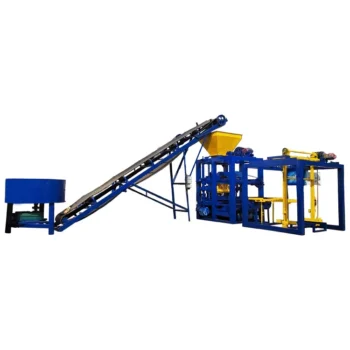
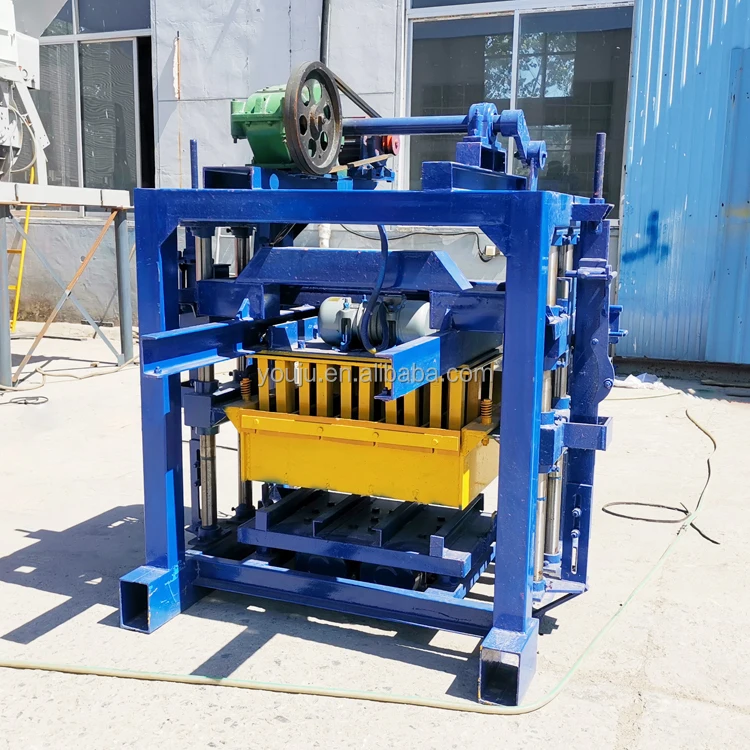
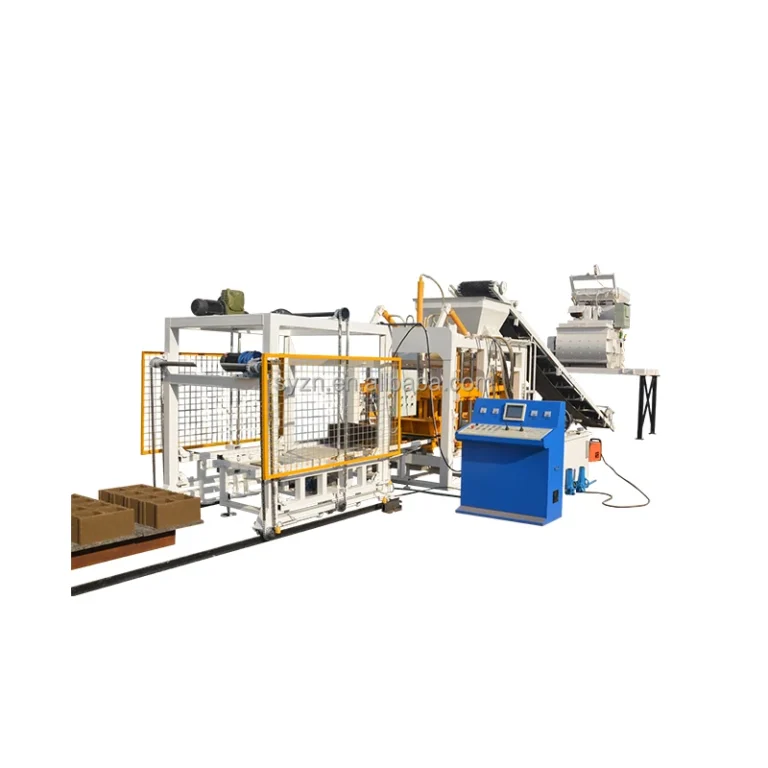
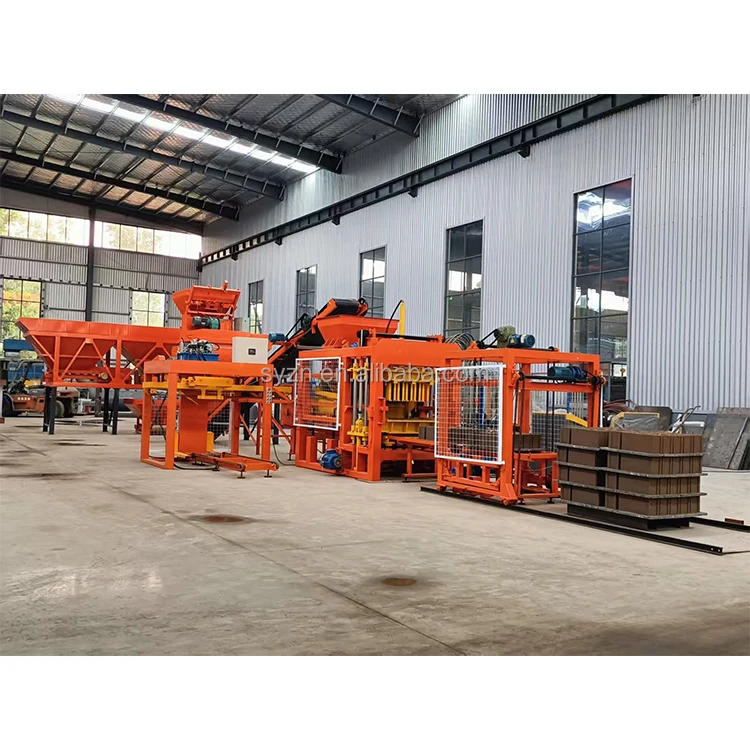
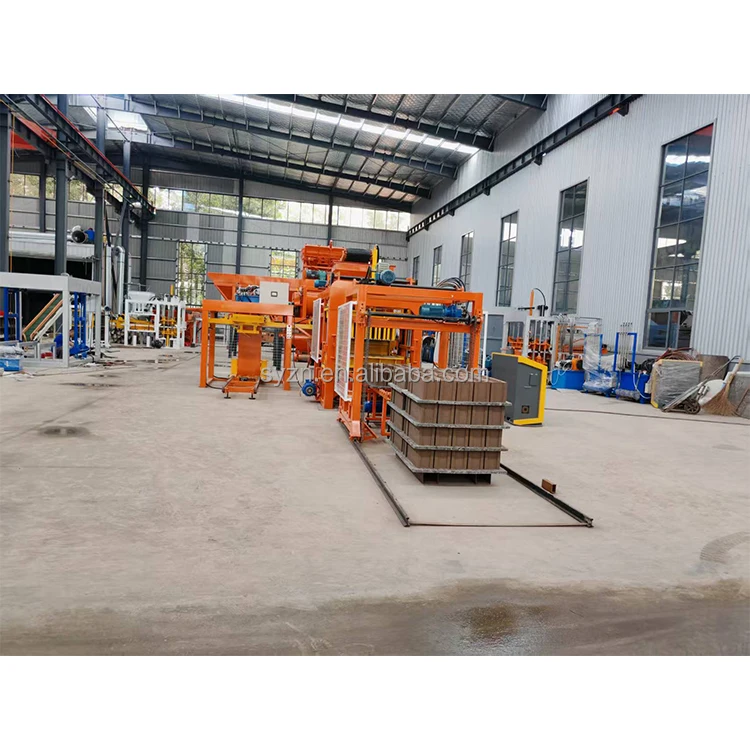
Matched System Delivery — every QT6-15 leaves the factory with pallets, moulds, and hydraulic station verified against your block format and site power before container loading.
Technical Specifications
| Parameter | Value |
|---|---|
| Model | QT6-15 |
| Product Type | Hydraulic Concrete Block Making Machine |
| Overall Dimensions (L×W×H) | 8200×1700×2950 mm |
| Vibration Frequency | 0-60 Hz |
| Vibration Form | Platform Vibration |
| Moulding Mode | Load automatically, vibration moulding |
| Pallet Size | 880×850 mm |
| Molding Cycle | 15-20 s |
| Overall Power | 37 kW |
| Vibration Force | 45 kN |
| Total Mass | 7 T |
| Demolding Method | Hydraulic |
| Factory Area | 1200 m² |
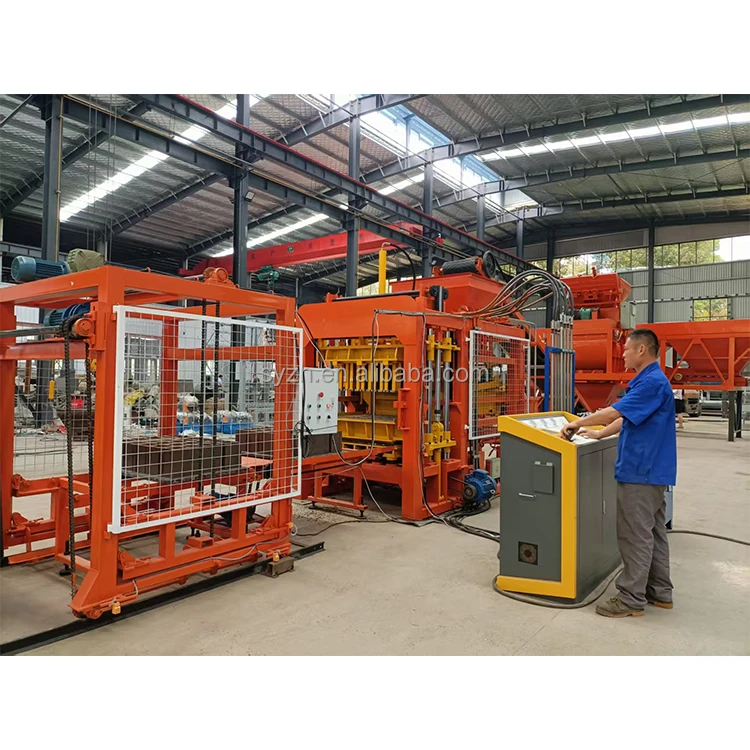
| Control System | PLC (Programmable Controller) with touch screen |
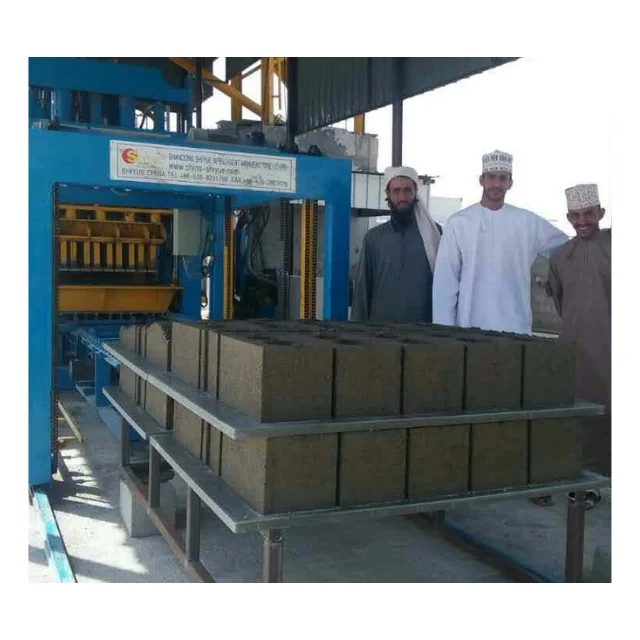
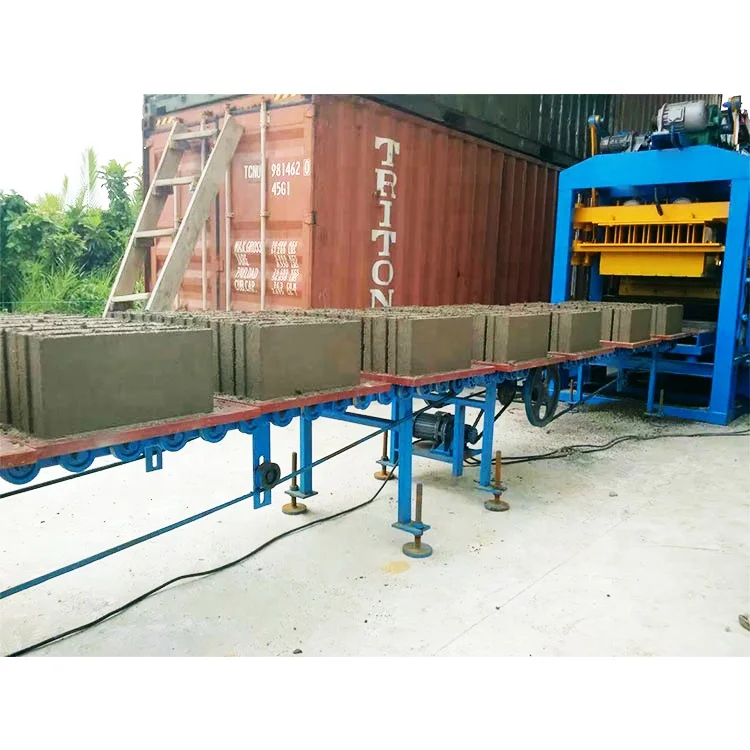
| Output Capacity (Hollow block 400×200×200 mm) | 1080-1440 pcs/hour (basis stated in source) |
| Output Capacity (Hollow block 400×150×200 mm) | 1440-1920 pcs/hour (basis stated in source) |
| Output Capacity (Solid brick 240×115×53 mm) | 5760-7680 pcs/hour (basis stated in source) |
| Output Capacity (Rectangular brick 200×100×60 mm) | 2160-2880 pcs/hour (basis stated in source) |
| Output Capacity (Zigzag brick 225×112.5×60 mm) | 2160-2880 pcs/hour (basis stated in source) |
| Compressive Strength of Blocks | >15 MPa |
| Assembly State | Complete machine with hydraulic station |
| Key Features | CE compliant, platform vibration, hydraulic demolding, touch screen PLC |
Application Suitability
| Application | Material or Output |
|---|---|
| Hollow block production | Crushed stone, cement, and sand mixes for load-bearing and non-load-bearing walls |
| Solid brick production | Fine aggregate and cement blends for masonry units |
| Paving brick / rectangular brick production | High-density aggregate mixes for footpaths, driveways, and parking areas |
| Interlocking / zigzag brick production | Graded aggregate with cement for permeable and decorative surfaces |
| Waste material utilization | Fly ash, slag, and recycled aggregate blends with reduced cement dosage |
What "Dispatch in Weeks" Actually Means for Your Deadline
A stocked QT6-15 block machine in stock means your container is booked before your competitor finishes their first vendor call.
When a housing project hits the block-laying phase, every week of machine lead time translates directly into idle crews and penalty clauses. I have watched contractors pay liquidated damages because their block machine was still sitting in a factory queue while the masonry subcontractor showed up on site with nothing to lay. The QT6-15 block machine in stock status is confirmed at inquiry, and the dispatch lead time is quoted before you commit — not discovered after payment. [NEED_CITE: typical construction penalty clauses for delayed masonry milestones]
Container Loading Plan Before You Pay
Once the QT6-15 block machine in stock is reserved against your order, the loading plan is finalized before balance payment. The main frame, hydraulic station, and mould are dismantled into shipping configuration, and each component is photographed in the crate. You receive container loading photos and a packing list that matches your customs broker’s requirements, so there are no surprises when the container arrives at your port.
Dispatch Timing You Can Build a Schedule Around
The value of a fast delivery QT6-15 for project-deadline buyers is not just speed — it is predictability. We quote the dispatch date at inquiry stage, and that date holds unless you change the mould specification or voltage configuration after confirmation. The machine ships as a complete unit with its hydraulic station, pallets, and standard moulds, meaning commissioning on your site starts with reassembly, not with waiting for a second shipment of missing components. [NEED_CITE: common delays caused by split-shipment block machine orders]
Stock Moulds and Pallets That Ship With the Machine
A QT6-15 block machine in stock ships with standard moulds matched to common block formats in your export market. Pallets at 880×850 mm are included in the package, sized to match standard curing racks and forklift tine spacing. If your project requires a non-standard block format, custom mould production runs on a separate timeline that we state clearly at inquiry — the machine itself does not wait.
How Vibration Force and Hydraulic Pressure Interact During Molding
The 45 kN vibration force and hydraulic demolding system on the QT6-15 work together to determine block density and surface finish. Platform vibration at 0-60 Hz compacts the mix into the mould cavity, while hydraulic pressure holds the mould head down to prevent the concrete from lifting during vibration. If the vibration frequency is set too high for a dry mix, the aggregate separates and the block face shows voids. Set it too low for a wet mix, and the block slumps on demolding. The PLC touch screen stores cycle parameters per mould, so operators recall proven settings rather than guessing each shift.
The 15-20 s molding cycle applies across standard formats, but actual cycle time shifts depending on the block height and the compaction required. Taller hollow blocks need longer vibration to fill the core voids evenly, while thin paving bricks reach full compaction faster. The 880×850 mm pallet size sets the maximum mould footprint, which directly defines how many blocks are produced per cycle.
The Cost of Ignoring Pallet Compatibility
I once saw a buyer receive a block machine with pallets that did not match the curing racks already installed in their yard. The pallets were wider than the rack slots, so every wet block had to be hand-transferred to the curing area — exactly the bottleneck the machine was supposed to eliminate. With the QT6-15, the 880×850 mm pallet dimension is confirmed against your existing curing infrastructure before the order is finalized. If your forklift has a narrow tine spread or your curing racks are built to a different standard, we adjust the pallet specification at the order stage, not after the container is sealed. [NEED_CITE: pallet and curing rack mismatch issues in block plants]
Why Sourcing From a Stock-Focused Supplier Matters
Single-focus block machinery sourcing means the machine, mould, pallet, and hydraulic station leave as one verified system — not separate purchases that arrive mismatched. Dispatch lead time is stated at inquiry, so your project schedule has a real date to anchor against. Container loading plans with machine dismantling methods are shared before payment, giving your logistics team the information they need to plan port clearance. Voltage, frequency, and PLC display language are confirmed against your destination country before the machine leaves the factory. Packing photographs and customs documentation support are included in every shipment, reducing delays at your port of entry. [NEED_CITE: export documentation requirements for industrial machinery]
Documentation & Verification
- Factory test record showing cycle time and block output for your specified format before dispatch
- Voltage and PLC language confirmation sheet signed against your destination country standard
- Container loading photographs with component-level packing detail for your customs broker
- Hydraulic and electrical schematic matching the as-built configuration of your machine
- Mould drawing and format list covering every mould included in your shipment
- CE declaration documentation where applicable to your import market
Installation, Commissioning & Support
- Foundation must support 7 T total mass with level tolerance across the 8200×1700 mm footprint
- Dedicated 37 kW power circuit required with voltage and frequency confirmed before shipment
- Machine arrives dismantled; hydraulic station reconnects to main frame on site
- PLC touch screen parameters set for your block format during commissioning
- Operator training covers mould change procedure and cycle adjustment per format
- Wear parts and mould replacement list provided with recommended reorder intervals
Before You Send the Inquiry
To move from stock availability to a confirmed dispatch date, we need your target block format and daily output requirement, your local aggregate type and cement availability, and your site voltage and frequency specification. If you already have curing racks or forklifts on site, share the dimensions so pallet compatibility is verified before loading.
Frequently Asked Questions
Q: Is the QT6-15 currently in stock, and what is the dispatch lead time?
A: Stock status for the QT6-15 block machine in stock is confirmed at inquiry and held against your order. Dispatch lead time is quoted upfront before payment, based on the standard configuration with included moulds and pallets. If your order requires a custom mould or non-standard voltage, we state the adjusted timeline clearly at the proposal stage.
Q: How is the machine packed for container loading, and which container type is required?
A: The QT6-15 is dismantled into shipping configuration with the main frame, hydraulic station, and moulds packed separately. Container loading photographs and a detailed packing list are provided before dispatch. We confirm the required container type based on the complete shipment volume, including pallets and any additional moulds in your order.
Q: Which moulds and pallets ship with the machine, and are additional formats available?
A: The QT6-15 ships with standard moulds matched to common block formats and 880×850 mm pallets sized for standard curing racks. Additional mould formats can be included in the same shipment if they are in stock. Custom mould production follows a separate timeline that we quote at inquiry so your fast delivery schedule is not delayed.
Q: What voltage and PLC language options can be confirmed before shipment?
A: Voltage and frequency are confirmed against your destination country’s power standard before the machine leaves the factory. The PLC touch screen display language is set to your operator’s preference. Both specifications are documented in a confirmation sheet that becomes part of your shipment documentation package.
Q: Do you provide arrival timing estimates for major ports?
A: We provide a dispatch date and estimated transit time to your destination port based on the shipping route and carrier schedule. This estimate is shared at the order stage so you can plan port clearance and on-site reassembly. Actual arrival depends on carrier routing and customs processing at your port of entry.