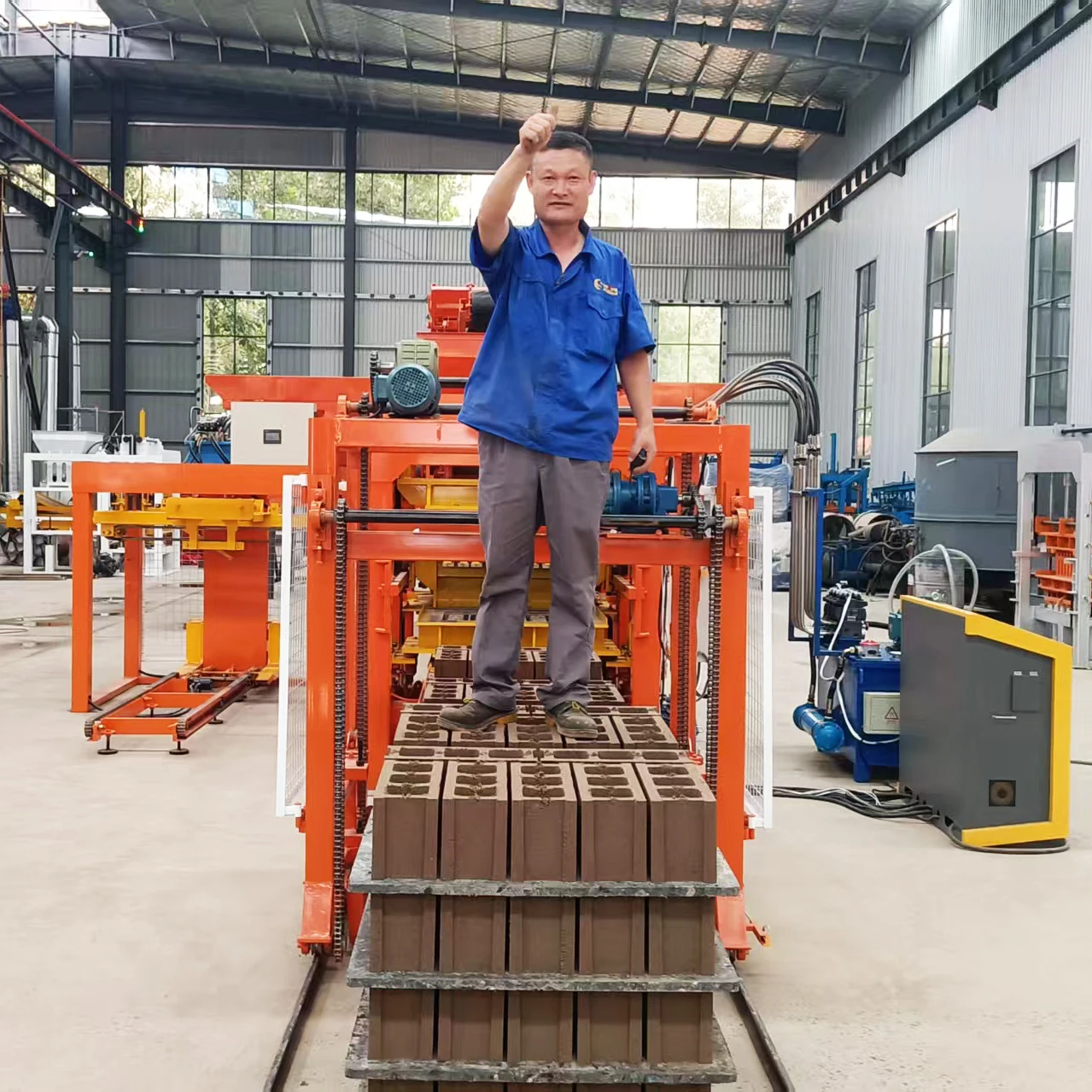
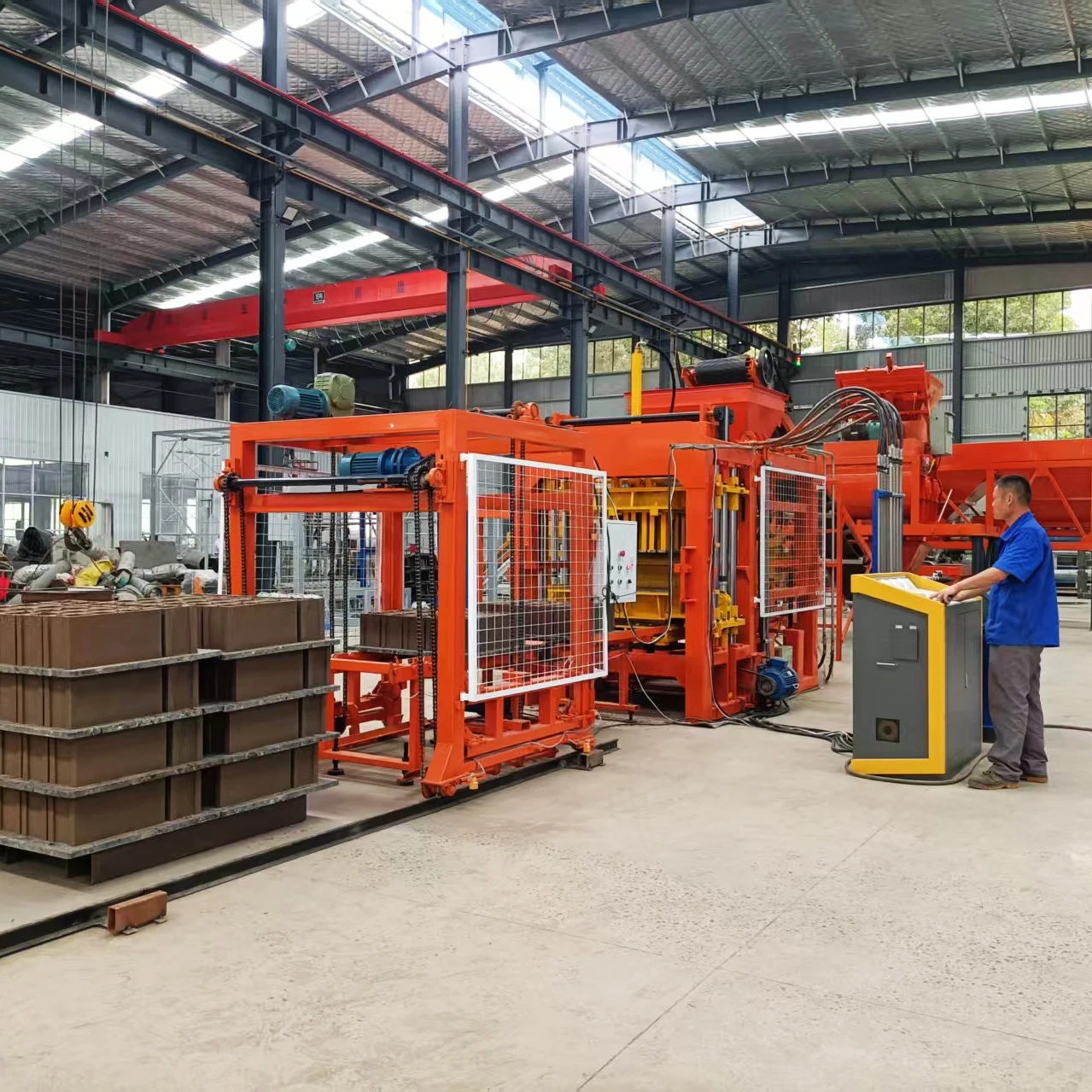
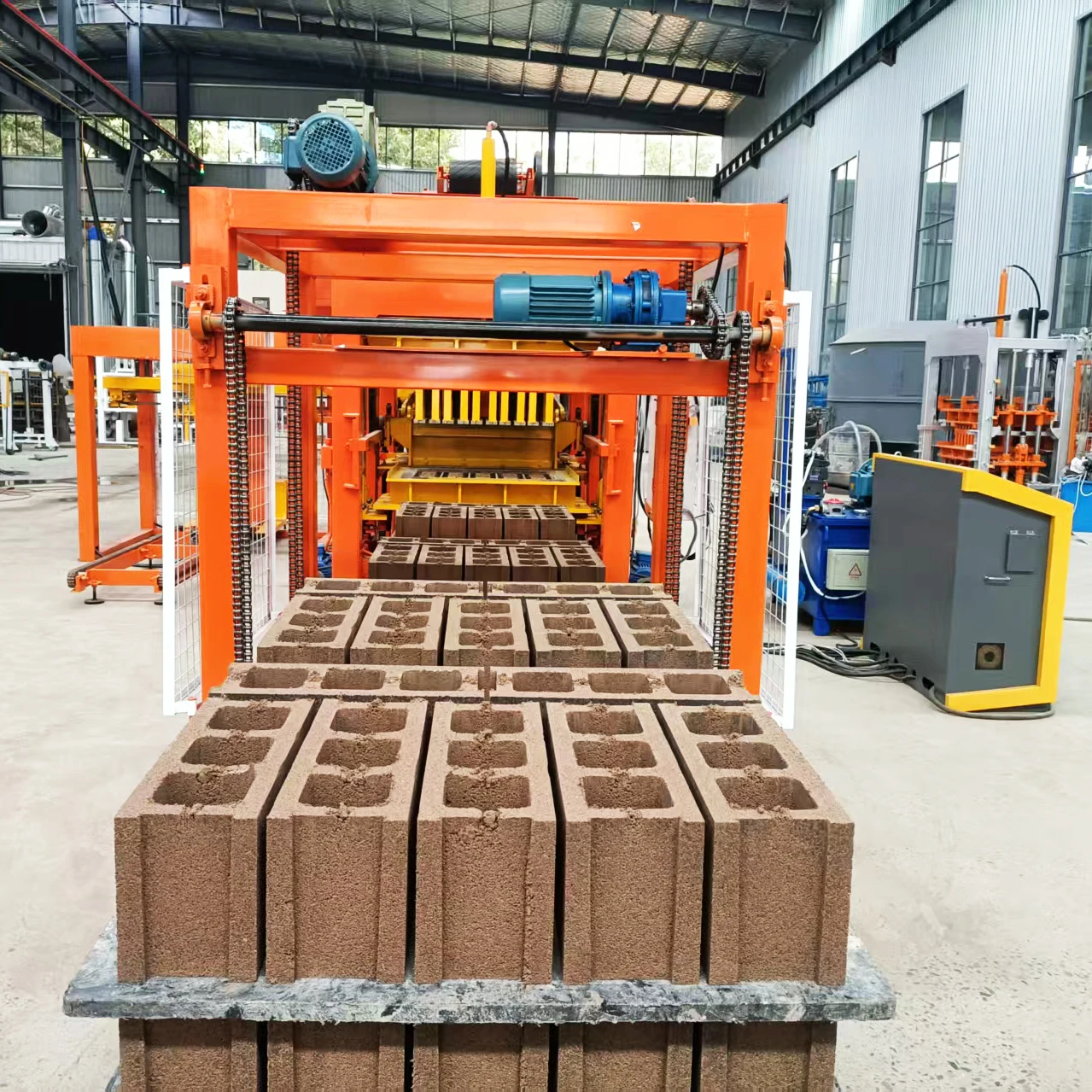
Description
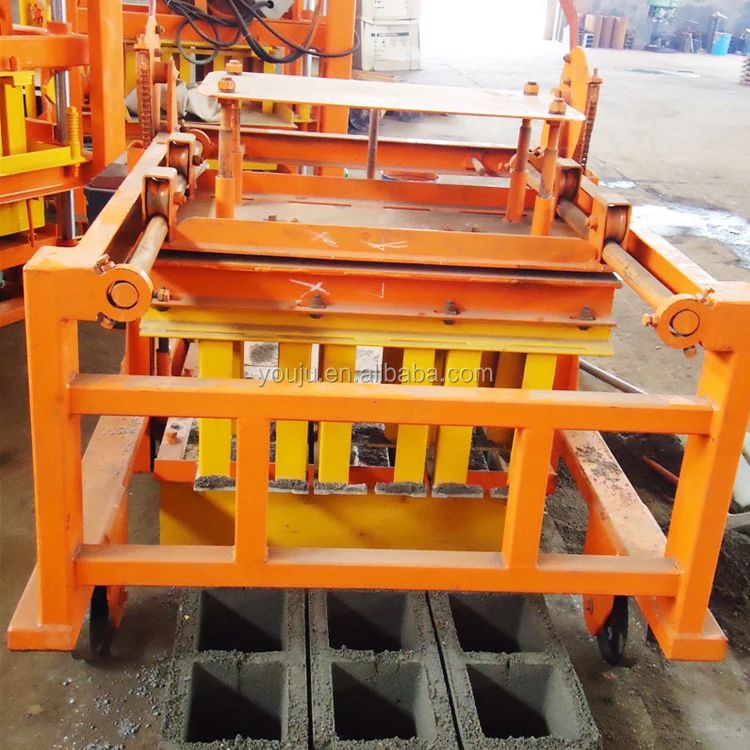
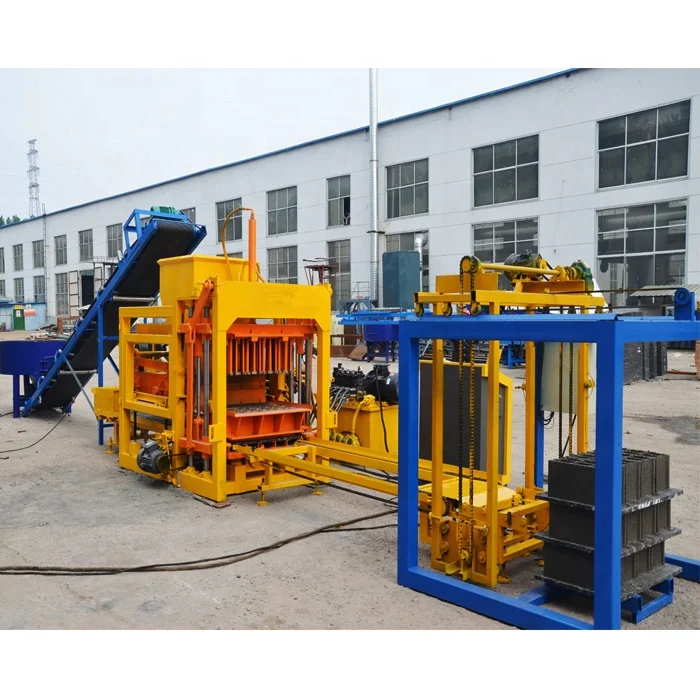
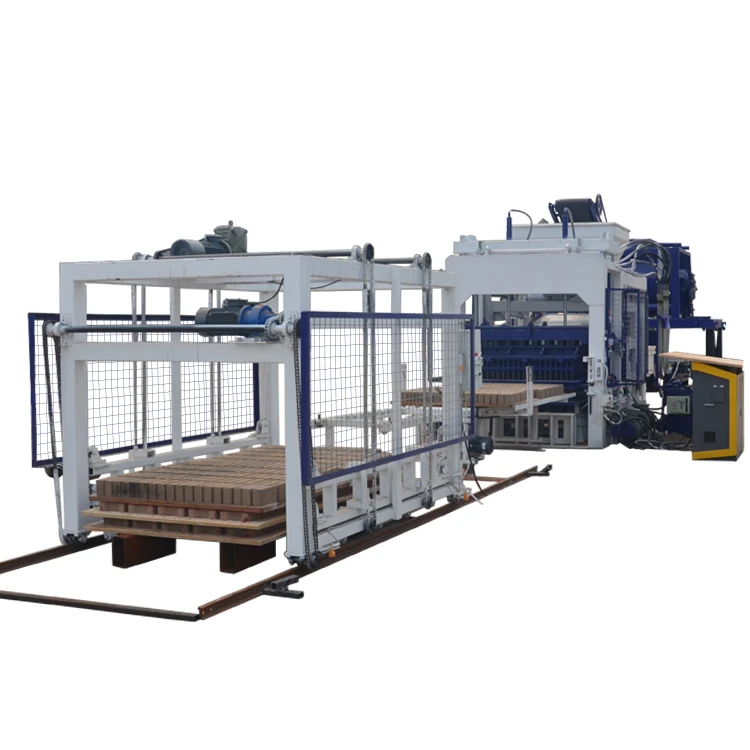
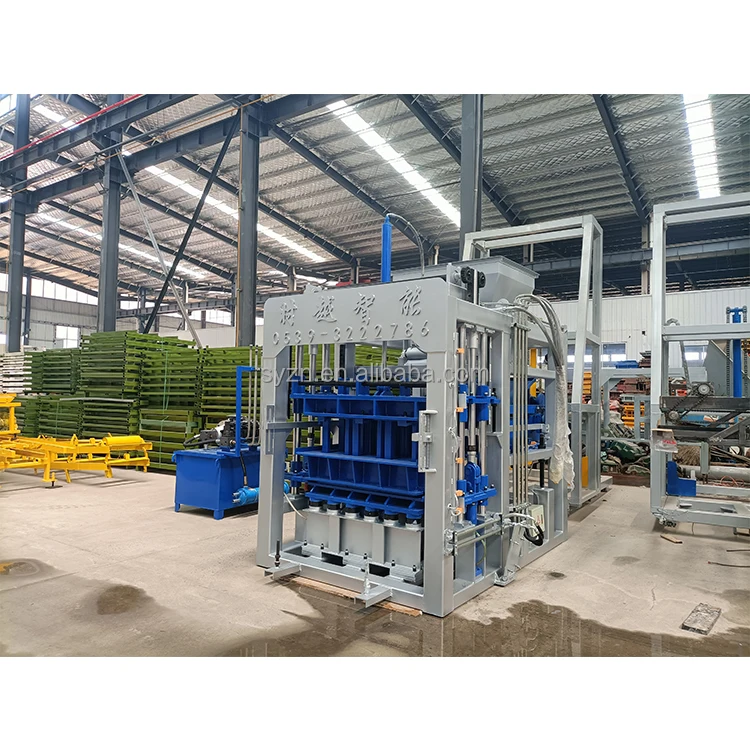
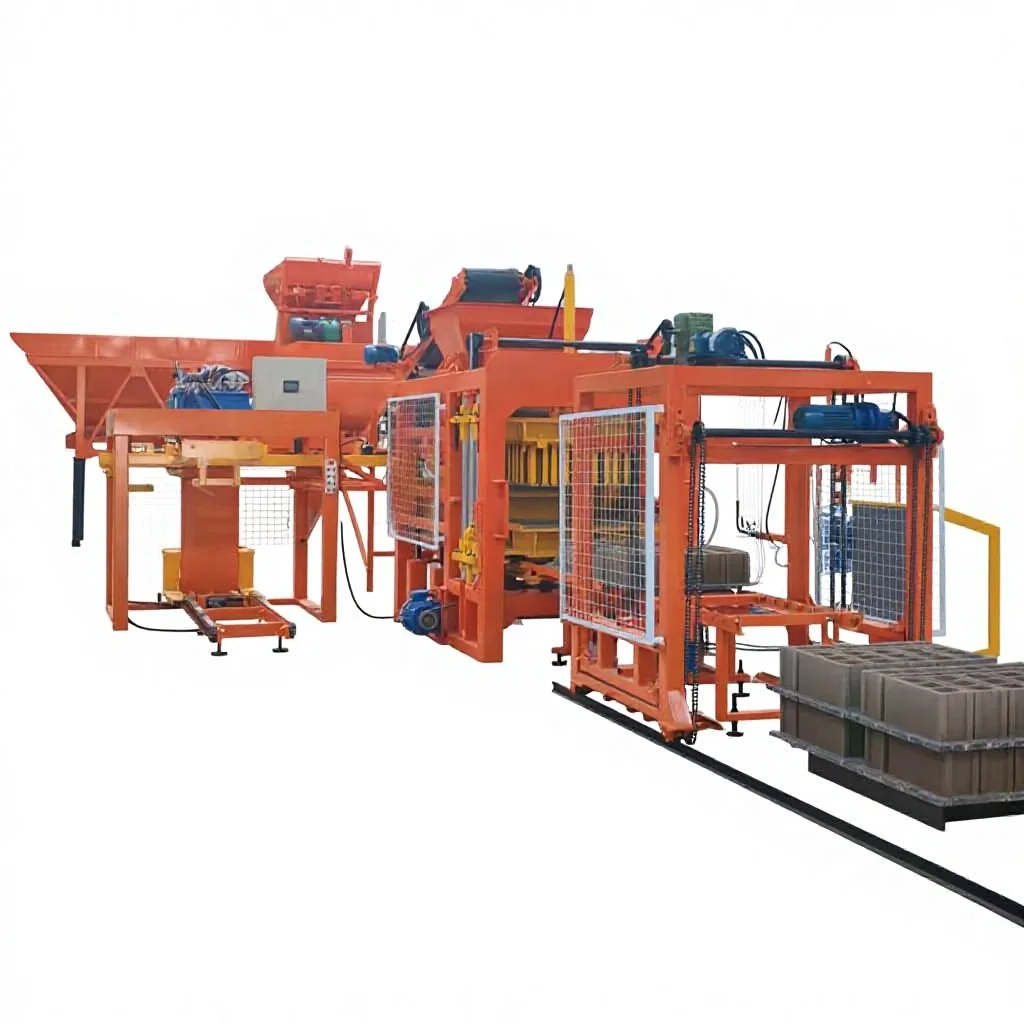
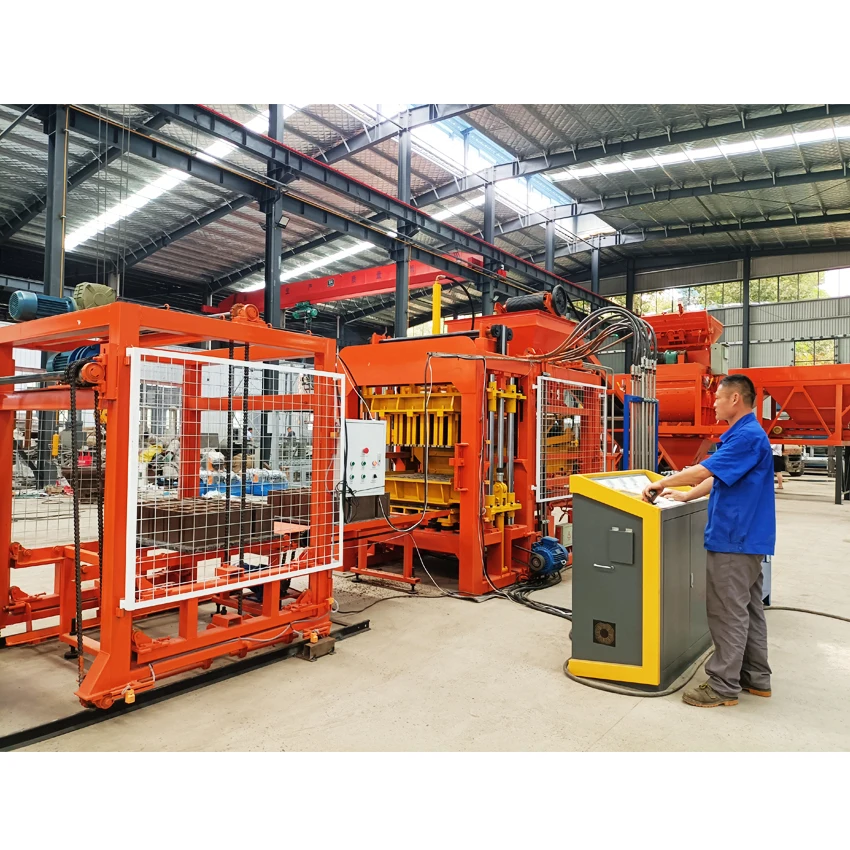
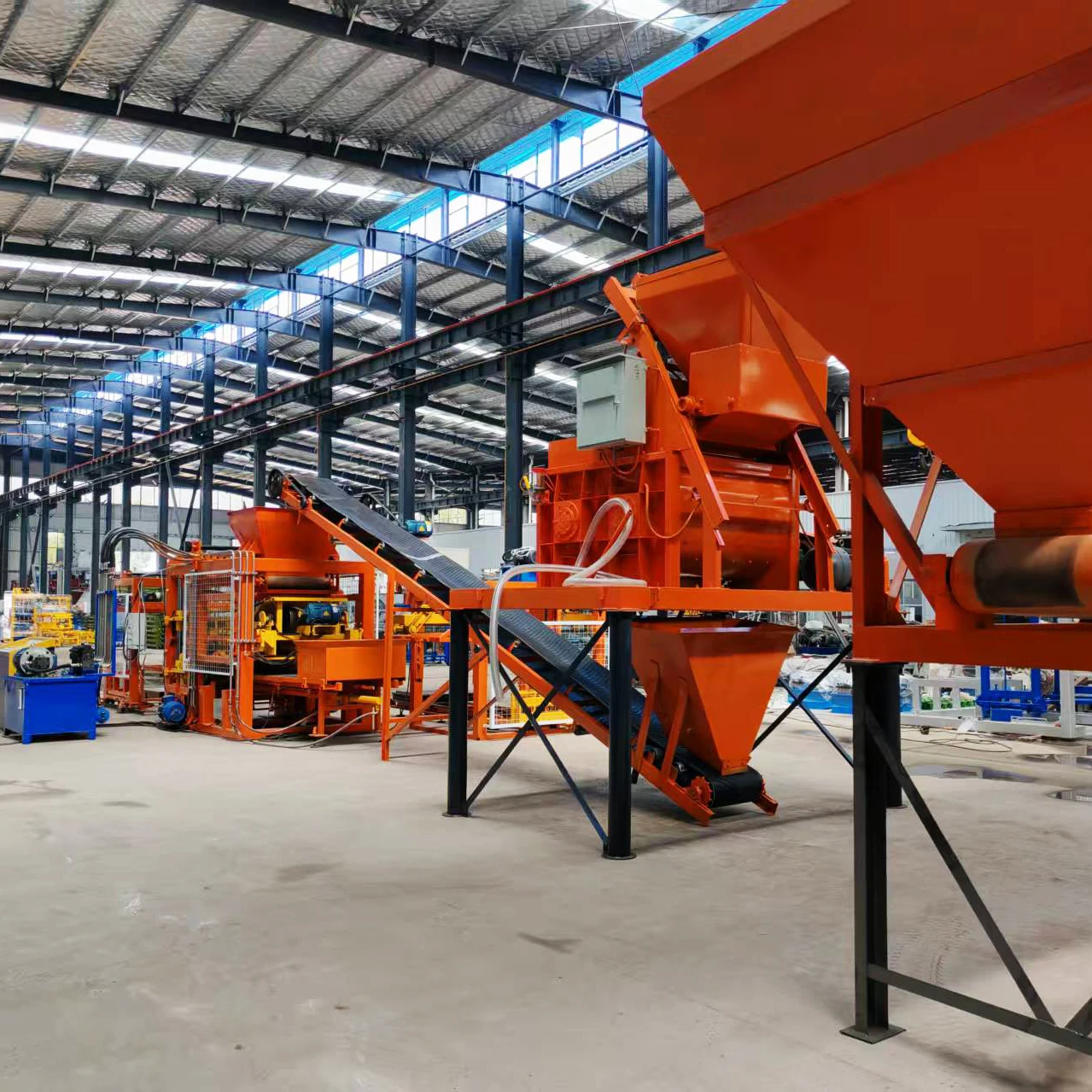
Integrated Block Line Dispatch — The QT6-15 block machine in stock is shipped with its hydraulic station, pallet set, and control panel pre-matched, so container loading and arrival timing are quoted before production starts.
Technical Specifications
| Parameter | Value |
|---|---|
| Product Type | Automatic Hydraulic Concrete Block Making Machine |
| Model | QT6-15 |
| Overall Dimensions (L×W×H) | 8200×1700×2950 mm |
| Total Mass | 7 T |
| Overall Power | 37 kW |
| Vibration Form | Platform Vibration |
| Vibration Frequency | 0-60 Hz |
| Vibration Force | 45 kN |
| Moulding Mode | Load automatically, vibration moulding |
| Demolding Method | Hydraulic |
| Pallet Size | 880×850 mm |
| Molding Cycle | 15-20 s |
| Control System | PLC (Programmable Controller) with touch screen interface |
| Recommended Factory Area | 1200 m² |
| Output Capacity (Hollow block 400×200×200 mm) | 1080-1440 pcs/hour, 8640-11520 pcs/8hr |
| Output Capacity (Hollow block 400×150×200 mm) | 1440-1920 pcs/hour, 11520-15360 pcs/8hr |
| Output Capacity (Solid brick 240×115×53 mm) | 5760-7680 pcs/hour, 46080-61440 pcs/8hr |
| Output Capacity (Rectangular paving brick 200×100×60 mm) | 2160-2880 pcs/hour (basis: molding cycle 20-25s), 17280-23040 pcs/8hr |
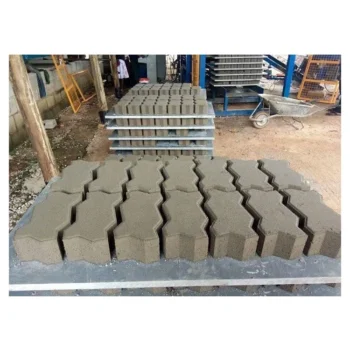
| Output Capacity (Zigzag paving brick 225×112.5×60 mm) | 2160-2880 pcs/hour (basis: molding cycle 20-25s), 17280-23040 pcs/8hr |
| Automation Level | High (automatic loading, intelligent electronic control, fault diagnosis system) |
| Hydraulic System | Independent integrated hydraulic station |
| Block Compressive Strength | More than 15 MPa |
| Warranty | 1 year for whole machine (excluding spare parts) |
Application Suitability
| Application | Material or Output |
|---|---|
| Hollow block production for building walls | Crushed stone, sand, cement, and waste ash blends |
| Solid brick manufacturing | Fly ash, slag, and cement mixes with reduced cement dosage |
| Rectangular paving brick for roads and yards | Coarse aggregate and cement under 20-25 s molding cycle |
| Zigzag interlocking paving brick | Sand, fine aggregate, and cement for permeable surfaces |
| On-site production for housing projects | Local aggregate with site-specific moisture and gradation |
Why the Dispatch Date Matters More Than the Brochure Number
A fast delivery concrete block machine only helps if the pallet size, voltage, and moulds arrive matched to your site.
I have watched buyers lose entire shifts because the quotation listed a cycle time that assumed one block format, while their daily order book demanded a completely different shape. By the time the QT6-15 block machine in stock reached their port, the curing racks they had already built did not fit the pallet dimensions, and the local electrician spent days rewiring the control panel for the wrong frequency [NEED_CITE: common commissioning delays from unconfirmed voltage and frequency]. The capacity chart on paper meant nothing against a project deadline slipping week by week.
Stock Availability and Container Loading
When a buyer needs a fast delivery concrete block machine, the first question is not the cycle time — it is whether the exact configuration sits in the warehouse or enters production. The QT6-15 block machine in stock is dismantled into press frame, hydraulic station, and control cabinet for container loading, and each sub-assembly is secured to prevent transit shift. Dispatch lead time is stated at inquiry, not after the deposit clears, so project-deadline buyers can align shipping with their civil works schedule.
Matching Pallet and Curing Area Before Shipment
The 880×850 mm pallet size drives every downstream decision: curing rack spacing, forklift tine width, and stacking height. If the buyer already operates a curing yard built for a different pallet dimension, the whole line stalls at the stacking station [NEED_CITE: pallet dimension mismatch causing manual restacking on block plants]. Confirming pallet material — bamboo, PVC, or steel — against local humidity and forklift capacity prevents cracked or warped pallets that would otherwise halt the press while operators search for replacements.
What the Molding Cycle Actually Means on Site
The quoted 15-20 s cycle applies to hollow blocks at 400×200×200 mm; switching to paving bricks pushes the cycle to 20-25 s because higher vibration force and longer pressure hold are required for surface finish. Output capacity therefore shifts from 1080-1440 pcs/hour down to 2160-2880 pcs/hour only when the smaller paving format is counted. Buyers planning a daily target must anchor their calculation to the specific block format they will run most often, not the highest number on the sheet.
Independent Hydraulic Station and Dust Isolation
The hydraulic station sits in its own enclosure, separated from the main press vibration and the dust cloud that rises from every demolding stroke. This arrangement keeps valve spools and pump seals cleaner, extending service intervals in workshops where dry aggregate is fed without enclosed conveyors. When replacement seals are eventually needed, the integrated station uses standard cartridge valves that are available through regional hydraulics distributors rather than proprietary fittings [NEED_CITE: hydraulic cartridge valve interchange standards].
When the Wrong Configuration Reaches the Site
A buyer once ordered a machine rated for 380 V / 50 Hz, but the project site ran on 440 V / 60 Hz from a diesel generator. The PLC touch screen flickered on start-up, the fault diagnosis system threw error codes the operator could not read in English, and the hydraulic pump ran above its rated speed, overheating within hours. Voltage, frequency, and control language must be locked before production begins; retrofitting on site costs more than a two-week factory rewire.
Why Source This Machine from Our Workshop
Block machinery is our single production focus, so the press, mould, pallet, and handling equipment leave as one matched system rather than separate purchases bolted together. Configuration is set against the buyer’s actual mix design and local aggregate, not a catalogue default. Moulds are designed for the formats the buyer’s market sells, including custom drawings when standard shapes do not match local demand. Automation level is selectable, allowing a buyer to start semi-automatic and add stacking later. Installation support includes operator training on the specific PLC interface shipped with the machine.
Documentation & Verification
- Factory test record running your block format and pallet size before dispatch
- Line layout showing capacity per block format, not a single blanket number
- Hydraulic and electrical schematic matching the as-built voltage and frequency
- Packing photographs and container loading plan for insurance and customs
- Wear parts and mould list with part numbers for reordering
Installation, Commissioning & Support
- 1200 m² recommended area verified against your curing yard and raw material stockpile
- 37 kW total load requires a dedicated circuit breaker sized for motor starting surge
- Press frame and hydraulic station reassembled on leveled concrete pad per layout drawing
- PLC touch screen language and fault codes confirmed with your operators before first run
- Mould change procedure practiced until your team hits the target swap time
- First-batch block compressive strength tested on site to validate mix and pressure settings
Before You Request a Quote
Send us the block format your market actually buys, the daily volume your project demands, and the raw material test report from your local quarry. Tell us the voltage and frequency at the site panel, the language your operators read, and the curing area dimensions you have already planned. With those details we can confirm whether a QT6-15 block machine in stock fits your deadline or whether a short production run is needed.
Frequently Asked Questions
Q: Which QT6-15 models and standard moulds are currently in stock for immediate dispatch?
A: Standard hollow block and solid brick moulds paired with the 880×850 mm pallet size are typically held in finished stock. Paving brick and interlocking moulds are built to order within a stated lead time. Exact availability is confirmed at inquiry against your block format list so the container carries only the tooling you will actually run.
Q: What is the dispatch lead time, and how is the machine dismantled for shipment?
A: Stocked units can be dispatched within days of order confirmation. The press frame, hydraulic station, and control cabinet are separated for container loading, each secured with timber bracing and steel straps. A container loading plan with photographs is provided so you can verify condition upon arrival and plan your reassembly sequence.
Q: Can the arrival estimate be quoted upfront based on my destination port?
A: Yes. Once the dispatch date is fixed, we provide a transit time estimate based on current shipping schedules to your named port. This lets you align foundation work, electrical connection, and raw material delivery so the fast delivery concrete block machine is running within your project window rather than sitting in a bonded warehouse.
Q: What voltage and frequency configurations are available from stock for my target market?
A: The standard configuration is 380 V / 50 Hz / 3-phase, matching many Asian and African markets. Other voltages and frequencies are configured during production or retrofitted before dispatch. The PLC touch screen language is also set at the factory so operators see fault codes and menus in their working language from the first start-up.
Q: Are moulds and hydraulic wear parts shipped together with the machine?
A: Yes. The initial mould set for your chosen block format is loaded in the same container. A wear parts kit — including hydraulic seals, vibration springs, and proximity switches — is packed in a labelled crate so replacements are on hand when the first scheduled maintenance interval arrives, avoiding unplanned downtime while waiting for international courier deliveries.