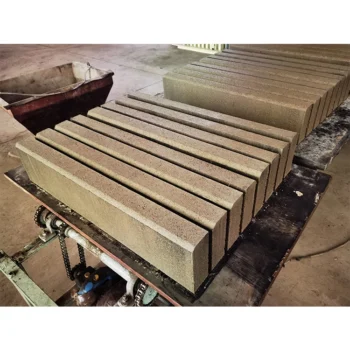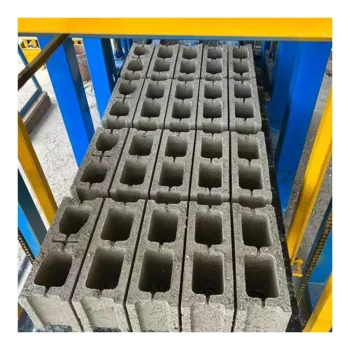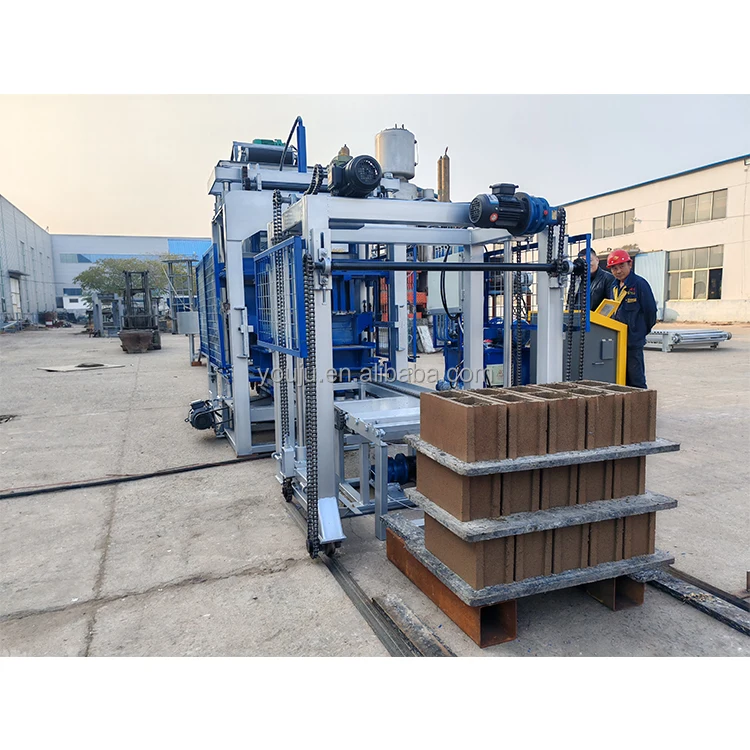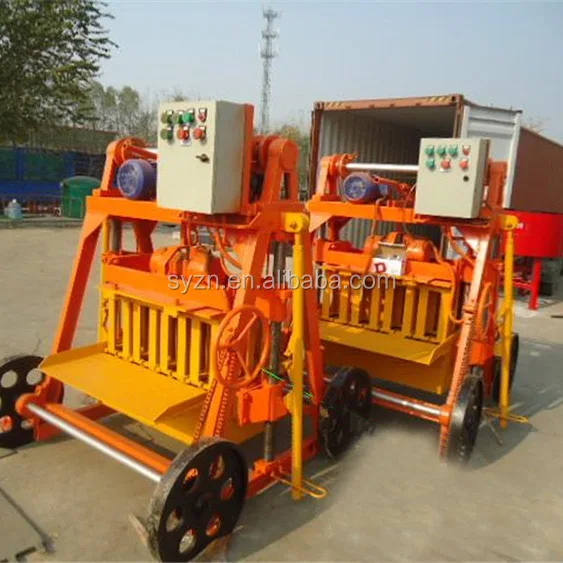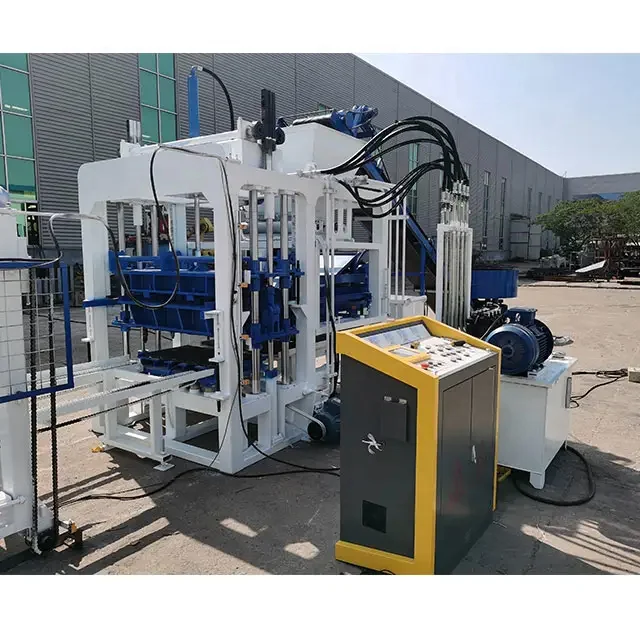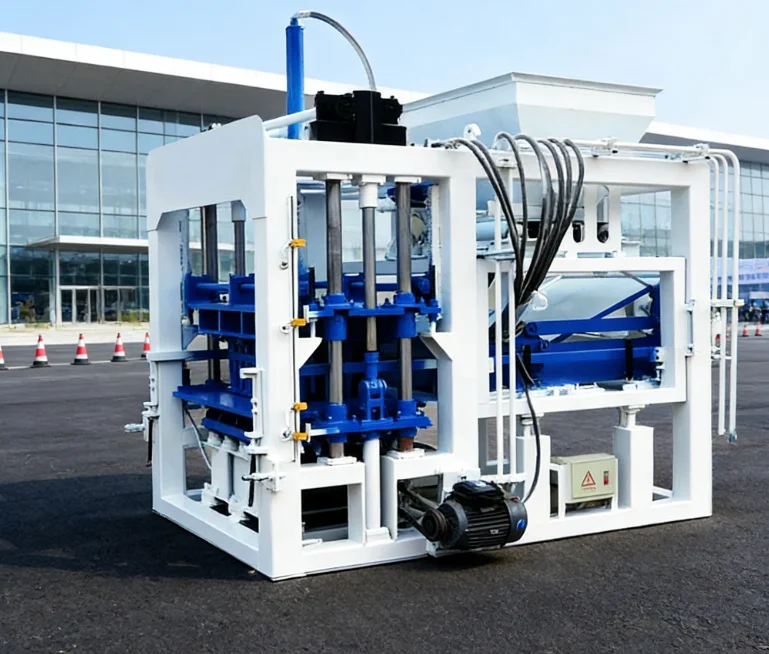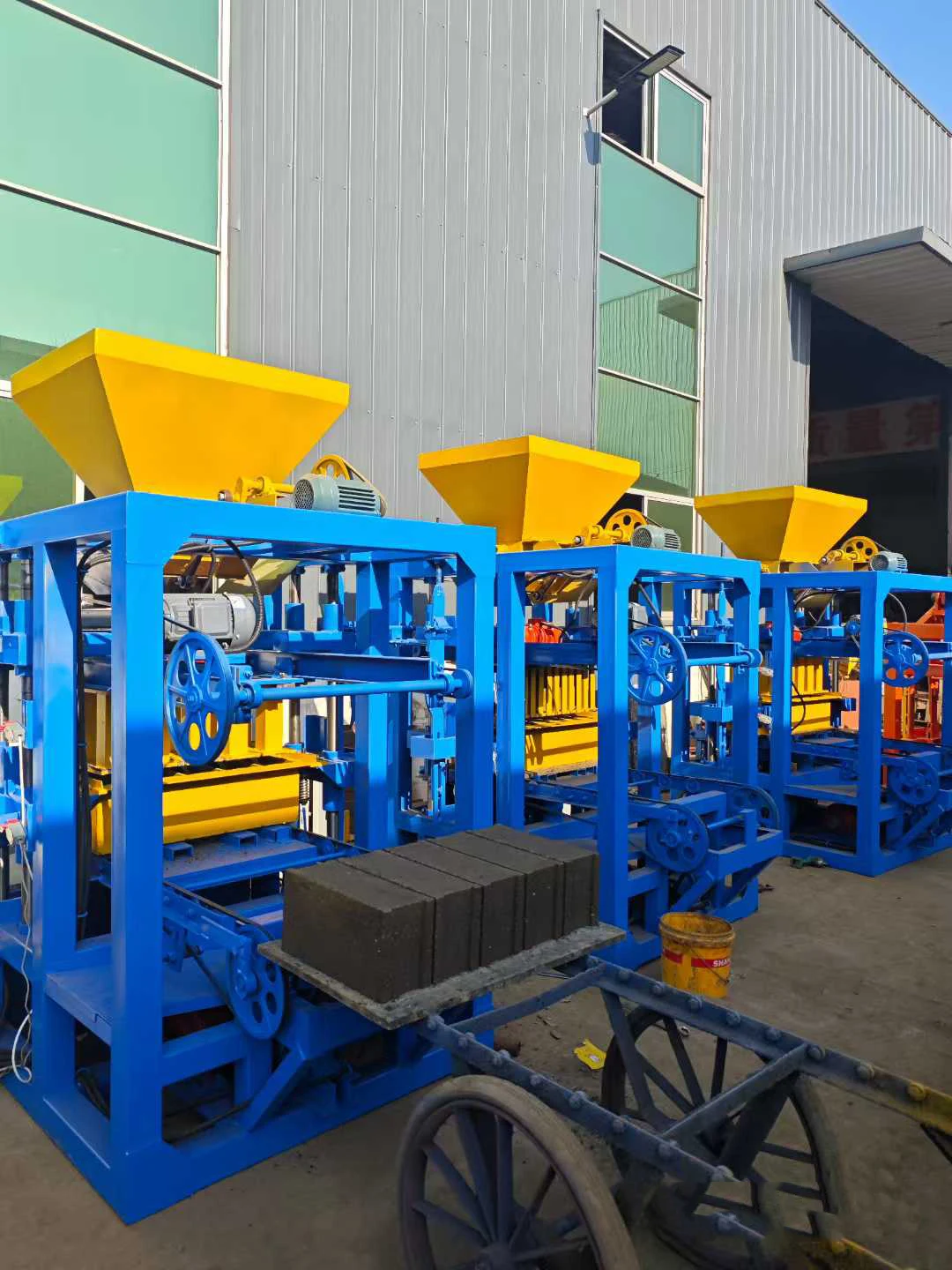


Description
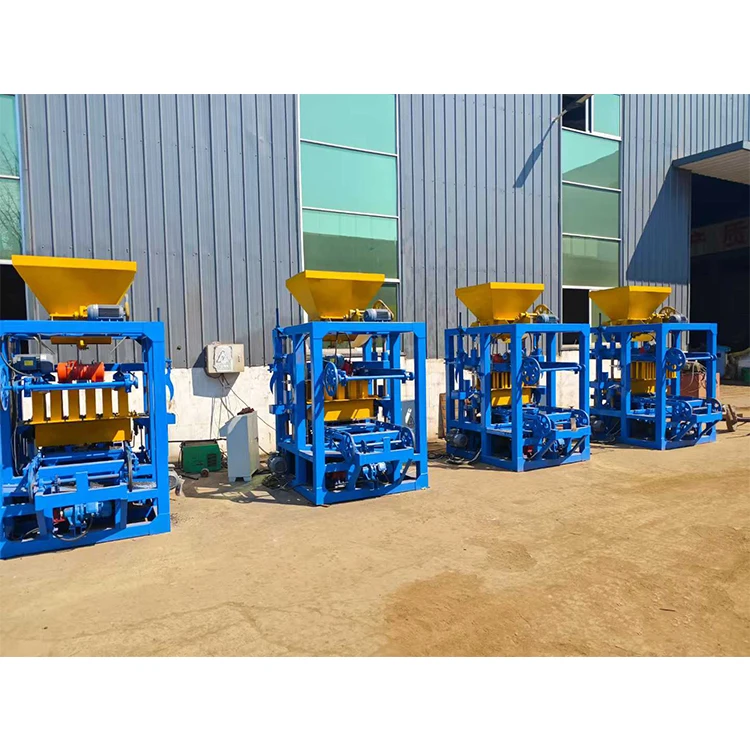
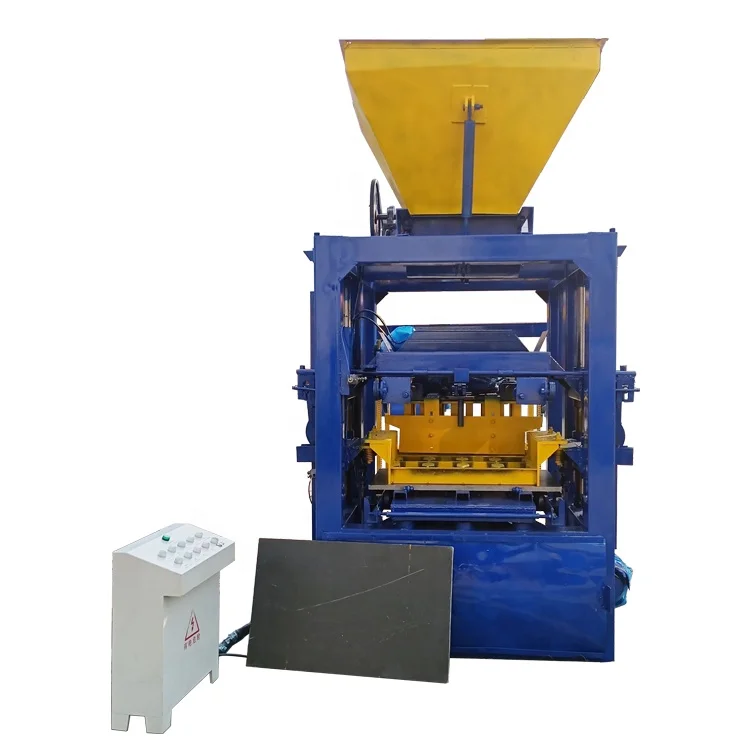
Configuration Matched to Your Site — the QTJ4-24 block machine in stock ships with pallet size, voltage, and mould format confirmed against your actual curing area and local power grid before the container is booked.
Technical Specifications
| Parameter | Value |
|---|---|
| Model | QTJ4-24 |
| Product Type | Automatic Hydraulic Cement Block Making Machine |
| Overall Dimensions (L×W×H) | 3600×1700×2560 mm |
| Pallet Size | 850×450 mm |
| Cycle Time | 24–26 s (basis not stated in source — confirm block format and material) |
| Total Power | 11.95 kW |
| Vibration Force | 45 kN |
| Vibration Configuration | 2×3 kW lower vibrators + 2×1.5 kW upper vibrators |
| Net Weight | 2 T |
| Molding Method | Mechanical vibration with hydraulic assist |
| Material Feeding | Full-automatic spiral material distribution |
| Reducer for Mold Lifting | 350-type |
| Control System | PLC |
| Automation Level | Semi-automatic (mechanical molding, manual pallet handling) |
| Standards | CE compliant documentation available |
Application Suitability
| Application | Material or Output |
|---|---|
| Hollow block production for small-to-medium block plants | Cement, sand, crushed stone aggregate |
| Solid block manufacturing for local building supply | Cement, river sand, gravel |
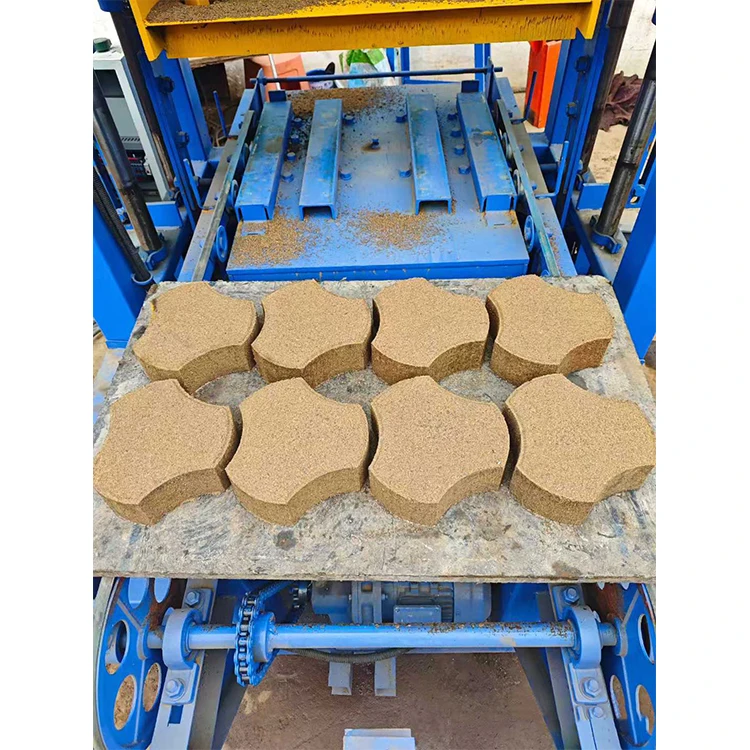
| Interlocking brick for paving and landscaping | Cement, fine aggregate, stone dust |
| Paving brick for walkways and light-traffic areas | Cement, sand, stone with surface finish |
What "Ready to Ship" Actually Means for Your Project Timeline
Stock means the machine is built, tested, and waiting — not that it will run on your site the day it arrives.
When a QTJ4-24 block machine in stock leaves the factory without voltage confirmation or pallet size cross-checked against your forklift, the dispatch speed you gained is lost during commissioning. I have watched containers arrive at port with the correct machine inside, only for the buyer to spend weeks sourcing a step-down transformer because the frequency was never confirmed in writing [NEED_CITE: voltage and frequency standards by export market]. The QTJ4-24 semi-automatic block machine available for quick dispatch only delivers on its schedule advantage when the electrical specification, PLC display language, and mould format are locked before the production release is signed.
Dispatch Lead Time From Order to Container Gate
The QTJ4-24 block machine in stock is held in assembled form with standard moulds fitted, meaning the typical gap between order confirmation and container loading is measured in days rather than the multi-week build slots required for custom-configured lines. Once the buyer confirms voltage, frequency, and the specific block format they intend to produce, the factory test is run on that exact mould and the machine is dismantled for loading. Container loading photographs and the packing plan are shared before the truck leaves the yard.
Arrival Estimate Quoted Before You Commit
Shipping schedules shift, but the transit estimate for a QTJ4-24 block machine in stock is provided at the quotation stage so the buyer can plan foundation work, raw material procurement, and operator availability around a realistic arrival window. The dispatch lead time and arrival estimate are stated upfront in the proposal [NEED_CITE: typical ocean freight transit windows to West African and Southeast Asian ports]. This prevents the common situation where a machine arrives before the curing area is poured or before the first pallet of cement has been sourced locally.
Vibration, Reducer, and Pallet: The Three Specs That Decide Your First Week
The 45 kN vibration force generated by the dual upper and lower vibrator configuration (2×3 kW lower, 2×1.5 kW upper) is a fixed rating for this model, meaning the compaction energy applied to the mix is consistent across every cycle. The 350-type reducer fitted for mould lifting is sized above the minimum commonly seen on machines in this output tier, which extends service intervals before the first reducer maintenance is due. The 850×450 mm pallet size is the dimension that governs your curing rack layout, forklift tine width, and stacking pattern — confirming it before shipment avoids the cost of replacing an entire pallet inventory after arrival. The 24–26 second cycle time is a mechanical baseline; real daily output depends on the block format, mix consistency, and operator rhythm during pallet exchange.
The Cost of Skipping the Pre-Shipment Checklist
A machine that ships fast but arrives with the wrong voltage specification sits idle while a transformer is sourced locally, and the project deadline that drove the urgency in the first place slips anyway. Pallet handling and stacking left out of the scope means the output you were told the machine would produce has to be moved by hand from the press to the curing area, cutting actual daily throughput well below expectation [NEED_CITE: manual pallet handling impact on semi-automatic block machine output]. Moulds specified without reference to the block format your market actually buys forces a second mould order and a production gap while you wait for the replacement tooling to arrive.
Why Source This Machine Through Our Dispatch Channel
Block machinery is our single focus, so the QTJ4-24 is specified as a matched unit — machine, mould, pallet, and handling — rather than assembled from separate supply sources. We confirm voltage, frequency, and PLC display language in writing before the machine leaves the factory, so commissioning begins the day power is connected on your site. Factory test records are run on the exact mould fitted at the time of dispatch, not a generic certificate pulled from a file. Packing photographs show the dismantling method and container loading plan, giving you visibility into how the machine will arrive and what equipment you need to offload it.
Documentation & Verification
- Factory test record on the exact mould fitted at time of dispatch
- Packing photographs showing dismantling method and container loading plan
- Voltage, frequency, and PLC language confirmation captured before release
- Wear parts and mould list shipped inside the container with the machine
- CE declaration documentation provided where applicable to destination market
Installation, Commissioning & Support
- Foundation pad sized to the 3600×1700 mm footprint with level tolerance confirmed before arrival
- Dedicated electrical circuit rated for the 11.95 kW total power draw at your confirmed voltage and frequency
- Machine dismantled into press frame, vibrator table, and feeder assembly for container loading
- On-site reassembly and first-cycle test with your local aggregate and cement mix
- Operator training covering mould change procedure, spiral feeder adjustment, and daily vibration inspection
- Wear parts list and first replacement cycle schedule provided at handover
What We Need to Quote Your Dispatch Date
To give you an accurate dispatch lead time and arrival estimate for the QTJ4-24, share the block format you intend to produce (hollow, solid, interlocking, or paving), your local voltage and frequency standard, and the pallet size your existing curing area and forklift are set up for. If you have a project completion date driving the order, tell us that too — it shapes whether we release a stocked unit immediately or hold for a specific mould swap before loading.
Frequently Asked Questions
Q: Which QTJ4-24 models and standard moulds are currently stocked and ready to ship?
A: The QTJ4-24 is held in stock with standard moulds for hollow block, solid block, interlocking brick, and paving brick formats. Stock levels and available mould formats at any given time are confirmed at the inquiry stage, so buyers receive an accurate picture of what can ship immediately versus what requires a short mould change before loading.
Q: What is the dispatch lead time from order confirmation to container loading?
A: Once voltage, frequency, PLC language, and mould format are confirmed in writing, the factory test is run and the machine is dismantled for container loading. For stocked units with standard moulds already fitted, this process is measured in days rather than weeks, with packing photographs shared before the truck departs.
Q: How is the machine dismantled for shipment, and what container size is required?
A: The QTJ4-24 is dismantled into its main assemblies — press frame, vibrator table, material feeder, and mould — for container loading. The 3600×1700×2560 mm overall dimensions and 2-tonne net weight are within standard container limits. A detailed container loading plan and packing photographs are provided before dispatch.
Q: Will voltage, frequency, and PLC display language be confirmed before the machine leaves the factory?
A: Yes. Voltage, frequency, and PLC display language are confirmed in writing and captured on the production release before the machine is tested and loaded. This prevents the common delay where a machine arrives on site but cannot be commissioned until a transformer or control panel modification is sourced locally.
Q: What arrival estimate can be quoted at the time of order?
A: An arrival estimate based on the dispatch date and typical transit times to your destination port is provided alongside the quotation. This allows you to plan foundation work, raw material delivery, and operator availability around a realistic timeline rather than a container tracking notification that arrives after the ship has already sailed.