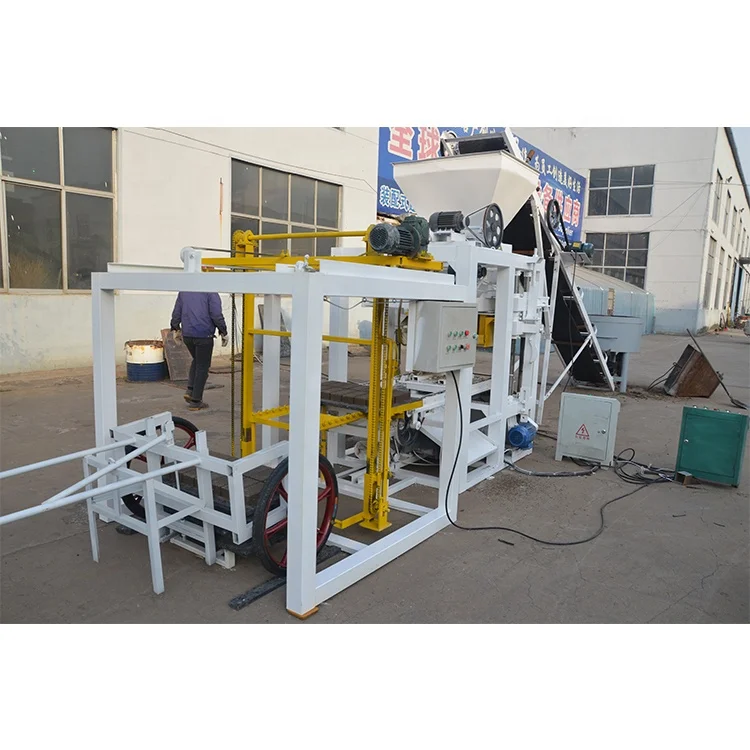


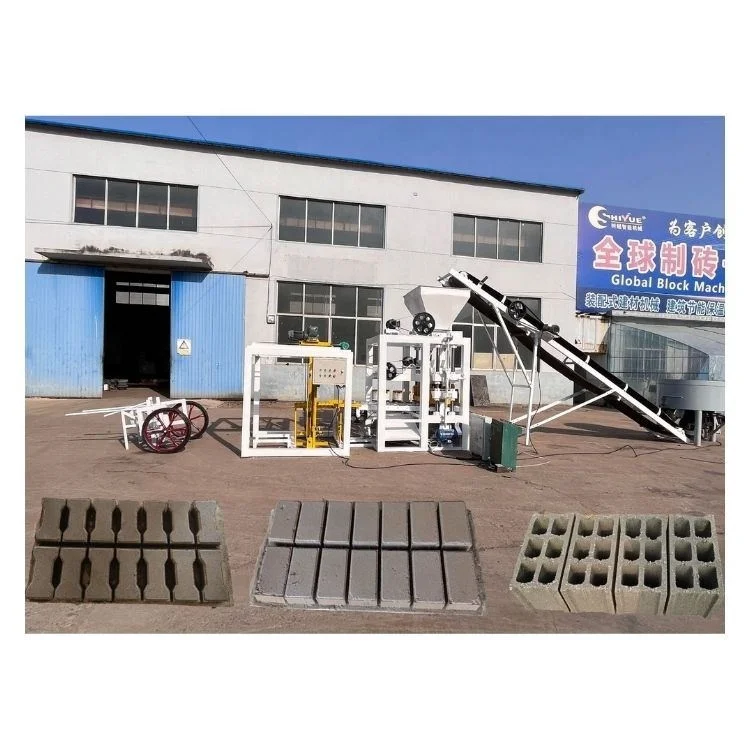
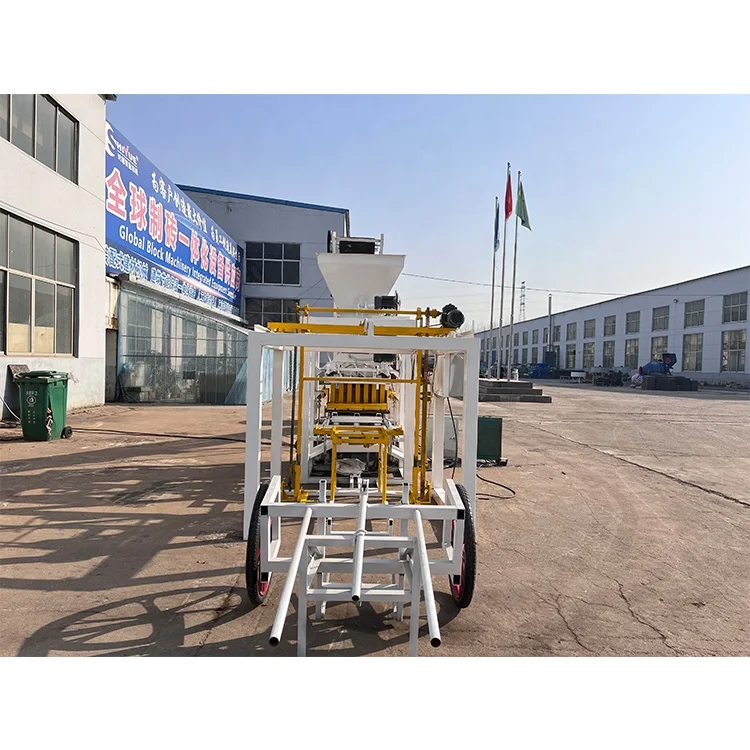
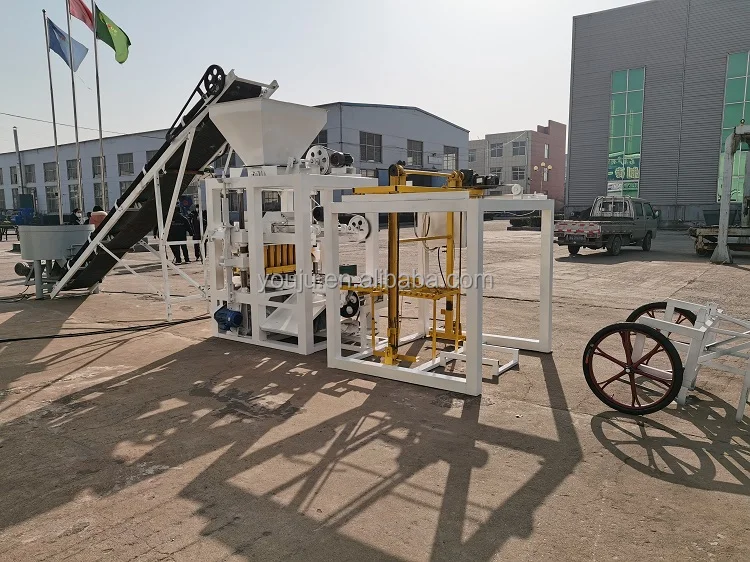
Description
Dispatch-ready block press — every QTJ4-24 leaves our Linyi yard only after voltage, frequency, and control language are verified against the buyer’s site electrical plan, preventing dead-on-arrival delays.
Technical Specifications
| Parameter | Value |
|---|---|
| Model | QTJ4-24 |
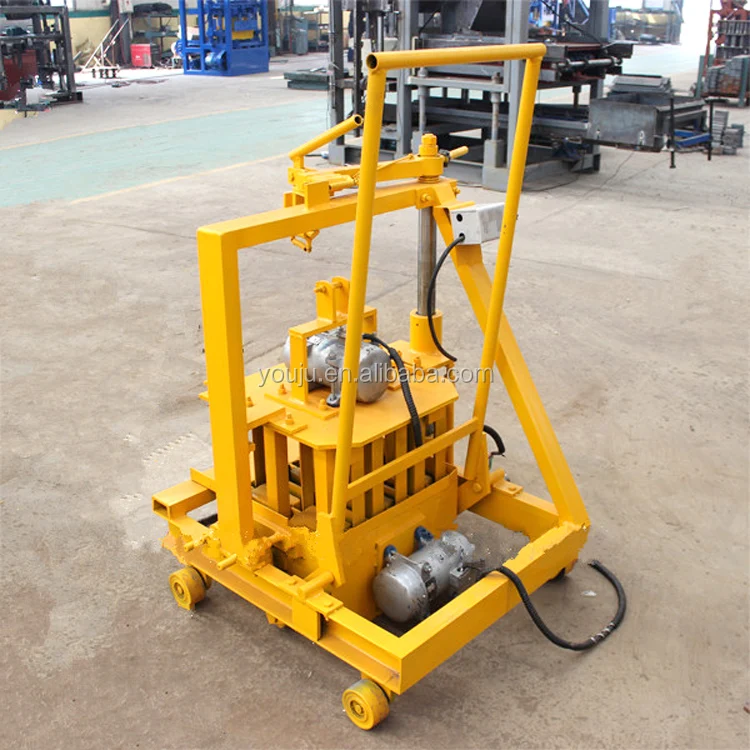
| Product Type | Semi-Automatic Concrete Block Making Machine |
| Molding Type | Platform Vibration |
| Overall Dimensions (working state) | 3600 mm × 1700 mm × 2560 mm |
| Total Mass | 1750 kg |
| Pallet Size | 850 mm × 450 mm |
| Overall Power | 14.25 kW |
| Vibration System | Lower platform vibration (two 3 kW motors) + upper vibration (1.5 kW attached device) |
| Elevating System | Cone-shape motor with JZQ250 speed reducer |
| Delivery Device | Cycloidal pin wheel speed reducer with chains and V-belt |
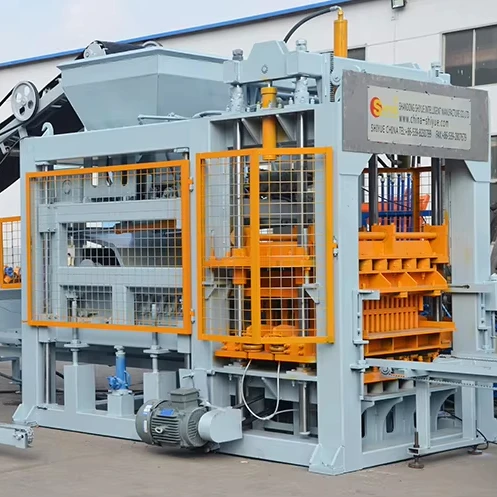
| Frame Type | Dragon gate style, super steel construction |
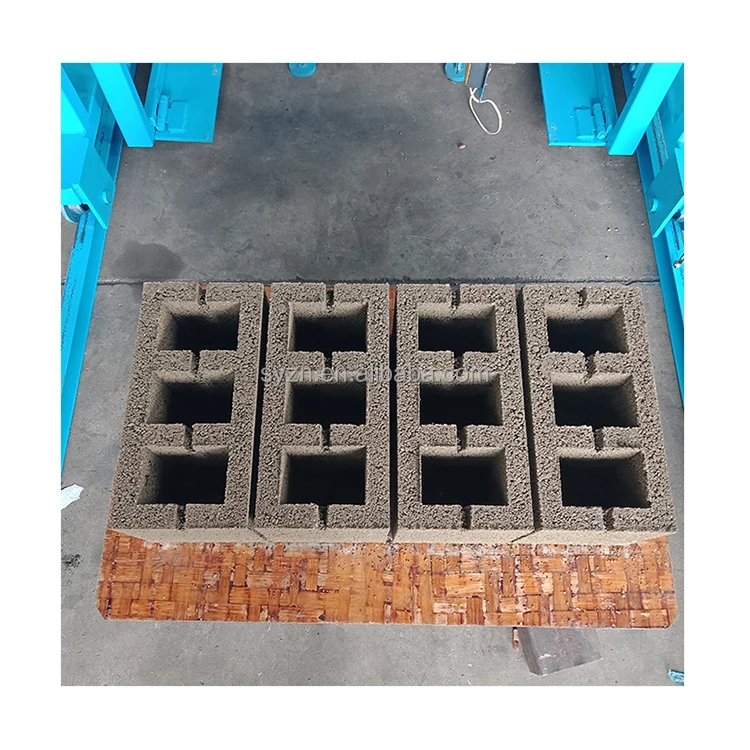
| Mould Format — Hollow | 390 mm × 190 mm × 190 mm (4 pcs/mold) |
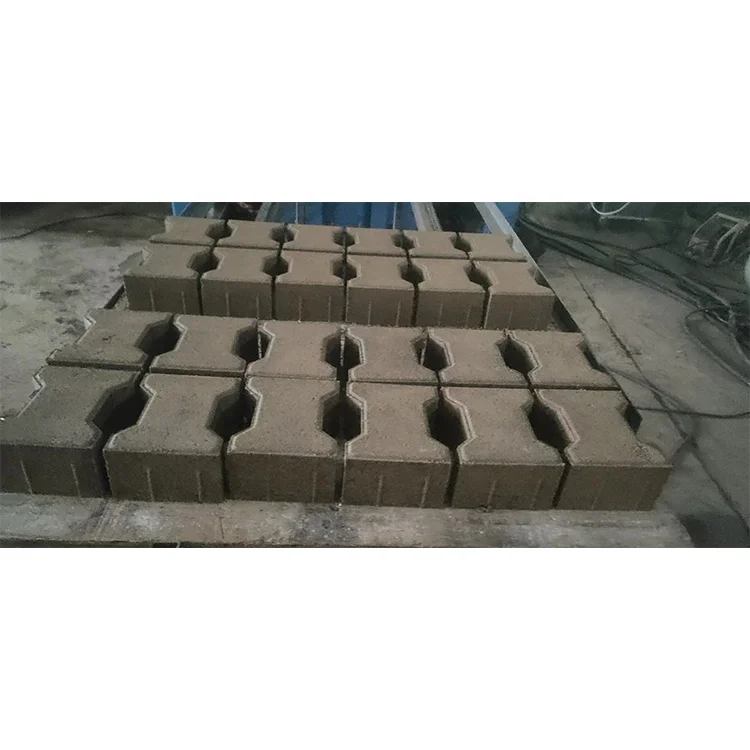
| Mould Format — Solid | 240 mm × 115 mm × 53 mm (21 pcs/mold) |
| Automation Level | Semi-automatic |
| Basic Line Configuration | QTJ4-24 + JQ350 pan mixer + 6 m belt conveyor |
| Optional Equipment | Auto stacker (3–6 layers depending on block height) |
| Voltage & Frequency | Configurable — confirm before dispatch |
| Output Capacity | Basis to be confirmed per block format and mix design |
Application Suitability
| Application | Material or Output |
|---|---|
| Hollow block production for small masonry projects | Crushed stone, sand, cement blends on 390×190×190 mm format |
| Solid brick runs for load-bearing walls | Local aggregate and cement on 240×115×53 mm format |
| On-site block production at construction yards | Contractor-sourced aggregate with portable pan mixer feeding |
| First-plant entrepreneurship | Low-investment semi-automatic line with manual pallet handling |
| Paving block and kerbstone production | Mould availability to confirm per format drawing |
Why the Voltage Question Must Come Before the Container Booking
A stationary block machine in stock ships fast, but a voltage mismatch at the destination can stall commissioning for weeks.
I have watched a contractor lose an entire curing cycle because the control cabinet arrived wired for 380 V / 50 Hz while the site transformer only delivered 440 V / 60 Hz. The machine sat idle under tarpaulin until a local electrician sourced compatible contactors. That delay is entirely avoidable when the electrical specification is confirmed at the order stage rather than assumed from a catalogue default [NEED_CITE: voltage and frequency standards by export market]. Buyers focused on the fastest dispatch sometimes skip this step, and the consequences land squarely on the project schedule.
Stock Availability and Dispatch Lead Time
The QTJ4-24 is held as a stationary block machine in stock at our Linyi yard, meaning the press, frame, and vibration assembly are built and bench-tested before an order is placed. Dispatch lead time covers final inspection, dismantling for container loading, and export documentation rather than manufacturing from scratch. Buyers working against a project deadline can plan their vessel booking with a known departure window instead of waiting on a production queue.
Container Loading and Dismantling Method
The dragon gate frame is separated from the vibration platform and packed flat against the container wall, while the mould assembly and pallet stack are crated to prevent transit damage. A loading photograph set is shared with the buyer before the container doors close, so the receiving team knows exactly how to sequence the unload. This matters on tight sites where a forklift and crane may only be available for a single day [NEED_CITE: standard container loading practice for heavy machinery].
How Vibration Force and Pallet Size Shape the Block You Actually Sell
The dual 3 kW lower vibration motors deliver platform vibration through the pallet, while the 1.5 kW upper device applies pressure from above — this two-direction approach compacts the mix against the mould walls rather than relying on gravity alone. The 850 mm × 450 mm pallet size dictates how many blocks sit in a single curing rack row, so buyers must verify that their existing rack spacing and forklift tine width match this dimension before ordering. A mismatch here means purchasing an entirely new set of curing racks or living with manual restacking every shift. The JZQ250 speed reducer on the elevating system controls mould lift speed, which influences how cleanly the green block releases without corner spalling — a detail that becomes visible only after the first hundred cycles.
What Happens When Stock Configuration Meets the Wrong Aggregate
Ordering a stationary block machine in stock without confirming that its vibration profile suits your local aggregate is a common shortcut. If the crushed stone available near your site is harder or more angular than the mix the machine was tested on, the vibration amplitude may be insufficient to achieve full compaction, leaving blocks that crumble at the edges during pallet transfer. The semi-automatic pallet handling means operators are physically present at the discharge end, so inconsistent block quality becomes a safety and morale problem, not just a yield problem [NEED_CITE: aggregate hardness and vibration compaction requirements].
Why Buyers Source the QTJ4-24 Through This Channel
Single-focus block machinery sourcing means the press, mould, pallet, and optional auto stacker are specified as a matched set rather than assembled from unrelated suppliers. The basic line — QTJ4-24 paired with a JQ350 pan mixer and 6 m belt conveyor — is configured so that mixer batch volume and conveyor feed rate align with the press cycle without material bottleneck. Mould formats ship from stock for the two most common hollow and solid block sizes, and custom mould drawings can be quoted against buyer specifications. Voltage, frequency, and control display language are confirmed line-by-line before the machine leaves the yard, eliminating the most frequent cause of post-arrival delay.
Documentation & Verification
- Factory test record on your specified hollow and solid block format before dispatch
- Mould drawing and format list confirming cavity count and block dimensions
- Voltage, frequency, and control language confirmation sheet signed at order
- Packing photograph set showing dismantling method and container load sequence
- Wear parts and mould list with part numbers for first reorder cycle
Installation, Commissioning & Support
- Foundation pad sized to 3600 mm × 1700 mm footprint with anchor bolt template provided
- Dedicated 14.25 kW circuit with confirmed voltage and frequency before energizing
- Frame and vibration platform reassembly guided by labeled dismantling photographs
- First-run parameter setting for vibration duration and elevating speed per block format
- Operator training on mould change procedure and pallet feed sequence
- Spare mould wear plates and vibration motor brushes included for initial operating period
What to Prepare Before Requesting a Dispatch Quote
Share your target block format with daily volume, the local aggregate type and maximum particle size, and your site voltage and frequency. Include the pallet dimensions and curing rack layout you already operate, so the 850 mm × 450 mm pallet can be evaluated against your existing infrastructure. Confirm the control panel display language your operators read, and note whether the optional auto stacker is required for your output volume.
Frequently Asked Questions
Q: What is the current stock status and fastest dispatch lead time for the QTJ4-24?
A: The QTJ4-24 is held as a stationary block machine in stock at our Linyi yard. Dispatch lead time covers final bench testing, dismantling for container loading, and export paperwork rather than manufacturing. Exact departure timing depends on the container booking window for your destination port, which we confirm at the order stage.
Q: How is the machine dismantled and loaded into a container for shipment?
A: The dragon gate frame separates from the vibration platform and packs flat. Mould assemblies and pallets are crated individually. A full photograph set documenting the dismantling sequence and container loading position is shared before the container doors close, so your receiving crew can plan the unload order.
Q: Can voltage and control language be confirmed before the machine leaves the factory?
A: Yes — voltage, frequency, and PLC display language are confirmed in writing before dispatch. This step is built into our order process specifically because a voltage mismatch discovered at the job site can delay commissioning by several weeks while local components are sourced.
Q: Which moulds ship with the machine, and what is the lead time for custom formats?
A: The standard stock mould set includes 390×190×190 mm hollow (4 pcs/mold) and 240×115×53 mm solid (21 pcs/mold). Custom mould formats are produced from buyer drawings; lead time depends on cavity complexity and is quoted separately once the drawing is reviewed.
Q: What arrival estimate can I expect based on my destination port?
A: Arrival timing depends on the sailing schedule from the loading port to your destination. We quote a vessel booking window at the order stage and track container status through departure, so you can align site preparation and crane rental to a known arrival range rather than guessing.