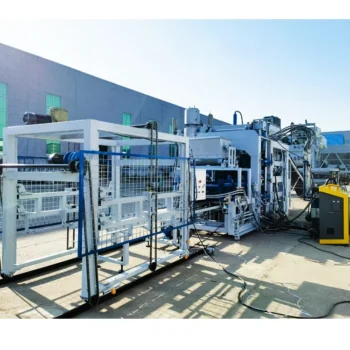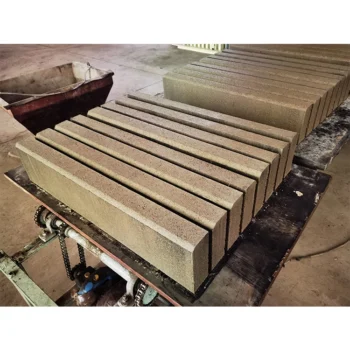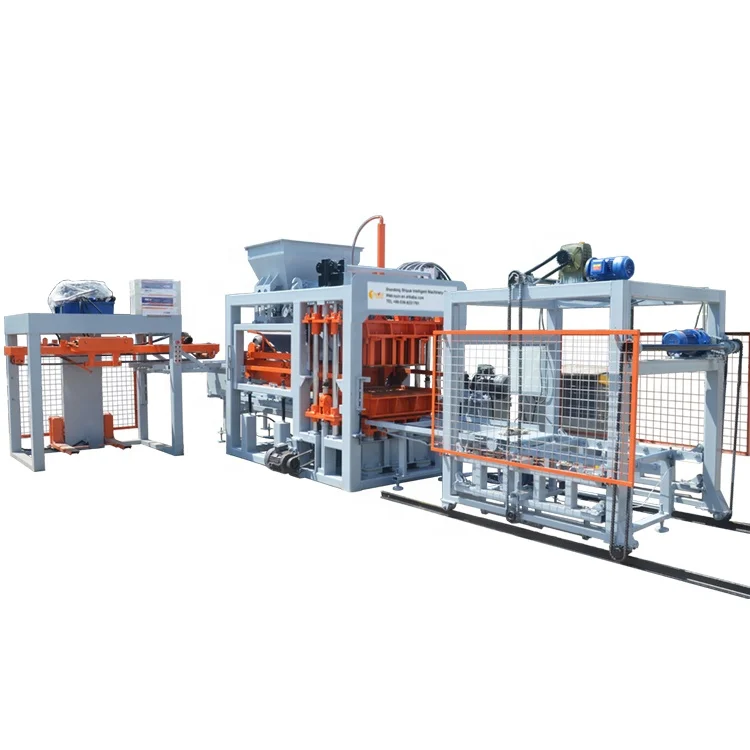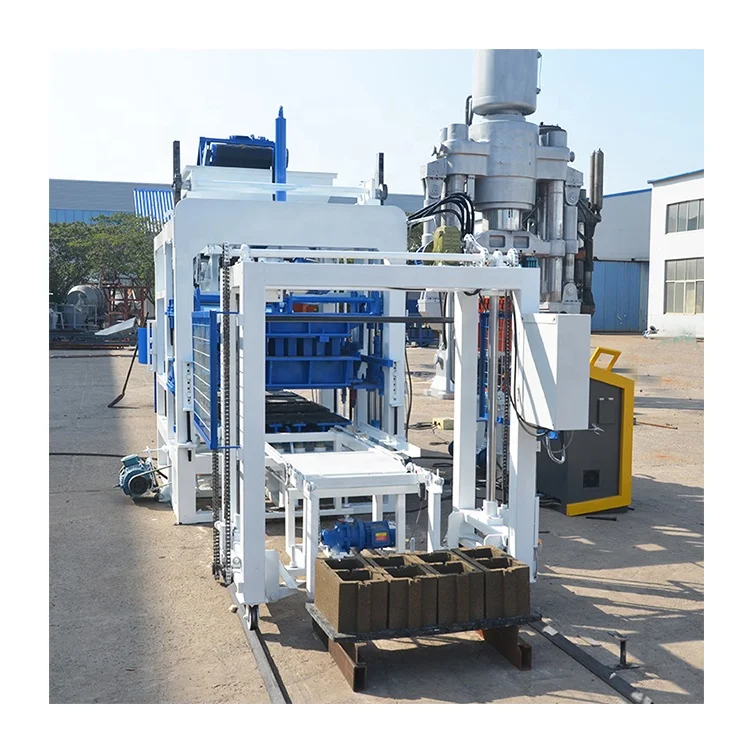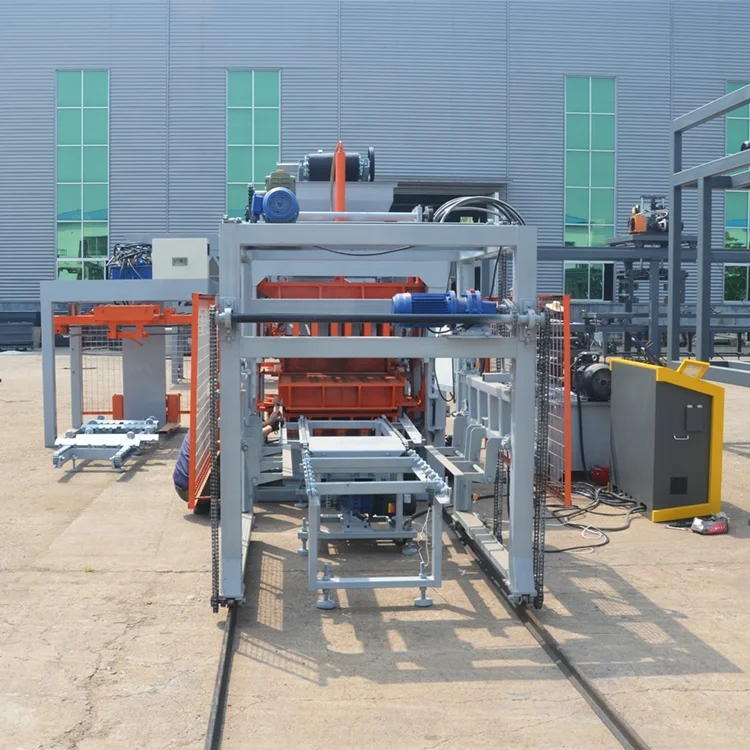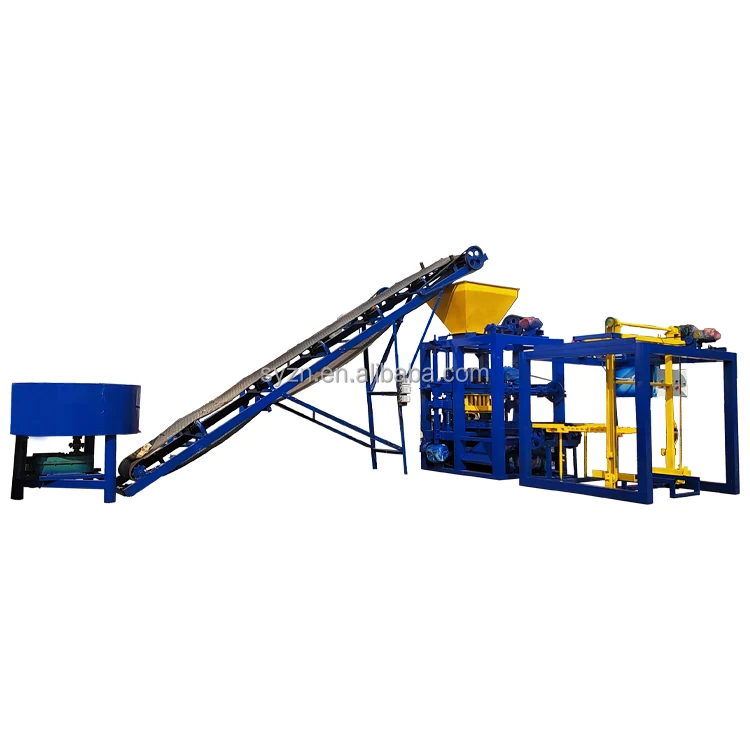
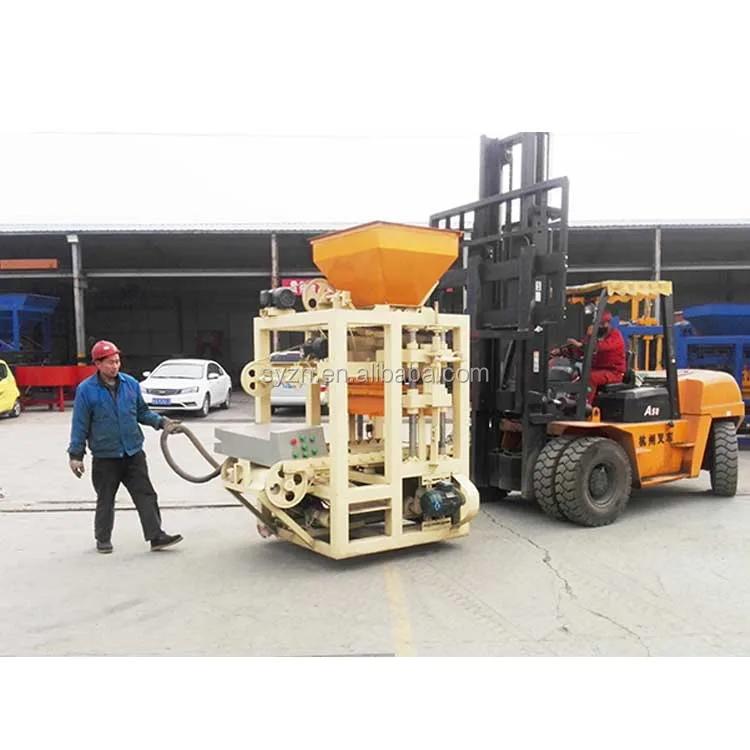
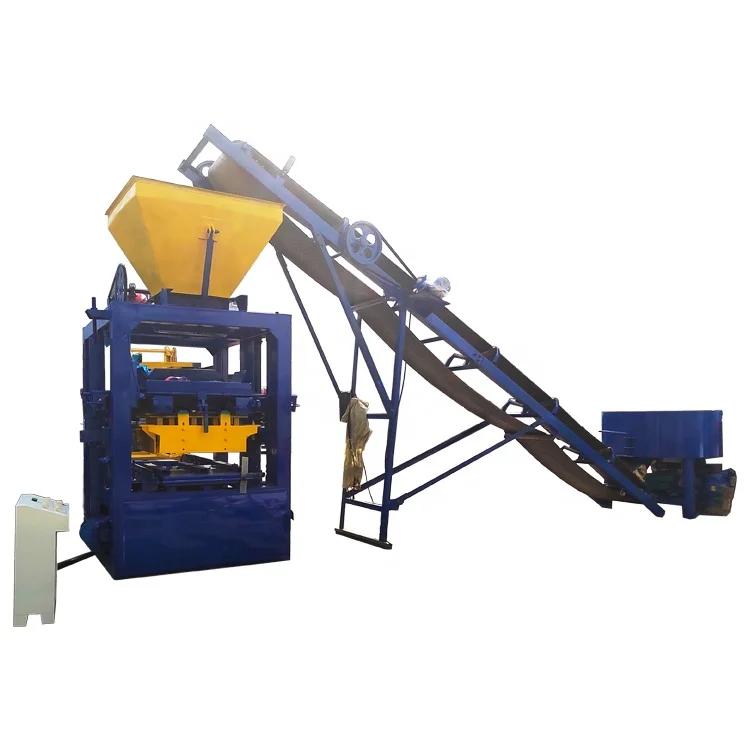
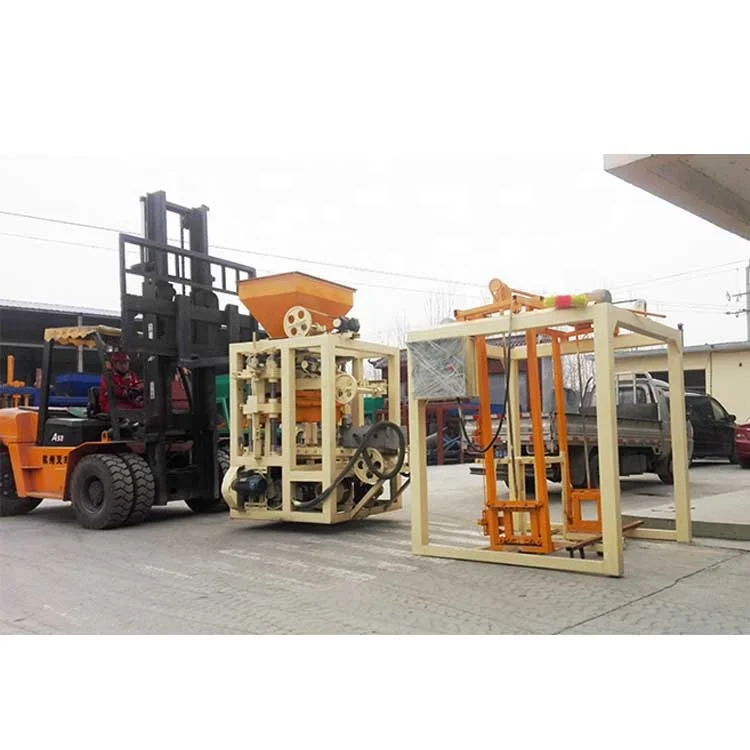
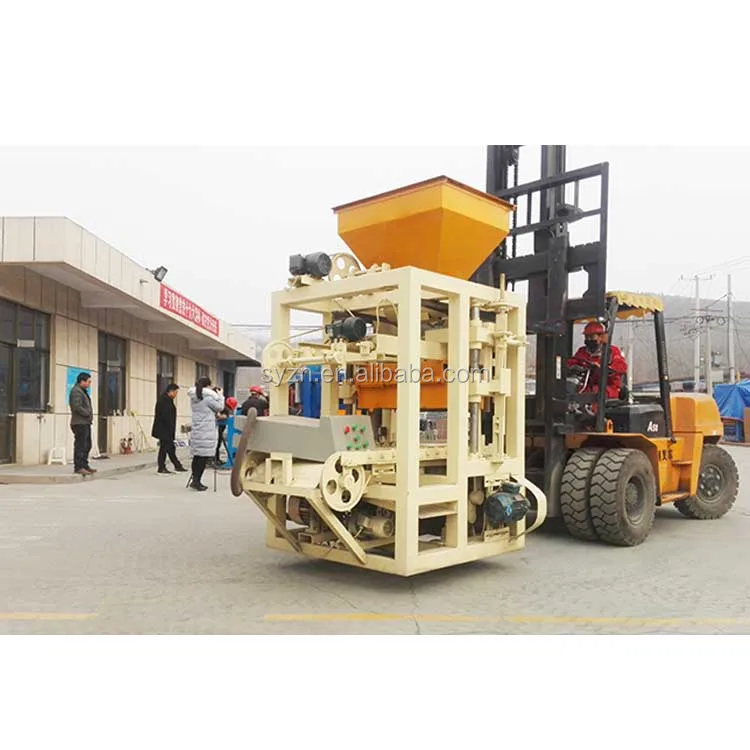
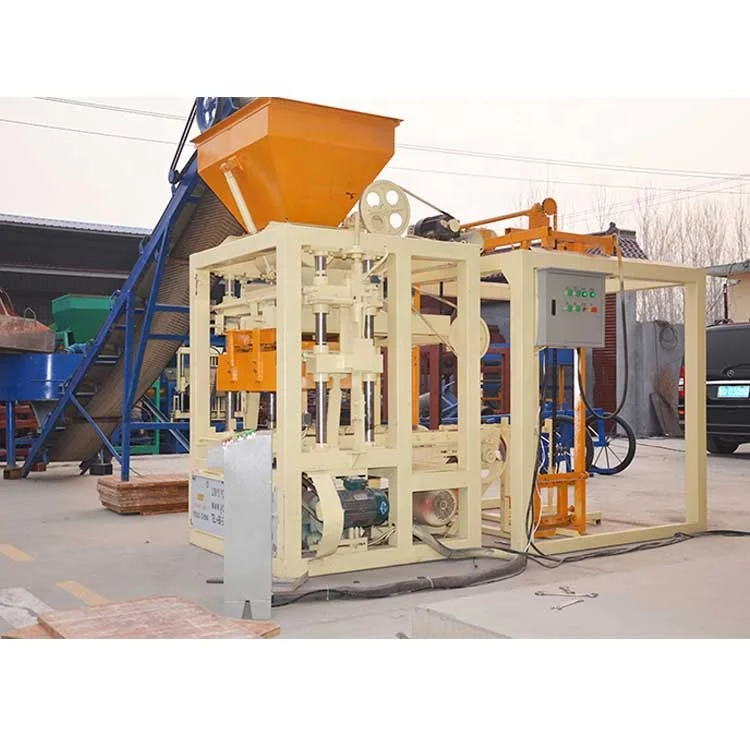
Description
Fast Dispatch Readiness — every QTJ4-24 unit is voltage-verified and container-loading planned before the crate leaves Linyi, so your site receives a machine that powers up on day one.
Technical Specifications
| Parameter | Value |
|---|---|
| Model | QTJ4-24 |
| Product Type | Stationary Block Making Machine |
| Overall Dimensions (L×W×H) | 3600 × 1700 × 2560 mm |
| Pallet Size | 850 × 450 mm |
| Molding Cycle | 24–26 s (basis not stated in source — confirm block format and mix) |
| Overall Power | 11.95 kW |
| Vibration Force | 45 kN |
| Vibrator Configuration | 2 × 3 kW lower + 2 × 1.5 kW upper |
| Total Mass | 2 t |
| Molding Method | Mechanical |
| Material Distribution | Full-automatic spiral |
| Reducer for Mold Lifting | 350-type |
| Automation Level | Semi-automatic |
| Compatible Materials | Cement, sand, stone aggregates |
| Mould Formats | Interlocking, paving, hollow, solid |
| Voltage & Frequency | Configurable per destination (to be confirmed before dispatch) |
| Control System | To be confirmed per buyer specification |
| Warranty | 1 year (whole machine, excluding spare parts) |
Application Suitability
| Application | Material or Output |
|---|---|
| Hollow block production for masonry walls | Cement, sand, crushed stone |
| Solid brick manufacturing for load-bearing structures | Cement, fine aggregate, stone dust |
| Interlocking brick production for paving and landscaping | Cement, sand, coarse aggregate |
| Paving brick output for walkways and yards | Cement, sand, stone chips |
| Small-to-medium block plant capacity expansion | Standard concrete mixes with local aggregates |
| On-site contractor block production at project locations | Locally sourced cement and sand |
Why the Voltage Question Must Come Before the Container Booking
A stationary block making machine in stock is only useful if it matches your site’s electrical grid the moment it arrives.
I spent years on the assembly floor in Linyi before moving to the dispatch side, and one job still sticks with me. A contractor in West Africa needed a QTJ4-24 urgently to keep a housing project on schedule. We shipped a standard 380V configuration. Their site ran on 415V/50Hz. The local electrician spent two weeks rewiring and sourcing step-down transformers while the crew stood idle. That delay nearly cost them the contract [NEED_CITE: voltage and frequency standards by export market]. Now every stationary block making machine in stock that leaves our yard goes through a voltage and wiring protocol check matched to the buyer’s destination before it is crated.
Stock Configuration and Dispatch Timing
When a buyer needs a block machine on site before a project milestone, waiting eight to twelve weeks for a custom build is not an option. The QTJ4-24 is held in standard configuration so that it can be dispatched within a short lead time once the order is confirmed. The mechanical press, spiral material distribution system, and dual-layer vibrator setup are pre-assembled and factory-tested. Buyers receive written confirmation of stock status and a container loading plan that shows how the frame, mould, and pallets are dismantled and secured for ocean freight.
Container Loading and Arrival Estimation
A stationary block making machine in stock must reach the buyer’s port predictably. The QTJ4-24 frame, press head, and pallet stack are broken down into components that fit within a standard 20-foot container alongside the mould set and supporting pallets. Before shipment, the loading team photographs each layer so the buyer can verify condition on arrival. Estimated transit times are quoted based on the destination port and current shipping schedules, not guessed from a generic rate card [NEED_CITE: typical ocean freight transit windows from Qingdao to major African and Southeast Asian ports].
Reading the Specs That Matter on Site
How Vibration Force and Mechanical Pressure Shape Block Density
The QTJ4-24 delivers 45 kN of vibration force through four vibrators — two 3 kW units below the mould and two 1.5 kW units above. This dual-layer arrangement compacts the concrete mix from both directions, which is important when the local aggregate varies in particle size. The mechanical press applies downward force during the 24–26 second molding cycle, working together with vibration to produce consistent block density. If the vibration force is too low for a given mix design, blocks come out with soft edges and low compressive strength. If it is too high, the finer particles separate and the block surface cracks. The 45 kN rating on this machine sits in a range that handles standard cement-sand-stone mixes well, but buyers using lightweight aggregates or high-sand ratios should confirm the cycle parameters before production starts.
The 850 × 450 mm pallet size determines how many blocks fit on each cycle and how those pallets move through the curing area. Buyers need to check that this pallet dimension matches their existing curing racks and forklift forks, because switching pallet sizes later means rebuilding the entire handling layout.
Mould Change and Format Flexibility
The QTJ4-24 supports interlocking, paving, hollow, and solid brick moulds. The 350-type reducer on the mould lifting mechanism is rated for repeated changeovers, which matters when a plant switches formats multiple times per week. A worn or undersized reducer causes the mould to drift during lifting, leading to misalignment and damaged block edges. The full-automatic spiral material distribution system feeds mix into the mould cavity evenly, reducing the chance of short-filled corners that operators would otherwise have to correct by hand [NEED_CITE: common causes of block format defects in mechanical presses].
The Cost of Skipping the Electrical Confirmation
When voltage and frequency are not confirmed before dispatch, the consequences go beyond a delayed start. Motors wired for the wrong voltage overheat and burn out within days. PLC displays configured in the wrong language leave operators guessing at fault codes. A contractor who discovers these problems after arrival faces electrician fees, replacement motor costs, and idle crew wages that quickly exceed any savings from a fast purchase. These are the hidden expenses that turn a quick-delivery machine into a slow-start project [NEED_CITE: motor failure rates linked to voltage mismatch in exported machinery].
Why Buyers Source This Model Here
Block machinery is the only product line, so the press, mould, pallet, and handling equipment are specified as a matched set rather than pulled from separate suppliers. The QTJ4-24 configuration is checked against the buyer’s target block format and local aggregate before dispatch, not shipped as a catalogue default. Moulds are designed for the formats the buyer’s market actually sells, with custom drawings available. The semi-automatic setup lets a buyer start with manual pallet handling and add automation later as volume grows. Every unit ships with a factory test record, and on-site installation support with operator training is available to ensure the machine runs correctly from the first shift.
Documentation & Verification
- Factory test record run on your specified block format before crating
- Machine specification sheet with confirmed voltage and frequency
- Mould drawing and format list matching your order
- Pallet specification matched to your curing rack dimensions
- Packing photographs documenting each component layer
- Operation and maintenance manual in your preferred language
Installation, Commissioning & Support
- Foundation pad must be level and rated for the 2 t machine mass plus dynamic vibration load
- Dedicated electrical circuit sized for 11.95 kW total draw at your confirmed voltage and frequency
- Frame, press head, and mould shipped dismantled with labeled bolt patterns for reassembly
- First-run cycle parameters set against your local mix design and target block strength
- Operator training covers mould change procedure using the 350-type reducer lift system
- Wear parts list provided with recommended reorder intervals for vibrators and spiral feeder components
- Pallet handling workflow reviewed to match your existing curing area and forklift capacity
What to Share With Your Inquiry
To match the right stock configuration to your project, share your target block format and daily volume requirement, the cement and aggregate types available locally, and your site’s voltage, frequency, and phase. If you already have curing racks or pallets in use, send the dimensions so the pallet specification can be aligned. Confirm the language you need for the control interface and any manuals.
Frequently Asked Questions
Q: Which QTJ4-24 configurations are currently in stock?
A: Standard stock units ship with the mechanical press, 45 kN dual-layer vibrator system, full-automatic spiral distribution, and 850 × 450 mm pallets. Mould sets for hollow, solid, interlocking, or paving formats are available from stock. Voltage, frequency, and control language are configured to your destination before dispatch and confirmed in writing with the order.
Q: What is the dispatch lead time and how is the machine loaded?
A: Stock units can be prepared for dispatch within a short lead time once electrical specifications are confirmed. The QTJ4-24 is dismantled into frame, press head, mould, and pallet components for container loading. A loading plan with photographs is shared before the container is sealed so you know exactly how each component is secured.
Q: How is arrival time estimated for my port?
A: Arrival estimates are based on your destination port and current shipping schedules from the loading port. We quote the transit window upfront rather than giving a generic number. Buyers are advised to arrange customs clearance documentation in parallel so the machine moves from port to site without additional delay.
Q: Are moulds and pallets included with the press?
A: Yes. Each QTJ4-24 shipment includes the selected mould set and a batch of pallets sized at 850 × 450 mm. If your curing area or forklift requires a different pallet dimension, confirm this before dispatch so the correct specification is loaded. Spare moulds and wear parts can be added to the same container.
Q: What does the warranty cover and how are spare parts supplied?
A: The warranty covers the whole machine for one year, excluding consumable spare parts. A wear parts list is included in the documentation package with recommended reorder intervals. Replacement vibrators, spiral feeder components, and hydraulic wear items can be shipped separately or included with your next mould order to keep the machine running without extended downtime.