

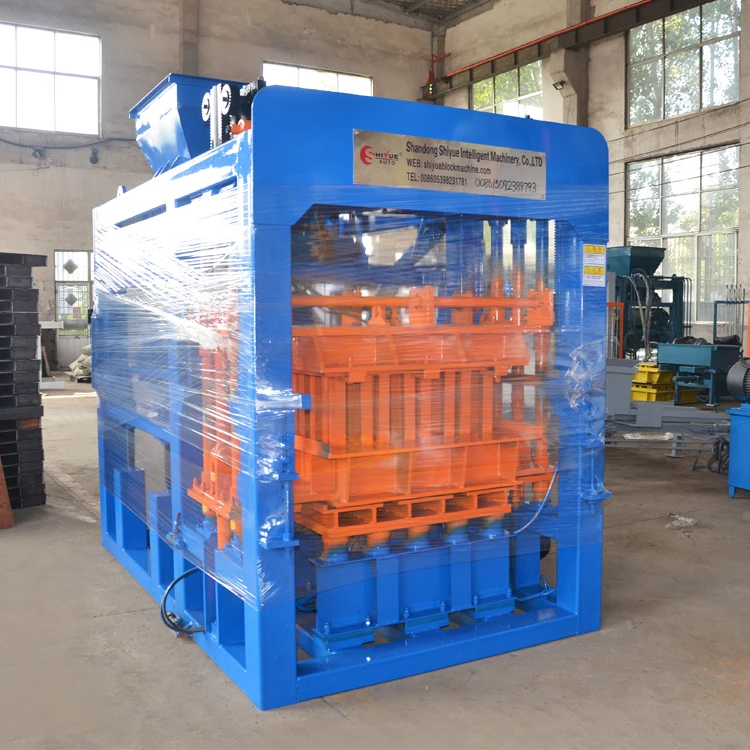

Description
Stocked block lines ship on schedule — the QT6-15 and its standard moulds are held ready so container loading happens against your project timeline, not a factory backlog.
Technical Specifications
| Parameter | Value |
|---|---|
| Model | QT6-15 |
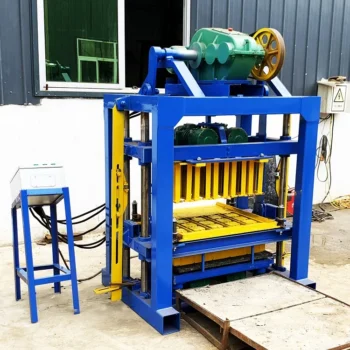
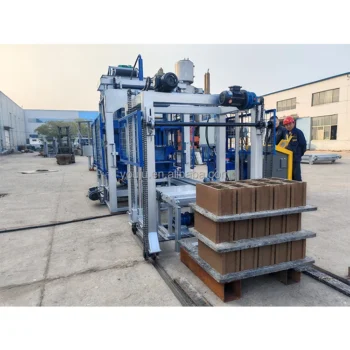
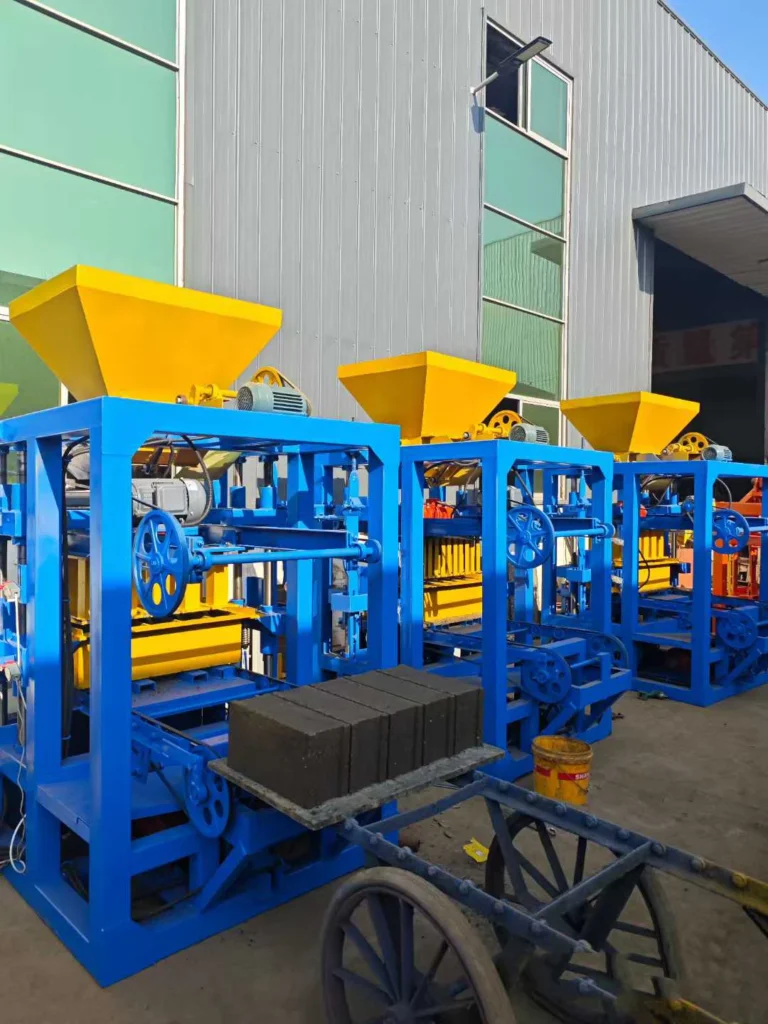
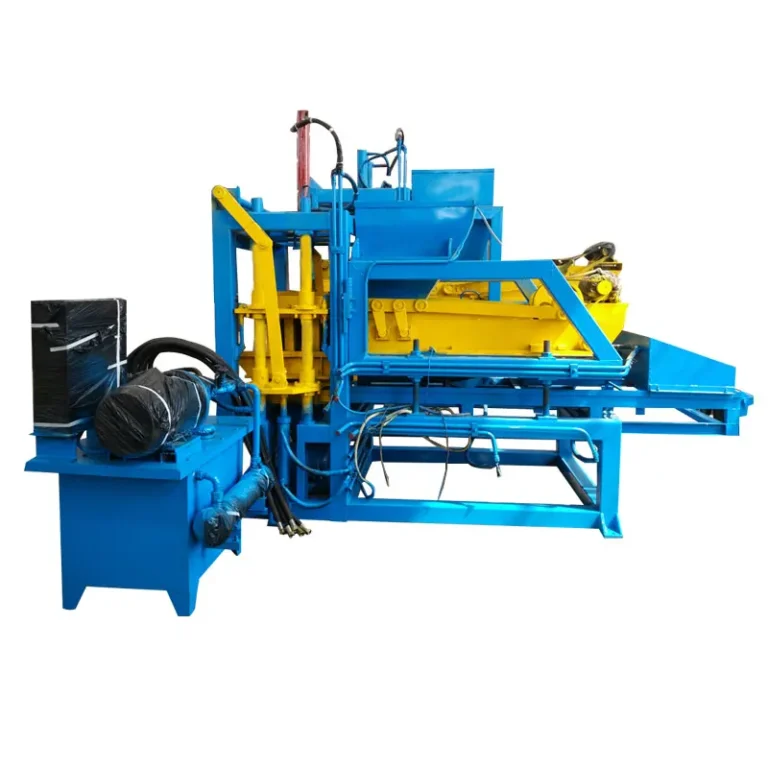
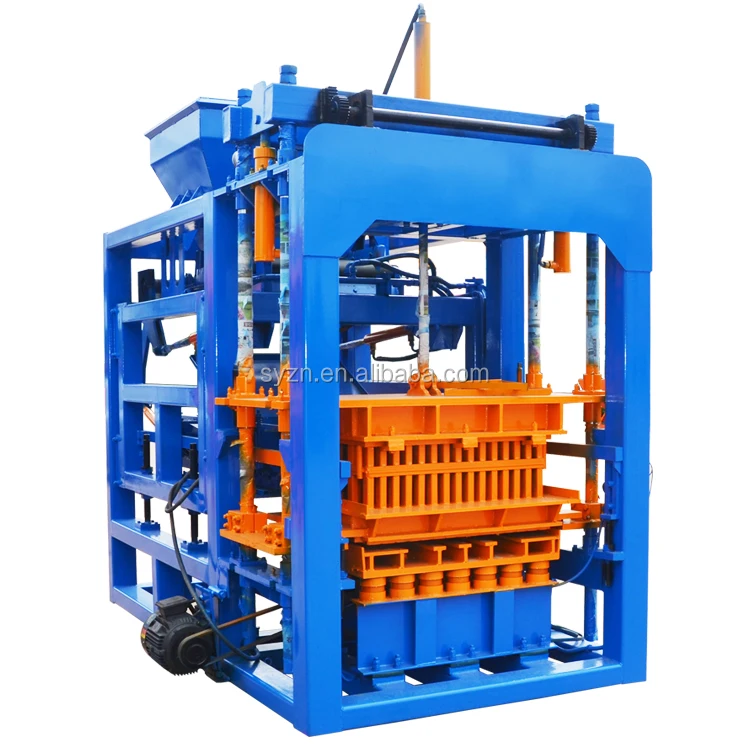
| Product Type | Stationary Hydraulic Block Making Machine |
| Overall Dimensions (L×W×H) | 8200×1700×2950 mm |
| Total Mass | 7 T |
| Overall Power | 37 kW |
| Vibration Force | 45 kN |
| Vibration Frequency | 0-60 Hz |
| Vibration Form | Platform Vibration |
| Moulding Mode | Load automatically, vibration moulding |
| Demolding Method | Hydraulic |
| Pallet Size | 880×850 mm |
| Molding Cycle | 15-20 s |
| Control System | PLC (Programmable Controller) with touch screen |
| Factory Area Required | 1200 m² |
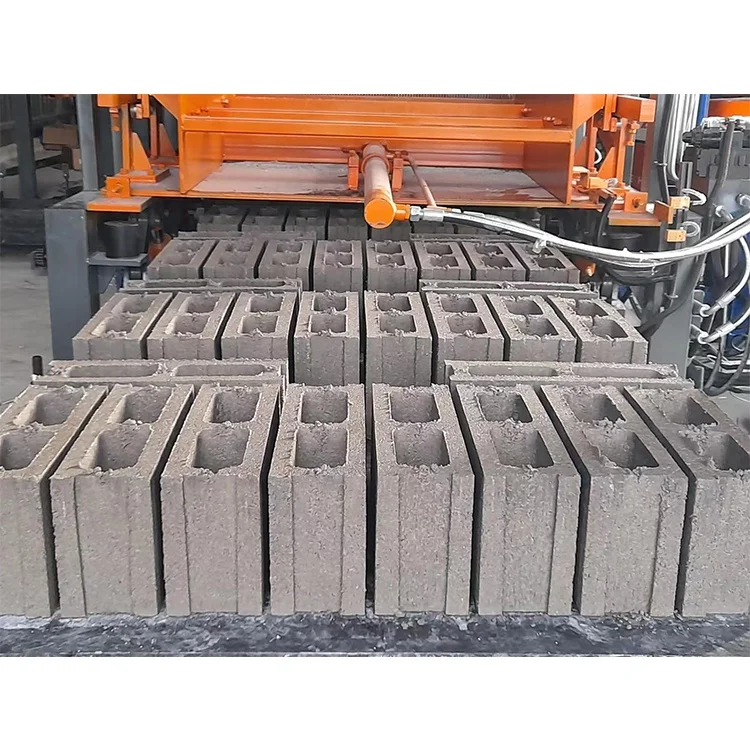
| Output — Hollow block 400×200×200 mm | 1080-1440 pcs/h, 8640-11520 pcs/8hr (basis: stated format) |
| Output — Hollow block 400×150×200 mm | 1440-1920 pcs/h, 11520-15360 pcs/8hr (basis: stated format) |
| Output — Solid brick 240×115×53 mm | 5760-7680 pcs/h, 46080-61440 pcs/8hr (basis: stated format) |
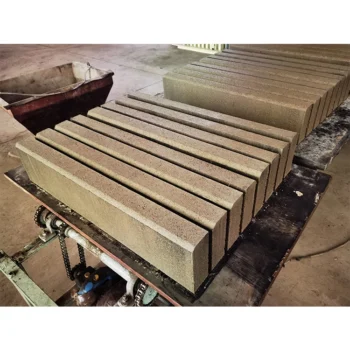
| Output — Rectangular paver 200×100×60 mm | 17280-23040 pcs/8hr at 20-25 s cycle (basis: stated format) |
| Output — Zigzag paver 225×112.5×60 mm | 17280-23040 pcs/8hr at 20-25 s cycle (basis: stated format) |
| Block Compressive Strength | >15 MPa |
| Hydraulic System | Independent integrated hydraulic station |
| Fault Diagnosis | Built-in PLC fault diagnosis system |
| Assembly State | Stationary plant installation |
| Voltage & Frequency | (basis not stated in source — confirm before dispatch) |
| PLC Display Language | (basis not stated in source — confirm before dispatch) |
| Mould Change Time | (basis not stated in source — confirm before dispatch) |
| Warranty | 1 year (excluding spare parts) |
Application Suitability
| Application | Material or Output |
|---|---|
| Housing and infrastructure hollow block production | Waste ash, slag, crushed stone, cement mixes |
| Paving brick runs for roads and commercial plazas | Rectangular and zigzag pavers from aggregate-cement blends |
| Solid brick manufacturing for load-bearing walls | Standard clay-free cementitious mixes |
| On-site block production for development contractors | Formats matching local market demand |
Why Dispatch Timing Matters More Than Peak Output
A machine sitting in the factory is zero output on your site.
Contractors and entrepreneurs buying a QT6-15 block machine in stock are usually racing a construction season or a handover deadline. When lead times slip, the crew arrives before the press does, and the curing area sits empty while penalties accumulate. Getting the container loaded and on the water against a known schedule is what protects your project start. [NEED_CITE: typical construction delay penalties for missed milestones]
Container Loading and What Actually Arrives
The QT6-15 block machine in stock measures 8200×1700×2950 mm at 7 T total mass. Those dimensions mean the main press frame, hydraulic station, and pallet feeder must be dismantled in a specific sequence to fit inside a standard 40-foot container alongside the standard moulds and pallets. A clear loading plan provided before the balance payment lets you arrange the forklift and floor space at your port of entry.
Confirming Voltage and Control Language Before Dispatch
Every export market runs on different voltage and frequency standards, and the PLC touch screen must display in the language your operators read. The QT6-15 block machine in stock ships with a configurable electrical package, but those settings have to be locked in writing before the machine leaves the Linyi workshop. Arriving with a 380V/50Hz cabinet on a 440V/60Hz site means weeks of rewiring while your deadline passes. [NEED_CITE: voltage and frequency standards by export market]
Pallet Size and Curing Area Alignment
The 880×850 mm pallet is the physical link between the press output and your curing racks. If your existing forklift tines or curing bays were built around a different pallet dimension, every loaded pallet has to be re-stacked by hand before it moves to the yard. Confirming pallet compatibility before the QT6-15 ships avoids that hidden labour cost once production starts.
Output Stated per Format, Not a Single Headline Number
The press cycles between 15 and 20 seconds, but real daily output depends entirely on which block format is in the mould. A 400×200×200 mm hollow block yields 8640-11520 pieces over an eight-hour shift, while the same machine running 240×115×53 mm solid bricks reaches 46080-61440 pieces per shift. Pavers at a 20-25 second cycle sit between those extremes. Knowing your primary format lets you plan raw material deliveries and curing space with actual numbers rather than guesses. [NEED_CITE: block format demand by regional construction code]
How Vibration Force and Hydraulic Pressure Shape Block Density
The 45 kN vibration force working through platform vibration, combined with the independent hydraulic station, determines how tightly the aggregate-cement mix compacts before demolding. Insufficient compaction leaves porous blocks that fail the >15 MPa compressive strength target, while excessive pressure on a lean mix cracks the green block during extraction. The 0-60 Hz adjustable frequency range lets the operator tune the cycle once the local aggregate and cement ratio are confirmed.
The Cost of Skipping Site Conditions
A QT6-15 configured for a clean graded aggregate that your local quarry cannot supply will produce inconsistent blocks from day one. The mix design has to match what is actually available, otherwise the vibration frequency and cycle time settings become irrelevant. Buyers who skip the raw material check often end up paying for a second round of commissioning after the first batches fail strength tests. [NEED_CITE: aggregate quality impact on concrete block compressive strength]
Why Buyers Source the QT6-15 Here
Block machinery is the single focus of the workshop, so the press, mould, pallet, and handling equipment are specified as one matched system rather than assembled from separate suppliers. The configuration is set against your actual mix design and target block format, not pulled from a catalogue default. Standard moulds for hollow blocks, solid bricks, and pavers are held in stock alongside the machine, which is what makes fast delivery realistic. The PLC control language and voltage are confirmed in writing before production so commissioning can begin the week the container is unpacked. Installation support includes operator training on the touch screen interface and the built-in fault diagnosis system.
Documentation & Verification
- Machine specification sheet listing the exact mould formats included in your shipment
- Factory test record run on your target block format before container loading
- Pallet specification confirming 880×850 mm dimensions and load rating
- Hydraulic and electrical schematic matching your confirmed voltage and frequency
- Voltage and PLC control language confirmation signed before dispatch
- Packing photographs showing dismantling state and container loading sequence
Installation, Commissioning & Support
- Foundation pad must support the 7 T mass across the 8200×1700 mm footprint
- Dedicated 37 kW electrical circuit at confirmed voltage and frequency
- Main press and hydraulic station reassembled from container-load dismantled state
- PLC touch screen language and fault diagnosis verified during first power-on
- Operator training covering mould change procedure and cycle time adjustment
- Wear parts list provided with first replacement intervals for hydraulic seals and vibration components
What to Include in Your Inquiry
Send the block formats your market actually sells, the daily output you need to hit, and the raw material sources available near your site. Confirm your local voltage and frequency, the language your operators need on the PLC screen, and the port where you want the arrival estimate quoted.
Frequently Asked Questions
Q: Which QT6-15 units and standard moulds are stocked for immediate dispatch?
A: The QT6-15 stationary press is held in stock along with standard moulds for 400×200×200 mm hollow blocks, 240×115×53 mm solid bricks, and 200×100×60 mm rectangular pavers. Custom mould formats are made to order. Stock status and available mould list are confirmed at inquiry.
Q: What is the dispatch lead time from deposit to container loading?
A: For a stocked QT6-15 with standard moulds, dispatch typically follows within a short period after deposit and voltage confirmation. Made-to-order moulds extend this timeline. A loading date is provided in the quotation so you can plan your shipping agent accordingly.
Q: How is the machine dismantled and loaded into the container?
A: The 8200×1700×2950 mm press frame and hydraulic station are dismantled into container-sized sections. A dismantling and loading plan with photographs is provided before the balance payment, so you know exactly what arrives and what requires reassembly on site.
Q: Can voltage, frequency, and PLC language be confirmed before shipment?
A: Yes. Voltage, frequency, and PLC touch screen language are confirmed in writing before the machine leaves the factory. This prevents post-arrival commissioning delays caused by electrical mismatch or operators unable to read the control display.
Q: What is the estimated arrival time at the destination port?
A: Arrival depends on the shipping route from the Chinese port to your destination. An estimated transit time is quoted alongside the dispatch date once your destination port is confirmed, giving you a working timeline for site preparation and crew scheduling.