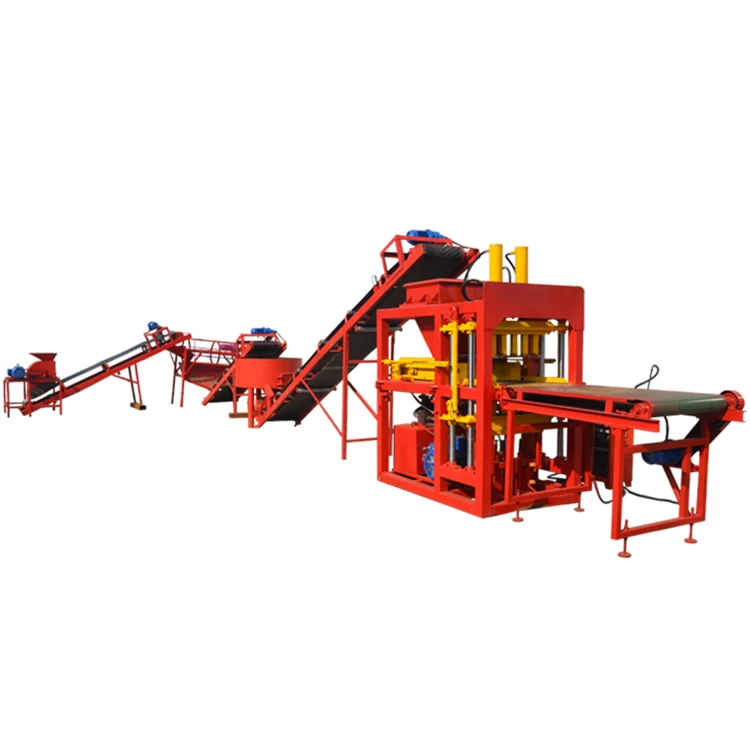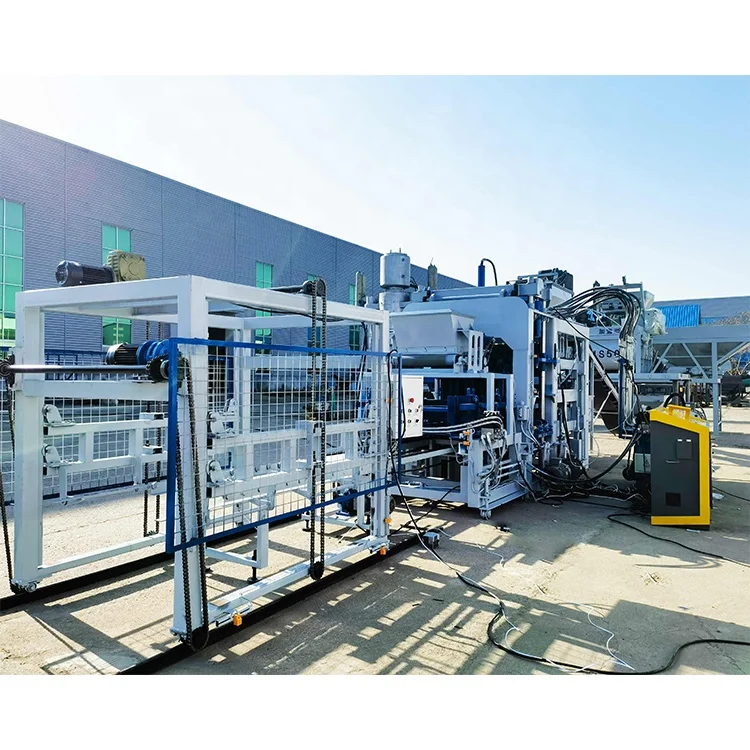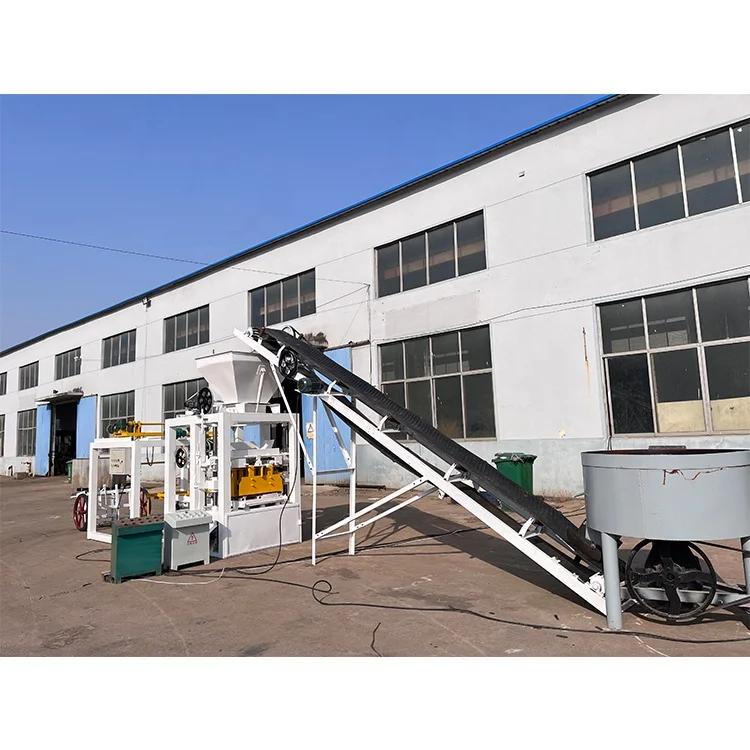
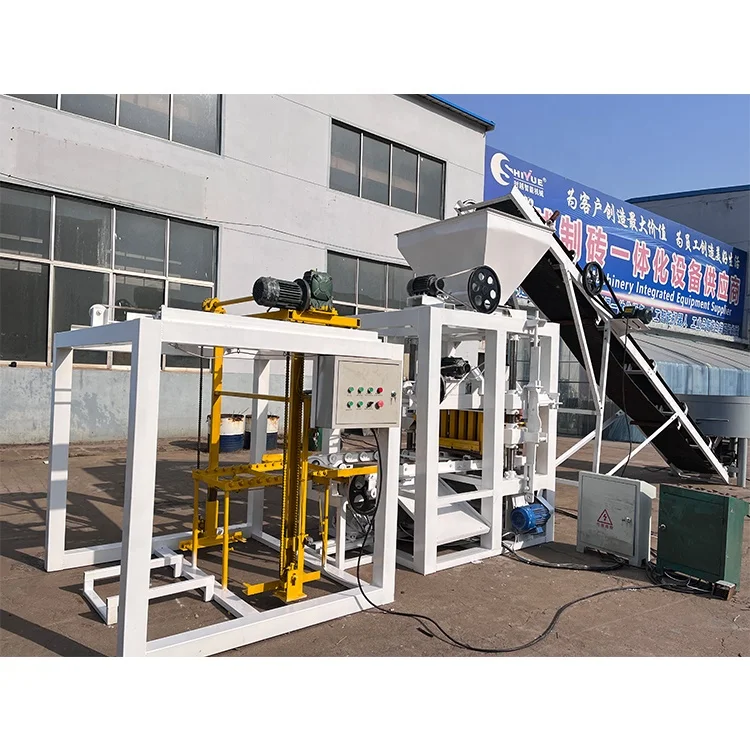
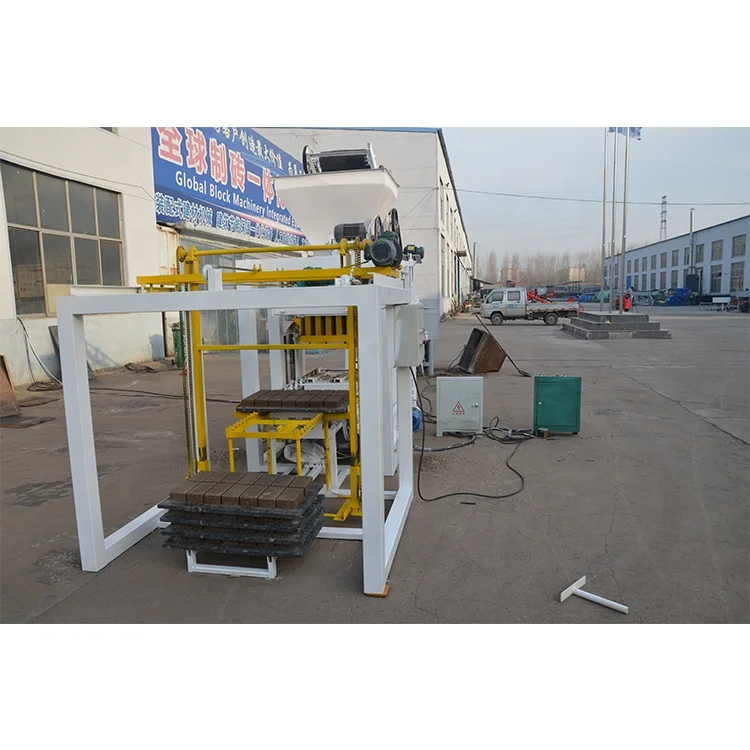
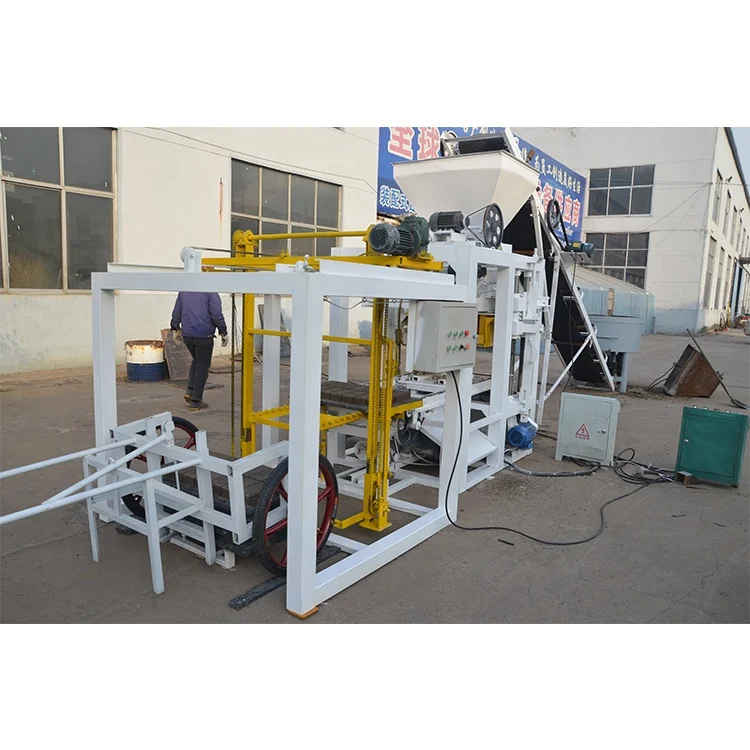
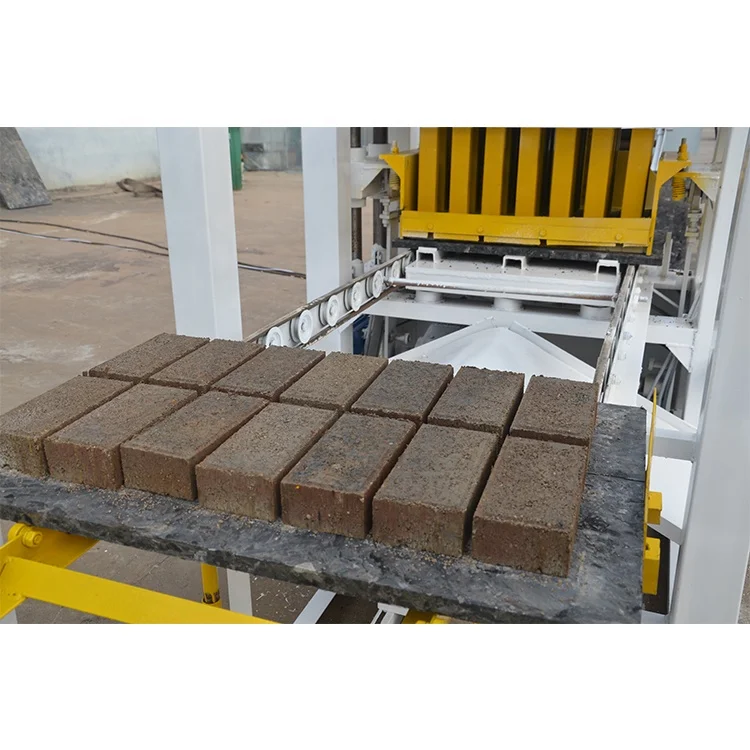
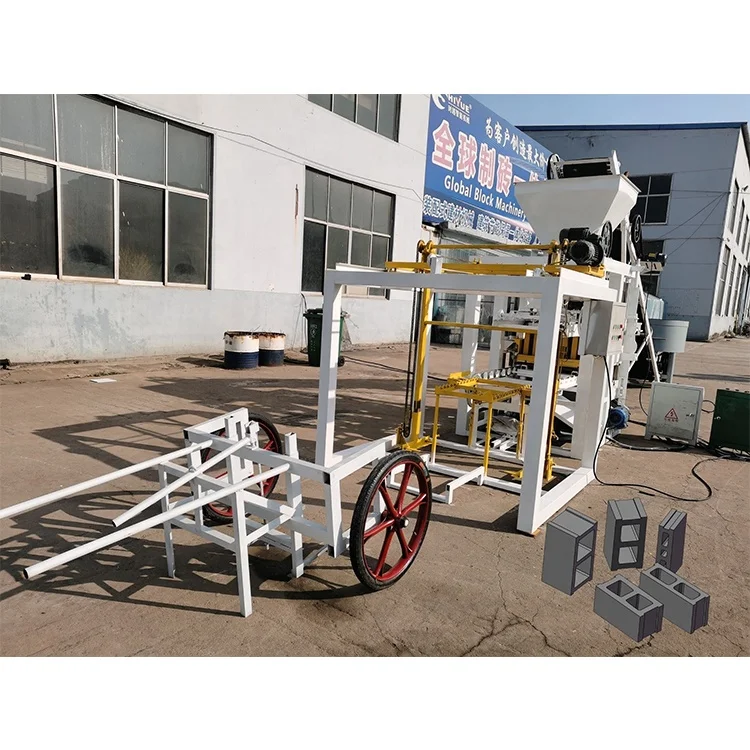
Description
Rapid Dispatch Readiness — Every QTJ4-24 block machine in stock is verified for voltage, frequency, and PLC language before container loading, eliminating the two-week rework delays that plague unconfirmed shipments.
Technical Specifications
| Parameter | Value |
|---|---|
| Model | QTJ4-24 |
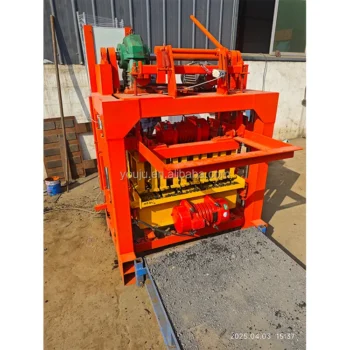
| Product Type | Stationary Concrete Block Making Machine |
| Molding Method | Mechanical (gear drive) |
| Molding Cycle | 24-26 seconds |
| Overall Dimensions (L×W×H) | 3600 × 1700 × 2560 mm |
| Total Mass | 2,000 kg |
| Overall Power | 11.95 kW |
| Vibration Force | 45 kN (2 × 3 kW lower vibrators + 2 × 1.5 kW upper vibrators) |
| Pallet Size | 850 × 450 mm |
| Material Distribution | Full-automatic spiral feeder |
| Reducer for Mold Lifting | 350-type |
| Control System | PLC controlled |
| Automation Level | Semi-automatic (mechanical press, manual pallet handling) |
| Hydraulic Pressure | Not applicable (mechanical vibration type) |
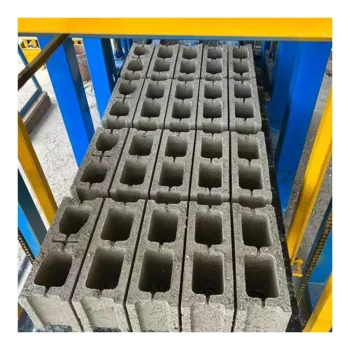
| Mould Compatibility | Hollow block, solid block, interlocking brick, paving brick |
| Voltage & Frequency | Configurable to target market (basis to be confirmed at order) |
Application Suitability
| Application | Material or Output |
|---|---|
| Hollow block production for wall construction | Cement, sand, crushed stone aggregate |
| Solid block manufacturing for load-bearing structures | Cement, sand, stone with standard mix ratios |
| Interlocking brick production for paving and landscaping | Cement, sand, fine aggregate |
| Paving brick output for walkways and yards | Cement, sand, stone dust |
| On-site block production by contractors | Locally sourced aggregate with cement binder |
Why the Voltage Question Must Come Before the Crate Is Nailed Shut
A stocked QTJ4-24 block machine in stock ships within days, but only if its motor and control panel already match the destination grid.
I once watched a Middle East buyer lose fourteen days on a QTJ4-24 block machine in stock because the warehouse held a 380V/50Hz unit while the job site ran 440V/60Hz. The machine had to return to the workshop for a motor swap and control panel rewiring. That delay ate into the contractor’s curing schedule and pushed back wall construction. [NEED_CITE: voltage and frequency standards by export market] Since then, every unit leaving our Linyi warehouse gets its nameplate photographed three times — front, side, and wiring terminal — before the container doors close. A fast dispatch advantage disappears the moment the wrong voltage arrives on site.
Stock Verification Before the Purchase Order
The QTJ4-24 block machine in stock is a semi-automatic mechanical press, meaning the buyer receives a defined configuration rather than a custom build with an open-ended lead time. When a buyer confirms the target block format and pallet quantity, the dispatch timeline becomes a matter of container booking rather than production scheduling. This matters most for contractors working against a project deadline or entrepreneurs who have already committed to a site lease and need the machine producing before the first month’s rent runs out.
Container Loading and Dismantling Transparency
A 2,000 kg machine with a 3,600 mm frame length does not simply roll into a container. The QTJ4-24 is partially dismantled — vibration table separated from the host frame, mould removed and wrapped, hopper folded or detached — so it fits within standard container dimensions. Buyers receive loading photographs showing the exact placement and securing method, which lets the receiving team plan forklift positioning and unloading sequence before the vessel arrives. [NEED_CITE: standard container loading procedures for heavy machinery]
What the Molding Cycle and Vibration Force Mean on the Floor
The 24-26 second molding cycle is measured from press close to press open on a single pallet, not from pallet feed to finished block ejection. Real throughput depends on how quickly an operator can swap pallets and move cured units aside. The 45 kN vibration force comes from four motors — two 3 kW units below the mould table and two 1.5 kW units above — which compacts the concrete mix from both directions. This dual vibration reduces voids in hollow block walls and improves the surface finish on paving bricks. The mechanical gear drive, rather than hydraulic pressure, keeps maintenance straightforward: no hydraulic hoses to replace, no oil temperature to monitor in hot climates.
Spiral Feeding and the 350-Type Reducer
The full-automatic spiral feeder distributes concrete evenly across the mould cavity, which matters when the mix contains coarse aggregate up to 10 mm. Uneven feeding causes density variation between blocks on the same pallet. The 350-type reducer governing mould lifting handles the repeated shock load of the vibration cycle. A smaller reducer would wear its gear teeth prematurely under continuous 45 kN vibration, leading to mould misalignment and scrap blocks. This component choice is one reason the QTJ4-24 block machine in stock can sustain daily production without frequent reducer replacement.
What Happens When Pallet Handling Is Left Out of the Plan
The QTJ4-24 is semi-automatic with manual pallet handling implied. Buyers who assume the quotation includes pallet return conveyors or automatic stackers will find blocks piling up on the floor, waiting for workers to carry them to the curing area. On a 850 × 450 mm pallet, each wet block unit weighs several kilograms, and continuous production demands hundreds of pallets in rotation. Without planning pallet count and curing rack layout in advance, the machine’s cycle speed becomes irrelevant because the operator has nowhere to put the next pallet. [NEED_CITE: pallet rotation requirements for semi-automatic block production]
Why Procurement from a Stock-Oriented Warehouse Works
Inventory is physically present in Linyi, not scheduled against a production queue. Buyers receive a confirmed dispatch date rather than an estimated completion window. Voltage and frequency are verified against the destination country grid before crating, preventing on-site rewiring delays. Container loading plans are prepared per unit, with dismantling photographs shared so the buyer’s receiving team knows the exact lift points and reassembly sequence. The same warehouse handles standard moulds for hollow, solid, interlocking, and paving formats, allowing mould sets to ship in the same container as the host machine.
Documentation & Verification
- Factory test record showing cycle timing on buyer’s specified block format
- Voltage and frequency confirmation sheet signed before container sealing
- Mould drawing and format list matching the shipped mould set
- Pallet specification sheet with load rating and material type
- Packing photographs documenting dismantling state and securing method
- Operation and maintenance manual in the buyer’s preferred language
Installation, Commissioning & Support
- Foundation pad must support 2,000 kg static load across the 3,600 × 1,700 mm footprint
- Dedicated electrical circuit rated for 11.95 kW continuous draw with correct voltage match
- Vibration table re-mounted to host frame using factory-supplied alignment bolts
- First production run supervised to set spiral feeder timing and vibration duration
- Operator training covers mould change procedure and 350-type reducer grease intervals
- Wear parts list identifies vibrator motor mounts and spiral flighting as priority spares
What to Prepare Before Requesting a Dispatch Quote
Share the target block format and daily volume so the correct mould set is pulled from stock. Confirm the site voltage and frequency — both the value and the tolerance range — so the motor nameplate matches before crating. Specify the PLC display language for operator readability. If the curing area uses a specific forklift model, provide its turning radius and fork width so pallet arrangement aligns with existing equipment.
Frequently Asked Questions
Q: Is the QTJ4-24 block machine currently in stock, and how long does dispatch take?
A: The QTJ4-24 is maintained as a stocked model in our Linyi warehouse. Once the buyer confirms block format, voltage, and frequency, the machine is inspected, dismantled for loading, and photographed before container booking. Dispatch timing depends on container availability and port scheduling rather than a production queue.
Q: How is the machine dismantled for shipping, and what unloading equipment is needed?
A: The vibration table, mould, and hopper are separated from the main frame to fit standard container dimensions. Buyers receive loading photographs showing securing points. A forklift rated for the component weights and a flat unloading surface are required on arrival.
Q: Can voltage and frequency be configured to match our local grid before shipment?
A: Yes. Voltage and frequency are confirmed at the order stage. The motor and control panel are verified or replaced to match the destination grid. The nameplate is photographed three times before the container is sealed to prevent mismatches.
Q: Are pallets included in the shipment, and how many do we need for continuous production?
A: Pallets are specified and quoted separately. The 850 × 450 mm size means buyers need enough pallets in rotation to cover the molding cycle, curing time, and return loop. The required quantity depends on the curing method and site layout.
Q: What customs documentation do you provide for import clearance?
A: Shipping documents include a commercial invoice, packing list detailing each component, and a bill of lading. Additional certificates or declarations required by the destination country are prepared in advance based on the buyer’s import requirements.