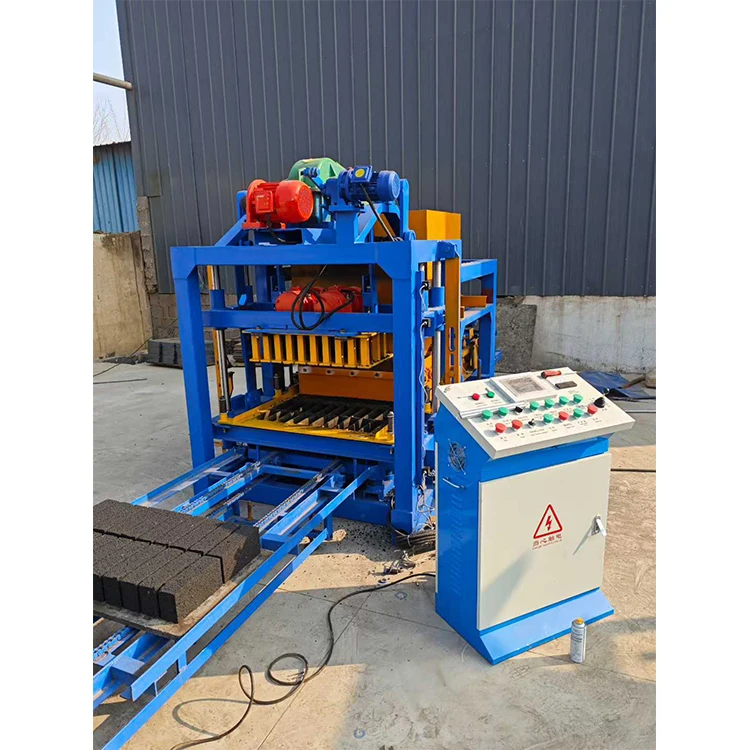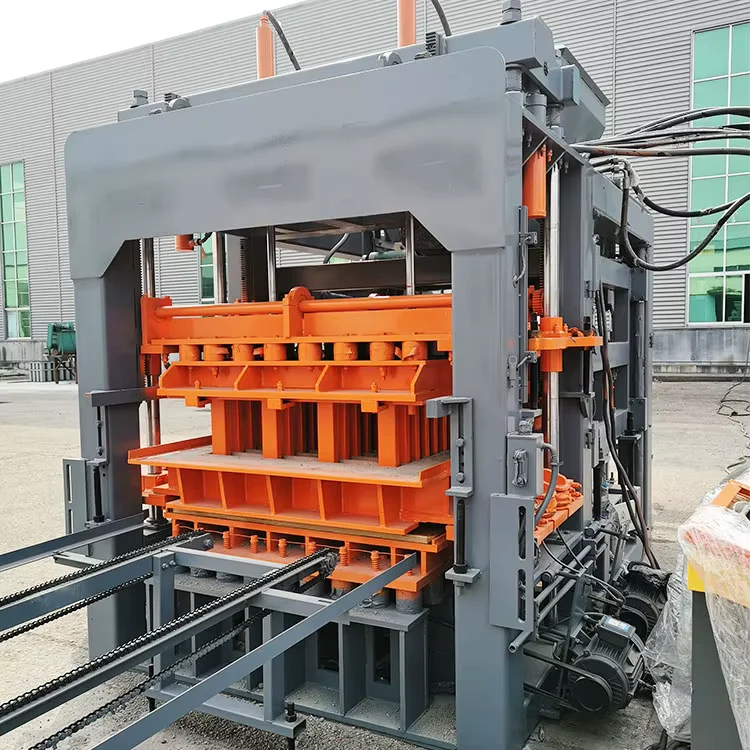
Description
Rapid Dispatch Readiness — The QT12-15 is held in inventory and pre-staged for immediate container loading, eliminating typical manufacturing delays for deadline-driven projects.
Technical Specifications
| Parameter | Value |
|---|---|
| Model | QT12-15 |
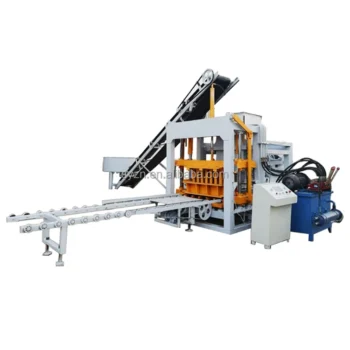
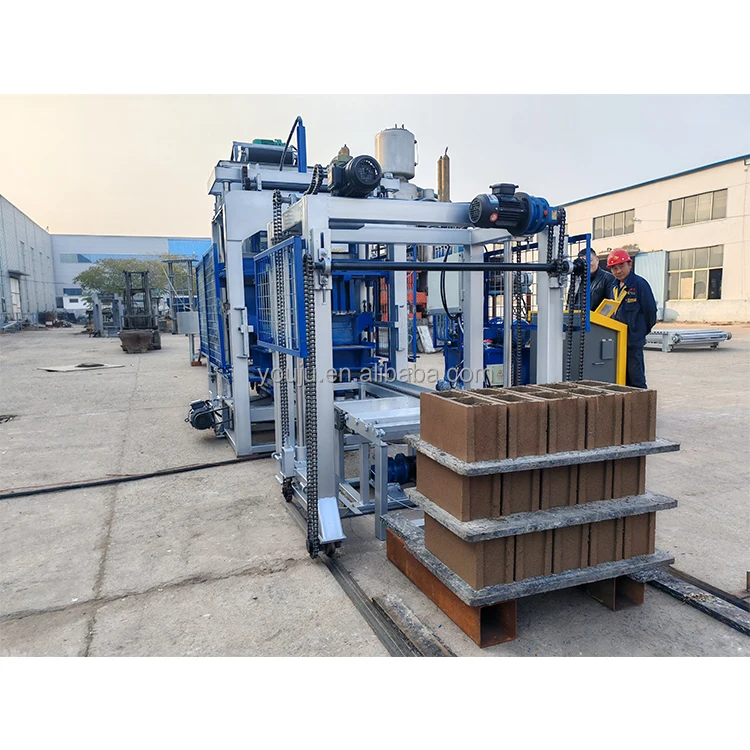
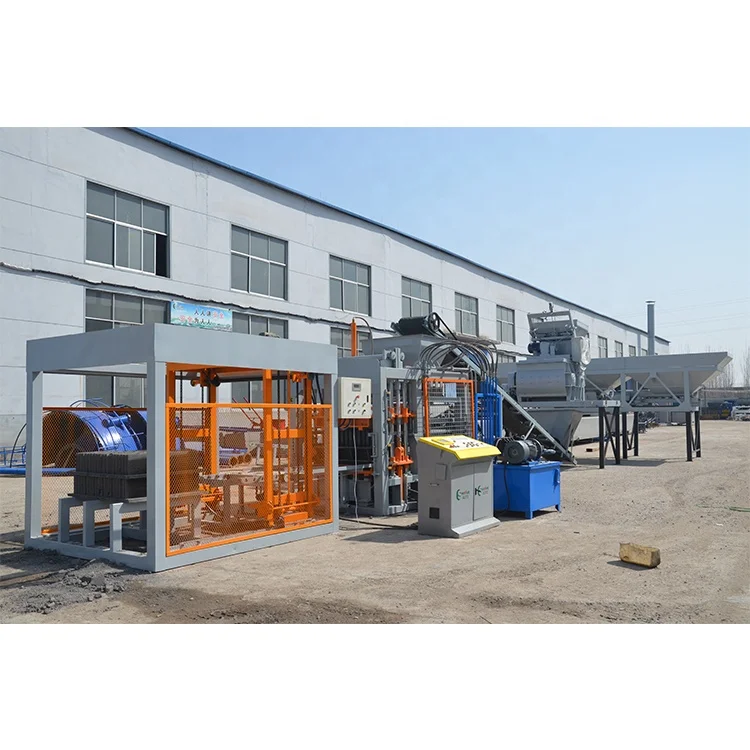
| Product Type | Fully Automatic Cement Hollow Block Making Machine Production Line |
| Method | Hydraulic pressure |
| Automation Level | Fully Automatic |
| Overall Dimensions (L×W×H) | 9400 x 3060 x 2980 mm |
| Net Weight | 10500 kg |
| Voltage | Local Voltage (configurable to site requirements) |
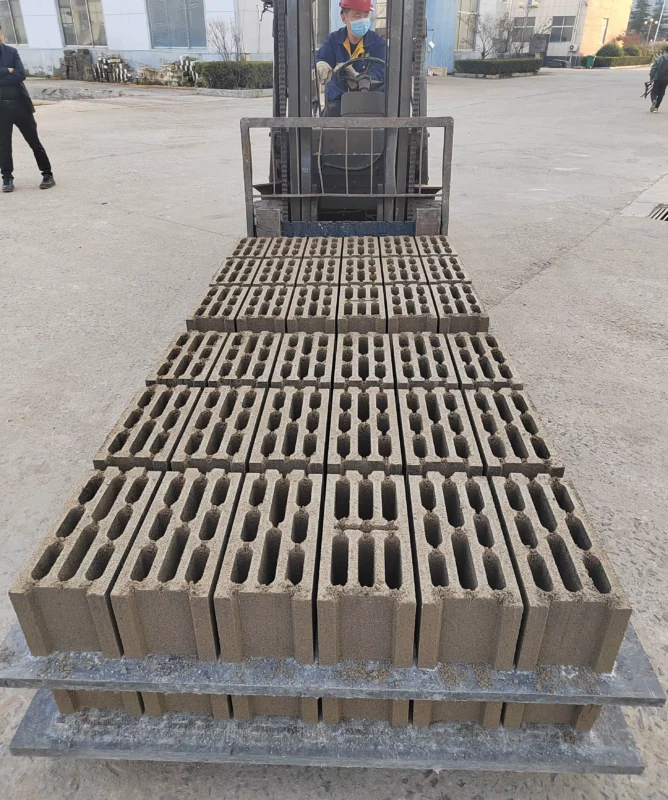
| Mould Format / Brick Size | 400x100x200 mm, 400x120x200 mm, 200x100x60 mm, 300x150x100 mm, 400x150x200 mm, 240x115x90 mm, 200x200x60 mm, 150x150x100 mm, 400x200x200 mm, 230x220x115 mm, Other |
| Raw Material Compatibility | Cement, concrete, clay, crushed stone, sand |
| Core Components | Motor, Pump |
| Color | Customizable to customer demand |
| Cycle Time | Varies by block format and material (basis to be confirmed) |
| Warranty | More Than 5 Years |
| After Warranty Service | Video technical support |
| Standards | Machinery Test Report, Video outgoing-inspection |
Application Suitability
| Application | Material or Output |
|---|---|
| Housing project sites | Hollow blocks from local crushed stone and cement |
| Paving contractors | Interlock blocks and curbstones from concrete mixes |
| Building material distributors | Standard solid and hollow blocks for rapid inventory replenishment |
| Remote development zones | On-site masonry units utilizing available regional aggregates |
Why the Voltage Question Must Precede the Dispatch Date
A fast delivery block production line is useless if it cannot power up upon arrival.
I used to handle equipment procurement for a factory, and I know exactly how fatal a missed deadline can be. Later, transitioning to the seller side and spending years on-site in the Middle East, I witnessed a critical failure firsthand. A client was rushing to start production and took delivery of a QT12-15 without verifying the local grid specifications. When the equipment arrived, it could not be powered on. They waited three weeks for a transformer retrofit while the machine sat idle in the dirt [NEED_CITE: typical delays caused by electrical mismatch in heavy machinery imports]. Now, managing order fulfillment and logistics, I obsess over electrical and site details before the crate is sealed. Securing a QT12-15 block machine in stock means nothing if the motor frequency does not match the destination port.
Inventory Staging and Container Loading
Having the physical equipment ready is only the first step in rapid deployment. The QT12-15 block machine in stock undergoes a specific dismantling sequence designed for standard shipping containers. The main frame, hydraulic station, and control cabinets are separated and secured to prevent transit damage while maximizing space efficiency. This pre-planned breakdown ensures that the fast delivery block production line can be loaded and dispatched without waiting for custom crating or specialized flat-rack arrangements.
Arrival Estimates and Port Clearance
Speed in ordering relies heavily on transparent logistics planning. We provide upfront arrival estimates and detailed container loading plans before the order is finalized. By supplying comprehensive customs documentation alongside the machinery test reports, the clearance process at the destination port is accelerated. A fast delivery block production line must clear customs swiftly, and having the correct paperwork prepared in advance prevents the cargo from being held at the terminal [NEED_CITE: standard customs documentation requirements for heavy industrial machinery].
Dimensional Logistics and Weight Distribution
The overall dimensions of 9400x3060x2980mm and a net weight of 10500 kg dictate how the equipment is distributed across shipping units. Proper weight distribution inside the container is critical to avoid structural stress during ocean freight. The QT12-15 block machine in stock is loaded according to strict weight balance protocols, ensuring that the heavy hydraulic pump and motor assemblies are secured over the container axles. This attention to loading logistics protects the structural integrity of the equipment throughout the journey.
Electrical Verification Before the Crate Seals
Assuming standard voltage applies globally is a costly mistake in heavy equipment procurement. The local voltage configuration must be confirmed and adjusted before the stocked unit ships. If the destination site operates on a different frequency or phase setup, the motor and pump must be swapped or calibrated at our facility, not in a muddy construction yard. Verifying these electrical parameters ensures the QT12-15 block machine in stock can be connected to the local grid immediately upon uncrating [NEED_CITE: international voltage and frequency standards for industrial motors].
The Cost of Ignoring Dispatch Logistics
Failing to plan the dismantling and loading sequence leads to severe consequences at the destination. If a machine is shipped fully assembled when it should have been broken down, it may not fit through the site gates or might require expensive heavy-lift cranes to unload. Furthermore, missing customs paperwork can leave a fast delivery block production line sitting in port storage, accumulating daily demurrage charges. These logistical oversights easily erase any time gained by purchasing a stocked unit, turning a rapid deployment into a prolonged headache [NEED_CITE: financial impact of port demurrage and heavy lift requirements].
Why Procure This Unit Through Our Logistics Channel
Our focus is strictly on block machinery, meaning the host machine, pallets, and handling equipment are dispatched as a single matched system rather than scattered across multiple suppliers. We configure the electrical and control parameters against the buyer’s actual site conditions, not a generic catalogue default. Standard moulds for common formats are kept in inventory for immediate dispatch alongside the main press. The automation level is confirmed prior to shipping, ensuring the buyer receives the exact operational setup required. Finally, our installation and commissioning support begins with the container loading plan, ensuring every component is accounted for when the crate opens.
Documentation & Verification
- Factory test record confirming hydraulic pressure and motor operation before dispatch.
- Video outgoing-inspection showing the specific stocked unit dismantled and loaded.
- Detailed container loading plan with weight distribution and securing points.
- Customs documentation package aligned with destination port clearance requirements.
- Machinery test report verifying dimensional accuracy and structural integrity.
Installation, Commissioning & Support
- Foundation requirements mapped to the 9400x3060x2980mm footprint and dynamic vibration loads.
- Dedicated electrical circuit planning based on the confirmed local voltage and motor draw.
- On-site reassembly guided by the pre-shipped dismantling sequence and loading plan.
- Initial power-up and hydraulic pressure calibration matching the site’s ambient temperature.
- Operator training focused on the specific control language and interface configured pre-dispatch.
- Wear parts inventory list provided to ensure immediate availability for the first maintenance cycle.
Preparing Your Site for Immediate Integration
To ensure the equipment integrates smoothly into your project timeline, we need precise details about your destination facility. Please provide the exact local voltage and frequency, along with the available footprint for the machine and curing area. Confirming the required control panel language and the specific block formats you intend to run first allows us to finalize the dispatch paperwork and loading sequence without delay.
Frequently Asked Questions
Q: What is the exact dispatch lead time for the stocked QT12-15?
A: The dispatch lead time depends on the final electrical verification and customs paperwork preparation. Once the local voltage is confirmed and the destination port details are provided, the container loading and booking process begins immediately, allowing us to quote a precise arrival estimate upfront.
Q: Are standard moulds included in the immediate stock availability?
A: Yes, standard moulds for common block formats are held in inventory and can be loaded into the same container as the host machine. This ensures that the necessary tooling arrives simultaneously with the main press, preventing delays in starting initial production runs.
Q: How is the machine dismantled for fast shipment?
A: The equipment is broken down into major sub-assemblies, including the main frame, hydraulic station, and control cabinets. This specific dismantling sequence is designed to fit standard shipping containers while protecting critical components and ensuring straightforward reassembly at the destination site.
Q: What customs documentation is provided for port clearance?
A: We provide a comprehensive documentation package, including the commercial invoice, packing list, bill of lading, and machinery test reports. These documents are prepared in advance to align with destination port requirements, facilitating smooth and quick clearance upon arrival.
Q: Can the local voltage configuration be adjusted before shipping?
A: Absolutely. We require the exact local voltage and frequency details before the unit is crated. If the stocked configuration does not match your site’s grid, the motor and electrical components are swapped or calibrated at our facility to ensure immediate power-up upon arrival.