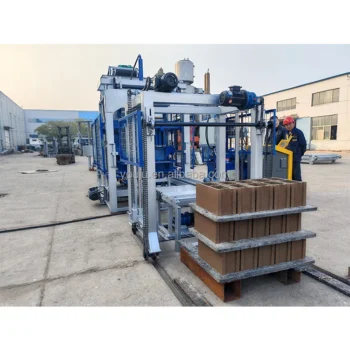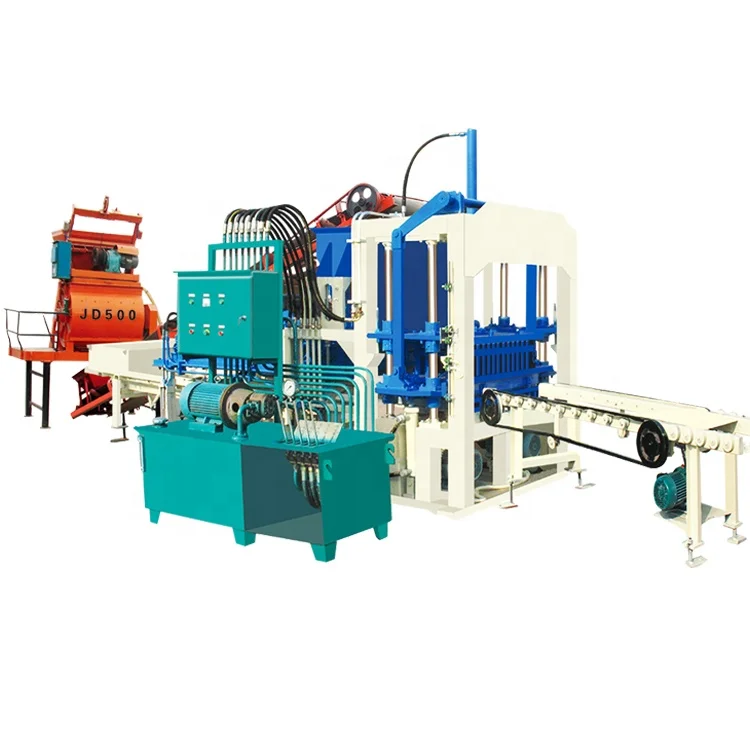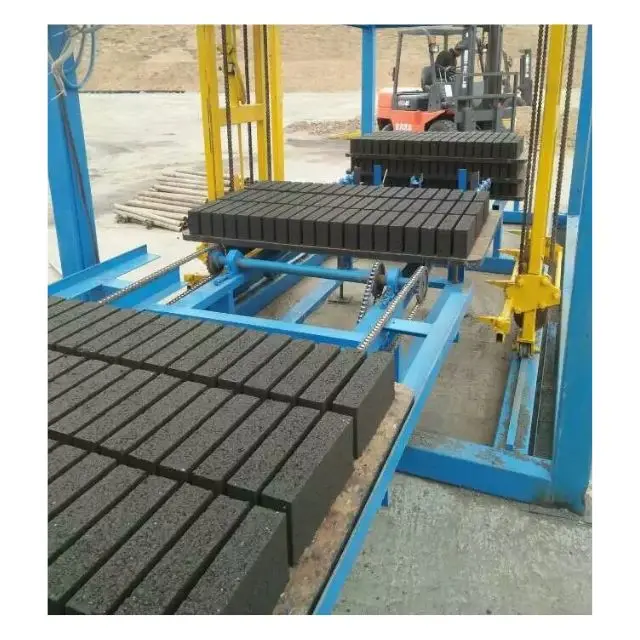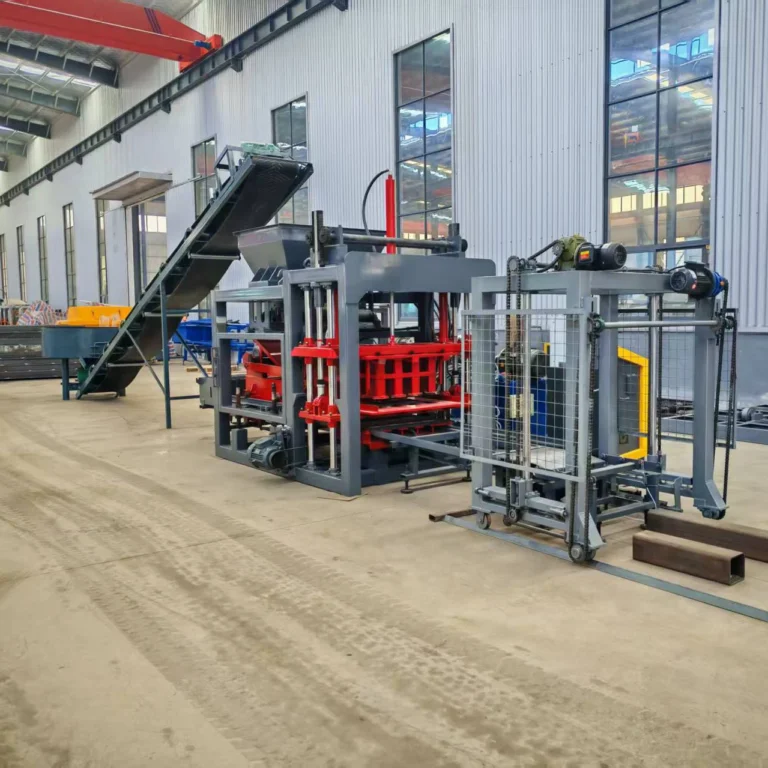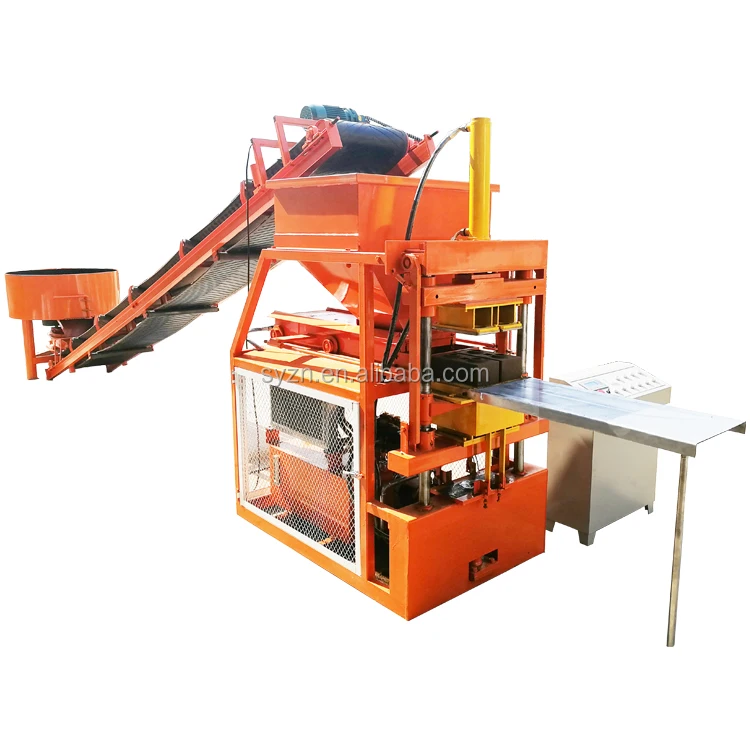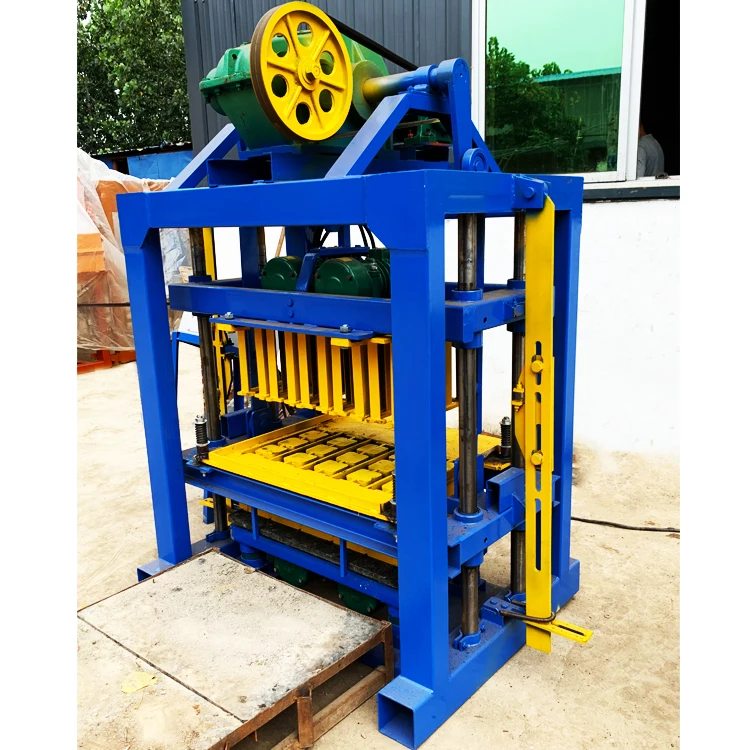
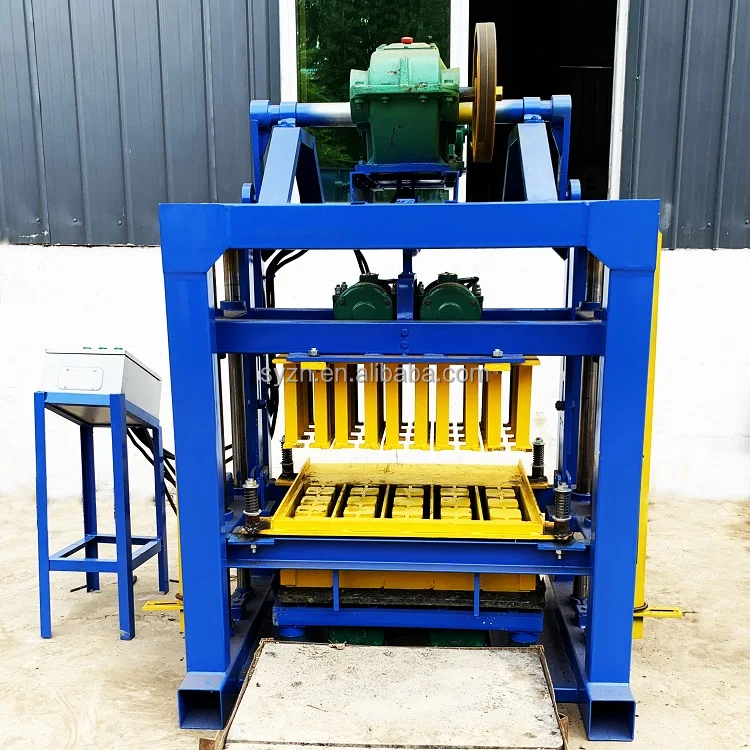
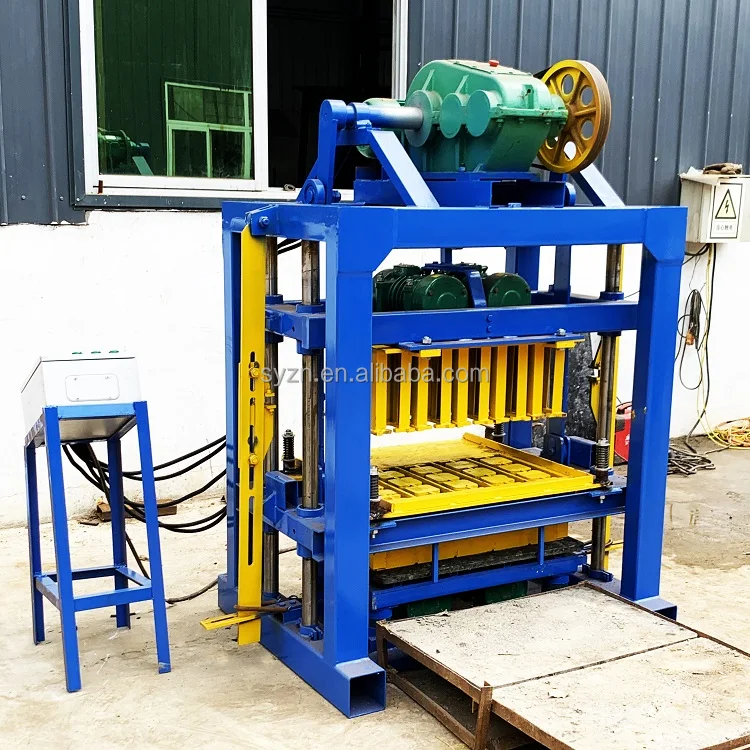
Description
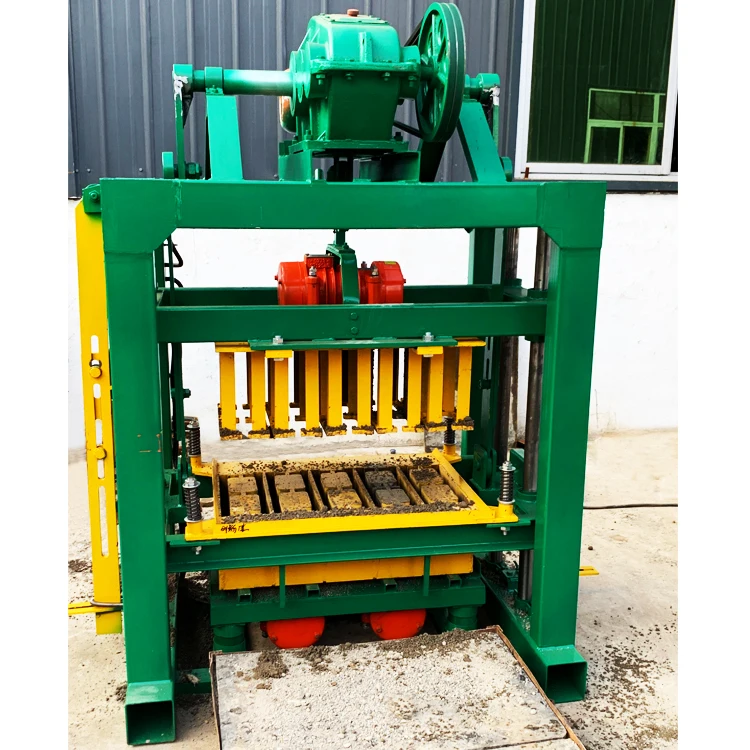
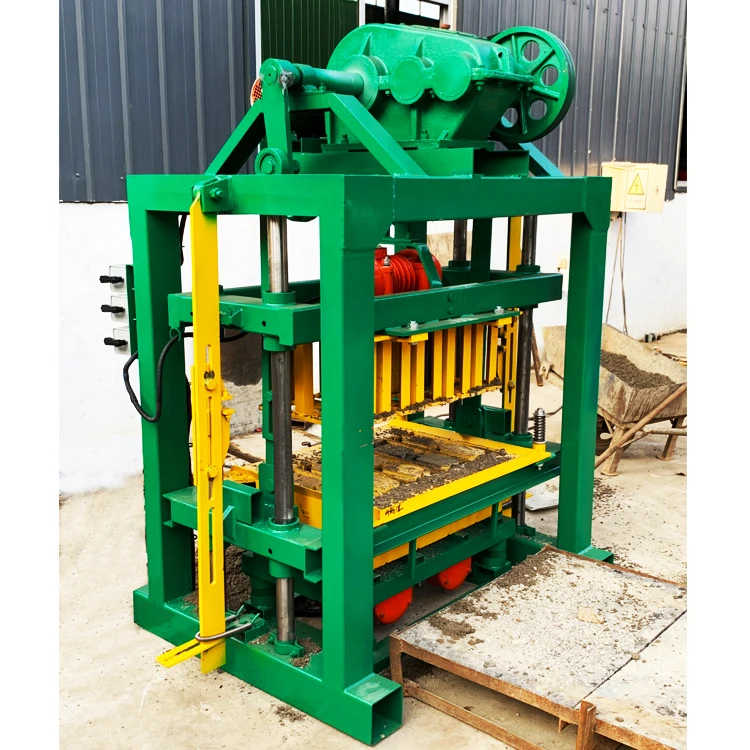
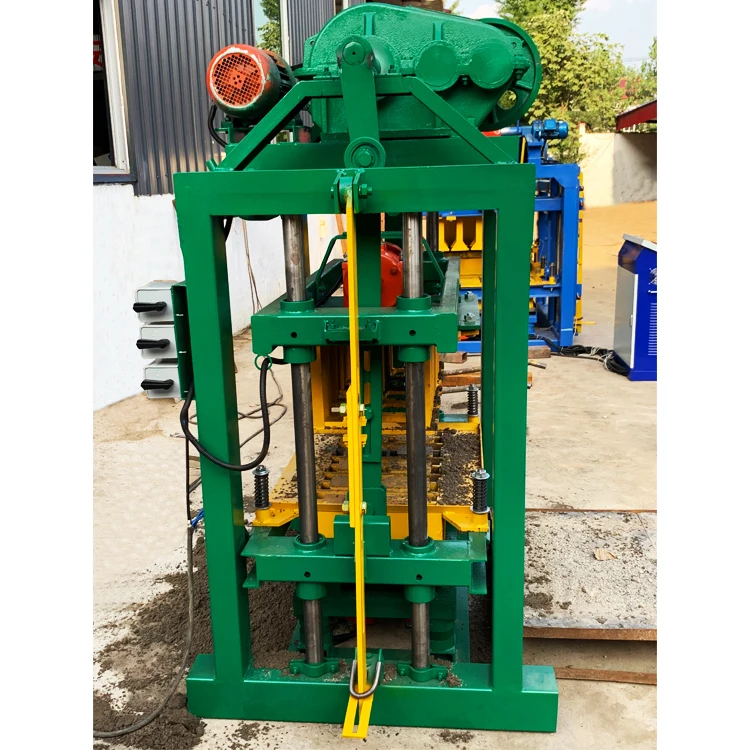
Stock-First Availability — QTJ4-40 units assembled, tested, and container-ready so your site does not sit idle while a custom build runs through the factory queue.
Technical Specifications
| Parameter | Value |
|---|---|
| Product Type | Semi-Automatic Concrete Block Making Machine |
| Model | QTJ4-40 |
| Machine Dimensions | 1350 × 1460 × 1800 mm |
| Machine Weight | 1.2 T |
| Rated Power | 10.4 kW |
| Molding Cycle | 40 seconds |
| Output Capacity (Hollow Block) | 2,880 pcs/day based on 400×200×200 mm hollow block, 4 pcs/mould |
| General Output Capacity | 2,000–2,500 pcs/8 h (basis to be confirmed by block format and material) |
| Pallet Size | 850 × 450 × 20 mm |
| Vibration Type | Bed mould vertical vibration with upper mould compression vibration |
| Mould Formats Available | Hollow, solid, paver — 8 in, 6 in, 5 in, 4 in |
| Voltage | Configurable to local voltage and frequency |
| Automation Level | Semi-automatic |
| Raw Materials | Concrete, sand, cement, fly ash, lime, gypsum |
| Certification | CE declaration where applicable |
Application Suitability
| Application | Material or Output |
|---|---|
| On-site hollow block production for housing projects | Crushed stone, sand, and cement mix |
| Small-scale paver manufacturing | Cement and fine aggregate blend |
| Contractor-run solid block yard | Fly ash, lime, and sand combination |
| First-plant entrepreneur startup | Local aggregate with cement binder |
| Kerbstone and interlocking brick runs | Graded aggregate with cement |
Why the Voltage Question Must Come Before the Crate Is Nailed Shut
A machine that arrives with the wrong voltage is not a delivery — it is a three-week delay parked on your curing slab.
I have stood on a job site in West Africa watching an entire crew wait for a step-down transformer because the nameplate read one voltage and the local grid supplied another. The hollow brick paving block making machine sat bolted to its foundation, doing nothing while the contractor burned through deadline penalties. When you order a Semi-Automatic Block Making Machine in stock, the voltage confirmation has to be the first line in the technical annex, not an afterthought in the shipping documents [NEED_CITE: voltage and frequency standards by export market]. Getting this wrong does not just cost a transformer; it costs the confidence of every mason who showed up expecting to lay blocks that week.
Dispatch Without the Waiting Game
When a project deadline is already tight, the last thing a contractor needs is a production queue. The QTJ4-40 is a Semi-Automatic Block Making Machine in stock configuration, meaning the host machine, mixer, standard moulds, and pallets are assembled and factory-tested before your inquiry even turns into a purchase order. Semi-automatic configuration shortens the build cycle compared with fully automated lines, so stocked units can be crated within days rather than months. For buyers working against a housing handover or a road-paving milestone, that difference decides whether blocks are curing on-site or still sitting on a factory floor overseas.
Container Loading and the Dismantling Reality
The QTJ4-40 weighs 1.2 T and measures 1,350 × 1,460 × 1,800 mm, which means the main press fits inside a standard 20-foot container alongside pallets, moulds, and the mixer. Certain components — the hopper frame and vibration table supports — are unbolted and packed flat to maximize floor space for spare wear parts and extra pallets. A documented loading plan is prepared before dispatch, so the buyer knows exactly which crate holds what when the container doors open at destination [NEED_CITE: container loading standards for heavy industrial machinery].
Reading the Numbers That Actually Matter on Site
The 40-second moulding cycle is the heartbeat of this machine. Combined with 4 pcs per mould on a 400 × 200 × 200 mm hollow block, that cycle yields a daily output of 2,880 hollow blocks across an eight-hour shift. Switch to a smaller solid brick format and the pieces-per-mould count rises, which shifts daily throughput accordingly — the cycle stays the same, but the block count per cycle changes. Vibration comes from two directions: vertical vibration under the bed mould and compression vibration from the upper mould. This dual action compacts the concrete mix evenly, reducing the chance of weak corners that break during pallet transfer. The 850 × 450 × 20 mm pallet size is chosen to match common curing rack dimensions, so blocks can move straight from the press to the rack without a second handling step. Machine power of 10.4 kW means the electrical supply requirement stays within the range of a standard workshop connection in most regions, though frequency must still be confirmed before the motor is wound.
What Happens When the Pallet and the Curing Rack Do Not Agree
A pallet size chosen without checking the buyer’s existing curing racks leads to one of two problems: either the pallet overhangs the rack and blocks tilt during curing, or the pallet is too small and half the rack space goes to waste. Either way, the Semi-Automatic Block Making Machine in stock is producing blocks that cannot be stored properly. On top of that, if the forklift at the destination site has a fork width that does not match the pallet length, every pallet has to be moved by hand [NEED_CITE: pallet handling best practices in block production]. That is an extra labour cost nobody budgeted for, and it shows up on day one.
Why Buyers Come Back to the Same Configuration Source
Block machinery is the single product focus here, which means the press, mould, pallet, and handling equipment are specified as one matched system. The QTJ4-40 ships with moulds sized to the formats the buyer’s market actually sells, not a generic catalogue pack. Voltage and control language are confirmed before the motor is wound and the PLC is programmed, so commissioning starts with the press running, not with an electrician scratching his head. Dispatch timing is stated from the date of inquiry, not buried in fine print. Standard moulds and pallets are stocked alongside the machine, so a format change on arrival does not mean waiting for a second shipment.
Documentation & Verification
- Factory test record run on the buyer’s target hollow block format before crating
- Machine specification sheet listing confirmed voltage and frequency for destination
- Pallet specification matched to the curing rack dimensions the buyer provides
- Mould drawing and format list covering hollow, solid, and paver sizes included
- Packing photographs documenting container loading and crate condition at dispatch
- Customs documentation support with HS codes and origin certificates prepared
Installation, Commissioning & Support
- Foundation pad sized to 1,350 × 1,460 mm footprint with vibration-dampening clearance
- Electrical circuit rated for 10.4 kW at the confirmed local voltage and frequency
- Host machine reassembled from flat-pack components with bolt-torque check on site
- First production run supervised to set moulding cycle and vibration intensity
- Operator training covers mould change procedure across all stocked formats
- Wear parts list supplied with reorder part numbers for vibration springs and mould liners
What to Tell Us Before You Ask for a Quote
Share the block formats your market buys most — hollow, solid, or paver — and the dimensions you need, so the right moulds are loaded into the crate. Confirm the voltage and frequency at your site, along with the control-panel language your operators read. If you already have curing racks or a forklift, send the dimensions so pallets can be matched before the machine leaves the factory floor.
Frequently Asked Questions
Q: Which QTJ4-40 machines and moulds are currently ready to ship?
A: The QTJ4-40 Semi-Automatic Block Making Machine in stock includes the host press, standard hollow and solid block moulds in common inch sizes, and a set of 850 × 450 × 20 mm pallets. Additional paver moulds are available from inventory. Exact stock quantities shift weekly, so confirming availability at inquiry locks your unit before another buyer claims it.
Q: How soon after order confirmation does the machine leave the factory?
A: Because the QTJ4-40 is a Semi-Automatic Block Making Machine in stock rather than a custom build, dispatch typically follows within a short window after voltage confirmation and payment clearance. The exact dispatch date is quoted at inquiry so your shipping agent can book the vessel slot without guessing.
Q: How is the machine packed and loaded into the container?
A: The main press, vibration table, and mould assemblies are secured on the container floor. The hopper frame and upper structure are unbolted and packed flat to free space for pallets and spare parts. A loading plan with photographs is shared before the container is sealed so you know the packing layout at destination.
Q: Can the voltage be matched to my country before the machine ships?
A: Yes. Voltage and frequency are confirmed during the order stage, and the motor is wound or selected to match. This avoids the costly transformer delays that stall commissioning. The control panel display language is also set before dispatch so operators can read instructions from day one.
Q: What is the estimated arrival time at my port?
A: Arrival depends on destination and vessel schedule. Once the dispatch date is set, an estimated transit time to your port is provided so you can plan foundation work, raw material delivery, and crew mobilisation around a known date rather than an open-ended promise.